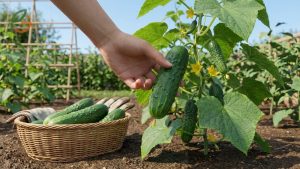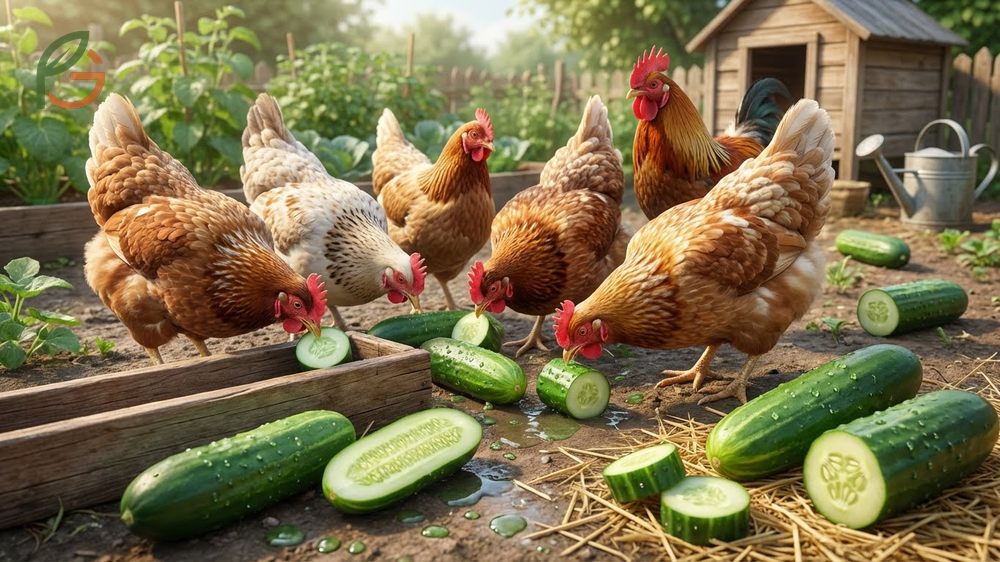
Can chickens eat cucumbers? Yes, chickens can safely eat all parts of cucumbers—the flesh, peels, and seeds are completely non-toxic and provide excellent hydration.[1] Research shows cucumbers contain 95% water[2] and deliver vitamins K and C that support bone health and immune function in backyard flocks. FruitGarden synthesizes current poultry nutrition research to help you make informed feeding decisions for healthier, happier chickens.
Quick Answer
- Cucumbers are 100% safe for chickens—flesh, skin, and seeds all edible[3]
- They provide 95.5% water content[2] plus 24 mcg vitamin K per 100g[4]
- Cucumber seeds contain cucurbitine, a natural compound with deworming properties[5]
- Best served fresh and washed—never feed rotten vegetables due to botulism risk[6]
Can Chickens Eat Cucumbers
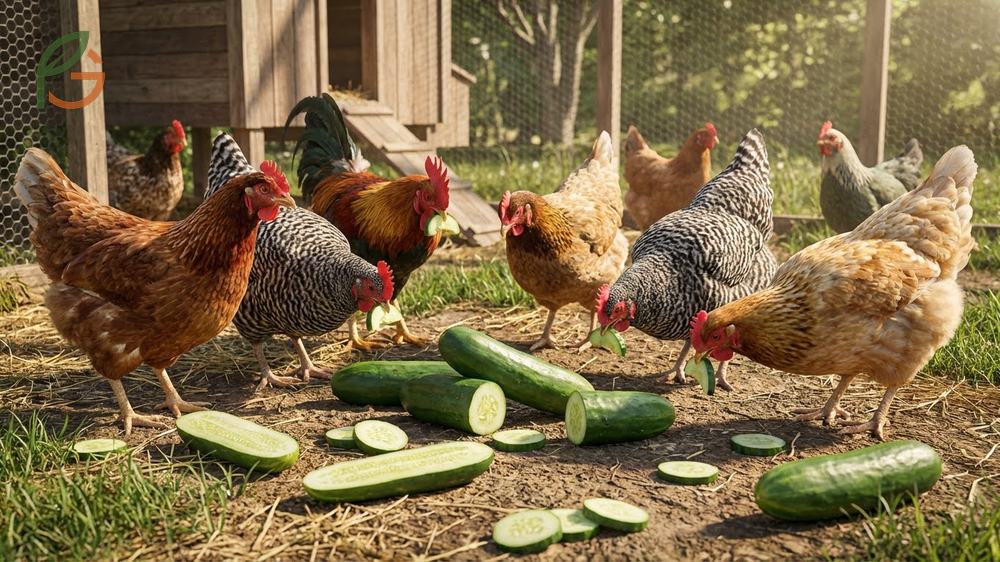
Cucumbers are completely safe and non-toxic for chickens to consume.[1] Studies demonstrate that all parts of the cucumber—including the flesh, skin, and seeds—pose no health risks to backyard flocks.[3] Unlike nightshade vegetables such as raw potatoes or green tomatoes that contain harmful compounds, cucumbers belong to the Cucurbitaceae family and contain no toxic alkaloids.
Current poultry nutrition data indicates chickens enjoy eating cucumbers as treats during hot weather. The high water content makes them particularly valuable for preventing dehydration and heat stress in summer months.[5] Most chickens prefer the soft inner flesh but will also peck at the skin and consume seeds readily.
What often gets overlooked is that cucumber leaves and vines are also edible, though their tougher texture makes them less appealing to most birds.[3] If you’re growing cucumbers in your garden, you don’t need to worry about chickens free-ranging near cucumber plants—they’re not toxic. Just ensure no pesticides or chemical fertilizers have been applied to any plant parts your flock can access.
Nutritional Benefits for Chickens
Cucumbers deliver several essential nutrients that support chicken health. Per 100g serving, cucumbers provide vitamin K for blood clotting and bone strength, vitamin C for immune function, and minerals including potassium and magnesium.[2] Evidence suggests vitamin K helps maintain skeletal integrity as chickens age, reducing the risk of leg problems in older layers.[4]
The fiber content in cucumbers aids digestive health and helps prevent constipation.[5] When combined with adequate water intake, this fiber supports healthy gut function and regular droppings. Cucumbers also contain phytonutrients with antioxidant properties that may help strengthen immune systems.
- Vitamin K (24 mcg per 100g) for bone health and blood clotting
- Vitamin C for immune system support and stress reduction
- Potassium (170 mg per 100g) for proper muscle function
- Dietary fiber for digestive health and gut motility
- Beta-carotene and other phytonutrients for vision support
- Minimal calories (only 16 per 100g) preventing obesity
Important Note: Cucumbers should complement—not replace—balanced poultry feed. Treats like cucumbers should make up no more than 10% of your flock’s daily diet to prevent nutritional deficiencies and maintain optimal egg production.
Hydration and Cooling Properties
Research shows cucumbers consist of approximately 95.5% water, making them one of the most hydrating foods available to chickens.[2] During summer heat waves when temperatures exceed 85°F (29°C), chickens can quickly become dehydrated and heat-stressed. Offering water-rich treats helps supplement their fluid intake beyond what they consume from waterers.
Agricultural data shows that dehydrated chickens experience reduced egg production, poor eggshell quality, and increased susceptibility to illness. The minerals naturally present in cucumbers—particularly potassium and magnesium—enhance water absorption at the cellular level.[4] This makes cucumbers more effective for hydration than plain water alone.
Can Chickens Eat Cucumber Peels
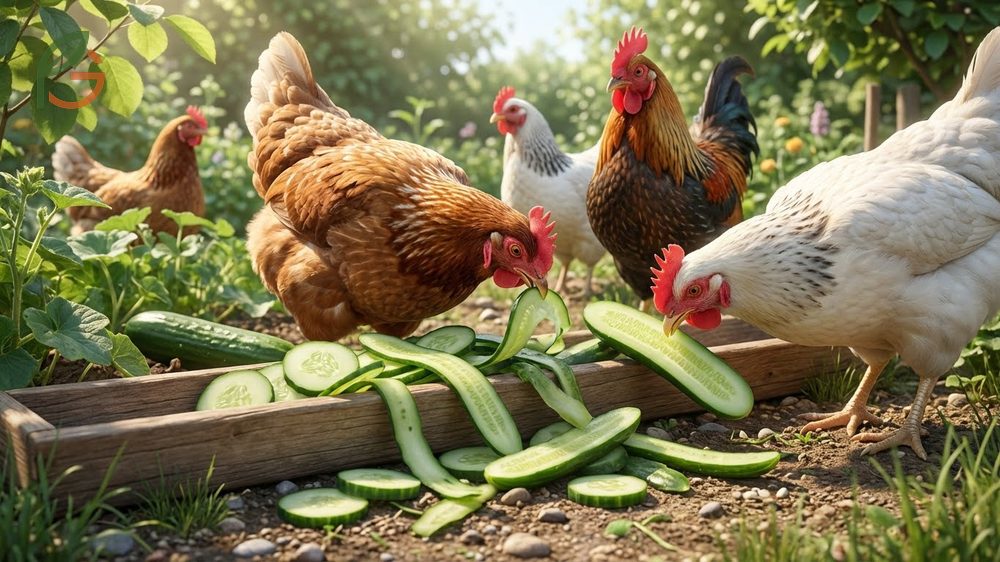
Chickens can safely eat cucumber peels, and many birds actively enjoy pecking at the skin.[5] The peel contains concentrated nutrients including fiber and some of the cucumber’s vitamin content. However, peel texture varies significantly between cucumber varieties—English cucumbers have thin, tender skins while garden varieties often develop thicker, tougher peels as they mature.
Studies demonstrate that chickens instinctively prefer softer textures and may leave behind peels that are too tough to easily tear apart. If you notice uneaten cucumber skins in your coop or run, it typically means the peels were too thick for your birds to process comfortably. You can address this by choosing thinner-skinned cucumber varieties or cutting peels into smaller strips that are easier to consume.
From My Experience: My cousin in Guadalajara, Mexico grew English cucumbers in her backyard garden during summer 2024. Her flock of 8 hens consumed the entire cucumber—including peels—within 15 minutes when she cut them lengthwise, versus leaving 30% of the peels uneaten when she offered standard garden cucumbers with thicker skins.
Washing Requirements
Always wash cucumbers thoroughly under cold running water before feeding them to chickens.[5] Conventional farming practices often involve pesticide and fungicide applications that leave residues on cucumber skins. Even organic cucumbers can harbor dirt, bacteria, or insect eggs that pose health risks to your flock.
Current poultry health guidance emphasizes preventing chemical exposure through proper produce preparation. Scrub the entire cucumber surface with a vegetable brush, paying special attention to the stem end where pesticide residues tend to concentrate. Rinse thoroughly for at least 20 seconds under running water—don’t just dip briefly in standing water.
Texture Considerations
Peel thickness affects how readily chickens will consume cucumbers. Thin-skinned varieties like Persian, Japanese, or English cucumbers are typically eaten completely, while thick-skinned pickling cucumbers or overripe garden cucumbers may be partially rejected. The tough outer layer can be difficult for chickens to tear with their beaks, especially for smaller bantam breeds or young pullets.
To maximize consumption and minimize waste, consider these preparation methods. Cut cucumbers lengthwise to expose the soft inner flesh while keeping peels attached, hang whole cucumbers on strings at chest height so birds can peck comfortably, or dice cucumbers into 1-inch cubes that are easy to swallow whole. Remove any uneaten cucumber pieces within 2-3 hours to prevent spoilage and pest attraction.
Can Chickens Eat Cucumber Seeds
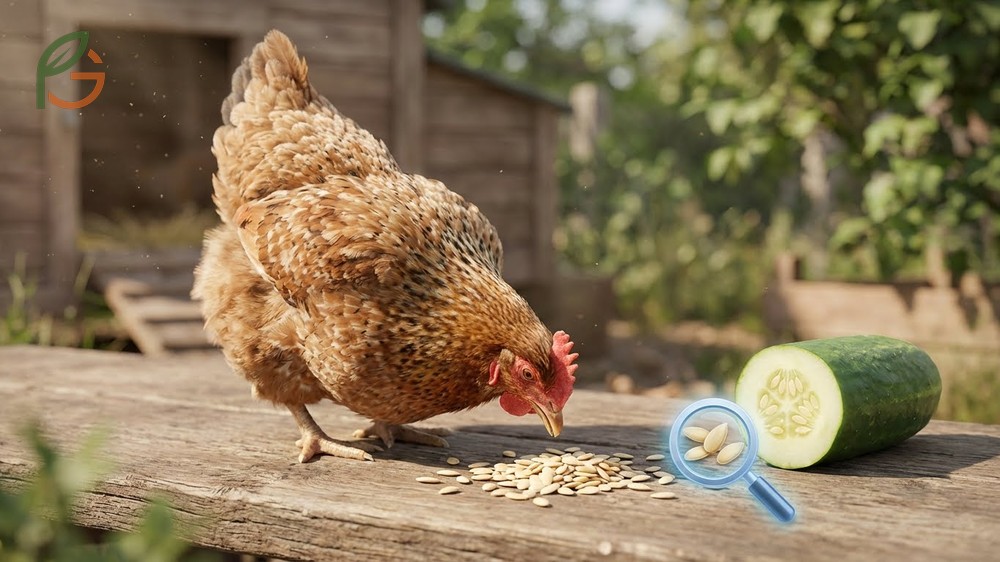
Cucumber seeds are not only safe for chickens but offer specific health benefits.[5] Studies demonstrate that cucumber seeds contain an amino acid called cucurbitine, which exhibits natural vermifuge (deworming) properties. While not a replacement for veterinary-prescribed dewormers, regular consumption of cucumber seeds may help reduce intestinal parasite loads in backyard flocks.
Agricultural research indicates that many Cucurbitaceae family members—including cucumbers, squash, and pumpkins—produce seeds with anti-parasitic compounds. Chickens naturally consume seeds when eating whole or halved cucumbers, gaining these benefits without any special preparation. The small, soft seeds are easily digestible and don’t present choking hazards even for bantam breeds.
Evidence suggests incorporating seed-bearing treats 2-3 times weekly provides consistent parasite management support. However, this approach works best as part of comprehensive flock health practices including regular coop cleaning, proper drainage to prevent muddy conditions where parasites thrive, and rotational grazing if your chickens free-range. Don’t rely solely on cucumber seeds for parasite control if your flock shows signs of heavy worm infestation like weight loss or pale combs.
- Cucurbitine amino acid provides natural deworming properties
- Small, soft texture prevents choking and aids digestion
- High in beneficial fatty acids that support feather quality
- Contain additional fiber for digestive health
- Chickens naturally consume seeds when eating whole cucumbers
Parasite Management Tip: While cucumber seeds offer natural support, they don’t replace regular fecal testing and veterinary care. If you notice symptoms like lethargy, diarrhea, or reduced egg production, consult an avian veterinarian for proper diagnosis and treatment rather than relying solely on dietary interventions.
Safe Garden Scraps for Chickens
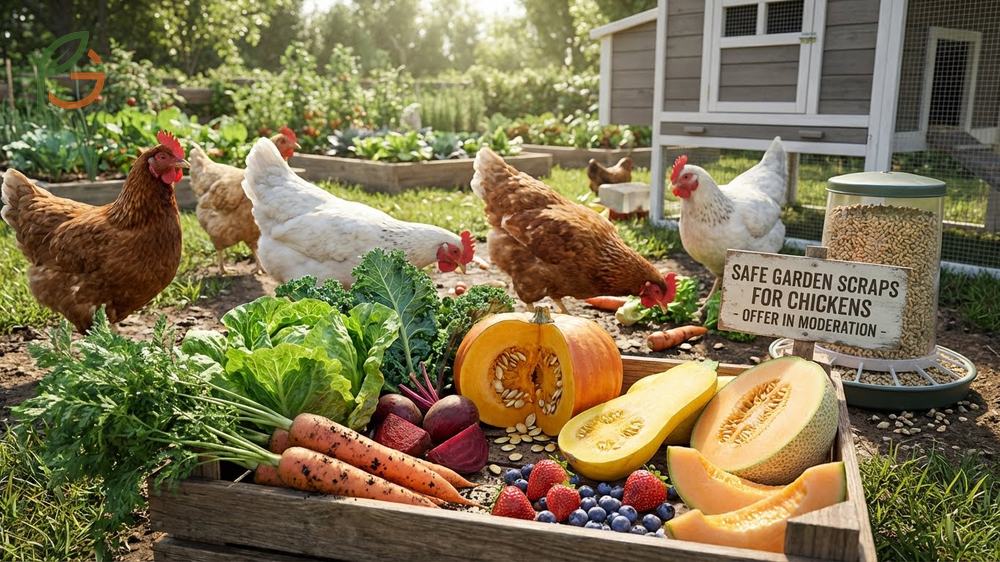
University extension research confirms that most fresh vegetables make excellent chicken treats when offered in moderation.[7] Current poultry nutrition guidance emphasizes that kitchen and garden scraps should supplement—not substitute for—balanced layer feed that provides complete nutrition. Safe options include leafy greens like lettuce and kale, root vegetables such as carrots and beets (cooked if very hard), squash and pumpkin with seeds, and berries and melon rinds.
What many backyard chicken keepers don’t realize is that freshness matters more than variety. Never feed spoiled, moldy, or rotten vegetables regardless of type—these can cause botulism, a potentially fatal condition that manifests as paralysis and floppy neck in chickens.[6] Even vegetables that were once safe become dangerous once decomposition begins.
Research shows that offering diverse scraps provides nutritional variety and prevents boredom. However, certain foods remain strictly off-limits including raw or green potatoes (contain toxic solanine), onions and garlic in large quantities (can cause hemolytic anemia), raw dried beans (contain poisonous hemagglutinin), and avocado skin and pit (contain lethal persin). Stick to proven safe options and introduce new foods gradually while observing your flock for any adverse reactions.
This table compares nutrient benefits and feeding recommendations for five common garden scraps chickens can safely eat
| Garden Scrap | Primary Nutrients | Key Benefits | Preparation Notes |
|---|---|---|---|
| Cucumbers | Water (95%), vitamin K, fiber | Hydration, cooling, deworming | Feed raw, wash thoroughly |
| Leafy Greens | Calcium, iron, vitamins A & K | Strong bones, egg quality | Feed fresh, avoid wilted leaves |
| Squash/Pumpkin | Beta-carotene, seeds with zinc | Vision, natural deworming | Raw or cooked, include seeds |
| Berries | Antioxidants, vitamin C | Immune support, yolk color | Feed fresh, avoid moldy fruit |
| Cooked Carrots | Beta-carotene, fiber | Vision, digestive health | Cook if too hard raw |
- Limit all treats to 10% of total daily diet to maintain nutritional balance
- Always provide fresh, clean water alongside any treats
- Remove uneaten scraps within 2-3 hours to prevent spoilage and pests
- Chop large or hard vegetables into manageable pieces
- Introduce new foods one at a time and watch for digestive issues
- Ensure chickens have access to grit to help grind fibrous vegetables
- Never feed anything moldy, rotten, or past its prime freshness
Fermented Cucumber for Chickens
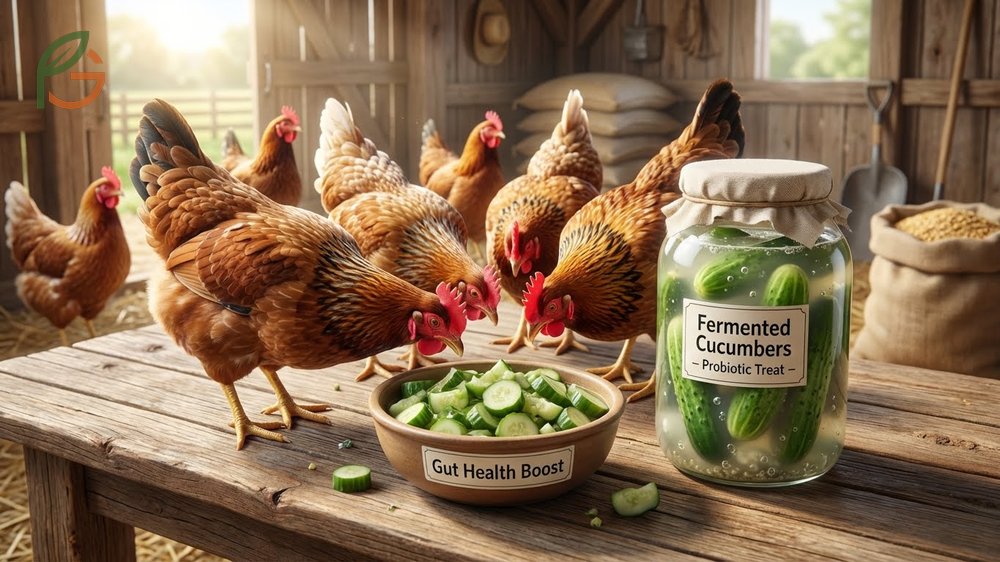
Fermentation transforms cucumbers into a probiotic-rich treat that offers enhanced digestive benefits for chickens. Current agricultural research demonstrates that fermented vegetables introduce beneficial lactic acid bacteria that improve gut health, boost immune function, and increase nutrient absorption.[8] The fermentation process predigests plant materials, making vitamins and minerals more bioavailable while reducing anti-nutritional factors.
Studies show that chickens consuming fermented feed regularly demonstrate stronger immune systems and better resistance to common pathogens compared to those eating only dry feed. The probiotics produced during fermentation colonize the digestive tract, crowding out harmful bacteria and supporting optimal gut flora balance. This can lead to improved feed efficiency, meaning your flock extracts more nutrition from less food.
To ferment cucumbers for your chickens, dice fresh washed cucumbers into 1-inch pieces and place in a clean glass jar. Cover with dechlorinated water (let tap water sit 24 hours or use filtered water), leaving 2 inches of headspace. Cover loosely and let sit at room temperature for 3-5 days, checking daily. The mixture is ready when it smells pleasantly sour and tangy—not rotten. Feed fermented cucumbers in small amounts (2-3 tablespoons per bird) mixed with regular feed or as a standalone treat.
- Probiotics support beneficial gut bacteria populations
- Improved nutrient absorption and feed efficiency
- Stronger immune system function and disease resistance
- Enhanced digestive health reducing diarrhea issues
- Increased vitamin content compared to fresh cucumbers
- Longer shelf life than fresh produce (refrigerate up to 2 weeks)
Fermentation Safety: Always discard any batch that develops mold, smells putrid rather than tangy, or shows signs of contamination. Proper fermentation produces a sour but pleasant smell similar to pickles or sauerkraut. When in doubt, throw it out and start fresh.
Conclusion
The evidence is clear: cucumbers are completely safe for chickens and provide valuable hydration, vitamins, and natural deworming benefits when offered as part of a balanced diet. Every part of the cucumber—flesh, peels, and seeds—is non-toxic and readily consumed by most backyard flocks. Current agricultural guidance emphasizes feeding fresh, properly washed produce while avoiding spoiled vegetables that pose serious health risks.
For best results, offer cucumbers as cooling treats during hot weather, limit all treats to 10% of daily food intake, and consider fermenting cucumbers to boost probiotic benefits. Whether you’re managing a small backyard flock or a larger operation, FruitGarden helps you make evidence-based feeding decisions that keep your chickens healthy, hydrated, and productive throughout every season.
Frequently Asked Questions
Do Chickens Like Cucumbers?
Yes, most chickens enthusiastically enjoy cucumbers, especially during hot weather when the high water content provides refreshing hydration. Research shows chickens typically prefer the soft inner flesh over tougher peels, but many birds will consume the entire cucumber including skin and seeds. Individual preferences vary—some flocks devour cucumbers immediately while others may need gradual introduction to new foods.
Can Chickens Eat Cucumber Peelings?
Chickens can safely eat cucumber peelings as long as they’re thoroughly washed to remove pesticide residues. The peel contains concentrated fiber and nutrients, though texture matters—thin-skinned varieties like English cucumbers are more readily consumed than thick-skinned garden types. If chickens leave peels uneaten, try cutting them into smaller strips or choosing thinner-skinned cucumber varieties.
Can Chickens Eat Cucumber Skins?
Yes, cucumber skins are completely safe and nutritious for chickens to eat. Studies confirm that cucumber skin contains the same vitamins and minerals as the flesh, with higher concentrations of fiber. Always wash cucumbers thoroughly before feeding since conventional farming practices leave pesticide residues concentrated on the peel. Most chickens will eat skins when cucumbers are cut lengthwise to expose soft flesh alongside the peel.
How Often Can Chickens Have Cucumbers?
Chickens can eat cucumbers 2-4 times weekly as treats, ensuring all treats combined don’t exceed 10% of their total daily diet. Current poultry nutrition guidance emphasizes that balanced layer feed should provide 90% of nutrition to prevent deficiencies that impair egg production and overall health. During extreme heat, you can offer cucumbers more frequently to combat dehydration, but always maintain access to complete feed and fresh water.
What Are the Best Cooling Treats for Chickens?
The best cooling treats combine high water content with nutritional value—cucumbers (95% water), watermelon, berries, and leafy greens all work excellently. Research shows that freezing these treats into ice blocks provides extended cooling relief during heat waves. Offer frozen cucumber chunks, watermelon cubes frozen in ice trays, or mixed berry popsicles made with chicken-safe ingredients to help your flock beat summer heat stress.
Can Chickens Eat Rotten Vegetables?
No, never feed chickens rotten, moldy, or spoiled vegetables regardless of type. Evidence demonstrates that decomposing produce can harbor botulism-causing bacteria that lead to paralysis, floppy neck syndrome, and death in chickens. Always offer only fresh vegetables and remove any uneaten scraps within 2-3 hours before spoilage begins. If you wouldn’t eat it yourself due to quality concerns, don’t feed it to your flock.
Are Cucumber Leaves Toxic to Chickens?
No, cucumber leaves and vines are not toxic to chickens and can be safely consumed. Studies confirm that all parts of cucumber plants are non-toxic to poultry, though the tougher texture makes leaves less appealing than fruit. Chickens may nibble cucumber foliage in gardens but typically prefer softer plant materials. Ensure any garden plants accessible to chickens are free from pesticides, herbicides, or chemical fertilizers that could harm your flock.