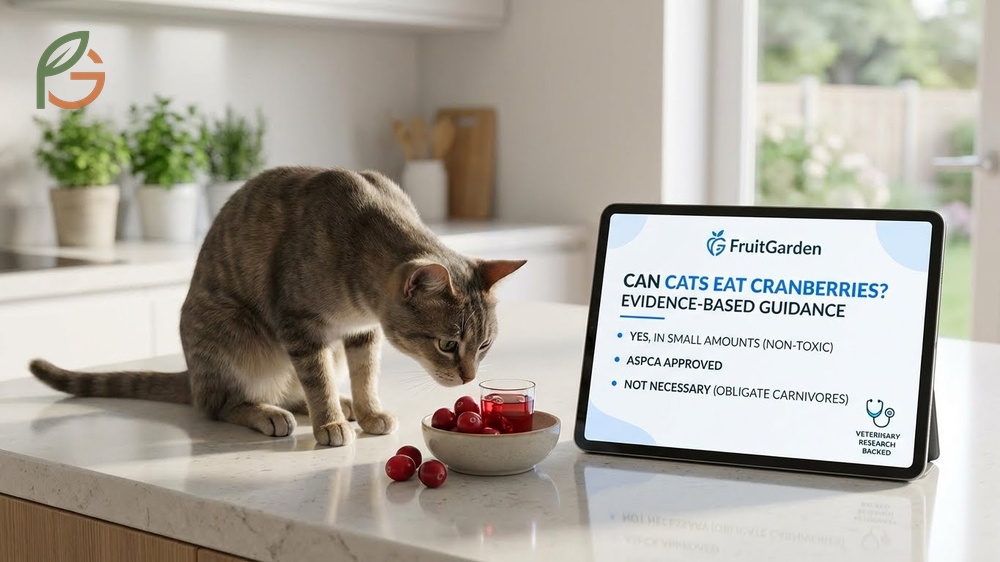
Can cats eat cranberries? Yes, in small amounts. Research shows cranberries are non-toxic to cats according to the ASPCA[1], but they’re not necessary for feline nutrition since cats are obligate carnivores. FruitGarden provides evidence-based guidance on which fruits and foods are safe for pets, drawing from veterinary research and nutritional science.
Quick Answer
- Fresh cranberries contain 46 calories and 4g fiber per 100g[2], but cats only need 1-2 berries maximum
- Cranberry juice isn’t recommended by veterinary professionals due to high sugar and pH-altering effects[3]
- Avoid all sweetened products, especially those with xylitol (toxic to pets)
- Cats with kidney issues or oxalate crystals shouldn’t have cranberries due to high oxalate content[4]
Can Cats Eat Cranberries
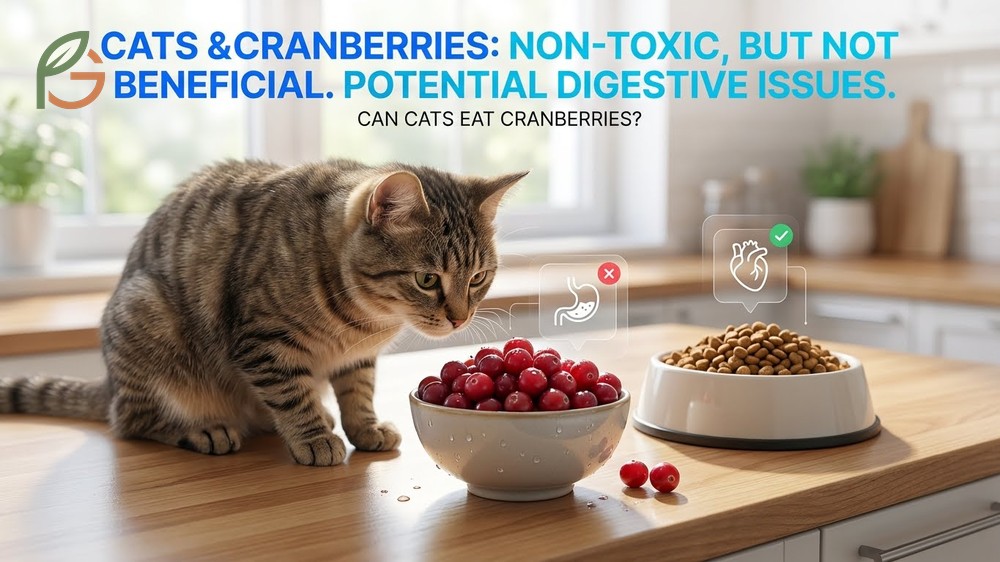
Studies demonstrate that cranberries are classified as non-toxic to felines by the ASPCA[1], meaning they won’t cause immediate poisoning when consumed in very small amounts. However, this doesn’t make them beneficial or necessary for cat nutrition.
Current veterinary guidance emphasizes that cats derive no essential nutrients from cranberries that aren’t already present in properly formulated cat food. What often gets overlooked is that even “safe” foods can cause digestive upset when they don’t align with a cat’s carnivorous digestive system.
Most veterinarians recommend limiting cranberries to 1-2 fresh berries as an occasional treat, not a regular dietary addition. Overfeeding can lead to vomiting, diarrhea, or stomach discomfort within 2-4 hours of consumption.
Why Cats Don’t Need Fruit
Cats are obligate carnivores, meaning their bodies evolved to extract all necessary nutrients from animal tissue. Unlike dogs or humans, they lack sufficient enzymes to efficiently process plant-based carbohydrates.
Research shows cats require specific nutrients—taurine, arachidonic acid, and preformed vitamin A—that only come from meat sources. Their digestive tracts are shorter than omnivores’, optimized for protein digestion rather than fiber fermentation.
Nutritional Content Overview
Raw cranberries contain 46 calories, 12g carbohydrates, and 4g fiber per 100g serving[2]. They’re composed of approximately 87% water with trace amounts of vitamins C, E, and K.
For context, a single cranberry weighs about 1 gram, providing less than 0.5 calories. Cats weighing 10 pounds (4.5 kg) require approximately 200-250 calories daily from complete protein sources, making cranberries nutritionally insignificant.
Important Note: Cranberries contain high levels of oxalates[4], which can contribute to crystal formation in susceptible cats. Never feed cranberries to cats with a history of urinary stones or kidney disease.
Can Cats Have Cranberry Juice
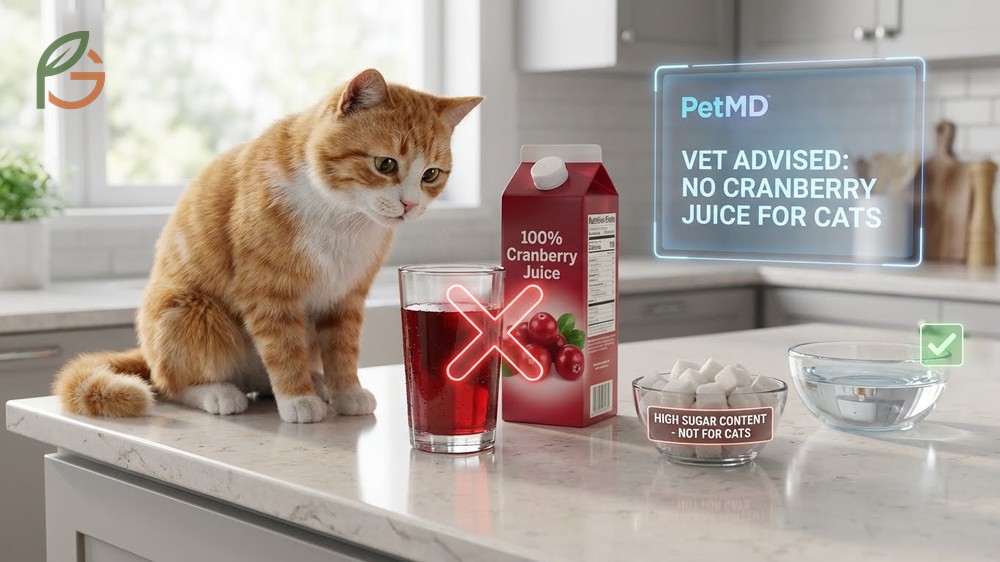
Veterinary professionals strongly advise against cranberry juice for cats. PetMD explicitly states it’s not recommended for treating feline urinary tract infections[3], and the pH changes it causes may actually promote crystal formation.
Commercial cranberry juices contain 20-30g of sugar per cup, which is completely inappropriate for feline metabolism. Cats lack taste receptors for sweetness and have minimal ability to process concentrated sugars.
Even unsweetened cranberry juice poses risks. The concentrated acidity can irritate a cat’s stomach lining, potentially causing vomiting within 30-60 minutes of consumption.
Sugar Concerns
Excessive sugar intake in cats can lead to obesity, dental disease, and increased diabetes risk. A cat’s pancreas isn’t designed to handle rapid glucose spikes from fruit sugars or juice.
Dried cranberries are particularly problematic, containing 130 calories per quarter-cup[5] due to concentrated sugars and added sweeteners. Most commercial varieties include high-fructose corn syrup or cane sugar.
pH and Crystal Risks
Cranberry products acidify urine, which sounds beneficial but can backfire in feline urinary health. Veterinary research shows that lowering urine pH may promote calcium oxalate crystal formation in predisposed cats[6].
Feline idiopathic cystitis (FIC), the most common lower urinary tract condition in cats, isn’t caused by bacteria and won’t respond to cranberry’s antibacterial properties. Most cats with urinary symptoms need stress reduction and increased water intake, not dietary supplements.
Warning: Never give cranberry products containing xylitol (artificial sweetener) to cats. While xylitol toxicity is more severe in dogs, it can still cause digestive upset and potential liver issues in felines.
Are Cranberries Safe for Cats
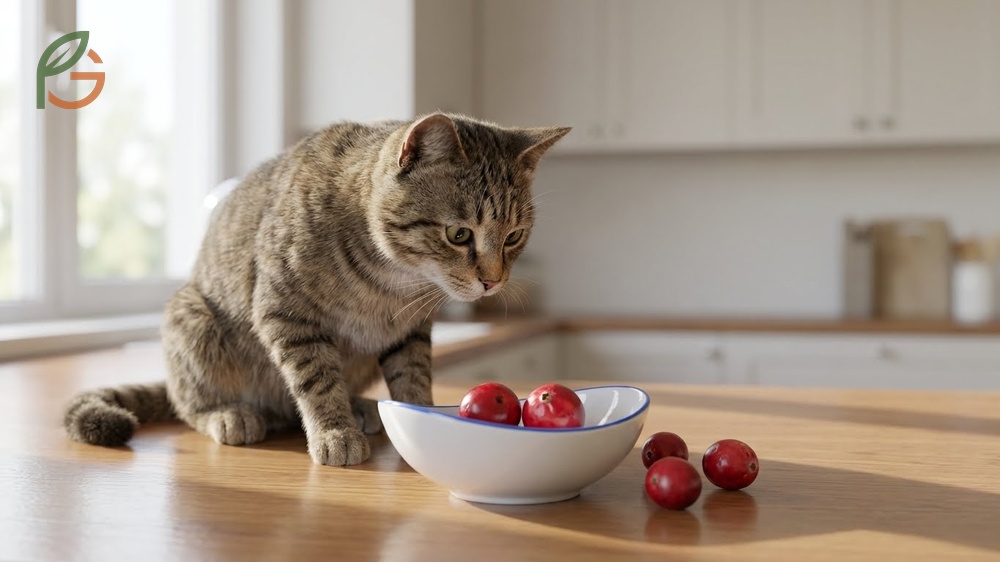
Fresh, plain cranberries are generally safe in tiny quantities for healthy adult cats without pre-existing conditions. The key word is “moderation”—1-2 berries once or twice per month at most.
Evidence from veterinary poison control databases shows no reports of acute cranberry toxicity in cats at normal exposure levels. However, there’s also no evidence they provide meaningful health benefits to justify regular feeding.
Safety depends heavily on the form and frequency. Plain frozen cranberries carry the same low risk as fresh ones, while cranberry sauce, relish, or cocktails present multiple hazards from sugar, artificial sweeteners, and other ingredients.
- Cats with diagnosed kidney disease or compromised renal function
- Cats with history of calcium oxalate or any urinary crystals/stones
- Diabetic cats requiring strict carbohydrate control
- Cats with sensitive stomachs prone to vomiting or diarrhea
- Kittens under 12 months whose digestive systems are still developing
The choking hazard is real for whole cranberries, especially in cats with dental problems or those who gulp food quickly. Cutting a cranberry in half reduces this risk slightly, though many cats will simply refuse to eat it due to the sour taste.
Cranberry Forms and Safety

Different cranberry products carry vastly different risk levels for cats. Understanding these distinctions helps you make informed decisions if your cat accidentally consumes cranberry-containing foods.
This table compares safety levels, primary risks, and veterinary recommendations across five common cranberry forms from fresh to sauce
| Form | Safety Level | Primary Risk | Recommendation |
|---|---|---|---|
| Fresh cranberries | Low risk | Choking, digestive upset | 1-2 berries maximum, monitor closely |
| Frozen cranberries | Low risk | Same as fresh, possible brain freeze | Thaw first, limit to 1-2 berries |
| Dried cranberries | Moderate risk | High sugar, added sweeteners | Avoid unless completely unsweetened |
| Cranberry juice | High risk | Sugar, acidity, pH changes | Not recommended[3] |
| Cranberry sauce | High risk | Sugar, spices, potential xylitol | Never feed to cats |
Cranberry supplements marketed for pets deserve special mention. While some contain standardized cranberry extract, there’s limited evidence they work in cats the way they might in humans for preventing bacterial UTIs.
A 2022 study on cranberry extract for feline idiopathic cystitis showed some improvement in clinical signs[6], but researchers noted no significant changes in urinalysis results. This suggests benefits may be indirect or placebo-related rather than from cranberry’s active compounds.
Feline Urinary Health Myths

The persistent myth that cranberries prevent urinary tract infections in cats stems from human medicine, but feline urinary anatomy and disease patterns differ significantly. Most cat UTIs aren’t bacterial—they’re inflammatory conditions triggered by stress, dehydration, or crystal formation.
Veterinary research shows that only 1-3% of feline lower urinary tract disease cases involve bacterial infections in cats under 10 years old. Cranberry’s mechanism—preventing bacterial adhesion to bladder walls—is irrelevant for the 97%+ of cases caused by other factors.
Current evidence indicates cranberries may even worsen outcomes in cats prone to calcium oxalate crystals. The high oxalate content[4] combined with urine acidification creates ideal conditions for crystal formation rather than preventing it.
- Increase water intake through wet food, water fountains, or multiple water stations
- Maintain optimal body weight to reduce inflammation and metabolic stress
- Provide multiple clean litter boxes in quiet, accessible locations (one per cat plus one extra)
- Reduce environmental stressors through enrichment, vertical space, and routine consistency
- Feed veterinary-formulated urinary diets when recommended by your vet for specific conditions
Prescription urinary diets work by carefully controlling mineral content, pH, and moisture levels—factors that can’t be replicated by adding cranberries to regular food. These diets undergo feeding trials proving they reduce crystal recurrence by 80-90% in susceptible cats.
Safe Fruits for Cats
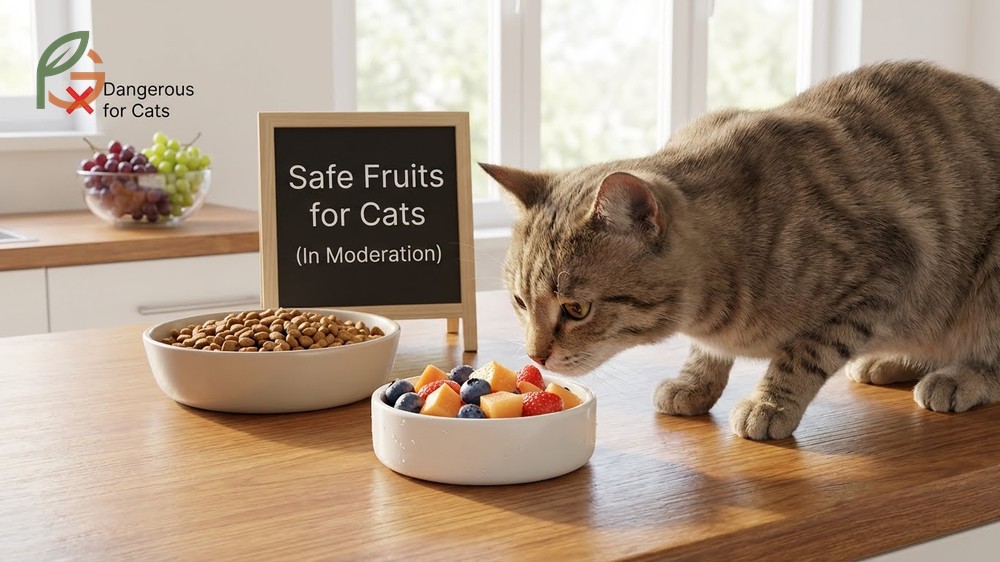
If you’re looking to offer your cat occasional fruit treats, several options are safer and more palatable than cranberries. Blueberries top the list—they’re non-toxic, contain antioxidants, and most cats find them less sour.
Small pieces of seedless watermelon (rind removed) provide hydration with 92% water content. The mild sweetness cats can’t taste makes it less likely to encourage sugar-seeking behavior compared to other fruits.
Cantaloupe cut into pea-sized pieces offers beta-carotene and is softer for cats with dental issues. However, even these “safer” options should never exceed 5% of daily caloric intake—roughly one or two small pieces.
- Blueberries: 1-3 berries, rich in antioxidants, low choking risk
- Seedless watermelon: One-inch cube maximum, remove all rind and seeds first
- Cantaloupe: 2-3 pea-sized pieces, high in vitamin A and hydration
- Strawberries: Quarter of a berry, remove leaves and stem completely
- Banana: Half-inch slice, high in potassium but also sugar—rare treat only
- Apples: Small piece without seeds or core, can be cooked to soften
- Pumpkin (cooked): One teaspoon, beneficial for digestive health and hairballs
Never feed grapes, raisins, citrus fruits, or cherries to cats—these are toxic and can cause kidney damage. When offering any fruit, watch for signs of digestive upset like vomiting, diarrhea, or decreased appetite within 4-6 hours.
Pro Tip: Most cats show little interest in fruits due to lacking sweet taste receptors. If your cat refuses cranberries or other fruits, don’t force it—their instincts are usually correct about what their bodies need.
Conclusion
The evidence is clear: can cats eat cranberries safely in tiny amounts, but there’s no compelling nutritional or medical reason to include them in a cat’s diet. Fresh cranberries won’t harm healthy cats when limited to 1-2 berries occasionally, but they offer no benefits that aren’t better obtained from properly formulated cat food.
Current veterinary guidance emphasizes species-appropriate nutrition focused on high-quality animal proteins rather than supplementing with human foods. If you’re concerned about your cat’s urinary health, consult your veterinarian for evidence-based treatments instead of relying on cranberries or other home remedies. FruitGarden provides research-backed information to help pet owners make informed decisions about food safety and nutrition.
Medical Disclaimer
Important Medical Disclaimer: This content is for informational and educational purposes only. It’s not intended as a substitute for professional veterinary advice, diagnosis, or treatment. Always consult a qualified veterinarian before making any changes to your cat’s diet, medication, or health routine, especially if your cat has kidney disease, diabetes, urinary tract issues, or other medical conditions. Never use cranberries or any food supplement to treat diagnosed medical problems without veterinary supervision.
Frequently Asked Questions
Are Cranberries Toxic to Cats?
No, cranberries are not toxic to cats according to veterinary poison databases and the ASPCA classification. However, non-toxic doesn’t mean beneficial—cats may experience digestive upset from the high fiber and acidity even though cranberries won’t cause poisoning. The real risks come from sweetened cranberry products containing sugar or artificial sweeteners like xylitol.
Can Cats Eat Dried Cranberries?
Dried cranberries are safe only if completely unsweetened, but most commercial varieties contain added sugar making them inappropriate for cats. Even unsweetened dried cranberries concentrate natural sugars and oxalates into smaller portions, increasing the risk of digestive problems. Fresh cranberries are always preferable to dried if you choose to offer any at all.
Can a Cat Have Cranberry Juice for UTI?
No, veterinarians don’t recommend cranberry juice for feline urinary tract infections. Research shows it may alter urine pH in ways that promote crystal formation rather than preventing infection. Most cat UTIs are non-bacterial inflammatory conditions that require proper veterinary diagnosis and treatment—not home remedies. Contact your vet if your cat shows urinary symptoms like straining or blood in urine.
How Many Cranberries Can a Cat Eat Safely?
Limit cranberries to 1-2 fresh berries once or twice per month maximum for healthy adult cats. Each cranberry weighs approximately 1 gram with less than 0.5 calories, making even this small amount unnecessary in feline nutrition. Cats with kidney disease, urinary crystals, diabetes, or sensitive stomachs shouldn’t have any cranberries at all.
What Symptoms Show a Cat Reacted Badly to Cranberries?
Watch for vomiting, diarrhea, decreased appetite, lethargy, or excessive drooling within 4-6 hours of consumption. Some cats may show signs of stomach discomfort like restlessness, hiding, or reluctance to eat their next meal. If symptoms persist beyond 12 hours or if your cat shows severe reactions like difficulty breathing or swelling, contact your veterinarian immediately.
Are Blueberries Safer Than Cranberries for Cats?
Yes, blueberries are generally considered safer and more palatable for cats than cranberries. They’re less acidic, contain similar antioxidants, and most cats tolerate them better due to milder flavor. However, the same moderation rules apply—1-3 blueberries occasionally, not as a regular dietary component. Remember that cats derive no essential nutrients from any fruit that isn’t already in their complete cat food.
Do Cranberry Supplements Work for Cats With Urinary Problems?
Evidence for cranberry supplements in cats is weak and contradictory. While one 2022 study showed some improvement in clinical signs of feline idiopathic cystitis, there were no significant urinalysis changes, suggesting benefits may be indirect. More concerning, cranberries’ high oxalate content can worsen problems in cats prone to calcium oxalate crystals. Always consult your veterinarian before using any supplements for urinary issues.