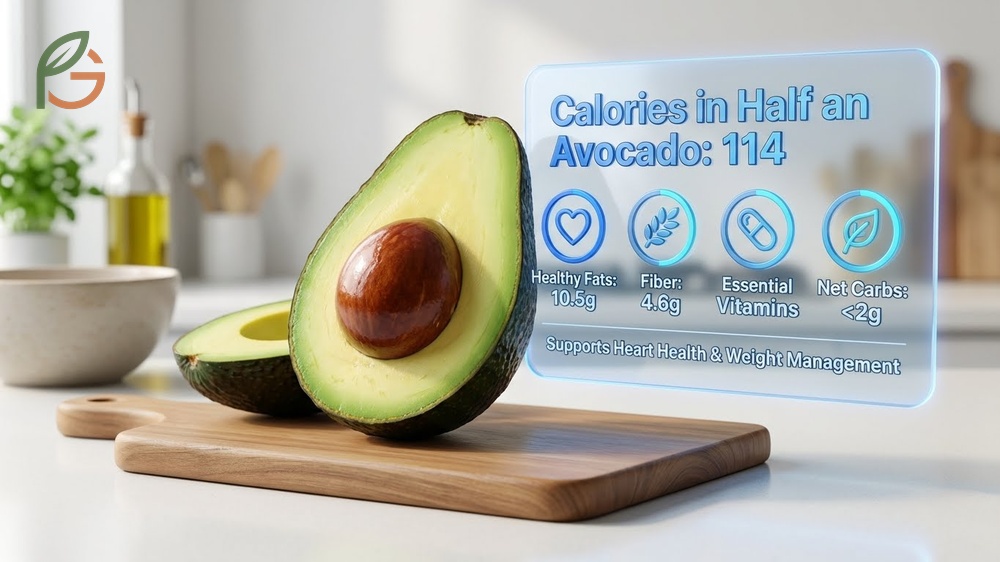
Calories in half an avocado total 114 with a powerful nutritional profile that supports heart health and weight management. Research shows this creamy fruit delivers 10.5g of healthy fats, 4.6g of fiber, and essential vitamins while keeping net carbs under 2g[1]. FruitGarden synthesizes current nutritional research and USDA data to help you make informed decisions about incorporating avocados into your daily diet.
Quick Answer
- 114 calories in half a medium Hass avocado (68g)
- 10.5g total fat[1] with 77% from heart-healthy monounsaturated fats
- 1.4g net carbs[2] (5.9g total carbs minus 4.6g fiber) making it keto-friendly
- Low glycemic index of 40[3] won’t spike blood sugar levels
Calories in Half an Avocado
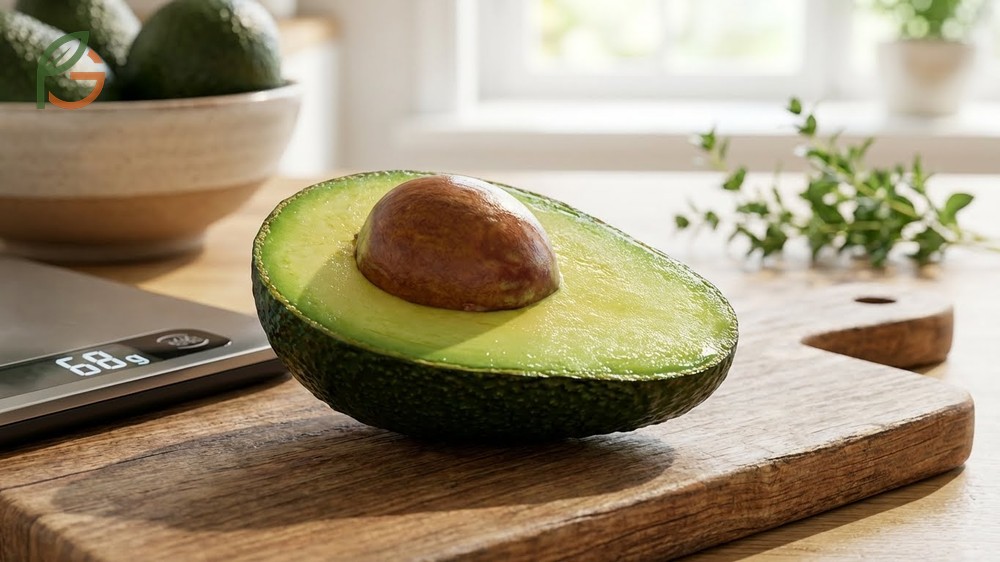
Research shows that half a medium Hass avocado (68g edible portion) contains 114 calories[1]. This serving size represents the official USDA recommendation and provides substantial nutrition without excessive calories. Current data indicates the calorie content varies slightly based on avocado size and variety.
Unlike processed snacks that pack empty calories, avocados deliver nutrient-dense energy. The 114 calories come primarily from healthy fats that support hormone production and vitamin absorption. Most people don’t realize that 77% of an avocado’s calories come from monounsaturated fats—the same heart-healthy fats found in olive oil[1].
Calorie Breakdown by Avocado Size
Avocado sizes vary significantly, affecting total calorie counts. Studies demonstrate that choosing the right portion size helps with meal planning and calorie tracking.
This table compares calorie content and weight measurements across five avocado sizes from small to very large
| Avocado Size | Weight (without skin/pit) | Half Avocado Calories | Whole Avocado Calories |
|---|---|---|---|
| Small | 70g | 58 cal | 116 cal |
| Medium | 136g | 114 cal[1] | 227 cal[1] |
| Large | 195g | 167 cal | 334 cal |
Important Note: California Hass avocados (the most common variety in US stores) contain 167 calories per 100g of edible fruit, while Florida avocados have slightly fewer calories at around 120 per 100g due to lower fat content.
Macronutrient Distribution
Evidence suggests that half an avocado provides a balanced macronutrient profile ideal for sustained energy. The breakdown includes 10.5g fat, 5.9g total carbohydrates, and 1.35g protein[1].
The fat content breaks down into 6.65g monounsaturated fats, 1.25g polyunsaturated fats, and 1.45g saturated fats[1]. This ratio of fats supports cardiovascular health and helps your body absorb fat-soluble vitamins A, D, E, and K.
- Total fat: 10.5g (mostly heart-healthy monounsaturated)
- Total carbs: 5.9g (with 4.6g fiber for digestive health)
- Protein: 1.35g (contains all essential amino acids)
- Net carbs: Only 1.4g (total carbs minus fiber)
- Zero cholesterol and naturally low in sodium
Nutritional Value of Avocado
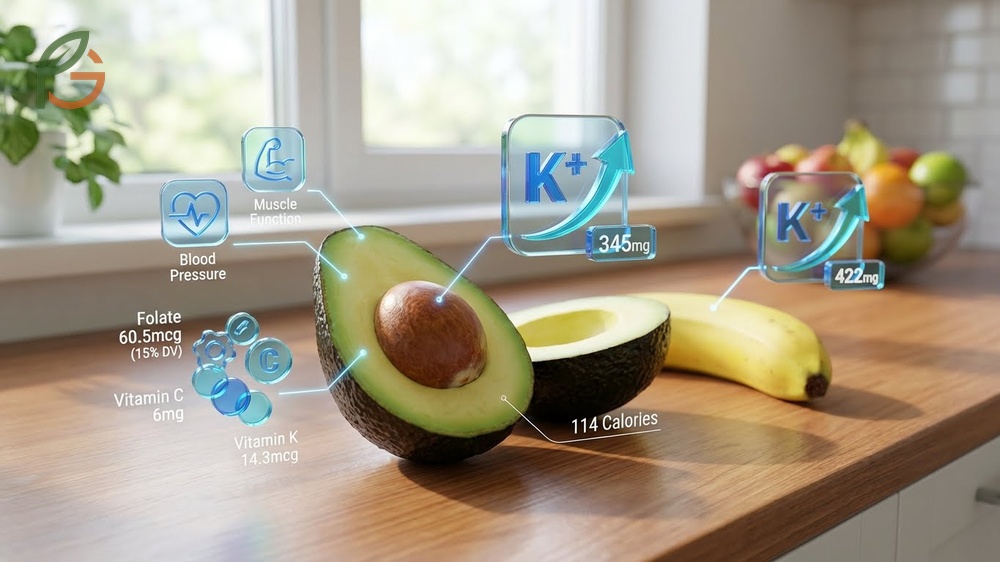
Current nutritional analysis shows that half an avocado delivers more potassium than a medium banana—345mg compared to 422mg[1]. This mineral supports healthy blood pressure and muscle function. What’s remarkable is how many nutrients pack into just 114 calories.
The vitamin content reads like a multivitamin label. You’ll get 60.5 micrograms of folate (15% daily value), 6mg of vitamin C, and 14.3 micrograms of vitamin K per half avocado[1].
Vitamins and Minerals
Agricultural data shows avocados stand out for their B-vitamin complex. Half an avocado provides 0.2mg vitamin B6 (10% DV), 1mg pantothenic acid (20% DV), and 1.3mg niacin[1].
- Potassium: 345mg (supports heart and muscle function)
- Folate: 60.5mcg (crucial for cell growth and DNA synthesis)
- Vitamin K: 14.3mcg (essential for blood clotting and bone health)
- Vitamin E: 1.35mg (powerful antioxidant for skin health)
- Magnesium: 19.5mg (aids muscle and nerve function)
- Copper: 0.1mg (supports iron absorption and red blood cell formation)
Fiber Content and Digestive Benefits
Studies demonstrate that the 4.6g of fiber in half an avocado provides 18% of your daily fiber needs[1]. This impressive fiber content includes both soluble and insoluble types. The soluble fiber slows digestion and helps control blood sugar spikes, while insoluble fiber supports regular bowel movements.
Research shows that people who eat avocados regularly consume significantly more fiber than non-consumers. The fiber in avocados also feeds beneficial gut bacteria, supporting a healthy microbiome and reducing inflammation markers[4].
Carbs in Avocado
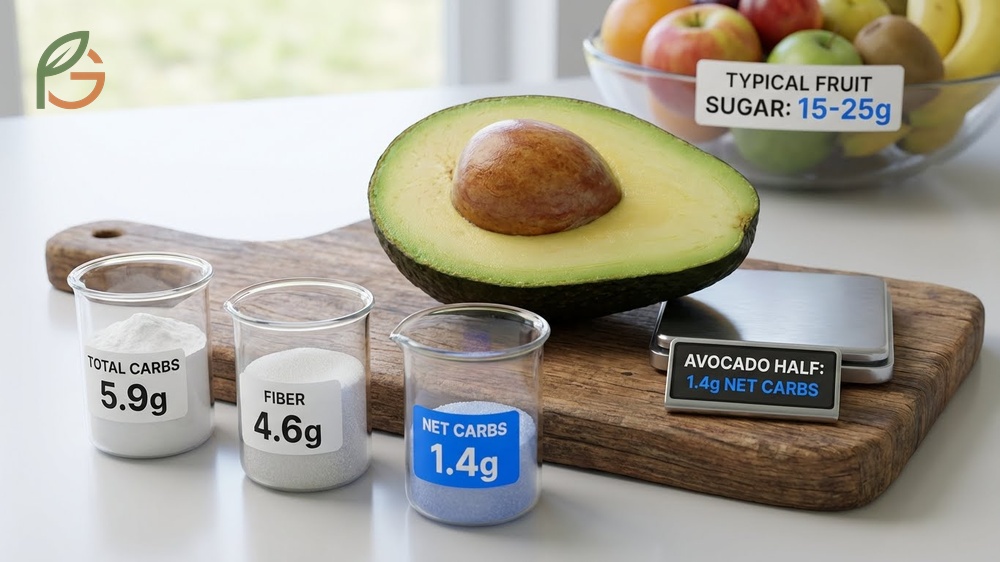
Half an avocado contains 5.9g total carbohydrates, but here’s what makes it special—4.6g of that is fiber[1]. This means you’re only getting 1.4g of net carbs (digestible carbohydrates that affect blood sugar). The reason this matters is simple: net carbs determine how a food impacts your glucose levels and ketosis state.
Current guidance emphasizes that avocado’s carb profile makes it unique among fruits. Most fruits contain 15-25g of sugar per serving, but avocados have less than 0.2g of sugar[2]. This low sugar content explains why diabetics can safely include avocados in their meal plans without worrying about blood sugar spikes.
Net Carb Calculation: Always subtract fiber from total carbs to get net carbs (5.9g total – 4.6g fiber = 1.4g net carbs). This calculation determines whether a food fits keto or low-carb diets.
- Total carbohydrates: 5.9g per half avocado
- Dietary fiber: 4.6g (78% of total carbs)
- Net carbs: 1.4g (extremely low)
- Natural sugars: Less than 0.2g (minimal impact on blood glucose)
- Glycemic index: 40 (classified as low-GI food)
Keto Diet and Avocado
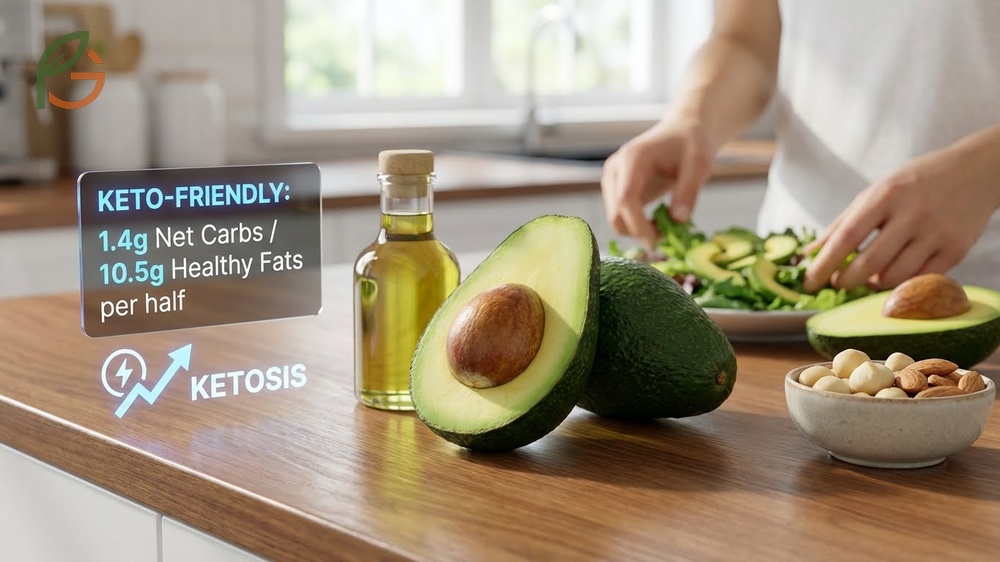
Research confirms that avocados rank as one of the most keto-friendly fruits available[2]. With only 1.4g net carbs per half and 10.5g of healthy fats, they help you hit your fat macros while staying well under the typical 20-50g daily carb limit. The high fat-to-carb ratio in avocados supports ketosis better than almost any other whole food.
Evidence indicates that the monounsaturated fats in avocados increase ketone production and provide sustained energy without breaking ketosis[2]. Most keto dieters can eat 1-2 whole avocados daily without exceeding their carb limits. The fiber content also helps counter the constipation that some people experience when starting keto.
- Net carbs of 1.4g fit easily into strict keto macros (under 20g daily)
- 77% of calories from fat match keto’s high-fat requirements
- Zero sugar content won’t trigger insulin spikes
- Glycemic index of 40 keeps you in ketosis
- Rich in electrolytes (potassium, magnesium) that keto dieters often lack
- Provides satiety that reduces carb cravings
Avocado for Weight Loss
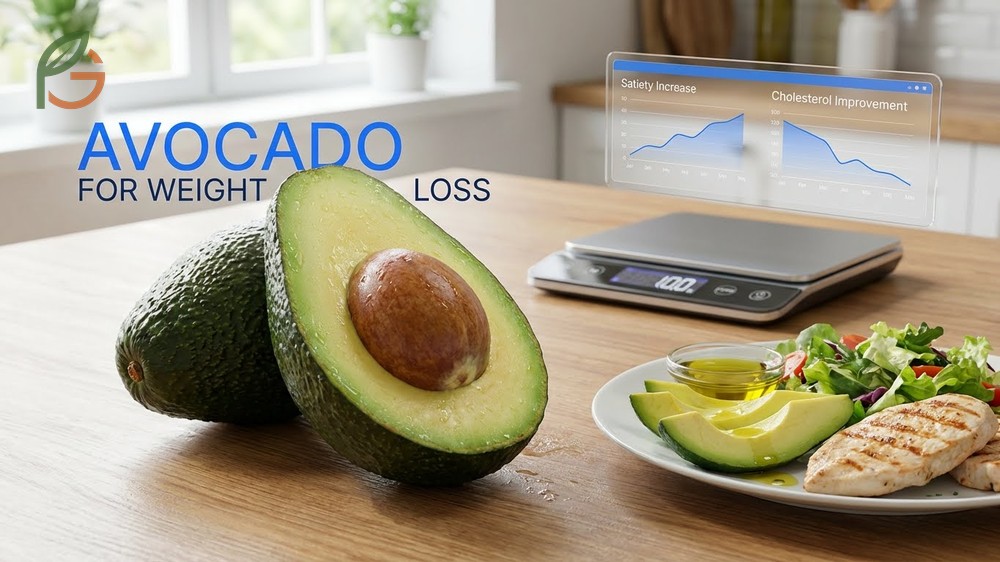
Studies demonstrate that including one Hass avocado daily in a calorie-controlled diet supports weight loss just as effectively as low-fat diets[4]. Research participants who ate avocados daily for 12 weeks lost similar amounts of weight compared to control groups, but experienced better improvements in cholesterol levels and gut bacteria composition. The key isn’t that avocados burn fat—it’s that their fiber and healthy fats increase satiety and reduce overall calorie intake.
Population studies show that regular avocado consumers weigh less on average than non-consumers—74.5kg versus 77.9kg—and have lower BMI (26.0 versus 27.3)[5]. What often gets overlooked is that the monounsaturated fats in avocados help your body burn stored fat more efficiently. They also improve insulin sensitivity, which helps prevent fat storage around your midsection.
The 114 calories in half an avocado replace higher-calorie spreads and dressings without sacrificing satisfaction. For instance, swapping 2 tablespoons of mayo (180 calories) for half an avocado saves 66 calories while adding 4.6g of fiber. This simple swap repeated daily creates a calorie deficit that leads to sustainable weight loss.
- High fiber (4.6g per half) increases fullness and reduces hunger for 3-5 hours
- Monounsaturated fats trigger satiety hormones that signal “I’m full”
- Low glycemic index prevents the energy crashes that lead to overeating
- Replaces calorie-dense condiments while providing superior nutrition
- Supports healthy gut bacteria that influence weight regulation
- Reduces visceral fat accumulation around organs
Calories in Avocado Toast
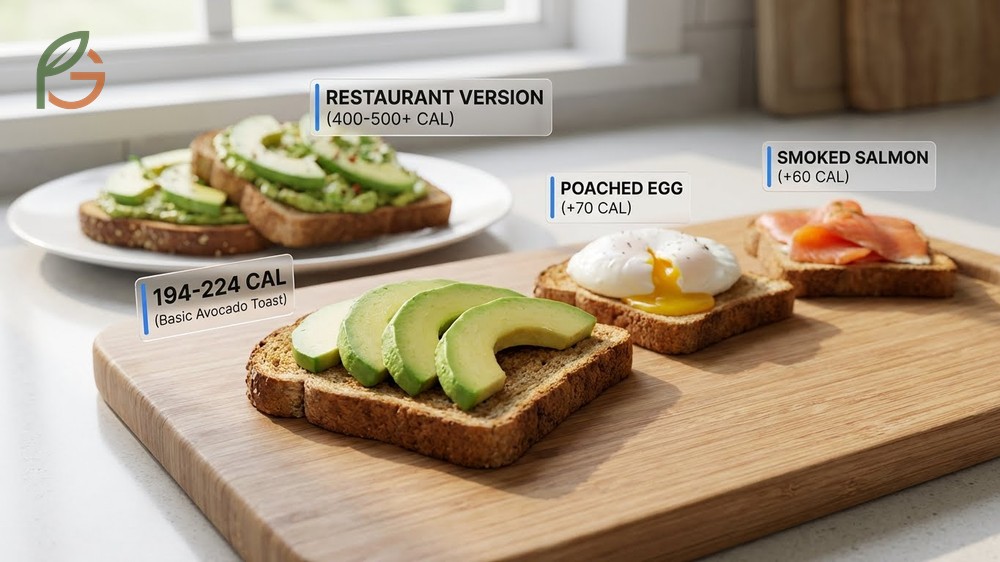
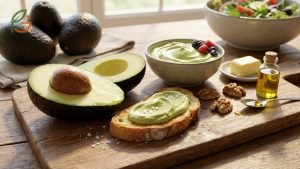
Basic avocado toast made with half an avocado (114 calories) and one slice of whole wheat bread (80-110 calories) totals 194-224 calories[6]. This makes it a reasonable breakfast or snack option for most calorie goals. The calories climb quickly when you add toppings—a poached egg adds 70 calories, smoked salmon adds 60 calories, and restaurant versions often exceed 400-500 calories due to extra oil and larger portions.
Research shows that starting your day with avocado toast provides 10g of fiber (from both avocado and whole grain bread) that stabilizes blood sugar better than typical breakfast cereals or pastries. The combination of healthy fats, fiber, and complex carbs creates sustained energy without the mid-morning crash.
If you’re tracking calories for weight loss, stick with the basic version and measure your portions. Use a kitchen scale to confirm you’re using half an avocado (68g), not eyeballing it—most people accidentally use 30-40% more than they think. Adding a squeeze of lemon, sea salt, and red pepper flakes boosts flavor without adding calories.
| Variation | Total Calories | Protein |
|---|---|---|
| Basic (1 slice + ½ avocado) | 194-224 cal[6] | 7g |
| With Poached Egg | 264-294 cal | 13g |
| With Smoked Salmon (2 oz) | 254-284 cal | 19g |
| Restaurant Style (extra oil) | 400-550 cal | 10-15g |
Conclusion
The evidence is clear: calories in half an avocado total 114 with exceptional nutritional value that supports heart health, weight management, and blood sugar control. Current data confirms that avocados deliver more nutrients per calorie than most fruits, with 10.5g of healthy fats, 4.6g of fiber, and only 1.4g of net carbs making them ideal for keto, low-carb, and balanced diets alike.
Agricultural research emphasizes choosing medium Hass avocados for consistent portions and tracking your intake if you’re managing calories for weight loss. FruitGarden synthesizes peer-reviewed nutrition science to help you make confident food choices—whether you’re spreading half an avocado on morning toast, blending it into smoothies, or eating it straight with a spoon.
Medical Disclaimer
Important Medical Disclaimer: This content is for informational and educational purposes only. It’s not intended as a substitute for professional medical advice, diagnosis, or treatment. Always consult a qualified healthcare professional or registered dietitian before making significant changes to your diet, especially if you have diabetes, cardiovascular disease, food allergies, or other medical conditions. Individual nutritional needs vary based on age, activity level, health status, and medications.
Frequently Asked Questions
How Many Calories Are in a Whole Avocado?
A whole medium Hass avocado (136g edible portion) contains 227 calories. This breaks down to roughly 114 calories per half, though exact amounts vary slightly by size. Large avocados can reach 334 calories for the whole fruit, while small avocados contain around 116 calories total.
Is Half an Avocado Too Much Fat for One Meal?
No, the 10.5g of fat in half an avocado represents healthy monounsaturated fat that supports heart health and vitamin absorption. Current dietary guidelines don’t set upper limits on monounsaturated fats. For context, 10.5g is roughly 15% of a typical 2,000-calorie diet’s fat allowance, leaving plenty of room for other fat sources throughout your day.
Can You Eat Avocado Every Day for Weight Loss?
Yes, research shows that eating one avocado daily as part of a calorie-controlled diet supports weight loss without hindering progress. Studies demonstrate that daily avocado consumers experience improved satiety, better cholesterol levels, and healthier gut bacteria compared to non-consumers. The key is accounting for the 227 calories if you’re eating a whole avocado and adjusting other foods accordingly.
What’s the Serving Size for Avocado?
The official USDA serving size is one-fifth of a medium avocado (30g), which contains about 50 calories. However, most nutritionists and meal plans use half an avocado (68g, 114 calories) as a practical serving since it’s difficult to portion out one-fifth. For meal planning purposes, half an avocado makes sense as a single serving.
Do Small Avocados Have Fewer Calories Than Large Ones?
Yes, calorie content scales with size. Half a small avocado (35g) contains approximately 58 calories, while half a large avocado (97.5g) contains about 167 calories. Medium avocados remain the standard reference at 114 calories per half. If you’re tracking calories precisely, weigh your avocado after removing the skin and pit to calculate exact calorie content using 1.67 calories per gram.
Is Avocado High in Protein?
No, avocados aren’t considered a high-protein food. Half an avocado provides only 1.35g of protein, which is 3% of the daily value. While avocados contain all essential amino acids, you’ll need to pair them with protein sources like eggs, Greek yogurt, chicken, or legumes to meet your protein needs. Avocados excel at providing healthy fats and fiber, not protein.
How Many Net Carbs Are in Half an Avocado?
Half an avocado contains 1.4g of net carbs, calculated by subtracting fiber (4.6g) from total carbohydrates (5.9g). This extremely low net carb count makes avocados one of the most keto-friendly fruits available. You can eat 1-2 whole avocados daily and still stay well under the 20-50g net carb limit required for ketosis.