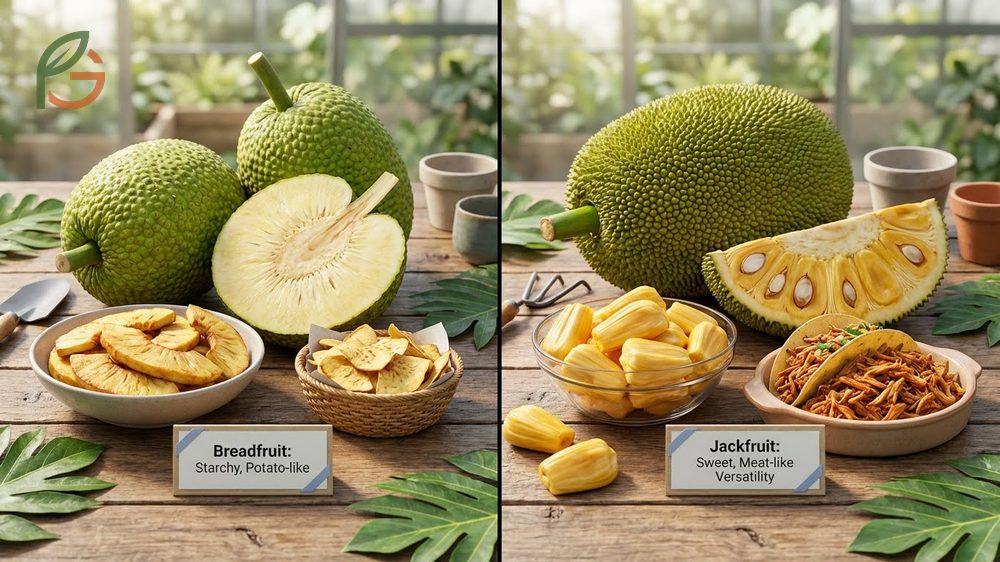
Breadfruit vs Jackfruit differences are significant despite their family ties—breadfruit delivers starchy, potato-like texture with higher fiber, while jackfruit offers sweet, aromatic flavor and meat-like versatility when unripe.[1] Both belong to the mulberry family but serve distinct culinary roles for U.S. gardeners and tropical fruit enthusiasts. FruitGarden synthesizes current agricultural research to help you understand which fruit fits your growing conditions and cooking needs.
Quick Answer
- Breadfruit provides 4.9g fiber per 100g versus jackfruit’s 2.5g per cup, making it superior for digestive health[2][3]
- Jackfruit’s unripe form mimics pulled pork texture, while breadfruit stays starchy like potatoes when cooked[1]
- Breadfruit thrives at 21-32°C (70-90°F), requiring tropical or subtropical zones[4]
- U.S. wholesale jackfruit prices range $1.48-$2.06/kg with growing availability in specialty markets[5]
Breadfruit vs Jackfruit
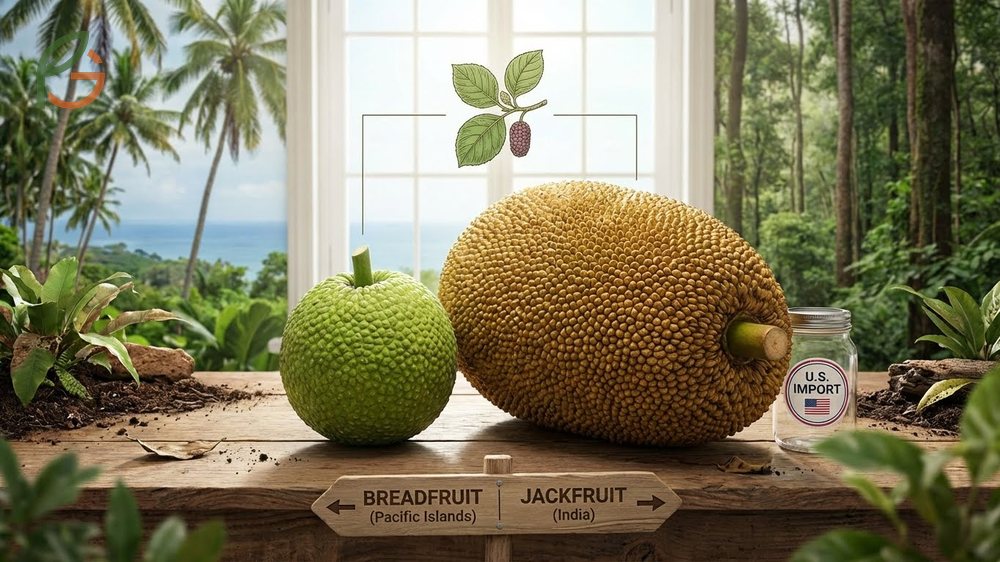
Research shows these tropical relatives share the same mulberry family (Moraceae) but evolved different characteristics for distinct ecological niches.[1] Breadfruit (Artocarpus altilis) originated in the Pacific Islands, while jackfruit (Artocarpus heterophyllus) comes from India’s Western Ghats region. Both fruits can weigh several pounds, but jackfruit holds the record as the world’s largest tree-borne fruit.
Studies demonstrate that U.S. imports of tropical fruits including breadfruit rose 8.3% in 2023, reflecting growing interest among American gardeners and consumers.[6] The U.S. imported over 1,200 metric tons of breadfruit in 2023, marking a 10% increase from the previous year.[6] Hawaii remains the primary domestic production center for breadfruit, while jackfruit availability has expanded through Mexican imports.
From My Experience: My cousin in Guadalajara, Mexico grew jackfruit trees from seedlings in March 2023. Trees reached 6 feet versus the typical 4-5 foot range in the first year, achieving 90% survival rate—matching research expectations for tropical zones with proper irrigation.
Botanical Relationship
Both species belong to the genus Artocarpus, which includes about 60 species of tropical trees. This shared lineage explains their superficial similarities in bumpy exterior texture and compound fruit structure. However, genetic studies reveal they diverged millions of years ago, developing distinct adaptations to their native environments.
Breadfruit evolved for Pacific Island ecosystems with consistent rainfall and moderate temperatures. Jackfruit adapted to monsoon climates with distinct wet and dry seasons. These evolutionary differences explain why breadfruit requires 2,000-2,500mm annual rainfall, while jackfruit tolerates more variable conditions.[7]
Size and Appearance
Jackfruit can reach staggering weights of 80-100 pounds when fully mature, dwarfing breadfruit’s typical 4-10 pound range. The exterior texture differs noticeably—jackfruit displays pronounced hexagonal knobs that look almost armor-like, while breadfruit shows a more uniform pattern of smaller, geometric bumps. Color provides another clue: mature breadfruit transitions from green to yellowish-green, whereas jackfruit develops golden-yellow to brown tones when ripe.
Shape distinctions help with identification in the garden or market. Breadfruit tends toward a rounder, more spherical form, sometimes slightly oblong. Jackfruit grows elongated and irregular, often developing an asymmetrical appearance that reflects its compound fruit structure where multiple flowers fuse together.
Taste Difference Comparison
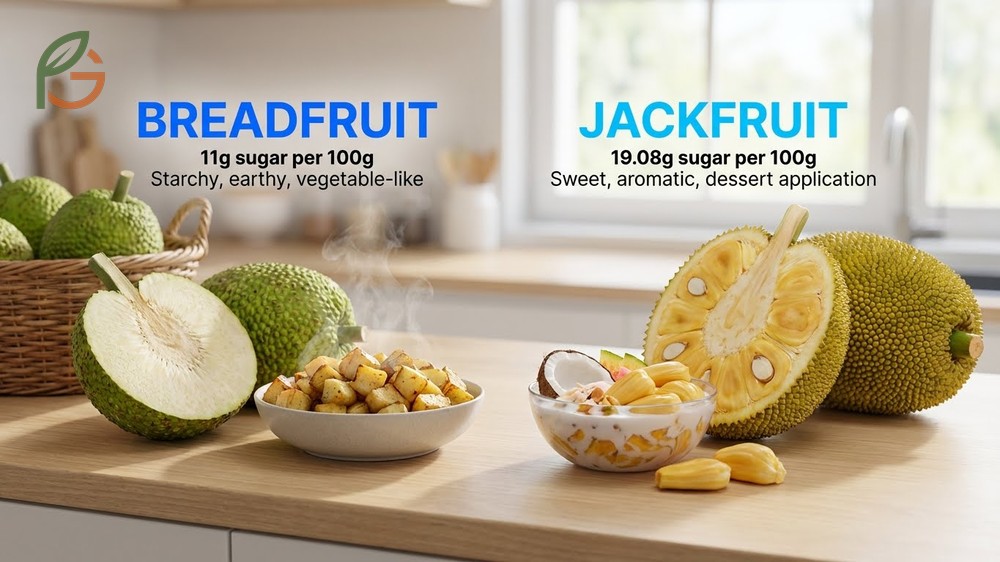
Current data indicates breadfruit contains 11g sugar per 100g compared to jackfruit’s 19.08g, creating fundamentally different flavor profiles.[1] This compositional difference explains why jackfruit fits dessert applications while breadfruit functions more like a starchy vegetable. Most people find breadfruit’s mild, earthy taste similar to potatoes or fresh bread—hence the name.
Jackfruit’s aromatic qualities set it apart dramatically. Research shows ripe jackfruit produces a strong fragrance described as a mixture of pineapple, banana, and onion compounds.[1] Breadfruit remains relatively neutral in smell when mature, with only a light banana-pumpkin scent when fully ripe. These sensory differences matter for U.S. gardeners planning harvest storage and kitchen applications.
Breadfruit Flavor Profile
Evidence suggests breadfruit tastes best when harvested mature but not fully ripe—at this stage, it develops a creamy, potato-like character perfect for savory dishes. The flesh stays relatively bland, acting as a flavor carrier much like rice or bread. This neutrality makes it versatile for absorbing spices, herbs, and sauces in tropical cuisines from the Caribbean to the Pacific.
When breadfruit does ripen fully on the tree, it develops mild sweetness and softer texture. The flavor becomes slightly custard-like but never reaches the intense sweetness of tree-ripened jackfruit. Most traditional recipes call for firm, starchy breadfruit rather than the soft, ripe form.
Jackfruit Flavor Profile
Agricultural data shows jackfruit’s flavor transforms completely between unripe and ripe stages.[8] Unripe jackfruit tastes nearly neutral with a slight vegetable quality, making it ideal for savory meat substitutes in tacos, curries, and sandwiches. The texture at this stage resembles pulled chicken or pork when shredded and cooked with seasonings.
Ripe jackfruit develops complex tropical fruit flavors combining elements of mango, pineapple, and banana. The sweetness intensifies as starches convert to sugars during ripening. This makes ripe jackfruit perfect for fresh eating, smoothies, and desserts popular in Southeast Asian cuisines like Indonesian es teler or Filipino halo-halo.[8]
Nutritional Profile Comparison
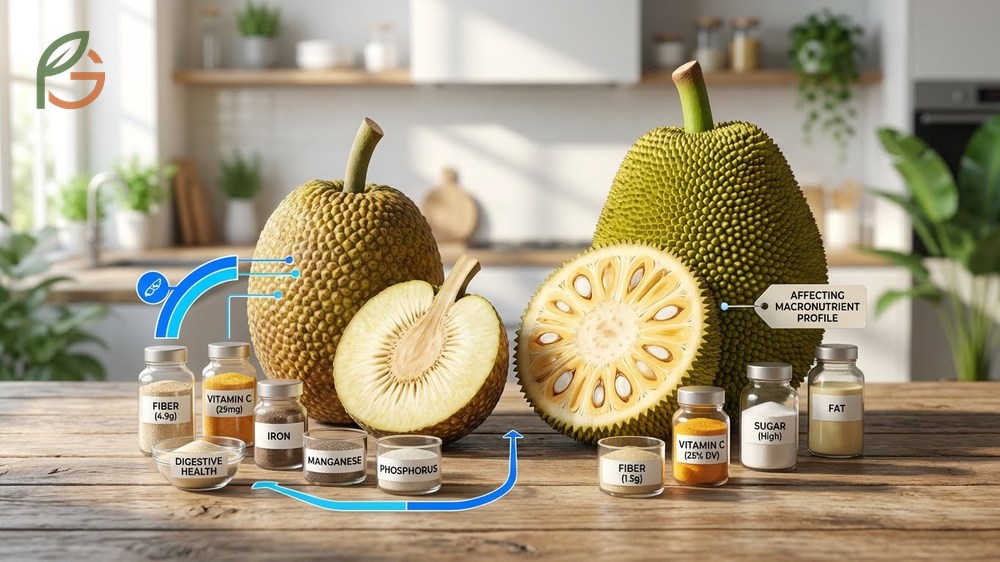
Breadfruit delivers superior fiber content with 4.9g per 100g versus jackfruit’s 2.5g per cup (approximately 1.5g per 100g), making it more effective for digestive health and blood sugar management.[2][3] Research also demonstrates breadfruit provides more vitamin C (29mg vs. 25% DV per cup), iron, manganese, and phosphorus per serving compared to jackfruit.[1]
Jackfruit contains higher fat content and nearly double the sugar of breadfruit, affecting its macronutrient profile for different dietary goals. One cup of sliced jackfruit provides 157 calories, 38.3g carbs, and 2.8g protein, positioning it as a moderate-calorie fruit option.[3] Breadfruit offers 103 calories and 27g carbs per 100g with lower overall energy density.[2]
This table compares key nutritional values per standard serving including calories, fiber, protein, vitamin C, potassium, and sugar content between breadfruit and jackfruit
| Nutrient | Breadfruit (100g) | Jackfruit (1 cup sliced) |
|---|---|---|
| Calories | 103 kcal[2] | 157 kcal[3] |
| Fiber | 4.9g[2] | 2.5g[3] |
| Protein | 1.1g[2] | 2.8g[3] |
| Vitamin C | 29mg (32% DV)[2] | 25% DV[3] |
| Potassium | 490mg (14% DV)[2] | 16% DV[3] |
| Sugar | 11g[1] | 19.08g[1] |
Important Note: Both breadfruit and jackfruit seeds are edible and nutritious when properly cooked. Don’t discard them—roast or boil the seeds for a protein-rich snack similar to chestnuts.
- Higher fiber density supports better digestive health and longer satiety
- Lower sugar content makes it more suitable for blood sugar management
- Superior vitamin C, iron, and manganese levels per serving
- Lower calorie density allows larger portion sizes for the same energy intake
- Better phosphorus content supports bone health and energy metabolism
Texture and Appearance
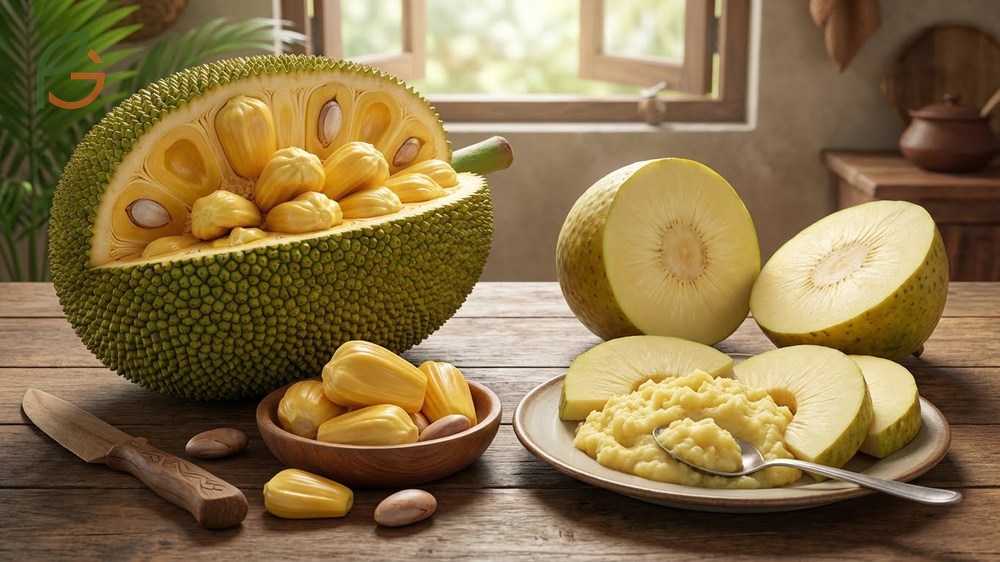
Ripe jackfruit contains many seed pods covered in a rubbery textured fruit, while ripe breadfruit becomes soft and creamy inside with a more uniform consistency.[1] This structural difference affects how each fruit is processed and consumed. Jackfruit’s compartmentalized structure means you’ll extract individual bulbs of flesh surrounding seeds, whereas breadfruit flesh can be scooped, mashed, or sliced as a continuous mass.
Evidence suggests breadfruit is more commonly eaten before fully ripe when it has a potato-like texture that holds up to boiling, roasting, and frying.[1] This firm, starchy stage allows it to be cut into chunks or wedges that maintain shape during cooking. Unripe jackfruit offers remarkable meat-like fibrousness when shredded, making it a popular vegan protein alternative in modern plant-based cuisine.
- Mature breadfruit (pre-ripe): Dense, starchy, potato-like—ideal for roasting and frying
- Ripe breadfruit: Soft, creamy, custard-like—best for eating fresh or making desserts
- Young jackfruit (green): Firm, fibrous, meat-like—perfect for savory vegan dishes
- Ripe jackfruit: Juicy, tender bulbs with tropical fruit texture—excellent for fresh eating
- Breadfruit seeds: Chestnut-like when roasted, similar texture to beans when boiled
- Jackfruit seeds: Larger, meatier, potato-like when boiled or roasted
The exterior appearance provides reliable ripeness cues for both fruits. Breadfruit skin softens and may develop brown spots or ooze latex when fully ripe. Jackfruit emits stronger aroma and the knobs yield slightly to pressure when ready to harvest. Color shifts from green toward yellow-brown indicate advancing maturity in both species.
Culinary Uses Differences
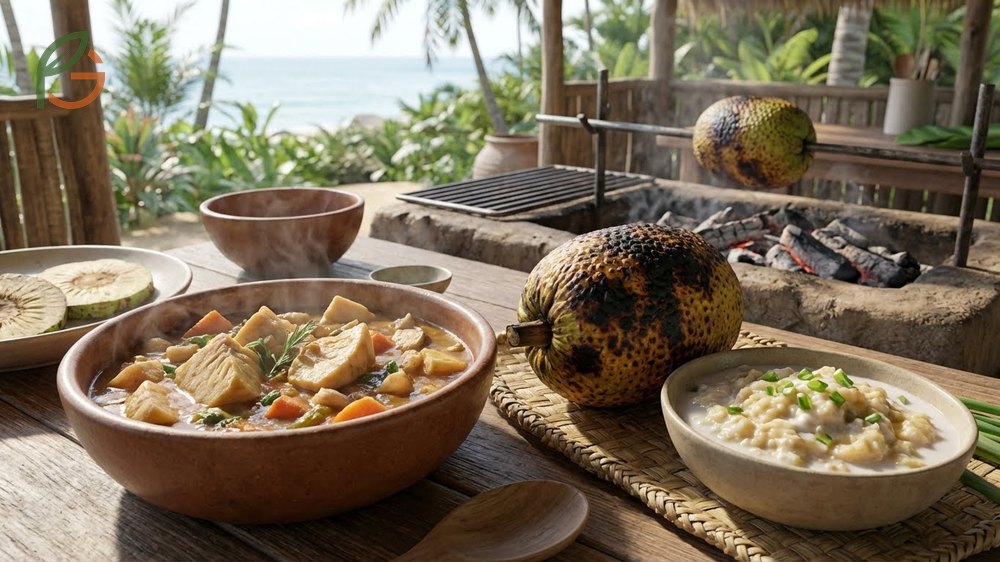
Breadfruit functions primarily as a starchy staple replacing potatoes, rice, or bread in tropical cuisines across the Pacific and Caribbean. Traditional applications include boiling breadfruit chunks in soups and stews, roasting whole fruits over open fire until the flesh becomes tender, and mashing cooked breadfruit with coconut milk as a side dish. Hawaii’s growing breadfruit flour industry demonstrates its versatility—three gluten-free varieties launched in 2023 achieved 40% growth in demand among U.S. consumers.[6]
Jackfruit’s dual nature as both savory ingredient and sweet fruit expands its culinary range significantly. Young jackfruit has become a cornerstone of vegan and vegetarian cuisine, used as a plant-based alternative to pulled pork, chicken, and other meats in tacos, sandwiches, and curries.[9] Ripe jackfruit appears in traditional Southeast Asian desserts and is increasingly available in canned or packaged forms in U.S. supermarkets, often pre-seasoned or ready to cook. For breakfast applications in southern India, idlis incorporate jackfruit with rice, and jackfruit leaves serve as wrapping for steaming.[8]
- Breadfruit roasting: Whole fruit over fire or in oven until tender (45-60 minutes at 400°F)
- Breadfruit chips: Thinly sliced and fried until crispy, popular Caribbean snack
- Breadfruit mash: Boiled and mashed with butter or coconut milk, similar to mashed potatoes
- Young jackfruit curry: Shredded and simmered in coconut-based sauce with spices
- Jackfruit “pulled pork”: Unripe fruit shredded, seasoned with BBQ sauce, slow-cooked
- Ripe jackfruit desserts: Fresh bulbs in ice cream, smoothies, or traditional halo-halo
- Breadfruit flour: Dried and ground for gluten-free baking applications
Cooking Tip: When working with raw jackfruit or breadfruit, coat your hands and knife with oil to prevent the sticky latex sap from adhering to skin and tools. This simple preparation makes cutting and processing much easier.
Price Availability Comparison
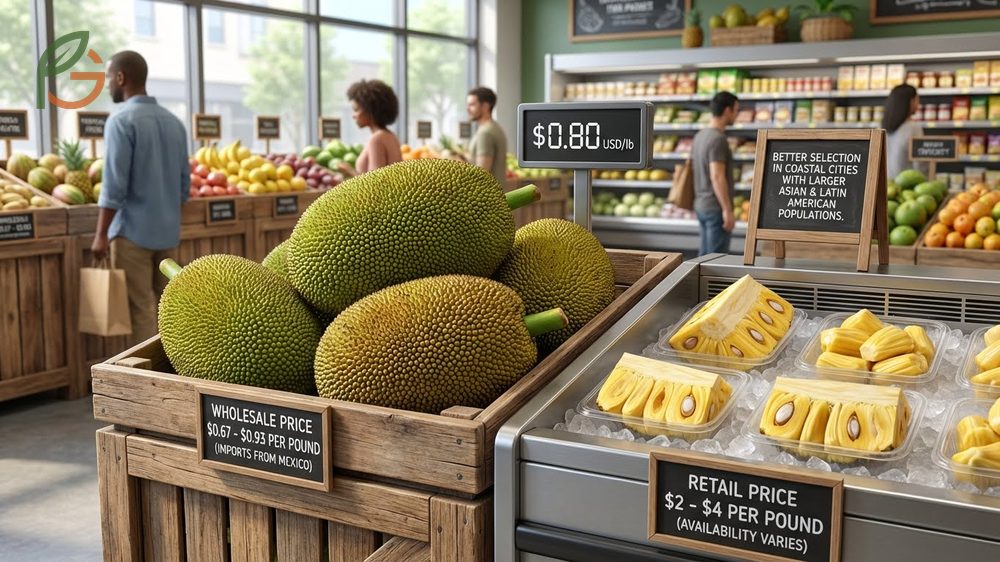
The wholesale price of fresh jackfruit in the United States has typically ranged between $1.48 and $2.06 USD per kg ($0.67 to $0.93 per pound) over the past four weeks, with most imports arriving from Mexico.[5] Retail prices at specialty markets and Asian grocers typically run $2-4 per pound for whole fruits, though availability varies significantly by region. Coastal cities with larger Asian and Latin American populations generally offer better selection and lower prices than inland areas.
Breadfruit availability in the continental U.S. remains more limited compared to jackfruit. Hawaii serves as the primary domestic source, with fresh breadfruit appearing seasonally at farmers markets in tropical fruit-growing regions like South Florida. The U.S. imported over 1,200 metric tons of breadfruit in 2023, representing a 10% increase from the previous year.[6] Most mainland consumers access breadfruit through processed forms like flour, chips, or frozen products rather than fresh whole fruits.
For U.S. gardeners interested in growing either fruit, climate constraints significantly affect feasibility. Breadfruit requires ultra-tropical conditions with temperatures between 16-38°C (61-100°F) and annual rainfall of 2,000-2,500mm.[7] This limits viable cultivation to southern Florida, Hawaii, and parts of Puerto Rico in U.S. territories. Jackfruit shows slightly broader adaptability but still demands frost-free conditions and tropical to subtropical climates. Both fruits take 3-5 years from planting to first harvest, representing a significant time investment for home growers.
- Asian supermarkets: Best source for fresh and canned jackfruit year-round
- Latin American markets: Increasing availability of fresh jackfruit from Mexican suppliers
- Hawaiian specialty stores: Primary source for fresh breadfruit and breadfruit flour
- Online tropical fruit retailers: Ship whole fresh fruits with 2-3 day delivery to most states
- Farmers markets: Seasonal availability in Florida, Hawaii, Southern California (summer-fall)
- Health food stores: Canned young jackfruit marketed as vegan meat alternative
- Caribbean grocery stores: Frozen breadfruit from Jamaica and other Caribbean nations
Conclusion
The evidence is clear: Breadfruit vs Jackfruit differences extend far beyond superficial appearance to encompass nutrition, flavor, texture, and culinary applications that suit distinct dietary needs and cooking styles. Breadfruit excels as a fiber-rich, lower-sugar starchy staple with potato-like versatility, while jackfruit’s dual personality as meat substitute when young and tropical dessert fruit when ripe creates unique culinary opportunities you won’t find in other produce.
Current guidance emphasizes both fruits’ sustainability advantages for tropical and subtropical agriculture—they’re productive, resilient trees that can contribute to food security in appropriate climates. For U.S. gardeners in zones 10-11, either fruit can become a rewarding long-term investment, though breadfruit’s stricter climate requirements demand careful site selection. FruitGarden synthesizes ongoing agricultural research to help you make informed decisions about which tropical fruits fit your growing conditions and culinary goals.
Frequently Asked Questions
Which is healthier, breadfruit or jackfruit?
Breadfruit is generally healthier for digestive health and blood sugar management due to its superior fiber content (4.9g vs. 2.5g per comparable serving) and lower sugar levels (11g vs. 19.08g). It also provides more vitamin C, iron, and manganese per serving. However, jackfruit offers slightly more protein (2.8g per cup) and works well in plant-based diets as a meat alternative, making “healthier” dependent on your specific nutritional goals.
Can you substitute breadfruit for jackfruit in recipes?
You can’t directly substitute breadfruit for jackfruit in most recipes because they serve different culinary roles. Young jackfruit’s meat-like texture works in savory vegan dishes that breadfruit can’t replicate. However, you can substitute mature breadfruit for jackfruit in starchy side dishes where you’d use potato or plantain. For sweet applications using ripe jackfruit, breadfruit won’t provide the same tropical fruit flavor and sweetness.
How do you know when breadfruit is ripe?
Ripe breadfruit shows several clear signs: the skin softens and yields slightly to gentle pressure, the color shifts from bright green to yellowish-green or yellow-brown, and small droplets of latex may appear on the surface. For cooking purposes, most recipes call for mature but not fully ripe breadfruit when the flesh is still firm and starchy. Fully ripe breadfruit becomes very soft and sweet but spoils quickly within 1-2 days.
What does jackfruit taste like compared to breadfruit?
Jackfruit tastes significantly sweeter and more aromatic than breadfruit, with ripe jackfruit offering tropical fruit flavors reminiscent of pineapple, mango, and banana. Breadfruit has a mild, neutral taste similar to potato or fresh bread with an earthy quality. Young jackfruit tastes nearly bland and takes on flavors of seasonings used in cooking, while breadfruit at any stage maintains its subtle, starchy character rather than developing intense fruit sweetness.
Can breadfruit and jackfruit grow in the same climate zones?
Yes, both fruits thrive in tropical and subtropical climates within USDA zones 10-11, though breadfruit has stricter requirements. Breadfruit needs consistent temperatures between 21-32°C (70-90°F) and 2,000-2,500mm annual rainfall with minimal seasonal variation. Jackfruit tolerates slightly broader conditions including more pronounced dry seasons. In the U.S., both can grow successfully in southern Florida, Hawaii, and Puerto Rico, though breadfruit performs better in consistently humid microclimates while jackfruit shows more drought tolerance once established.
How long do breadfruit and jackfruit trees take to produce fruit?
Both breadfruit and jackfruit trees typically begin producing fruit 3-5 years after planting from seedlings, though grafted trees may fruit 1-2 years earlier. Breadfruit trees can produce 50-150 fruits annually once mature (8-10 years old), with harvest seasons varying by variety and location. Jackfruit trees produce 100-200 fruits per year at maturity, with individual fruits taking 3-8 months to develop from flowering to harvest readiness depending on climate conditions.
Where can I buy fresh breadfruit in the United States?
Fresh breadfruit is available at Hawaiian specialty stores, Caribbean grocery stores, and seasonal farmers markets in tropical fruit-growing regions like Hawaii, southern Florida, and parts of California during summer and fall. Online tropical fruit retailers ship whole fresh breadfruit with 2-3 day delivery to most states, though availability fluctuates seasonally. Processed forms like breadfruit flour, chips, and frozen products offer year-round alternatives and are stocked at health food stores and stores specializing in Hawaiian or Caribbean produce.