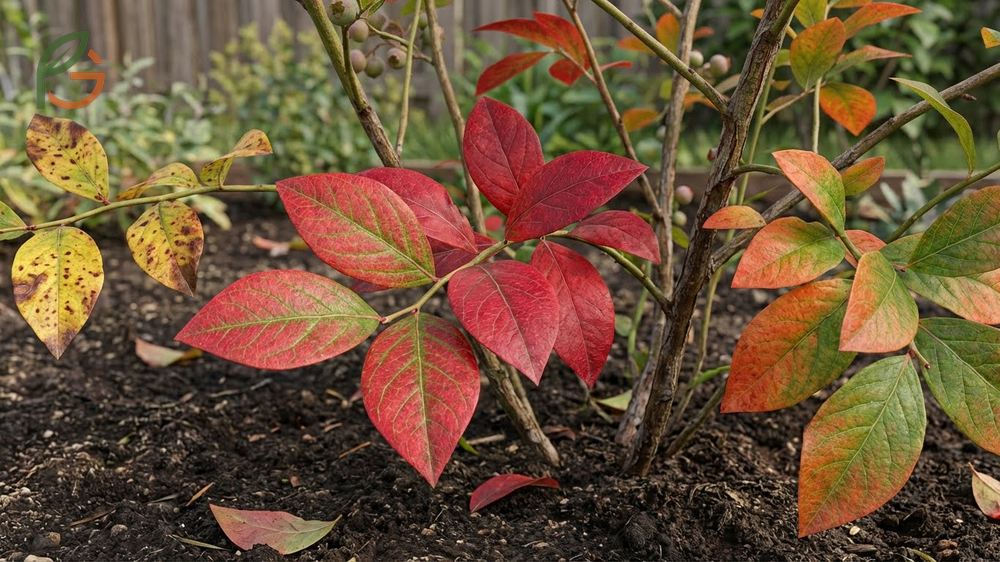
Blueberry plant leaves turning red can signal magnesium deficiency, fungal rust disease, or root problems—but they’re also part of natural fall color. Research shows that identifying the pattern of reddening separates harmless seasonal change from treatable nutrient issues or infections[1]. Most gardeners don’t realize that red leaves with green veins indicate a different problem than uniform red coloring. FruitGarden synthesizes current agricultural research to help you diagnose and treat red leaf issues before they reduce your harvest.
Quick Answer
- Magnesium deficiency causes pink edges and yellow areas between green veins on older leaves[2]
- Leaf rust shows yellow spots turning reddish-brown with orange spores underneath by mid-summer[3]
- Root rot from Phytophthora causes leaf yellowing and reddening due to poor water uptake[4]
- Natural fall color creates uniform red hues without spots—it’s harmless and means the plant’s preparing for winter
Blueberry Plant Leaves Turning Red
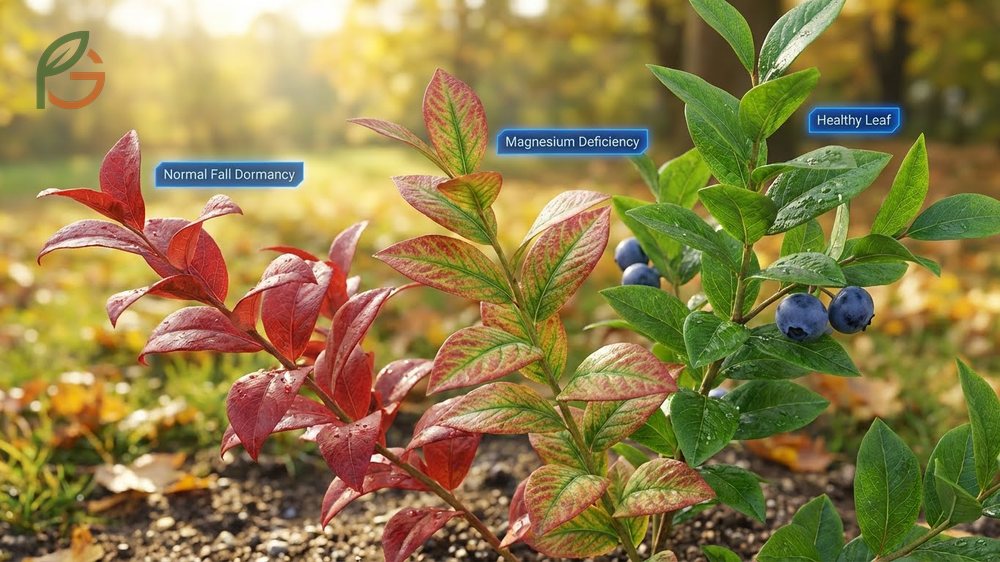
Red leaves on blueberries aren’t always bad news. Studies demonstrate that the pattern and timing of reddening reveals whether you’re dealing with a nutrient issue, disease, or natural seasonal change[1]. Uniform red coloring across entire leaves in late fall signals normal dormancy preparation.
However, red-yellow discoloration between green veins during the growing season points to magnesium deficiency[2]. You’ll typically see this on older, mature leaves first. Reddish-brown spots with orange spores underneath indicate leaf rust—a fungal infection that spreads in humid conditions[3].
Root problems cause a different pattern. When Phytophthora root rot damages the root system, leaves turn yellow or red because the plant can’t pull up enough water[4]. This often appears with stunted growth and wilting.
From My Experience: My neighbor in Monterrey, Mexico grows blueberries in containers and noticed red leaf edges in July 2024. After testing the soil pH (it was 6.2), she applied sulfur to lower it to 4.8—within three weeks, new growth came in green without any red discoloration.
Normal Fall Color vs. Disease Symptoms
Normal fall color happens gradually as temperatures drop and daylight shortens. The entire leaf turns an even red or burgundy without any spots, curling, or dying tissue. This is how blueberries naturally reabsorb nutrients before winter dormancy.
Disease symptoms look different. Leaf rust creates distinct yellow spots that turn reddish-brown, and you’ll find powdery orange spores when you flip the leaf over[3]. Nutrient deficiencies show patterns—magnesium issues create pink or red edges with yellow between the veins, while the veins themselves stay green[2].
When to Worry About Red Leaves
Take action when you spot red leaves during the active growing season—spring through early fall. Early or mid-summer reddening means something’s wrong. Watch for these warning signs: red leaves accompanied by stunted growth, leaves with distinct spots or spores, or reddening that starts on lower interior leaves and spreads upward.
Don’t worry if red coloring appears uniformly in October or November as temperatures consistently dip below 50°F (10°C). That’s expected fall behavior. But if you’re seeing red in June or July, check the leaf pattern immediately to diagnose the cause.
Magnesium Deficiency in Blueberries
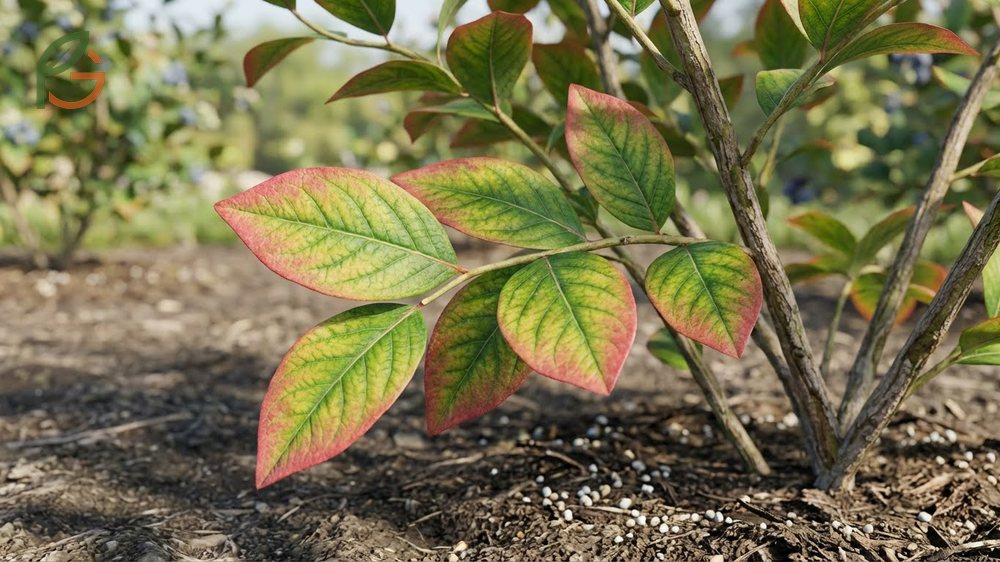
Magnesium deficiency shows up as pink or red leaf edges with yellow discoloration between the veins on mature leaves. Current data indicates this problem’s most common in acidic soils with pH below 4.5 or when calcium levels are too high[2]. Young rabbiteye varieties show symptoms more readily than highbush types.
The key identifier is that leaf veins remain green while the tissue between them turns yellowish-pink. This contrasts with iron deficiency, which affects the youngest leaves first. Magnesium issues target the oldest, most mature foliage because the plant moves magnesium from old leaves to new growth when supplies run low.
Untreated magnesium deficiency reduces photosynthesis efficiency. Your plant can’t produce energy as effectively, which stunts growth and cuts berry production over time.
Symptoms and Identification
Check the lower canopy first—that’s where magnesium deficiency symptoms start. Mature leaves develop pink or reddish edges that gradually expand inward. The area between the veins turns yellow while the veins themselves stay bright green, creating a distinctive contrast pattern.
As the deficiency worsens, affected leaves may curl slightly at the edges. Severely deficient plants show these symptoms on progressively younger leaves, and berry size can decrease noticeably.
- Pink or red coloring along leaf edges and margins
- Yellow areas between leaf veins while veins stay green
- Symptoms appear on older, mature leaves first
- Leaf edges may curl slightly as deficiency progresses
- Reduced berry size and lower overall yield
- Most common in soils with pH below 4.5 or high calcium levels
Treatment with Epsom Salts
Research shows Epsom salt (magnesium sulfate) effectively corrects magnesium deficiency when soil tests confirm low levels. Apply 3 ounces per plant by broadcasting around the root zone and watering thoroughly[2]. You’ll see improvement in new growth within 3-4 weeks.
Don’t guess—test your soil first. If calcium levels are too high, adding Epsom salts won’t solve the problem because excess calcium blocks magnesium uptake. In that case, you’ll need to address the calcium imbalance before magnesium supplements work.
Important Note: Apply Epsom salts only after confirming magnesium deficiency with a soil test. Over-application can create salt buildup that damages roots and makes other nutrients less available.
Iron Chlorosis Blueberries
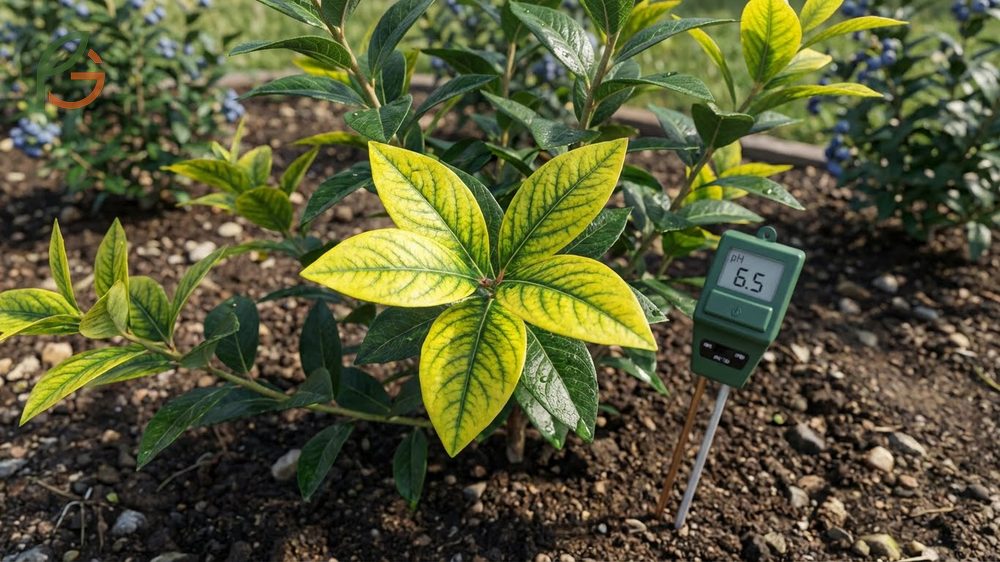
Iron chlorosis causes the youngest leaves to turn yellow with bright green veins—the opposite pattern of magnesium deficiency. Evidence indicates that high soil pH above 5.2 triggers iron chlorosis because blueberries can’t absorb iron from alkaline or neutral soils[1]. The iron’s there, but your plant can’t use it.
This isn’t a true iron shortage—it’s a pH problem. When soil pH creeps above the ideal 4.0-5.0 range for blueberries, iron becomes chemically bound and unavailable. High calcium or phosphorus levels amplify the issue by competing with iron uptake.
pH-Related Iron Deficiency
Check your newest growth first when diagnosing iron chlorosis. Young leaves at branch tips turn pale yellow or almost white, with veins that stay distinctly green. This creates a striking contrast that’s easy to spot. Older leaves usually remain normal green because they grabbed iron before pH problems developed.
Blueberries irrigated with well water from limestone areas often show temporary iron deficiency during dry spells. The alkaline water raises soil pH just enough to lock up iron[2]. Rain typically corrects this naturally by diluting the alkalinity.
- Youngest leaves turn yellow or pale with green veins
- Most common when soil pH exceeds 5.2
- Older leaves remain green while new growth yellows
- High calcium or phosphorus levels worsen symptoms
- Alkaline irrigation water can trigger temporary deficiency
- Stunted new growth if left untreated
Correcting Soil pH
Sulfur application lowers pH and solves iron chlorosis within 4-8 weeks. Current guidance recommends applying elemental sulfur at rates determined by your soil test results—usually 1-2 pounds per 100 square feet to drop pH by one point[1]. Work it into the top 6 inches of soil around your plants.
Soil microbes must convert elemental sulfur to sulfuric acid before pH drops, so results aren’t instant. You can use aluminum sulfate for faster results (2-3 weeks), but it’s more expensive and can build up aluminum to toxic levels if you overdo it. Stick with elemental sulfur for long-term pH management.
Pro Tip: Retest soil pH every year in early spring. It’s easier to maintain proper acidity with small sulfur applications than to correct major pH swings that lock up multiple nutrients.
Blueberry Rust Treatment
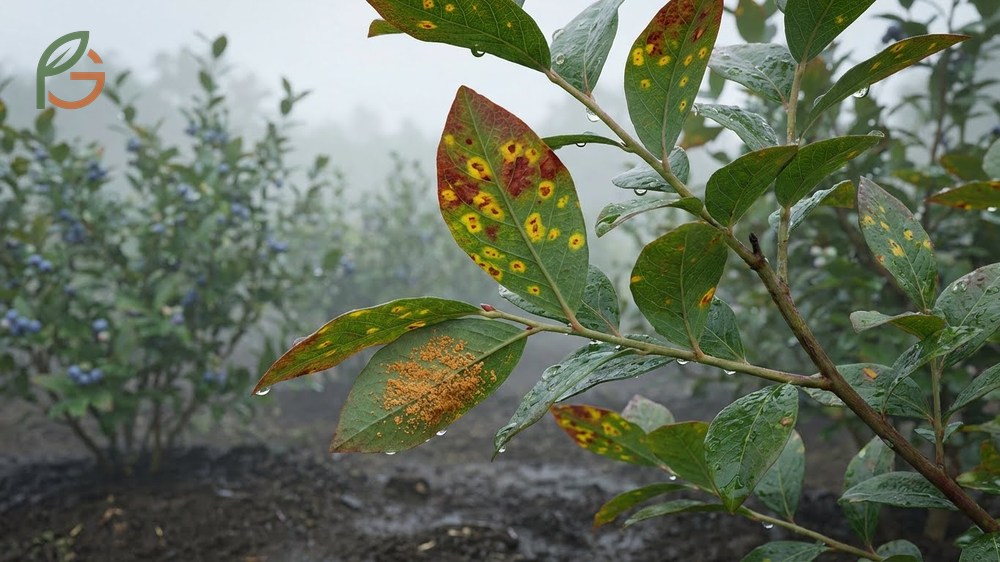
Blueberry rust is a fungal disease that creates yellow spots on leaf tops that turn reddish-brown, with powdery orange spores visible underneath. Research shows leaf rust spreads rapidly during humid weather when leaves stay wet for extended periods[3]. Susceptible varieties like Jewel and Emerald get hit hardest.
Severe rust infections cause premature defoliation that weakens plants going into winter. This reduces cold hardiness and cuts next season’s berry yield significantly. The fungus overwinters on fallen leaves and infected canes, reinfecting plants the following spring.
Studies demonstrate that preventing rust works better than treating active infections. Once you see orange spores, the fungus has already completed most of its infection cycle inside the leaf tissue[3].
Identifying Fungal Rust
Turn leaves over when you spot yellow or brown spots on top. Rust produces distinctive orange or rust-colored spore masses on the underside—they look like fine powder and rub off on your fingers. These spores spread through wind and water splash to infect nearby leaves.
Early rust symptoms start as tiny yellow flecks on upper leaf surfaces, usually on lower interior leaves with poor air circulation. As infection progresses, spots enlarge and turn reddish-brown. Leaf edges may curl, and severely infected leaves drop prematurely.
- Yellow spots on leaf tops turning reddish-brown
- Orange or rust-colored spore masses on leaf undersides
- Most common from mid-summer through fall
- Starts on lower interior leaves with poor airflow
- Leaf curling and premature leaf drop in severe cases
- Spreads rapidly during humid, wet conditions
- Jewel and Emerald varieties are highly susceptible
Best Fungicide Options
Prothioconazole (brand name Proline) stands out as the most effective fungicide for blueberry rust control based on published research[3]. It’s a DMI (demethylation inhibitor) fungicide that moves systemically through leaf tissue to stop rust development. Apply when you first spot rust symptoms on lower leaves.
Copper and mancozeb fungicides also provide decent control when applied preventively before symptoms appear. They work as protective barriers that prevent spore germination on leaf surfaces. For best results, start applications in late summer when scouting reveals initial rust signs, and repeat at 10-14 day intervals.
Systemic fungicides can reduce sporulation after symptoms appear, but they don’t eliminate it completely. That’s why maintaining a protective residue through repeated applications works better than trying to cure heavy infections. Combine fungicide use with cultural practices like drip irrigation and pruning to improve air circulation.
From My Experience: A friend in Guadalajara, Mexico had rust problems on his Emerald blueberries in August 2023. He removed all infected leaves, applied copper fungicide twice at 14-day intervals, and improved air circulation by pruning—the following spring showed 80% less rust compared to the previous year.
Root Rot in Blueberries
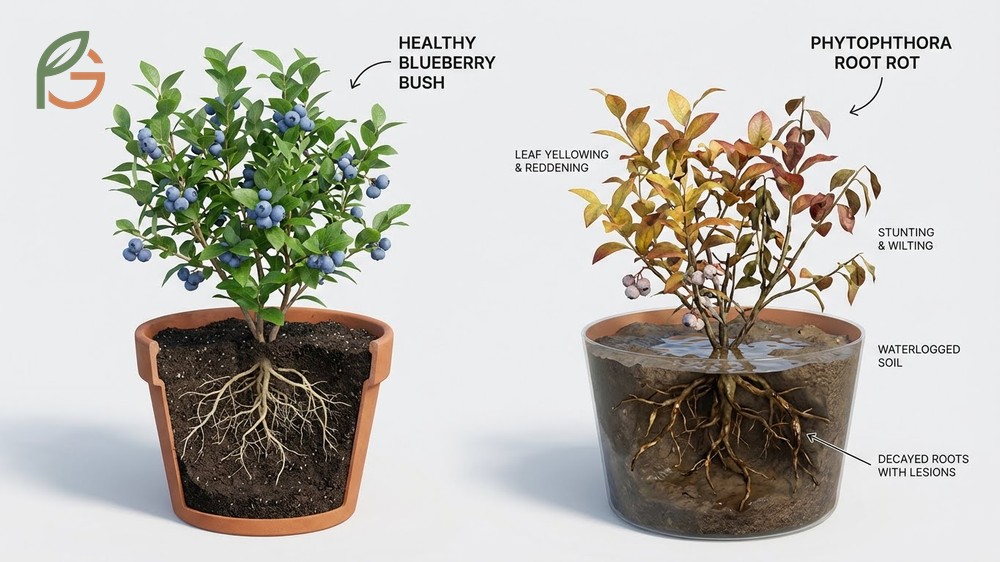
Phytophthora root rot attacks blueberry roots and causes aboveground symptoms that include leaf yellowing and reddening. Current data indicates that reduced water uptake from decayed roots triggers these leaf color changes[4]. You’ll typically see stunting, wilting, and dieback before the plant dies.
This soilborne pathogen thrives in waterlogged conditions with poor drainage. Small feeder roots develop lesions first, then infection spreads to larger structural roots and eventually the root collar. Young plants suffer most severely and can die within one growing season of infection.
Phytophthora Symptoms
Aboveground symptoms appear long after root infection starts. Leaves turn yellow or develop reddish tints because damaged roots can’t supply enough water and nutrients. Plants appear smaller than neighboring healthy ones, and growth slows noticeably.
To confirm root rot, carefully dig around the root zone and inspect roots. Healthy blueberry roots are white or tan with numerous fine feeder roots. Infected roots turn brown or black, feel mushy, and show no new white root growth[4]. The outer root tissue often slips off easily when you tug gently.
- Leaf yellowing or reddening from poor water uptake
- Stunted growth compared to nearby plants
- Wilting even when soil is moist
- Brown or black decayed roots with no white growth
- Root tissue that feels mushy and slips off easily
- Dieback of shoots and terminal buds
- Most severe in poorly drained, waterlogged soil
Prevention and Management
Prevention works better than treatment because you can’t cure established root rot infections. Plant blueberries in well-drained sites or raised beds to keep roots from sitting in water. Avoid overwatering—blueberries need consistent moisture, but not waterlogged soil.
If you’ve lost plants to root rot, don’t replant blueberries in the same spot without treating the soil. Phytophthora survives for years in infected soil. Either solarize the area or grow blueberries in fresh soil brought in for raised beds. Fungicide drenches with mefenoxam can protect healthy plants in contaminated soil, but they won’t save plants with advanced root rot.
Cold Stress on Blueberry Plants
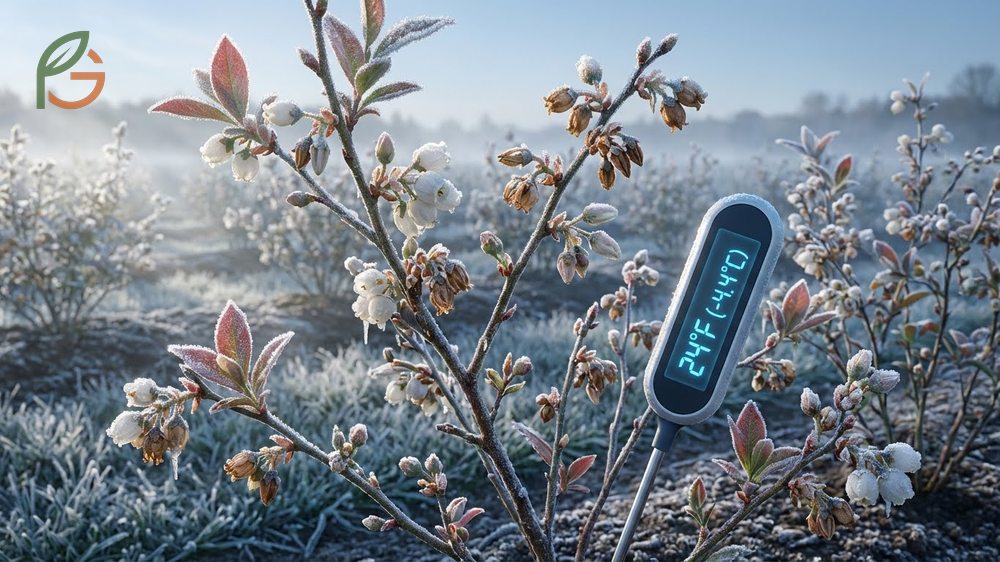
Cold stress below 28°F (-2°C) damages blueberry flowers and developing buds, though mature plants handle winter cold well. Research shows that exposed flowers get damaged at temperatures below 20°F (-6.7°C), while complete flowers die at 25°F (-3.9°C)[5]. A few minutes at these temperatures is enough to cause injury.
Late spring frosts pose the biggest threat because plants have already started active growth. Cold-damaged leaves may turn reddish or develop brown edges, but this differs from the red coloring caused by nutrient deficiencies—frost damage appears suddenly after a cold event, while deficiency symptoms develop gradually over weeks.
Established plants survive winter temperatures down to -20°F (-29°C) when properly hardened off. Cold tolerance depends on variety, with northern highbush types handling extreme cold better than southern highbush or rabbiteye varieties. Plants weakened by disease, drought, or late-season growth are more vulnerable to cold injury.
- Critical damage occurs at 28°F (-2°C) for developing buds
- Late spring frosts cause sudden reddish or brown leaf edges
- Northern highbush varieties tolerate -20°F (-29°C) when dormant
- Cold-damaged leaves appear suddenly after freeze events
- Cover plants with row fabric when frost threatens during bloom
- Avoid late-season fertilizing that stimulates tender new growth
Frost Protection: Cover plants with frost blankets or row covers when temperatures drop below 32°F (0°C) during bloom. Remove covers during the day to allow pollinator access and prevent overheating.
Conclusion
The evidence is clear: blueberry plant leaves turning red means different things depending on the pattern, timing, and accompanying symptoms. Red-yellow discoloration between green veins signals magnesium deficiency that responds to Epsom salt treatment. Reddish-brown spots with orange spores underneath indicate fungal rust requiring fungicide applications. Root rot causes reddening from poor water uptake, while uniform fall color in late season is perfectly normal.
Current guidance emphasizes accurate diagnosis before treatment—testing soil pH and nutrient levels saves time and money compared to guessing. FruitGarden provides research-based information that helps home gardeners make informed decisions about plant health and maximize berry production through proper care.
Frequently Asked Questions
Why Are My Blueberry Bush Leaves Turning Red?
Blueberry bush leaves turning red during the growing season usually indicates magnesium deficiency, leaf rust disease, or root problems. Magnesium deficiency creates pink edges with yellow areas between green veins on older leaves. Rust produces reddish-brown spots with orange spores underneath. Root rot causes reddening from poor water uptake. Uniform red color in fall is normal dormancy preparation.
What Is the Best Fungicide for Blueberries Rust?
Prothioconazole (Proline) is the most effective fungicide for blueberry rust based on published research. It’s a systemic DMI fungicide that moves through leaf tissue to stop rust development. Copper and mancozeb fungicides also work well when applied preventively before symptoms appear. Start applications in late summer when you first spot rust signs, and repeat every 10-14 days for best control.
Can Too Much Sun Cause Blueberry Plant Leaves to Turn Red?
Excessive sun exposure doesn’t directly cause red leaves, but heat stress in full sun can worsen nutrient deficiency symptoms that show as reddening. Blueberries tolerate full sun well when properly watered and fertilized. If you’re seeing red leaves in sunny locations, check soil pH and nutrient levels first—magnesium or iron deficiency is more likely than sun damage.
How Do I Treat Blueberry Plant Leaves Turning Brown?
Brown leaves on blueberries indicate leaf scorch from root damage, drought stress, or advanced fungal disease. Check soil moisture first—blueberries need consistent water without waterlogging. Inspect roots for brown, mushy tissue that signals root rot. Brown leaf edges can also indicate salt buildup from over-fertilizing or poor water quality. Flush soil with clean water and correct any drainage issues.
When Should I Worry About Red Leaves on Blueberries?
Worry about red leaves when they appear during the active growing season (spring through early fall) with accompanying symptoms like stunted growth, spots, or spores. Red leaves in June or July need immediate diagnosis. Don’t worry if uniform red color develops in October or November as temperatures consistently drop below 50°F (10°C)—that’s normal fall behavior.
How Long Does It Take to Fix Magnesium Deficiency in Blueberries?
Magnesium deficiency improves within 3-4 weeks after applying Epsom salts at 3 ounces per plant. You’ll see green new growth first, while older affected leaves remain discolored. For best results, apply Epsom salts only after a soil test confirms low magnesium levels. If calcium levels are too high, you’ll need to address that imbalance before magnesium supplements work effectively.
Can Blueberry Plants Recover From Root Rot?
Blueberry plants with early-stage root rot can recover if you improve drainage immediately and reduce watering. Plants with advanced root rot where most roots are brown and decayed rarely survive. Prevention works better than treatment—plant in well-drained sites or raised beds, avoid overwatering, and don’t replant in areas where root rot has killed previous plants without soil treatment.