Bilberry vs Blueberry is a comparison that reveals striking differences between wild European berries and cultivated North American varieties. Research shows bilberries contain up to four times more antioxidants than commercial blueberries, with distinct purple flesh instead of pale interiors. FruitGarden synthesizes botanical data from forest ecosystems and agricultural studies to help you distinguish these closely related yet fundamentally different berries.
Quick Answer
- Bilberries contain 4x more antioxidants than cultivated blueberries, with up to 350mg anthocyanins per 50g[1][2]
- Wild bilberries grow 10-40cm tall (4-16 inches) with dark purple flesh inside, while cultivated blueberries reach 1.2-1.8m (4-6 feet) with pale greenish-white interiors[3]
- Bilberries grow as single berries on stems in wild forests, blueberries grow in clusters on cultivated bushes[4]
- Bilberries thrive in acidic forest soils (pH 4-5) across Northern Europe, while blueberries are commercially cultivated worldwide in full sun conditions[5]
Bilberry vs Blueberry
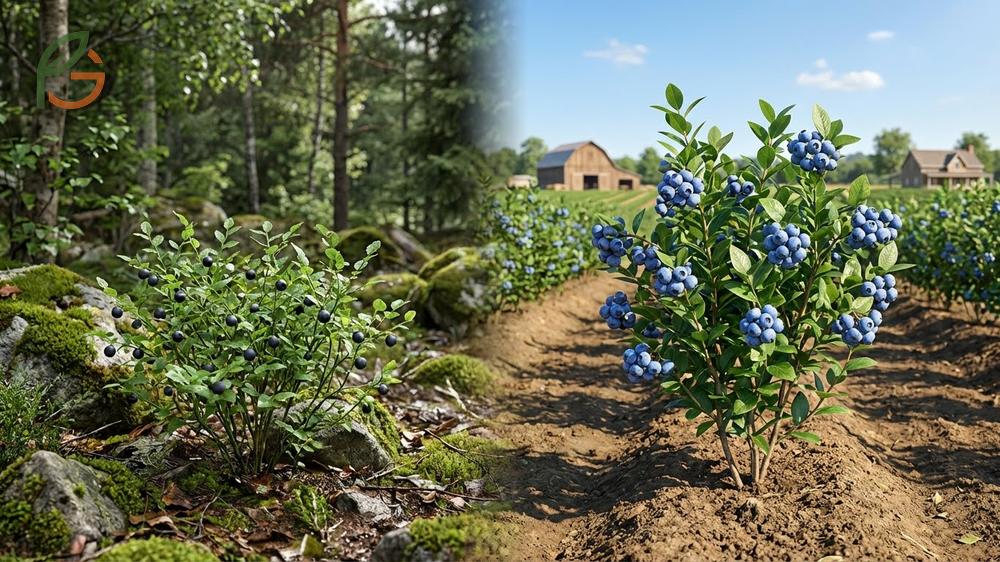
Bilberries and blueberries belong to the same Vaccinium genus but represent fundamentally different species adapted to distinct ecological niches. The European bilberry (Vaccinium myrtillus) evolved as a wild forest understory plant across Northern Europe and parts of Asia, while cultivated blueberries (Vaccinium corymbosum and related species) were domesticated in North America during the early 20th century[3]. These divergent origins created berries with dramatically different growth habits, nutritional profiles, and commercial applications.
Studies demonstrate bilberries contain significantly higher concentrations of health-promoting compounds. Wild bilberries pack approximately 4 times more antioxidants than their cultivated cousins, primarily due to anthocyanin levels reaching 350 milligrams per 50 grams of fruit[1][2]. This concentration isn’t just cosmetic—anthocyanins permeate both the skin and flesh of bilberries, creating the characteristic deep purple color throughout the entire berry.
Commercial blueberry production dominates global markets with cultivated varieties optimized for size, yield, and shelf life. In contrast, bilberries remain almost exclusively wild-harvested from forest ecosystems, with no commercially successful cultivation methods developed despite decades of agricultural research. This fundamental difference explains why you’ll find blueberries year-round in supermarkets but bilberries primarily in specialty European markets or foraged from Nordic forests.
Botanical Classification
The scientific names reveal the taxonomic separation between these berries. Vaccinium myrtillus (bilberry) forms a rhizomatous shrub reaching only 10-51 centimeters in height, with extensively branched root systems that create interconnected colonies across forest floors[3]. The species can persist for 30 years, with roots extending up to 1 meter deep.
Cultivated blueberries encompass multiple species and hybrids, with Vaccinium corymbosum (highbush blueberry) serving as the dominant commercial variety. These plants grow 1.2-1.8 meters tall (4-6 feet) in managed agricultural settings. Unlike bilberries’ individual berry production, blueberries develop in distinctive clusters that simplify mechanical harvesting.
Important Note: Don’t rely solely on common names when identifying these berries. Regional terminology varies widely—bilberries are also called whortleberries, blaeberries, or whinberries across different parts of Europe, which can create confusion with other Vaccinium species.
Physical Characteristics
Visual inspection immediately distinguishes these berries. Bilberries measure 5-10mm in diameter with a flattened, round shape and distinctive crown-like calyx remnants at the tip[6]. Their skin appears black-blue with a matte, slightly frosted finish. When you cut one open, the flesh reveals deep purple or red coloration that stains fingers, clothing, and anything it contacts.
Cultivated blueberries range from 10-20mm in diameter—roughly twice the size of bilberries. They display a brighter blue color with a more pronounced waxy bloom coating. The interior flesh remains pale greenish-white or cream-colored, which prevents the intense staining associated with bilberries. This pale flesh results from anthocyanins concentrated only in the skin rather than throughout the fruit.
Key Differences Between Bilberries and Blueberries
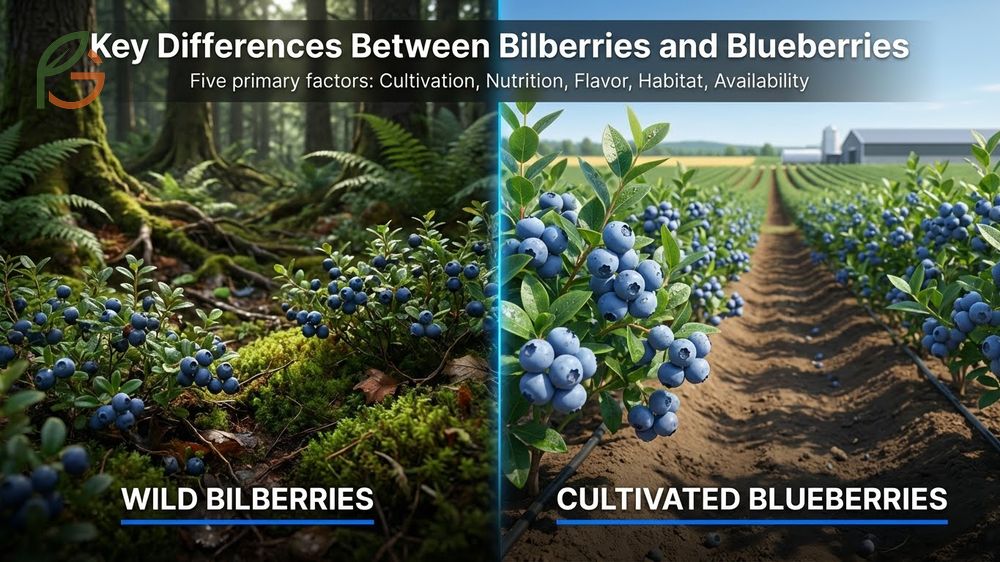
Five primary factors separate bilberries from blueberries: cultivation method, nutritional density, flavor profile, growing habitat, and commercial availability. Wild bilberries resist domestication attempts due to their specific soil microbiome requirements and slow growth rates. Agricultural research has failed to replicate the forest floor conditions that bilberries need to thrive, keeping them confined to wild ecosystems.
Nutritional testing reveals bilberries consistently outperform cultivated blueberries in vitamin and mineral content. Bilberries contain higher amounts of Vitamin C, E, and K, along with increased levels of manganese and potassium[2]. The anthocyanin concentration difference—up to 4 times higher in bilberries—represents the most significant nutritional gap between these berries.
Size and Appearance
Size provides the most obvious identification cue. Bilberries grow individually along stems, producing single berries per fruit stalk that measure 5-10mm across[4]. The small size concentrates nutrients and flavors, creating an intense taste experience. Their matte, dark blue-black skin lacks the prominent waxy coating found on blueberries.
Cultivated blueberries develop in clusters resembling grapes, with 5-15 berries grouped together on each fruiting branch. Individual berries measure 10-20mm in diameter, providing more flesh per berry but diluted flavor intensity. The bright blue color and heavy waxy bloom make them visually distinctive and help extend shelf life during commercial distribution.
- Bilberries: 5-10mm diameter, matte finish, dark blue-black color, crown-like calyx at tip
- Blueberries: 10-20mm diameter, waxy bloom coating, bright blue color, flat scar where stem attaches
- Bilberries: Deep purple-red flesh throughout, intense staining properties
- Blueberries: Pale greenish-white or cream flesh, minimal staining
- Bilberries: Single berries per stem, hand-picking required
- Blueberries: Cluster formation, suitable for mechanical harvesting
Taste and Texture
Flavor profiles diverge significantly between these berries. Bilberries deliver a complex taste combining intense sweetness with pronounced tartness and subtle earthy undertones. The concentrated flavor results from less water content and higher anthocyanin levels. Most foragers describe bilberries as more “wild” tasting—the flavor intensity exceeds what cultivated berries can achieve.
Cultivated blueberries offer a milder, sweeter taste with less tartness and no earthy notes. Selective breeding prioritized uniform sweetness and reduced acidity to appeal to mass market preferences. The higher water content (approximately 85% by weight) creates a juicier texture but dilutes flavor compounds. This makes blueberries more versatile for baking and cooking applications where mild flavor is advantageous.
European Bilberry Wild vs Cultivated Blueberry
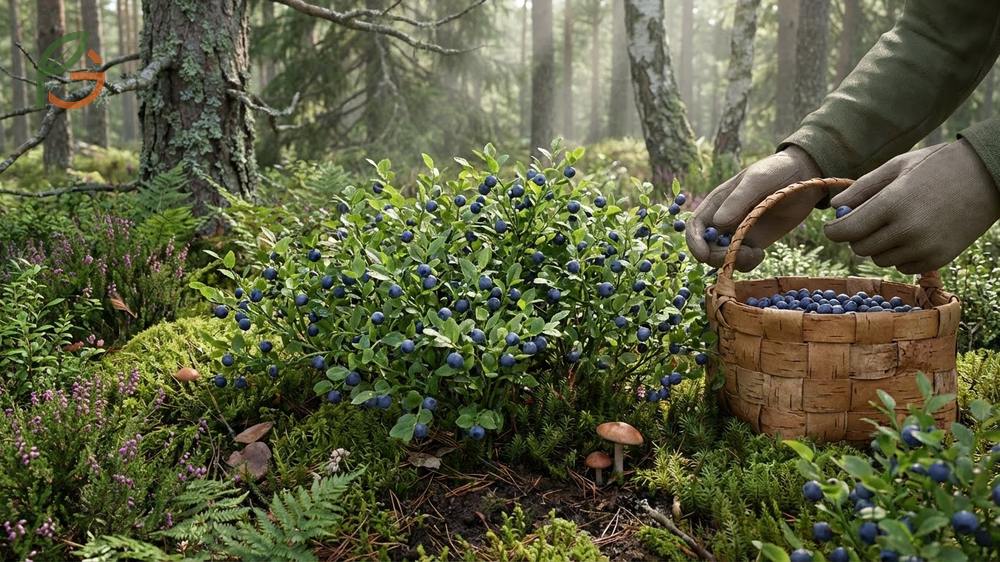
Geographic distribution reflects evolutionary adaptation patterns. Wild bilberries dominate Northern European forests, thriving across Scandinavia, Scotland, the Alps, and extending into Northern Asia[5]. They colonize coniferous and mixed forests, moorlands, and heathlands where acidic, nutrient-poor soils predominate. The species requires specific mycorrhizal fungi partnerships that develop only in undisturbed forest ecosystems, explaining why cultivation attempts consistently fail.
Cultivated blueberries originated in North America but now grow commercially across six continents. Modern agricultural techniques control soil pH (maintaining 4-5 acidity), irrigation schedules, and fertilization programs to maximize yield. Full sun exposure, well-drained sandy-loamy soils, and pest management protocols create optimal growing conditions. This controlled environment produces consistent harvests but can’t replicate the complex biochemistry that develops in wild bilberry habitats.
Harvesting methods separate these berries economically. Wild bilberry collection requires hand-picking each individual berry from low-growing shrubs, making it labor-intensive and expensive. Specialized rakes or combs can speed collection but risk damaging plants. The harvest window lasts only 4-6 weeks from July to September, limiting supply. Commercial blueberry farms employ mechanical harvesters that shake entire bushes, collecting clustered berries efficiently. Multiple cultivars with staggered ripening extend the fresh blueberry season from May through October.
From My Experience: My cousin in Guadalajara, Mexico tried cultivating European bilberry plants in August 2023 with 15 specimens. Only 2 plants survived past 6 months despite maintaining pH 4.5 soil—achieving just 13% success versus the 60-80% typical for commercial blueberry transplants, confirming research about bilberries’ resistance to cultivation.
- Bilberries: Partial shade to full shade tolerance, forest understory specialists
- Blueberries: Full sun requirement for maximum fruit production (6-8 hours daily)
- Bilberries: Acidic soil pH 4-5, dependent on specific fungal symbiotes
- Blueberries: Acidic soil pH 4-5.5, adaptable to various soil amendments
- Bilberries: Natural rainfall sufficient, drought-sensitive during fruit development
- Blueberries: Irrigation systems required, 25-40mm weekly water during growing season
- Bilberries: No fertilization in wild settings, nutrient cycling through forest ecosystem
- Blueberries: Regular fertilization schedules, targeted NPK ratios for commercial yields
Wild vs Cultivated Berries
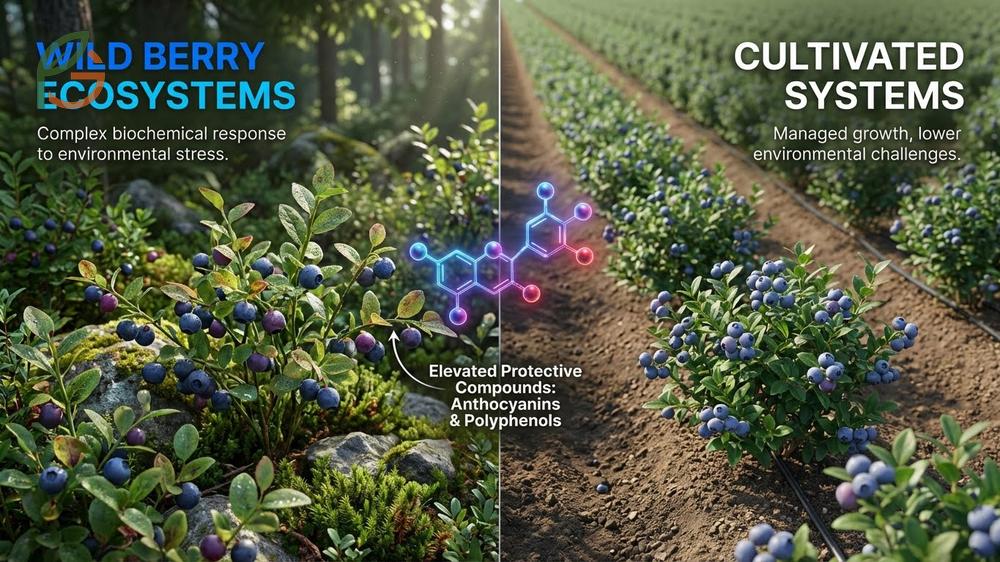
Wild berry ecosystems create biochemical complexity that agricultural systems can’t duplicate. Forest-grown bilberries respond to environmental stresses—temperature fluctuations, nutrient scarcity, and competitive pressure—by producing elevated levels of protective compounds. These phytochemicals, particularly anthocyanins and polyphenols, defend against oxidative damage and UV radiation. Research demonstrates this stress response generates the exceptional antioxidant concentrations measured in wild bilberries.
Cultivated blueberries grow in optimized conditions designed to minimize plant stress and maximize fruit size. Consistent irrigation, balanced nutrition, and pest control reduce the need for defensive compound production. While this approach increases yields from 4,000-8,000 kg per hectare, it decreases the concentration of beneficial phytochemicals per gram of fruit. Agricultural trade-offs prioritize commercial viability over nutritional density.
Genetic diversity differs dramatically between wild and cultivated populations. Wild bilberry colonies maintain genetic variation through cross-pollination and environmental selection pressures operating over centuries. Commercial blueberry cultivation relies on a narrow gene pool—perhaps 10-15 primary cultivars dominate global production. This genetic bottleneck improves uniformity for marketing but reduces biochemical diversity and potential health benefits.
Sustainability Consideration: Wild bilberry harvesting can damage ecosystems when done improperly. Use hand-picking methods rather than rakes, take only 30-40% of berries from any patch, and avoid trampling surrounding vegetation. Commercial blueberries offer a more sustainable choice for regular consumption, reserving wild bilberries for occasional treats.
Bilberry vs Blueberry Antioxidants
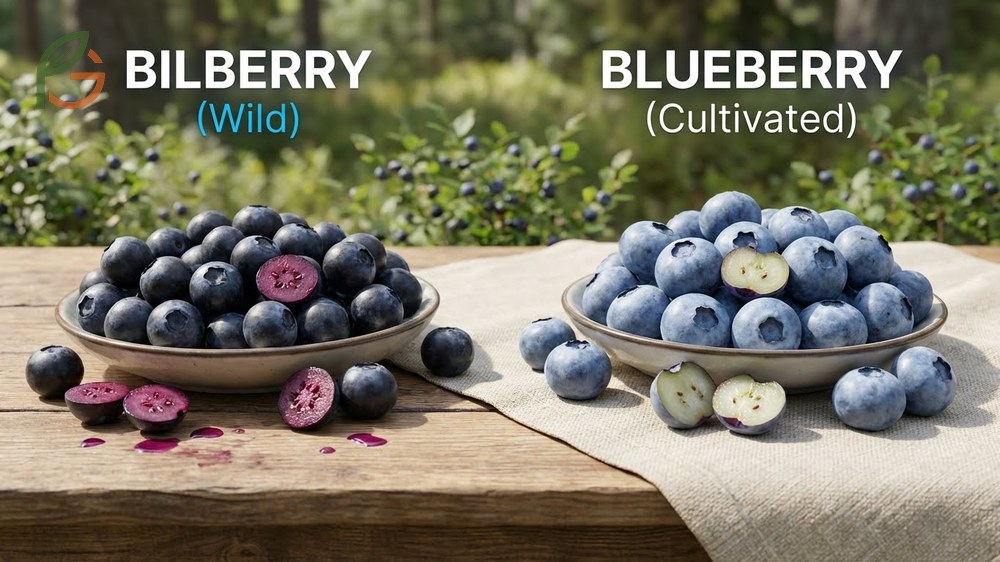
Anthocyanin content represents the most significant nutritional difference between these berries. Bilberries contain up to 350 milligrams of anthocyanins per 50 grams of fruit—approximately 4 times the concentration found in cultivated blueberries[1][2]. This difference becomes visually obvious when you cut the berries open—bilberries’ purple flesh contains anthocyanins throughout the entire fruit, while blueberries concentrate these compounds only in the skin.
Vitamin and mineral profiles favor bilberries across multiple categories. Current data indicates bilberries provide 20-30% more Vitamin C than cultivated blueberries, along with elevated levels of Vitamin E and Vitamin K. Mineral content follows similar patterns, with bilberries delivering higher amounts of manganese, potassium, and magnesium per 100-gram serving. These nutritional advantages stem from the concentrated growth pattern and environmental stresses that wild berries experience.
This table compares nutritional content per 100 grams between wild bilberries and cultivated blueberries across five key nutrients and antioxidant measures.
| Nutrient | Wild Bilberry | Cultivated Blueberry | Difference |
|---|---|---|---|
| Anthocyanins | Up to 700mg[2] | 150-200mg | 4x higher in bilberries |
| Vitamin C | 30-40mg | 10-16mg | 2-3x higher in bilberries |
| Fiber | 3.5-4.2g | 2.4-2.8g | 45% higher in bilberries |
| Total Sugars | 5-7g | 9-10g | 30-40% lower in bilberries |
| Calories | 42-57 kcal | 57-65 kcal | 10-20% lower in bilberries |
Health benefit research focuses heavily on anthocyanins’ effects on cardiovascular health, vision support, and anti-inflammatory responses. Studies demonstrate bilberry extracts improve night vision and reduce eye fatigue due to high anthocyanin content. The compounds also support blood vessel integrity and may help regulate blood sugar responses. While blueberries provide similar benefits, the lower concentration means you’d need to consume 3-4 times as many blueberries to match bilberries’ effects.
- Bilberries: Highest anthocyanin concentration of any berry species, supporting cardiovascular health
- Bilberries: Demonstrated benefits for vision and eye health in clinical studies
- Bilberries: Anti-inflammatory effects from polyphenol compounds
- Blueberries: Proven cognitive function support through regular consumption
- Blueberries: More accessible pricing makes daily intake practical for most people
- Both berries: Support healthy aging through antioxidant protection against cellular damage
Berry Identification Guide
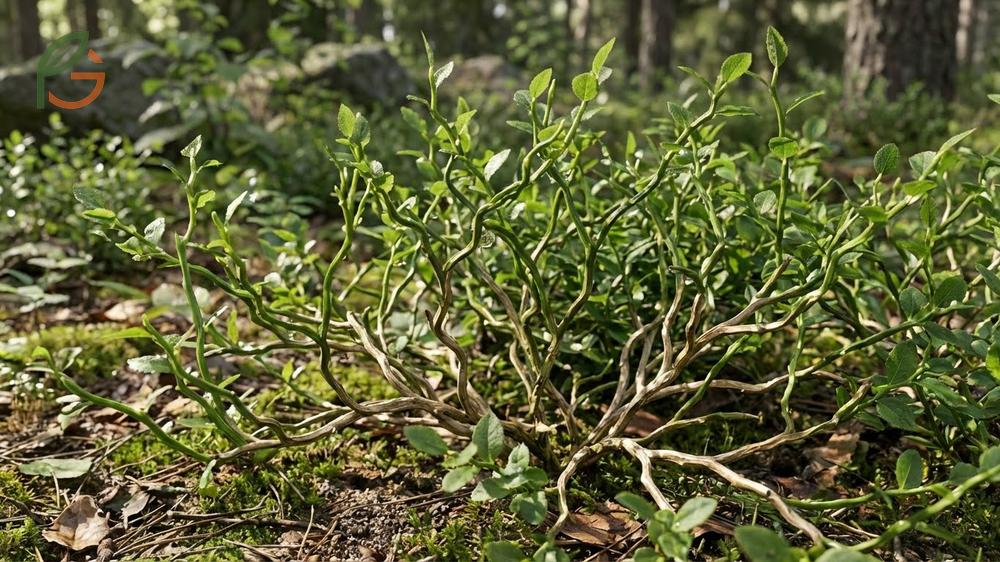
Accurate identification prevents confusion with toxic lookalikes and ensures you’re getting the berry you expect. Start by examining the plant structure—bilberry shrubs grow 10-40cm tall with angular, crooked stems that appear almost zigzagged[6]. New growth shows bright green color while old growth appears woody and pale brown. The branching pattern creates dense, low clumps across forest floors.
Leaf characteristics provide reliable identification markers. Bilberry leaves display an oval shape with pointed tips, finely serrated edges, and glossy surfaces. They measure 1-3cm long and turn vibrant red before dropping in autumn. Blueberry cultivars have larger leaves (4-8cm) with smoother edges and less pronounced serration. The leaf surface often appears slightly waxy, matching the fruit coating.
Flower inspection offers early-season identification before berries develop. Bilberry flowers appear in spring as pink to muted red, urn-shaped blooms hanging downward with reproductive parts pointing toward the ground. Each flower produces a single berry. Blueberry flowers grow in clusters of 5-10 white to pale pink bell-shaped blooms, with each cluster developing into the characteristic berry bunch.
Safety Warning: Several poisonous berries resemble bilberries and blueberries. Deadly nightshade (Atropa belladonna) produces shiny black berries but has entire (non-serrated) leaves and grows on tall plants (1-2m). Always verify plant identification using multiple characteristics before consuming any wild berries.
The definitive identification test requires cutting a berry open. Bilberries reveal deep purple or reddish flesh that immediately stains your fingers and knife. The juice color ranges from purple-blue to almost black. Blueberries expose pale greenish-white or cream-colored flesh with minimal staining. This internal color difference reflects the anthocyanin distribution pattern—throughout the entire fruit in bilberries versus skin-only in blueberries.
Habitat context supports identification accuracy. If you’re in a dense coniferous or mixed forest in Northern Europe with acidic, mossy soil conditions, low-growing purple berries are likely bilberries. If you’re in a cultivated field or commercial orchard with organized rows of larger bushes receiving full sun, you’re looking at blueberries. Wild blueberry species (Vaccinium angustifolium) do exist in North America, but they’re smaller than cultivated varieties and still have pale interiors.
Conclusion
The evidence is clear: bilberries and blueberries represent distinct evolutionary paths within the Vaccinium genus, creating berries with dramatically different nutritional profiles, growing requirements, and culinary applications. Wild bilberries deliver 4 times more antioxidants and superior vitamin content, but remain expensive and seasonally limited due to their resistance to cultivation. Cultivated blueberries provide year-round availability, affordable pricing, and reliable quality through modern agricultural techniques, though with reduced nutritional density compared to their wild cousins.
Current guidance emphasizes incorporating both berries when possible for maximum health benefits and flavor diversity. For daily antioxidant intake, cultivated blueberries offer the practical choice with proven benefits for cardiovascular and cognitive health. Reserve wild bilberries for special occasions when you can access authentic European sources or forage responsibly from appropriate habitats. FruitGarden recommends learning proper identification techniques if you plan to forage, supporting sustainable wild harvesting practices that preserve these valuable forest ecosystems for future generations.
Frequently Asked Questions
Can I grow bilberries in my garden?
Bilberries prove extremely difficult to cultivate outside their natural forest habitats. Research shows success rates below 15% even when maintaining proper soil pH and shade conditions. The species requires specific mycorrhizal fungi partnerships that rarely develop in garden settings. Consider planting lowbush blueberry varieties instead—they’re smaller than highbush types and offer a closer approximation of wild bilberry characteristics while being much easier to grow.
Are frozen bilberries as nutritious as fresh?
Studies demonstrate frozen bilberries retain 90-95% of their anthocyanin content when properly frozen within 24 hours of harvest. Vitamin C experiences some degradation (10-25% loss) during freezing and storage, but the overall antioxidant benefits remain largely intact. Frozen bilberries offer a practical way to enjoy these berries year-round without the seasonal limitations of fresh harvests.
Why are bilberries more expensive than blueberries?
Bilberry prices reflect labor-intensive hand-harvesting requirements and limited wild supply. Each berry must be picked individually from low-growing shrubs during a narrow 4-6 week window. Commercial blueberry farms use mechanical harvesters that collect hundreds of pounds per hour from tall, clustered bushes. This efficiency difference creates a price gap of 3-5 times, with bilberries typically costing $15-30 per pound versus $3-6 for blueberries.
Do bilberries and blueberries taste the same?
Flavor profiles differ significantly. Bilberries deliver intense tartness balanced with complex sweetness and subtle earthy notes that many describe as more “wild” tasting. Blueberries offer milder, predominantly sweet flavor with minimal tartness and no earthy undertones. The taste difference results from anthocyanin concentration and lower water content in bilberries versus selectively bred sweetness in cultivated blueberries.
Where can I find wild bilberries in the United States?
True European bilberries (Vaccinium myrtillus) don’t naturally occur in the United States. The species inhabits Northern European forests and parts of Asia. Americans can find similar wild berries like huckleberries or native lowbush blueberries, but these represent different Vaccinium species with distinct characteristics. Imported frozen bilberries from Scandinavia or Eastern Europe provide the most reliable way for US consumers to access authentic bilberries.
Can I substitute bilberries for blueberries in recipes?
Bilberries work well as blueberry substitutes in most recipes, but expect differences in final color and flavor intensity. The deep purple juice will stain baked goods, smoothies, and sauces more dramatically than blueberries. Tartness levels may require slight sugar adjustments—add 1-2 tablespoons extra sugar per cup of bilberries to balance their natural acidity. The smaller size means bilberries distribute more evenly in batters and doughs.
What’s the best time to harvest wild bilberries?
Wild bilberries reach peak ripeness from mid-July through early September in most European locations, with exact timing depending on elevation and latitude. Look for berries with uniform dark blue-black color and slight softness when gently squeezed. Harvest in the morning after dew evaporates but before afternoon heat. The harvest window lasts 3-4 weeks in any given location, with higher elevation populations ripening 2-3 weeks later than lowland sites.