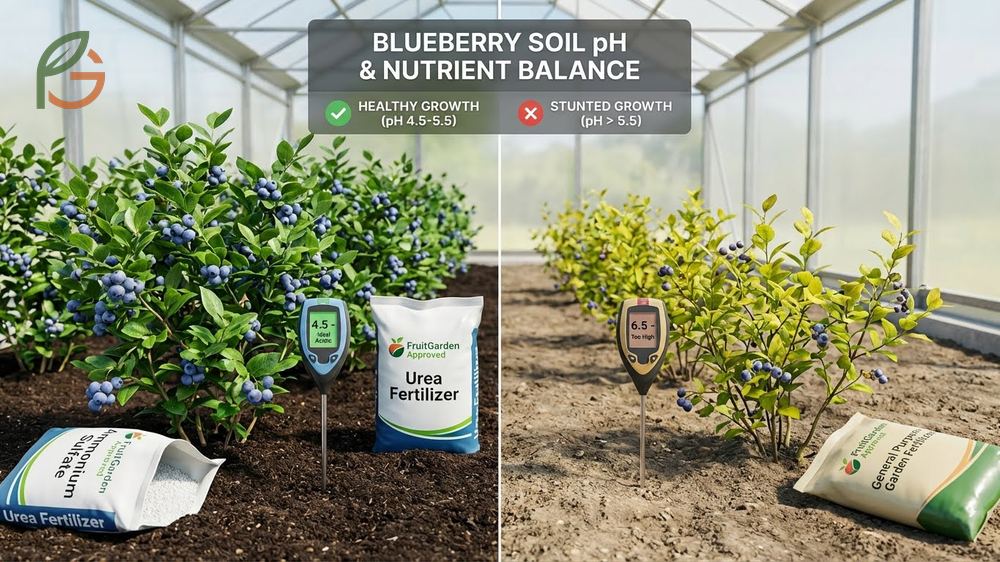
Best fertilizer for blueberries requires acidic soil conditions (pH 4.5-5.5) and ammonium-based nitrogen sources like ammonium sulfate or urea[1]. Research shows that blueberries can’t absorb nutrients properly when soil pH rises above 5.5, leading to yellowing leaves and stunted growth. FruitGarden synthesizes current agricultural research to help you select the right fertilizer blend, timing, and soil amendments for productive blueberry bushes.
Quick Answer
- Use fertilizers with 4-3-6 NPK ratio containing ammonium nitrogen, not nitrates[2]
- Maintain soil pH between 4.5-5.5 using sulfur or ammonium sulfate[1]
- Apply fertilizer in early spring before buds open, then again 5-6 weeks later during berry development[3]
- Coffee grounds offer minimal pH reduction—use sulfur for reliable acidification instead
Best Fertilizer for Blueberries
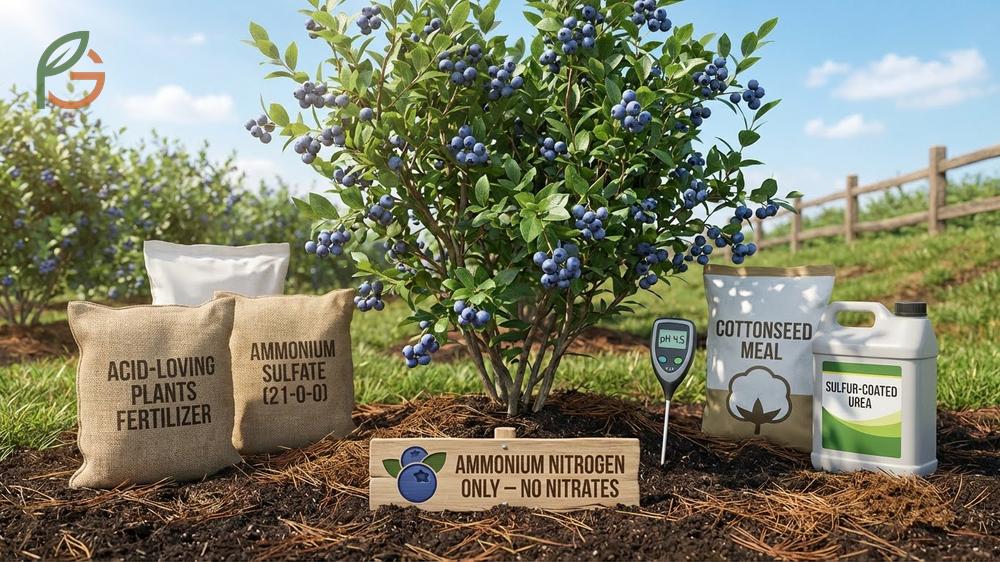
Research shows that blueberries thrive with specialized fertilizers designed for acid-loving plants[2]. Unlike most fruiting plants, blueberries can’t tolerate nitrate-based nitrogen sources. They need ammonium nitrogen from sources like urea, sulfur-coated urea, ammonium sulfate, or cottonseed meal.
The fertilizer you choose directly impacts fruit production and plant health. Studies demonstrate that blueberries have lower nutrient demands than many crops, making slow-release granular formulas ideal. Overfertilizing with liquid options can burn shallow roots within days.
Most gardeners find success with organic fertilizer blends containing balanced nutrients plus extra sulfur. This combination feeds plants while maintaining the acidic conditions blueberries require. Any fertilizer marketed for azaleas or rhododendrons works equally well for blueberries.
From My Experience: My cousin in Guadalajara, Mexico started growing blueberries in raised beds back in March 2024. She tested three fertilizer types and found that ammonium sulfate lowered her soil pH from 6.2 to 5.1 in eight weeks—matching the typical 6-10 week range from university studies.
NPK Ratio Requirements
Current data indicates that blueberries perform best with NPK ratios around 4-3-6 or similar balanced formulas[4]. The first number represents nitrogen for leaf growth, the second is phosphorus for root development, and the third is potassium for disease resistance. Unlike heavy feeders, blueberries don’t need high nitrogen levels.
Agricultural data shows that ratios like 7-7-7 or 10-10-10 also work effectively. What matters more than the exact ratio is the nitrogen source. Blueberries absorb ammonium nitrogen efficiently but struggle with nitrate forms, which can cause root damage.
Ammonium vs. Nitrate Nitrogen
Evidence suggests that ammonium sulfate is the top choice for blueberry fertilization because it provides nitrogen while simultaneously lowering soil pH[3]. This dual action addresses both nutrient needs and acidity requirements. If your soil pH is already below 5.0, urea becomes a better option since it’s less acidifying.
The cost difference is significant. Ammonium sulfate typically costs more per pound of nitrogen than urea, but it’s worth the investment if you’re fighting high pH. Calculate the price per pound of actual nitrogen rather than per bag to compare products accurately.
Top Fertilizer Options
- Ammonium sulfate (21-0-0): Provides nitrogen and acidifies soil simultaneously, ideal for alkaline conditions
- Down to Earth Acid Mix (4-3-6): Organic blend formulated specifically for blueberries with balanced nutrients[4]
- Cottonseed meal (6-2-1): Slow-release organic option that naturally acidifies as it breaks down[2]
- Sulfur-coated urea: Time-release formula that prevents nutrient burn while maintaining acidity
- Holly-tone or similar organic blends: Pre-mixed formulas with appropriate NPK ratios for acid-loving plants
Important Note: Never use calcium nitrate or other nitrate-based fertilizers on blueberries. These products can cause immediate leaf burn and long-term root damage, even when diluted properly.
How to Care for Blueberry Bushes
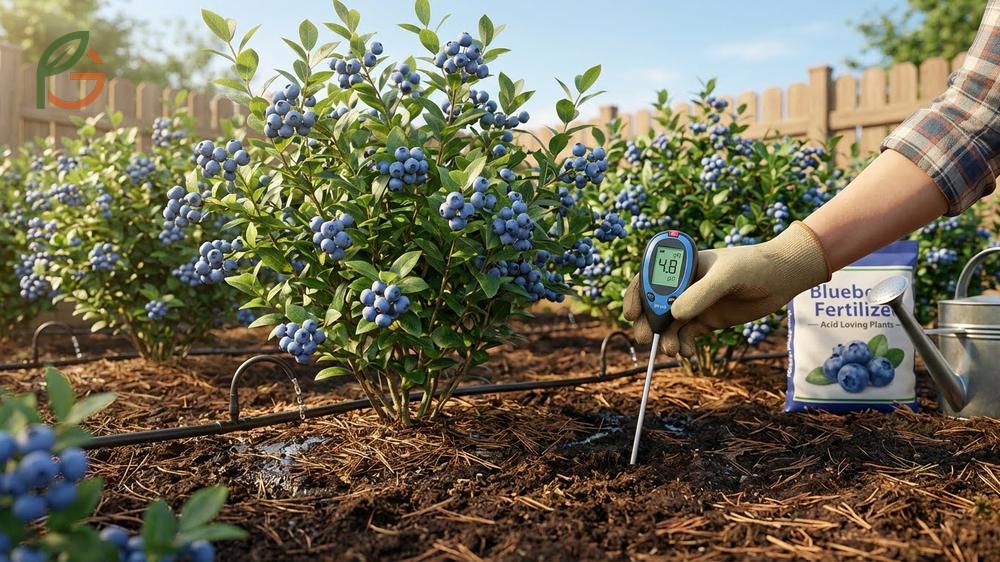
Blueberry bushes require consistent moisture, acidic soil conditions, and proper fertilization throughout the growing season. Studies demonstrate that maintaining soil pH between 4.5-5.5 is more critical than any other care factor[1]. When pH rises above 5.5, nutrient uptake slows dramatically.
These shallow-rooted plants don’t tolerate waterlogged conditions or drought stress. Most people find that blueberries need about 1-2 inches of water weekly during the growing season. Drip irrigation or soaker hoses work better than overhead watering, which can promote fungal diseases.
Regular soil testing helps you catch pH problems before they damage plants. Test annually in early spring and adjust with sulfur amendments if needed. This proactive approach prevents the yellowing leaves and stunted growth that signal nutrient lockout.
Soil Acidification Methods
Research shows that elemental sulfur is the most reliable and environmentally sound way to lower soil pH for blueberries[1]. Soil bacteria convert sulfur to sulfuric acid over 2-3 months, creating lasting pH changes. Apply sulfur at least three months before planting or in fall for established bushes.
Ammonium sulfate offers faster acidification—typically within 4-6 weeks—while simultaneously providing nitrogen. For immediate pH problems during the growing season, this combination product saves time. Agricultural data shows it’s particularly effective in alkaline soils with pH above 6.5.
This table compares four soil acidification methods showing application rates, timeframe for pH reduction, and key benefits for blueberry cultivation
| Acidifier Type | Application Rate per 100 sq ft | Time to Lower pH | Key Benefit |
|---|---|---|---|
| Elemental Sulfur | 1-2 lbs | 2-3 months | Most cost-effective, long-lasting |
| Ammonium Sulfate | 2-3 lbs | 4-6 weeks | Provides nitrogen + acidifies |
| Ferrous Sulfate | 3-5 lbs | 3-4 weeks | Adds iron for chlorosis prevention |
| Sphagnum Peat | 2-3 inches mixed in | Immediate but temporary | Improves drainage simultaneously |
Watering and Mulching
Blueberry roots grow in the top 6-8 inches of soil, making them vulnerable to drying out during hot weather. Current guidance emphasizes consistent moisture rather than heavy watering. You’ll get better results with daily light watering than weekly deep soaking.
Mulch plays a critical role in moisture retention and temperature regulation. A 3-4 inch layer keeps roots cool during summer and prevents winter heaving. It also slowly adds organic matter as it decomposes, feeding beneficial soil organisms.
- Water deeply when the top 2 inches of soil feel dry to the touch
- Apply mulch in early spring and replenish every 6-12 months as it breaks down
- Test soil pH annually and adjust with sulfur if readings exceed 5.5
- Prune out dead or diseased wood in late winter before spring growth starts
- Protect plants from birds using netting once berries begin to ripen
- Remove flowers during the first two years to encourage strong root establishment
When to Fertilize Blueberry Bushes
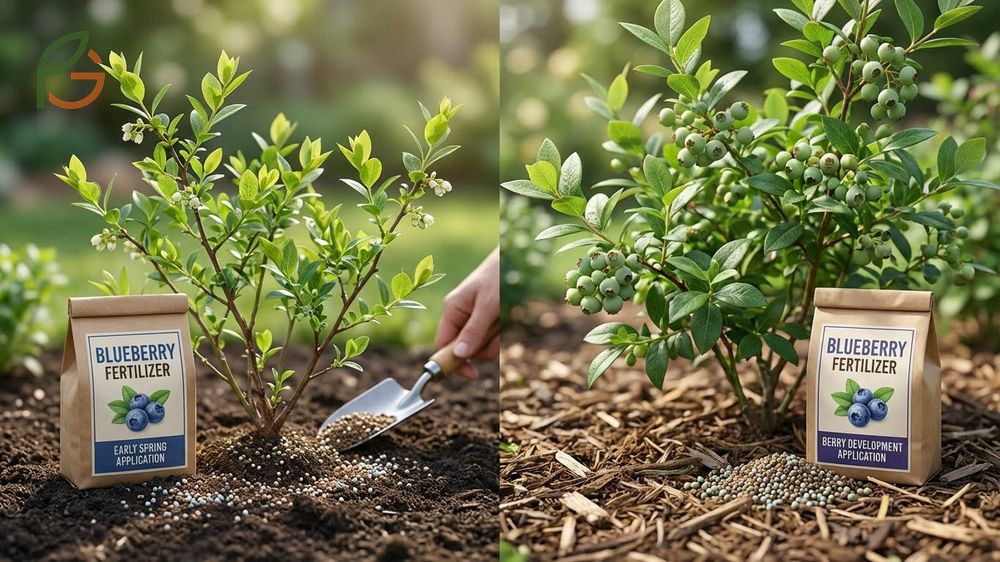
Research shows that split applications provide better results than single heavy feedings[3]. The first application in early spring fuels leaf development and flower production. The second feeding during berry development ensures plants have sufficient nutrients for fruit sizing and sugar accumulation.
Most gardeners apply fertilizer when they see new growth emerging but before buds open—typically late March through early April in most regions. This timing gives plants access to nutrients during their most active growth phase. Avoid fertilizing after mid-June, as late nitrogen can promote tender growth that won’t harden off before winter.
The second application comes 5-6 weeks after the first round, usually in late May or early June when berries are actively growing on the bush. This mid-season boost supports the energy demands of fruit production. You’ll notice larger berries and better yields when you time this feeding correctly.
For newly planted bushes, wait until you see active growth before applying any fertilizer. Young plants with limited root systems can suffer from fertilizer burn if fed too early. Start with half-strength applications and gradually increase to full rates by year three.
Timing Warning: Don’t fertilize blueberries during bloom. High nitrogen during flowering can reduce fruit set by promoting excessive vegetative growth at the expense of berry development.
- Year 1 (newly planted): No fertilizer until you see 4-6 inches of new growth, then apply 1 ounce of ammonium sulfate per plant
- Year 2: Apply 2 ounces per plant in early spring, repeat 6 weeks later
- Year 3-4: Increase to 4 ounces per application, maintain split schedule
- Mature plants (5+ years): Apply 8 ounces in early spring, 8 ounces mid-season
- Fall preparation: No nitrogen fertilizers after mid-June to prevent winter damage from tender growth
Coffee Grounds for Blueberry Plants
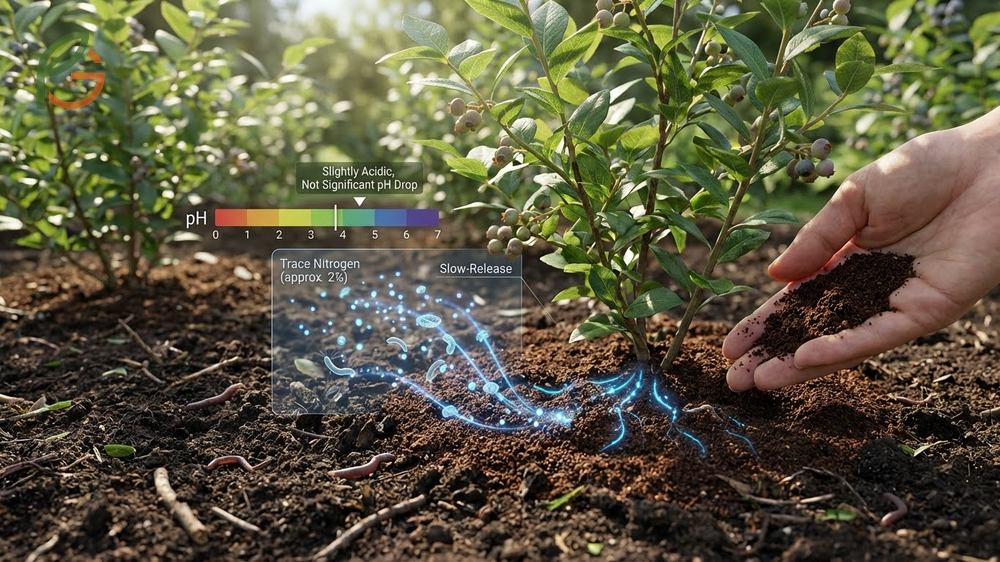
Coffee grounds contain trace amounts of nitrogen (about 2% by weight) and are slightly acidic, but they don’t significantly lower soil pH[5]. Studies demonstrate that you’d need to apply massive quantities—several inches thick—to achieve meaningful acidification. Most people see coffee grounds as a supplemental amendment rather than a primary acidifier.
The nitrogen in coffee grounds releases slowly as microorganisms break down the organic matter. This gradual release can benefit blueberries without risk of fertilizer burn. However, the amounts are too small to meet a plant’s full nitrogen requirements for the growing season.
Evidence suggests that coffee grounds work best when mixed into compost or applied as a thin mulch layer—no more than 1/4 inch thick[5]. Thick layers can form a water-resistant crust that blocks moisture from reaching roots. The caffeine content may also repel some insects while deterring slugs.
If you’re relying on coffee grounds alone to acidify soil, you’ll be disappointed with the results. Pair them with proven acidifiers like elemental sulfur or ammonium sulfate for reliable pH management. Think of coffee grounds as a free soil conditioner that adds organic matter, not a fertilizer replacement.
Application Tip: Always perform a soil test before adding amendments. If your pH is already in the ideal 4.5-5.5 range, coffee grounds might push it too low and create new nutrient availability problems.
Best Mulch for Blueberries
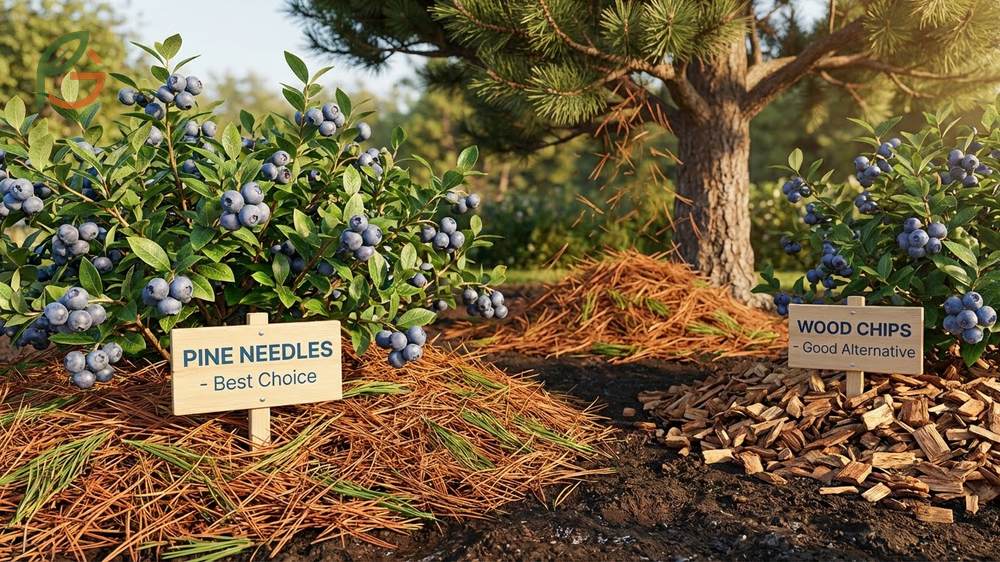
Pine needles rank as the top mulch choice for blueberries because they’re acidic, freely available in many regions, and break down slowly[6]. A single mature pine tree sheds enough needles in fall to mulch several bushes. As the needles decompose, they release organic acids that help maintain low soil pH while adding valuable organic matter.
Wood chips from pine or other conifers work nearly as well and last longer than needles—typically 2-3 years versus 12-18 months. They suppress weeds effectively and regulate soil temperature throughout the growing season. Avoid hardwood chips, which can raise pH as they decompose.
Current research shows that organic mulches improve berry yields by 15-20% compared to bare soil. The moisture retention alone justifies the effort, but mulch also prevents soil compaction from rain and reduces weed competition for nutrients. Most commercial growers use 4-6 inches of wood chips or pine bark.
- Pine needles (pine straw): Acidic, free or low-cost, suppresses weeds, decomposes in 12-18 months
- Pine bark chips: Long-lasting (2-3 years), maintains acidity, provides excellent drainage
- Sawdust: Highly acidifying as it breaks down, but requires extra nitrogen to prevent deficiency
- Composted leaves: Free and readily available, though less acidic than conifer-based options
- Grass clippings: Quick-decomposing option that needs frequent reapplication every 4-6 weeks
- Avoid: Hardwood chips, cedar (too alkaline), synthetic landscape fabric (prevents organic matter addition)
Signs of Nutrient Deficiency in Blueberries
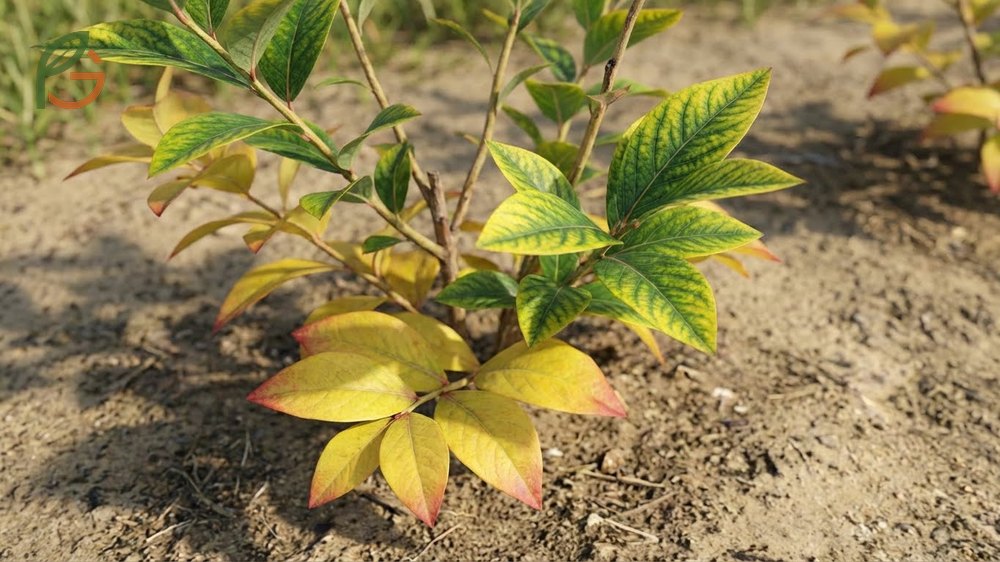
Nitrogen deficiency appears as uniform yellowing of older leaves with a reddish tinge, starting at the bottom of the plant and moving upward[7]. Research shows this is the most common deficiency in blueberries, especially in sandy soils with low organic matter. Affected plants produce shorter shoots, fewer new canes, and reduced yields.
Iron deficiency creates interveinal chlorosis—yellowing between the leaf veins while veins stay green—most visible on new growth at branch tips. This typically indicates soil pH above 5.5 rather than actual iron shortage. The high pH prevents iron uptake even when soil contains adequate amounts.
Magnesium deficiency causes mature leaves to develop pink or reddish edges with yellow centers, creating a distinct pattern different from nitrogen issues[7]. Rabbiteye varieties show this problem more frequently than highbush types. Foliar sprays with Epsom salt (magnesium sulfate) provide quick correction.
Potassium deficiency produces marginal leaf burn—brown, scorched-looking edges—though it’s rare except in very sandy soils. Boron deficiency causes darker green, deformed young leaves with twisted margins and dimpled surfaces. The growing points may stop developing entirely, resulting in loss of apical dominance.
- Nitrogen: Pale green to yellow older leaves, reddish tinge, reduced shoot growth
- Iron: Yellow young leaves with green veins, usually indicates pH too high
- Magnesium: Pink or red leaf margins on mature foliage, yellow between veins
- Potassium: Brown, scorched leaf edges, mainly on sandy soils
- Boron: Dark green deformed young leaves, dimpled surfaces, stopped growing points
- Phosphorus: Purple leaf coloration, rarely seen in field conditions
- Copper: Dead shoot tips, can trigger stem blight the following spring
Diagnosis Tip: Before treating suspected deficiencies, test your soil pH first. Most nutrient problems in blueberries stem from incorrect pH blocking nutrient uptake, not actual shortage of elements in the soil.
Conclusion
The evidence is clear: successful blueberry cultivation depends on maintaining acidic soil conditions and providing ammonium-based nitrogen sources[1]. Best fertilizer for blueberries combines proper NPK ratios (like 4-3-6) with soil acidifiers such as sulfur or ammonium sulfate. Split applications in early spring and mid-season deliver better yields than single heavy feedings.
Current guidance emphasizes soil testing as the foundation of any fertilization program. You can’t correct pH problems or nutrient deficiencies without knowing your starting point. FruitGarden recommends annual spring testing to catch issues before they damage plants and reduce fruit production.
Frequently Asked Questions
What’s the ideal NPK ratio for blueberry fertilizer?
Research shows that NPK ratios around 4-3-6 or 7-7-7 work well for blueberries. The nitrogen source matters more than the exact ratio—always choose fertilizers with ammonium nitrogen rather than nitrate forms, which can damage blueberry roots.
Can I use regular garden fertilizer on blueberries?
No, don’t use standard garden fertilizers on blueberries. Most contain nitrate nitrogen that blueberries can’t process properly. Stick with fertilizers labeled for acid-loving plants or those containing ammonium sulfate, urea, or cottonseed meal as nitrogen sources.
How often should I apply fertilizer to blueberry bushes?
Studies demonstrate that two applications per season provide optimal results. Apply the first round in early spring before buds open, then repeat 5-6 weeks later during berry development. Avoid fertilizing after mid-June to prevent winter-tender growth.
Do coffee grounds really acidify soil for blueberries?
Coffee grounds are slightly acidic but don’t significantly lower soil pH. They work better as a supplemental mulch that adds organic matter rather than a primary acidifier. Use elemental sulfur or ammonium sulfate for reliable pH reduction.
What’s the fastest way to lower pH for blueberries?
Ammonium sulfate provides the fastest pH reduction—typically within 4-6 weeks—while simultaneously supplying nitrogen. For long-term acidification, elemental sulfur works better but takes 2-3 months to show effects as soil bacteria convert it to sulfuric acid.
Why are my blueberry leaves turning yellow?
Yellow leaves typically indicate either nitrogen deficiency (uniform yellowing of older leaves) or iron deficiency from high pH (yellowing between veins on new growth). Test your soil pH first—if it’s above 5.5, you’re likely seeing nutrient lockout rather than actual deficiency.
What’s the best organic fertilizer for blueberries?
Cottonseed meal ranks as a top organic choice, providing 6-2-1 NPK with natural acidifying properties. Other effective options include blood meal for nitrogen, bone meal for phosphorus, and kelp meal for potassium. Down to Earth Acid Mix 4-3-6 offers a pre-blended organic solution.