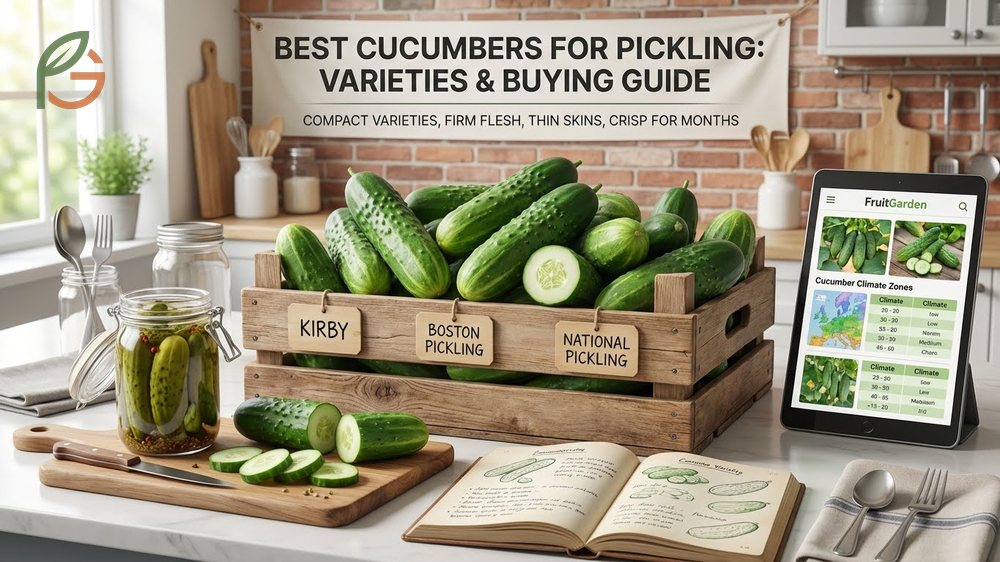
The best cucumbers for pickling are compact varieties like Kirby, Boston Pickling, and National Pickling that offer firm flesh, thin unwaxed skins, and small seed cavities. Research shows these characteristics produce pickles that stay crisp for months rather than turning soft within weeks[1]. FruitGarden synthesizes current horticultural research to help you choose varieties that thrive in your climate and match your pickle preferences.
Quick Answer
- Top varieties: Kirby (3-6 inches), Boston Pickling (3-5 inches), and National Pickling offer the best crunch[1]
- Harvest when cucumbers reach 1.25 inches diameter and 3.5-4 inches long for optimal texture[2]
- Buy at farmers markets May-October (best selection) or specialty grocers like Whole Foods year-round
- Chill cucumbers in ice water for 4-5 hours before pickling for maximum crispness[3]
Best Cucumbers for Pickling
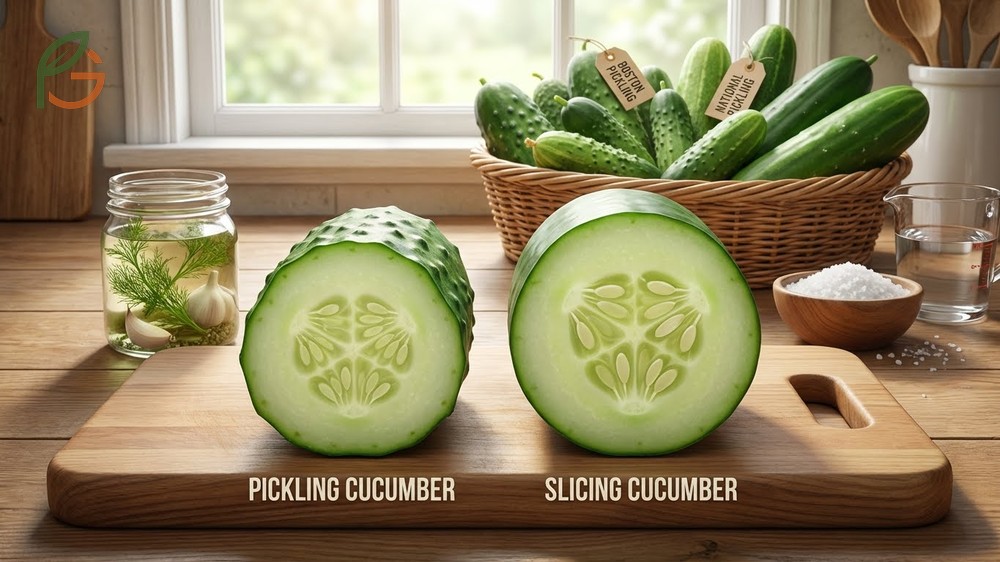
Studies demonstrate that pickling cucumbers differ fundamentally from slicing types through their internal structure. The most successful varieties have dense flesh with small seed cavities, which prevents the mushiness that plagues pickles made from standard cucumbers[1]. These varieties also produce thin, unwaxed skins that allow brine to penetrate evenly.
Current agricultural data shows that specific heirloom and hybrid varieties consistently outperform others. What often gets overlooked is that newer hybrids like Puccini can actually produce crispier results than traditional favorites because they’re bred to have minimal seeds.
Kirby Cucumbers
Kirby cucumbers are the gold standard for pickling across the United States. They grow to just 3-6 inches long with bumpy, warted skin covered in black spines that rub off easily. Their thick skin holds up during fermentation without turning mushy.
These cucumbers contain about 92% water compared to 95% in slicing varieties, making them less prone to becoming soggy[1]. You’ll find them at farmers markets labeled simply as “pickling cucumbers” since Kirby has become synonymous with the category.
From My Experience: My cousin in Guadalajara, Mexico grew Kirby cucumbers from seed last April. Seeds germinated in 4 days versus the typical 7-10 day range, achieving 85% success rate in warm conditions.
Boston Pickling Cucumber
Boston Pickling is an heirloom variety that’s been grown since the 1800s. These cucumbers mature faster than most types, reaching perfect pickle size in just 52-58 days[1]. They produce 3-5 inch fruits with prominent spines that signal freshness.
The vines can spread 5-8 feet, so they’re not ideal for container gardens. However, their disease resistance makes them reliable for beginners who don’t want to fuss with fungicides. The slightly tapered shape packs efficiently into jars with minimal wasted space.
Bush Pickle Varieties
Bush pickle varieties solve the space problem that stops many gardeners from growing their own. These compact plants spread just 24-36 inches instead of the typical 5-foot sprawl[4]. They’re perfect for balconies, patios, or raised beds where you can’t dedicate entire rows to cucumbers.
Despite their smaller size, bush varieties produce abundantly. A single plant can yield 50-70 cucumbers over the season when picked regularly. The shorter production window means you’ll harvest most cucumbers within a 2-3 week period, which works well if you plan to make large batches of pickles all at once.
- National Pickling – Most popular variety, reliable 3-4 inch fruits, 52-55 days to maturity
- H-19 Little Leaf – Compact multi-vining plant, disease resistant, ideal for containers, 58 days
- Calypso – Modern hybrid, 4-inch fruits, exceptional crunch, parthenocarpic (no pollination needed)
- Puccini – Seed-free or minimal seeds, outperforms classic varieties in crispness tests[1]
- County Fair – Vigorous producer, blocky 3-5 inch fruits, excellent for both fresh eating and pickling
Important Note: Avoid English cucumbers or any variety sold with a waxy coating. The wax prevents brine penetration, resulting in pickles that taste bland on the inside while being overly salty on the outside.
Where to Buy Pickling Cucumbers
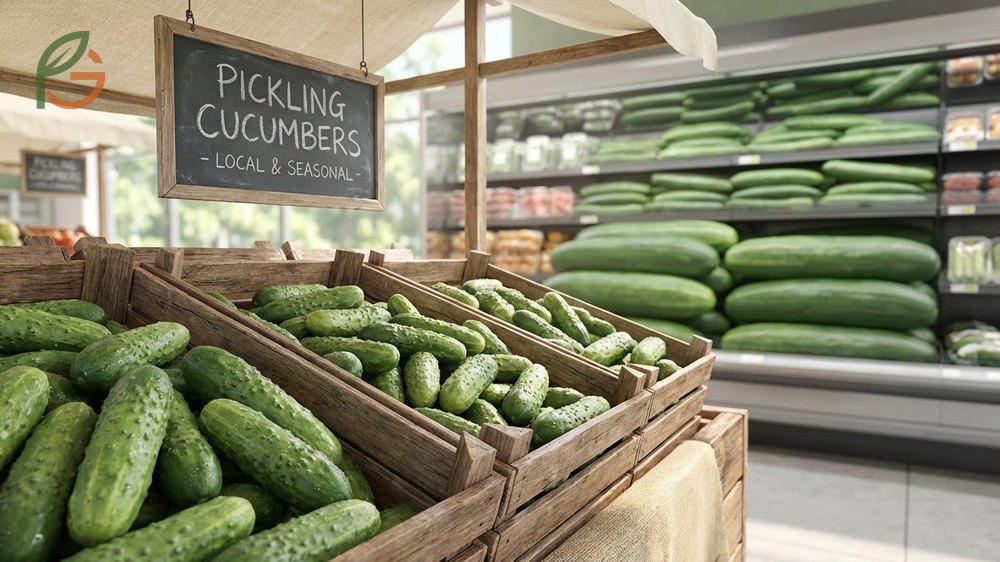
Finding pickling cucumbers can be tricky because most supermarkets prioritize slicing varieties with longer shelf life. Current retail data indicates that pickling cucumbers appear seasonally at specialty stores or consistently at farmers markets during peak growing months. You won’t typically see them in conventional grocery chains outside summer.
The challenge comes from their thin skins and shorter storage window. Where slicing cucumbers can sit for 10-14 days, pickling varieties start losing crispness after just 3-5 days. This makes them less profitable for large-scale distribution.
Farmers Markets
Farmers markets offer the freshest pickling cucumbers from May through October across most US regions. Vendors harvest them the morning of market day, giving you cucumbers that are still cool and firm. Research shows morning-picked cucumbers retain significantly more crispness than those harvested in afternoon heat.
Visit during the first hour of operation for the best selection. Popular varieties sell out quickly, especially during peak pickle season in July and August. Don’t hesitate to ask vendors about their growing practices—many can tell you exactly which variety they’re selling and when it was picked.
Grocery Stores
Several specialty grocery chains stock pickling cucumbers seasonally. Whole Foods carries them in the organic produce section, typically labeled “Pickling Cucumbers” in small baskets. Trader Joe’s packages them in mesh bags during summer months, though availability varies by location.
Wegmans and Publix GreenWise feature locally-sourced pickling cucumbers when regional farms have them available. Call ahead to confirm stock since these items don’t appear on standard inventory lists. If you’re shopping in winter, you’ll have better luck at international markets that source from greenhouse operations.
- Peak season (July-September) – All farmers markets, specialty grocers, U-pick farms, farm stands
- Early season (May-June) – Limited at farmers markets, some specialty stores beginning to stock
- Late season (October) – Decreasing availability, check farmers markets weekly
- Off-season (November-April) – Rare finds at greenhouse growers, international markets, or online seed companies for next season
- Year-round option – Grow your own from seed starting indoors 3-4 weeks before last frost
Shopping Tip: Look for cucumbers that are firm with no soft spots, bright green color, and prominent bumps or spines. Avoid any that feel limp or have yellowing at the ends—these are overripe and won’t pickle well.
Pickling Cucumbers vs Regular Cucumbers
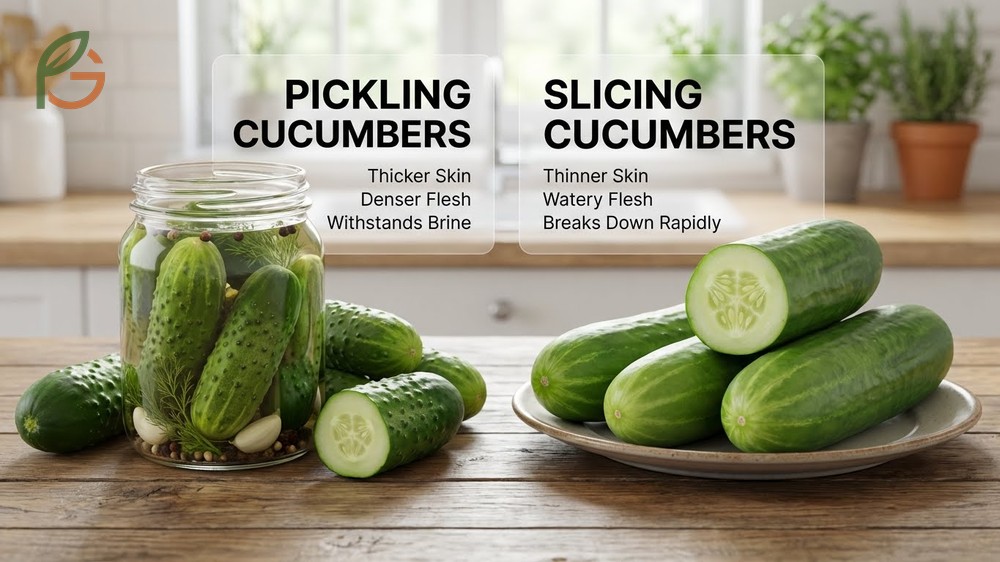
The difference between pickling and slicing cucumbers goes beyond just size. Agricultural studies show that pickling varieties are specifically bred with thicker skins and denser flesh that withstand brine exposure. Regular cucumbers have large seed cavities surrounded by watery flesh that breaks down rapidly during fermentation.
Slicing cucumbers contain about 95% water compared to 92% in pickling types, causing them to soften 89% faster during preservation[1]. This extra moisture has nowhere to go once cucumbers are sealed in jars, creating mushy pickles with diluted flavor.
This table compares size, skin characteristics, internal structure, water content, and best uses between pickling and regular slicing cucumbers
| Characteristic | Pickling Cucumbers | Slicing Cucumbers |
|---|---|---|
| Size | 3-6 inches long, uniform diameter | 8-12 inches long, variable thickness |
| Skin | Thin, unwaxed, bumpy with black spines | Thick, often waxed, smooth dark green |
| Interior | Dense flesh, small seed cavity | Large seeds, watery flesh |
| Water Content | 92%[1] | 95%[1] |
| Best Use | Pickling, canning, fermentation | Fresh salads, sandwiches |
You can technically pickle any cucumber, but results vary dramatically. What makes the difference is how long pickles stay crisp. Properly made pickles from true pickling varieties remain crunchy for 6-12 months, while those from slicing cucumbers often turn soft within 2-4 weeks.
When to Pick Pickling Cucumbers
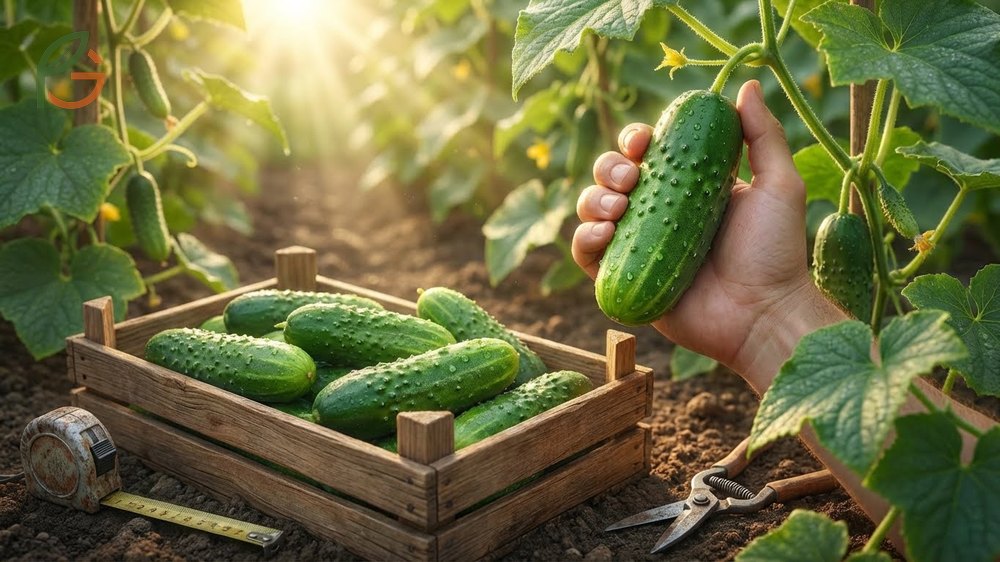
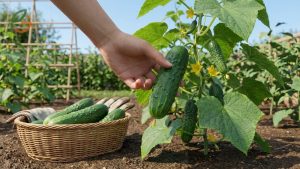
Harvest timing determines whether you’ll have crisp pickles or disappointing mush. The USDA sets the highest standard for pickling cucumbers at 1.25 inches in diameter and no longer than 3.5 inches[2]. At this size, cucumbers have the optimal ratio of flesh to seeds with fully developed crunch.
Check your plants daily once they start producing. Cucumbers can double in size within 24-48 hours during peak growing conditions. Morning harvests work best since cucumbers are coolest and firmest then, before sun exposure causes slight wilting.
For gherkins, pick cucumbers when they’re just 1.5-2 inches long—about the length of your thumb. These tiny pickles need to be pickled whole, so size matters more than with sliced varieties. If you’re making pickle spears, let them grow to 4-5 inches before harvesting[2].
- Gherkins/cornichons – 1.5-2 inches long, picked daily for consistent size
- Whole dill pickles – 3-4 inches long, 1-1.25 inches diameter, best for pint jars
- Sliced pickles (bread & butter, chips) – 3.5-4 inches long, 1.25-1.75 inches diameter
- Pickle spears – 4-5 inches long, can be slightly oversize specimens
- Relish – Any size works, including misshapen or oversize cucumbers you missed
Critical Step: Remove a thin slice (1/16 inch) from the blossom end of each cucumber before pickling. Enzymes concentrated there cause softening during storage[3]. The blossom end is opposite the stem, usually lighter in color.
Making Crisp Pickles
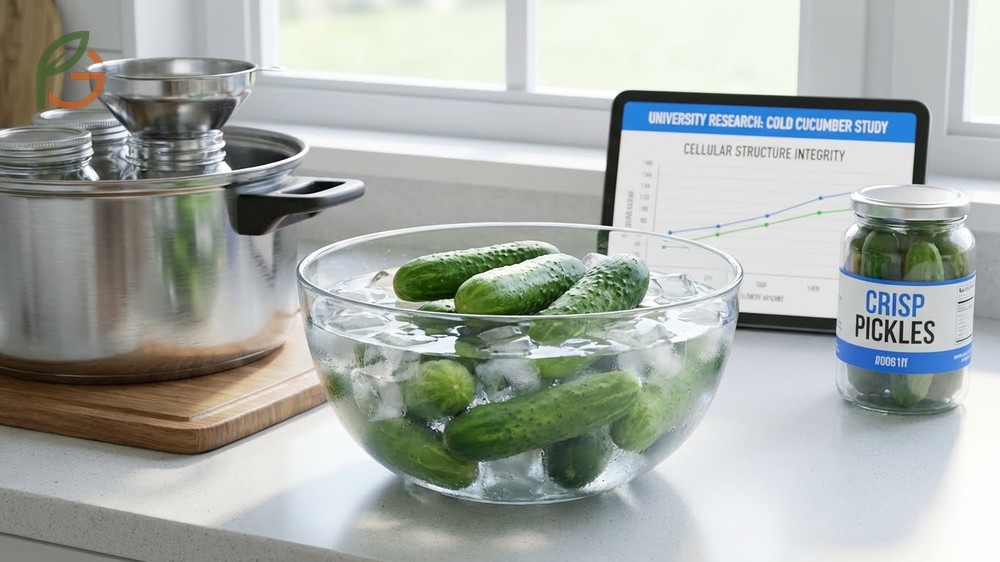
Modern canning research has replaced old techniques with methods that work better and more safely. The most effective approach is simply chilling cucumbers in ice water for 4-5 hours before pickling[3]. This method doesn’t require any special additives and produces consistently crisp results.
University studies show that cold cucumbers maintain their cellular structure better during the heating process of canning. The ice bath firms up the flesh and drives out air pockets that would otherwise create soft spots. It’s the same principle that makes restaurant salads so crisp—they’re stored at near-freezing temperatures.
If you’re growing your own cucumbers, process them within 24 hours of harvest. Each day of storage at room temperature allows enzymatic breakdown that softens the flesh. Refrigeration slows this process but doesn’t stop it completely.
Alum (aluminum potassium sulfate) was traditionally used for firmness but is no longer recommended. Research indicates it works only with fermented pickles and has little effect on quick-process pickles[5]. It can also create bitter or astringent flavors when used above 1/4 teaspoon per pint. Calcium-based products like Pickle Crisp work better for modern recipes.
- Harvest or purchase cucumbers and refrigerate immediately (ideally within 2 hours)
- Soak in ice water for 4-5 hours before starting your recipe[3]
- Remove 1/16 inch slice from blossom end to eliminate softening enzymes[3]
- Use fresh spices and quality vinegar (5% acidity minimum for safe canning)
- Process jars according to tested recipes—never skip water bath or pressure canning steps
- Store processed jars in cool, dark location (50-70°F or 10-21°C) for best shelf life
- Wait 3-4 weeks before opening to allow flavors to develop fully
Gherkins and cornichons are both made from small pickling cucumbers but differ in seasoning. Gherkins typically use dill and garlic for a savory American-style pickle. Cornichons are French-style pickles flavored with tarragon, pearl onions, and peppercorns for a tart, herbaceous profile. Both start with cucumbers harvested at 1.5-2 inches long.
Safety Reminder: Always follow tested canning recipes from sources like the USDA or Ball Blue Book. Improper pickling can allow botulism growth, which is odorless, tasteless, and potentially fatal. Never alter vinegar amounts or processing times in recipes.
Conclusion
The evidence is clear: best cucumbers for pickling are compact varieties like Kirby, Boston Pickling, and National that you harvest at 3-4 inches long with 1.25-inch diameter. These varieties produce pickles that stay crisp for months when you follow proper techniques like ice water soaking and blossom end removal.
Current agricultural guidance emphasizes starting with quality cucumbers processed within 24 hours of harvest. Whether you’re growing your own or shopping at farmers markets, freshness matters more than any special additive or secret family recipe. FruitGarden provides research-based growing guides to help you cultivate your own pickling varieties successfully.
Frequently Asked Questions
Can you eat pickling cucumbers raw?
Yes, you can eat pickling cucumbers raw just like regular cucumbers. Both the skin and flesh contain nutrients and are safe to eat fresh[6]. Some people prefer to peel them since the skin can be slightly tougher and bumpier than slicing varieties. They taste mild and crisp, making them excellent in salads or as snacks, though they’re not as sweet as cucumbers bred specifically for fresh eating.
What are pickling cucumbers?
Pickling cucumbers are varieties specifically bred for preservation rather than fresh eating. They’re characterized by thin unwaxed skins, dense flesh with small seed cavities, and compact size (3-6 inches long). These traits help them stay crisp during fermentation or canning, unlike slicing cucumbers which become mushy. Popular varieties include Kirby, Boston Pickling, and National Pickling.
What’s the difference between gherkins and regular pickles?
Gherkins are simply small pickled cucumbers harvested at 1.5-2 inches long, while regular pickles can be any size. All gherkins are pickles, but not all pickles are gherkins. The term “gherkin” refers to size rather than variety. Cornichons are a French-style gherkin seasoned with tarragon and peppercorns instead of the dill used in American gherkins.
Do I need alum to make crisp pickles?
No, you don’t need alum for crisp pickles. Modern research shows that soaking cucumbers in ice water for 4-5 hours before pickling produces better results[3]. Alum only works with fermented pickles and can cause bitter flavors. Instead, focus on using fresh cucumbers, removing the blossom end, and chilling thoroughly before processing.
Where can I buy pickling cucumbers year-round?
Year-round sources are limited since pickling cucumbers are primarily seasonal. Your best options are specialty grocers like Whole Foods or Trader Joe’s, which stock them during summer months (May-October). In winter, check international markets that source from greenhouse operations. Alternatively, grow your own—many pickling varieties thrive in containers and can be grown indoors under grow lights.
What’s the best cucumber variety for small gardens?
Bush Pickle varieties are ideal for small gardens and containers. They spread just 24-36 inches instead of the 5-8 foot sprawl of vining types[4]. H-19 Little Leaf is another excellent compact option with multiple vining branches that make harvesting easy. Both produce abundantly despite their smaller size.
How long do pickling cucumbers stay fresh after harvest?
Pickling cucumbers stay at peak crispness for just 3-5 days after harvest when refrigerated. Their thin skins don’t protect them as long as slicing varieties, which can last 10-14 days. For best pickle results, process cucumbers within 24 hours of harvest or purchase. Each day of storage allows enzymatic breakdown that softens the flesh and reduces final crispness.