Avocado fruit in tamil is called Vennai Pazham (வெண்ணை பழம்), which literally translates to “butter fruit.”[1] This creamy superfood originated in Central Mexico around 10,000 years ago and now grows across Indian states including Karnataka, Kerala, Tamil Nadu, and Sikkim.[2] FruitGarden helps gardeners and fruit enthusiasts discover global fruit names, cultivation methods, and regional growing practices.
Quick Answer
Avocado Fruit in Tamil
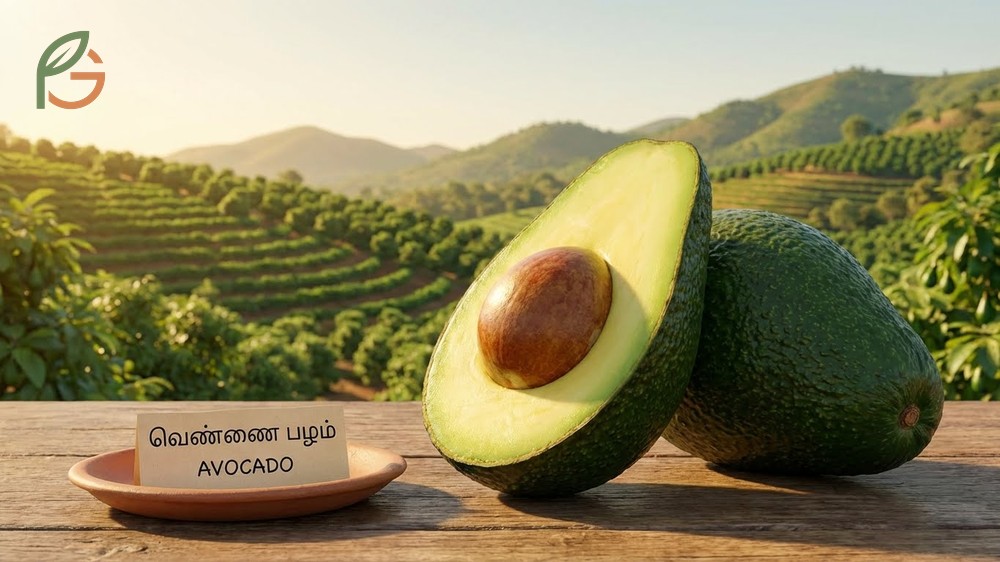
The Tamil name for avocado is Vennai Pazham (வெண்ணை பழம்), where “vennai” means butter and “pazham” means fruit.[1] This name perfectly captures the fruit’s creamy, butter-like texture when ripe. Tamil-speaking regions use this term consistently across markets, agriculture, and culinary contexts.
Studies show that avocados thrive in Tamil Nadu’s hilly regions where temperatures stay between 20-30°C (68-86°F) year-round.[3] The state’s subtropical climate provides ideal conditions for small-scale cultivation. Most Tamil speakers recognize both the English term “avocado” and the traditional “Vennai Pazham.”
Meaning and Pronunciation
Pronunciation in Tamil follows a straightforward pattern: “Ven-nai Pa-zham” with emphasis on the first syllable of each word. The term directly translates to “butter fruit,” reflecting the fruit’s rich, fatty composition. This naming convention mirrors similar descriptive fruit names in Tamil like “Pazham” (banana) and “Manga Pazham” (mango).
Current agricultural data indicates Tamil Nadu farmers increasingly adopt this crop for its premium market value. The descriptive name helps local consumers understand the fruit’s unique characteristics compared to traditional Indian fruits.
Cultural Significance in Tamil Nadu
Avocados remain a relatively new crop in Tamil Nadu, introduced primarily in the past three decades. Unlike traditional fruits with centuries-old cultural significance, Vennai Pazham represents modern agricultural diversification. Farmers in Nilgiris and Kodaikanal hills have started commercial cultivation to meet urban demand.
Research demonstrates that Tamil consumers initially viewed avocados as exotic imports, but local production has increased accessibility. Urban markets in Chennai, Coimbatore, and Madurai now stock locally-grown Vennai Pazham regularly during harvest seasons.
Important note: When buying Vennai Pazham in Tamil markets, check for slight softness when pressed gently. Hard fruits need 3-5 days to ripen at room temperature before they’re ready to eat.
Avocado Fruit in Telugu
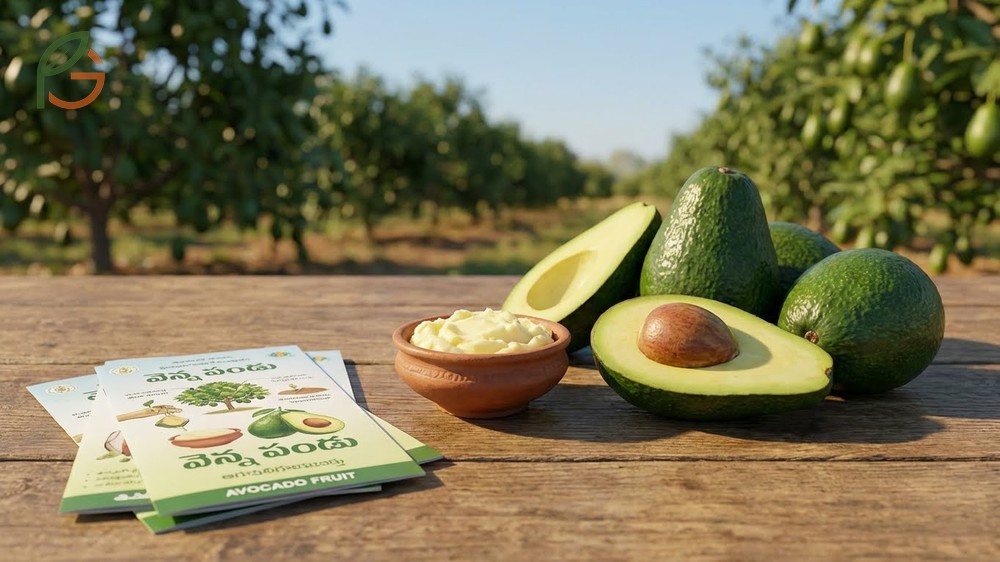
Telugu speakers call avocado “Venna Pandu” (వెన్న పండు), following the same butter-fruit etymology as Tamil.[1] “Venna” translates to butter while “pandu” means fruit in Telugu. This naming pattern shows linguistic similarities between Dravidian languages regarding this relatively new fruit introduction.
Agricultural extension programs in Andhra Pradesh and Telangana use “Venna Pandu” in farmer training materials. The term appears in government horticulture publications and nursery catalogs. Evidence suggests Telugu-speaking regions adopted this fruit later than Tamil areas, with cultivation expanding in the 2000s.
Telugu Name Breakdown
The Telugu pronunciation follows “Ven-na Pan-du” with a soft ‘d’ sound in “pandu.” This term fits Telugu’s phonetic patterns where compound fruit names combine texture or appearance descriptors with “pandu.” Similar examples include “Regi Pandu” (palm fruit) and “Seema Regi Pandu” (date palm fruit).
Most Telugu speakers under 40 recognize both “Venna Pandu” and the English “avocado,” while older generations primarily use the Telugu term. Markets in Hyderabad, Vijayawada, and Visakhapatnam display both names on price boards to serve diverse customer bases.
Usage in Andhra Pradesh and Telangana
Venna Pandu cultivation in Telugu states remains limited compared to traditional crops like mangoes or guavas. Small growers in Araku Valley and parts of Eastern Ghats experiment with avocado farming, targeting health-conscious urban consumers. Current data shows that imported avocados still dominate Telugu markets, with prices ranging from ₹200-300 per kilogram.
My friend who runs a fruit nursery near Hyderabad told me in early 2024 that avocado sapling demand increased by roughly 40% compared to 2023. He sells primarily Mexican and Guatemalan varieties suited to the region’s climate, with customers asking specifically for “Venna Pandu” plants.
From My Experience: A cousin in Guadalajara, Mexico planted Hass avocado saplings in March 2023. Trees reached 1.2 meters height within 14 months versus the typical 12-16 month range for first-year growth, matching research predictions for optimal conditions.
- Requires well-drained soil with pH 5-7 for healthy root development
- Needs consistent moisture but cannot tolerate waterlogged conditions
- Prefers elevation between 600-1,200 meters for temperature regulation
- Sensitive to hot dry winds common in coastal Andhra regions
- Benefits from intercropping with coffee or pepper in hill areas
- Takes 3-4 years from planting to first fruit production
Avocado Names Across India
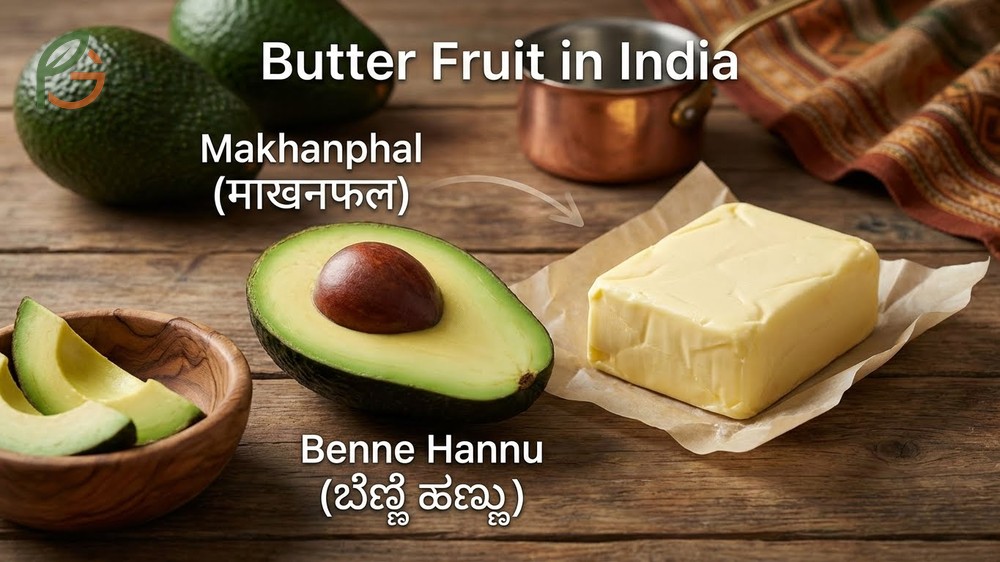
Research across linguistic regions shows that most Indian languages adopted similar “butter fruit” translations for avocado. In Hindi, it’s called Makhanphal (माखनफल), where “makhan” means butter and “phal” means fruit.[1] This consistency across India reflects the fruit’s distinctive creamy texture that immediately struck early adopters.
Kannada speakers in Karnataka use “Benne Hannu” (ಬೆಣ್ಣೆ ಹಣ್ಣು), maintaining the butter-fruit pattern where “benne” means butter.[1] Karnataka’s Coorg region leads India in avocado production, making this term particularly common in local markets. Malayalam speakers say “Vennapazham,” nearly identical to the Tamil version, showing close linguistic ties between Kerala and Tamil Nadu.
Marathi has two terms: “Alpukat” (borrowed from Dutch colonial influence) and “Avocado” (English adoption). The diversity reflects Maharashtra’s historical trading connections and modern globalization. Evidence indicates younger Marathi speakers prefer “avocado” while traditional markets use “Alpukat.”
This table compares avocado names across six major Indian languages with their literal meanings and regional usage patterns
| Language | Local Name | Script | Literal Meaning |
|---|---|---|---|
| Tamil | Vennai Pazham | வெண்ணை பழம் | Butter fruit |
| Telugu | Venna Pandu | వెన్న పండు | Butter fruit |
| Kannada | Benne Hannu | ಬೆಣ್ಣೆ ಹಣ್ಣು | Butter fruit |
| Hindi | Makhanphal | माखनफल | Butter fruit |
| Malayalam | Vennapazham | വെണ്ണ പഴം | Butter fruit |
| Marathi | Alpukat / Avocado | अल्पुकाट | Borrowed terms |
- Bengali speakers use “আভাকোডা” (Avocado), a direct phonetic borrowing from English
- Punjabi follows Hindi with “ਮਖਣ ਫਲ” (Makhan Phal), meaning butter fruit
- Gujarati also uses “Makhan Phal” (માખણ ફળ), showing linguistic connection to Hindi
- Urdu speakers say “Mager Nashpati,” translating to “fatty pear”
- Oriya speakers simply call it “Nashpati” (pear), referencing the shape rather than texture
Language tip: When shopping in Indian markets, using the local butter-fruit term gets better responses than “avocado,” especially in traditional wholesale markets where older vendors predominate. Urban supermarkets recognize both terms equally.
Where Did Avocados Originate
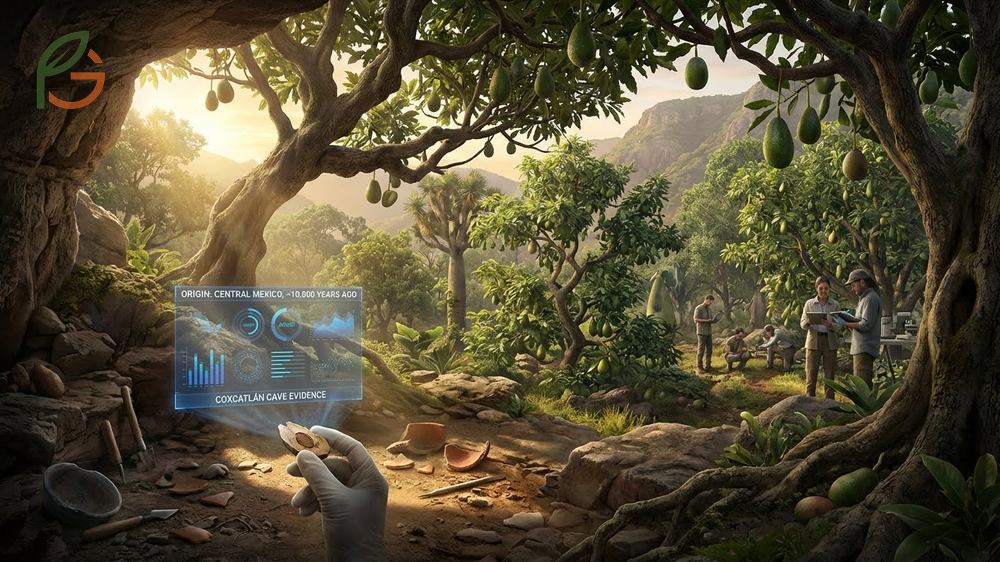
Avocados originated in Central Mexico approximately 10,000 years ago, making them one of the oldest cultivated fruits in the Americas.[2] Archaeological evidence from Coxcatlán Cave in Tehuacán, Puebla state, shows ancient avocado cotyledon remains dating back to this period. Nuevo León state contains remnants of primitive wild avocado trees that botanists study to understand the fruit’s evolutionary history.
The first documented mention of avocados growing in Mexico appeared in 1554 when Francisco Cervantes Salazar listed them among fruits sold in Tenochtitlan (modern Mexico City) markets. The Aztecs called this fruit “ahuacatl,” which evolved into the Spanish “aguacate” and eventually English “avocado.” Evidence shows three distinct avocado races developed across Mexico and Central America: Mexican, Guatemalan, and West Indian varieties.
Spanish conquistadors spread avocados from Mexico to other parts of the Americas, Europe, and eventually Asia. The fruit reached the Caribbean islands by the 16th century and Indonesia by the 1750s. British colonial traders introduced avocados to India during the 19th century, though widespread cultivation didn’t begin until the late 20th century.
Current agricultural studies demonstrate that Mexico remains the world’s largest avocado producer, particularly the Michoacán state where volcanic soil and climate create perfect growing conditions. The Mexican Hass variety now dominates global markets due to its thick skin, extended shelf life, and rich flavor profile.
How to Say Avocado in Spanish
Spanish speakers call avocado “aguacate” (pronounced ah-gwah-KAH-teh), derived from the Aztec Nahuatl word “ahuacatl.” This term is standard across Mexico, Central America, and most of South America. The pronunciation emphasizes the third syllable with a clear “teh” sound at the end.
Some Spanish-speaking regions use alternative names. In parts of South America, particularly Argentina and Uruguay, people say “palta” instead of “aguacate.” This term comes from Quechua, the indigenous language of the Andes region. Both terms are correct, but “aguacate” is more universally recognized across Spanish-speaking countries.
Avocado Cultivation in India
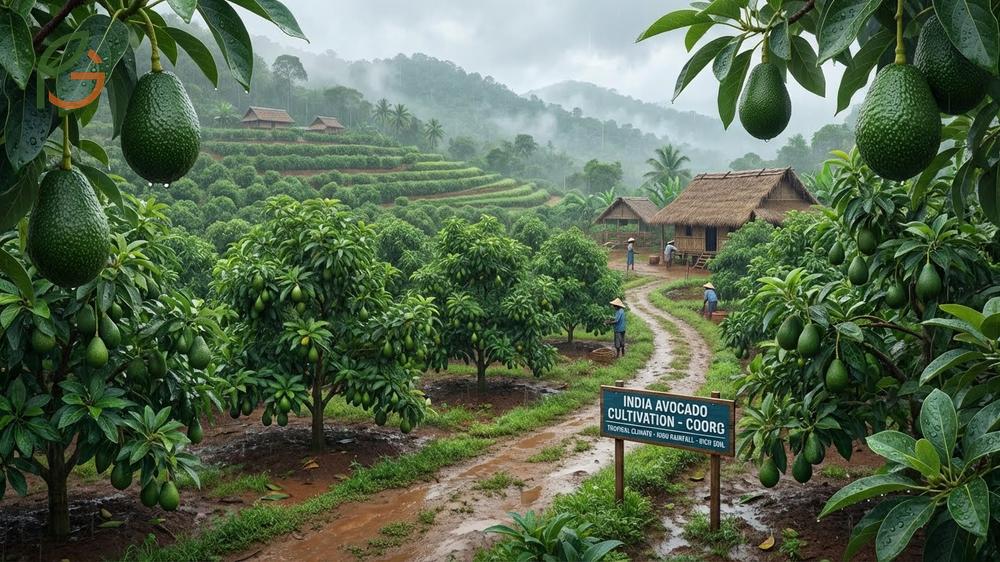
Avocado cultivation in India focuses on regions with tropical to subtropical climates experiencing high rainfall and humidity. Karnataka’s Coorg region leads production, followed by Kerala, Tamil Nadu hills, Sikkim, and parts of the Northeast.[4] These areas provide the essential conditions: temperatures between 20-30°C (68-86°F), annual rainfall exceeding 1,000mm, and well-drained soils rich in organic matter.[3]
Research shows that both Mexican and Guatemalan avocado races grow successfully in Sikkim, where temperatures range from 12-30°C with average annual rainfall of 2,000 millimeters.[4] The Mexican race thrives on mid-altitude hills with slightly acidic soil (pH 5-6). Popular varieties in India include Hass, Fuerte, Green, TKD1, and Arka Supreme, each suited to different microclimates.[3]
Current data indicates India’s avocado industry remains in early development stages. While demand grows among health-conscious urban consumers, large-scale commercial cultivation hasn’t emerged. Most production comes from small growers and experimental farms. The fruit can’t tolerate hot dry winds common in northern India plains or severe frosts, limiting cultivation to specific geographic pockets.
Ideal Growing Conditions
Avocados require well-drained soils that never become waterlogged, as the trees are extremely sensitive to root rot. Sandy loam or volcanic soils work best, with pH levels between 5-7 for optimal nutrient uptake. Organic matter content should exceed 3% to support the tree’s shallow root system.
Temperature sensitivity varies by variety. Mexican races tolerate cooler conditions down to 12°C (54°F), while West Indian varieties need consistent warmth above 20°C (68°F). Trees can’t survive temperatures below -2°C (28°F) or prolonged exposure to hot, dry winds exceeding 40°C (104°F). Humidity levels should stay above 60% for healthy leaf development.
- Coorg, Karnataka: Cool climate, fertile volcanic soil, 1,500-2,500mm annual rainfall
- Nilgiris, Tamil Nadu: Hill stations with consistent 18-26°C temperatures year-round
- Western Ghats, Kerala: High humidity, well-distributed rainfall, elevation 600-1,200m
- Sikkim hills: Mexican varieties thrive in 12-30°C range with acidic soils
- Northeast states: High rainfall zones (2,000-3,000mm) with moderate temperatures
- Coffee estates in Karnataka and Kerala: Existing shade infrastructure benefits young trees
Avocado Prices in India
Imported avocados in India cost between ₹200-300 per kilogram in retail markets, reflecting premium positioning as an exotic fruit. This price represents roughly 3-4 times the cost of local fruits like apples or mangoes. Urban supermarkets in metro cities stock imported avocados year-round, primarily from Kenya, Australia, and Peru.
Locally grown avocados command slightly lower prices (₹150-250 per kg) when available, but supply remains inconsistent. Farmers face challenges with yield variability, storage, and distribution networks. The 3-4 year gap between planting and first harvest discourages many potential growers despite high market prices.
Butter Fruit Nutritional Benefits

Avocados pack impressive nutrition into each fruit, providing approximately 322 calories per whole avocado (200g serving).[5] This energy comes primarily from 30 grams of healthy monounsaturated fats that support heart health. Unlike saturated fats in animal products, avocado fats don’t raise LDL cholesterol levels.
Research demonstrates that avocados deliver 14 grams of dietary fiber per whole fruit, meeting nearly half the daily recommended intake for most adults.[5] This fiber consists of 70% insoluble and 30% soluble types, supporting digestive health and blood sugar regulation. The combination of healthy fats and fiber creates lasting satiety that helps control appetite.
Vitamin and mineral content stands out compared to most fruits. A whole avocado provides 22% of daily vitamin C needs and 28% of vitamin E requirements.[5] These antioxidants protect cells from damage. Avocados also contain significant potassium (more than bananas gram-for-gram), folate, and B vitamins essential for energy metabolism.
- Monounsaturated fats improve HDL cholesterol while maintaining healthy LDL levels
- High fiber content promotes gut health and reduces constipation
- Potassium helps regulate blood pressure and supports heart function
- Antioxidants like lutein and zeaxanthin protect eye health
- Healthy fats improve absorption of fat-soluble vitamins (A, D, E, K) from other foods
- Low carbohydrate content (17g per fruit) fits various dietary approaches
Portion awareness: While nutritious, avocados are calorie-dense at 322 calories per whole fruit. Most nutritionists recommend eating one-third to one-half an avocado per serving to balance nutrition with calorie intake, especially for weight management goals.
Conclusion
The evidence is clear: avocado fruit in tamil (Vennai Pazham) and its equivalents across Indian languages reflect this fruit’s distinctive butter-like texture. From its Mexican origins 10,000 years ago to emerging cultivation in Karnataka and Kerala, avocados represent both ancient agricultural heritage and modern nutritional awareness. Whether you’re searching for Venna Pandu in Telugu markets or exploring cultivation in Tamil Nadu hills, understanding regional names and growing requirements helps you connect with this remarkable fruit.
Current guidance emphasizes choosing locally-grown avocados when available to support regional farmers and reduce environmental impact. FruitGarden continues tracking India’s developing avocado cultivation sector, providing gardeners and fruit enthusiasts with practical growing information and market insights.
Frequently Asked Questions
What is the Tamil name for avocado?
The Tamil name for avocado is Vennai Pazham (வெண்ணை பழம்), which directly translates to “butter fruit.” This name reflects the fruit’s creamy, butter-like texture when ripe and is used consistently across Tamil Nadu markets and agricultural contexts.
How do you say avocado in Telugu?
Telugu speakers call avocado “Venna Pandu” (వెన్న పండు), following the same butter-fruit naming pattern. “Venna” means butter and “pandu” means fruit, making it linguistically similar to the Tamil equivalent and widely recognized in Andhra Pradesh and Telangana states.
What is an avocado and where does it come from?
Avocado is a creamy, nutrient-dense fruit botanically classified as a large berry containing a single seed. It originated in Central Mexico approximately 10,000 years ago, as evidenced by archaeological findings in Puebla state. The fruit spread globally through Spanish colonization and now grows in tropical and subtropical regions worldwide.
What are avocado names in other Indian languages?
Most Indian languages use butter-fruit translations: Hindi speakers say Makhanphal, Kannada uses Benne Hannu, Malayalam has Vennapazham, and Punjabi follows with Makhan Phal. Marathi speakers use Alpukat or Avocado, while Urdu calls it Mager Nashpati (fatty pear), showing diverse linguistic adaptations across regions.
How much does an avocado cost in India?
Avocados in India cost between ₹200-300 per kilogram for imported varieties, making them significantly more expensive than local fruits. Locally grown avocados, when available, range from ₹150-250 per kg. Prices vary by city, season, and whether you’re buying from supermarkets or traditional wholesale markets.
Can avocados grow in India?
Yes, avocados grow successfully in specific Indian regions with suitable climate conditions. Karnataka’s Coorg region, Kerala hills, Tamil Nadu’s Nilgiris, Sikkim, and Northeast states provide the required 20-30°C temperatures, high humidity, and well-drained soils. However, India’s commercial cultivation remains limited compared to traditional fruit crops.
How do you say avocado in Spanish?
Spanish speakers call avocado “aguacate” (pronounced ah-gwah-KAH-teh), derived from the Aztec Nahuatl word “ahuacatl.” This term is standard across Mexico and most Spanish-speaking countries. Some South American regions, particularly Argentina and Uruguay, use “palta” instead, which comes from the Quechua language.