Are peach pits poisonous? Yes, peach pits contain amygdalin—a compound that breaks down into cyanide when digested[1]. Research shows that swallowing one whole pit rarely causes harm, but chewing or crushing 13-15 kernels can reach lethal levels for adults[2]. Current agricultural safety data from FruitGarden emphasizes understanding stone fruit toxins to protect your family while enjoying homegrown peaches.
Quick Answer
Are Peach Pits Poisonous
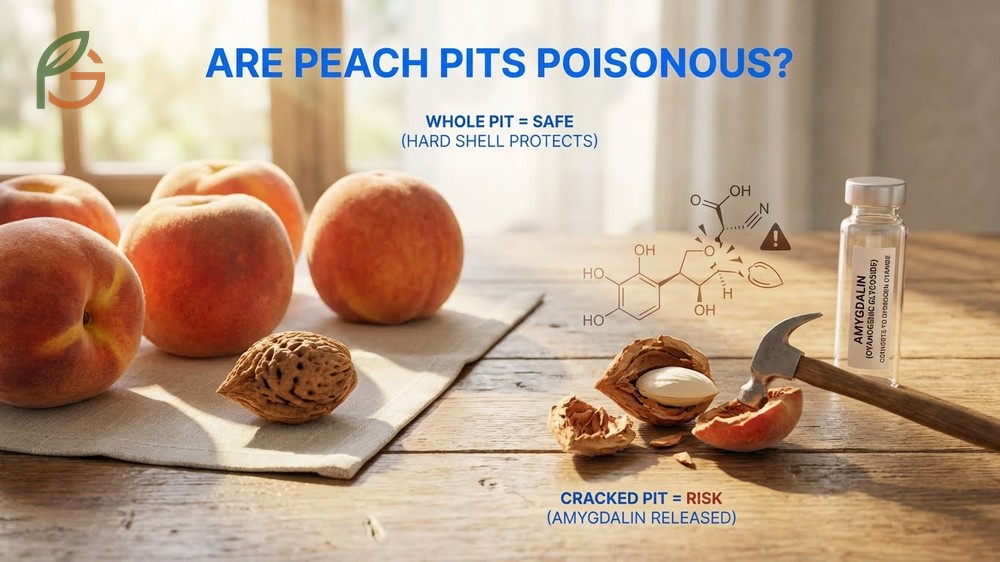
Peach pits from the Prunus plant family contain amygdalin, a cyanogenic glycoside that your digestive enzymes convert into hydrogen cyanide[1]. This natural defense mechanism protects seeds from being eaten in the wild. Studies demonstrate that amygdalin remains locked inside the hard shell until you crack or chew it[5].
The good news? Swallowing a whole peach pit during summer backyard gatherings won’t send you to the hospital. Research from poison control centers confirms that the intact shell passes through your digestive system without releasing toxins[1]. Most people who accidentally swallow pits experience no symptoms beyond mild stomach discomfort.
Current data shows the danger emerges when you chew, crush, or grind peach kernels. Evidence suggests that enzymatic hydrolysis releases hydrogen cyanide at toxic levels when consumed in quantities exceeding 20 mg per 100 g of plant tissue[5].
What often gets overlooked is that ripe peaches contain dramatically lower amygdalin levels than unripe fruit. Agricultural data reveals that amygdalin content peaks during fruit enlargement stages and drops significantly at ripening[6].
Important Note: Don’t confuse peach pit toxicity with peach flesh safety. The sweet fruit you eat is completely safe and nutritious—only the inner kernel poses cyanide risk when crushed or chewed.
Peach Pit Toxicity: How Amygdalin Works
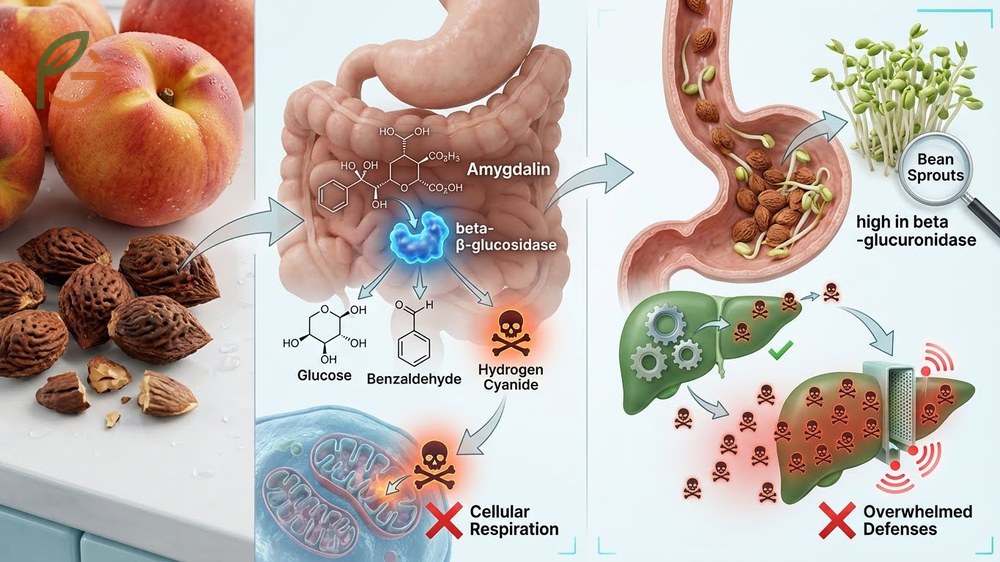
Amygdalin breaks down through a two-step enzymatic process when it contacts beta-glucosidase in your gut. This enzyme splits amygdalin into glucose, benzaldehyde, and hydrogen cyanide—the deadly component that interferes with cellular respiration[5]. Your body can detoxify small cyanide amounts through natural processes, but large doses overwhelm these defenses.
Research shows that eating peach kernels with foods high in beta-glucuronidase—like bean sprouts, celery, or carrots—accelerates cyanide conversion. Vitamin C supplements also increase this conversion rate in laboratory conditions[5].
How Cyanide Affects Your Body
Cyanide binds to ferric ions in cytochrome oxidase, effectively shutting down your mitochondria’s ability to use oxygen. This creates cellular hypoxia even when your lungs deliver adequate oxygen to your bloodstream[7]. Cells suffocate despite normal breathing.
The minimum lethal dose of cyanide ranges from 0.52 to 3.5 mg/kg of body weight when ingested orally[7]. For a 70 kg (154 lb) adult, this translates to approximately 36-245 mg of hydrogen cyanide.
Stone Fruit Comparison
This table compares amygdalin content across five stone fruit types showing peaches have moderate toxicity levels
| Fruit Type | Amygdalin (mg/g) | Relative Risk |
|---|---|---|
| Bitter Almonds | 40-50[5] | Highest |
| Wild Apricots | 25-30[5] | High |
| Peaches | 12-14.7[3] | Moderate |
| Plums | 8-12[6] | Moderate |
| Sweet Cherries | 2-4[5] | Lower |
Cyanide in Peach Seeds: Lethal Doses
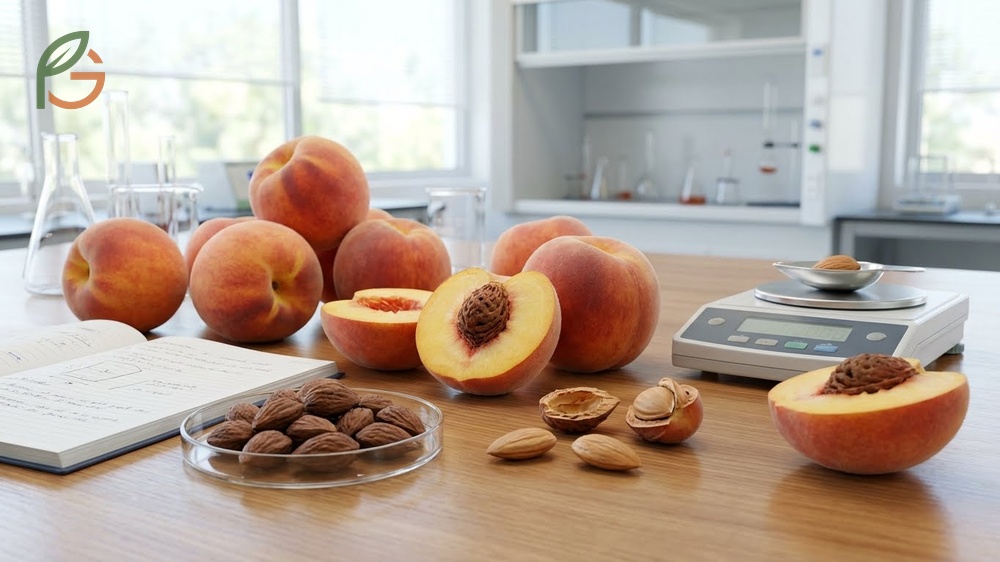
Studies examining peach toxicity establish that consuming 13-15 raw peach kernels reaches the lethal range for adults[2]. This calculation assumes you’ve cracked open the hard shells and chewed the inner seeds thoroughly. The exact number varies based on peach variety, ripeness, and individual body weight.
Research demonstrates that each peach kernel averages 0.4-0.6 grams when dried. With amygdalin content at 12-14.7 mg/g, one kernel delivers approximately 5-9 mg of amygdalin[3]. When hydrolyzed, this produces roughly 0.3-0.5 mg of hydrogen cyanide per kernel.
Adult Toxicity Levels
For a 70 kg adult, the minimum lethal cyanide dose of 0.52 mg/kg equals about 36 mg total hydrogen cyanide[7]. This explains why 13-15 kernels (producing approximately 39-75 mg cyanide) enter dangerous territory. Your body’s natural detoxification enzymes can’t keep pace with this sudden influx.
Current medical data shows that mild-to-moderate toxicity symptoms appear at doses well below lethal levels. Evidence indicates that consuming 5-8 crushed kernels may trigger headaches, nausea, and breathing difficulties in sensitive individuals[4].
- Breathing changes: Rapid shallow breaths or difficulty getting air
- Mental confusion: Disorientation or inability to focus clearly
- Cardiovascular stress: Racing heartbeat or chest tightness
- Digestive upset: Severe nausea, vomiting, or abdominal cramping
- Physical weakness: Sudden fatigue or inability to stand steadily
Children’s Toxicity Risk
Children face dramatically higher risk due to lower body weight. Evidence suggests that 7-10 kernels can reach lethal doses for children[5]. A 20 kg child needs only 10 mg of cyanide to reach the minimum lethal threshold—achievable by eating just 3-4 crushed peach kernels.
Research shows that children’s faster metabolisms actually increase toxicity risk. Their cells consume oxygen at higher rates, making cyanide’s interference with cellular respiration more immediately dangerous[4].
Critical Warning: Never let children crack open peach pits as a game or snack activity. Even “just tasting” crushed kernels can deliver dangerous cyanide doses for small body weights.
Peach Kernel Safety Guidelines
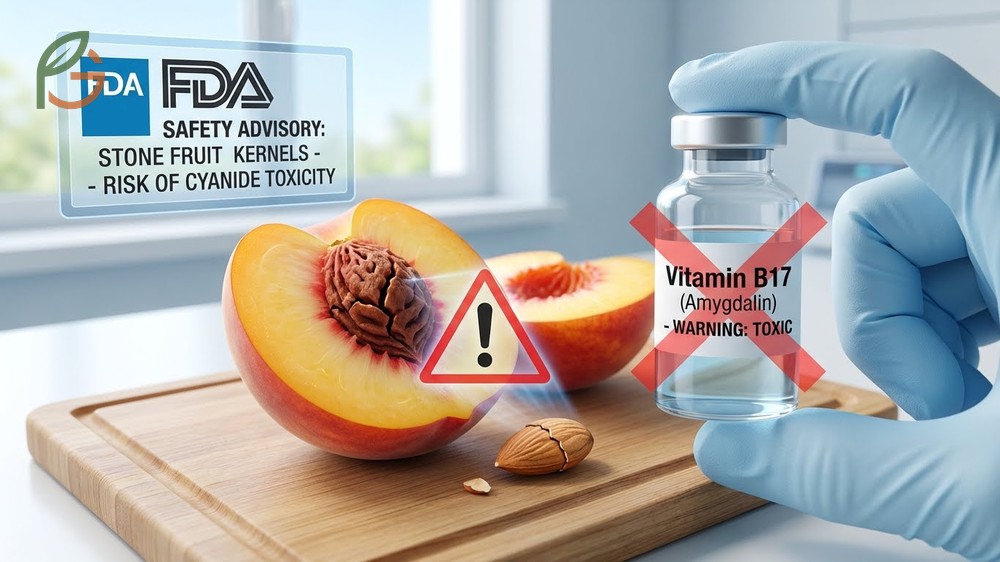
The FDA issued explicit warnings about consuming stone fruit kernels as alternative health products. Their 2024 safety advisory specifically addressed apricot kernels but applies equally to peach pits, noting that amygdalin-containing products can cause fatal cyanide toxicity[4]. Don’t fall for marketing claims about “vitamin B17” or cancer-fighting properties—these lack scientific support and pose serious health risks.
If you accidentally crack a peach pit while processing fruit for preserves or desserts, dispose of the inner kernel immediately. Agricultural safety protocols recommend wearing gloves when handling large quantities of cracked pits to avoid skin contact with amygdalin-rich dust[1].
For home gardeners growing peach trees, teach children that peach pits aren’t edible components. Store fallen fruit pits in sealed containers away from pets and wildlife. Dogs and cats show higher sensitivity to cyanide than humans and can develop toxicity from even smaller amounts[1].
- Never intentionally consume peach kernels or “peach seed tea” products
- Discard cracked pits immediately during canning or jam preparation
- Supervise children during peach picking to prevent pit cracking games
- Store harvested pits in sealed containers away from pets
- Educate family members that only peach flesh is edible
- Contact poison control immediately if someone chews kernels—don’t wait for symptoms
Stone Fruit Toxins: What Gardeners Should Know
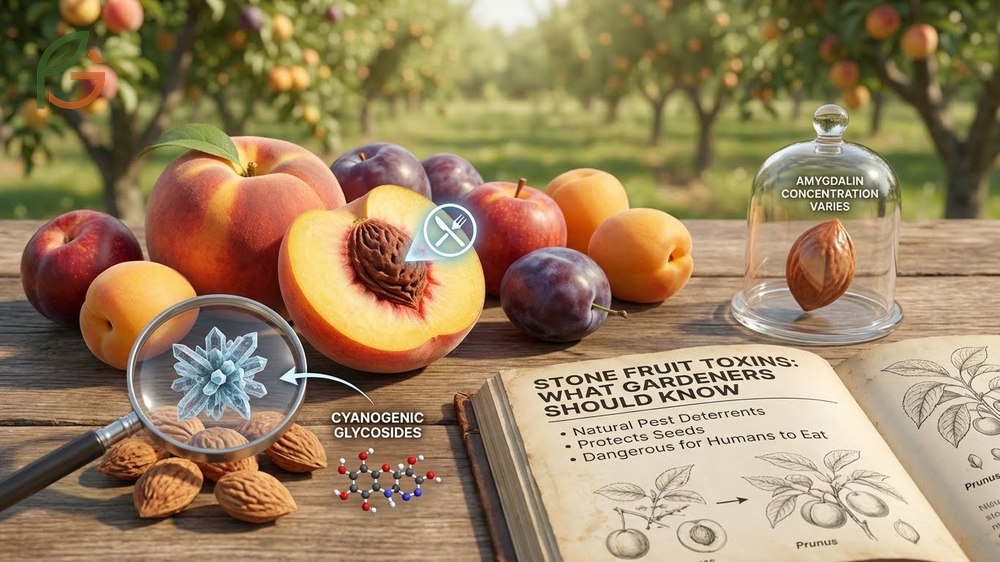
All members of the Prunus genus produce cyanogenic glycosides as natural pest deterrents. Research across multiple stone fruit species shows this evolutionary adaptation protects seeds from being destroyed by animals before germination[6]. Ironically, the same compound that ensures seed survival makes kernels dangerous for humans to eat.
Studies demonstrate that amygdalin concentration varies dramatically between peach cultivars. Stone peach varieties contain significantly higher levels than softer-fleshed dessert varieties like Redhaven or Elberta[3]. This matters for home orchardists deciding which trees to plant near play areas.
Agricultural data reveals that amygdalin levels in leaves and young shoots exceed seed concentrations during early growing seasons. Evidence indicates that pruning debris and dropped green fruit should be kept away from livestock and pets[6].
What most gardeners don’t realize is that frost-damaged peach trees produce higher amygdalin levels in new growth. This stress response increases cyanogenic glycoside production as a defense mechanism, making spring pruning debris particularly toxic[5].
Orchard Safety Tip: Compost fallen peach leaves and pruning waste separately from vegetable garden compost. While amygdalin degrades over time, fresh debris can harm beneficial insects and soil microorganisms.
Peach Seed Poison: Recognizing Symptoms
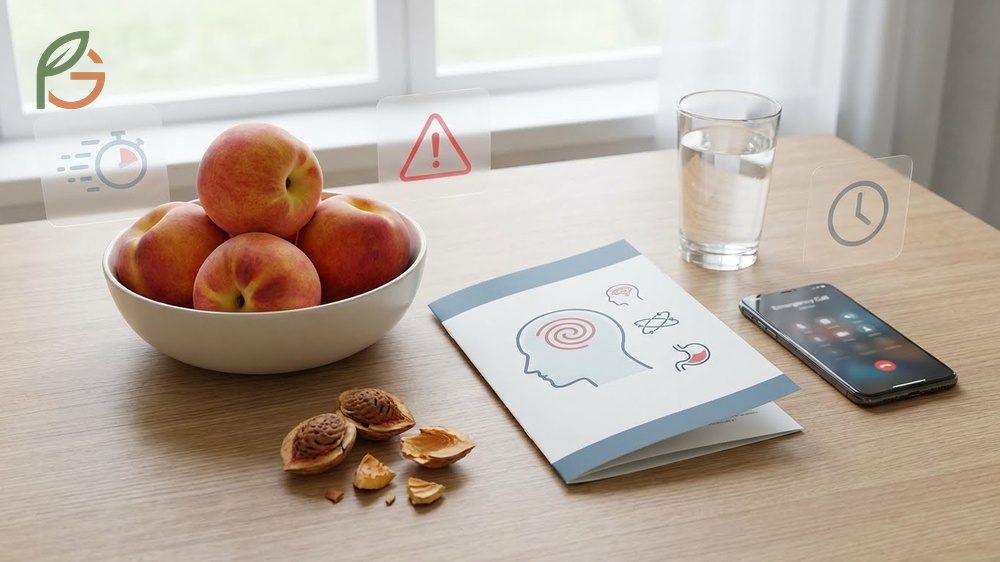
Cyanide toxicity progresses rapidly—symptoms can appear within 15-30 minutes of consuming crushed kernels. Early warning signs include headache, dizziness, and nausea that escalate quickly to more severe reactions[4]. Don’t wait to see if symptoms worsen—seek emergency medical care immediately if someone has chewed peach kernels.
Research documents three severity levels. Mild cases involve gastrointestinal distress and headaches. Moderate toxicity adds breathing difficulty, chest tightness, and mental confusion. Severe poisoning causes seizures, loss of consciousness, cardiac arrhythmias, and potentially death within 15-60 minutes[7].
Medical evidence shows that mortality rates for untreated severe cyanide poisoning reach 95%[7]. The rapid progression means calling 911 immediately offers far better outcomes than driving someone to the hospital yourself. Paramedics carry specific cyanide antidote kits that can reverse toxicity if administered quickly.
- Bright red gums or lips: Paradoxical sign showing cells can’t use oxygen
- Gasping or labored breathing: Respiratory distress despite adequate air supply
- Rapid weak pulse: Heart racing above 120 bpm with low blood pressure
- Bluish skin tone (cyanosis): Discoloration around lips, fingernails, or face
- Seizures or convulsions: Uncontrolled muscle spasms or loss of consciousness
- Severe vomiting: Repeated episodes with inability to keep water down
- Mental status changes: Confusion, drowsiness, or inability to respond to questions
If you suspect peach pit poisoning, provide emergency responders with critical information: how many kernels were consumed, approximate time of ingestion, and whether they were chewed or swallowed whole. This information helps medical teams determine appropriate antidote dosing[1].
Conclusion
The evidence is clear: peach pits are poisonous when kernels are chewed or crushed, but swallowing whole pits poses minimal risk. Research confirms that 13-15 crushed kernels can deliver lethal cyanide doses to adults, while children face danger from even smaller amounts[2]. You can safely enjoy fresh peaches from your backyard orchard—just dispose of pits properly and educate family members about kernel dangers.
Current safety guidance emphasizes prevention over treatment. Keep cracked pits away from children and pets, never consume stone fruit kernels as supplements, and contact poison control immediately if accidental ingestion occurs. FruitGarden helps home orchardists grow delicious peaches safely by providing research-based cultivation practices that prioritize both harvest quality and family health.
Medical Disclaimer
Important Medical Disclaimer: This content is for informational and educational purposes only. It is not intended as a substitute for professional medical advice, diagnosis, or treatment. Always consult a qualified healthcare professional or poison control center (1-800-222-1222) immediately if you suspect cyanide poisoning or peach pit ingestion. Never delay seeking emergency care for symptoms described in this article.
Frequently Asked Questions
What Happens If You Swallow a Peach Pit Whole?
Swallowing a whole peach pit rarely causes problems because the hard shell protects you from amygdalin exposure[1]. The pit passes through your digestive system intact within 24-48 hours. You might experience mild stomach discomfort, but cyanide poisoning won’t occur unless you chew or crack the pit first.
How Much Cyanide Is in One Peach Pit?
One peach kernel contains approximately 5-9 mg of amygdalin, which converts to about 0.3-0.5 mg of hydrogen cyanide when digested[3]. This amount is too small to cause toxicity in healthy adults, but multiple kernels rapidly accumulate dangerous doses.
Can Cooking Peach Pits Remove the Cyanide?
Cooking doesn’t reliably eliminate amygdalin from peach kernels. Studies show that while high heat degrades some cyanogenic glycosides, significant toxicity remains even after boiling or roasting[5]. Never assume that cooked or processed kernels are safe to eat—dispose of them regardless of preparation method.
Are Peach Pits More Toxic Than Apple Seeds?
Yes, peach pits contain significantly more amygdalin than apple seeds. Research shows peach kernels have 12-14.7 mg/g of amygdalin while apple seeds contain only 1-4 mg/g[3]. This means eating one crushed peach kernel equals approximately 3-15 crushed apple seeds in toxicity.
How Long Does Peach Pit Poisoning Take to Show Symptoms?
Cyanide toxicity symptoms appear rapidly—typically within 15-30 minutes of consuming crushed kernels[4]. Early signs include headache, nausea, and dizziness that can progress to severe reactions within the first hour. This rapid onset makes immediate medical attention critical—don’t wait to see if symptoms improve on their own.
Can Peach Pit Toxins Harm My Garden Soil?
Composted peach pits don’t harm soil once fully decomposed. Amygdalin degrades naturally during the composting process, and mature compost contains no detectable cyanogenic glycosides[6]. However, fresh cracked pits and green plant material should be composted separately to protect beneficial organisms.
Do All Peach Varieties Have the Same Toxicity Level?
No, amygdalin content varies significantly between cultivars. Stone peach varieties contain higher concentrations than dessert peaches like Redhaven or Elberta[3]. Wild or ornamental peach trees typically have the highest toxicity levels. Regardless of variety, all peach kernels should be treated as potentially dangerous.