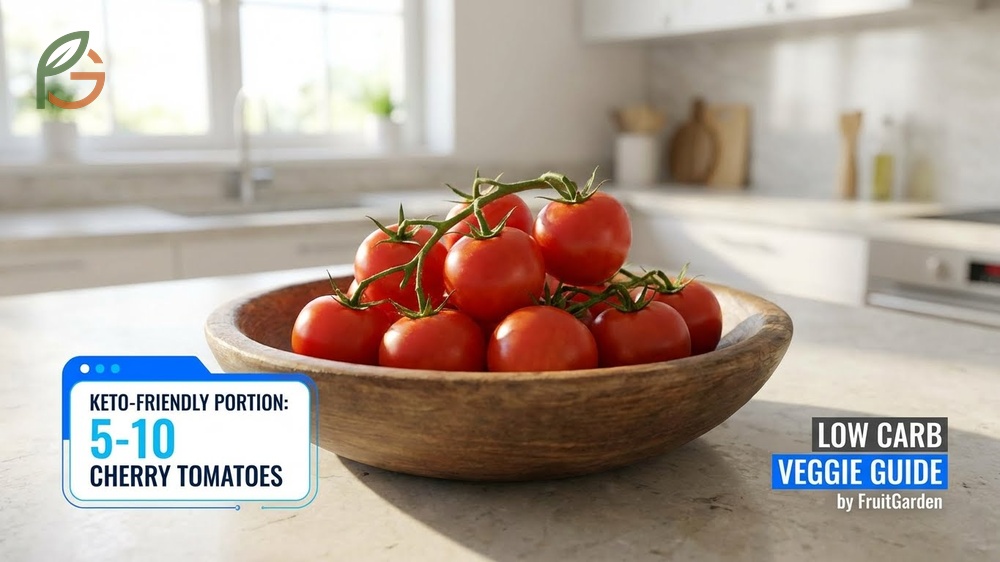
Are cherry tomatoes keto? Yes, cherry tomatoes can fit into a keto diet when you control portions. Research shows they contain 4g net carbs per cup[1], which is about 20% of your daily keto limit. Most people following strict keto (under 20g net carbs daily) can enjoy 5-10 cherry tomatoes without disrupting ketosis. FruitGarden synthesizes current nutritional research and USDA data to help you make informed decisions about low-carb vegetables for your garden and diet.
Quick Answer
- Cherry tomatoes contain 4g net carbs per cup[1] (149g serving) or 3g net carbs per 100g[2]
- They’re moderately keto-friendly – higher in carbs than spinach (1g) or cucumbers (3g), but lower than carrots (7g)[2]
- Stick to 5-10 cherry tomatoes daily (about ½ to 1 cup) on strict keto to stay under 20g net carbs[3]
- Best practice: Pair cherry tomatoes with high-fat foods like avocado, olive oil, or cheese to maintain ketosis
Are Cherry Tomatoes Keto
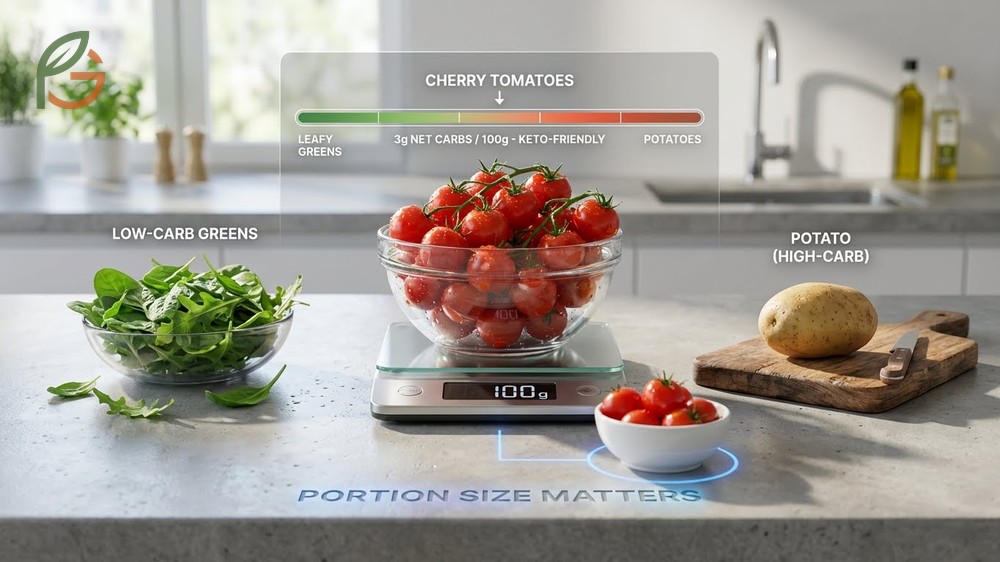
Cherry tomatoes occupy a middle ground on the keto spectrum. They’re not as low-carb as leafy greens, but they won’t derail your diet like potatoes would. Studies show that vegetables with less than 5g net carbs per 100g serving can be eaten relatively freely on keto[2].
Cherry tomatoes contain exactly 3g net carbs per 100g[2], placing them just inside the “keto-friendly” category. What often gets overlooked is that portion size matters more than the carb count itself – eating 10 cherry tomatoes (about 170g) won’t kick you out of ketosis, but consuming an entire pint (about 300g) might push you over your daily limit.
The key difference between cherry tomatoes and truly low-carb vegetables is volume tolerance. You can eat massive salads with spinach or lettuce without worrying, but cherry tomatoes require mindful portioning.
Understanding Net Carbs in Cherry Tomatoes
Net carbs are calculated by subtracting fiber from total carbohydrates. This matters because fiber doesn’t raise blood sugar or interfere with ketosis. For cherry tomatoes, one cup (149g) contains 6g total carbs and 2g fiber[1], giving you 4g net carbs.
This 2g of dietary fiber provides about 6% of your daily fiber needs[1]. Research demonstrates that fiber helps moderate blood sugar response, making cherry tomatoes a smarter choice than low-fiber carb sources.
How Cherry Tomatoes Fit Your Daily Carb Limit
Standard keto protocols require staying under 20g net carbs daily to achieve and maintain ketosis[3]. If you’re following strict keto, vegetables should account for 12-15g of those carbs[4].
Here’s what that means practically: One cup of cherry tomatoes (4g net carbs) represents 20-33% of your vegetable carb budget. You’ll need to balance them with lower-carb options like zucchini, cauliflower, or leafy greens throughout the day.
Important Note: People following moderate low-carb diets (30-50g net carbs daily) have significantly more flexibility and can eat 2-3 cups of cherry tomatoes without concern.
Carb Content Tomatoes
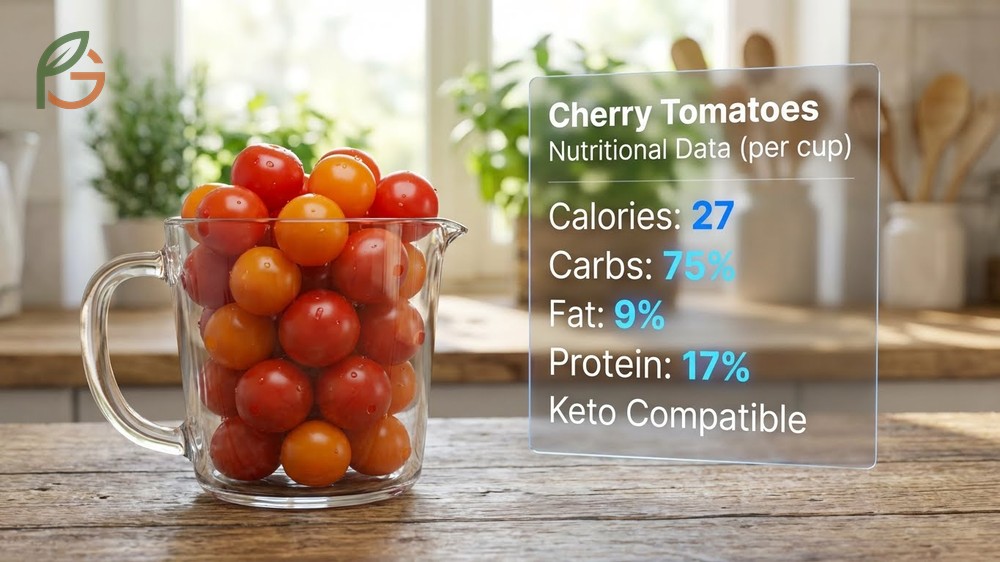
Current USDA nutritional databases show cherry tomatoes are relatively low in calories and carbohydrates. One cup provides just 27 calories, making them volume-friendly for those who want to feel full without consuming excess energy.
The macronutrient breakdown shows 75% carbs, 9% fat, and 17% protein[5]. While the high carb percentage might seem concerning, the absolute amount remains low enough for keto compatibility.
USDA Nutrition Data for Cherry Tomatoes
Agricultural data shows cherry tomatoes provide more than just carbohydrates. They’re an excellent source of vitamin C (23% DV per cup), potassium (8% DV), and lycopene (3,834μg per cup)[5].
The vitamin C content is particularly noteworthy for keto dieters, as reducing carb-rich fruits often means less vitamin C intake. Ten cherry tomatoes provide nearly one-quarter of your daily vitamin C requirement without significantly impacting your carb budget.
- Calories: 27 per cup (149g)[1]
- Total Carbs: 6g per cup[1]
- Dietary Fiber: 2g per cup (6% DV)[1]
- Net Carbs: 4g per cup[1]
- Protein: 1g per cup[5]
- Fat: 0.3g per cup[5]
- Water Content: 94.9% by weight[6]
Cherry vs. Grape vs. Roma Tomatoes
Different tomato varieties have slightly different carb profiles. Cherry tomatoes actually contain fewer calories than many larger varieties while delivering higher natural sweetness[6].
The differences are minimal but worth noting if you’re tracking macros precisely. Roma tomatoes have 22 calories per 100g compared to cherry tomatoes’ 18 calories[6].
This table compares calories, carbohydrate content, water percentage, and best culinary uses across four common tomato varieties
| Tomato Type | Calories | Net Carbs | Water Content | Best Keto Usage |
|---|---|---|---|---|
| Cherry Tomatoes | 18 kcal[6] | 1.9g[6] | 94.9% | Snacking, salads, roasting |
| Grape Tomatoes | 20 kcal[6] | 2.1g | 94.5% | Snacking, cold dishes |
| Roma Tomatoes | 22 kcal[6] | 2.4g | 93.7% | Cooking, sauces (use sparingly) |
| Regular Tomatoes | 18 kcal[2] | 3g[2] | 94.5% | Slicing, sandwiches (limit) |
Keto Vegetable Options
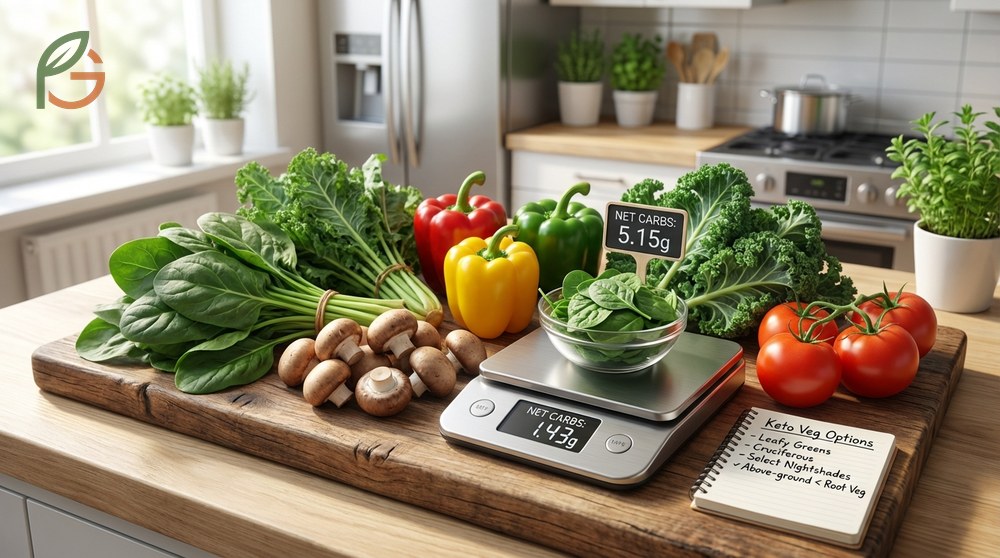
Evidence suggests a simple rule for choosing keto vegetables: above-ground vegetables are generally lower in carbs than below-ground root vegetables[2]. This principle holds true across nearly all plant categories, with few exceptions like onions.
Green vegetables tend to be lower in carbs than colorful ones. For instance, green bell peppers contain fewer carbs than red or yellow peppers, and green cabbage beats purple cabbage for carb content[2].
Most people find it hard to overeat spinach, zucchini, lettuce, cucumbers, cabbage, asparagus, and kale on keto[2]. These vegetables can be consumed relatively freely without tracking every gram.
Lower Carb Vegetable Alternatives
If you’re looking to maximize vegetable volume while minimizing carbs, several options beat cherry tomatoes. Spinach contains just 1g net carbs per 100g[2], giving you 4x more volume for the same carb budget as cherry tomatoes.
Leafy greens provide the most flexibility on strict keto. You can eat large salads with lettuce, spinach, and arugula without worrying about carb counts. Adding cherry tomatoes as a garnish (5-7 pieces) gives you flavor variety without carb overload.
- Spinach: 1g net carbs per 100g – use freely in salads and cooked dishes[2]
- Lettuce: 2g net carbs per 100g – perfect salad base[2]
- Cucumber: 3g net carbs per 100g – excellent snack with dip[2]
- Zucchini: 3g net carbs per 100g – versatile for cooking[2]
- Cauliflower: 3g net carbs per 100g – rice and mash substitute[2]
- Asparagus: 2g net carbs per 100g – pairs well with butter or hollandaise[2]
- Avocado: 2g net carbs per 100g – high in healthy fats[2]
Vegetables to Limit on Keto
Root vegetables grow below ground and pack significantly more carbs than their above-ground counterparts. Potatoes contain 19g net carbs per 100g[2], nearly equal to your entire daily keto carb budget in just 3.5 ounces.
Carrots, onions, and beets fall into the “use sparingly” category. While they’re not strictly forbidden, eating them in typical serving sizes will consume a large portion of your daily carb allowance.
Pro Tip: Onions can be used as seasoning in small amounts since you won’t eat them in large quantities. However, be careful with caramelized or sautéed onions – they’re easier to overconsume[2].
Serving Size Keto
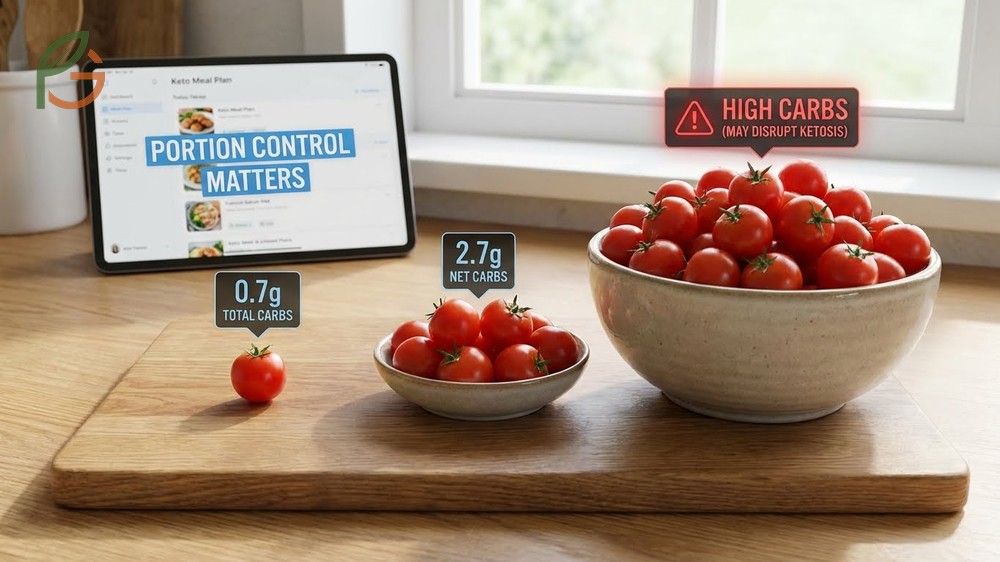
Portion control makes the difference between cherry tomatoes fitting your keto plan or disrupting ketosis. Current guidance emphasizes that serving size matters more than whether a food is technically “keto-friendly.” One cherry tomato (about 17g) contains only 0.7g total carbs[6], making individual tomatoes nearly negligible.
The challenge comes when eating them mindlessly. Ten cherry tomatoes (170g) provide approximately 2.7g net carbs – still manageable. But consuming a full pint (about 300g or 18-20 tomatoes) delivers 6-8g net carbs, which represents 30-40% of your strict keto budget.
For breakfast, pairing 5-7 cherry tomatoes with eggs, avocado, and cheese creates a balanced keto meal. The combination of high-fat foods with moderate vegetables helps maintain satiety without exceeding carb limits. At lunch, adding 8-10 halved cherry tomatoes to a large spinach salad with olive oil dressing provides volume and nutrients within your carb budget.
Dinner presents more flexibility if you’ve kept carbs low throughout the day. Roasting 1 cup of cherry tomatoes with olive oil, garlic, and herbs makes an excellent side dish for grilled meats or fish. The cooking process concentrates flavors without increasing carb content.
Research shows that tracking macros becomes second nature after 2-3 weeks of consistent practice. Until then, measuring portions prevents accidental overconsumption. Pre-portioning cherry tomatoes into small containers (½ cup each) helps maintain control without constant calculation.
- Strict Keto (under 20g net carbs daily): 5-10 cherry tomatoes per day, maximum 1 cup total
- Moderate Keto (20-30g net carbs daily): 10-15 cherry tomatoes per day, up to 1.5 cups total
- Liberal Low-Carb (30-50g net carbs daily): 15-20 cherry tomatoes per day, up to 2 cups total
- Single Serving Size: ½ cup (75g) contains 2g net carbs – ideal portion for strict keto meals
- Snack Portion: 5 cherry tomatoes (85g) with 2oz cheese provides 3g total net carbs
Meal Timing Tip: Save cherry tomatoes for meals rather than snacks. When eaten with protein and fat, the fiber in tomatoes helps slow digestion and stabilize blood sugar.
Conclusion
The evidence is clear: cherry tomatoes are moderately keto-friendly when you control portions. With 4g net carbs per cup, they fit comfortably into most keto meal plans without disrupting ketosis. The key is treating them as a condiment or accent rather than a main vegetable, especially if you’re following strict keto protocols under 20g net carbs daily.
Current nutritional guidance emphasizes food quality over rigid restriction. Cherry tomatoes provide valuable nutrients like vitamin C, potassium, and lycopene that support overall health while you’re limiting carbohydrate-rich fruits. FruitGarden encourages growing cherry tomatoes in your garden for fresh, pesticide-free produce that enhances both keto meals and your connection to sustainable food sources.
Medical Disclaimer
Important Medical Disclaimer: This content is for informational and educational purposes only. It’s not intended as a substitute for professional medical advice, diagnosis, or treatment. Always consult a qualified healthcare professional or registered dietitian before making significant changes to your diet, especially if you have diabetes, metabolic syndrome, or other medical conditions. The ketogenic diet isn’t suitable for everyone, and individual carbohydrate tolerance varies. Your healthcare provider can help determine the appropriate carb intake for your specific health needs and goals.
Frequently Asked Questions
How Many Cherry Tomatoes Can I Eat on Keto Per Day?
You can eat 5-10 cherry tomatoes per day on strict keto (under 20g net carbs), which provides 2-4g net carbs. If you’re following moderate keto (20-50g net carbs daily), you can increase this to 15-20 cherry tomatoes. The exact amount depends on your total carb budget and what other vegetables you’re eating that day.
Are Cherry Tomatoes Better Than Regular Tomatoes for Keto?
Cherry tomatoes and regular tomatoes have nearly identical carb content per 100g – both contain about 3g net carbs. The advantage of cherry tomatoes is portion control; it’s easier to count and limit individual small tomatoes than to measure slices of large tomatoes. Cherry tomatoes also have slightly higher water content (94.9% vs 94.5%), making them more hydrating.
Do Cooked Cherry Tomatoes Have More Carbs Than Raw?
No, cooking doesn’t add carbs to cherry tomatoes. However, cooked tomatoes may have slightly lower net carbs per 100g (about 2.5g vs 3g raw) because the increased water content during cooking makes them less dense. Roasting cherry tomatoes concentrates their flavor without changing their carbohydrate structure, making them an excellent keto-friendly side dish when prepared with olive oil.
Can Cherry Tomatoes Kick You Out of Ketosis?
Cherry tomatoes won’t kick you out of ketosis unless you eat excessive amounts. Staying in ketosis requires keeping net carbs under 20-50g daily. Since one cup of cherry tomatoes contains 4g net carbs, you’d need to eat 5+ cups (about 750g or 50+ tomatoes) to risk disrupting ketosis – an unlikely scenario for most people.
What Are the Best Keto-Friendly Alternatives to Cherry Tomatoes?
If you want even lower-carb options, try cucumbers (3g net carbs per 100g), radishes (1.8g), or bell peppers (3-5g depending on color). These vegetables provide similar crunch and freshness with slightly fewer carbs. For salads specifically, swap half your cherry tomatoes for cucumber slices to reduce carbs while maintaining volume and texture.
Should I Avoid Cherry Tomatoes During Keto Induction Phase?
During the first 2-4 weeks of keto (induction phase), many people stick to ultra-low-carb vegetables like spinach, lettuce, and cucumbers to ensure they enter ketosis quickly. While cherry tomatoes aren’t forbidden, limiting them to 5 tomatoes daily (about 1g net carbs) during induction can help guarantee success. After you’re fat-adapted, you can gradually increase portions to 10-15 tomatoes daily.
Are Sun-Dried Cherry Tomatoes Keto-Friendly?
Sun-dried tomatoes are significantly higher in carbs than fresh cherry tomatoes – about 15-18g net carbs per 100g – because removing water concentrates the natural sugars. They’re not ideal for strict keto, but you can use 1-2 tablespoons (about 10g) as a garnish, which provides only 1.5-2g net carbs. Always check labels, as some brands add sugar or corn syrup during processing.