Are cherries good for diabetics? Yes, when eaten in moderation. Research shows fresh cherries have a low glycemic index of 20-25[1], meaning they’re less likely to cause blood sugar spikes compared to other sweet snacks. One cup of fresh cherries provides 3g of fiber[2], which slows carbohydrate absorption and helps control glucose levels. Studies demonstrate that anthocyanins in cherries can improve insulin sensitivity and reduce inflammation markers associated with diabetes complications[3]. FruitGarden synthesizes current nutritional research to help you make informed choices about fruit consumption for diabetes management.
Quick Answer
- Fresh cherries have a low glycemic index of 20-25[1], making them suitable for diabetics
- One cup contains 24g carbs, 3g fiber, and 97 calories[2]
- Tart cherries have 30% less sugar than sweet varieties (8g vs 18g per cup)[1]
- Anthocyanins in cherries may improve insulin sensitivity by blocking glucose transporters[3]
- Best consumed with protein (Greek yogurt, nuts) to further stabilize blood sugar
Are Cherries Good for Diabetics
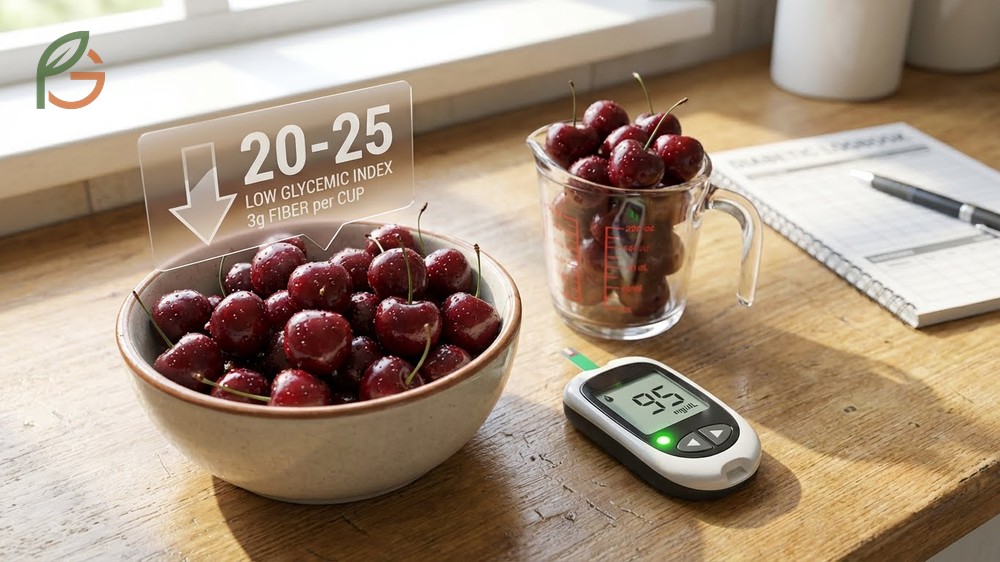
Cherries can be a smart choice for people managing diabetes. Research shows they don’t cause the same dramatic blood sugar spikes you’d get from candy or processed sweets[4]. What makes them work is their combination of natural fiber, antioxidants, and a low glycemic response.
Studies demonstrate that cherries contain anthocyanins, powerful antioxidants that give them their deep red color and may help your body use insulin more effectively[3]. These compounds block specific glucose transporters in your digestive system, which slows down how quickly sugar enters your bloodstream. Current data indicates this effect can reduce inflammation markers linked to diabetes complications.
The fiber content plays a key role too. One cup of fresh cherries delivers 3g of dietary fiber[2], which delays stomach emptying and gives your body more time to process carbohydrates gradually. This matters because fiber can help lower fasting blood sugar and A1C levels in people with type 2 diabetes.
Important Note: Avoid canned cherries packed in syrup and maraschino cherries. These processed varieties contain added sugars that can spike blood glucose levels to 60g carbs per cup[1], compared to 24g in fresh cherries.
Glycemic Index of Fresh Cherries
The glycemic index (GI) measures how quickly a food raises blood sugar on a scale from 0 to 100. Fresh sweet cherries score 20-25, placing them firmly in the “low GI” category[1]. For comparison, white bread scores 70-75 and pure glucose is 100.
This low score means cherries release glucose slowly into your bloodstream. Evidence suggests this gradual absorption helps prevent the sharp peaks and valleys in blood sugar that can make you feel jittery or fatigued. The glycemic load (GL), which factors in portion size, is equally impressive at about 5 for a one-cup serving.
Fiber Content and Blood Sugar Control
The 3g of fiber in one cup of cherries represents about 12% of the daily recommended intake[2]. This soluble and insoluble fiber mix creates a gel-like substance in your digestive tract that physically slows down carbohydrate absorption. Research across multiple studies shows fiber intake can reduce A1C levels by 0.5-0.8% over three months in people with type 2 diabetes.
What often gets overlooked is that cherry fiber also feeds beneficial gut bacteria. These microorganisms produce short-chain fatty acids that improve insulin sensitivity throughout your body, creating a secondary benefit beyond just slowing sugar absorption.
Sugar Content in Tart vs Sweet Cherries
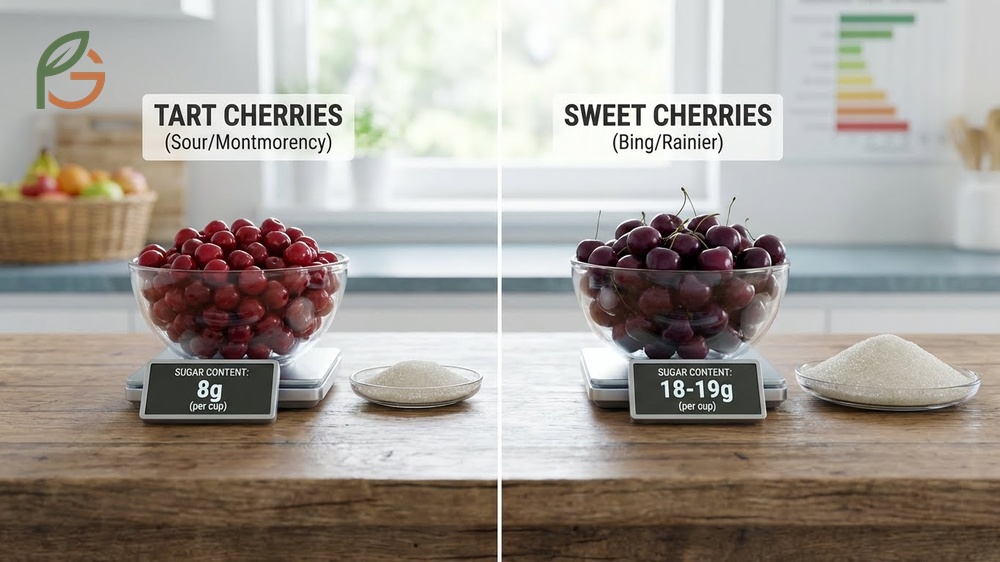
Not all cherries affect blood sugar the same way. Tart cherries (also called sour or Montmorency cherries) contain significantly less natural sugar than their sweet counterparts. Current agricultural data shows one cup of pitted sour cherries has about 8g of sugar[1], while sweet varieties like Bing or Rainier contain 18-19g in the same serving.
This 55% difference in sugar content makes tart cherries a better choice if you’re strictly monitoring carbohydrate intake. Studies demonstrate that tart cherries also pack higher concentrations of certain anthocyanins, giving you more anti-inflammatory benefit per gram of sugar consumed.
Nutritional Comparison
This table compares calories, carbohydrates, sugar, and fiber content between sweet and tart cherries, plus processed varieties to avoid
| Cherry Type | Calories | Total Carbs | Sugar | Fiber |
|---|---|---|---|---|
| Fresh Sweet Cherries | 97 cal[2] | 25g[2] | 18-19g | 3g[2] |
| Fresh Tart Cherries | 50 cal | 12g | 8g[1] | 2.5g |
| Canned in Syrup | 232 cal | 60g[1] | 55g | 2g |
| Dried Sweetened (1/4 cup) | 130 cal | 32g | 27-28g | 1g |
| Tart Cherry Juice | 140 cal | 37g[1] | 33g | 0g |
Which Type Is Better for Diabetics
For strict blood sugar control, tart cherries win. Their lower sugar content and higher anthocyanin concentration provide more metabolic benefit per serving. Research shows the specific anthocyanin profile in tart cherries may reduce insulin resistance more effectively than sweet varieties.
That said, sweet cherries aren’t off-limits. If you prefer their taste, you can still enjoy them by reducing the portion to 1/2 cup (cutting carbs to about 12g) and pairing them with a protein source like Greek yogurt or almonds. This combination further blunts the glycemic response by slowing digestion even more.
Cherries and Blood Sugar Spike
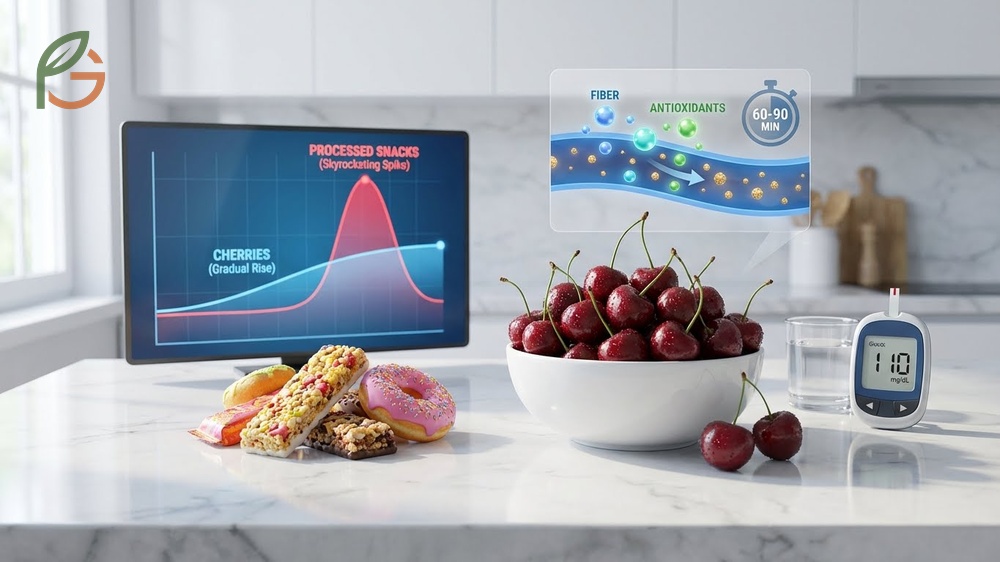
Unlike processed snacks that send blood sugar skyrocketing within 15-30 minutes, cherries produce a gentle, gradual rise. Current data indicates the fiber-antioxidant combination creates a “time-release” effect where glucose enters your bloodstream steadily over 60-90 minutes. This prevents the crash that often follows high-glycemic foods.
Most people with diabetes find they can eat 1/2 to 1 cup of fresh cherries without seeing their blood glucose rise more than 30-40 mg/dL. Evidence suggests individual responses vary based on factors like current insulin sensitivity, what else you’re eating, and whether you’re physically active after the meal.
Timing matters too. Eating cherries as part of a balanced meal (with protein, healthy fats, and vegetables) produces the smallest blood sugar impact. Consuming them alone on an empty stomach, especially first thing in the morning, can cause a more noticeable spike even with their low GI.
How Cherries Affect Insulin Response
Research across multiple clinical studies shows anthocyanins in cherries can enhance insulin signaling pathways[3]. These compounds block sodium-glucose cotransporter 1 (SGLT1) and glucose transporter type 2 (GLUT2), which are proteins that move sugar from your intestines into your blood. By inhibiting these transporters, cherries essentially put a “brake” on glucose absorption.
Studies demonstrate this mechanism can improve glucose uptake by muscle cells while reducing the amount your liver releases. The net result is better blood sugar control with less insulin needed from your pancreas. This matters for type 2 diabetics whose bodies often struggle with insulin resistance.
Best Practices for Portion Control
- Start with 1/2 cup (10-12 cherries) to gauge your individual blood sugar response
- Count out cherries in advance rather than eating from a large bowl to avoid overconsumption
- Pair cherries with 15-20g protein (like 6 oz Greek yogurt or 1/4 cup almonds) to stabilize glucose
- Test your blood sugar 90-120 minutes after eating to identify your personal tolerance level
- Choose fresh or frozen cherries over dried, canned, or juice forms which concentrate sugars
- Save cherry consumption for meals rather than isolated snacks on an empty stomach
- If using frozen cherries in smoothies, limit to 1/2 cup and add chia seeds or hemp hearts for extra fiber
Blood Sugar Monitoring Tip: Everyone’s glucose response is unique. Test your levels before eating cherries and again 2 hours later for the first few times. This gives you a personal baseline to work from rather than guessing.
Diabetic Friendly Cherry Recipes
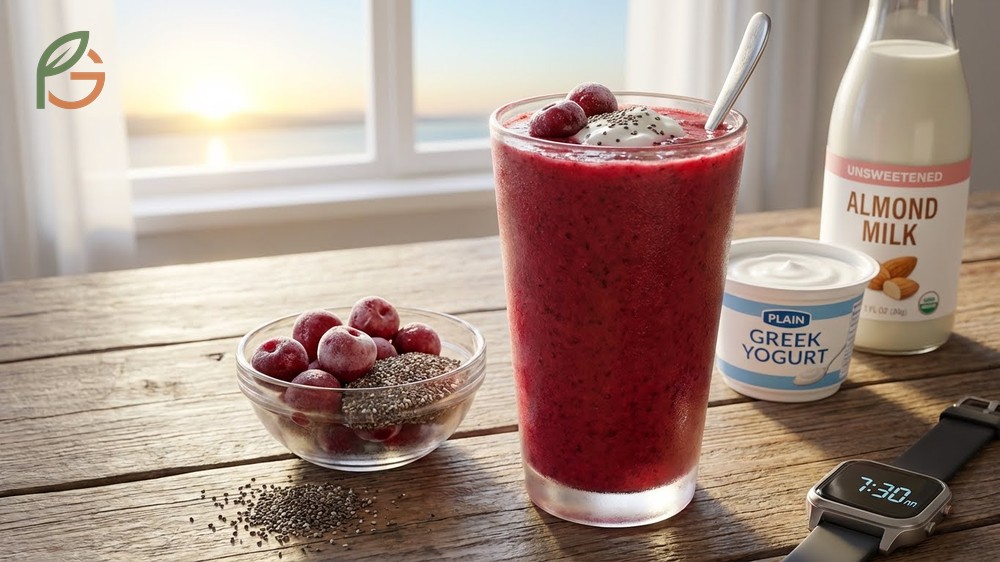
You don’t have to eat cherries plain to get their benefits. Smart recipe combinations can enhance their blood sugar-stabilizing effects while adding variety to your diet. The key is pairing cherries with ingredients that provide protein, healthy fats, and additional fiber.
For breakfast (6-9 AM), cherry smoothies work exceptionally well. Blend 1/2 cup frozen tart cherries with 1 cup unsweetened almond milk, 1/4 cup plain Greek yogurt, 1 tablespoon chia seeds, and 1 tablespoon hemp hearts. This creates a balanced meal with roughly 28g total carbs, 15g protein, and 8g fiber that won’t spike your blood sugar.
As a mid-morning snack (10-11 AM), try mixing 1/2 cup fresh sweet cherries with 1/4 cup raw walnuts and a sprinkle of cinnamon. The omega-3 fats in walnuts slow digestion even further, while cinnamon may improve insulin sensitivity. This combination provides sustained energy for 3-4 hours without the afternoon crash.
For dessert (7-8 PM), create a cherry parfait by layering 1/3 cup cherries with 6 oz full-fat Greek yogurt and 2 tablespoons ground flaxseed. The higher fat content in full-fat yogurt produces a more gradual glucose response compared to low-fat versions, making it ideal for evening consumption when insulin sensitivity naturally decreases.
- Replace dried cherries in recipes with fresh or frozen to eliminate 15-20g added sugars per 1/4 cup
- Add 1-2 tablespoons of nut butter to cherry smoothies for 7-8g protein and healthy fats
- Sprinkle 1 teaspoon cinnamon on cherry dishes, which may improve glucose metabolism
- Mix cherries with cottage cheese for a high-protein snack (14g protein per 1/2 cup)
- If making cherry salads, add grilled chicken or salmon to balance the carbohydrate load
Best Fruits for Type 2 Diabetes
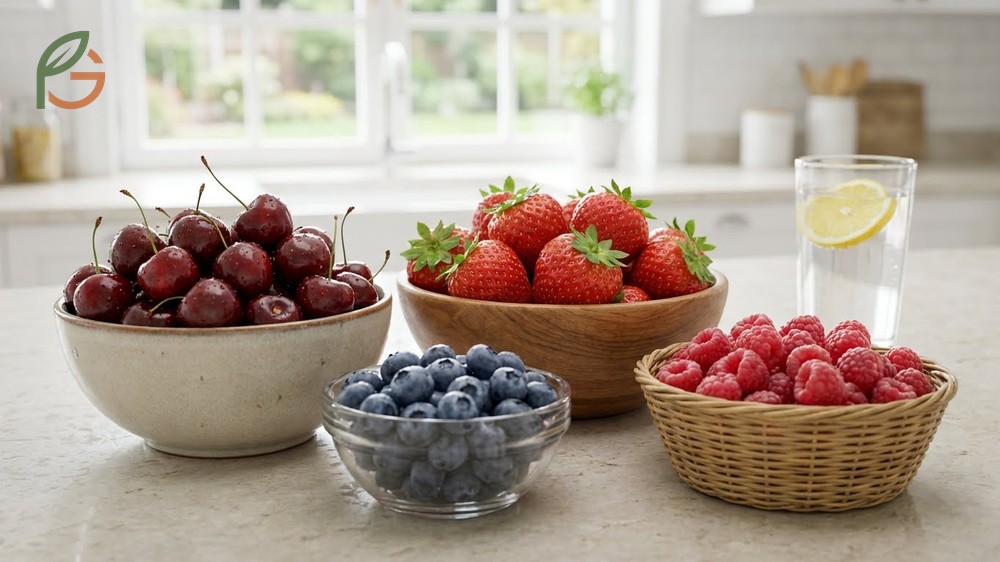
Cherries aren’t the only diabetes-friendly fruit option. Understanding which fruits offer the best glycemic control helps you build variety into your diet without compromising blood sugar management. Evidence suggests focusing on fruits with a GI below 55 and at least 2g fiber per serving.
Berries lead the pack alongside cherries. Strawberries (GI 40), blueberries (GI 53), and raspberries (GI 32) all provide anthocyanins similar to cherries, plus they’re typically lower in total carbs at 11-15g per cup. Raspberries stand out with 8g fiber per cup, nearly triple what you’d get from cherries.
Apples with skin (GI 36) and pears (GI 38) work well due to their pectin fiber content, which forms a thick gel in your stomach. Stone fruits like peaches (GI 42) and plums (GI 39) offer similar benefits to cherries but with slightly different antioxidant profiles. Citrus fruits like oranges (GI 43) and grapefruit (GI 25) provide vitamin C and soluble fiber while keeping carbs in check.
- Berries (strawberries, blueberries, raspberries, blackberries): GI 32-53, rich in anthocyanins
- Cherries: GI 20-25, highest anthocyanin content among common fruits
- Grapefruit: GI 25, may interact with certain diabetes medications (check with your doctor)
- Apples with skin: GI 36, pectin fiber slows glucose absorption significantly
- Pears: GI 38, high soluble fiber content for blood sugar stability
- Plums: GI 39, provide sorbitol which slows digestion naturally
- Peaches: GI 42, lower carb option at 15g per medium fruit
Fruits to Limit: Watermelon (GI 72), pineapple (GI 66), and ripe bananas (GI 62) can cause faster blood sugar spikes. If you eat these, keep portions to 1/2 cup and pair with protein sources.
Conclusion
The evidence is clear: cherries can be part of a healthy diabetes management plan when you follow three key principles. First, stick with fresh or frozen varieties that haven’t been processed with added sugars. Second, respect portion sizes by limiting intake to 1/2 to 1 cup daily and always pairing cherries with protein or healthy fats to minimize blood sugar impact. Third, test your individual response since glycemic control varies from person to person.
Current nutritional guidance emphasizes whole fruits like cherries over fruit juices or dried versions, which concentrate sugars without the protective fiber matrix. FruitGarden continues to monitor emerging research on anthocyanin-rich fruits and their role in diabetes prevention and management, providing evidence-based recommendations for home gardeners and fruit enthusiasts.
Medical Disclaimer
Important Medical Disclaimer: This content is for informational and educational purposes only. It is not intended as a substitute for professional medical advice, diagnosis, or treatment. Always consult a qualified healthcare professional or registered dietitian before making any changes to your diet, medication, or diabetes management routine, especially if you have type 1 diabetes, type 2 diabetes, prediabetes, or other medical conditions. Individual blood sugar responses to foods can vary significantly based on factors including medications, insulin sensitivity, physical activity levels, and overall health status.
Frequently Asked Questions
Can Diabetics Eat Cherries Every Day?
Yes, diabetics can eat cherries daily in moderation. Research shows consuming 1/2 to 1 cup of fresh cherries per day provides beneficial anthocyanins and fiber without significantly impacting blood glucose levels in most people with diabetes. Monitor your individual response and adjust portions as needed based on your blood sugar readings.
How Many Cherries Can a Diabetic Eat per Day?
Most diabetics can safely eat 10-20 cherries (about 1/2 to 1 cup) per day as part of their daily carbohydrate allowance. This amount provides 12-25g of carbohydrates depending on the variety. Start with a smaller portion and test your blood sugar response 2 hours after eating to determine your personal tolerance level.
Are Tart Cherries Better Than Sweet Cherries for Diabetics?
Yes, tart cherries are generally better for diabetics because they contain 55% less sugar than sweet cherries (8g vs 18g per cup) while providing higher concentrations of anti-inflammatory anthocyanins. However, both types have a low glycemic index and can fit into a diabetes meal plan when portions are controlled.
Is Cherry Juice Good for Diabetics?
Cherry juice is not ideal for diabetics compared to whole cherries. One cup of tart cherry juice contains 37g carbohydrates with zero fiber, causing faster blood sugar absorption than whole fruit. If you choose cherry juice, limit intake to 1/4 cup (9g carbs), select 100% juice without added sugars, and consume it with a protein source.
Do Cherries Help Lower Blood Sugar Levels?
Cherries don’t directly lower blood sugar, but research shows their anthocyanins can improve insulin sensitivity and slow glucose absorption over time. Studies demonstrate that regular cherry consumption may reduce inflammation markers and enhance glucose metabolism, potentially leading to better long-term blood sugar control when combined with a balanced diet.
What’s the Best Time to Eat Cherries for Diabetics?
The best time for diabetics to eat cherries is as part of a balanced meal rather than on an empty stomach. Consuming cherries at breakfast or lunch with protein and healthy fats produces the smallest blood sugar impact. Avoid eating cherries alone as a late-night snack when insulin sensitivity is naturally lower.
Are Frozen Cherries as Good as Fresh for Diabetes?
Yes, frozen cherries are equally good for diabetics as fresh varieties. Freezing preserves the anthocyanin content and fiber structure without adding sugars or processing. Choose unsweetened frozen cherries and check the ingredient label to ensure no sugar, syrup, or sweeteners have been added during freezing.