Are canned peaches good for you? Yes, when you choose the right type. Research shows canned peaches packed in juice or water deliver comparable nutrition to fresh peaches—including vitamins A and C, fiber, and antioxidants—without the added sugars found in syrup-packed varieties[1]. FruitGarden synthesizes current nutrition research and USDA data to help you make informed choices about canned fruit options.
Quick Answer
Are Canned Peaches Good for You
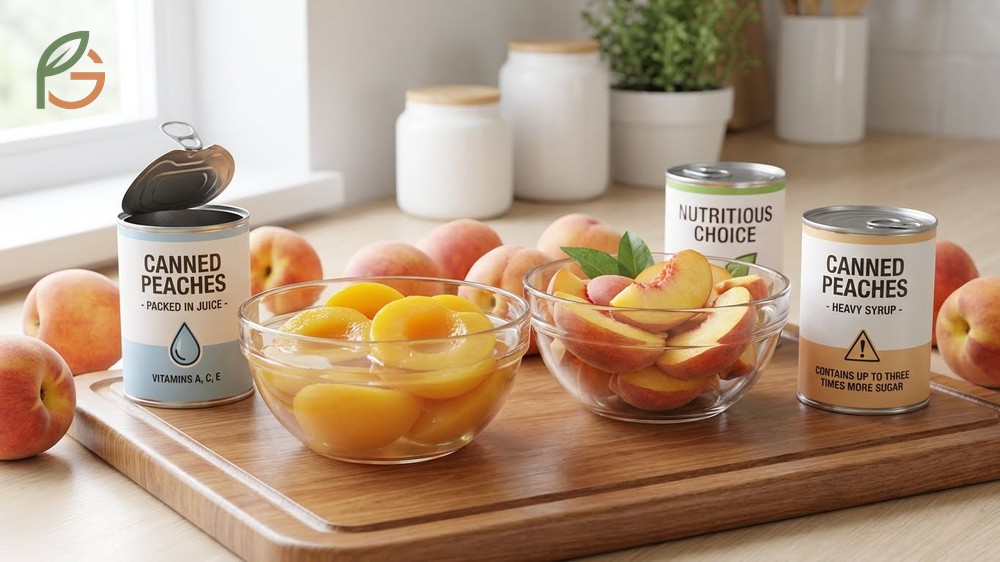
Canned peaches offer year-round nutrition that’s comparable to fresh peaches. Studies demonstrate that the canning process doesn’t destroy key vitamins—in fact, some nutrients become more bioavailable[1]. You’ll get vitamins A, C, and E along with antioxidants in every serving.
The catch is choosing wisely. Peaches packed in juice or water give you the nutrition without excess sugar. Most people don’t realize that heavy syrup varieties can contain up to three times more sugar than juice-packed options[3]. This matters for blood sugar control and daily calorie intake.
Research from Oregon State University found that antioxidant levels in canned peaches were statistically higher than fresh peaches. Folate levels increased by 10 times during the canning process[1]. The heat treatment activates certain phytochemicals, making them easier for your body to absorb.
Vitamin Retention in Canned Fruit
Current data indicates that vitamin C, often lost during processing, actually remains stable in canned peaches. Vitamins A and E decrease slightly during initial processing but stabilize after canning[1]. You won’t see significant nutrient loss during storage for up to three months.
The airtight seal preserves nutrients that would otherwise degrade in fresh fruit. Fresh peaches lose vitamin C within days of picking, but canned peaches lock in nutrients at peak ripeness. This is why canned options can be just as nutritious—or more so—than fresh peaches shipped long distances.
How Canning Affects Nutrients
Heat processing changes the structure of plant cells, releasing nutrients trapped in cell walls. This is similar to how cooking tomatoes increases lycopene availability. The canning liquid also helps distribute water-soluble vitamins throughout the container.
Total carotenoids and phenolic compounds show minimal change between fresh and canned peaches. The key difference is convenience—you can access these nutrients year-round without worrying about seasonal availability or spoilage.
Are Canned Peaches Healthy
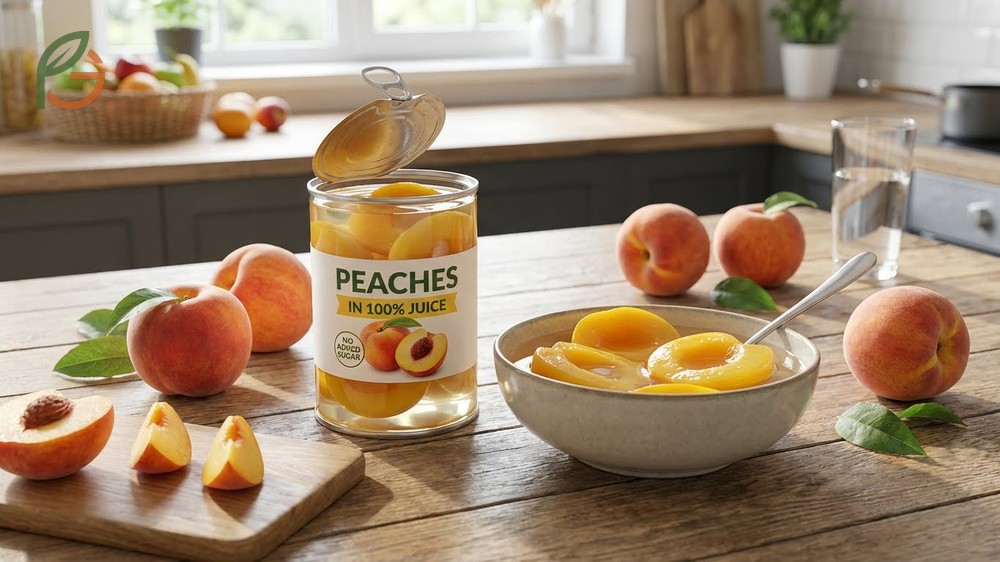
They’re a healthy choice when you avoid heavy syrup versions. A half-cup serving of juice-packed peaches delivers essential vitamins, minerals, and fiber with minimal processing. You’re getting whole fruit nutrition in a shelf-stable format.
Evidence suggests that canned fruit helps people meet daily fruit intake recommendations. Many Americans don’t eat enough fruit, and convenient options like canned peaches remove barriers related to preparation time and seasonal availability[5]. This matters for overall diet quality.
The fiber content supports digestive health and helps you feel full. Vitamin A promotes eye health and immune function. Vitamin C acts as an antioxidant, protecting cells from damage. These benefits remain whether peaches are fresh or canned.
Health Benefits of Canned Peaches
- Low calorie option: At 55-60 calories per half-cup, they fit into weight management plans without sacrificing nutrition
- Antioxidant support: Polyphenols and carotenoids fight inflammation and oxidative stress throughout your body
- Digestive health: Soluble and insoluble fiber promotes regular bowel movements and feeds beneficial gut bacteria
- Heart health: Potassium helps regulate blood pressure, while fiber supports healthy cholesterol levels
- Immune function: Vitamin C and zinc work together to strengthen your body’s defense against illness
- Budget-friendly nutrition: Canned peaches cost less per serving than fresh while offering similar nutritional value
Important Note: If you’re watching sugar intake for diabetes management or weight loss, always check the nutrition label. Some brands add unnecessary sweeteners even to “light syrup” products. Stick with labels that say “packed in water” or “no added sugar.”
Canned Peaches Nutrition Facts
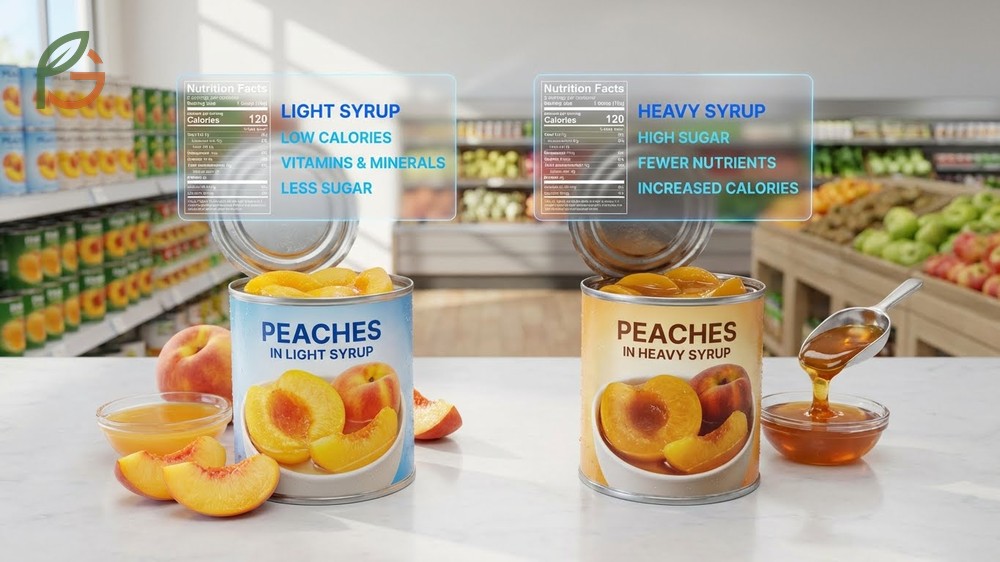
Understanding the numbers helps you make better choices at the grocery store. The USDA provides detailed nutrition data for different canned peach preparations, showing exactly what you’re getting in each serving.
Light syrup and juice-packed options offer the best nutritional profile. They keep calories low while preserving the fruit’s natural vitamins and minerals. Heavy syrup versions dramatically increase sugar content without adding meaningful nutrients.
This table compares calories, sugar, fiber, and key vitamins across four types of canned peach preparations per half-cup serving
| Type | Calories | Sugar (g) | Fiber (g) | Vitamin C (mg) |
|---|---|---|---|---|
| Juice-packed | 55[6] | 13 | 1.5 | 3-4 |
| Extra light syrup | 60[2] | 13 | 1 | 3 |
| Light syrup | 68 | 17 | 1 | 2-3 |
| Heavy syrup | 97[3] | 20 | 1 | 2 |
The vitamin A content remains consistent across all types, ranging from 400-500 IU per serving. Vitamin E provides about 8% of your daily value regardless of packing liquid. These fat-soluble vitamins aren’t affected by the syrup choice.
- Potassium: Supports heart function and muscle contractions with 87-120mg per serving
- Calcium: Contributes to bone health with 3-8mg per half-cup
- Iron: Helps transport oxygen throughout your body at 0.3-0.5mg per serving
- Magnesium: Involved in over 300 enzyme reactions with 5-7mg per serving
- Phosphorus: Works with calcium for bone strength at 10-15mg per serving
Syrup vs Juice Packed
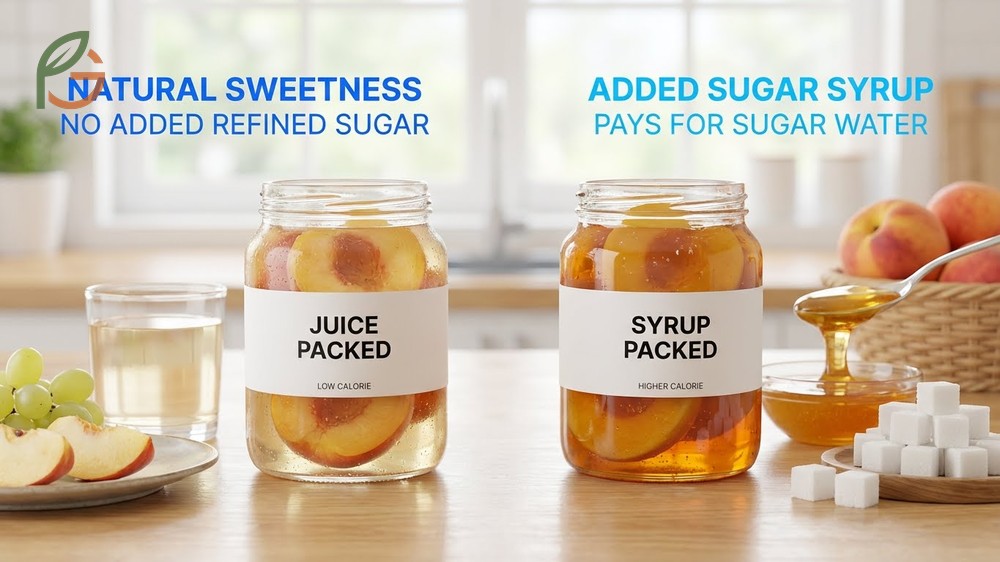
The packing liquid makes all the difference in nutritional value. Juice-packed peaches use fruit juice—usually white grape or apple—to preserve the fruit without adding refined sugar. This keeps the calorie count low while maintaining natural sweetness.
Syrup-packed varieties add sugar syrup at different concentrations. Light syrup contains less sugar than heavy syrup, but both add calories that don’t come with additional nutrients. You’re essentially paying for sugar water that dilutes the fruit’s nutritional density.
Most health organizations recommend choosing fruit packed in water or 100% juice. The American Heart Association suggests limiting added sugars to 25g daily for women and 36g for men[5]. A single cup of heavy syrup peaches can exceed half that limit.
Heavy Syrup Sugar Content
Heavy syrup peaches contain about 39g of sugar per cup, with 37g coming from added sugars[3]. That’s equivalent to adding 9 teaspoons of sugar to a cup of fruit. Your blood sugar spikes rapidly with this much concentrated sweetness.
Light syrup reduces added sugar to about 15-18g per cup, which is better but still significant. Extra light syrup drops it further to 10-12g. Juice-packed options contain only the fruit’s natural sugars—no added sweeteners at all.
Current nutrition guidance emphasizes reducing added sugars across all food categories. Switching from heavy syrup to juice-packed peaches eliminates nearly 150 calories per cup while keeping all the beneficial nutrients. That’s a simple swap that improves your diet quality immediately.
Smart Shopping Tip: Don’t assume “light” means low-sugar. Some light syrup products still contain 12-15g added sugar per serving. Read the nutrition facts panel, not just the front label. Look for “0g added sugars” or “packed in 100% juice.”
Rinsing Canned Fruit
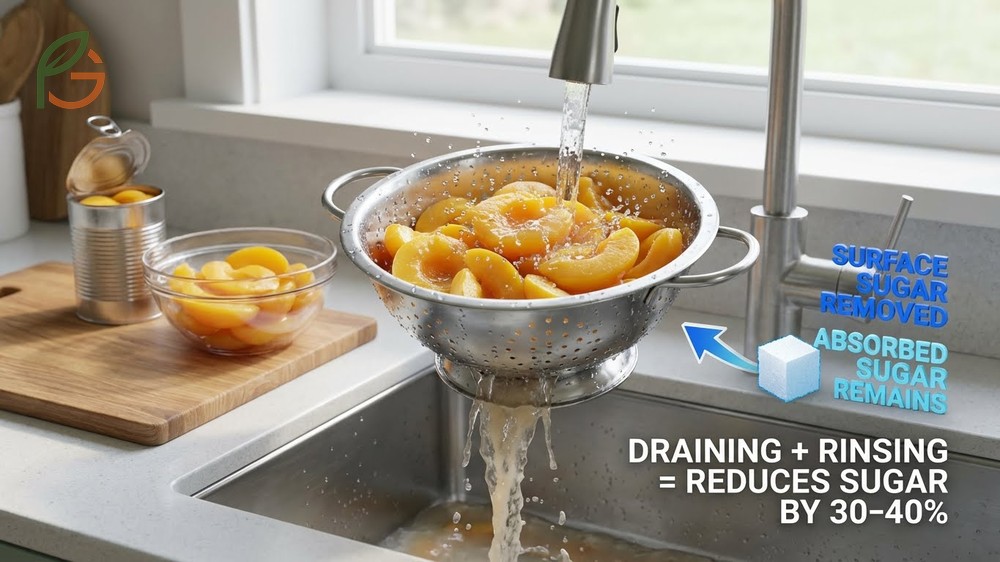
Draining and rinsing canned peaches can reduce sugar content, but it won’t eliminate added sugars completely. Studies show that rinsing removes some syrup clinging to the fruit surface, but sugar that’s been absorbed into the fruit tissue remains[7]. It’s helpful but not a complete solution.
Research demonstrates that draining syrup completely reduces added sugars by 30-40%. Rinsing under cold water for 30 seconds removes additional residual syrup. This simple step improves the nutritional profile of syrup-packed fruit when juice-packed isn’t available.
The technique works best when you transfer peaches to a strainer immediately after opening. Let cold water run over them while gently shaking the strainer. Pat dry with a clean towel before using. You’ll notice less sweetness and a more natural peach flavor.
- Open the can: Use a can opener and pour contents into a fine-mesh strainer positioned over the sink
- Drain completely: Let gravity remove all liquid for 60 seconds—don’t rush this step
- Rinse with cold water: Run cold tap water over peaches for 30 seconds while gently moving them around
- Shake off excess: Bounce the strainer several times to remove water clinging to fruit surfaces
- Pat dry if needed: Use paper towels for recipes where excess moisture causes problems
Keep in mind that rinsing also removes some water-soluble vitamins like vitamin C. The loss is minimal—probably 5-10%—but it’s a tradeoff. If you’re starting with heavy syrup peaches, the sugar reduction outweighs minor nutrient loss.
The better approach is buying juice-packed or water-packed peaches in the first place. You’ll skip the rinsing step entirely while getting better nutrition. Store brands often cost the same as syrup-packed options, so there’s no price penalty for the healthier choice.
Conclusion
The evidence is clear: canned peaches are good for you when you choose juice-packed or water-packed varieties. Research confirms they deliver comparable nutrition to fresh peaches—sometimes even higher levels of key antioxidants and vitamins. You can enjoy them year-round without sacrificing health benefits.
Current nutrition guidance emphasizes avoiding heavy syrup options that add unnecessary sugars and calories. By selecting the right type and checking nutrition labels carefully, canned peaches become a convenient, budget-friendly way to meet your daily fruit needs. FruitGarden provides evidence-based information to help you make informed choices about all your fruit options, whether fresh, frozen, or canned.
Medical Disclaimer
Important Medical Disclaimer: This content is for informational and educational purposes only. It is not intended as a substitute for professional medical advice, diagnosis, or treatment. Always consult a qualified healthcare professional or registered dietitian before making any changes to your diet, especially if you have diabetes, heart disease, kidney problems, or other medical conditions. Individual nutritional needs vary based on age, health status, and activity level.
Frequently Asked Questions
How Long Do Canned Peaches Last After Opening?
Once opened, transfer canned peaches to an airtight container and refrigerate. They’ll stay fresh for 5-7 days when stored properly. Don’t leave them in the original can, as metal exposure can affect flavor and safety after opening.
Can You Eat Canned Peaches on a Low-Sugar Diet?
Yes, if you choose peaches packed in water or 100% juice with no added sugars. Check the nutrition label for 0g added sugars. A half-cup serving contains only the fruit’s natural sugars—about 13g—which is comparable to fresh peaches.
Are Dole Canned Peaches Healthy?
Dole canned peaches are healthy when you select their juice-packed varieties. Their “fruit in 100% juice” line contains no added sugars and provides the same vitamins and fiber as other quality brands. Always read the specific product label, as Dole makes both syrup and juice options.
What’s the Shelf Life of Unopened Canned Peaches?
Unopened canned peaches last 2-5 years when stored in cool, dry conditions below 70°F (21°C). They’re safe to eat beyond the “best by” date, though quality gradually declines. Color may darken and flavor can weaken after 3 years, but they remain nutritious and safe if the can isn’t damaged.
Do Canned Peaches Have as Much Fiber as Fresh?
Canned peaches contain slightly less fiber than fresh—about 1-1.5g per half-cup versus 2g for a fresh medium peach with skin. The canning process uses peeled peaches, which removes some fiber. You still get beneficial soluble fiber that supports digestive health.
Should You Drain the Liquid From Canned Peaches?
It depends on the packing liquid. Drain and discard heavy or light syrup to reduce sugar intake. For juice-packed peaches, you can use the liquid in smoothies or recipes since it contains nutrients from the fruit. Water-packed liquid can be drained or used based on your recipe needs.
Are Canned Peaches Good for Weight Loss?
Yes, when you choose juice or water-packed varieties. At 55-60 calories per half-cup, they provide sweetness and nutrition without excess calories. The fiber helps you feel full, and the low energy density means you can eat a satisfying portion. Avoid syrup-packed versions that nearly double the calorie count.