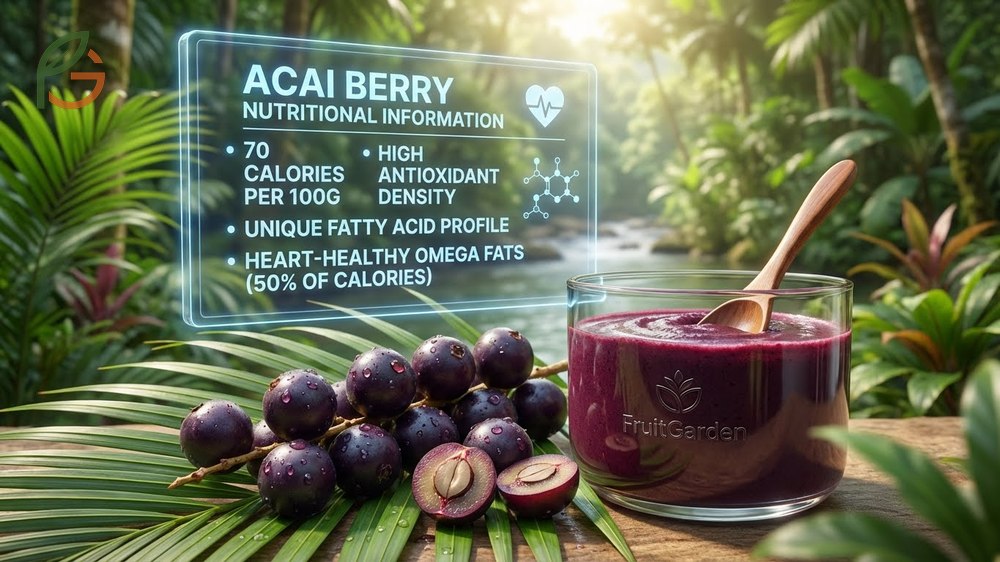
acai berries contain unique fatty acid profiles rarely found in fruits, delivering roughly 50% of calories from heart-healthy omega fats[2]. FruitGarden synthesizes current nutritional data and agricultural research to help you understand this superfruit’s complete nutrient profile.
Quick Answer
- Acai frozen pulp contains 70 calories per 100g with 5g fat, 4g carbs, and 2g protein[1]
- Freeze-dried acai achieves an ORAC antioxidant score of 102,700 μmol TE/100g—among the highest of all fruits[3]
- Omega fatty acids comprise 74% of total fat content, delivering balanced omega-3, omega-6, and omega-9[2]
- Acai provides 15% daily value vitamin A and substantial fiber at 2g per 100g serving[1]
Acai Berry Nutritional Information
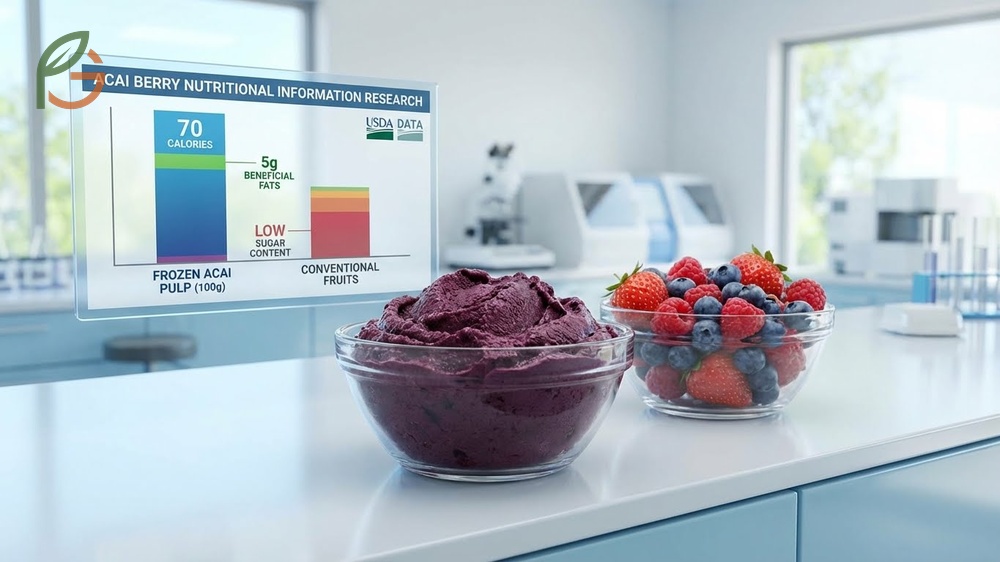
Research from the United States Department of Agriculture establishes acai berry frozen pulp as remarkably nutrient-dense compared to conventional fruits[1]. Unlike most berries that derive calories primarily from sugars, acai berries get roughly half their energy from beneficial fats. This unique macronutrient profile makes them energy-dense while maintaining low sugar content.
Studies demonstrate that 100 grams of frozen acai pulp delivers 70 calories with 5 grams of fat, 4 grams of carbohydrates, and 2 grams of protein[1]. The fiber content reaches 2 grams per serving, supporting digestive health. What sets acai apart is its protein content—unusual for fruit—providing essential amino acids.
Current nutritional analysis reveals acai berries contain minimal sodium at just 10mg per 100g while delivering substantial potassium[2]. This favorable sodium-potassium ratio supports cardiovascular function. The berries contain zero cholesterol and provide balanced nutrition across all macronutrient categories.
Macronutrient Breakdown
The macronutrient distribution in acai berries differs dramatically from typical fruits. Research shows carbohydrates account for only 23% of total calories, while fats contribute 64% and protein makes up 13%[2]. This fat-forward composition resembles avocados more than strawberries or blueberries.
Evidence indicates freeze-dried acai powder concentrates these nutrients further. Agricultural data shows processing methods significantly impact final nutritional values—freeze-drying preserves more bioactive compounds than spray-drying or heat treatment[2]. The fiber becomes more concentrated in dried forms, often exceeding 30% by weight.
Calorie Density Comparison
Acai berries register as moderately calorie-dense compared to other popular fruits. At 70 calories per 100 grams, they contain more than blueberries (57 calories) but less than bananas (89 calories). The fat content drives this higher calorie level while delivering satiety benefits that lower-calorie fruits can’t match.
Most people find acai’s calorie density advantageous for smoothie bowls and energy-focused meals. The combination of fats, fiber, and protein creates sustained energy release rather than blood sugar spikes. This makes acai particularly useful for pre-workout nutrition or breakfast applications where lasting energy matters.
Important Note: Commercial acai products often contain added sugars and ingredients that significantly increase calorie content. Pure frozen pulp delivers the nutritional profile described here—always check labels on processed acai bowls, drinks, and supplements.
Acai Nutrition Facts
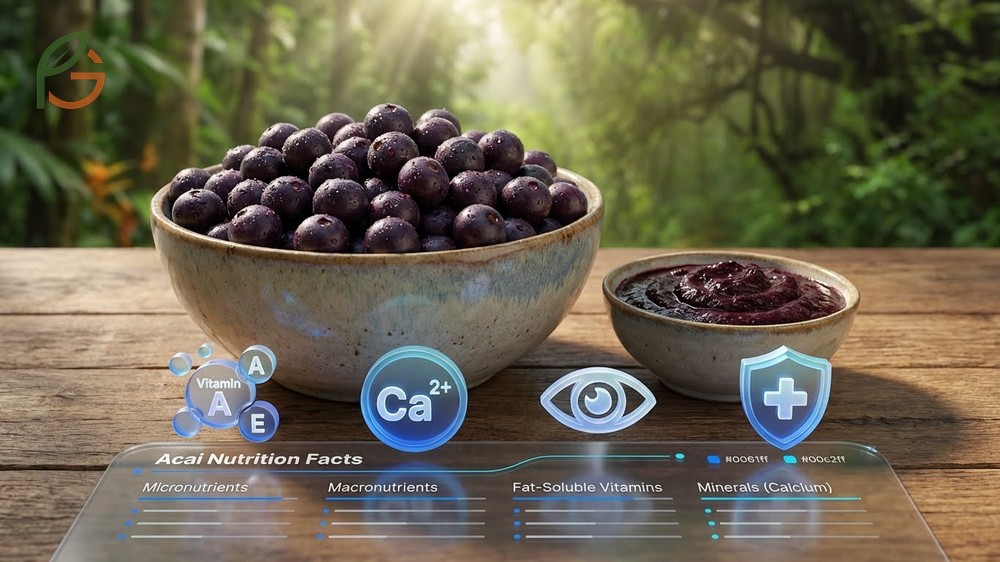
Comprehensive analysis from nutritional databases reveals acai berries provide an impressive array of micronutrients alongside their unique macronutrient profile. The vitamin and mineral content supports multiple physiological functions, from vision to immune response. Studies show acai delivers particularly high levels of fat-soluble vitamins that benefit from the berry’s natural fat content for enhanced absorption.
Research demonstrates acai berries contain more calcium than typical berries—approximately 47.6mg per 100g serving[1]. Iron content reaches 1.4mg per serving, contributing 7% of daily values. These minerals become especially bioavailable due to acai’s vitamin C content, which enhances mineral absorption in the digestive tract.
Current data indicates acai berries supply substantial trace minerals including manganese, copper, zinc, and magnesium[2]. The manganese content stands out at 5.5mg per 100g in some preparations. This trace mineral supports bone health and metabolic function at levels rarely achieved through fruit consumption alone.
Vitamin Content Profile
Vitamin A constitutes one of acai’s most significant nutritional strengths, delivering 15% of recommended daily intake per 100g serving. This fat-soluble vitamin supports vision health, immune function, and cellular communication. The natural fats in acai berries facilitate vitamin A absorption more effectively than water-based fruits.
Studies show acai contains meaningful levels of vitamin E (4.5mg per 100g) and vitamin C comparable to blueberries[2]. B-complex vitamins including B1 and B6 appear in moderate amounts. This vitamin profile works synergistically—vitamin E protects fats from oxidation while vitamin C regenerates vitamin E molecules.
Mineral Composition
Potassium represents the most abundant mineral in acai berries at approximately 309.5mg per 100g. This electrolyte mineral supports muscle function, nerve signaling, and blood pressure regulation. The potassium-to-sodium ratio in acai exceeds 30:1, creating favorable conditions for cardiovascular health.
Evidence suggests acai provides meaningful iron content for a plant-based food source. At 1.4mg per 100g, acai delivers about 7% of daily iron needs. Calcium content reaches nearly 3% of daily values while magnesium contributes to enzyme function and energy metabolism throughout the body.
This table compares key nutritional values per 100g serving across different acai berry forms including frozen pulp, powder, and fortified drinks
| Nutrient | Frozen Pulp (100g) | Freeze-Dried Powder (100g) | Fortified Drink (8 fl oz) |
|---|---|---|---|
| Calories | 70 kcal[1] | 533 kcal (concentrated) | 165 kcal[1] |
| Total Fat | 5g[1] | 52g (concentrated) | 2.21g |
| Carbohydrates | 4g | 8g | 34g[1] |
| Fiber | 2g | 44g (concentrated) | 3.19g |
| Protein | 2g | 8g | 2.21g |
Acai Antioxidant Levels
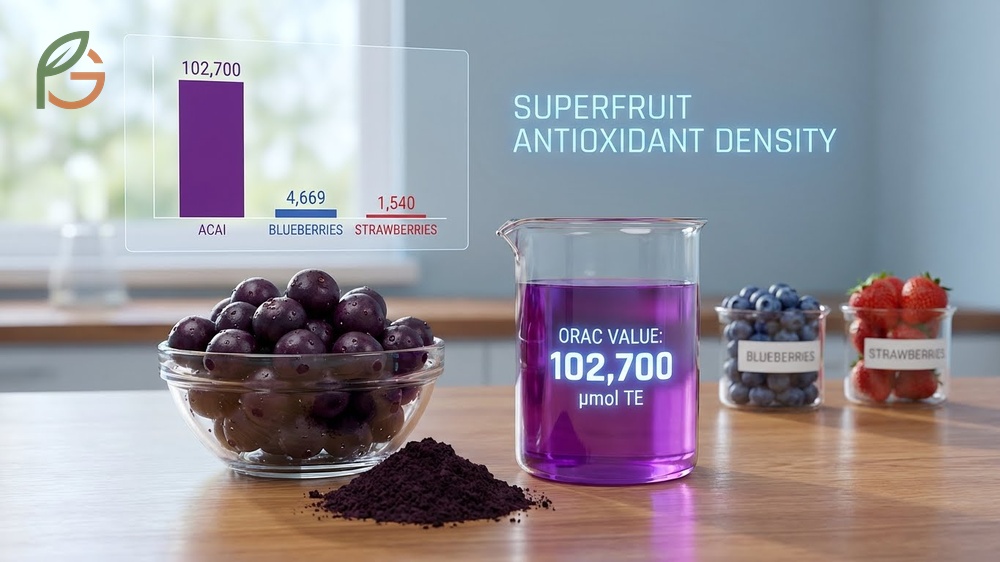
Acai berries rank among the highest-scoring foods on the Oxygen Radical Absorbance Capacity (ORAC) scale, which measures antioxidant activity. Research shows freeze-dried acai achieves an ORAC value of 102,700 μmol TE per 100 grams—dramatically exceeding blueberries at 4,669 and strawberries at 1,540[3]. This exceptional antioxidant density positions acai as a true superfruit.
Studies demonstrate the polyphenol content in acai berries reaches 3.29 grams per 100 grams—substantially higher than most fruits[2]. These plant compounds include anthocyanins, flavonoids, and phenolic acids that neutralize free radicals. The deep purple color directly correlates with anthocyanin concentration, providing visual confirmation of antioxidant density.
Current nutritional guidance emphasizes that most populations consume less than 1,000 ORAC units daily, while researchers suggest optimal intake ranges from 3,000-5,000 units. A single tablespoon of acai powder can deliver over 2,000 ORAC units, making it remarkably efficient for meeting antioxidant targets through minimal serving sizes.
ORAC Score Measurements
Processing methods dramatically affect acai’s final ORAC values. Freeze-dried acai powder registers the highest scores at 102,700 μmol TE/100g, while spray-dried versions measure around 70,000[3]. Fresh frozen pulp typically scores between 15,000-20,000 due to higher water content diluting the concentration. Storage conditions and time since processing also influence antioxidant retention.
Evidence shows acai berries contain 10 times the antioxidants of red grapes and twice those of blueberries when compared gram-for-gram. The anthocyanin content specifically exceeds red wine by 10 to 30 times. These comparisons help contextualize acai’s position among antioxidant-rich foods, though whole food matrices provide benefits beyond isolated ORAC scores.
Anthocyanin Concentration
Anthocyanins—the pigments responsible for acai’s deep purple hue—constitute the primary antioxidant compounds in these berries. Research indicates acai contains particularly high concentrations of cyanidin-3-glucoside and cyanidin-3-rutinoside. These specific anthocyanins demonstrate superior stability compared to those in other berries, maintaining activity through processing and storage.
Studies show anthocyanin content varies with ripeness, with fully mature deep purple berries containing peak levels. Agricultural data suggests harvest timing significantly impacts final nutritional quality—berries picked at optimal ripeness deliver 20-30% higher anthocyanin concentrations than under-ripe fruit. Processing within 24 hours of harvest preserves maximum antioxidant activity.
Processing Matters: Acai berries oxidize rapidly after harvest, losing antioxidant potency within hours. Flash-freezing or freeze-drying immediately after harvest preserves anthocyanins effectively. Check sourcing information on acai products—processing delays can reduce ORAC values by 40-50%.
Acai Omega Fatty Acids
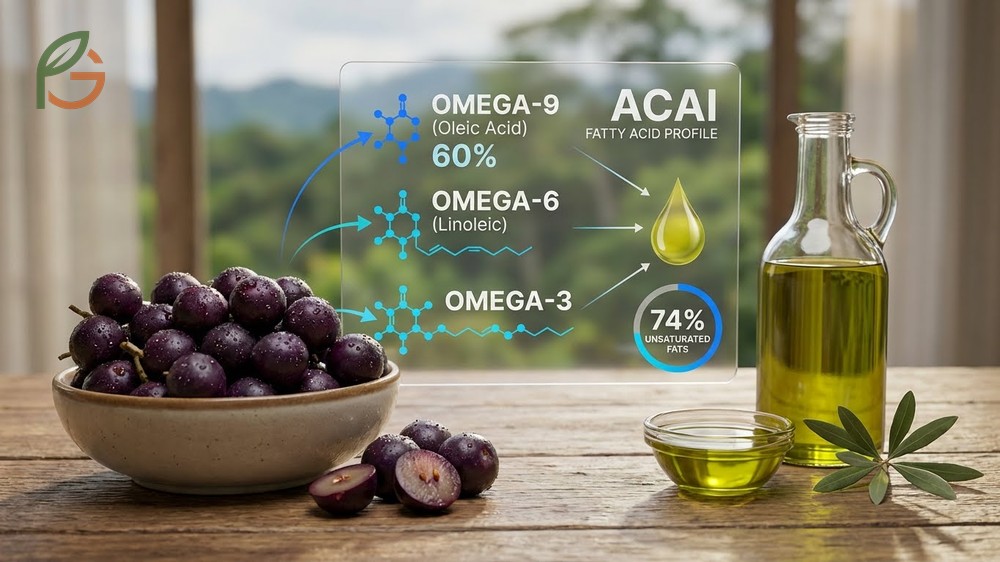
The fatty acid profile in acai berries sets them apart from virtually all other fruits. Research demonstrates approximately 74% of total fat content consists of unsaturated fatty acids, including omega-3, omega-6, and omega-9 in balanced ratios[2]. This composition resembles heart-healthy olive oil more than typical berry profiles, which contain negligible fats.
Studies show omega-9 oleic acid dominates acai’s fat content at roughly 60% of total fatty acids. Omega-6 linoleic acid contributes about 12%, while omega-3 alpha-linolenic acid accounts for 2-3%. This ratio supports cardiovascular health, brain function, and anti-inflammatory responses throughout the body. The naturally occurring phytosterols in acai further enhance these cardiovascular benefits.
Current nutritional analysis reveals acai berries contain three key phytosterols: beta-sitosterol, campesterol, and stigmasterol. These plant compounds structurally resemble cholesterol and compete for absorption in the digestive tract. Evidence suggests regular phytosterol intake from foods like acai can support healthy cholesterol levels when combined with balanced nutrition.
The unique fat composition explains why acai feels more satisfying than other berries despite similar portion sizes. Dietary fats slow gastric emptying and trigger satiety hormones more effectively than carbohydrates alone. This property makes acai particularly valuable in smoothies and breakfast bowls where sustained energy matters more than quick sugar rushes.
- Omega-3 fatty acids support brain health, cognitive function, and anti-inflammatory pathways throughout the body
- Omega-6 linoleic acid maintains skin barrier function and supports cellular membrane integrity
- Omega-9 oleic acid promotes cardiovascular health similar to Mediterranean diet staples like olive oil
- Phytosterols compete with cholesterol absorption in the intestinal tract, supporting healthy lipid profiles
- The balanced omega ratio provides anti-inflammatory effects without the pro-inflammatory concerns of omega-6-heavy processed oils
- Fat-soluble vitamins A and E achieve better absorption when consumed with acai’s natural fats
- Sustained energy release from healthy fats prevents blood sugar spikes common with high-sugar fruit alternatives
Acai Health Benefits
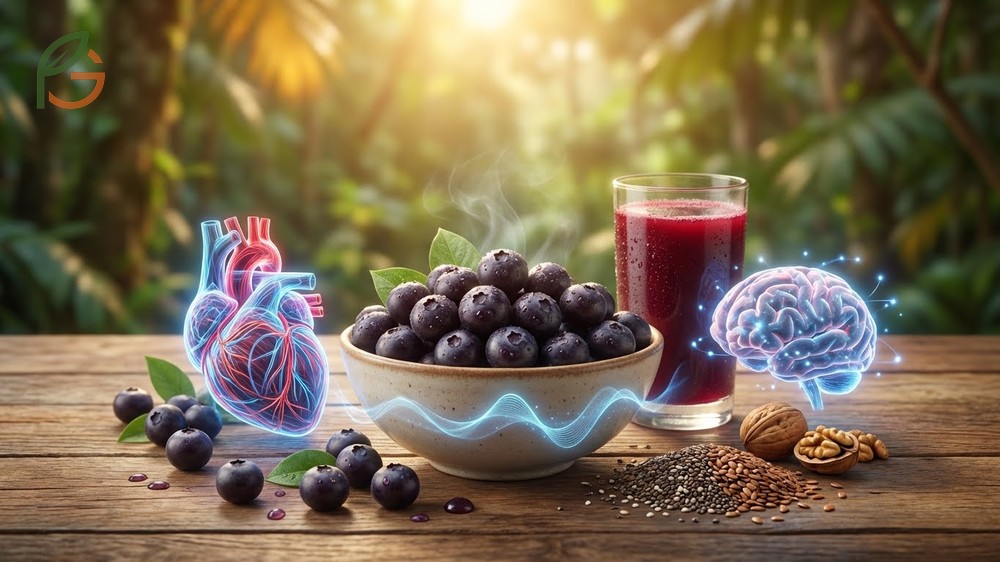
Research demonstrates acai berries deliver measurable health benefits primarily through their antioxidant compounds, omega fatty acids, and fiber content working synergistically. Studies document cardioprotective, anti-inflammatory, and neuroprotective properties in both animal and human trials[2]. The combination of nutrients creates effects exceeding what isolated compounds produce.
Evidence shows acai’s anthocyanins cross the blood-brain barrier, potentially protecting neural tissues from oxidative stress. The omega fatty acids support brain cell membrane integrity while phytosterols aid cardiovascular function. Fiber content promotes beneficial gut bacteria populations, creating systemic anti-inflammatory effects throughout the body.
Current nutritional guidance suggests acai works best as part of varied fruit intake rather than as a singular superfood solution. The antioxidants provide cellular protection complementing other dietary choices. Most researchers recommend consuming acai alongside other colorful fruits and vegetables to maximize the diversity of protective compounds in your diet.
- Cardiovascular support through omega fatty acids and phytosterols that promote healthy cholesterol profiles
- Anti-inflammatory effects from polyphenols and anthocyanins that reduce oxidative stress markers
- Digestive health benefits from fiber content supporting beneficial gut bacteria populations
- Brain function support through antioxidants that cross the blood-brain barrier to protect neural tissue
- Immune system modulation via vitamins A, C, and E working synergistically with zinc and other minerals
- Skin health enhancement from antioxidants and healthy fats that support cellular membrane integrity
- Blood sugar management through low sugar content and fiber that slows carbohydrate absorption
Growing Acai Palms
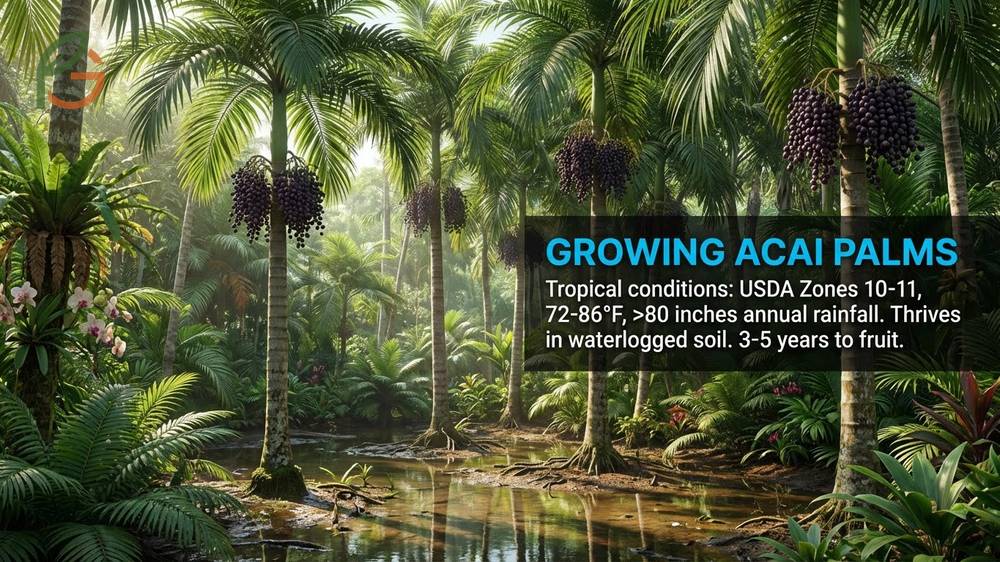
Acai palms (Euterpe oleracea) require specific tropical conditions that limit cultivation to USDA zones 10-11 with consistent warmth and high humidity. Research shows these palms thrive in temperatures between 72-86°F (22-30°C) with annual rainfall exceeding 80 inches[4]. Native to the Amazon rainforest floodplains, they tolerate waterlogged soil conditions that kill most fruit trees.
Studies demonstrate acai palms take 3-5 years from seedling to first fruit production, with peak yields occurring between years 5 and 15 of the palm’s lifespan[4]. Under ideal conditions, mature palms grow 2-3 feet annually and can live 20-30 years. Commercial growers often rotate out older trunks to maintain vigorous production from younger stems in the same clump.
Current horticultural guidance indicates acai palms develop multiple trunks from a single root system, creating dense groves naturally. Each mature palm produces 1-2 fruit harvests annually depending on rainfall patterns. The berries grow in large hanging clusters near the crown, requiring skilled climbers to harvest safely from heights often exceeding 50 feet.
Evidence suggests container cultivation of acai palms rarely produces fruit outside tropical climates, though the palms make attractive ornamental specimens. Home gardeners in suitable climates should plant in partial shade with consistently moist, organic-rich soil. Established palms tolerate brief flooding but struggle with extended dry periods that stress their shallow root systems.
- USDA hardiness zones 10-11 with no frost tolerance—temperatures below 50°F (10°C) damage foliage
- Full sun to partial shade exposure with protection from strong winds that damage fronds
- Consistently moist, organic-rich soil with pH 4.5-6.5—acai palms evolved in acidic floodplain conditions
- High humidity levels exceeding 60% year-round for optimal growth and fruit development
- Adequate spacing of 6-10 feet between palms to accommodate mature clump expansion
- Regular fertilization with balanced palm food containing micronutrients including manganese and iron
- Patient timeline expecting 3-5 years before first harvest and 5+ years for commercial-level production
Conclusion
The evidence is clear: acai berry nutritional information reveals a fruit with exceptional antioxidant density, unique omega fatty acid profiles, and balanced micronutrients rarely found together in plant foods. With 70 calories per 100g and an ORAC score exceeding 102,000 in freeze-dried forms, acai delivers measurable nutritional benefits when incorporated into varied diets alongside other fruits and vegetables.
Current nutritional guidance emphasizes sourcing quality acai products processed immediately after harvest to preserve maximum antioxidant activity. For home gardeners in tropical zones, growing acai palms requires patience and specific conditions, but mature specimens provide sustainable harvests for decades while contributing to biodiversity in suitable landscapes.
Medical Disclaimer
Important Medical Disclaimer: This content is for informational and educational purposes only. It is not intended as a substitute for professional medical advice, diagnosis, or treatment. Always consult a qualified healthcare professional or registered dietitian before making significant changes to your diet, especially if you have existing health conditions, take medications, or have concerns about food allergies. Individual nutritional needs vary based on age, health status, and other factors.
Frequently Asked Questions
How many calories are in acai berries?
Pure frozen acai pulp contains 70 calories per 100 grams (about 3.5 ounces). This makes acai moderately calorie-dense compared to other berries—higher than blueberries but lower than bananas. The calorie content comes primarily from healthy fats rather than sugars, with about 50% of calories derived from omega fatty acids that support cardiovascular and brain health.
What is the ORAC score of acai berries?
Freeze-dried acai berries score 102,700 μmol TE per 100 grams on the ORAC scale, ranking among the highest antioxidant foods tested. Spray-dried powder measures around 70,000, while fresh frozen pulp typically scores 15,000-20,000 due to water content dilution. These scores dramatically exceed common fruits like blueberries (4,669) and strawberries (1,540), confirming acai’s superfruit status.
Do acai berries contain omega-3 fatty acids?
Yes, acai berries contain omega-3 fatty acids along with omega-6 and omega-9 in a balanced profile. Research shows approximately 74% of acai’s total fat consists of unsaturated fatty acids, with omega-9 oleic acid dominating at 60%, omega-6 linoleic acid at 12%, and omega-3 alpha-linolenic acid at 2-3%. This composition resembles heart-healthy olive oil more than typical fruit profiles.
What vitamins are in acai berries?
Acai berries provide significant amounts of vitamins A (15% daily value per 100g), E (4.5mg), and C comparable to blueberries. They also contain B-complex vitamins including B1 and B6. The natural fat content in acai enhances absorption of fat-soluble vitamins A and E, making these nutrients more bioavailable than in water-based fruits.
Are acai berries high in sugar?
No, acai berries are relatively low in sugar compared to most fruits. Pure frozen pulp contains only 2 grams of sugar per 100 grams—significantly less than blueberries (10g), strawberries (7g), or bananas (12g). This low sugar content combined with 2g of fiber and 5g of healthy fats creates minimal blood sugar impact, making acai suitable for low-sugar diets.
How much protein is in acai berries?
Acai berries contain 2 grams of protein per 100 grams of frozen pulp—unusually high for fruit. This protein includes 19 different amino acids, with amino acids comprising 7.59% of pulp weight. While not a primary protein source, acai contributes more protein than most berries, and the amino acid profile provides building blocks for tissue repair and enzyme production.
Can you grow acai berries at home?
You can grow acai palms at home only in USDA zones 10-11 with tropical conditions including temperatures of 72-86°F (22-30°C) and high humidity. The palms require 3-5 years to produce first fruit and need consistently moist, acidic soil. Container cultivation rarely produces fruit outside tropical climates, though palms make attractive ornamental specimens in suitable environments.