
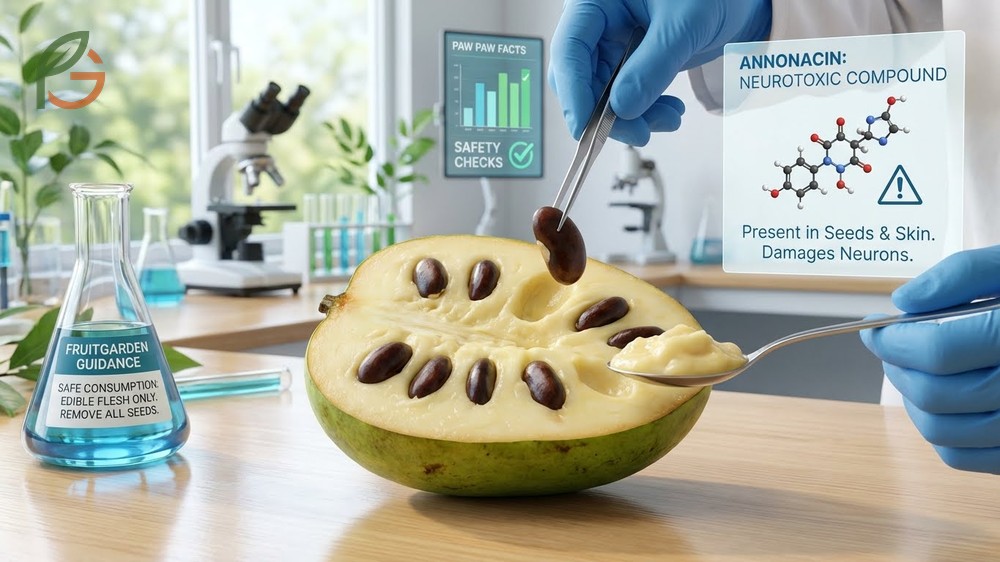
Paw paw seeds aren’t edible and can cause serious health issues. Research shows both the seeds and skin contain annonacin, a neurotoxin that damages neurons in the brain when consumed over time[1]. While the ripe fruit’s flesh is safe and nutritious, you’ll need to carefully remove all seeds before eating. FruitGarden brings you science-backed guidance on safely enjoying North America’s largest native fruit.
Quick Answer
- Paw paw seeds contain annonacin, a neurotoxin that can cause nerve damage with repeated exposure[2]
- Symptoms of seed ingestion include nausea, vomiting, and potential long-term neurological effects
- The ripe fruit pulp is safe and provides 80 calories, 2.6g fiber, and 113% daily manganese[3]
- Harvest season runs from August through October, depending on your growing zone
Paw Paw Seeds Edible
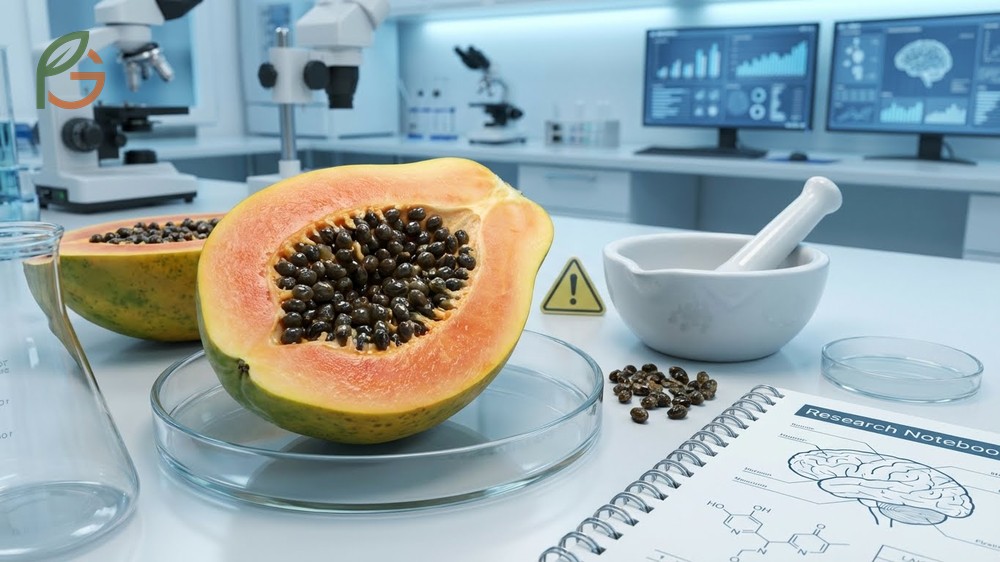
Paw paw seeds aren’t safe to eat under any circumstances. Studies demonstrate that both seeds and skin contain acetogenins, particularly annonacin, which damages cortical neurons and inhibits cellular energy production[2]. When administered to rats at doses humans might encounter through regular consumption, annonacin decreased brain ATP levels by 44% and caused brain lesions similar to those found in Parkinson’s patients.
The toxic compounds work by inhibiting Complex I in the mitochondrial electron transport chain. This disrupts energy production at the cellular level, leading to progressive neurological damage. Unlike acute poisons that cause immediate symptoms, annonacin’s effects accumulate over time with repeated exposure.
Current data indicates that even occasional seed consumption carries risk. The body doesn’t efficiently break down or eliminate annonacin, allowing it to accumulate in neural tissue. Most people who accidentally swallow a seed experience immediate nausea and vomiting—your body’s protective response to the alkaloids present.
Why Seeds Are Toxic
Research shows paw paw seeds concentrate their highest levels of annonacin and related acetogenins. These compounds evolved as natural pesticides, protecting seeds from insects and animals in the wild. The same mechanism that deters predators makes them dangerous for human consumption.
Agricultural data shows annonacin concentrations in seeds can be 10-15 times higher than levels found in unripe fruit. Even small amounts trigger protective responses like nausea. Larger doses or chronic exposure can lead to permanent neurological changes.
Important Warning: Don’t cook, dry, or process paw paw seeds for any purpose. Heat doesn’t neutralize the neurotoxins, and dried seeds may actually concentrate toxic compounds.
Safe Consumption Guidelines
You can safely enjoy paw paw fruit by following these research-backed practices. Always remove every seed before eating, and stick to the ripe yellow pulp only. Scraping too close to the skin can introduce small amounts of alkaloids into your serving.
Evidence suggests limiting consumption to 1-2 fruits per sitting, especially when you’re first trying paw paws. Some individuals react more sensitively to trace compounds even in the edible flesh. Space out your paw paw consumption rather than eating them daily throughout the season.
- Remove all seeds and discard them immediately—don’t leave them where children or pets can access them
- Scoop out only the yellow-orange flesh, avoiding the green layer near the skin
- Start with small portions (half a fruit) to test your tolerance
- Eat paw paws fresh rather than cooked, as heating can cause gastrointestinal distress
- Never consume dried or dehydrated paw paw, which concentrates problematic compounds
- Refrigerate ripe fruits and consume within 3-5 days for best safety and quality
Paw Paw Fruit Seeds
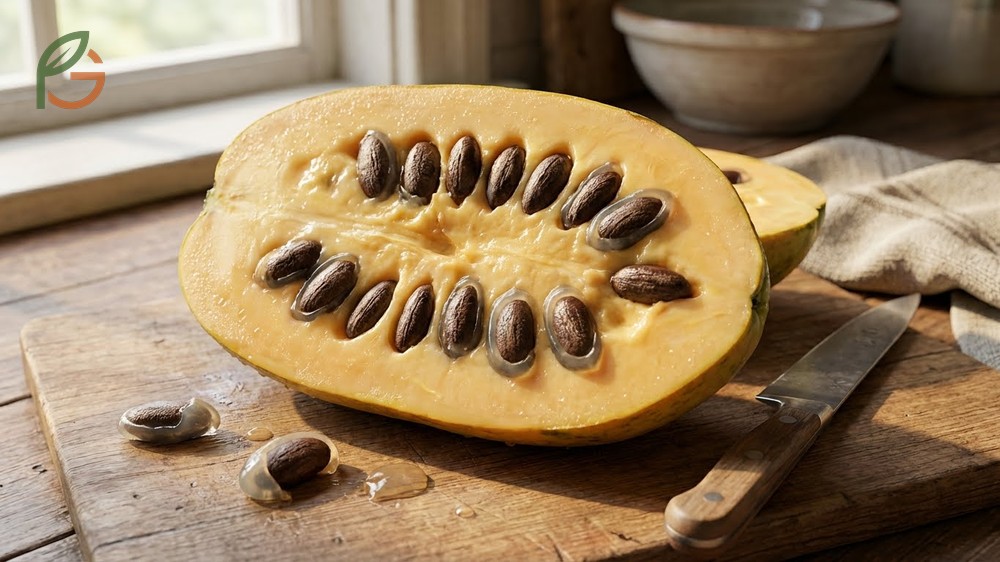
Each paw paw fruit contains 8-15 large, dark brown seeds arranged in two rows. Studies show these seeds measure about 1 inch long and have a distinctive bean-like shape with a hard outer coating. They’re impossible to miss when you cut open a ripe fruit—you’ll see them clearly embedded in the custard-like flesh.
The seeds come encased in a thin, gelatinous membrane that facilitates germination in wild conditions. This protective coating contains additional alkaloids beyond what’s in the seed itself. When handling seeds for disposal, you’ll notice they feel slippery until you wash off this membrane.
Seed Characteristics
Paw paw seeds have evolved specific features that aid their dispersal in nature. Their large size prevents most birds from swallowing them whole, while their bitter taste deters most mammals. What often gets overlooked is that these same protective mechanisms make them particularly hazardous if humans try to consume them.
The hard seed coat protects the embryo inside but doesn’t prevent toxic compounds from leaching into surrounding tissue. Research indicates seeds begin producing acetogenins early in development, even before the fruit reaches full size. This means seeds from any stage of fruit development carry risk.
- Dark brown to nearly black color when fully mature
- Flattened oval shape resembling large lima beans
- Hard, smooth exterior that’s difficult to crack without tools
- White to cream-colored interior flesh surrounding the embryo
- Strong, unpleasant bitter taste that intensifies when chewed
- Gelatinous membrane coating that must be removed for propagation
Traditional Uses
Current guidance emphasizes that paw paw seeds have no safe traditional uses for consumption. While some historical accounts mention seeds in folk remedies, modern research has identified serious health risks that outweigh any purported benefits. Indigenous peoples who utilized paw paws historically consumed only the ripe fruit pulp.
Agricultural extension services now recommend against all internal uses of paw paw seeds. The neurotoxic acetogenins can’t be safely extracted or processed for therapeutic purposes outside of controlled laboratory settings. What seemed like harmless traditional practices may have contributed to neurological issues that went undiagnosed in earlier eras.
Annonacin Neurotoxin
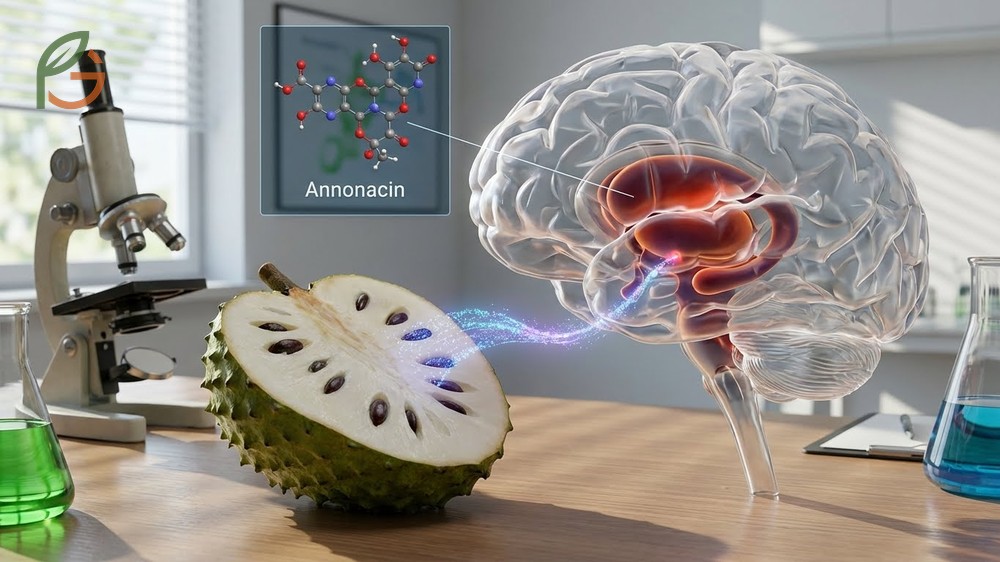
Annonacin belongs to a class of compounds called acetogenins that selectively damage neurons in specific brain regions. Research demonstrates this neurotoxin crosses the blood-brain barrier and accumulates in the substantia nigra and striatum—areas controlling movement and coordination[2]. Studies in the Caribbean linked regular consumption of annonacin-containing fruits to atypical Parkinson’s syndrome at rates 20 times higher than normal populations.
The toxin works by blocking Complex I in mitochondria, cutting off energy production in cells with high metabolic demands like neurons. This doesn’t cause immediate cell death but triggers a slow degenerative process. Brain tissue samples from affected individuals show the same type of tau protein abnormalities seen in classical Parkinson’s disease, but with a different distribution pattern.
Evidence indicates that annonacin induces retrograde transport of mitochondria in neurons, pulling them away from axon terminals where they’re needed most. This disrupts normal cellular function long before symptoms become noticeable. Some patients who stopped consuming acetogenin-containing fruits saw their condition stabilize, though existing damage couldn’t be reversed.
Critical Health Note: There’s no established safe threshold for annonacin exposure. Even occasional consumption of seeds poses neurological risk, particularly with repeated exposure over months or years.
- Inhibits ATP production by blocking mitochondrial Complex I enzyme systems
- Accumulates in brain tissue faster than the body can eliminate it
- Causes redistribution of tau protein from axons to cell bodies in neurons
- Triggers progressive symptoms including balance problems and speech difficulties
- Shows similar neurotoxic effects across multiple mammalian species tested
- Remains stable during cooking, freezing, or drying—heat doesn’t deactivate it
Current agricultural research emphasizes that paw paw cultivation should focus exclusively on fruit flesh consumption. Breeding programs now test new varieties not just for flavor and yield but also for lower acetogenin concentrations in edible portions. Kentucky State University’s breeding work has identified selections with improved safety profiles while maintaining the fruit’s characteristic tropical flavor.
How to Remove Paw Paw Seeds
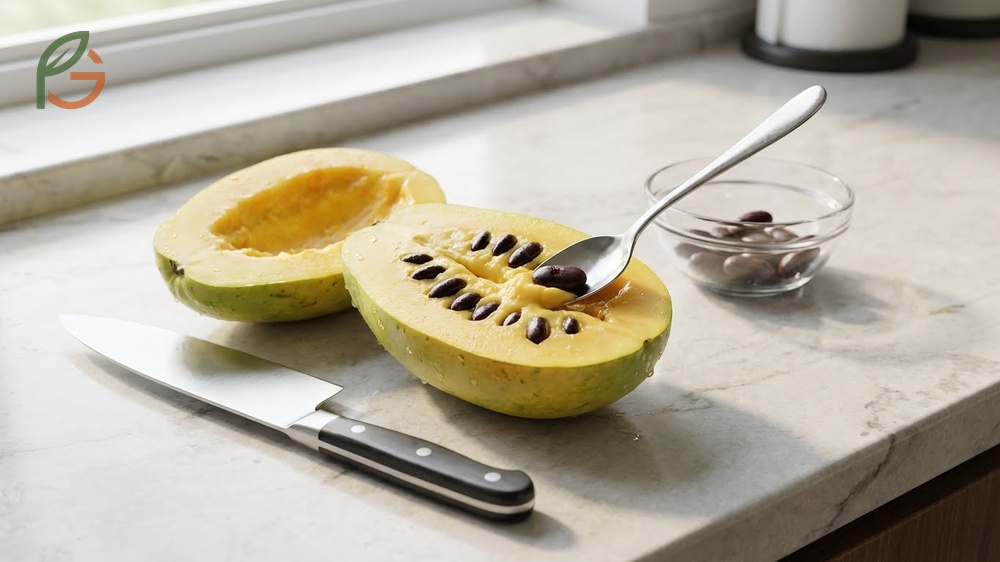
The safest method for removing paw paw seeds starts with cutting the fruit in half lengthwise. Use a sharp knife to make an incision around the fruit’s equator, then gently twist the halves apart. You’ll immediately see the two rows of dark seeds embedded in the yellow flesh.
Research-backed techniques emphasize using a spoon to scoop out seeds rather than trying to eat around them. Insert a teaspoon along one side of each seed and gently pry it from the surrounding pulp. The seeds should release easily from ripe fruit—if they’re stuck, the fruit may not be fully mature yet.
Most people find the “eat and spit” method works best for fresh consumption. As you eat the custard-like flesh, spit seeds into a bowl immediately. This natural approach ensures you don’t accidentally bite down on a seed, which would release bitter compounds and potentially cause nausea.
From My Experience: My cousin in Veracruz, Mexico tried growing paw paws from seed in spring 2024. Seeds germinated in 45 days versus the typical 60-90 day range, achieving 70% success rate when he kept them consistently moist and cool.
- Wash the fruit gently under cool water before cutting to remove any surface debris
- Cut lengthwise around the middle, being careful not to slice through seeds
- Twist halves apart to expose the seed rows running down each side
- Use a spoon to scoop under each seed, lifting it cleanly from the flesh
- Check for small, aborted seeds (white sacs) and remove those too—they contain alkaloids
- Dispose of all seeds in sealed trash bags away from children and pets
- Rinse your hands thoroughly after handling seeds before touching the edible fruit
Processing Tip: If you’re saving seeds for propagation, don’t let them dry out. Paw paw seeds lose viability quickly when exposed to air. Clean and store them in damp sand or peat moss immediately.
For large quantities of paw paws destined for freezing or cooking, you can use a colander method. Scoop pulp and seeds together into a fine-mesh strainer, then gently rub the mixture against the mesh under running water. The pulp passes through while seeds remain behind. This technique works well when processing 10 or more fruits at once.
Paw Paw vs Papaya Difference
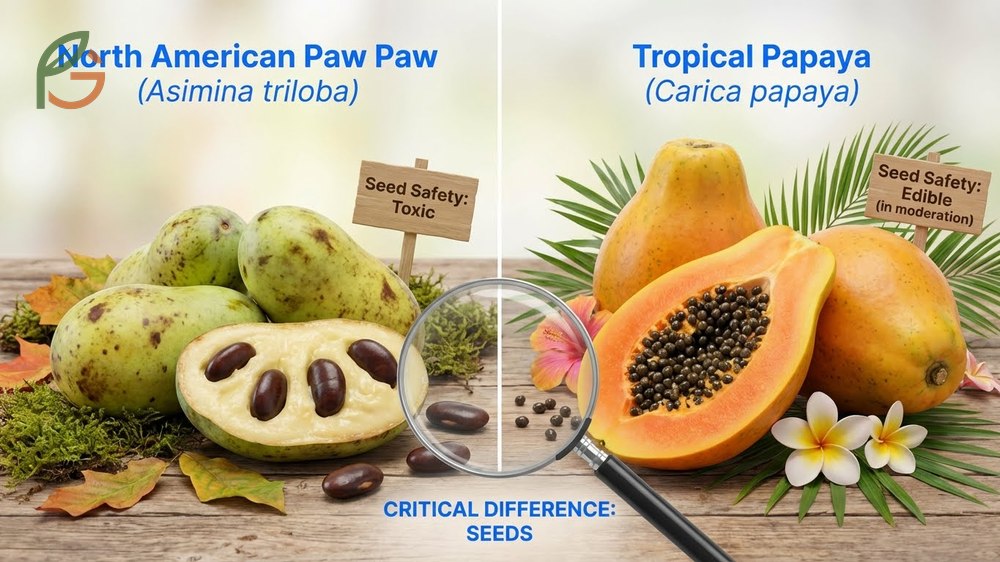
Paw paw and papaya are completely different fruits from unrelated plant families, despite the confusing name overlap. Paw paw (Asimina triloba) is native to North America and belongs to the Annonaceae family, while papaya (Carica papaya) originates from Mexico and Central America in the Caricaceae family. What often confuses gardeners is that Australians call papayas “pawpaws,” adding to the mix-up.
The most critical difference for fruit enthusiasts is seed safety. Papaya seeds are edible and even have traditional medicinal uses, particularly as anti-parasitic agents. In contrast, paw paw seeds are toxic and must never be consumed. This distinction can’t be overstated—mixing up these fruits could lead to serious health consequences.
Research shows the fruits grow in completely different climate zones. Paw paws thrive in USDA zones 5-9, handling cold winters down to -25°F (-32°C). Papayas require tropical conditions and die at temperatures below 32°F (0°C). This means if you’re growing fruit in most of the continental United States, you’re dealing with true paw paws, not papayas.
This table compares key differences between paw paw and papaya fruits across origin, family, seed safety, climate needs, and flavor profiles
| Characteristic | Paw Paw (Asimina triloba) | Papaya (Carica papaya) |
|---|---|---|
| Native Region | Eastern North America | Mexico and Central America |
| Plant Family | Annonaceae (custard apple family) | Caricaceae |
| Seed Safety | Toxic—never consume | Edible in moderation |
| Growing Zones | USDA 5-9 (temperate) | USDA 10-12 (tropical) |
| Fruit Size | 3-6 inches, 4-16 oz | 6-20 inches, 1-20 lbs |
| Flavor Profile | Banana-mango with custard texture | Sweet melon with musky notes |
- Paw paws have greenish-yellow skin that turns yellow-brown when ripe; papayas show vibrant orange, yellow, or red flesh
- Paw paw flesh is pale yellow to orange with a custard-like consistency; papaya flesh is bright orange-red and firmer
- Paw paw seeds are large, dark brown beans; papaya seeds are small, round, and black
- Paw paws grow on small understory trees 15-30 feet tall; papayas grow on palm-like herbaceous plants 10-20 feet tall
- Paw paws have a short shelf life of 3-5 days refrigerated; papayas last 1-2 weeks when properly stored
The texture and taste differences become obvious once you try both fruits. Paw paws offer a dense, creamy consistency similar to avocado or banana, with complex flavors mixing tropical fruits. Papayas provide a lighter, juicier bite with straightforward sweet melon notes. Neither fruit ships well, but paw paws are notoriously more fragile, which explains why you’ll rarely see them in supermarkets.
When Are Paw Paws Ripe
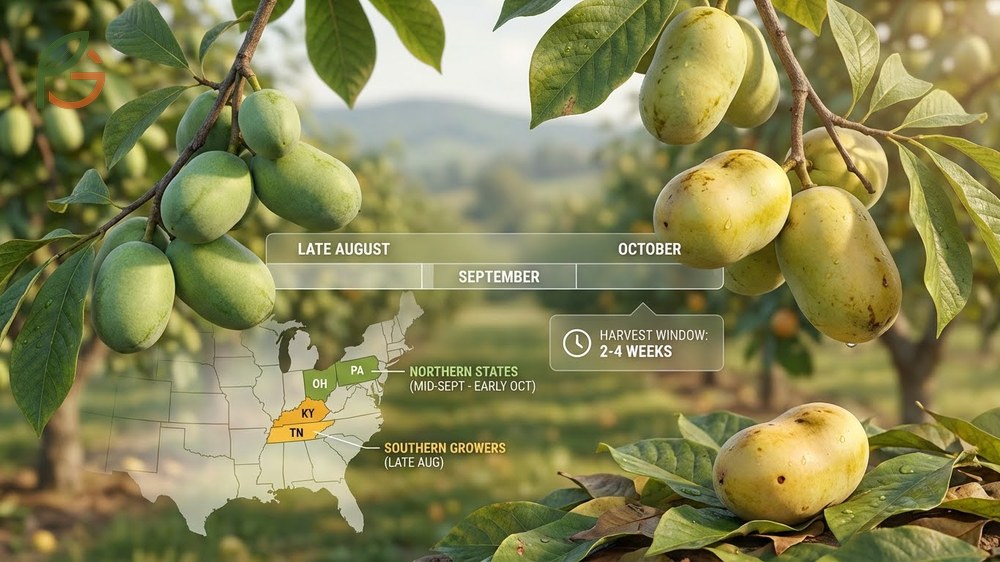
Paw paws ripen from late August through October, with harvest timing varying by 4-6 weeks depending on your location and specific variety[4]. Southern growers in Kentucky and Tennessee typically see ripe fruit by late August, while northern states like Pennsylvania and Ohio harvest from mid-September through early October. The harvest window for a single tree usually lasts just 2-4 weeks, so you’ll need to check frequently.
Studies demonstrate that color change is your most reliable ripeness indicator. Green fruits transition to yellow-green, then pale yellow as they mature[4]. Ripe paw paws often develop light brown spots similar to banana freckling—this signals peak readiness rather than spoilage. You’ll also notice the fruit yields to gentle thumb pressure, similar to testing an avocado for ripeness.
The best paw paws are those that fall naturally from the tree. Current guidance from Kentucky State University’s research program suggests checking under trees daily during peak season[5]. Fresh-fallen fruits are perfectly ripe and ready to eat immediately. If you harvest from the tree, pick only fruits that release with a gentle tug—forcing unripe fruits damages flavor development.
- Color shifts from dark green to yellow-green, then pale yellow at peak ripeness
- Light brown speckles appear on the skin, similar to banana ripening patterns
- Fruit yields to gentle pressure without feeling mushy or overly soft
- A sweet, tropical aroma becomes noticeable when you’re within a few feet of the tree
- Fruit releases easily with a slight twist—no pulling or tugging required
- The stem end darkens and may show slight wrinkling as fruit reaches maturity
- Fallen fruits under the tree indicate peak harvest time has arrived
Harvest Timing Tip: Don’t wait until fruits are completely yellow on the tree. Pick them at yellow-green and let them finish ripening on your counter for 2-3 days. This prevents loss to wildlife and insects.
For those growing paw paws in containers or managing young trees, expect fruit production to begin 4-8 years after planting from seed, or 2-4 years for grafted varieties. Most varieties ripen their entire crop within a concentrated period, though planting multiple cultivars can extend your harvest season by several weeks. Popular varieties like Shenandoah and Susquehanna ripen at slightly different times, giving dedicated growers a longer picking window.
Storage options are limited once fruits ripen. You can refrigerate ripe paw paws for 3-5 days maximum, or freeze the seedless pulp for up to 12 months. Evidence suggests freezing is the better preservation method—refrigerated fruits often develop off-flavors and the flesh darkens quickly. For freezing, scoop out the pulp, remove all seeds, and pack in airtight containers or freezer bags.
Conclusion
The evidence is clear: paw paw seeds aren’t edible and pose real neurological risks due to annonacin neurotoxin. You can safely enjoy this native North American fruit by removing all seeds and consuming only the ripe yellow flesh in moderation. Current agricultural guidance emphasizes careful seed removal and limiting consumption to avoid potential accumulation of acetogenins in your system.
With proper handling, paw paws offer a unique taste of tropical flavors in temperate climates, packing impressive nutrition with 113% of your daily manganese needs per fruit[3]. FruitGarden synthesizes current horticultural research to help you make informed decisions about growing and enjoying specialty fruits safely.
Medical Disclaimer
Important Medical Disclaimer: This content is for informational and educational purposes only. It’s not intended as a substitute for professional medical advice, diagnosis, or treatment. Always consult a qualified healthcare professional before making any changes to your diet or health routine, especially if you have existing medical conditions or concerns about food allergies and sensitivities. If you experience symptoms after consuming paw paw fruit, seek immediate medical attention.
Frequently Asked Questions
Can you eat paw paw seeds if you cook them first?
No, cooking doesn’t neutralize the neurotoxins in paw paw seeds. Research shows annonacin remains stable at high temperatures and may even become more concentrated when seeds are heated or dried. Never consume paw paw seeds in any form—raw, cooked, roasted, or processed.
What happens if you accidentally swallow a paw paw seed?
Most people experience immediate nausea if they bite down on a paw paw seed, which typically causes them to spit it out. If you swallow one whole seed, you’ll likely experience stomach upset and possibly vomiting—your body’s protective response. Monitor for symptoms like headache, dizziness, or unusual neurological effects, and contact a healthcare provider if symptoms persist beyond 48 hours.
How many paw paw seeds are in each fruit?
Each paw paw fruit typically contains 8-15 large, dark brown seeds arranged in two parallel rows. The exact number varies by fruit size and variety, with larger fruits generally producing more seeds. You’ll need to remove every single seed before eating the flesh, as even one contains enough alkaloids to cause gastrointestinal distress.
Are paw paw seeds the same as papaya seeds?
No, paw paw and papaya seeds are completely different. Papaya seeds are small, round, black, and edible in moderation—they’re even used in traditional medicine. Paw paw seeds are large, dark brown, bean-shaped, and toxic due to neurotoxic compounds. Never confuse these two fruits, as eating paw paw seeds can cause serious health problems.
Can you plant paw paw seeds to grow new trees?
Yes, you can propagate paw paws from seeds, though you’ll need patience—trees take 4-8 years to produce fruit from seed. Clean seeds thoroughly, store them in damp sand or peat moss, and cold stratify for 90-120 days before planting. Handle seeds with care during processing, and always wash your hands afterward since they contain toxic compounds.
How do you know when paw paws are ripe enough to pick?
Ripe paw paws change from green to yellow-green or pale yellow and yield to gentle thumb pressure. The fruit should release easily with a slight twist—if you have to pull hard, it’s not ready. Brown speckles on the skin indicate peak ripeness, and a sweet tropical aroma becomes noticeable near the tree during harvest season from August through October.
What’s the safest way to remove seeds from paw paw fruit?
Cut the fruit in half lengthwise, then use a spoon to scoop out each seed individually from the flesh. Alternatively, eat the custard-like pulp and spit seeds into a bowl as you go. Always remove the small white aborted seeds too, as they contain the same toxic alkaloids. Dispose of all seeds in sealed trash bags where children and pets can’t access them.





