
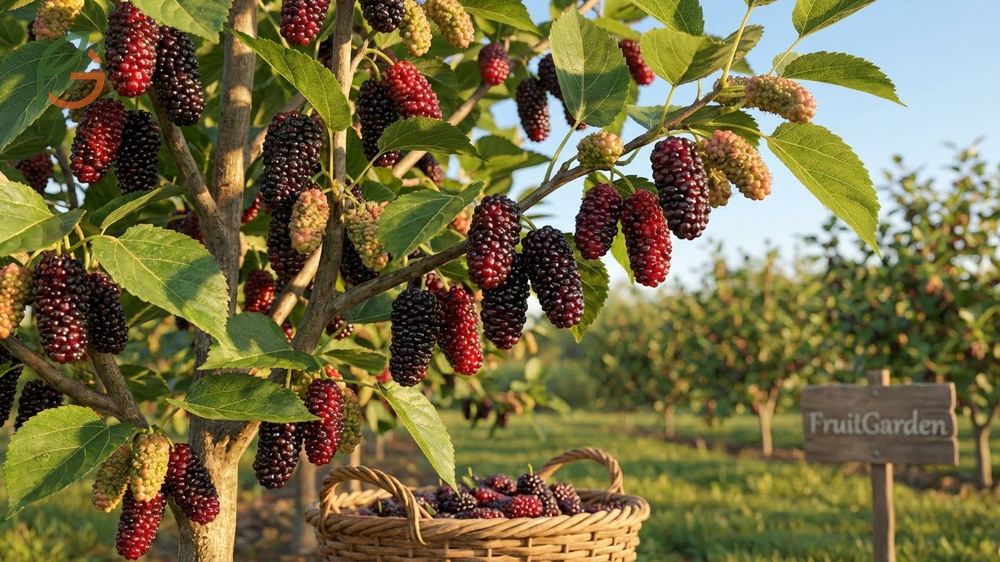
When do mulberry trees fruit? Most mulberry trees produce fruit from late spring through mid-summer, with peak harvest occurring between mid-June and August[1]. Research shows that the exact timing depends on your climate zone, tree variety, and local weather patterns[2]. FruitGarden synthesizes current agricultural research to help you maximize your mulberry harvest success.
Quick Answer
When Do Mulberry Trees Fruit
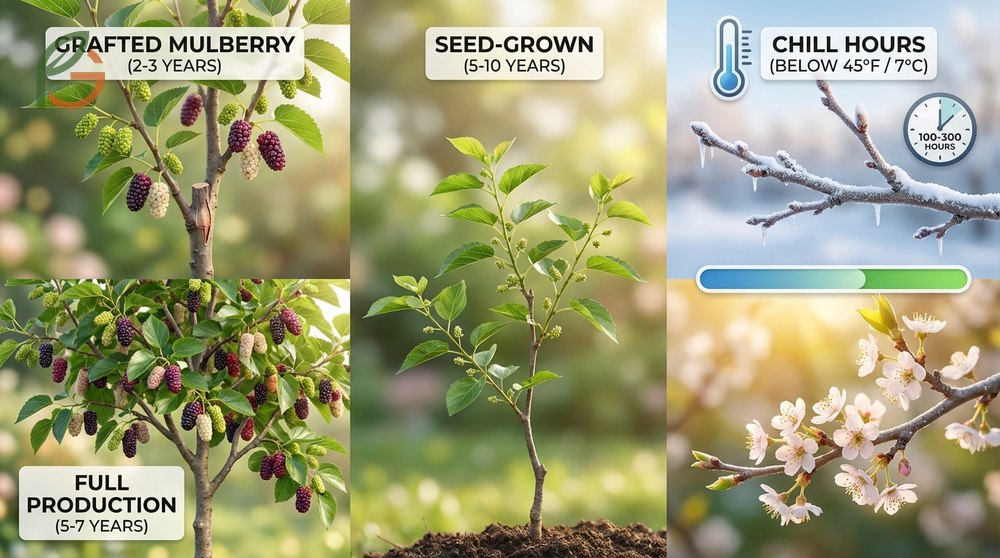
Mulberry trees begin their fruiting cycle in late spring, with flowers appearing in April and May for about 1-2 weeks[4]. After successful wind pollination, berries develop over 4-6 weeks before reaching maturity[4]. The entire fruiting season extends from mid-spring to late summer, lasting 6-8 weeks total[4].
Studies demonstrate that mulberry trees don’t ripen all at once. Instead, they produce fruit continuously throughout the harvest window, allowing you to pick fresh berries every few days. This extended harvest is one reason mulberries are popular for home gardens and small-scale production.
Current agricultural data indicates that warmer climates see earlier fruiting periods, while cooler regions experience later starts[2]. Trees growing in USDA zones 5-6 typically fruit in July, whereas zones 8-9 may see ripe berries by late May or early June.
Spring Flowering Phase
Before fruit appears, mulberry trees must complete their flowering cycle. The flowers are small, inconspicuous, and wind-pollinated rather than insect-pollinated. White Mulberry pollen can travel at remarkable speeds, moving over half the speed of sound through the air[4].
Trees require adequate winter chilling to bloom properly. Most mulberry varieties need 200-400 chill hours—time spent between 32°F and 45°F (0°C and 7°C)—to trigger flowering[3]. Without sufficient chilling, you’ll see erratic flowering or no blooms at all.
Important Note: Some mulberry trees are dioecious (separate male and female plants), while others are self-fertile. Male trees produce no fruit, so verify your tree’s sex if you’re not seeing berries after several years.
Fruit Development Timeline
Once pollination occurs, the berry development process begins immediately. The fruit changes from green to its final color over 25-30 days[6]. During this period, berries accumulate sugars and develop their characteristic sweet flavor profile.
Research shows that mulberries are non-climacteric fruits, meaning they don’t continue ripening after harvest. This makes timing crucial—you must wait until berries reach full maturity on the tree before picking them for optimal sweetness and flavor.
Mulberry Fruiting Season
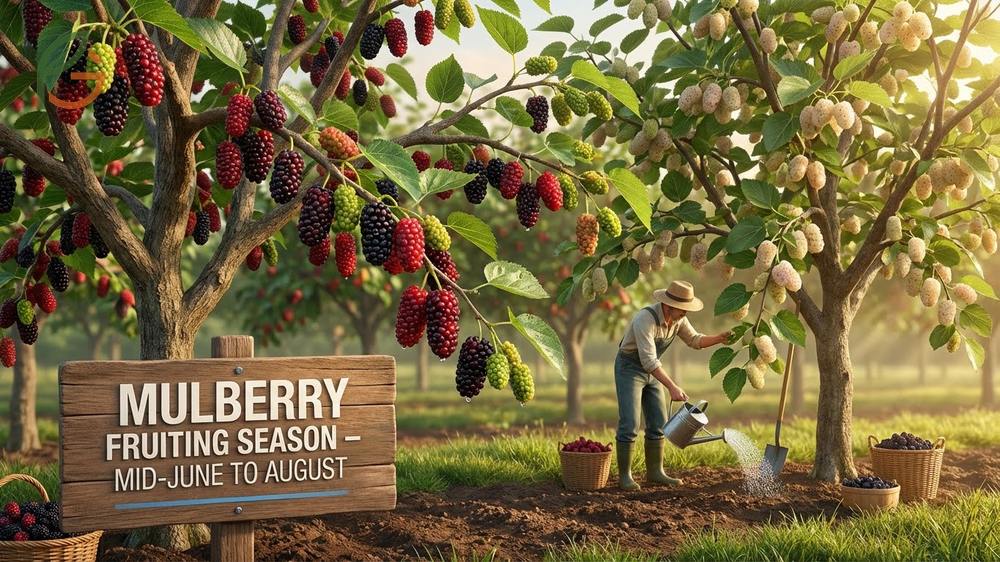
The primary mulberry season runs from mid-June through August across most of the United States[1]. Both Red Mulberry and White Mulberry species fruit during this window, with individual trees producing continuously rather than all at once[7]. This staggered ripening allows for multiple harvests from a single tree throughout summer.
Agricultural guidance emphasizes that proper care significantly impacts fruiting duration. Well-maintained trees with adequate water, sunlight, and nutrients produce fruit for longer periods compared to stressed trees. Some varieties, particularly Illinois Everbearing and Pakistan types, are known for exceptionally long harvest windows.
Evidence suggests that the fruiting season can extend into early September in favorable conditions. Trees with consistent moisture and protection from extreme heat continue producing quality berries later than those experiencing drought stress.
Peak Harvest Months
June and July represent peak production months for most mulberry varieties. During these weeks, trees produce their heaviest berry yields, and fruit quality reaches its highest level. A mature tree at age 10 can yield 15-20 pounds of fruit annually[1].
The concentration of ripe fruit during peak season creates both opportunities and challenges. While you’ll harvest the most berries, you’ll also need to check trees every 2-3 days to collect ripe fruit before it falls and attracts wildlife or creates staining issues on hardscapes.
- Daily production increases significantly, requiring frequent harvests
- Berry size reaches maximum dimensions for each variety
- Sugar content peaks, delivering the sweetest flavor profiles
- Wildlife competition intensifies as birds discover the ripe fruit
- Fallen berries accumulate rapidly beneath the tree canopy
Regional Timing Variations
Your location dramatically affects when you’ll harvest mulberries. Southern states like Florida and Texas see ripe fruit as early as late April or May, while northern zones 4-5 may not harvest until mid-July. These differences stem from accumulated heat units and spring temperature patterns.
Coastal areas with moderate climates often experience longer fruiting seasons than inland regions with temperature extremes. The extended mild weather allows trees to continue producing new flowers and developing fruit over many weeks rather than compressing the season into a shorter window.
When Mulberries Ripen
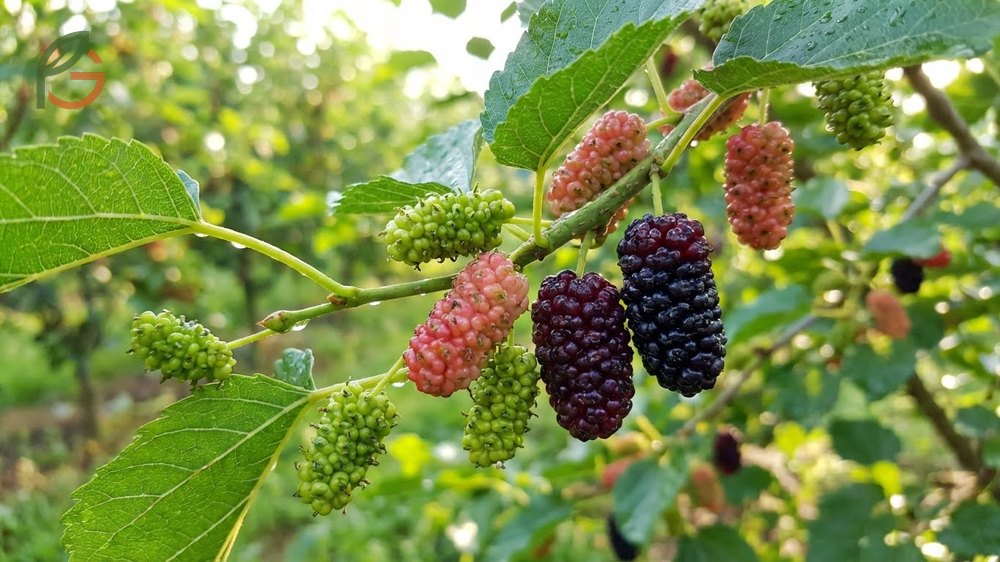
Mulberries ripen gradually over several weeks rather than all at once. Individual berries on the same branch may be at different ripeness stages simultaneously—some green, others red or partially colored, and some fully ripe. This sequential ripening pattern means you’ll need to selectively harvest only the ready fruit during each picking session.
The ripening process follows a predictable color progression. Berries start green and firm, then transition through color changes specific to their variety before reaching full maturity. The skin color change occurs because of increasing pigment concentrations as the fruit develops[6].
Studies demonstrate that fully ripe mulberries detach easily from the stem with gentle pressure. If you must tug or pull hard, the berry isn’t ready yet. This natural abscission zone forms only when the fruit reaches optimal ripeness, providing a reliable harvest indicator.
Ripening Color Stages
During the 25-30 day growth period, mulberry skin color progresses from green (unripe) through intermediate shades to the final mature color[6]. The specific colors depend entirely on your tree’s variety, as mulberry names don’t correspond to fruit color—White Mulberries can produce white, red, or dark purple berries.
Research identifies four distinct ripeness stages: unripe (green/hard), semi-ripe (color changing/firm), ripe (full color/soft), and overripe (very dark/mushy). For eating fresh or processing, harvest at the ripe stage when berries are soft but not falling apart.
- Unripe: Green color, very firm texture, tart or bitter taste
- Semi-ripe: Color beginning to develop, still firm, mildly sweet
- Ripe: Full variety-specific color, soft texture, maximum sweetness
- Overripe: Very dark color, mushy texture, beginning to ferment
- Past harvest: Shriveling on branch or fallen to ground
Harvest Tip: Taste-test a few berries before harvesting in quantity. Ripe mulberries are sweet and juicy, while underripe fruit tastes bland or slightly bitter. Color alone isn’t always reliable since varieties differ.
Variety Differences
Red Mulberry produces fruit that’s always nearly black when ripe, providing a consistent color indicator[7]. In contrast, White Mulberry shows remarkable color variation—ripe fruit may be white, pink, red, or deep purple depending on the specific cultivar. This variation sometimes causes confusion about ripeness timing.
Black Mulberry typically ripens later in the season compared to White and Red varieties. If you’re growing multiple species, expect your Black Mulberry harvest to begin 1-2 weeks after the others reach maturity. The Black variety also tends to have deeper, richer flavor compared to the sweeter White types.
Mulberry Harvest Time
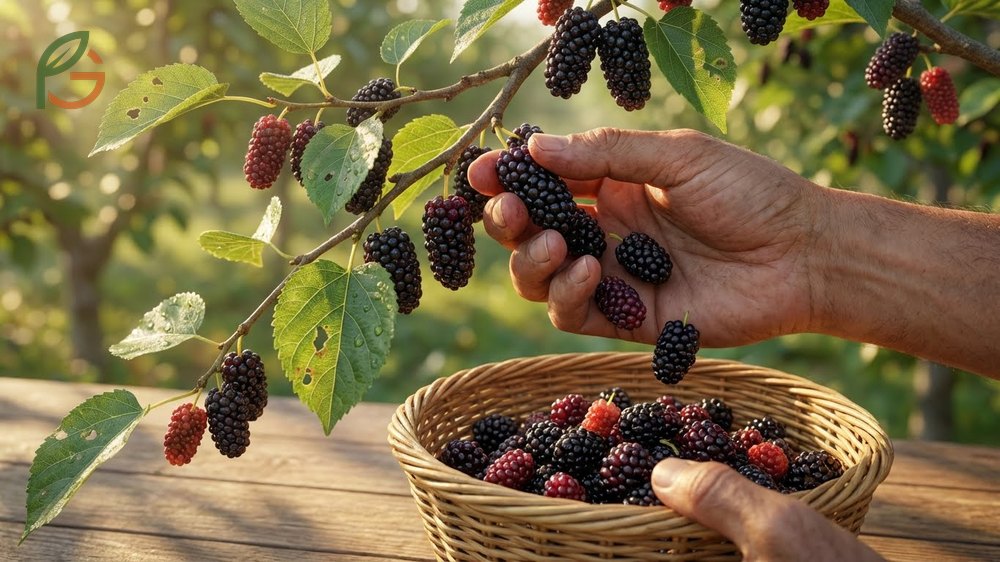
Optimal harvest timing occurs when berries are fully colored, soft to gentle touch, and detach easily from the stem. Most varieties reach this stage during morning hours after overnight sugar concentration. The fruit will be large, sweet, and at peak flavor when properly ripe[1].
Plan to harvest every 2-3 days during peak season. This frequent collection prevents overripe berries from falling and attracting pests, reduces waste, and ensures you capture fruit at optimal quality. Missing a harvest window means losing berries to birds, insects, or ground spoilage.
Evidence indicates that mulberry fruit drops naturally when fully ripe, creating purple stains on anything below the tree. This natural shedding is why many growers position their trees away from sidewalks, driveways, and patios. If staining is a concern, use collection methods that catch berries before they fall.
Best Collection Methods
Hand-picking works well for small quantities or when you want the highest quality fruit. Gently pinch the stem just above the berry and pull—ripe fruit will release immediately. Place berries in shallow containers to prevent crushing lower layers under the weight of fruit above.
For larger harvests, spread a clean sheet or tarp under the tree and gently shake the branches[1]. Ripe berries will fall onto the collection surface while unripe fruit stays attached. This method speeds harvest significantly but may include some slightly underripe or overripe berries mixed with perfect ones.
- Hand-picking: Slowest method but highest quality, select only perfect berries
- Branch shaking: Faster collection, good for large trees, some mixed ripeness
- Ground collection: Convenient but fruit may be overripe or damaged
- Net systems: Install netting below branches to catch naturally falling fruit
- Combination approach: Shake for bulk harvest, hand-pick remaining prime berries
Daily Harvest Timing
Harvest during cool morning hours for best results. Early collection preserves fruit freshness, maintains higher moisture content, and makes handling more comfortable. Berries picked in morning heat will be warmer and soften faster during storage.
Late evening harvests work as a secondary option when mornings aren’t possible. The key is avoiding midday heat, which causes berries to become overly soft and more prone to crushing. Cool temperatures help fruit maintain quality from tree to refrigerator.
Storage Tip: Refrigerate harvested mulberries immediately. They’re highly perishable and will deteriorate within 24-48 hours at room temperature. For longer storage, freeze berries in a single layer on baking sheets before transferring to containers.
Fruit Production Timing
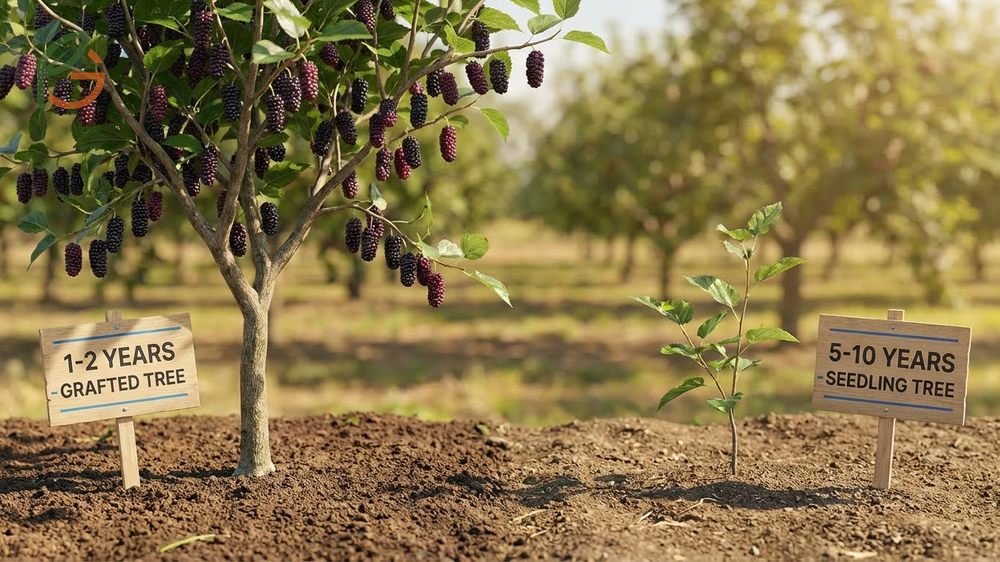
The age of your tree dramatically affects when fruit production begins. Grafted mulberry varieties start producing in as little as 1-2 years after planting[5]. These grafted trees carry mature genetics from the parent plant, allowing them to skip the juvenile growth phase and fruit much earlier than seed-grown specimens.
Trees grown from seed require significantly more patience. Most seedling mulberries need 5-10 years before producing their first berries[5]. This extended juvenile period occurs because the tree must reach physiological maturity before switching from vegetative growth to reproductive flowering and fruiting.
Current guidance shows that nursery-purchased trees aged 2-3 years typically begin fruiting within 1-2 seasons after transplanting. These semi-mature plants have already progressed partway through the juvenile phase, reducing your wait time compared to starting from seed or very young whips.
Tree Age Factors
Young mulberry trees between 3-6 years old produce modest crops while still investing energy in structural growth. Don’t expect heavy yields during this establishment phase. As trees mature into their second decade, production increases substantially—a 10-year-old tree can yield 10 bushels or 15-20 pounds annually[1].
Peak production occurs in trees aged 10-25 years. During this prime fruiting window, well-maintained trees deliver maximum yields with consistent fruit quality. Very old trees beyond 40-50 years may show declining production as vigor decreases, though they can continue fruiting for decades with proper care.
- Years 1-2 (grafted): Light initial fruiting, focus on establishment
- Years 3-6: Increasing production as tree matures, still growing vigorously
- Years 7-10: Approaching peak yields, 15-20 pounds per season possible
- Years 10-25: Maximum production period with heaviest crops
- Years 25+: Continued production with gradual decline in very old age
Climate Requirements
Mulberry trees thrive in USDA zones 4-9, with most varieties showing excellent cold tolerance down to -30°F (-34°C)[8]. This wide adaptation range makes mulberries suitable for nearly all contiguous US states. However, fruiting success depends on adequate winter chilling—hot-climate gardeners in zones 10-11 may see reduced flowering and fruit set.
The chill hour requirement of 200-400 hours is relatively low compared to many fruit trees[3]. This makes mulberries ideal for moderate climates that don’t experience deep winter freezes. Southern California, coastal areas, and transitional climate zones provide excellent growing conditions.
Research shows that mulberries need full sun exposure—at least 6 hours of direct sunlight daily—to fruit productively. Shaded trees grow well but produce significantly fewer berries. Plant in the sunniest available location for best yields and sweetest fruit.
Conclusion
The evidence is clear: when do mulberry trees fruit? They produce berries from late spring through mid-summer, with the prime harvest window falling between mid-June and August across most US regions. Trees require adequate winter chilling, proper care, and sufficient maturity to fruit successfully, but once established, they’ll provide reliable annual crops for decades.
Current agricultural data emphasizes the importance of variety selection, site conditions, and tree age in determining your specific fruiting timeline. Whether you’re planting grafted trees for quick production or growing from seed for a long-term project, understanding these timing factors helps you set realistic expectations and plan effective care strategies. FruitGarden continues tracking the latest research on fruit production timing to help you maximize your harvest success year after year.
Frequently Asked Questions
How long does it take for a mulberry tree to produce fruit after planting?
Grafted mulberry trees start producing fruit in 1-2 years after planting, while seed-grown trees require 5-10 years to reach fruiting maturity. Nursery-purchased trees aged 2-3 years typically begin fruiting within 1-2 seasons of transplanting, offering a middle-ground timeline for home gardeners.
What months do mulberries ripen in the United States?
Mulberries ripen from mid-June through August in most US regions. Southern states may see ripe fruit as early as late April or May, while northern zones 4-5 harvest in mid-July. The 6-8 week harvest window allows for multiple pickings from each tree throughout the summer season.
How can I tell when mulberries are ripe and ready to pick?
Ripe mulberries display full color for their variety (often dark purple or black), feel soft to gentle touch, and detach easily from the stem without pulling. Taste is the most reliable indicator—ripe berries are sweet and juicy, while underripe fruit tastes bland or slightly bitter regardless of color.
Do all mulberry tree varieties fruit at the same time?
No, different varieties have varying fruiting schedules. White Mulberry and Red Mulberry typically fruit simultaneously in mid-June through July, while Black Mulberry often ripens 1-2 weeks later in the season. Specific cultivars like Illinois Everbearing extend the harvest window even further into late summer.
Why isn’t my mulberry tree producing fruit?
Common reasons include insufficient tree age (under 3-4 years old), inadequate winter chill hours, having a male tree (which produces no fruit), excessive shade (needs 6+ hours direct sun), or improper pruning that removes fruiting wood. Trees stressed by drought or poor soil conditions may also skip fruiting seasons.
How much fruit does a mature mulberry tree produce per season?
A healthy 10-year-old mulberry tree produces approximately 10 bushels or 15-20 pounds of fruit annually. Production increases as trees mature into their second decade, with peak yields occurring in trees aged 10-25 years under optimal growing conditions with proper care and maintenance.
Can I harvest mulberries multiple times during the season?
Yes, mulberries ripen gradually over 6-8 weeks rather than all at once. This staggered ripening requires harvesting every 2-3 days during peak season to collect ripe berries before they fall. The extended harvest window provides fresh fruit throughout summer but demands frequent collection attention.





