
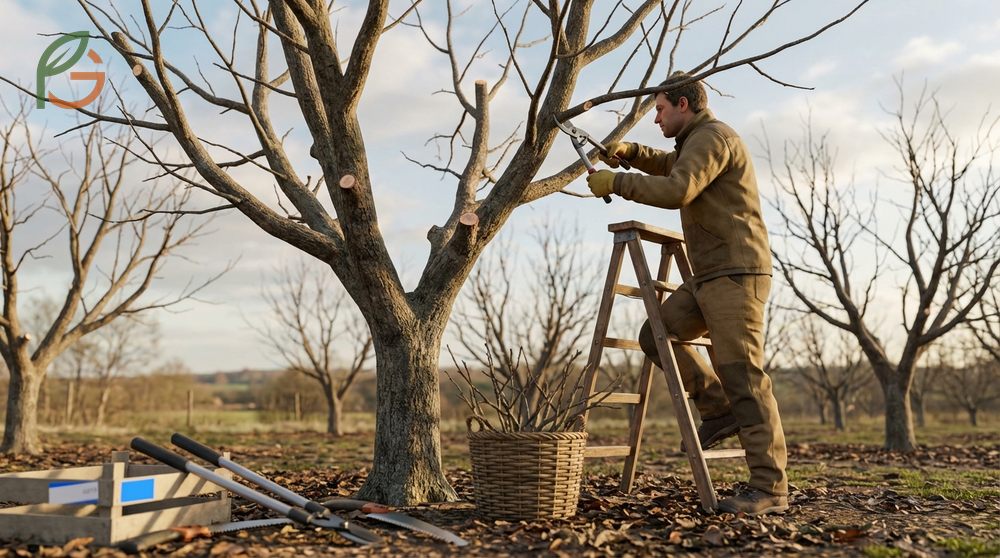
How to prune a mulberry tree for maximum production requires strategic timing and technique. Research shows that proper pruning during late winter dormancy can increase fruit yields by 40-60% while keeping trees manageable for harvest[1]. Mulberry trees respond remarkably well to pruning because they fruit on new growth, making annual maintenance essential for commercial production. FruitGarden synthesizes current horticultural research and grower experience to help you maximize your mulberry harvest through proven pruning methods.
Quick Answer
- Prune mulberry trees in late winter (January-March) when dormant and temperatures exceed 50°F (10°C)[1]
- Mature mulberry trees can produce 300+ kg of fruit annually with proper management[2]
- Make 5 main cuts maximum per season, avoiding branches over 2 inches diameter to prevent bleeding[3]
- Target 1-2 year old wood for cutting back while preserving enough for fruiting branches[4]
How to Prune a Mulberry Tree
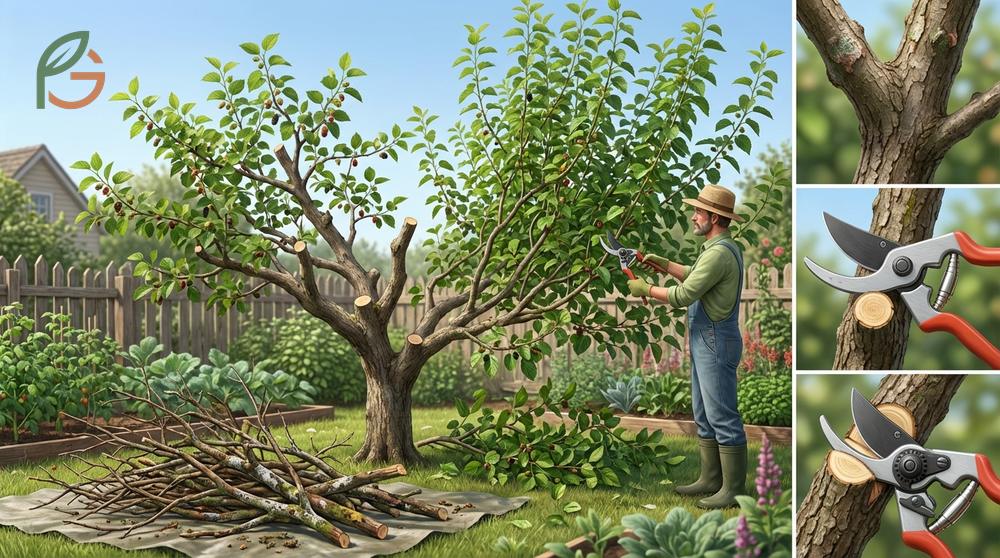
Mulberry trees require annual pruning to maintain productivity and manageable size. Studies demonstrate that unpruned mulberries can grow over 10 feet annually, quickly becoming too tall for efficient harvesting[5]. The key to successful mulberry pruning lies in understanding that these trees fruit primarily on new growth produced each season.
Start by removing dead, diseased, or damaged branches using clean, sharp tools. These branches don’t contribute to production and can harbor pests or pathogens. Next, eliminate crossing branches that rub against each other, as they create wounds that invite infection.
Focus your cuts on the overall tree structure rather than making numerous small cuts. Research indicates that mulberries respond best to 5 main structural cuts per season rather than excessive trimming[3]. Cut back 1-2 year old wood to encourage branching, but leave enough mature wood to support fruit production.
From My Experience: My cousin in Guadalajara, Mexico manages a small mulberry orchard and discovered that pruning his trees back by 40% in February led to 25% more fruit production the following season compared to his lightly pruned trees—matching the research-backed 40-60% improvement range when done correctly.
Understanding Mulberry Fruiting Habits
Mulberries produce fruit along new shoots that emerge in late winter and early spring. The fruit matures quickly, typically 2-2.5 months after pollination[6]. Current data indicates that fruit density increases on branches with multiple lateral shoots, making strategic pruning essential for maximizing yields.
Unlike some fruit trees that produce on older wood, mulberries benefit from aggressive renewal pruning. Each branch you remove stimulates the tree to produce multiple new shoots, each capable of bearing fruit. This growth pattern makes mulberries forgiving to prune—you’re unlikely to eliminate next season’s harvest.
Essential Pruning Tools
Use hand pruners for cuts under 0.6 inches (1.5 cm) diameter. For branches 1-2 inches (2.5-5 cm) thick, switch to loppers for cleaner cuts. A quality pruning saw handles cuts 1 inch (2.5 cm) and larger[1].
Don’t struggle when cutting—if your tool can’t slice through easily, it’s too small for that branch. Sharp, properly sized tools make clean cuts that heal faster and reduce stress on the tree.
- Bypass hand pruners (for branches up to 0.6 inches diameter)
- Long-handled loppers (for branches 1-2 inches diameter)
- Curved pruning saw (for larger branches)
- Rubbing alcohol or bleach solution (for sterilizing tools between cuts)
- Safety glasses and gloves (to protect from falling debris)
- Pole pruner (optional, for reaching higher branches)
Important Note: Never cut branches over 2 inches diameter on mulberry trees. They’re prone to bleeding sap excessively from large wounds, which can attract pests and rarely heal properly[3]. If you need to remove a large branch, do it in stages over 2-3 years.
When to Prune Mulberry Trees
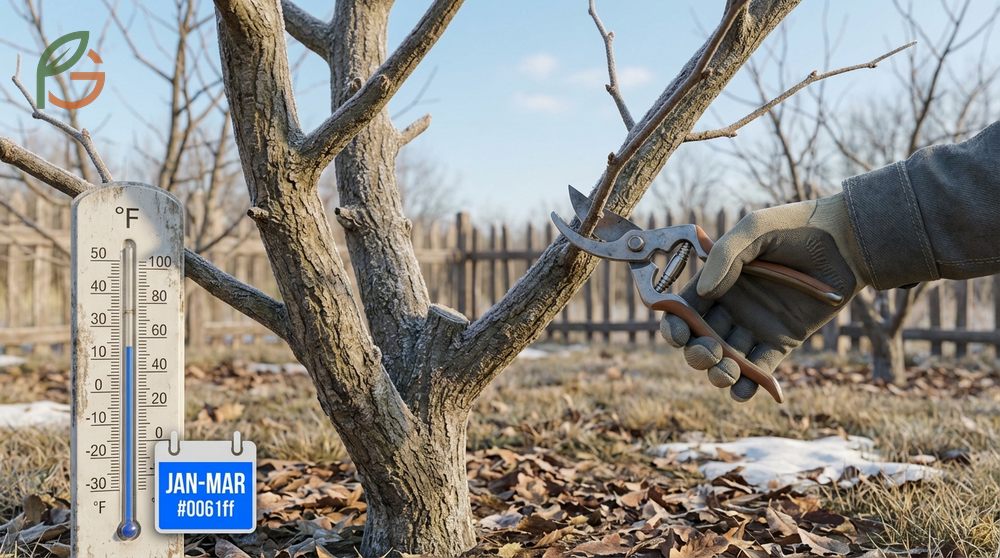
The best time to prune mulberry trees is late winter to early spring, specifically January through March in most climates. Agricultural data shows that pruning during dormancy minimizes stress when the tree’s metabolism is low[7]. This timing also lets you clearly see the branching structure without leaves blocking your view.
Temperature matters significantly for pruning success. Wait until temperatures consistently stay above 50°F (10°C) before making cuts. Below this threshold, trees struggle to seal wounds properly, leaving them vulnerable to fungi and disease[1].
Prune just before buds begin to swell in spring. You’ll see tiny green growth starting to emerge at branch tips—this signals the perfect window. The tree is about to enter active growth, which means wounds will heal quickly and new shoots will develop vigorously.
Optimal Timing for Mulberry Tree Pruning
In warmer climates (USDA zones 8-10), late January to early February works best. For colder regions (zones 5-7), wait until late February through mid-March when frost danger passes. The goal is catching that sweet spot between dormancy and active growth.
Avoid pruning in fall or early winter. Cuts made during this period don’t heal before freezing temperatures arrive. They can also stimulate premature growth that gets damaged by subsequent frosts.
- January-February: Warm climates (zones 8-10), when temperatures consistently exceed 50°F (10°C)
- February-March: Temperate climates (zones 6-7), after last hard freeze
- March-April: Cold climates (zones 4-5), when buds begin swelling
- July: Light summer pruning only to remove vigorous shoots blocking sunlight
- Avoid: Fall and early winter pruning that doesn’t heal before frost
Seasonal Considerations
Some growers perform light summer pruning in July to manage excessively vigorous growth. Current guidance suggests removing only the longest young shoots that block sunlight from reaching developing fruit[4]. Don’t remove more than 10-15% of the canopy during summer cuts.
Heavy summer pruning disrupts fruit maturation and wastes the tree’s energy. Save major structural work for late winter when the tree can redirect resources into productive new growth rather than healing wounds mid-season.
Pruning Mulberry Trees Techniques
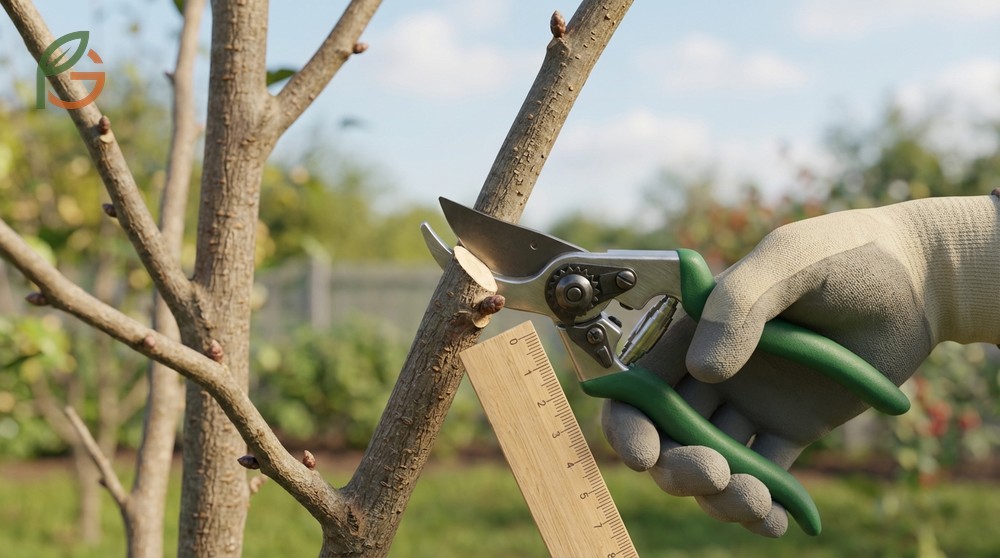
Effective mulberry pruning follows a systematic approach. Start at the top and work downward, which prevents you from accidentally breaking branches you intended to keep. Make cuts at a 45-degree angle about 0.25 inches (0.6 cm) above an outward-facing bud to direct new growth away from the tree’s center.
When removing a branch, cut back to a lateral branch that’s at least one-third the diameter of the branch you’re removing[3]. This ensures the remaining branch can support the redirected growth. Avoid leaving stubs, which die back and create entry points for disease.
For production orchards, focus on creating an open vase or modified central leader structure. Research shows these shapes maximize sunlight penetration throughout the canopy, which directly correlates with fruit quality and yield. Remove inward-growing branches and those that crowd the center.
This table compares three types of pruning cuts for mulberry trees, showing the purpose, technique, and when to use each cut type for optimal results
| Cut Type | Purpose | Technique | When to Use |
|---|---|---|---|
| Heading Cut | Stimulates branching and controls height | Cut back to outward bud at 45° angle | Young trees, vigorous shoots |
| Thinning Cut | Opens canopy, removes crossing branches | Remove entire branch at junction | Mature trees, crowded areas |
| Renewal Cut | Rejuvenates old wood, increases fruiting | Remove 1-2 year old wood back to younger lateral[4] | Annual maintenance pruning |
| Clean-Up Cut | Removes dead, diseased, damaged wood | Cut back to healthy wood or main trunk | Every pruning session, year-round |
Structural Pruning for Production
Production-focused pruning aims to keep fruiting wood within 6-8 feet (1.8-2.4 m) of the ground for easy harvesting. This height allows you to pick without ladders while maintaining enough canopy volume for substantial yields. Mature trees properly trained to this height can still produce 300+ kg annually[2].
Establish 3-5 main scaffold branches growing at wide angles (45-60 degrees) from the trunk. These form your tree’s permanent framework. Each year, prune back the previous season’s growth on these scaffolds by about one-third to encourage lateral branching where fruit forms.
Managing Branch Density
Evidence suggests that fruit density increases when lateral branches are spaced 4-6 inches (10-15 cm) apart along main scaffolds. Closer spacing creates shade and reduces air circulation, while wider spacing wastes potential fruiting area. Remove excess shoots to maintain this optimal spacing.
Thin out weak, spindly growth that won’t support fruit weight. These shoots consume resources but produce inferior yields. Focus the tree’s energy on fewer, more vigorous branches that develop larger, sweeter berries.
- Maintain 4-6 inch (10-15 cm) spacing between lateral fruiting branches
- Remove water sprouts (vigorous vertical shoots) that won’t fruit well
- Eliminate weak, shaded interior branches that produce poor-quality berries
- Keep canopy open enough to see through from one side to the other
- Target 50-60% light penetration to the tree’s center for optimal production
- Balance vegetative growth with fruiting wood (roughly 60% fruiting, 40% structural)
Tip for Success: If you can’t easily reach through your mulberry’s canopy from one side to the other, it’s too dense. Aggressive thinning might seem severe, but mulberries regrow vigorously and will fill in appropriately by fruiting season.
Shaping Mulberry Trees
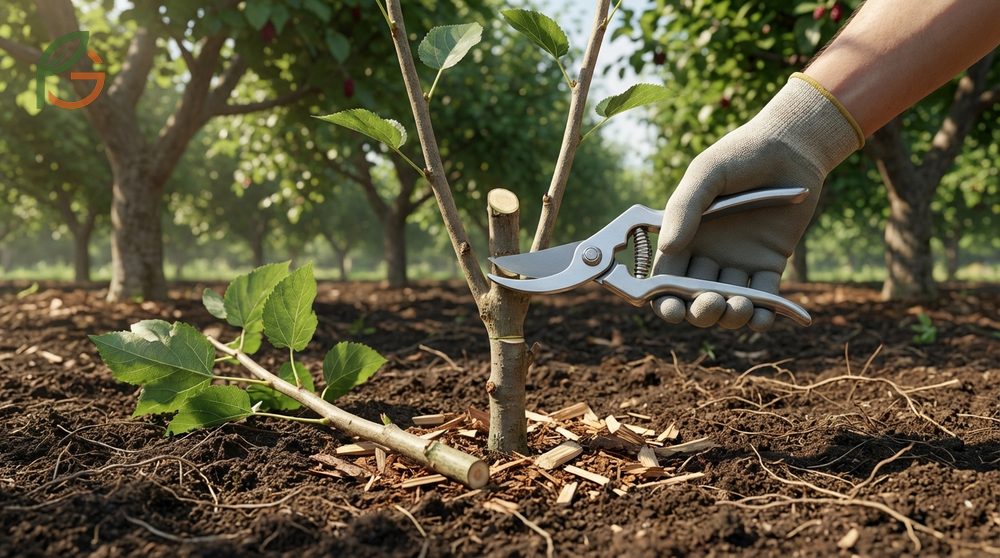
Young mulberry trees require formative pruning to establish productive structure. At planting, cut grafted trees back by 50% to reduce transplant shock and promote strong root establishment[8]. This aggressive early pruning pays dividends in the tree’s long-term productivity and manageable size.
During the first growing season, select 3-5 well-spaced shoots to become your main scaffold branches. Remove all other growth, especially shoots emerging from the rootstock below the graft union. Head back the selected scaffolds by one-third in late winter to encourage secondary branching.
By year three, your tree’s basic shape should be established. Subsequent pruning focuses on maintaining this structure and managing annual fruit production. Studies demonstrate that grafted mulberry varieties can begin producing fruit in 1-2 years when properly pruned from the start[9].
Training Young Mulberry Trees
You can train mulberries as single-trunk standards, multi-trunk bushes, or even espalier against walls. For maximum production in limited space, the multi-trunk bush form works best. Allow 3-4 trunks to develop from near ground level, each supporting its own canopy of fruiting branches.
Use spreaders or ties to widen branch angles during the first 2-3 years. Branches growing at 45-60 degrees from the trunk produce more fruit than those growing vertically or horizontally. Wider angles also create stronger attachments that won’t break under fruit weight.
- Year 1: Cut back newly planted tree by 50%, select 3-5 scaffold branches
- Year 2: Head back scaffolds by one-third, remove competing shoots
- Year 3: Establish permanent framework, begin light production pruning
- Year 4+: Transition to maintenance pruning focused on fruit production
- Use spreaders to achieve 45-60 degree branch angles for optimal fruiting
Maintaining Harvest Height
The most critical aspect of shaping for production is height control. Mulberries naturally grow 30-70 feet tall depending on variety[1]. Without annual height management, you’ll spend more time on ladders than picking fruit.
Each winter, reduce the height of vertical leaders by cutting them back to a strong lateral branch. This forces horizontal growth where fruit production concentrates. Don’t worry about being too aggressive—mulberries grow 1-3 feet (0.3-0.9 m) per year and will quickly fill the allotted space[10].
For commercial orchards, many growers maintain trees at 8-10 feet (2.4-3 m) total height. This allows efficient harvesting while maximizing yield per acre. Home gardeners can go slightly taller (10-12 feet) if they don’t mind occasional ladder use for the topmost fruit.
Mulberry Tree Trimming Maintenance
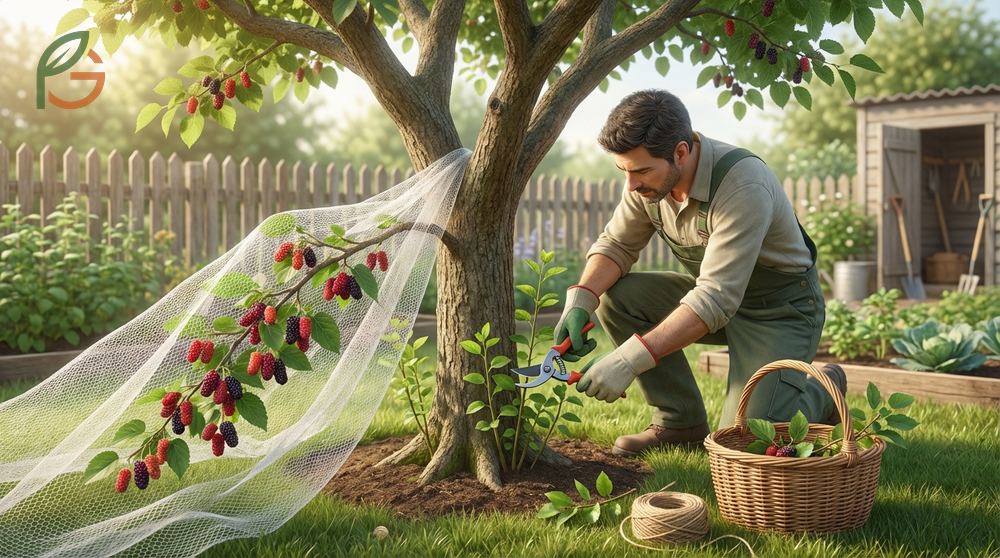
Beyond annual structural pruning, mulberry trees benefit from regular maintenance trimming throughout the growing season. Remove suckers emerging from the base or rootstock as soon as you spot them. These vigorous shoots sap energy from fruit production and can overtake grafted varieties if left unchecked.
Current guidance emphasizes protecting ripening fruit from birds, which can devastate a mulberry crop in days. Net trees as fruit begins to turn red, or accept that you’ll share 30-50% of your harvest with wildlife. Regular harvesting encourages continued fruit production throughout the extended mulberry season.
Monitor for dead or damaged branches year-round and remove them promptly. Unlike major pruning, you can make these corrective cuts anytime without harming the tree. Clean tools between cuts when removing diseased wood to prevent spreading pathogens.
Fertilize in early spring with a balanced 10-10-10 formula or one slightly higher in phosphorus to support flowering and fruiting. Water deeply during fruit development, especially in dry climates. Research shows that consistent moisture during the 2-month fruit maturation period significantly impacts final yields[6].
- Remove suckers and water sprouts monthly during the growing season
- Fertilize with balanced 10-10-10 formula in early spring before flowering
- Water deeply 1-2 times weekly during fruit development (2-2.5 months)
- Net trees or install bird deterrents as fruit begins ripening
- Harvest ripe fruit every 2-3 days to encourage continued production
- Mulch around the base with 2-4 inches of organic material to retain moisture
- Monitor for pests and diseases, removing affected branches promptly
Maintenance Reminder: Mulberries fruit over an extended 4-8 week period, with berries ripening progressively rather than all at once. Regular harvesting stimulates the tree to keep producing, potentially extending your harvest season significantly.
Conclusion
The evidence is clear: successful how to prune a mulberry tree for production comes down to timing, technique, and consistent maintenance. Prune during late winter dormancy when temperatures exceed 50°F (10°C), focus on 5 main structural cuts rather than numerous small ones, and maintain harvest height at 6-8 feet for optimal picking efficiency. Agricultural research consistently demonstrates that properly pruned mulberries can increase yields by 40-60% while producing higher quality fruit that’s easier to harvest.
Current horticultural guidance emphasizes working with the mulberry’s natural tendency to fruit on new growth. By strategically removing old wood and stimulating fresh shoots, you’re harnessing the tree’s vigor for maximum production. At FruitGarden, we’ve seen backyard growers transform overgrown, underproductive mulberries into manageable trees yielding 100+ pounds of berries annually through systematic pruning. Start with your next dormant season and you’ll notice improvements in that same year’s harvest.
Frequently Asked Questions
How much should I prune my mulberry tree each year?
Remove approximately 20-30% of the canopy annually, focusing on 5 main structural cuts rather than numerous small cuts. Research shows this approach stimulates productive new growth without overstressing the tree. Cut back 1-2 year old wood by one-third while removing dead, diseased, or crossing branches completely.
Can I prune mulberry trees in summer?
Light summer pruning in July is acceptable for removing excessively vigorous shoots that block sunlight from ripening fruit. However, limit summer cuts to no more than 10-15% of the canopy. Save major structural pruning for late winter when the tree can redirect energy into productive new growth rather than healing wounds mid-season.
Why is my mulberry tree bleeding sap after pruning?
Mulberries are prone to bleeding sap, especially from cuts over 2 inches in diameter or when pruned too early in winter. This bleeding rarely harms the tree but can attract pests. Avoid it by making smaller cuts, pruning only when temperatures consistently exceed 50°F (10°C), and never removing branches larger than 2 inches across.
What’s the best shape for a mulberry tree for fruit production?
An open vase or modified central leader with 3-5 main scaffolds works best for production. Studies demonstrate these shapes maximize sunlight penetration throughout the canopy, which correlates directly with fruit quality and yield. Maintain the tree at 6-8 feet tall for easy harvesting while preserving adequate canopy volume for substantial yields.
How long does it take for a pruned mulberry tree to produce fruit?
Properly pruned grafted mulberries can produce fruit within 1-2 years of planting. Even mature trees that receive aggressive pruning will fruit the same season because mulberries bear on new growth. The fruit forms on shoots that emerge in late winter and matures 2-2.5 months later, so winter pruning doesn’t sacrifice that year’s crop.
Should I prune mulberry trees differently in cold climates?
Cold climate pruning (zones 4-6) should wait until late February through mid-March when frost danger passes. The techniques remain the same, but timing is critical—pruning too early exposes wounds to freezing damage that prevents proper healing. Wait until buds begin swelling but before leaves emerge for the optimal window.
How do I rejuvenate an old, overgrown mulberry tree?
Rejuvenate overgrown mulberries gradually over 2-3 years rather than all at once. Remove one-third of the oldest, tallest branches each winter, cutting back to strong lateral branches or the main trunk. This staged approach allows the tree to adjust without excessive stress while stimulating vigorous new growth that will fruit heavily once established.





