
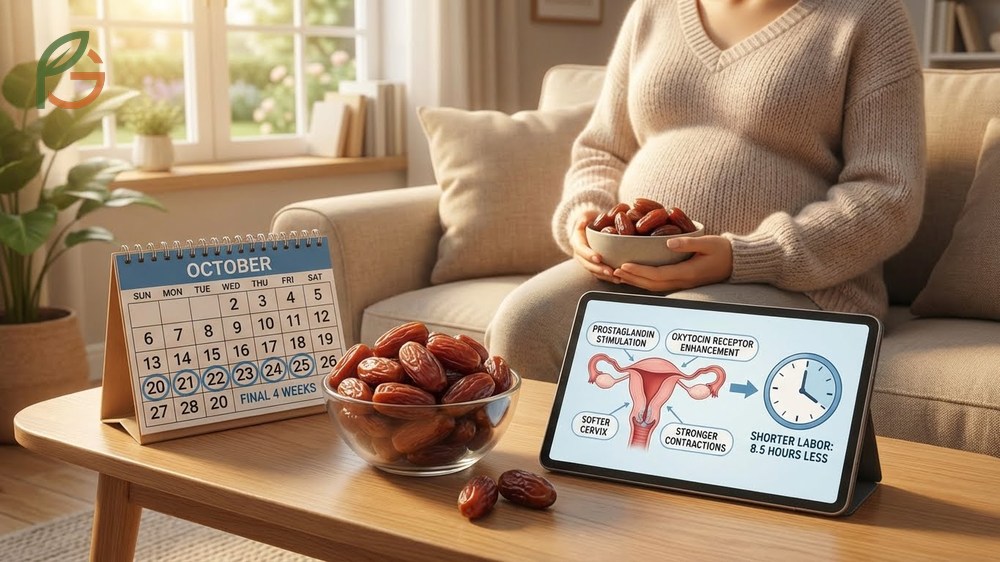
Eating dates during pregnancy can significantly shorten labor and support natural delivery. Research shows that women who ate 6 dates daily during the final 4 weeks of pregnancy experienced 8.5 hours shorter labor[1] compared to those who didn’t eat dates. Studies demonstrate that dates work by stimulating prostaglandin production and enhancing oxytocin receptor sensitivity, which naturally softens the cervix and strengthens uterine contractions[2]. FruitGarden synthesizes current pregnancy nutrition research and horticultural data to help you understand how this ancient superfruit can support your birthing journey.
Quick Answer
- 6 dates daily starting at week 36-37 can reduce labor duration by up to 8.5 hours[1]
- Women who ate dates had 74% more cervical dilation upon hospital arrival[2]
- Dates contain 7g fiber and 696mg potassium per 100g serving[3]
- Natural fatty acids in dates stimulate prostaglandin production needed for labor[1]
Eating Dates During Pregnancy

Research shows that eating dates during pregnancy, particularly in the third trimester, offers measurable benefits for labor and delivery outcomes. A 2024 study published in the NIH database found that pregnant women who consumed dates gave birth 8.5 hours faster than those who didn’t, with labor lasting approximately 15 hours versus 6.5 hours[1]. This significant reduction happens because dates contain specific compounds that prime your body for natural childbirth.
What makes dates effective isn’t just one nutrient—it’s the combination of saturated and unsaturated fatty acids that stimulate prostaglandin production. Prostaglandins are hormone-like substances your body naturally produces to initiate labor and cervical softening[1]. When you eat dates regularly in late pregnancy, you’re essentially giving your body the raw materials it needs to prepare for delivery.
The 2011 Al-Kuran study examined 69 women who ate dates versus 45 who didn’t. Results showed that the date-eating group had significantly shorter latent phases—the time it takes for the cervix to dilate to 10 cm—averaging 510 minutes compared to 906 minutes[2]. That’s nearly 7 hours less time in early labor.
How Dates Support Natural Labor
Dates work through multiple biological pathways to support labor. Current research identifies three primary mechanisms that make dates effective as a natural labor aid.
First, dates enhance oxytocin sensitivity. Your body produces oxytocin to trigger uterine contractions, but dates make the oxytocin receptors on your uterine muscles respond more efficiently[4]. This means you can achieve effective contractions with less medical intervention. In fact, only 40% of date-eating women required synthetic oxytocin (Pitocin) compared to higher rates in control groups[1].
- Prostaglandin stimulation – Fatty acids in dates trigger natural prostaglandin production, softening cervical tissue
- Oxytocin receptor enhancement – Makes uterine muscles respond more effectively to natural labor hormones
- Smooth muscle contraction – Serotonin and tannins in dates support coordinated uterine contractions
- Energy provision – High natural sugar content provides sustained energy during the demanding labor process
- Mineral support – Calcium content (64mg per 100g) supports uterine muscle efficiency during contractions[3]
Nutritional Profile of Dates
A 100-gram serving of Medjool dates (approximately 3-4 dates) delivers impressive nutritional value. According to USDA data, this serving provides 696mg potassium (15% of daily needs), 7g fiber, and 64mg calcium[3]. These aren’t just random nutrients—each plays a specific role in pregnancy and labor.
The fiber content helps prevent constipation, which affects up to 40% of pregnant women in the third trimester. Potassium regulates fluid balance and supports muscle function, including the intense muscular work of uterine contractions[5]. Dates also contain iron, magnesium, and folic acid—nutrients that support blood volume expansion and fetal development throughout pregnancy[1].
Important Note: While dates are nutrient-dense, they’re also calorie-dense with approximately 277 calories per 100g. If you’re monitoring weight gain, count dates as part of your daily carbohydrate intake rather than as unlimited snacks.
Pregnancy Benefits of Dates

Studies demonstrate that dates offer specific advantages beyond general nutrition when consumed during pregnancy. The most significant benefits emerge in the final weeks before delivery, but dates provide value throughout all trimesters.
A 2017 Iranian study found that date consumption in late pregnancy reduced the overall length of labor processes and decreased the need for medical interventions[6]. Women who ate dates were significantly more likely to experience spontaneous labor—meaning labor began naturally without induction drugs or procedures. This matters because spontaneous labor typically progresses more predictably and requires fewer interventions than induced labor.
Cervical Ripening Mechanism
Cervical ripening describes the process where your cervix changes from a firm, closed structure to a soft, effaced state ready for dilation. This transformation must occur before active labor can progress efficiently. Research shows that women who ate dates arrived at the hospital with significantly higher cervical dilation compared to non-date consumers[2].
The cervical ripening effect happens because prostaglandins break down collagen fibers in cervical tissue, making it softer and more pliable. Medical cervical ripening often uses synthetic prostaglandin medications like misoprostol or dinoprostone. Dates provide prostaglandin precursors naturally, potentially reducing the need for these pharmaceutical interventions[4].
This table compares recommended date consumption amounts, timing, and specific benefits across three pregnancy trimesters
| Trimester | Recommended Amount | Primary Benefits | Key Considerations |
|---|---|---|---|
| First Trimester | 1-2 dates daily | Energy boost, nausea relief, folic acid support | Start slowly if you have gestational diabetes risk factors |
| Second Trimester | 2-4 dates daily | Iron for blood volume expansion, potassium for muscle function | Helps prevent pregnancy-related constipation and leg cramps |
| Third Trimester | 6 dates daily from week 36[2] | Cervical ripening, reduced labor duration, spontaneous labor support | Most critical period—this is when dates have measurable labor effects |
Essential Nutrients for Third Trimester
The third trimester places unique nutritional demands on your body. Your blood volume increases by approximately 50%, your baby gains most of their birth weight, and your body prepares for the physical demands of labor and breastfeeding.
Dates address several third-trimester needs simultaneously. The 0.9mg iron per 100g helps prevent anemia, which affects energy levels during delivery[3]. The high fiber content (which provides 32% of recommended daily intake per 100g) prevents the constipation that commonly worsens as your growing uterus compresses your intestines[3].
- Vitamin K for clotting – Supports normal blood clotting after delivery, reducing postpartum hemorrhage risk
- Natural sugars for energy – Provides approximately 75g carbohydrates per 100g for sustained energy during long labor
- Magnesium for relaxation – Helps prevent muscle cramps and supports healthy blood pressure regulation
- B-vitamins for metabolism – Supports energy production as your metabolic rate increases in late pregnancy
- Antioxidants for cellular protection – Protects cells from oxidative stress during the demanding final trimester
How Many Dates During Pregnancy
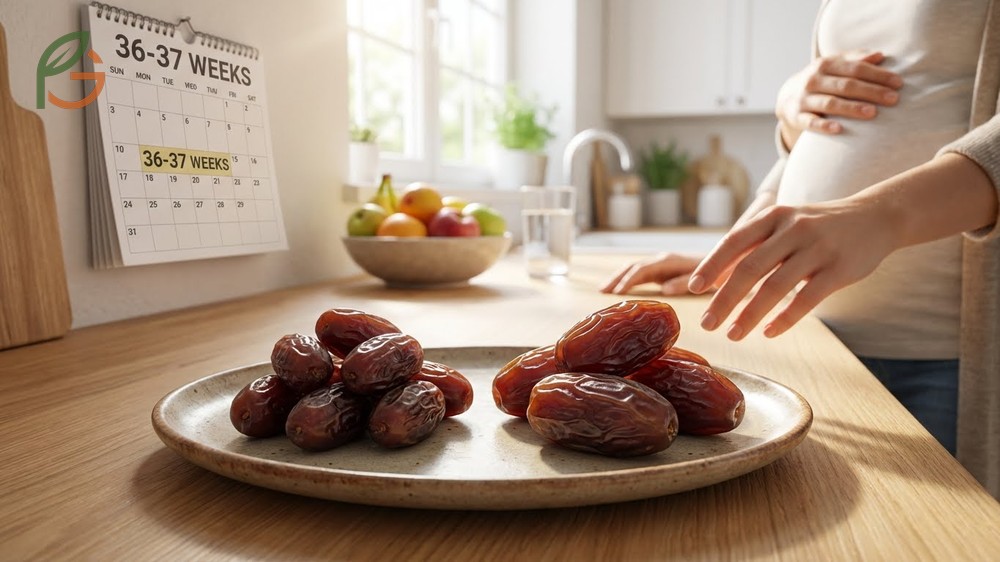
The research consensus points to 6 dates per day starting at 36-37 weeks of pregnancy for optimal labor benefits. This recommendation comes from multiple clinical studies that measured actual labor outcomes[2]. However, the exact number depends on the date variety you’re eating—size matters because nutritional content varies.
Medjool dates are larger (about 2 inches long) and contain more natural sugars per date. If you’re eating Medjools, aim for 3-4 dates daily to reach the 70-75 gram target weight. Deglet Noor dates are smaller (about 1 inch), so you’ll need 6 dates daily to reach the same weight and benefit threshold. The target isn’t the number of dates but the total weight consumed.
Studies used weight-based measurements because nutritional content varies by date type and growing conditions. Research protocols typically specified 70-75 grams of dates daily, which translates to different quantities depending on size and moisture content. If you’re unsure, weigh your dates on a kitchen scale rather than counting them.
Practical Tip: Don’t eat all 6 dates at once. Spread them throughout the day—2 dates with breakfast, 2 as an afternoon snack with nut butter, and 2 after dinner. This prevents blood sugar spikes and makes consumption more sustainable over several weeks.
Earlier in pregnancy, you can eat fewer dates. During the first trimester, 1-2 dates daily provides nutritional benefits without excessive calories. In the second trimester, 2-4 dates helps meet increased iron and fiber needs. It’s the third trimester—specifically from week 36 onward—where the full 6-date protocol becomes important for labor preparation.
Some women worry about eating too many dates, but the studies that showed benefits used consistent daily consumption without adverse effects. The key is starting at the right time (not too early) and maintaining consistency. One study showed that women who consumed dates for the full 4 weeks before delivery had better outcomes than those who consumed them sporadically[2].
Dates in Third Trimester
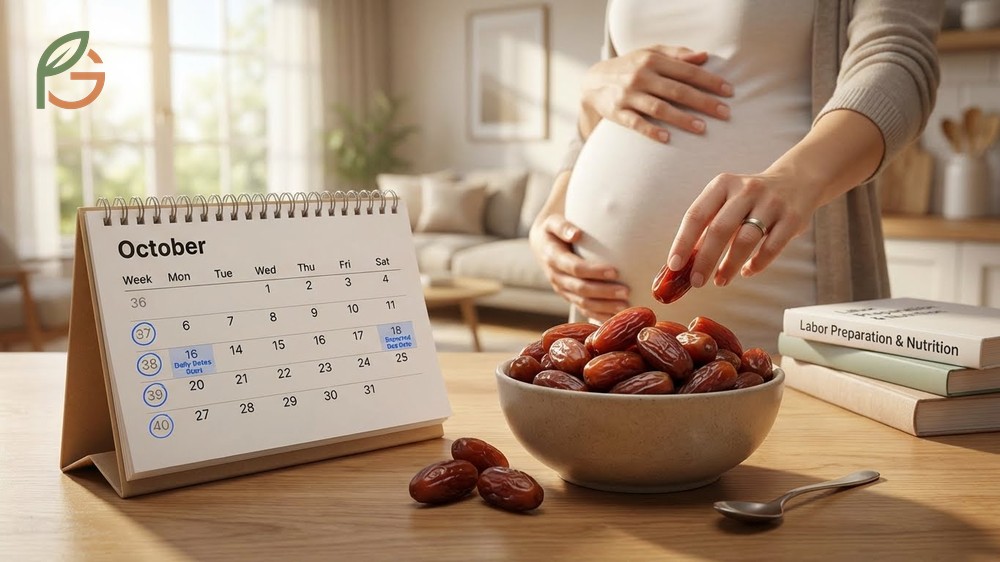
The third trimester—weeks 28 through 40—is when dates shift from general nutrition to targeted labor preparation. Most research focuses on consumption starting at week 36, which gives you 4 weeks of daily intake before your due date. This timing isn’t arbitrary—it’s based on when cervical changes typically begin and when prostaglandin effects are most beneficial.
Starting dates too early (before week 34) hasn’t been studied extensively and isn’t recommended. Your body undergoes natural preparatory changes in late pregnancy, and dates work with these changes rather than forcing premature labor. No research suggests that dates can trigger preterm labor in healthy pregnancies, but the proven benefits emerge specifically in the final month.
During weeks 36-40, your focus should be on consistency rather than perfection. If you miss a day, don’t double up the next day—just resume your regular pattern. If you find dates difficult to eat plain, there are creative ways to incorporate them into your diet without losing their benefits.
- Date smoothies – Blend 3 dates with Greek yogurt, banana, and almond milk for a protein-balanced breakfast
- Stuffed dates – Fill pitted dates with almond butter or cream cheese for a satisfying snack that slows sugar absorption
- Date energy balls – Mix chopped dates with oats, nuts, and coconut for portable pre-labor snacks
- Chopped in oatmeal – Add diced dates to morning oatmeal along with walnuts for sustained energy
- Date paste – Blend dates with water to create a natural sweetener for yogurt or whole grain toast
- Trail mix addition – Combine dates with almonds, pumpkin seeds, and dark chocolate chips for balanced nutrition
What you eat dates with matters, especially if you have gestational diabetes or blood sugar concerns. Pairing dates with protein sources like Greek yogurt, cheese, or nut butter slows glucose absorption and prevents the blood sugar spikes that pure fruit consumption can cause. This strategy lets you get the labor benefits while managing glycemic response.
Gestational Diabetes Warning: If you’ve been diagnosed with gestational diabetes, don’t start eating dates without consulting your healthcare provider. Monitor your blood sugar 1-2 hours after eating dates, especially during the first few days. Some women with GD can tolerate dates when paired with protein, while others need to avoid them entirely.
Safety Precautions and Considerations

While dates are generally safe during pregnancy, certain conditions require caution or medical guidance before adding them to your diet. The high natural sugar content makes dates problematic for women with poorly controlled gestational diabetes or pre-existing diabetes.
Research on dates and pregnancy has focused primarily on healthy pregnancies without complications. If you have high-risk conditions—such as placenta previa, preterm labor history, or cervical incompetence—ask your obstetrician before consuming dates regularly. The cervical ripening effect that’s beneficial at 36 weeks could theoretically be problematic earlier in pregnancy, though no studies have documented this concern.
Date allergies are rare but possible. If you’ve never eaten dates before pregnancy, start with one date and wait 24 hours to ensure you don’t experience allergic symptoms. Signs of date allergy include itching, hives, swelling, or digestive distress. These symptoms require immediate discontinuation and medical evaluation.
- Blood sugar monitoring – Check glucose levels 1-2 hours after eating dates if you have any diabetes history or risk factors
- Weight considerations – Account for date calories (approximately 277 per 100g) in your daily intake to avoid excessive weight gain
- Dental health – The sticky texture and high sugar content can promote tooth decay—rinse mouth after eating dates
- Organic sourcing – Choose organic dates when possible to minimize pesticide exposure during pregnancy
- Storage safety – Keep dates refrigerated after opening to prevent mold growth, especially in humid climates
Some practitioners question whether dates might overstimulate labor or cause excessively rapid delivery. Current research doesn’t support this concern—studies show reduced labor duration but not dangerous precipitous labor (delivery within 3 hours). The average reduction from 15 hours to 8.5 hours still falls within the normal labor range[1].
If you’re planning a scheduled cesarean section, the labor-preparation benefits of dates become less relevant. However, dates still offer nutritional value and can support postpartum recovery through their iron, fiber, and vitamin K content. There’s no reason to avoid dates if you’re having a planned C-section, but the specific labor benefits won’t apply to your situation.
Conclusion
The evidence is clear: eating dates during pregnancy, particularly 6 dates daily from week 36, can significantly reduce labor duration, support cervical ripening, and decrease the need for medical interventions. Research consistently shows that this simple dietary addition shortens labor by up to 8.5 hours while promoting spontaneous, natural delivery. The mechanism works through prostaglandin stimulation and enhanced oxytocin sensitivity—both critical for efficient labor progression.
Current guidance emphasizes consistency over perfection and proper timing over early start dates. Begin your date consumption at 36 weeks, pair dates with protein if you have blood sugar concerns, and consult your healthcare provider if you have any high-risk conditions. FruitGarden provides evidence-based information to help you make informed decisions about nutrition during pregnancy, combining horticultural knowledge with current maternal health research.
Medical Disclaimer
Important Medical Disclaimer: This content is for informational and educational purposes only. It’s not intended as a substitute for professional medical advice, diagnosis, or treatment. Always consult a qualified healthcare professional before making any changes to your diet, medication, or health routine during pregnancy. Every pregnancy is unique, and what works safely for one person may not be appropriate for another, especially if you have gestational diabetes, high-risk pregnancy conditions, or other medical concerns. Your obstetrician or certified nurse-midwife can provide personalized guidance based on your specific health situation.
Frequently Asked Questions
When Should I Start Eating Dates for Labor Preparation?
Start eating 6 dates daily at 36-37 weeks of pregnancy for optimal labor benefits. Research shows that 4 weeks of consistent consumption before your due date provides the most significant effects on cervical ripening and labor duration. Starting earlier hasn’t been studied extensively and isn’t recommended, while starting later than 37 weeks gives you less time to accumulate the prostaglandin-stimulating benefits.
Can Dates Actually Induce Labor Naturally?
Dates don’t induce labor in the traditional sense, but they do support spontaneous labor onset and cervical ripening. Studies show that women who eat dates are more likely to go into labor naturally without induction medications, but this doesn’t mean dates will trigger labor before your body is ready. They work by making your uterus more responsive to natural oxytocin when labor begins, not by forcing contractions to start prematurely.
What Type of Dates Are Best for Pregnancy?
Medjool and Deglet Noor dates are both effective for pregnancy benefits—the key is reaching the 70-75 gram daily target. Medjool dates are larger and softer, so you’ll need 3-4 per day, while smaller Deglet Noor dates require 6 per day to reach the same weight. Choose organic dates when possible to minimize pesticide exposure, and ensure they’re properly stored to prevent mold contamination.
Are Dates Safe With Gestational Diabetes?
Dates require caution if you have gestational diabetes because of their high natural sugar content. Some women with well-controlled GD can tolerate dates when paired with protein sources like Greek yogurt or almond butter, which slows glucose absorption. Always consult your healthcare provider first and monitor your blood sugar 1-2 hours after eating dates to assess your individual response. Start with just 1 date to test tolerance before increasing to the full 6-date protocol.
How Much Do Dates Really Shorten Labor?
Research shows that dates can reduce labor duration by approximately 8.5 hours on average, with women who ate dates experiencing 6.5-hour labors compared to 15 hours in non-date consumers. The latent phase (time to reach 10 cm dilation) was shortened from 906 minutes to 510 minutes in one major study. However, individual results vary based on factors like parity, baby position, and overall health status.
Can I Eat Dates Earlier Than 36 Weeks?
You can eat 1-4 dates daily earlier in pregnancy for general nutritional benefits, but the specific labor-preparation protocol (6 dates daily) should start at 36 weeks. Earlier in pregnancy, dates provide iron, fiber, and potassium without the focused cervical-ripening effects. There’s no evidence that eating dates before 36 weeks causes preterm labor, but the researched labor benefits specifically come from consumption in the final 4 weeks before delivery.
What If I Don’t Like the Taste of Dates?
If you don’t enjoy plain dates, try blending them into smoothies with banana and Greek yogurt, stuffing them with almond butter, or making date energy balls mixed with oats and nuts. You can also create date paste by blending dates with water and spreading it on whole grain toast. The key is finding a preparation method that makes the taste and texture palatable enough to eat consistently for 4 weeks—any method that gets you to the 70-75 gram daily target works.





