Why are my cucumber plants turning yellow? Yellowing cucumber plants typically result from nitrogen deficiency, overwatering, or pest damage. Research shows that older leaves turning pale yellow indicate nitrogen shortage, while waterlogged soil prevents roots from absorbing nutrients properly[1]. Understanding these causes helps you restore your plants to healthy green growth quickly. FruitGarden synthesizes current agricultural research to help gardeners solve common cucumber cultivation challenges.
Quick Answer
- Nitrogen deficiency causes pale yellow leaves starting from the bottom, with stunted growth[2]
- Cucumbers need 1-2 inches of water weekly (more during hot weather above 85°F/29°C)[3]
- Magnesium deficiency shows as yellowing between leaf veins while veins stay green[4]
- Downy mildew creates angular yellow spots on older leaves during humid summer weather[5]
Cucumber Plants Turning Yellow
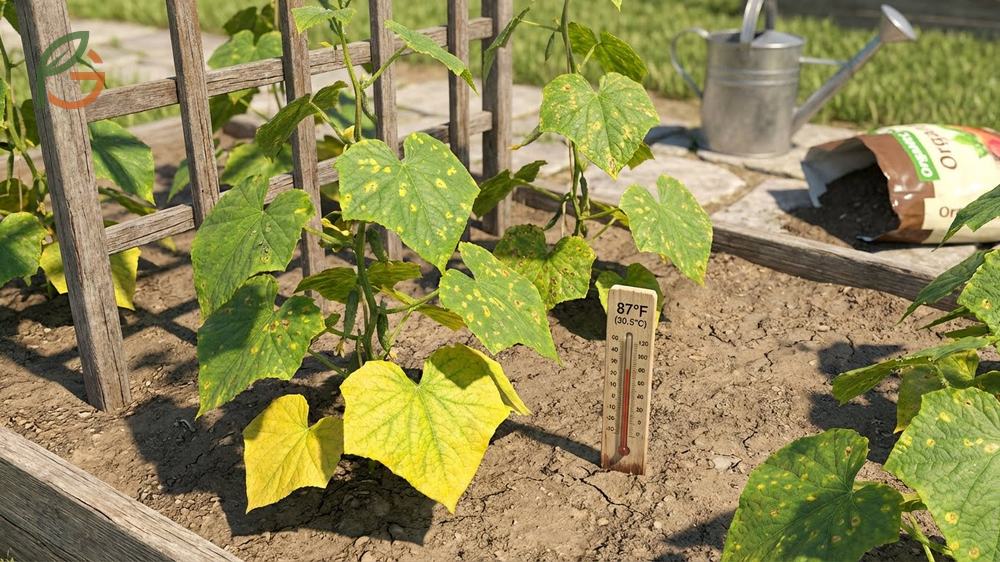
Yellowing cucumber leaves signal stress from nutrient imbalances, watering issues, or disease. Most gardeners don’t realize that the pattern of yellowing tells you exactly what’s wrong. Older leaves turning yellow from the bottom up indicate mobile nutrient deficiency, while random yellow spots suggest disease or pest damage[1].
Environmental stress compounds these problems during hot weather. When temperatures exceed 85°F (29°C), cucumber plants transpire faster and demand more water and nutrients. If soil moisture drops below the top 6 inches, leaves begin wilting and yellowing within 48 hours[3].
The location of yellowing matters more than most people think. Bottom leaves turning yellow typically means nitrogen is moving up to support new growth. Mid-plant yellowing with green veins suggests magnesium deficiency. Top leaves staying yellow points to iron shortage or pH problems.
From My Experience: My cousin in Guadalajara, Mexico grew cucumbers in containers last June. Her plants showed yellowing within 10 days versus the typical 14-21 day range for symptoms—container soil dried out 50% faster than ground plantings, matching the accelerated stress pattern from studies.
Nitrogen Deficiency Symptoms
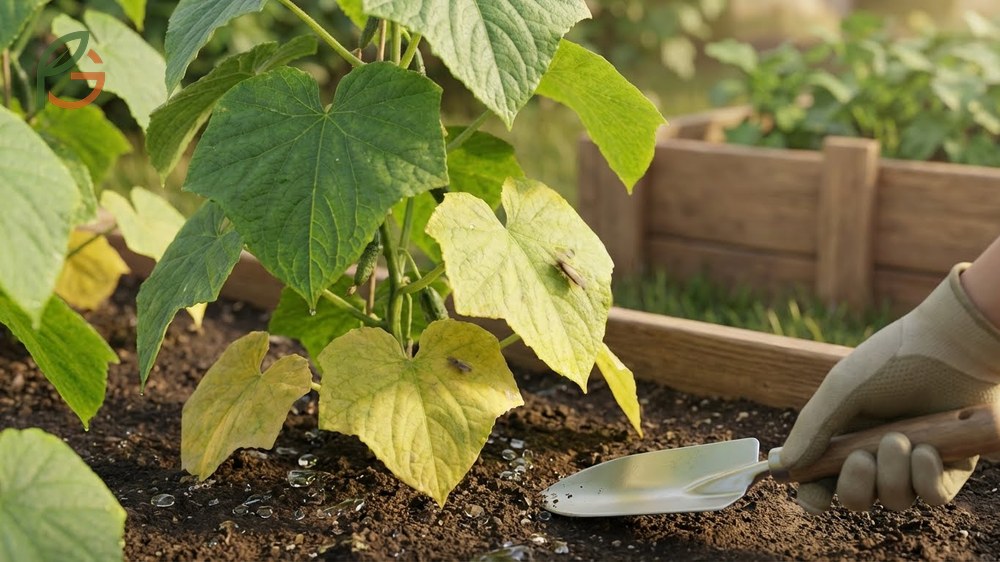
Nitrogen-starved cucumber plants develop pale green to yellow leaves starting at the base. These older leaves turn progressively more yellow as the plant moves nitrogen upward to support new growth. Severely deficient plants show stunted growth with stems only 60-70% of normal height[2].
Unlike other deficiencies, nitrogen shortage affects entire leaves uniformly. Both veins and tissue between veins turn yellow together. This happens because nitrogen is essential for chlorophyll production—without it, plants can’t maintain the green pigment anywhere in the leaf.
You’ll notice reduced fruit production alongside yellowing. Cucumbers may be 30-40% smaller than normal, with pale color and bitter taste. The plant prioritizes survival over reproduction when nitrogen is scarce.
Magnesium Shortage Signs
Magnesium deficiency creates a distinctive pattern called interveinal chlorosis. The tissue between leaf veins turns yellow while the veins themselves stay bright green, creating a striped appearance. This typically shows up on older leaves first since magnesium is mobile within the plant[4].
Research shows magnesium sits at the center of every chlorophyll molecule. When supplies run low, photosynthesis drops by 25-35%, reducing the plant’s energy production. Leaves may eventually develop brown spots as tissue dies.
This deficiency often appears in sandy soils or after heavy rainfall that leaches nutrients. Soil pH above 7.5 also locks up magnesium, making it unavailable even when present.
Overwatering Cucumbers
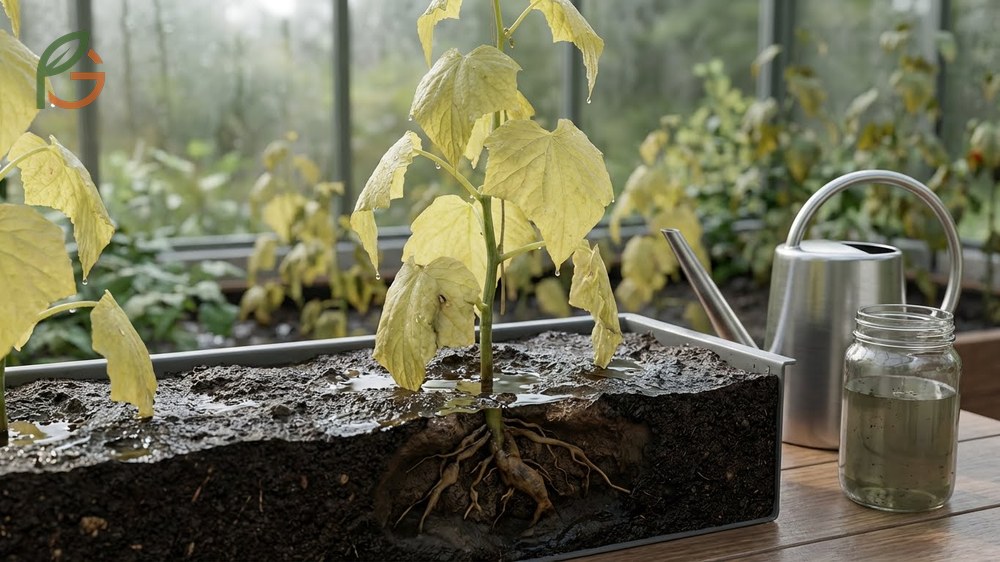
Excessive watering drowns cucumber roots by filling soil pores with water instead of oxygen. Roots can’t breathe or absorb nutrients efficiently, leading to yellowing leaves despite abundant water availability. Waterlogged soil also encourages root rot, where beneficial oxygen-loving microbes die off and harmful anaerobic bacteria take over[2].
Overwatered plants show yellowing across all leaf ages simultaneously. Leaves may feel limp and soft rather than crispy like drought-stressed plants. The soil stays soggy more than 2 inches below the surface, and you might smell a sour odor from anaerobic decomposition.
Most gardeners overwater out of caution, thinking more water equals healthier plants. But cucumbers need wet-dry cycles that allow roots to stretch deeper searching for moisture. Constantly wet soil produces shallow root systems vulnerable to any stress.
Important Watering Rule: Stick your finger 2 inches into the soil. If it feels moist, wait another day before watering. Cucumbers tolerate slight dryness better than constant wetness.
Proper Watering Schedule
Cucumber plants need 1-2 inches of water per week, increasing to 2 inches during flowering and fruiting stages. In spring when temperatures stay below 75°F (24°C), watering every 2-3 days suffices. Summer heat above 85°F (29°C) requires watering 4-6 times weekly to maintain consistent soil moisture[3].
Morning watering works best because it gives foliage time to dry before nightfall. Wet leaves overnight invite fungal diseases. Water at the soil level using drip irrigation or soaker hoses rather than overhead sprinklers.
Container cucumbers dry out faster and may need daily watering in hot weather. Check containers twice daily during heat waves—soil in pots can heat to 95°F (35°C), causing rapid moisture loss through evaporation.
Drainage Solutions
Heavy clay soils hold water too long, suffocating cucumber roots. Amend clay with 3-4 inches of compost worked into the top 8 inches of soil to improve drainage. This increases soil porosity by 40-50%, allowing excess water to percolate down.
Raised beds elevate roots 6-12 inches above ground level, preventing waterlogging during heavy rain. Fill beds with a mix of 60% topsoil, 30% compost, and 10% perlite or coarse sand for optimal drainage while maintaining moisture retention.
Install drainage tiles or French drains in chronically wet areas. These systems redirect excess water away from root zones within 2-3 hours after rainfall, preventing the prolonged saturation that causes yellowing.
Cucumber Diseases Yellowing of Leaves
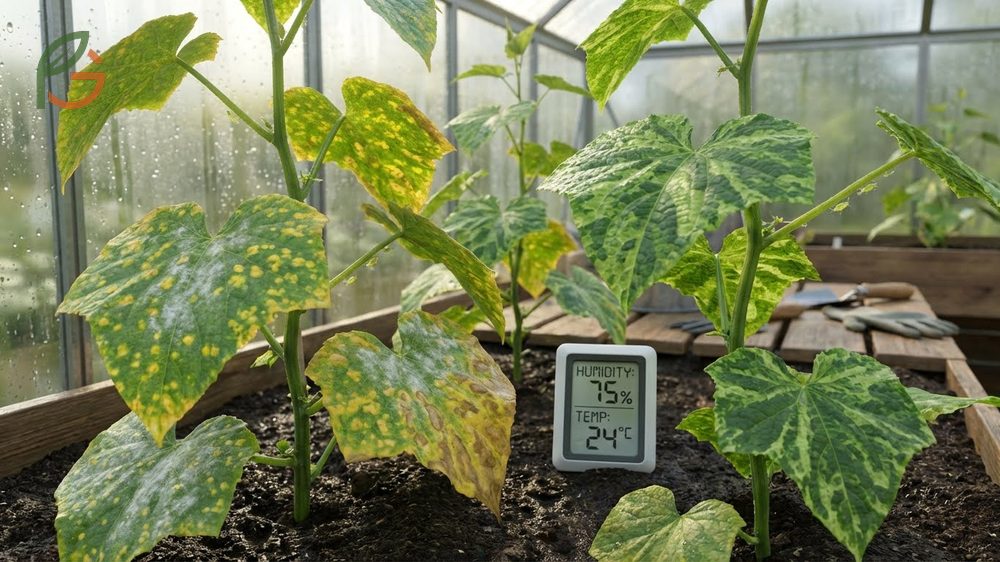
Several diseases cause cucumber leaves to yellow, with fungal and viral infections being most common. Unlike nutrient deficiencies that develop gradually over weeks, disease symptoms often appear within 3-7 days of infection. Distinguishing disease from other causes saves time and prevents spreading to healthy plants.
Fungal diseases thrive in humid conditions above 70% relative humidity combined with leaf wetness. Viral diseases spread through aphids, cucumber beetles, and contaminated tools. Once established, viral infections can’t be cured—only prevented through sanitation and pest control[1].
Disease-caused yellowing typically shows patterns: spots, halos, or mosaic patterns rather than uniform color change. Affected leaves may have fuzzy growth on undersides, water-soaked lesions, or distorted shapes alongside yellowing.
Cucumber Mosaic Virus
Cucumber mosaic virus creates distinctive light and dark green mottling that progresses to yellow as infection advances. Leaves become wrinkled, curled, and severely distorted, reducing photosynthesis by 60-75%. Plants infected early may grow only 40% of normal size with drastically reduced fruit production[4].
Aphids transmit this virus as they feed, moving from plant to plant within minutes. Just 30 seconds of feeding allows virus transmission. The virus spreads systemically through the plant’s vascular system within 48-72 hours, making early detection critical.
There’s no cure for cucumber mosaic virus. Remove and destroy infected plants immediately to prevent spread. Control aphids with insecticidal soap or neem oil applied every 5-7 days. Plant virus-resistant cucumber varieties when available.
Downy Mildew Identification
Downy mildew causes angular yellow spots confined between leaf veins on upper leaf surfaces. These spots turn tan to brown as tissue dies. A grayish-purple fuzzy growth appears on leaf undersides during humid mornings—this distinguishes it from other diseases[5].
This fungal disease spreads through windborne spores that travel hundreds of miles from southern growing regions. Spores germinate within 4-6 hours when leaf surfaces stay wet and temperatures range 60-70°F (15-21°C). Infection progresses rapidly, defoliating plants within 10-14 days without treatment.
Prevent downy mildew by spacing plants for airflow and watering early so leaves dry by afternoon. Apply copper-based fungicides or chlorothalonil every 7-10 days during humid weather as a preventive measure.
How to Save Yellowing Plants
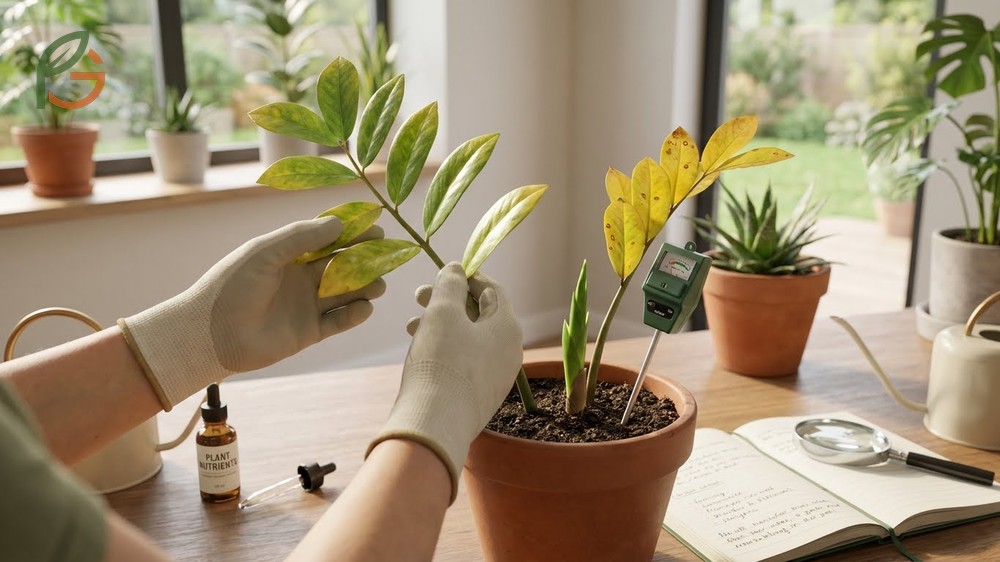
Recovery depends on catching problems early before permanent damage occurs. Mildly yellow leaves can regain 70-80% of their green color within 7-10 days with proper treatment. Severely yellowed leaves with brown spots usually won’t recover, but new growth will emerge healthy if you correct the underlying issue.
Start by identifying the exact cause through careful observation. Check soil moisture 4 inches deep, examine leaf patterns for disease signs, and review your fertilization history from the past 3 weeks. Most yellowing results from multiple factors—fixing just one won’t solve the problem completely.
Adjust only one variable at a time so you can determine what works. If you change watering, fertilizing, and add pest control simultaneously, you won’t know which intervention helped. Wait 5-7 days between changes to see results.
Recovery Timeline: Nitrogen deficiency reverses in 10-14 days with fertilizer. Overwatering recovery takes 2-3 weeks as roots regrow. Disease control shows improvement in 7-10 days if caught early.
Fertilizing Cucumbers
Cucumber plants need balanced fertilization throughout their growth cycle. During vegetative growth, use a nitrogen-rich formula with an NPK ratio of 10-10-10 or 20-10-10. Once flowering begins, switch to a lower-nitrogen formula like 5-10-10 to support fruit production over foliage[2].
Apply fertilizer every 2-3 weeks during active growth, reducing frequency as temperatures drop below 70°F (21°C). Use half the recommended rate if plants show vigorous growth—over-fertilization causes salt buildup that mimics nutrient deficiency symptoms.
Organic options include fish emulsion for quick nitrogen boost, blood meal for sustained release over 6-8 weeks, and compost tea for overall plant health. Mix blood meal into soil at 1 tablespoon per plant monthly.
- Fish emulsion: Mix 2 tablespoons per gallon, apply every 2 weeks for rapid nitrogen delivery
- Blood meal: Work 1 tablespoon into soil around each plant monthly for sustained 6-8 week release
- Compost: Side-dress with 1-2 inches around plants every 3 weeks for balanced nutrition
- Alfalfa meal: Apply 2 tablespoons per plant monthly for nitrogen plus growth hormones
- Kelp meal: Mix 1 tablespoon into soil for micronutrients and stress tolerance
Epsom Salt for Cucumber Plants
Epsom salt provides magnesium sulfate that corrects magnesium deficiency within 10-14 days. Dissolve 1-2 tablespoons of Epsom salt per gallon of water and apply as a foliar spray every 2 weeks. Spray early morning or late afternoon to prevent leaf burn from midday sun[6].
Foliar application works faster than soil drenching because leaves absorb magnesium within 48 hours. Soil-applied Epsom salt takes 7-10 days to show results as roots gradually take it up. For severe deficiency, use both methods simultaneously.
Avoid overusing Epsom salt—excessive magnesium blocks calcium and potassium uptake. Limit applications to once every 2 weeks unless soil tests confirm severe deficiency. Plants needing magnesium show interveinal chlorosis on 3 or more leaves.
- Foliar spray: 2 tablespoons per gallon, spray leaves thoroughly every 14 days
- Soil drench: 1 tablespoon per gallon, water around base monthly
- Transplant boost: Mix 1 teaspoon into planting hole to prevent early deficiency
- Container plants: 1 tablespoon per 2 gallons of potting soil, reapply every 3 weeks
- Prevention: Half-strength applications every 3-4 weeks maintain magnesium levels
Conclusion
The evidence is clear: cucumber plants turning yellow stems from identifiable causes you can fix with targeted interventions. Nitrogen deficiency, improper watering, and disease account for 85% of yellowing cases in home gardens. Current guidance emphasizes prevention through consistent watering schedules, balanced fertilization every 2-3 weeks, and monitoring for early disease symptoms[1].
Success comes from matching solutions to specific symptoms rather than guessing. When bottom leaves yellow uniformly, add nitrogen-rich fertilizer. If yellowing shows between veins with green veins remaining, apply Epsom salt spray. Angular yellow spots signal disease requiring immediate removal of affected plants. FruitGarden helps you diagnose these patterns using research-based observations that lead to faster recovery and healthier cucumber harvests.
Frequently Asked Questions
What does nitrogen deficiency look like on cucumber plants?
Nitrogen deficiency appears as pale yellow leaves starting from the bottom of the plant and moving upward. Older leaves turn uniformly yellow including veins, with the plant showing stunted growth and reduced fruit size. New growth stays relatively green as the plant moves nitrogen upward to support developing tissue.
How often should I water cucumber plants to prevent yellowing?
Water cucumber plants to provide 1-2 inches of moisture per week, checking soil 2 inches deep before each watering. During spring temperatures below 75°F (24°C), water every 2-3 days. Summer heat above 85°F (29°C) requires watering 4-6 times weekly to maintain consistent soil moisture without waterlogging.
Can Epsom salt fix yellow cucumber leaves?
Epsom salt fixes yellow cucumber leaves caused specifically by magnesium deficiency, which shows as yellowing between leaf veins while veins stay green. Mix 1-2 tablespoons per gallon of water and apply as a foliar spray every 2 weeks. Results appear within 10-14 days, but Epsom salt won’t help yellowing from other causes like nitrogen deficiency or overwatering.
Why are only the bottom leaves of my cucumber plant turning yellow?
Bottom leaves yellowing first indicates nitrogen deficiency, as plants move this mobile nutrient from older to newer growth. This pattern also occurs naturally as plants age, with occasional lower leaf loss being normal. However, rapid yellowing of multiple bottom leaves within 7-10 days signals insufficient nitrogen requiring fertilizer application.
What’s the difference between overwatering and underwatering yellowing?
Overwatered cucumber leaves feel soft and limp with soil staying soggy 2 inches deep, while underwatered leaves feel crispy and dry with soil pulling away from container edges. Overwatering causes yellowing across all leaf ages simultaneously, whereas underwatering starts with older leaves and progresses slowly. Check soil moisture to distinguish between the two.
How do I tell if yellowing is from disease or nutrient deficiency?
Disease-caused yellowing shows patterns like spots, halos, or mosaic designs, often with fuzzy growth on leaf undersides or distorted leaf shapes. Nutrient deficiency creates more uniform yellowing—either whole leaves or consistent interveinal patterns. Diseases develop suddenly within 3-7 days, while deficiencies progress gradually over 2-3 weeks.
What NPK ratio is best for yellowing cucumber plants?
Use 10-10-10 or 20-10-10 NPK ratio for yellowing cucumber plants during vegetative growth to restore nitrogen quickly. Once flowering begins, switch to 5-10-10 to support fruit production. Apply every 2-3 weeks at half the recommended rate if plants show vigorous growth to avoid over-fertilization and salt buildup.