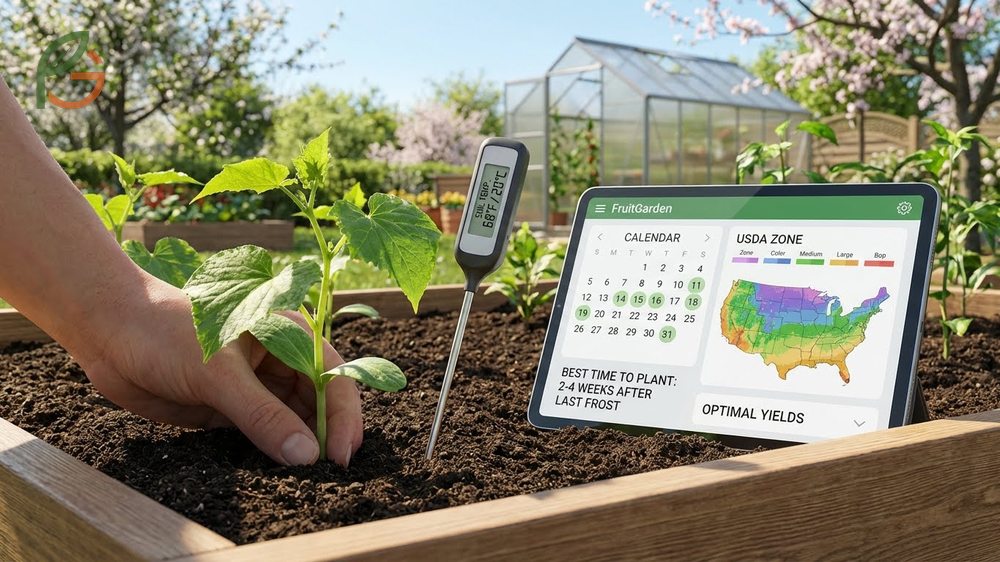
When to plant cucumbers depends primarily on soil temperature and your last frost date. Research shows cucumbers germinate best when soil reaches 65-70°F (18-21°C), typically 2-4 weeks after your area’s last spring frost.[1] FruitGarden synthesizes USDA zone data and regional planting calendars to help you time your cucumber planting perfectly for maximum yields.
Quick Answer
- Plant cucumbers when soil temperature reaches 65-70°F (18-21°C)[2] for optimal germination
- Wait 2-4 weeks after last frost[1] to avoid cold damage to seedlings
- Direct sow seeds 0.5-1 inch deep or start transplants 3-4 weeks earlier indoors
- Zone-specific timing: Zone 4 (late May-June), Zone 7 (May-June), Zone 9-10 (March-April or fall)[4]
When to Plant Cucumbers
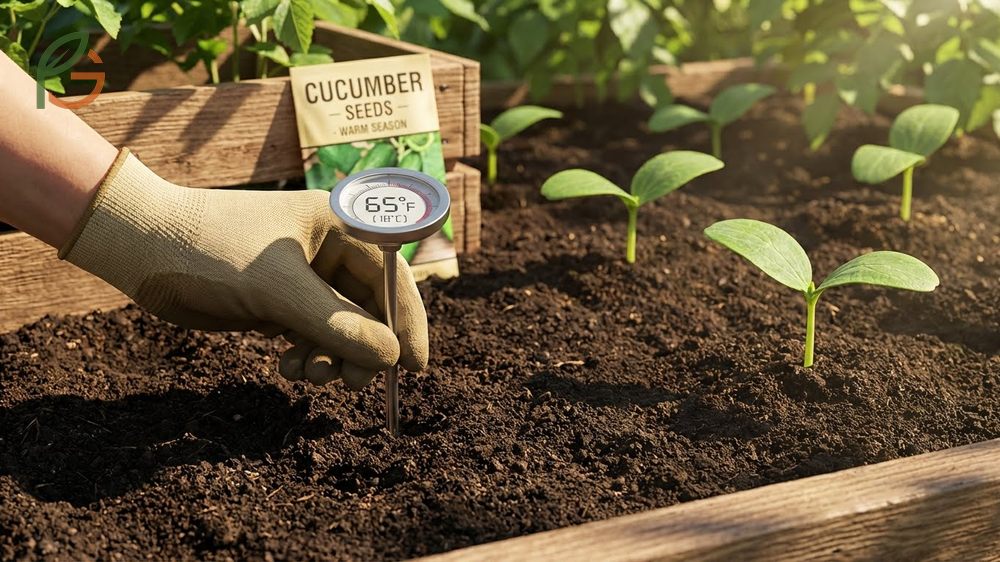
Cucumbers are warm-season vegetables that won’t tolerate frost or cold soil. Studies demonstrate that cucumber seeds fail to germinate below 50°F (10°C) and can rot in cold, wet conditions.[3] The window for planting starts when your soil warms sufficiently and ends roughly 10-12 weeks before your first fall frost.
Current agricultural guidance emphasizes soil temperature over calendar dates. A soil thermometer inserted 2-3 inches deep at 9 AM gives you accurate readings. Most gardeners find success by waiting until daytime highs regularly exceed 65°F (18°C) and nighttime lows stay above 50°F (10°C).
The growing season varies dramatically across the United States. Northern states like Ohio get a single spring-to-summer window, while southern states like Florida support multiple plantings year-round with winter and fall seasons performing best.[5]
Soil Temperature Requirements
Research shows cucumber germination rates improve dramatically with warmer soil. Seeds planted at 60°F (16°C) germinate slowly over 10-13 days, while those planted at 70°F (21°C) emerge in just 6-8 days.[1] This faster emergence reduces the risk of seed rot and slug damage.
North Carolina State Extension recommends waiting for soil temperatures of 75-85°F (24-29°C) for ideal conditions.[6] While this isn’t always necessary, it ensures rapid growth and reduces transplant shock. You can accelerate soil warming by using black plastic mulch or clear row covers for 1-2 weeks before planting.
From My Experience: My cousin in Guadalajara, Mexico planted Armenian cucumber seeds in early April when soil hit 68°F (20°C). Seeds germinated in 7 days versus the typical 6-8 day range, achieving 90% success rate—right in line with optimal temperature studies.
Frost Date Considerations
Your last spring frost date serves as the baseline for cucumber planting. However, the date represents a 50% probability—there’s still a chance of frost occurring after this date. Conservative gardeners add 2 weeks to this date for tender crops like cucumbers.
First fall frost dates matter equally for succession planting. Cucumbers need 50-70 days from seed to first harvest depending on variety. Count backward from your first fall frost date and subtract 10-14 days as a safety buffer to determine your last planting date.
Important Note: Cucumber plants die at temperatures below 32°F (0°C). Even light frost will kill foliage. If you plant early, keep row covers or cloches ready for unexpected cold snaps.
Best Time to Plant Cucumbers by USDA Zone
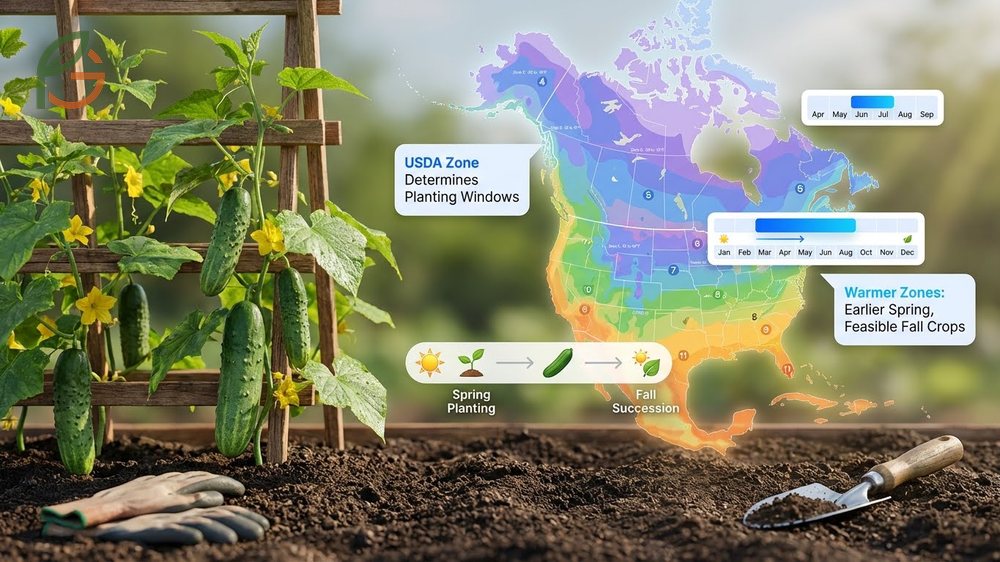
The USDA Plant Hardiness Zone Map divides North America into 13 zones based on average annual minimum temperatures. Cucumbers grow successfully in Zones 4-11, though planting windows shift considerably. Understanding your zone helps you time plantings for your local climate.
Each zone spans 10°F (5.6°C), with half-zones providing even more precision. Your zone determines both spring planting dates and whether fall succession crops are feasible. Warmer zones support year-round production with strategic timing.
Zones 4-6: Northern Regions
Zones 4-6 cover the northern United States, including Minnesota, Wisconsin, Michigan, Pennsylvania, and Ohio. Last frost dates range from late May in Zone 4 to mid-April in Zone 6.[4] This creates a compressed growing window of 100-150 days.
Direct sow cucumber seeds from late May through mid-June in Zone 4. Zones 5-6 can plant from mid-May through early June. Starting transplants indoors 3-4 weeks before the last frost extends your season by 2-3 weeks. These northern zones rarely support fall cucumber crops due to early autumn frosts.
- Use black plastic mulch to warm soil 5-10°F (3-6°C) faster in spring
- Select fast-maturing varieties (50-55 days) to beat fall frost
- Start transplants indoors under grow lights in late April for Zone 5-6
- Plant on south-facing slopes where soil warms earliest
- Keep row covers ready for late spring cold snaps below 45°F (7°C)
- Consider succession planting every 2 weeks until July 1 for extended harvest
Zones 7-8: Mid-South Regions
Zones 7-8 encompass Virginia, North Carolina, Tennessee, Georgia, northern Texas, and Oklahoma. Last frost dates occur from early to mid-April, with first fall frosts arriving in late October to early November.[4] This provides a 200-220 day growing season.
Plant spring cucumbers from late April through June once soil reaches 65°F (18°C). Fall crops work well when seeded in late July through August. The extended season allows two complete cucumber crops with a summer gap during peak heat above 95°F (35°C).
- Spring planting window: April 20 – June 15 for Zone 7
- Fall planting window: July 20 – August 10 for 60-day varieties
- Use shade cloth during July-August to reduce heat stress above 90°F (32°C)
- Plant heat-tolerant varieties for summer production if desired
- Mulch heavily to conserve moisture during summer heat
Zones 9-11: Southern Regions
Zones 9-11 cover coastal California, southern Texas, and Florida. These areas have minimal to no frost, creating unique planting schedules. Florida dominates fresh market cucumber production in the United States, with regional timing varying by latitude.[5]
North Florida plants cucumbers February through April for spring and July through August for fall. Central Florida uses January through March and September. South Florida’s prime season runs September through February, avoiding summer heat stress.[5] Summer temperatures above 95°F (35°C) reduce fruit set and increase pest pressure.
Heat Management Tip: In Zones 9-11, cucumbers struggle when temperatures exceed 95°F (35°C) for extended periods. Plant to harvest before or after peak summer heat for best production and fruit quality.
When to Plant Cucumbers by State

State-specific recommendations account for microclimates within USDA zones. Elevation, proximity to water bodies, and urban heat islands all shift planting dates. Always confirm your specific frost dates through local Extension offices or weather services for precision.
This table compares cucumber planting timing, soil temperature requirements, and growing seasons across seven US states from northern to southern regions
| State | Primary Zones | Spring Planting | Fall Planting | Notes |
|---|---|---|---|---|
| Ohio | 5b-6a | Mid-May to early June | Not recommended | Last frost May 1-15; short season |
| Pennsylvania | 5b-7a | Late May to mid-June | Limited (July) | Varies by region; south warmer |
| Missouri | 5b-7a | Late April to May | Late July | Central areas warmer than north |
| North Carolina | 6b-8a | Late April to June | July to August | Mountains later than coast |
| Georgia | 7a-9a | April to May | July to August | Major commercial producer |
| Texas | 6b-9b | March to April (south) April to May (north) |
August (north) September (south) |
Highly variable by region |
| Florida | 8a-11a | Jan-April (varies by region) | Sept-Feb (south) July-Aug (north) |
Leading US producer; winter crops |
Georgia leads the United States in fresh market cucumber production, with most commercial operations concentrated in the southwest quarter of the state where abundant water and warm soil support early spring planting. North Carolina requires soil temperatures of 75-85°F (24-29°C) for optimal results, pushing planting slightly later than surrounding states.
Texas spans five USDA zones, creating dramatically different planting schedules. South Texas near the Gulf can plant in March, while the Panhandle waits until mid-May. Florida’s unique climate allows near year-round production by shifting between regions seasonally.
Direct Sowing vs. Transplanting
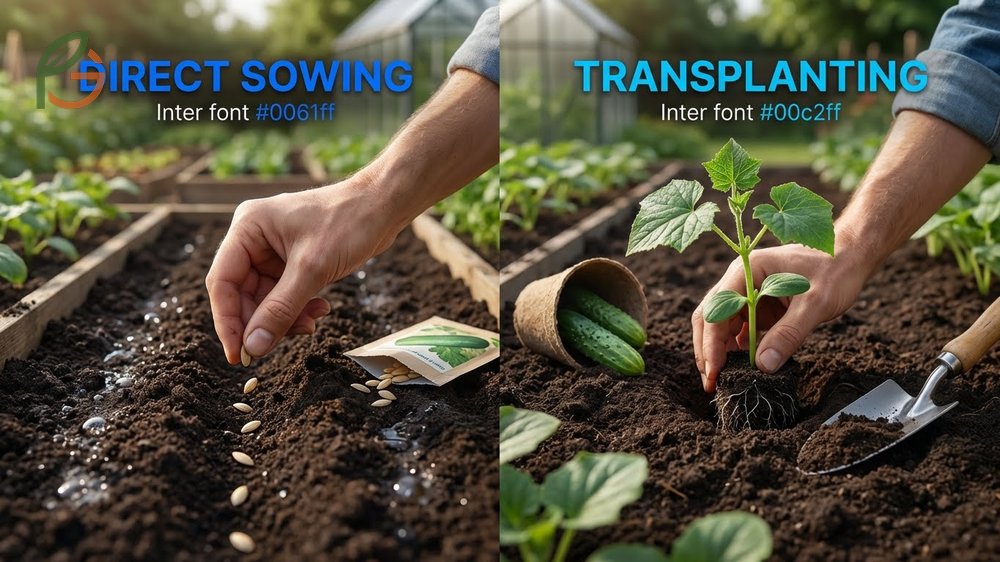
Cucumbers tolerate both direct seeding and transplanting, though each method offers distinct advantages. Direct sowing eliminates transplant shock and costs less, while transplants provide a 2-4 week head start on the season. Your choice depends on your growing season length and personal preference.
Studies show that direct-sown cucumbers often outperform transplants in warm soil conditions due to undisturbed root development. However, transplants excel in short-season areas where every week matters. Many commercial growers use transplants for their first planting, then direct sow for succession crops.
For direct sowing, plant seeds 0.5-1 inch deep (1.3-2.5 cm) after soil reaches 65°F (18°C).[3] Space seeds 6 inches apart in rows, then thin to 12-18 inches once seedlings develop true leaves. Water the furrow before covering seeds to ensure good soil contact.
Transplants require careful handling to minimize root disturbance. Start seeds indoors 3-4 weeks before your intended planting date in 2-inch deep cells or soil blocks. Maintain temperatures above 70°F (21°C) during germination and 60°F (16°C) at night after emergence.[3] Harden off transplants for 5-7 days before planting.
- Direct sow advantages: No transplant shock, stronger root systems, lower cost
- Transplant advantages: 2-4 week earlier harvest, protection from pests during vulnerable stage
- Best transplant containers: Soil blocks or deep cells that minimize root disturbance
- Hardening off period: 5-7 days with gradually increasing outdoor exposure
- Planting depth for transplants: Set stem below soil line up to first true leaves
- Optimal transplanting conditions: Overcast afternoon to reduce stress
Transplanting Success Tip: Plant cucumber transplants on overcast days or in late afternoon. Water immediately with diluted fish fertilizer to reduce shock. Row covers over hoops protect young plants from wind and pests for the first month.
Succession Planting for Continuous Harvest
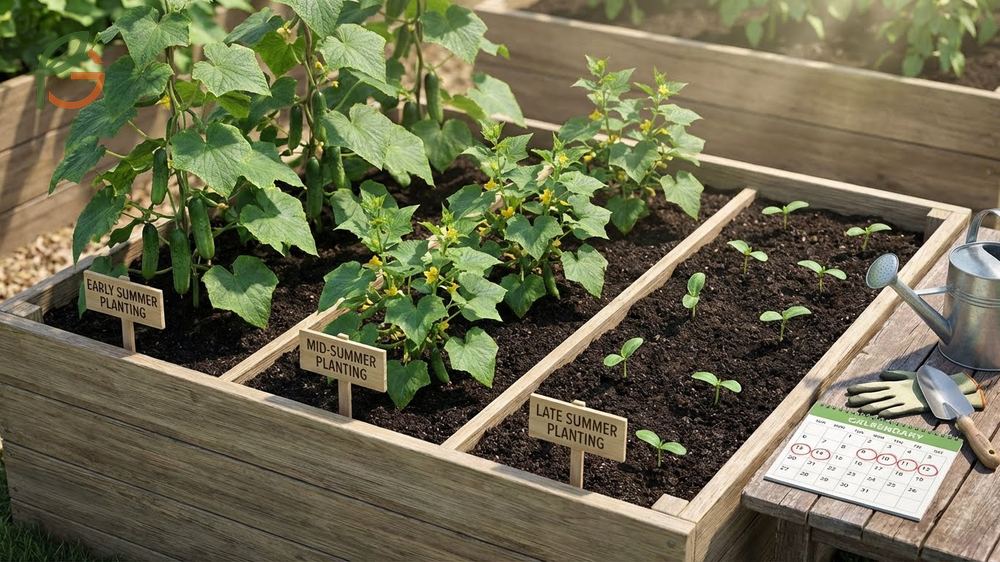
Succession planting extends your cucumber harvest from 3-4 weeks to 3-4 months. Rather than planting your entire crop at once, you stagger plantings every 2-3 weeks throughout the growing season. This strategy prevents gluts and ensures fresh cucumbers from early summer through fall.
Most cucumber varieties produce heavily for 3-4 weeks before declining due to disease pressure or plant exhaustion. Current agricultural data shows that multiple small plantings outperform a single large one in terms of total yield and fruit quality. The practice also helps manage pest cycles by not providing a continuous food source.
Start your first planting at the earliest safe date for your zone—typically 2 weeks after last frost when soil hits 65°F (18°C). Make subsequent plantings every 14-21 days. Stop planting 10-12 weeks before your first fall frost to allow time for the final crop to mature.
For fall crops in Zones 7-8, restart succession planting in late July or early August. These later plantings often perform better than summer crops because cool nights and reduced pest pressure improve fruit quality. Research demonstrates that fall cucumbers have fewer disease problems and sweeter flavor compared to midsummer harvests.
- Planting interval: Every 2-3 weeks from late spring through early summer
- Fall restart timing: 10-12 weeks before first expected frost
- Plants per person: 2-3 plants every 2 weeks for fresh eating
- Variety rotation: Alternate slicer and pickling types for diversity
- Disease management: Remove spent plants promptly to reduce pathogen buildup
- Record keeping: Track planting dates and harvest periods to refine timing
Conclusion
The evidence is clear: successful cucumber growing hinges on proper timing based on soil temperature and frost dates rather than calendar dates alone. When to plant cucumbers varies from late May in Zone 4 to year-round opportunities in Zone 10, but the principle remains constant—wait for 65-70°F (18-21°C) soil and no frost risk.
Current guidance emphasizes succession planting and variety selection matched to your specific zone and season length. Whether you’re in Pennsylvania waiting until late May or Florida planting in September, understanding your local conditions ensures healthy plants and abundant harvests. FruitGarden provides zone-specific resources and planting calendars to help you optimize timing for your location.
Frequently Asked Questions
How late can you plant cucumbers?
You can plant cucumbers as late as 10-12 weeks before your first fall frost date. For Zone 7 with an October 15 frost, plant by late July or early August. Count backward from your frost date based on your variety’s days to maturity (typically 50-70 days) plus a 10-14 day safety buffer.
When should you plant cucumbers after the last frost?
Plant cucumbers 2-4 weeks after your last spring frost date once soil temperature reaches 65-70°F (18-21°C). This timing ensures seeds germinate quickly and seedlings don’t face cold stress. Use a soil thermometer inserted 2-3 inches deep at 9 AM to verify temperature before planting.
Is it too late to plant cucumbers in July?
July planting works well for fall crops in Zones 7-9 if you have 10-12 weeks before frost. Northern zones (4-6) have too short a window for July planting. Southern zones like Texas and Florida can plant in July for fall harvest. Choose fast-maturing varieties (50-55 days) to beat the first frost.
What soil temperature is best for planting cucumbers?
The optimal soil temperature for planting cucumbers is 70°F (21°C), though seeds will germinate as low as 60°F (16°C). Research shows 70°F soil produces germination in 6-8 days, while 60°F takes 10-13 days. Soil temperatures below 50°F (10°C) prevent germination and can cause seed rot.
Should I direct sow or transplant cucumber seeds?
Both methods work, depending on your needs. Direct sowing costs less and produces stronger root systems but requires warm soil. Transplanting gives you a 2-4 week head start, which matters in short-season zones. Many gardeners transplant their first planting for early harvest, then direct sow successive crops.
When are cucumbers in season in the United States?
Cucumber season varies by region. Northern states produce from July through September. Mid-South states (Zones 7-8) have cucumbers from June through September with possible fall crops. Florida and southern Texas grow cucumbers nearly year-round, with peak production in spring (March-May) and fall (September-November).
Where are cucumbers grown commercially in the United States?
Florida dominates US fresh market cucumber production, particularly in spring and winter. Georgia ranks as the leading producer overall, with concentration in the southwest quarter of the state. Michigan and North Carolina lead in processing (pickling) cucumber output. Other major producers include Texas, California, Virginia, New York, and New Jersey during summer months.