When to pick cucumbers? Most cucumber varieties are ready to harvest between 50-70 days after planting[1], typically 8-10 days after the first female flowers open. Research shows that harvesting at the right time—when cucumbers reach 6-8 inches for slicing varieties or 2-4 inches for pickling types—ensures the sweetest flavor and crunchiest texture. FruitGarden combines university extension research and proven gardening practices to help you harvest cucumbers at peak ripeness for maximum flavor and continuous production.
Quick Answer
- Slicing cucumbers are ready at 6-8 inches long[2] with dark green, glossy skin
- Pickling varieties should be harvested at 2-4 inches[2] for best crunch and flavor
- Harvest in the morning when vines are cool and firm for extended storage life
- Check plants daily once fruiting starts—cucumbers can grow from perfect to overripe in just 1-2 days
When to Pick Cucumbers
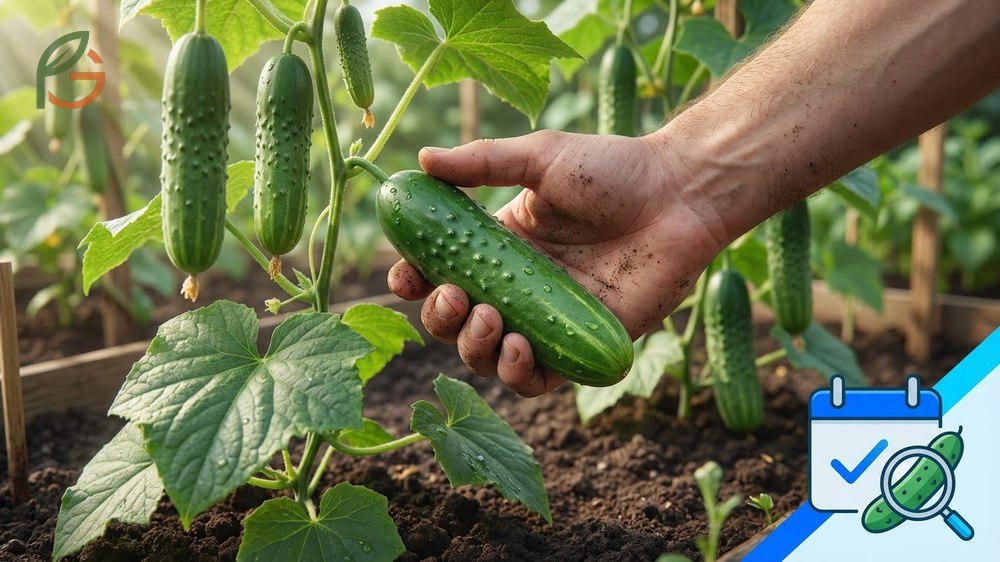
Most cucumber varieties reach harvest maturity between 50-70 days after germination[1], but you’ll need to watch for specific signs rather than relying on calendar dates alone. The exact timing depends on your variety, growing conditions, and local climate. Once your plants start producing, you’ll need to check them daily because cucumbers can go from perfect to overripe in just 24-48 hours.
Harvesting at the right time isn’t just about size—it’s about catching cucumbers when their flesh is sweetest and seeds are most tender[2]. If you wait too long, seeds become hard and bitter, and the plant slows down production. Pick early and often to keep your vines producing through the entire season.
From My Experience: My cousin in Guadalajara, Mexico grew lemon cucumbers last summer and checked them every morning once they started fruiting. She found that cucumbers left just one extra day past their prime developed tougher skin and visible seeds—matching the rapid growth pattern described in gardening studies.
The best time to harvest is in the morning when vines are cool and turgid from overnight dew[1]. Morning-picked cucumbers stay firmer longer in storage compared to those harvested during hot afternoon hours. The heat causes temporary wilting that reduces post-harvest quality, even if you refrigerate them immediately.
Timing by Days After Planting
Count approximately 8-10 days from when you first see female flowers opening on your vines. Female flowers are easy to spot—they have a tiny cucumber-shaped swelling at the base, unlike male flowers that grow on thin stems. Once a female flower gets pollinated, that small fruit starts sizing up rapidly.
Different varieties mature at different rates, so always check your seed packet for specific days-to-harvest information. Bush varieties tend to produce earlier than vining types, and some modern hybrids are bred for faster maturity in short-season climates.
Visual Ripeness Signs
Ripe cucumbers show consistent dark green color with glossy, slightly waxy skin. The skin should feel firm but not rock-hard when you gently squeeze it. Any yellowing at the blossom end (except for naturally yellow varieties) means you’ve waited too long.
Watch for these visual cues that signal perfect ripeness: uniform color without pale streaks, slight give when squeezed gently, and a size that matches your variety’s specifications. If you see wrinkled skin or soft spots, harvest immediately—these cucumbers are past their prime but can still be used for cooking or pickling.
Signs Your Cucumbers Are Ready to Harvest
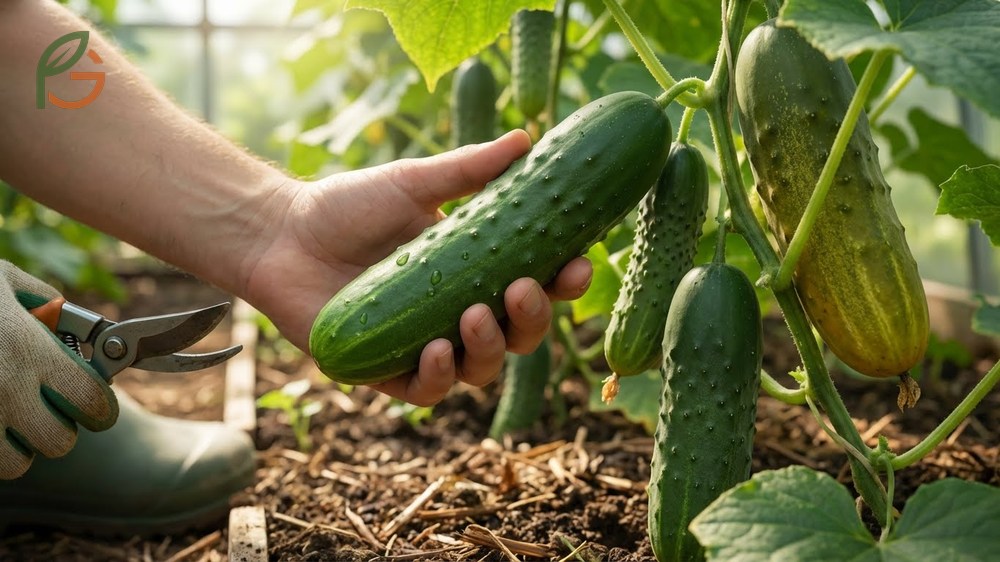
Knowing when cucumbers are ripe takes practice, but a few reliable indicators make the decision easier. The most obvious sign is size—each variety has an ideal harvest length that delivers the best flavor and texture. Beyond size, you’ll want to check firmness, color, and skin appearance.
Don’t wait for cucumbers to reach maximum size before picking. Smaller cucumbers almost always taste better than oversized ones because their seeds haven’t developed fully and their flesh stays sweet and crisp. Most gardeners find their best-tasting cucumbers come from picking slightly on the early side rather than waiting too long.
Size Matters by Variety
Different cucumber types have different ideal harvest sizes. Slicing cucumbers are best at 6-8 inches long[2], while pickling varieties should be harvested much smaller at 2-4 inches[2]. English cucumbers can grow much longer—between 10-18 inches—before they’re considered overripe.
This table compares ideal harvest sizes and timing across five common cucumber varieties including slicing, pickling, English, Armenian, and specialty types
| Variety Type | Ideal Length | Days to Harvest | Best Use |
|---|---|---|---|
| Slicing/Burpless | 6-8 inches[2] | 50-65 days | Fresh eating, salads |
| Pickling | 2-4 inches[2] | 48-55 days | Pickles, gherkins |
| English | 10-18 inches[2] | 55-70 days | Fresh eating, thin skin |
| Armenian | 12-18 inches (can grow to 36) | 60-75 days | Fresh eating, cooking |
| Lemon/Specialty | 3-4 inches diameter | 60-70 days | Fresh eating, novelty |
The Touch Test
Gently squeeze your cucumber about one-third from the blossom end. It should feel firm with just a tiny bit of give—like pressing on a ripe avocado. If it feels rock-hard, give it another day. If it feels soft or spongy, you’ve waited too long and should harvest immediately to prevent waste.
The skin should feel smooth and slightly waxy, not rough or wrinkled. Any wrinkles indicate water loss and overripeness. Fresh cucumbers at peak ripeness have taut skin that reflects light with a glossy appearance.
Harvesting Pickling Cucumbers vs Slicing
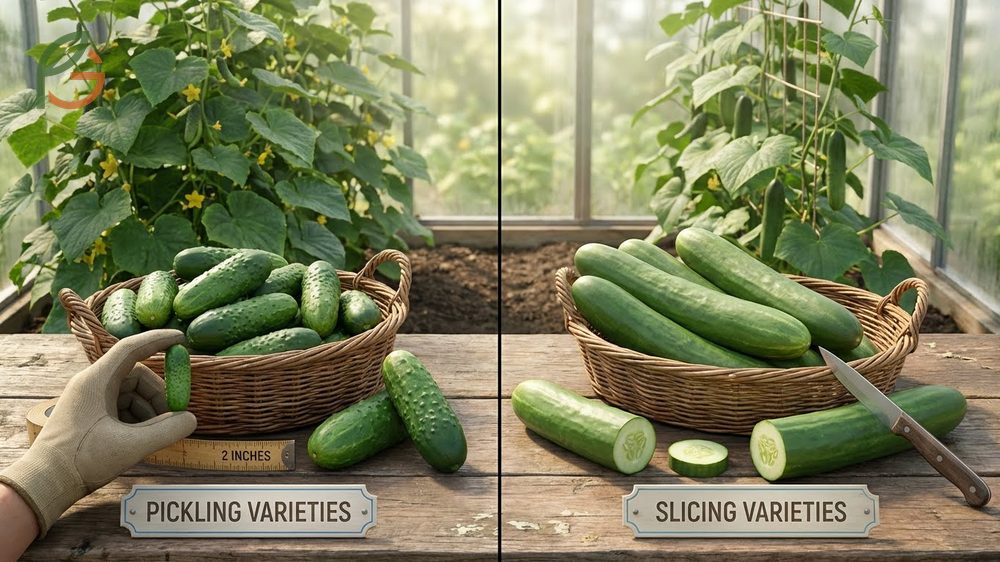
Pickling and slicing cucumbers aren’t just different sizes—they’re bred with distinct characteristics that affect when and how you harvest them. Pickling varieties are shorter, blockier, and have thinner skins with smaller seeds. Slicing varieties grow longer with thicker skins and more developed seed cavities.
For pickling cucumbers, you’ve got flexibility in harvest timing depending on what you’re making. Tiny gherkins need to be picked at just 2 inches long, while dill pickle spears can wait until they reach 4-5 inches. Check your plants every single day once they start producing because pickling cucumbers can double in size overnight during peak season.
Slicing cucumbers demand less frequent monitoring since they take longer to reach full size. You can usually get away with checking every other day, though daily checks still help you catch them at absolute peak flavor. Slicing varieties that grow too large develop thick, tough skins and prominent seeds that make them less appealing for fresh eating.
Important Difference: Pickling cucumbers have bumpy, spiny skin and lighter green color, while slicing types are smooth with dark, uniform green color. You can eat pickling cucumbers fresh and pickle slicing varieties, but each type works best for its intended purpose.
- Pickling varieties mature faster, typically 48-55 days vs 55-70 days for slicing types
- Harvest pickling cukes smaller (2-4 inches) to ensure thin skins and crunchy texture
- Slicing varieties can be left longer on the vine (6-9 inches) without becoming bitter
- Pickling types need daily checks; slicing types can be checked every 2-3 days
- Both types should be harvested before any yellowing appears at the blossom end
How to Pick Cucumbers
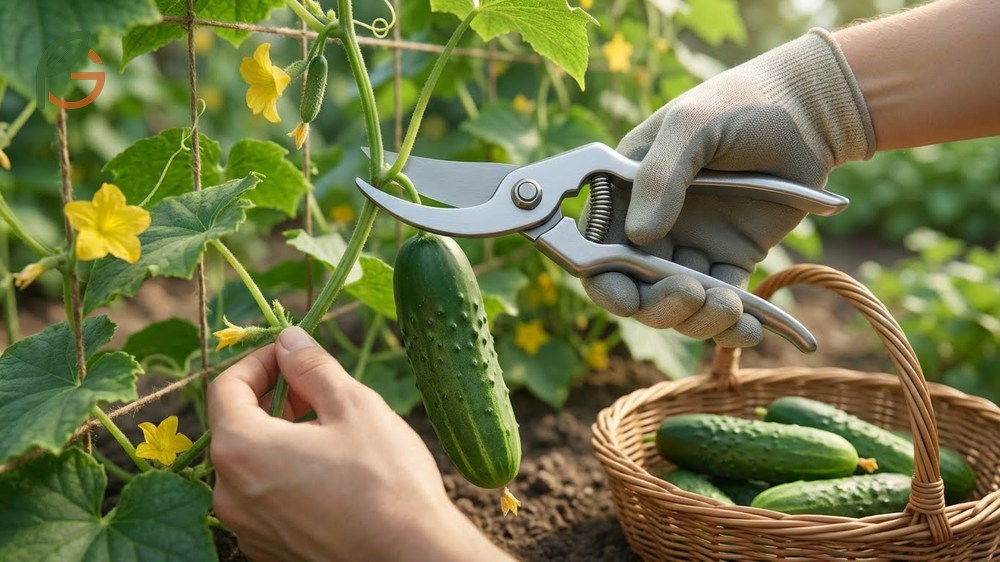
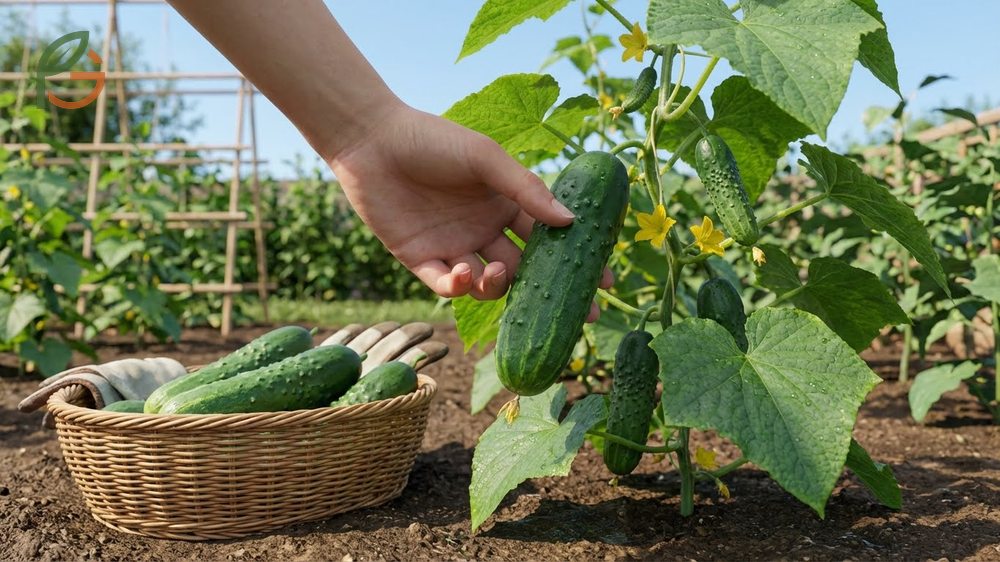
Always use clean, sharp pruning shears or a knife to cut cucumbers from the vine. Cut the stem about 1 inch above the fruit—this prevents the stem end from rotting in storage[1]. Never twist or pull cucumbers off because this damages the main vine and can reduce future production.
If you’re caught in the garden without tools, you can carefully twist the cucumber in one direction while supporting the vine with your other hand. It usually takes 5-6 gentle rotations before the stem breaks cleanly. This method works in a pinch but risks vine damage if you’re not careful.
Handle cucumbers gently during harvest—they bruise easily, and bruised spots turn soft and start rotting within a day or two. Place harvested cucumbers directly into a basket or bucket rather than dropping them, and keep them out of direct sunlight until you can get them into cool storage.
- Harvest in the morning when temperatures are cool and vines are firm
- Bring sharp, clean pruners or scissors to prevent spreading disease between plants
- Cut stems 1 inch above the fruit to extend storage life
- Check under leaves—cucumbers hide easily in dense foliage
- Remove any overripe or yellowing cucumbers to encourage continued production
- Handle gently and avoid stacking cucumbers more than 2-3 layers deep in your harvest basket
Why Are My Cucumbers Yellow
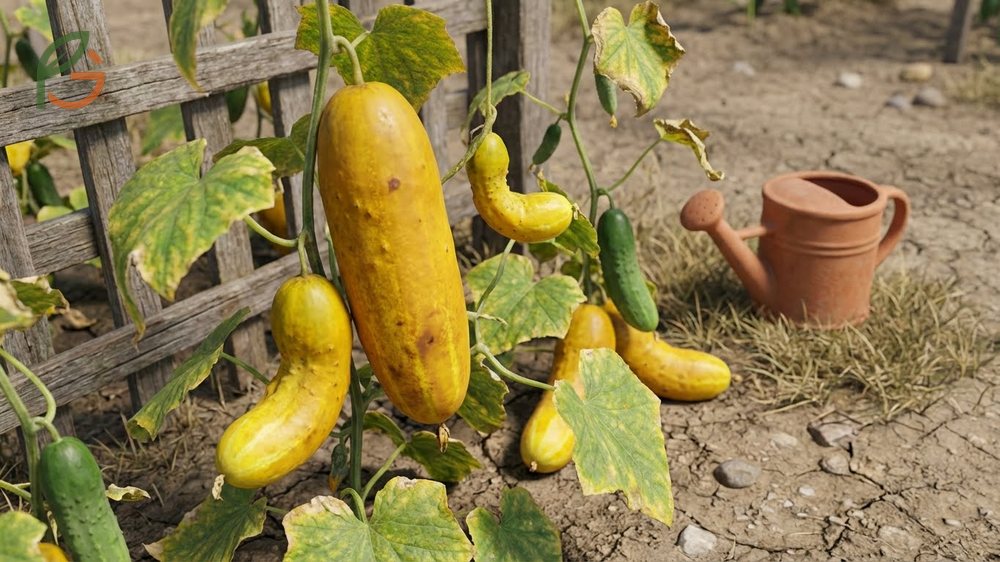
Yellow cucumbers signal several possible problems, and identifying the cause helps you prevent future issues. The most common reason is simply waiting too long to harvest—overripe cucumbers naturally turn yellow as they age on the vine. But yellowing can also indicate water stress, nutrient deficiencies, or incomplete pollination.
Water-stressed plants often produce yellow cucumbers because inconsistent moisture affects fruit development[3]. If your soil fluctuates between bone-dry and waterlogged, cucumbers can’t regulate their growth properly. This stress triggers yellowing even in young fruits. Consistent watering—about 1-2 inches per week—prevents this issue.
Nutrient deficiency, particularly lack of nitrogen, is another major culprit. Studies show nitrogen is essential for maintaining cucumbers’ green color, and without adequate levels, fruits turn pale or yellow even when they’re the right size. A balanced fertilizer application every 3-4 weeks during the growing season usually solves this problem.
Incomplete pollination causes yellow, misshapen cucumbers that never develop properly. Female flowers need 8-12 bee visits to produce quality fruit[3]. If bees are scarce in your garden, you might need to hand-pollinate by transferring pollen from male flowers to female flowers using a small paintbrush.
Check Your Variety: Some specialty cucumbers like ‘Lemon,’ ‘Yellow Submarine,’ and ‘Salt and Pepper’ naturally produce yellow fruit. These varieties aren’t bitter and are perfectly fine to eat when yellow. Always verify your seed packet before assuming yellowing is a problem.
- Overripe fruits left too long on the vine—harvest promptly when they reach ideal size
- Water stress from drought or overwatering—maintain consistent soil moisture
- Nitrogen deficiency—apply balanced fertilizer every 3-4 weeks during growing season
- Poor pollination—encourage pollinators or hand-pollinate female flowers
- Disease issues like bacterial wilt or downy mildew—practice crop rotation and use disease-resistant varieties
Bitter Cucumbers Causes
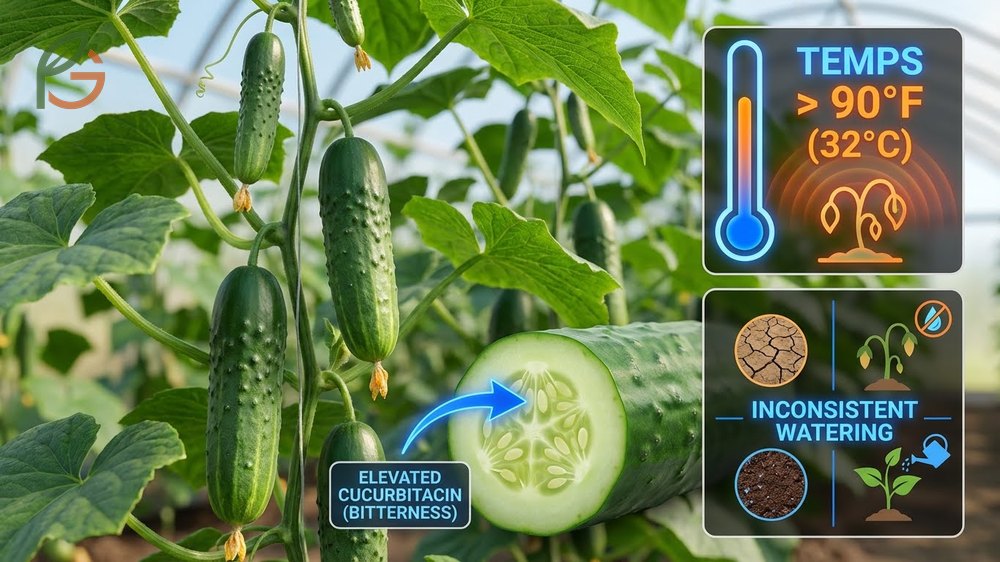
Bitter cucumbers result from elevated cucurbitacin levels—a natural compound that’s normally concentrated in leaves and stems but migrates into fruit under stress conditions. Heat stress is the primary trigger, with prolonged exposure to temperatures above 90°F (32°C) causing plants to produce bitter fruit[4]. You can’t reverse bitterness once it develops, but you can prevent it.
Inconsistent watering ranks second among bitterness triggers. When cucumbers alternate between drought and overwatering, plants respond by producing defensive compounds that make fruits taste bitter[4]. The solution is maintaining steady soil moisture—check daily and water deeply 2-3 times per week rather than giving plants frequent shallow drinks.
Temperature fluctuations—especially dramatic swings between day and night—also contribute to bitterness. If your region experiences cool nights (below 60°F/15°C) followed by hot days (above 85°F/29°C), cucumbers can’t regulate their metabolism properly. Using row covers at night during temperature swings helps moderate these extremes.
Some bitterness comes down to genetics. Certain plants carry a recessive trait that causes bitter fruit regardless of growing conditions[4]. If you consistently get bitter cucumbers from one plant while others are fine, remove that plant and focus your harvest on the good producers. Modern hybrid varieties are often bred for reduced bitterness—look for “burpless” or “non-bitter” on seed packets.
- Mulch heavily around plants to regulate soil temperature and moisture
- Water consistently—aim for 1-2 inches per week with no dramatic fluctuations
- Provide afternoon shade when temperatures exceed 90°F (32°C)
- Choose heat-tolerant, bitter-free varieties for hot climates
- Harvest cucumbers on the smaller side—younger fruits are less likely to be bitter
- Peel cucumbers from the stem end, where bitterness concentrates most
Storing Fresh Cucumbers
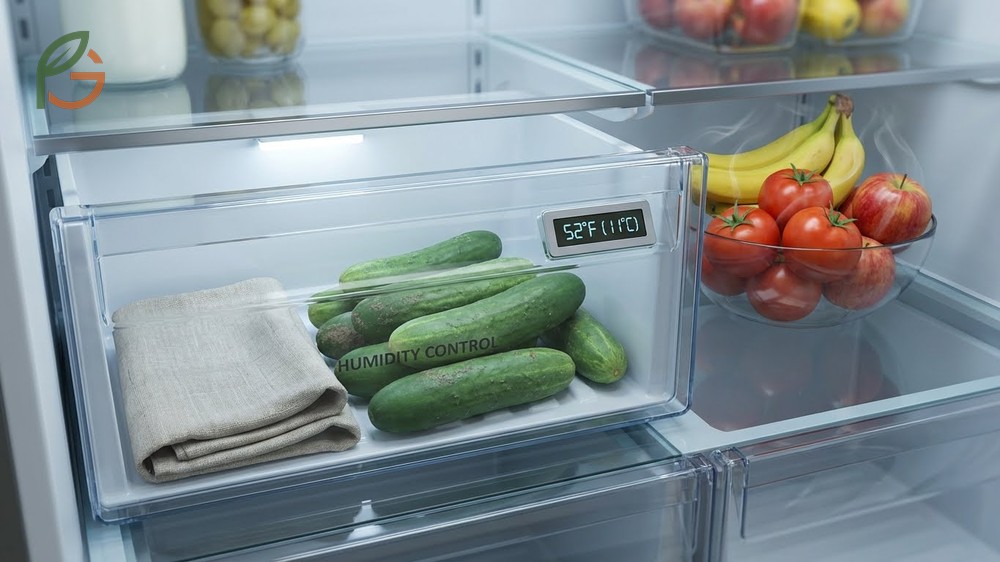
Proper storage extends cucumber freshness from a few days to about two weeks. Store whole cucumbers in your refrigerator’s crisper drawer at 50-55°F (10-13°C)[5]. Don’t wash them before storage—excess moisture promotes rot. Instead, wipe off any dirt with a dry cloth and wash just before eating.
Keep cucumbers away from ethylene-producing fruits like apples, tomatoes, and bananas. Ethylene gas accelerates ripening and causes cucumbers to turn yellow and soft prematurely. Store them with other vegetables in a separate crisper drawer if possible.
For pre-sliced cucumbers, store them in an airtight container or mason jar with a metal lid. They’ll stay fresh for 7-10 days[5] if you keep the container sealed tightly. A paper towel at the bottom of the container absorbs excess moisture and prevents sogginess.
Don’t freeze cucumbers for fresh eating—their high water content means they turn mushy when thawed. However, you can freeze them for cooking or smoothies where texture doesn’t matter. Freezing works well for cucumbers destined for cold soups, tzatziki, or other blended recipes.
Extending Harvest Season
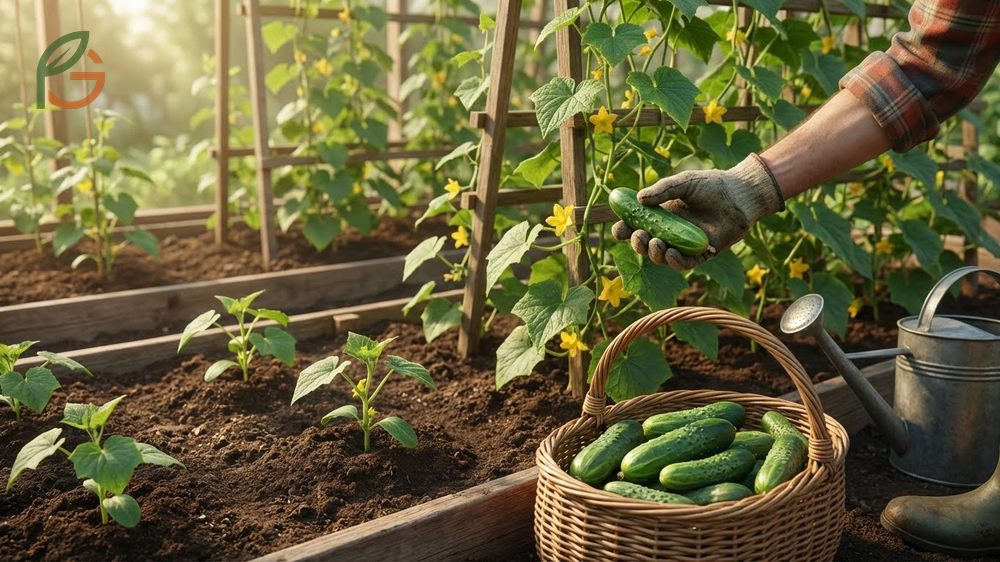
The single most effective way to extend your cucumber harvest is picking frequently. When you harvest cucumbers every 1-2 days, plants interpret this as a signal to keep producing more flowers and fruit. Leaving mature cucumbers on the vine signals the plant to stop flowering and focus on seed production instead.
Succession planting gives you continuous harvests from early summer through fall. Start new cucumber seeds every 3-4 weeks throughout your growing season. As older plants decline from pest pressure or disease, younger plants are hitting their productive stride. This strategy works especially well in areas with long growing seasons.
Pruning cucumber vines improves airflow and light penetration, which increases overall yield and extends productive life[6]. Remove lower leaves and suckers (side shoots) to direct energy into fruit production rather than excess foliage. Pruned plants experience less disease pressure from powdery mildew and bacterial wilt, keeping them productive longer.
Row covers protect late-season cucumbers from early fall frosts. Even 2-3 degrees of frost protection can add 2-3 weeks to your harvest season. Don’t worry about pollinators accessing flowers under row covers—by late season, you’ll likely have enough developing fruit already on the vine, and they’ll continue ripening under cover for 45+ days.
- Harvest every 1-2 days once production starts—frequent picking signals plants to keep producing
- Plant new seeds every 3-4 weeks for continuous harvests from June through September
- Prune lower leaves and side shoots to improve airflow and concentrate energy on fruit production
- Use row covers for frost protection in early fall—adds 2-3 weeks to harvest season
- Apply balanced fertilizer every 3-4 weeks to maintain plant vigor throughout the season
- Control pests early with row covers or organic sprays to prevent plant decline
Conclusion
Knowing when to pick cucumbers transforms your harvest from hit-or-miss to consistently delicious. Harvest slicing varieties at 6-8 inches and pickling types at 2-4 inches, check plants daily during peak season, and always pick in the cool morning hours for best quality. The evidence is clear: cucumbers harvested at the right size with proper technique taste sweeter, store longer, and encourage your vines to keep producing.
Current gardening guidance emphasizes consistent care—regular watering, frequent harvesting, and prompt removal of overripe fruit—as the keys to maximizing both quality and quantity. FruitGarden provides research-backed growing information to help you achieve abundant cucumber harvests all season long.
Frequently Asked Questions
How do you know when to pick cucumbers?
Pick cucumbers when they reach the size specified for your variety—typically 6-8 inches for slicing types and 2-4 inches for pickling varieties. The skin should be dark green and glossy with firm flesh. Check daily once plants start producing because cucumbers can go from perfect to overripe in just 24-48 hours.
When are cucumbers ripe for picking?
Cucumbers are ripe about 8-10 days after female flowers open, or roughly 50-70 days after planting seeds. Look for consistent dark green color, firm texture, and size appropriate for your variety. Harvest before any yellowing appears at the blossom end, which indicates overripeness.
How do I know when to pick a cucumber?
Gently squeeze the cucumber about one-third from the blossom end—it should feel firm with slight give, like a ripe avocado. Check the color (should be dark green without yellow patches) and measure the length against your variety’s specifications. When in doubt, pick slightly early rather than waiting too long.
When is a cucumber ready to pick?
A cucumber is ready when it reaches variety-specific size, shows glossy dark green skin, and feels firm when gently squeezed. For slicing varieties, this is typically 6-8 inches long. For pickling types, harvest at 2-4 inches. Always harvest before yellowing begins, which signals overripeness.
How to tell when a cucumber is ready to pick?
Check three main indicators: size (matches variety specifications), color (uniform dark green without pale streaks), and firmness (slight give when squeezed but not soft). The best time to check is morning when cucumbers are cool and turgid from overnight dew, making it easier to assess true firmness.
When should I pick my cucumbers?
Pick cucumbers as soon as they reach the minimum size for your variety—don’t wait for maximum size. Smaller cucumbers taste sweeter with more tender seeds. Harvest in the morning when temperatures are cool, and check plants daily once fruiting begins to catch cucumbers at peak ripeness.
How do you pick a good cucumber?
A good cucumber has uniform dark green color, glossy skin without wrinkles, and firm texture throughout. Avoid cucumbers with yellow patches (except naturally yellow varieties), soft spots, or very large size with visible seed bumps. The best cucumbers are picked slightly on the smaller side when their flesh is sweetest.