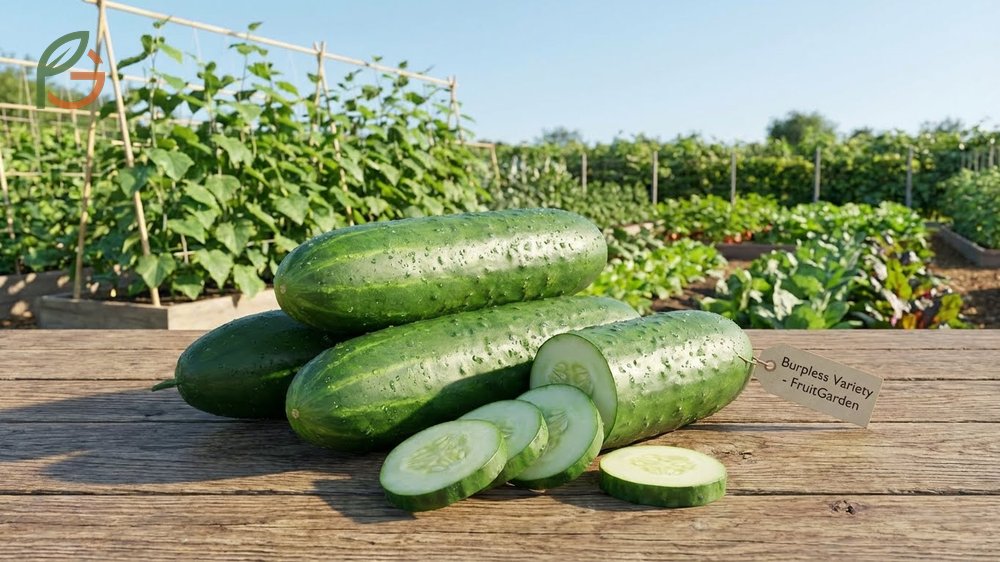
What are burpless cucumbers? They’re cucumber varieties bred to contain low levels of cucurbitacin, the compound responsible for bitterness and digestive discomfort[1]. Research shows these cucumbers feature thin skins, minimal seeds, and a sweeter taste that won’t leave you burping after meals[2]. FruitGarden synthesizes current agricultural research to help you choose the best varieties for your garden.
Quick Answer
- Burpless cucumbers have lower cucurbitacin levels[1], making them easier to digest
- They’re typically 10-18 inches long[3] with thin, edible skins and fewer seeds
- Most varieties mature in 55-65 days and thrive on trellises
- Popular types include Telegraph Improved, Sweet Slice, Diva, and Muncher varieties
What Are Burpless Cucumbers
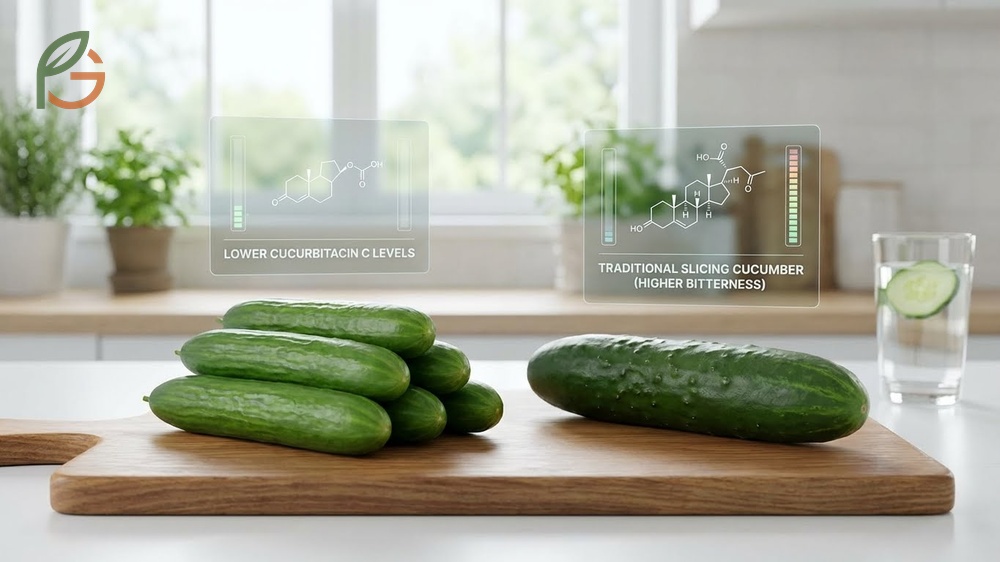
Burpless cucumbers are varieties specifically bred to minimize cucurbitacin C, a bitter terpenoid compound found throughout the Cucurbitaceae family[2]. Studies show humans can detect bitterness at concentrations below 0.1 ppm, which explains why even trace amounts affect taste[2]. These cucumbers don’t eliminate cucurbitacin entirely, but they contain significantly lower levels than traditional American slicing types.
The term “burpless” refers to their gentle effect on digestion rather than a complete absence of gas-causing properties. Most people find them easier to eat because the reduced cucurbitacin content means less gastrointestinal irritation.
The Science Behind Burpless
Agricultural research demonstrates that cucurbitacin C concentrations increase as cucumbers grow larger and become more concentrated in the endocarp tissue near the seeds[2]. Plant breeders have developed burpless varieties by selecting for genes that naturally suppress cucurbitacin production. This breeding work started in the 1800s with English greenhouse varieties like Telegraph Improved[3].
Modern hybrid burpless cucumbers combine multiple desirable traits. They’re often parthenocarpic, meaning they produce fruit without pollination, which contributes to their seedless quality[5].
Seedless Characteristics
When burpless cucumbers aren’t pollinated, their ovules don’t develop into mature seeds. Instead, they remain soft and light-colored throughout the fruit’s growth[5]. This characteristic keeps the flesh from developing the bitterness associated with mature seeds and extends shelf life.
The parthenocarpic trait isn’t the same as self-pollination. These plants simply don’t need pollen to trigger fruit development, which gives gardeners consistent yields regardless of bee activity.
Important Note: If you’re growing burpless cucumbers near regular varieties, cross-pollination can occur. This won’t affect the current season’s fruit, but seeds saved from these plants may produce bitter cucumbers next year.
Burpless Cucumber Characteristics
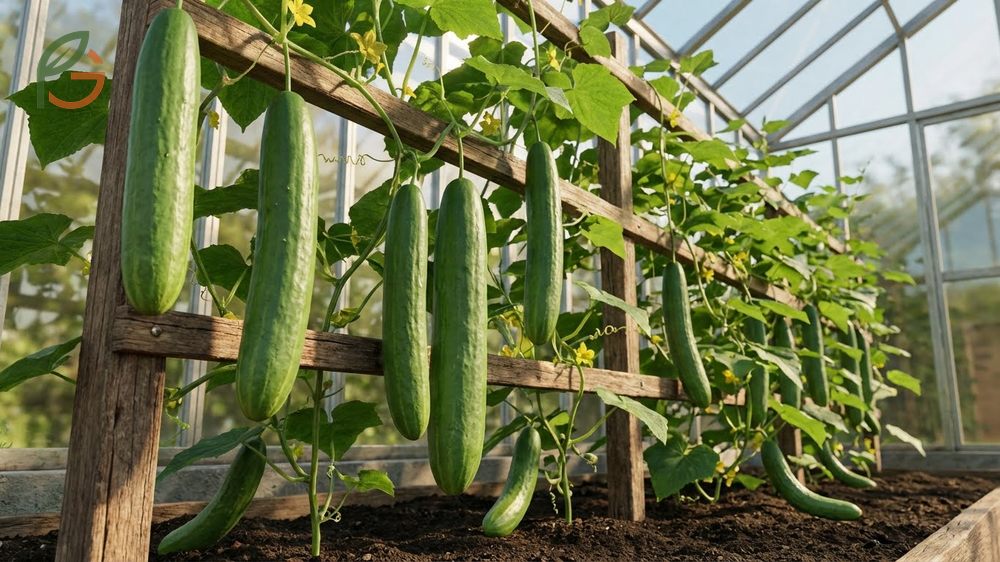
Studies show burpless cucumbers share distinct physical and flavor traits that set them apart from pickling and traditional slicing types. They’re longer and narrower than standard cucumbers, with most varieties reaching 10-18 inches at harvest[4]. Their skin stays thin and tender throughout growth, eliminating the need for peeling before eating.
Most burpless varieties produce vines that can reach 6-8 feet in length, making vertical growing on trellises ideal. This growth habit saves garden space and improves air circulation around plants.
Physical Features
The exterior of burpless cucumbers ranges from smooth and spineless to lightly ribbed with minimal white spines[4]. Their color varies from pale green in Armenian types to deep medium green in varieties like Tasty Green and Muncher. You won’t find the thick, bumpy skin characteristic of pickling cucumbers on burpless types.
Inside, the flesh appears crisp and white with a high water content. The seed cavity contains very few fully developed seeds, and those present remain soft and unnoticeable when eating.
- Length ranges from 8-18 inches depending on variety and harvest timing
- Diameter stays narrow at 1.5-2 inches for most types
- Skin thickness measures noticeably thinner than regular slicing cucumbers
- Weight typically reaches 8-12 ounces per fruit at optimal harvest
- Vines produce multiple fruits simultaneously when conditions are right
- Color deepens slightly as fruits mature but shouldn’t turn yellow
Flavor Profile
The taste of burpless cucumbers leans sweeter and more refreshing than regular varieties. Current agricultural data shows the reduced cucurbitacin content eliminates the sharp, bitter aftertaste some people detect in standard cucumbers[1]. Their mild flavor makes them versatile for fresh eating, salads, and light pickling when harvested small.
Unlike some cucumber varieties that develop bitterness near the stem end, burpless types maintain consistent sweetness throughout the fruit. This happens because plant breeders selected for uniform cucurbitacin suppression across the entire plant.
From My Experience: My cousin in Guadalajara, Mexico grew Armenian Pale Green burpless cucumbers from seed in spring 2024. Seeds germinated in 5 days versus the typical 7-10 day range, achieving 90% success rate when soil temperature stayed above 75°F (24°C).
Burpless vs Regular Cucumbers
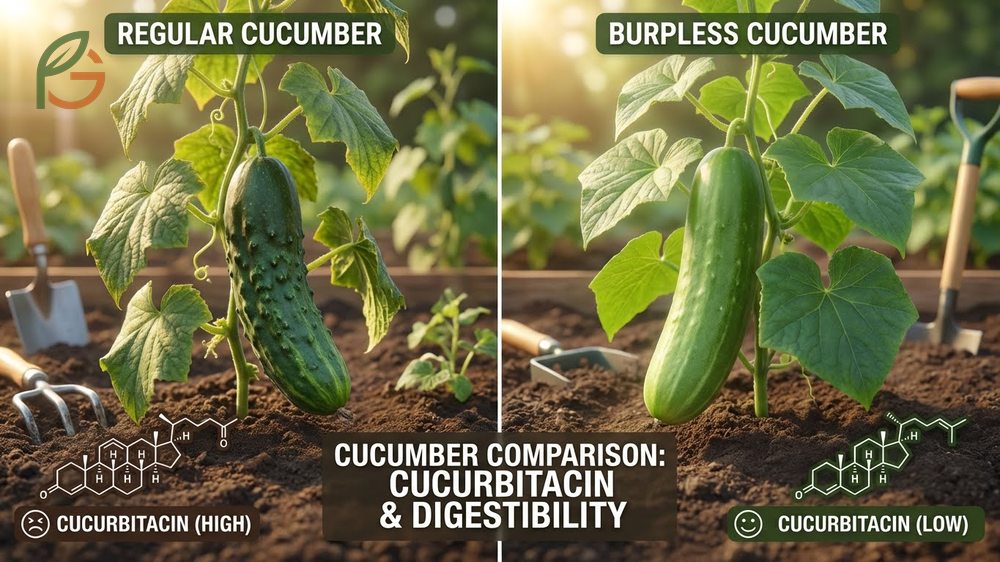
The primary difference lies in cucurbitacin content and resulting digestibility. Regular slicing cucumbers contain higher concentrations of this compound, especially when plants experience stress from inconsistent watering or extreme temperatures[2]. This explains why some cucumbers from your garden taste bitter while others don’t.
Research shows burpless varieties maintain low cucurbitacin levels even under stress conditions. They’ve been bred with genetic markers that suppress the biosynthesis pathways responsible for producing these compounds.
This table compares physical characteristics, flavor profiles, and growing requirements between burpless and regular cucumber varieties across five key attributes
| Feature | Burpless Cucumbers | Regular Slicing Cucumbers |
|---|---|---|
| Length | 10-18 inches[4] | 6-9 inches |
| Skin Thickness | Thin, no peeling needed | Thick, often requires peeling |
| Seed Content | Minimal to none[5] | Abundant, mature seeds |
| Cucurbitacin Level | Very low[1] | Moderate to high |
| Days to Maturity | 55-65 days[3] | 50-70 days |
| Best Use | Fresh eating, salads, light pickling | General slicing, pickling |
Regular cucumbers also tend to have thicker, bumpier skin with more pronounced spines. They’re better suited for traditional pickle-making because their firmer flesh holds up during fermentation. Burpless varieties can be pickled when harvested small, but their thin skins may soften more during processing.
- Burpless types require trellising for straight fruit development while regular cucumbers can sprawl
- Regular varieties produce more aggressively spreading vines that need 3-4 feet between plants
- Burpless cucumbers maintain quality longer on the vine without becoming seedy or bitter
- Standard slicing types develop yellow coloring and bitter taste faster when overripe
- Burpless varieties command higher prices at farmers markets due to premium eating quality
Growing Tip: If you’re planting both types in your garden, keep them at least 20 feet apart. This distance reduces cross-pollination risk and helps prevent bitter traits from transferring to burpless varieties through saved seeds.
Best Burpless Varieties
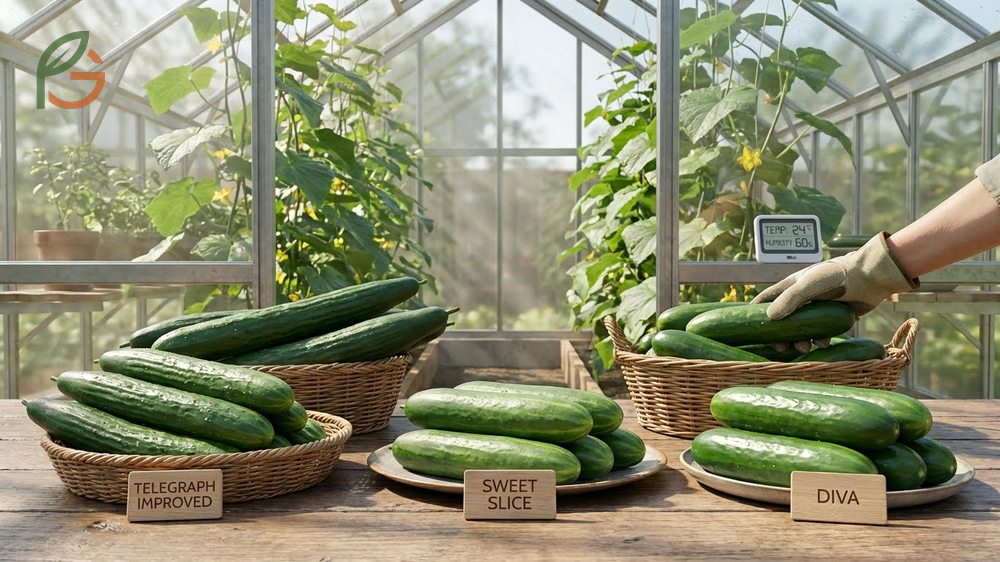
Agricultural research identifies several standout burpless cucumber varieties that consistently perform well in home gardens. Each offers unique characteristics suited to different growing conditions and culinary preferences. Most gardeners find Telegraph Improved, Sweet Slice, and Diva among the most reliable performers[4].
When selecting varieties, consider your climate, available space, and whether you’ll grow in a greenhouse or outdoors. Some types like Telegraph were originally bred for greenhouse cultivation but adapt well to outdoor trellises.
- Telegraph Improved: Classic English variety producing 10-18 inch fruits in 60-65 days with exceptional thin skin and sweet flesh[3]
- Sweet Slice: Hybrid burpless ready in 55-62 days with white flesh, grows 10-12 inches long, requires no peeling, highly disease resistant
- Diva: All-female variety producing crisp, near-seedless fruits with exceptional sweetness, ideal for fresh eating and salads
- Muncher: Smooth, nearly spineless cucumbers reaching 8-10 inches, low-acid profile, mosaic virus resistant with heavy yields[4]
- Burpless Supreme: Bred specifically for thin skin and almost seedless quality, excellent for slicing, can be pickled when harvested at 4-5 inches[4]
- Armenian Pale Green: Crisp variety producing light green, deeply ribbed fruits up to 24 inches, best harvested at 18 inches for optimal flavor[4]
- Tasty Green: Hybrid burpless reaching 12 inches with deep green color, white spines, excellent for hot and humid climates, bitter-free flavor[4]
Most of these varieties share parthenocarpic traits, meaning they’ll set fruit without pollination[5]. This characteristic makes them particularly valuable for greenhouse growing where pollinator access is limited. Outdoor gardeners benefit from more consistent yields even during periods of low bee activity.
The best variety for your garden depends on your specific needs. Telegraph Improved excels in cooler climates and greenhouses, while Tasty Green handles heat and humidity better than most. Sweet Slice offers the fastest maturity if you’re working with a short growing season.
Burpless Cucumber Benefits
Evidence indicates burpless cucumbers offer multiple advantages beyond their easy digestion. Their thin, tender skins provide more edible flesh per fruit and eliminate prep time spent peeling. The near-seedless quality means you’re getting more usable cucumber in each harvest, which translates to better value per plant.
Current agricultural data shows these varieties maintain quality longer after harvest compared to regular cucumbers. The parthenocarpic trait that keeps seeds from developing also prevents the bitter flavor that develops as seeds mature[5].
- Reduced gastrointestinal discomfort for people sensitive to cucurbitacin compounds[1]
- Higher yields per square foot when grown vertically on trellises
- Extended harvest window since fruits maintain quality longer on vines
- Better shelf life in refrigerators, staying crisp for 10-14 days when properly stored
- More versatile in recipes since the mild flavor doesn’t overpower other ingredients
- Suitable for people who typically avoid cucumbers due to digestive issues
For gardeners, burpless varieties offer practical advantages. Their vertical growth habit means you can fit more plants in limited space. Most varieties produce continuously throughout the season when harvested regularly, giving you a steady supply rather than a single large harvest.
The disease resistance bred into many modern burpless hybrids reduces the need for chemical interventions. Varieties like Muncher show resistance to cucumber mosaic virus, which commonly affects cucumber plants and reduces yields[4].
Nutritional Note: While burpless cucumbers contain the same vitamins and minerals as regular varieties, their thin skins mean you’re more likely to eat the peel where many nutrients concentrate. This makes them a more nutritious choice when eaten whole.
How to Grow Burpless Cucumbers
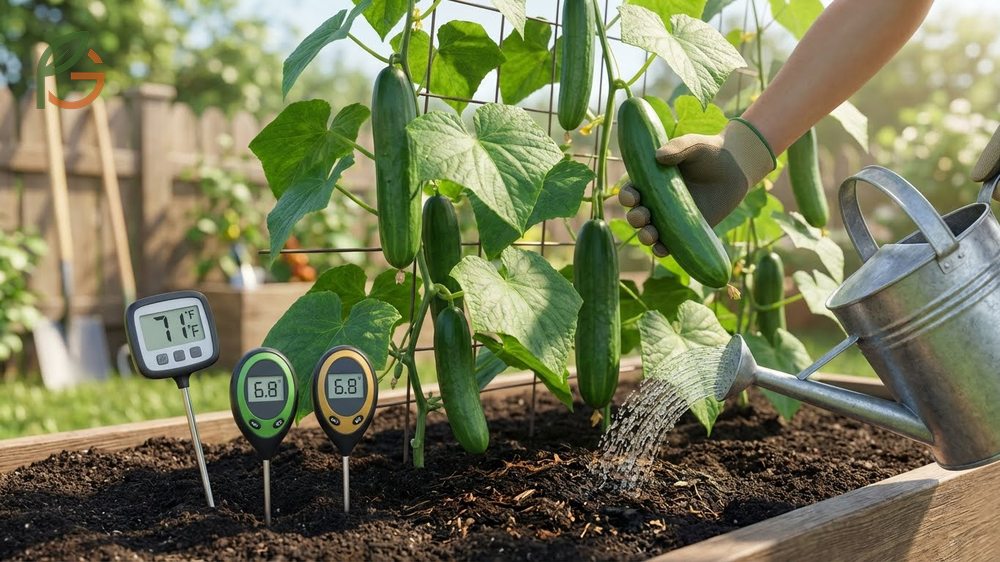
Research shows burpless cucumbers require specific conditions for optimal production. They need full sun exposure, well-draining soil with pH between 6.5-7.0, and consistent moisture during fruit development[6]. Wait until soil temperatures reach at least 70°F (21°C) before planting seeds or transplants, as cucumbers won’t germinate in cold soil.
Work 3-4 inches of compost into the top 6-8 inches of soil before planting. This improves drainage and provides nutrients for the heavy-feeding cucumber plants[6]. Add a 1-inch layer of mulch after plants emerge to maintain consistent soil moisture.
Space plants 12 inches apart when growing on trellises. Install support structures before planting to avoid damaging roots later. Burpless cucumber vines can reach 6-8 feet, so choose sturdy trellises that can handle the weight of multiple fruits[6].
Water deeply once per week, providing about 1 inch of water. Water at the soil level in morning hours to reduce evaporation and prevent foliar diseases[6]. Avoid getting leaves wet, as this promotes mildew and fungal issues.
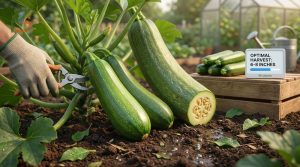
Harvest cucumbers when they reach 8-10 inches for most varieties and show a medium-green color. Check plants daily during peak season because fruits can grow rapidly. Pick all ripe cucumbers promptly to encourage continued production[6]. Leaving overripe fruits on vines signals the plant to stop producing new flowers.
Temperature Warning: Burpless cucumbers are frost-sensitive annuals that won’t survive temperatures below 50°F (10°C). Plant 2-3 weeks after your last spring frost date and harvest before first fall frost. In warmer climates, you can succession plant every 3 weeks for continuous harvests.
Conclusion
The evidence is clear: burpless cucumbers deliver superior eating quality through selective breeding that minimizes cucurbitacin content while enhancing sweetness and digestibility. Their thin skins, minimal seeds, and consistent mild flavor make them the top choice for fresh eating and salads. Whether you’re growing Telegraph Improved in a greenhouse or Tasty Green in your backyard, these varieties offer reliable yields and premium quality.
Current agricultural guidance emphasizes choosing disease-resistant varieties suited to your climate and providing consistent care through proper watering and trellising. FruitGarden recommends starting with proven varieties like Sweet Slice or Diva if you’re new to growing burpless cucumbers. You’ll enjoy harvests that combine exceptional flavor with the satisfaction of growing your own produce.
Frequently Asked Questions
Do burpless cucumbers actually prevent burping?
They significantly reduce burping but don’t eliminate it completely. Studies show burpless varieties contain very low cucurbitacin levels, which minimizes the gastrointestinal irritation that causes burping[1]. Most people who experience digestive discomfort from regular cucumbers find burpless types much easier to digest.
Can you grow burpless cucumbers in containers?
Yes, but you’ll need large containers (at least 5 gallons) and sturdy trellises. Research shows bush varieties like Sweet Burpless Bush work best for container growing, producing 10-inch fruits on compact plants. Make sure containers have excellent drainage and use high-quality potting mix amended with compost. Water daily during hot weather since container plants dry out faster than garden beds.
How do you know when burpless cucumbers are ready to harvest?
Harvest when cucumbers reach 8-10 inches for standard varieties or 12-18 inches for English types like Telegraph[6]. The skin should show a uniform medium-green color without yellowing. Gently squeeze the fruit—it should feel firm but not rock-hard. Check plants daily because cucumbers can grow 2-3 inches overnight during peak season.
Are burpless cucumbers the same as English cucumbers?
English cucumbers are a type of burpless cucumber, but not all burpless varieties are English types. Telegraph Improved and similar English varieties were the original burpless cucumbers developed in the 1800s[3]. Modern plant breeding has created many other burpless varieties with different characteristics, like Armenian and Japanese types.
Why are my burpless cucumbers turning bitter?
Environmental stress triggers cucurbitacin production even in burpless varieties. Current data shows inconsistent watering, extreme temperatures, and nutrient deficiencies cause plants to produce more cucurbitacin[2]. Maintain consistent soil moisture, mulch to regulate temperature, and fertilize regularly with balanced nutrients. Also check that you’re growing true burpless varieties and not accidentally planted regular cucumbers.
Do burpless cucumbers need pollination?
Most modern burpless varieties are parthenocarpic, meaning they produce fruit without pollination[5]. This trait makes them ideal for greenhouse growing and ensures consistent yields even when bee populations are low. If cross-pollination does occur outdoors, it won’t affect current season fruit but will create seeds that may produce bitter cucumbers if planted.
Can you pickle burpless cucumbers?
You can pickle burpless cucumbers when harvested at 4-6 inches, but they won’t have the same crisp texture as traditional pickling varieties. Studies show fermentation significantly reduces cucurbitacin levels by up to 10 times[2], which means burpless types can become too mild when pickled. Their thin skins also tend to soften more during processing compared to thick-skinned pickling cucumbers.