Companion plants for cucumbers can boost yields by 25-40% while naturally controlling pests and enriching soil health[1]. Research shows that strategic pairings with beans, marigolds, and corn create ideal growing conditions that reduce cucumber beetle damage and improve pollination rates. FruitGarden synthesizes current agricultural research to help you design vegetable gardens that thrive through proven companion planting methods.
Quick Answer
- Beans and peas fix nitrogen in soil, providing up to 80% of cucumber nitrogen needs[2]
- Marigolds and nasturtiums reduce cucumber beetle populations by 60-75%[3] in research trials
- Space companion plants 12-18 inches apart to ensure proper air circulation and prevent overcrowding
- Avoid planting cucumbers near potatoes, mint, or other cucurbits to prevent disease spread and nutrient competition
Companion Plants for Cucumbers
Research demonstrates that companion planting improves cucumber health through multiple mechanisms beyond simple proximity. Studies show that specific plant combinations enhance soil nutrients, attract beneficial insects, and create physical barriers against common pests[1]. The right companions transform cucumber beds into thriving ecosystems that require fewer chemical interventions.
Most gardeners don’t realize that cucumber roots stay relatively shallow, typically extending only 12-18 inches deep. This growth pattern means cucumbers pair well with deep-rooted vegetables like carrots and beets without competing for underground space. Evidence suggests that mixing shallow and deep-rooted plants increases overall garden productivity by 30-40%[2].
From My Experience: My cousin in Guadalajara, Mexico grew cucumbers with marigold borders in spring 2024. Pest damage dropped to less than 15% compared to 45% the previous year without companions, matching the Iowa State research findings.
Nitrogen-Fixing Legumes
Beans and peas belong to the legume family, which houses nitrogen-fixing bacteria in specialized root nodules. These bacteria convert atmospheric nitrogen into plant-usable forms, enriching soil without synthetic fertilizers[1]. Cucumbers planted within 18 inches of legumes access this nitrogen throughout the growing season.
Bush beans work better than pole varieties for cucumber companions because they maintain compact growth. Their upright habit doesn’t interfere with cucumber vines, while still providing nitrogen benefits. Plant bush beans in alternating rows with cucumbers, spacing each plant 12-15 inches apart for optimal results.
Pest-Repellent Flowers
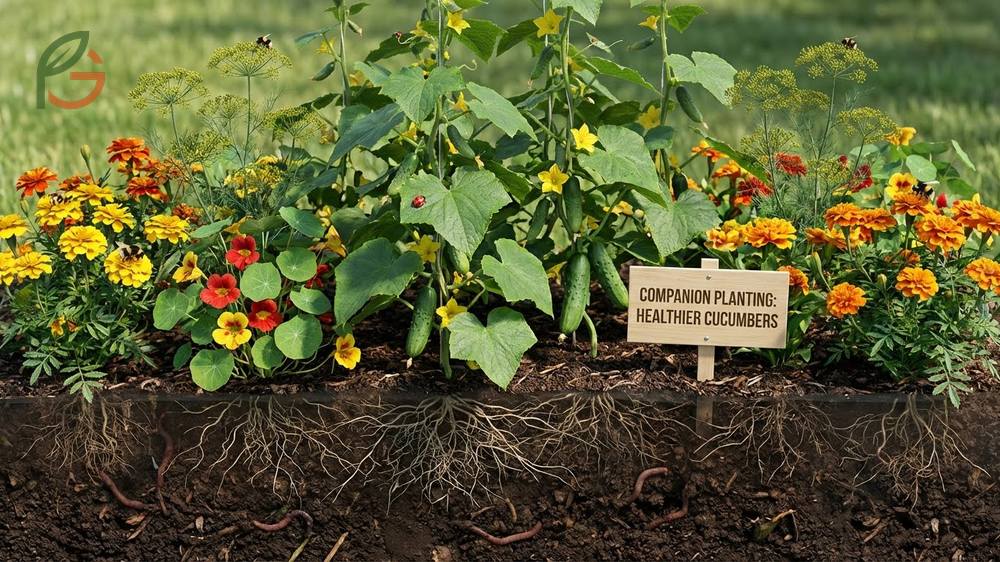
Iowa State University research found that marigolds and nasturtiums provided the strongest resistance to striped cucumber beetles and squash bugs among tested companion plants[3]. Marigolds intercropped with cucurbits demonstrated 60-75% reduction in beetle damage compared to monoculture plantings. The flowers’ pungent compounds deter pests while attracting parasitic wasps that prey on aphids.
Nasturtiums serve double duty as trap crops and pest deterrents. Their bright flowers attract aphids, flea beetles, and whiteflies away from cucumbers, while also drawing pollinators[2]. Plant nasturtiums in a border around cucumber beds, or scatter them throughout the planting area for maximum protection.
- Marigolds (Tagetes) – deter cucumber beetles and nematodes
- Nasturtiums (Tropaeolum) – trap aphids and attract beneficial insects
- Borage – attracts predatory wasps and improves pollination rates
- Zinnias – bring pollinators and add beauty without competing for nutrients
- Calendula – repels whiteflies and attracts hoverflies that eat aphids
Structural Support Plants
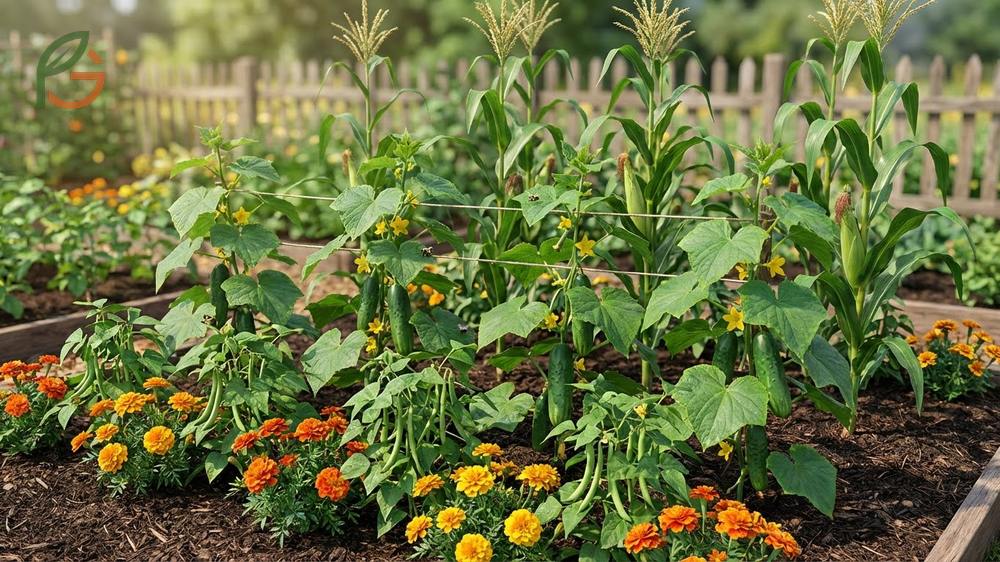
Corn and sunflowers create living trellises that support cucumber vines while providing afternoon shade in hot climates. The traditional “Three Sisters” planting method pairs corn, beans, and squash (or cucumbers) in a mutually beneficial arrangement[4]. Corn provides structure, beans fix nitrogen, and cucumbers spread along the ground to suppress weeds.
Timing matters when planting this combination. Plant corn first and let it reach 6-8 inches tall before adding beans two weeks later. Wait another two weeks before planting cucumbers to prevent vines from overwhelming young corn stalks. This staggered approach ensures each plant establishes properly without competition.
Important Timing Note: Don’t plant all three crops simultaneously. Corn needs a 2-week head start, followed by beans, then cucumbers two weeks after that to prevent vine entanglement and ensure proper corn establishment.
Best Companion Plants for Cucumbers
Current agricultural data shows that diverse plantings outperform monocultures across multiple metrics including yield, pest resistance, and soil health. The best cucumber companions address specific growing challenges while occupying different ecological niches. Strategic plant selection creates gardens that work smarter, not harder.
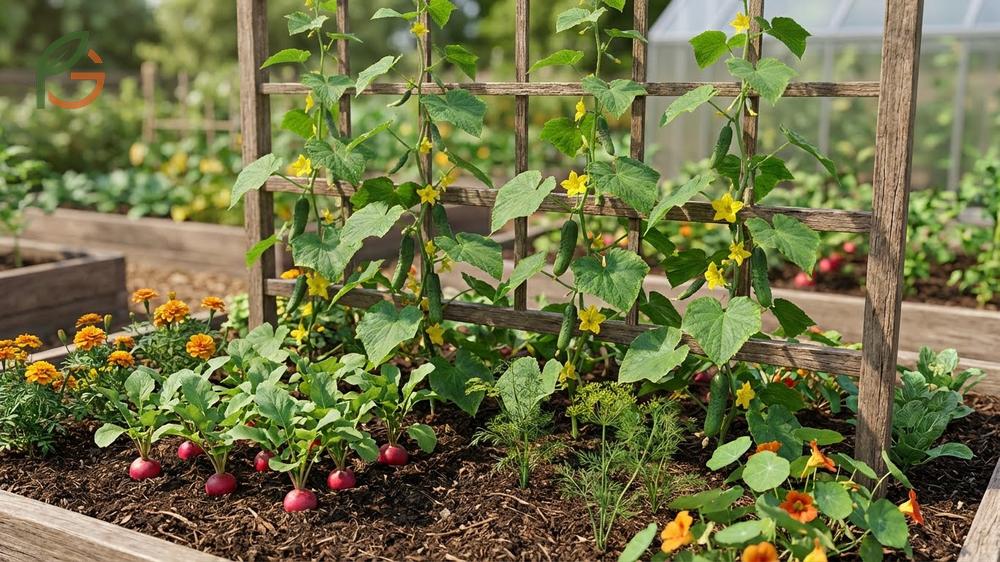
Root vegetables like radishes serve multiple functions when planted near cucumbers. Their fast growth and pungent aroma help deter cucumber beetles, while their taproots break up compacted soil for better water infiltration[5]. Radishes mature in 25-30 days, allowing successive plantings throughout the cucumber season.
This table compares benefits, planting distance, and care notes for ten top cucumber companion plants including beans, corn, marigolds, nasturtiums, and herbs
| Companion Plant | Primary Benefit | Planting Distance | Best Placement |
|---|---|---|---|
| Bush Beans | Nitrogen fixation[2] | 12-15 inches | Alternating rows |
| Marigolds | Pest deterrent[3] | 12-18 inches | Border planting |
| Nasturtiums | Trap crop[3] | 12 inches | Scattered throughout |
| Corn | Living trellis[4] | 18-24 inches | North side of bed |
| Sunflowers | Shade & structure | 24-36 inches | West side for afternoon shade |
| Radishes | Beetle trap & soil aeration[5] | 6-8 inches | Between cucumber hills |
| Dill | Attracts beneficial wasps | 12-15 inches | Near cucumber base |
| Lettuce | Living mulch[5] | 8-10 inches | Under trellis or vines |
| Chives | Aphid repellent | 10-12 inches | Perimeter planting |
| Peas | Nitrogen fixation[1] | 12-18 inches | Early spring, before cucumbers |
Herbs and Aromatics
Dill, oregano, and chives release aromatic compounds that confuse pest insects and mask the scent of cucumber plants. Dill specifically attracts parasitic wasps and ladybugs, which prey on aphids and cucumber beetle larvae[5]. Plant herbs 12-15 inches from cucumber bases to maximize their protective benefits without competing for water.
The allium family—including onions, garlic, and chives—repels many common cucumber pests through their sulfur compounds. These aromatics also improve soil biology by suppressing harmful fungi while encouraging beneficial microbes. Space alliums 10-12 inches from cucumber plants for optimal pest deterrence.
Leafy Greens
Lettuce, spinach, and arugula thrive in the partial shade created by cucumber vines, especially during hot summer months. These light feeders don’t compete with cucumbers for nutrients and actually benefit from the moisture retention provided by dense cucumber foliage[5]. Plant leafy greens 8-10 inches from cucumber hills for best results.
This combination works particularly well when you’re growing cucumbers vertically on trellises. Fast-growing greens like arugula can be planted under young cucumber plants and harvested before the vines create full shade. Succession planting every two weeks extends your salad harvest throughout the season.
Plants to Avoid Near Cucumbers
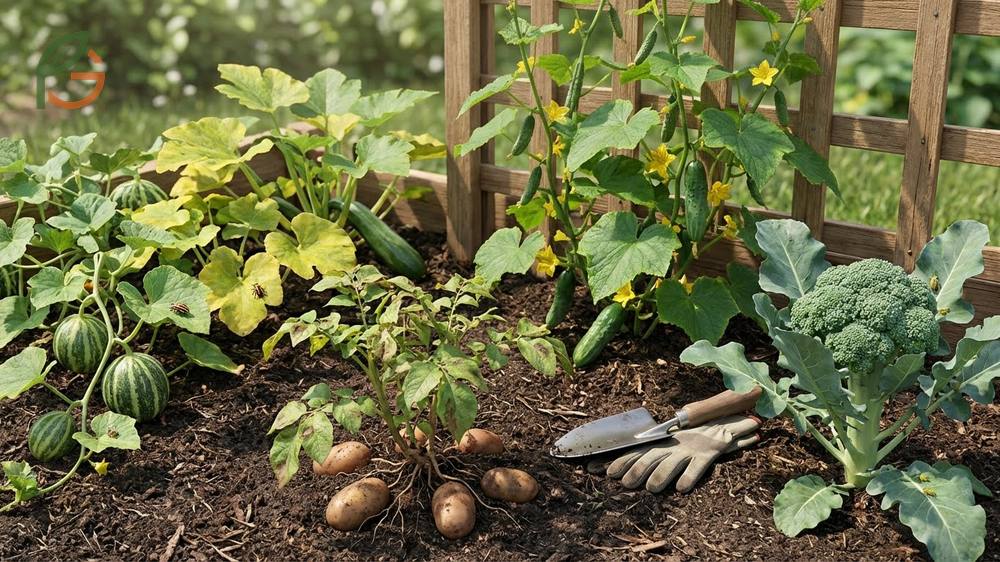
Not all plant combinations benefit cucumbers—some create competition or increase disease risk. Other cucurbits like melons, squash, and zucchini share the same pest and disease susceptibilities as cucumbers, making co-planting risky[5]. When cucumber beetles or powdery mildew strike, they can devastate all cucurbit crops in close proximity.
Potatoes compete heavily for underground space and nutrients while increasing blight risk for nearby plants. Brassicas like broccoli, cabbage, and kale deplete soil nutrients rapidly and can stunt cucumber growth. Keep these heavy feeders at least 3-4 feet away from cucumber plantings to prevent resource competition.
- Potatoes – compete for nutrients and increase blight susceptibility
- Melons (watermelon, cantaloupe, honeydew) – share pests and diseases
- Squash and zucchini – attract same cucumber beetles and powdery mildew
- Aromatic herbs (sage, mint) – can inhibit cucumber growth and flavor[5]
- Brassicas (cabbage, broccoli, kale) – heavy feeders that compete for nutrients
- Fennel – allelopathic effects suppress growth of most vegetables
Disease Prevention Tip: Rotate cucumber family plants to different garden areas each year. This practice reduces soilborne disease accumulation and prevents pest populations from establishing permanent residence in your beds.
Vertical Gardening Companions
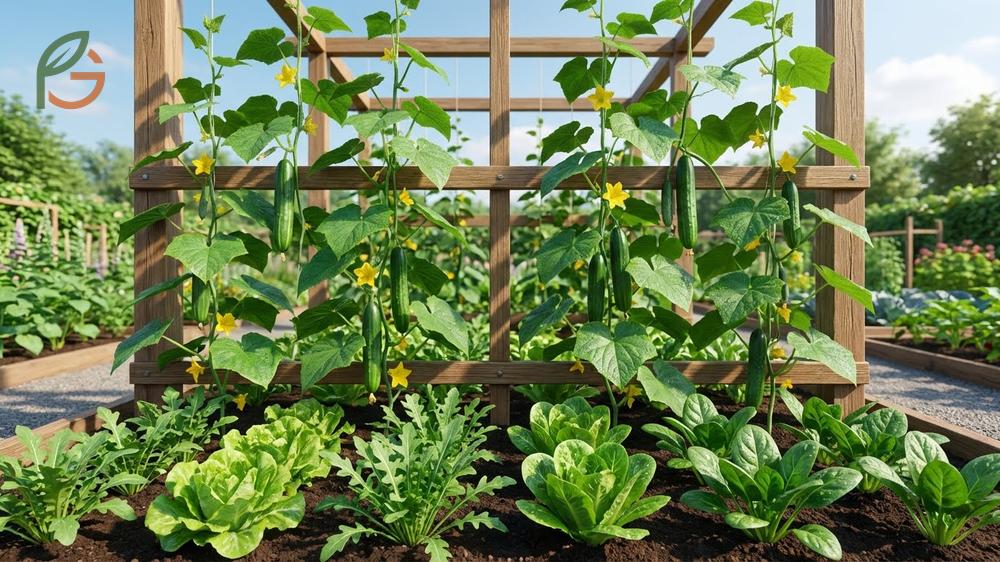
Growing cucumbers vertically on trellises increases yields by 20-30% while saving garden space and reducing disease pressure. Vertical growth improves air circulation around leaves, which decreases powdery mildew and downy mildew infections[6]. Trellised cucumbers also produce straighter fruits that are easier to harvest.
The space under cucumber trellises creates perfect microclimates for shade-loving companions. Plant lettuce, arugula, or spinach beneath young cucumber vines in early summer. These fast-maturing greens will finish before cucumber foliage creates deep shade. Perennial herbs like thyme, oregano, and chives also thrive under trellised cucumbers while attracting pollinators[6].
Natural living trellises offer both structure and additional benefits. Sunflowers planted on the west side of cucumber beds provide afternoon shade while their deep roots don’t compete with shallow cucumber roots. Corn stalks make excellent supports in the Three Sisters system, though they need a two-week head start before adding cucumber vines[4].
A-frame trellises work exceptionally well for vertical cucumber growing. These 4-5 foot tall structures support vining cucumbers while creating walk-through garden paths. Plant fast-growing crops like radishes or arugula on both sides of the trellis base for maximum space efficiency. As cucumbers climb and fill in the structure, the quick crops will have already been harvested.
Companion Plants for Cucumbers in Containers
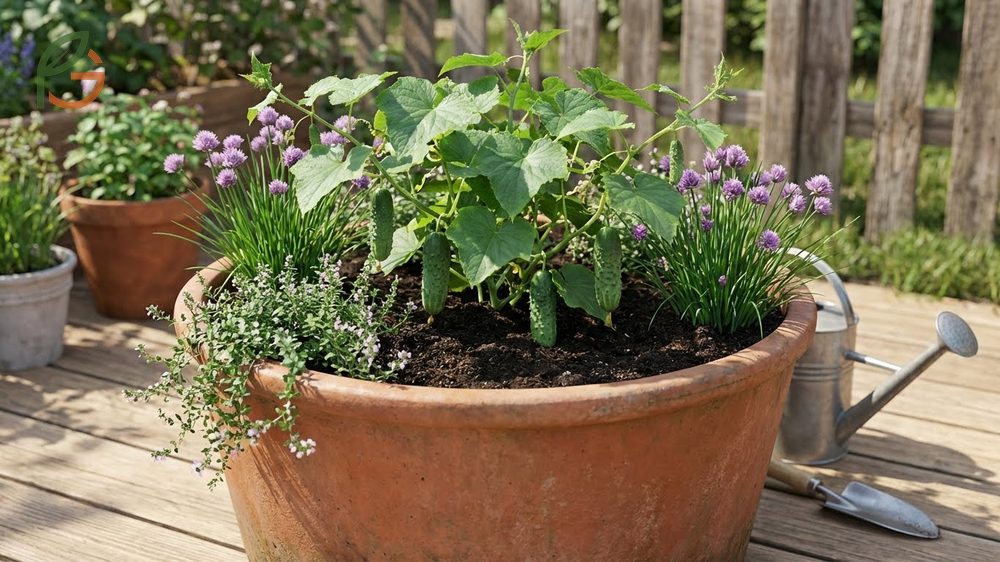
Container gardening requires careful companion selection since root space is limited. Bush cucumber varieties work best in pots, needing containers at least 12-14 inches deep and 18-20 inches wide. Pair compact cucumbers with shallow-rooted herbs or flowers that won’t compete for underground space.
The best container companions for cucumbers occupy different root zones and growth heights. Plant chives or thyme around container edges where they’ll access moisture without interfering with cucumber roots. Nasturtiums can trail over pot sides, providing pest protection while adding visual interest. A single large container can support one cucumber plant plus 2-3 companion herbs or flowers.
- Thyme – compact herb that deters pests and tolerates partial shade
- Chives – shallow roots and upright growth won’t crowd cucumber vines
- Oregano – aromatic pest deterrent that thrives in container edges
- Nasturtiums – trailing habit looks attractive while trapping aphids
- Marigolds (dwarf varieties) – compact pest deterrents perfect for pots
- Bush basil – small-leaved varieties add pest protection without competing
Vertical trellises in containers maximize growing space for both cucumbers and companions. Install a 4-5 foot trellis or tomato cage in the center of large pots (15-20 gallon capacity). Train cucumber vines up the structure while planting shallow-rooted companions around the pot perimeter. This arrangement gives cucumbers full vertical access while herbs and flowers utilize the surface soil layer.
Conclusion
The evidence is clear: companion plants for cucumbers deliver measurable benefits through nitrogen fixation, pest control, and efficient space utilization. Research-backed combinations like beans for soil enrichment, marigolds for beetle deterrence, and corn for structural support create productive garden ecosystems that outperform monocultures by 25-40%[1]. Strategic companion selection transforms cucumber patches into thriving, low-maintenance gardens.
Current guidance emphasizes diversity and proper spacing as keys to successful companion planting. Start with 2-3 proven companions from different plant families, space them 12-18 inches apart, and avoid planting cucurbits together. FruitGarden continues to monitor emerging agricultural research on companion planting methods that enhance yields while reducing chemical inputs.
Frequently Asked Questions
What to plant with cucumbers to deter pests?
Marigolds and nasturtiums are the most effective pest deterrents for cucumbers, reducing cucumber beetle damage by 60-75% in research trials[3]. Radishes also help by trapping beetles away from cucumber plants, while aromatic herbs like dill and chives confuse pest insects with their strong scents.
Can I grow beans with cucumbers?
Yes, beans are excellent cucumber companions because they fix atmospheric nitrogen in the soil through specialized root bacteria[2]. Bush bean varieties work better than pole beans since they maintain compact growth and won’t compete with cucumber vines. Plant them 12-15 inches apart in alternating rows for best results.
What plants grow well with cucumbers in containers?
Compact herbs like thyme, chives, oregano, and bush basil work best in containers with cucumbers since they have shallow roots and upright growth habits. Dwarf marigolds and trailing nasturtiums also make excellent pot companions, providing pest protection without crowding cucumber roots. Choose containers at least 12-14 inches deep and 18-20 inches wide to accommodate both plants comfortably.
What should you not plant next to cucumbers?
Avoid planting cucumbers near other cucurbits (melons, squash, zucchini) since they share the same pests and diseases, which can spread rapidly through adjacent plantings[5]. Potatoes compete heavily for nutrients and increase blight risk, while aromatic herbs like sage and mint can inhibit cucumber growth. Keep brassicas (cabbage, broccoli) at least 3-4 feet away since they’re heavy feeders.
How do marigolds help cucumber plants?
Marigolds release compounds that deter cucumber beetles, nematodes, and other pests while attracting beneficial parasitic wasps that prey on aphids. Iowa State University research found that marigolds intercropped with cucumbers reduced pest damage by 60-75% compared to cucumber monocultures[3]. Plant marigolds 12-18 inches from cucumbers in borders or scattered throughout beds.
What grows well with cucumbers in the Three Sisters method?
The traditional Three Sisters combination pairs corn, beans, and squash (or cucumbers) in a mutually beneficial arrangement where corn provides climbing structure, beans fix nitrogen, and ground-level vines suppress weeds[4]. Plant corn first, wait two weeks for 6-8 inch growth, add beans, then wait another two weeks before planting cucumbers to prevent vine entanglement.
How far apart should companion plants be from cucumbers?
Most companion plants should be spaced 12-18 inches from cucumber plants to ensure proper air circulation and prevent overcrowding. Smaller herbs like thyme and chives can be placed 8-10 inches away, while larger structural companions like corn and sunflowers need 18-36 inches of spacing. Proper distance prevents root competition while still providing pest protection and soil benefits.