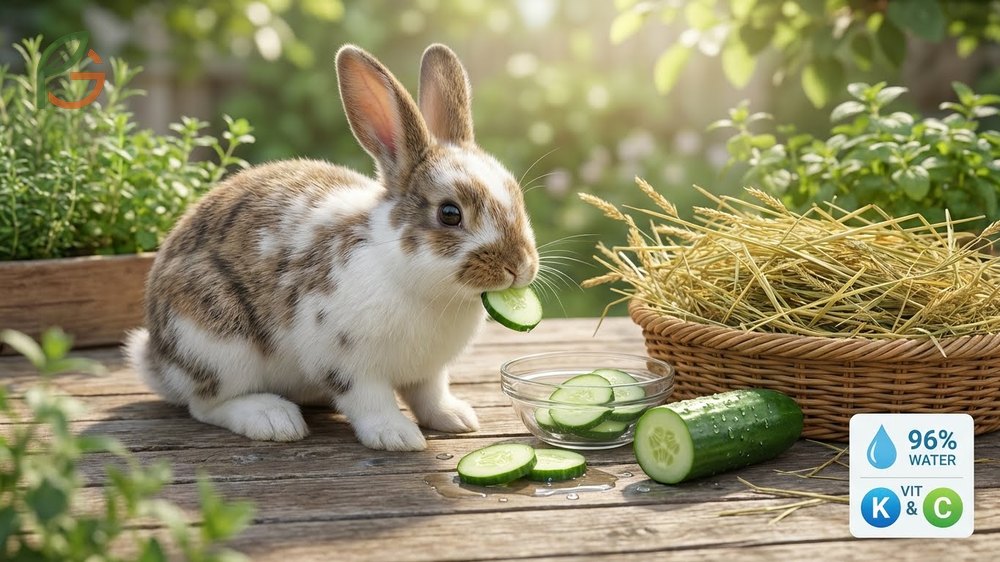
Can rabbits eat cucumbers? Yes, rabbits can safely eat cucumbers in moderation as a hydrating, low-calorie treat. Research shows cucumbers are 96% water[1] and provide vitamins K and C, making them beneficial for rabbits when fed occasionally. Current veterinary guidance emphasizes that while cucumbers offer hydration benefits, they shouldn’t replace fiber-rich hay, which remains essential for digestive health. FruitGarden synthesizes current veterinary research and pet nutrition data to help rabbit owners make informed feeding decisions.
Quick Answer
- Cucumbers are safe for rabbits when given as an occasional treat, not a dietary staple
- Feed only 1-2 thin slices once or twice weekly to prevent digestive upset[2]
- Cucumbers contain 95.5% water, 16 calories, and 24 mcg vitamin K per 100g[3]
- Always wash thoroughly to remove pesticides, and introduce gradually to monitor for soft stool or diarrhea
Can Rabbits Eat Cucumbers
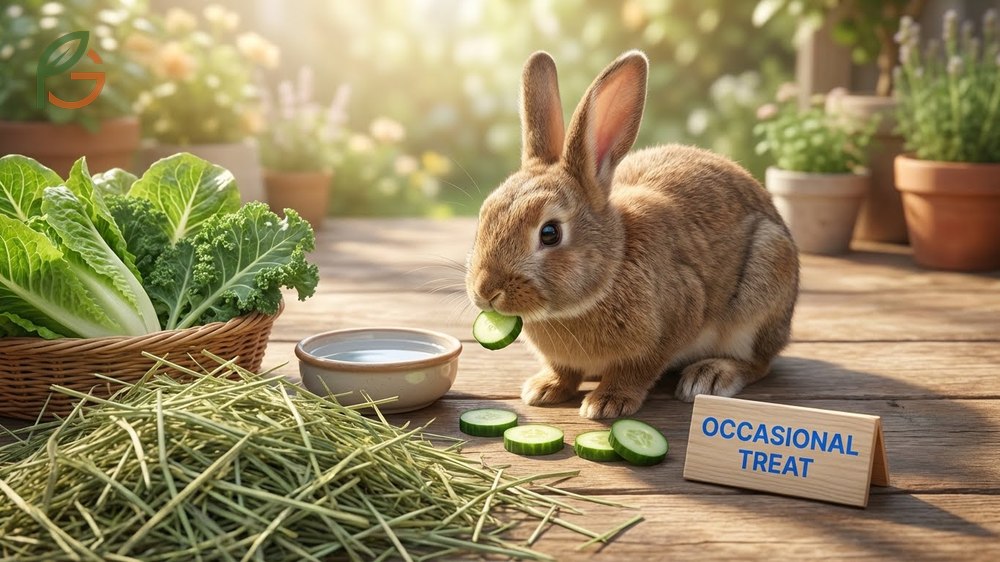
Rabbits can safely consume cucumbers as an occasional treat, but they’re not suitable as a primary food source. Studies demonstrate that cucumbers consist of 95-96% water[1], making them exceptionally hydrating during hot weather. However, this high water content also means they provide minimal nutritional density compared to fiber-rich hay and leafy greens.
Veterinary professionals note that cucumbers can help supplement a rabbit’s diet when offered sparingly. The vegetable’s crunchy texture encourages natural chewing behaviors that support dental health. Most rabbits find cucumbers palatable due to their mild flavor and refreshing quality, making them useful as training rewards or dietary variety.
Current data indicates that cucumbers should never replace a rabbit’s core diet of unlimited hay, which provides the 25-35% fiber content[4] essential for proper digestive function. Evidence suggests that rabbits fed excessive watery vegetables may experience reduced hay consumption, leading to inadequate fiber intake and potential gastrointestinal issues.
Nutritional Benefits for Rabbits
Cucumbers provide several vitamins and minerals that can complement a balanced rabbit diet. Agricultural data shows that 100g of raw cucumber contains 24 mcg of vitamin K, 10.1 mg of magnesium, and 170 mg of potassium[3]. Vitamin K supports proper blood clotting and bone health in rabbits.
The hydration factor makes cucumbers particularly valuable during summer months. Rabbits don’t sweat and regulate body temperature through their ears, so water-rich foods help prevent dehydration. The low calorie count—just 16 calories per 100g[3]—makes cucumbers suitable for overweight rabbits when given in controlled portions.
- Hydration support: The 96% water content helps maintain fluid balance, especially beneficial for rabbits who don’t drink enough water
- Vitamin K: Essential for blood clotting mechanisms and bone metabolism in rabbits
- Vitamin C: Acts as an antioxidant, though rabbits synthesize their own vitamin C and don’t require dietary sources
- Low calorie profile: At 16 calories per 100g, cucumbers won’t contribute to obesity when fed appropriately
- Trace minerals: Provides small amounts of magnesium and potassium for electrolyte balance
- Dental stimulation: The crunchy texture promotes natural gnawing behavior that helps wear down continuously growing teeth
Potential Risks and Precautions
The primary concern with feeding cucumbers to rabbits involves their extremely high water content. Research indicates that excessive consumption of watery vegetables can dilute nutrient intake and cause digestive disturbances[1]. Rabbits have delicate gastrointestinal systems that require consistent fiber intake to maintain proper motility and cecal function.
Veterinary reports document that overfeeding cucumbers can lead to soft stools, diarrhea, or watery cecotropes. These conditions compromise a rabbit’s ability to re-ingest cecotropes, which are essential for nutrient absorption and vitamin B synthesis. Additionally, rabbits who fill up on low-nutrient cucumbers may reduce their hay consumption, risking inadequate fiber intake.
Choking hazards present another risk when cucumber pieces are too large. Veterinarians recommend cutting cucumbers into small, bite-sized pieces appropriate for your rabbit’s size. Always monitor your rabbit during their first cucumber introduction for signs of allergic reactions or digestive upset.
Important Note: Never feed pickled cucumbers to rabbits. The high sodium content, vinegar, and potential garlic or onion additives in pickles can be toxic to rabbits and cause serious health complications[1].
Can Rabbits Eat Cucumber Skin
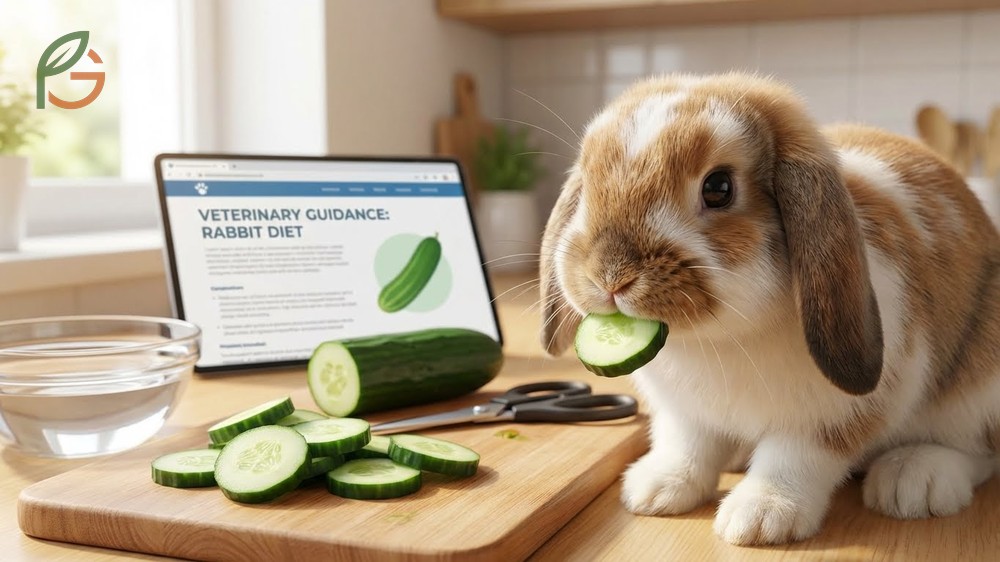
Cucumber peels are safe and even beneficial for rabbits when properly prepared. Current veterinary guidance indicates that cucumber skin contains higher fiber concentrations than the flesh, making it more valuable for digestive health[5]. The skin also provides additional texture that encourages natural chewing behaviors and dental wear.
Many rabbit owners wonder whether to peel cucumbers before offering them to their pets. Evidence suggests that leaving the skin on provides more nutritional value, as long as pesticide removal protocols are followed. The skin’s tougher texture requires more chewing effort, which benefits rabbits’ continuously growing teeth and provides longer-lasting enrichment.
Washing Requirements for Peels
Pesticide residue on conventional cucumber skins poses health risks for rabbits. Studies show that many commercially grown cucumbers receive wax coatings and pesticide treatments that aren’t safe for small animals. Washing conventionally grown cucumbers under running water for 30 seconds removes some but not all pesticide residue.
Organic cucumbers present a safer option when feeding skin to rabbits. If organic produce isn’t available, thoroughly wash conventional cucumbers with a vegetable brush under running water. Some rabbit owners choose to peel conventionally grown cucumbers as an extra precaution, though this reduces the fiber content your rabbit receives.
- Choose organic when possible: Organic cucumbers have significantly lower pesticide residue than conventional varieties
- Rinse thoroughly: Wash cucumbers under running water for at least 30 seconds, scrubbing gently with your hands or a vegetable brush
- Remove wax coatings: Use warm water and gentle scrubbing to remove commercial wax coatings applied to extend shelf life
- Peel if uncertain: When you can’t verify the cucumber’s growing conditions or pesticide use, remove the skin entirely
- Dry before serving: Pat cucumbers dry with a clean towel to prevent excess moisture that could contribute to digestive upset
Fiber Content in Peels
The skin of cucumbers provides the highest concentration of indigestible fiber within the vegetable. While cucumbers overall aren’t fiber-rich compared to hay or leafy greens, the peel contributes meaningfully to the small amount of fiber cucumbers offer. This fiber helps stimulate intestinal motility and supports the rabbit’s complex digestive process.
Rabbits require diets containing at least 15-20% crude fiber[4] to maintain proper gastrointestinal function. Cucumber skin contributes minimally to this requirement but adds variety and texture to the diet. The combination of fiber in the skin and water in the flesh creates a balanced occasional treat.
Do Rabbits Eat Cucumber Plants
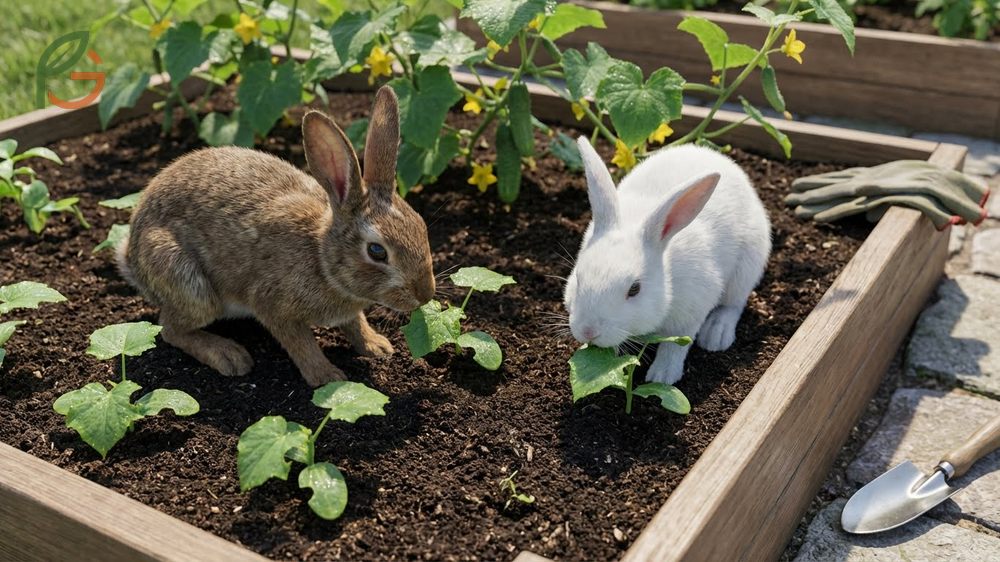
Wild and domestic rabbits will readily consume cucumber plants when given access to gardens. Agricultural observations indicate that rabbits typically target young cucumber seedlings and tender leaves rather than mature plants. Gardeners frequently report rabbit damage to cucumber crops, particularly during early growth stages when plants are most vulnerable.
Evidence from garden management studies shows that rabbits prefer cucumber plants over many other vegetables but rate them lower than lettuce, kale, and carrot tops. The preference varies based on hunger levels and alternative food availability. During periods of food scarcity, rabbits will eat mature cucumber plants, including stems and flowers.
Cucumber Leaves Safety
Cucumber leaves are safe and nutritious for rabbits when offered in appropriate quantities. The House Rabbit Society lists cucumber leaves as an acceptable leafy green that can be fed daily due to their low oxalic acid content[6]. These leaves provide more nutritional value than the fruit itself, containing higher concentrations of vitamins and minerals.
Fresh cucumber leaves from your garden can supplement your rabbit’s diet more effectively than the cucumber fruit. The leaves offer better fiber content and nutrient density compared to the watery flesh. If you grow cucumbers, harvest young to medium-aged leaves rather than old, tough leaves that may be bitter or difficult to digest.
- Low oxalic acid: Unlike some leafy greens, cucumber leaves don’t contain problematic levels of oxalates that interfere with calcium absorption
- Daily feeding option: Can be included in the daily rotation of leafy greens without the moderation concerns of cucumber fruit
- Higher nutrient density: Leaves contain more vitamins and minerals per gram than the watery cucumber flesh
- Garden freshness: Home-grown cucumber leaves offer pesticide-free options when organic produce isn’t accessible
- Natural foraging behavior: Leaves encourage natural browsing behaviors that provide mental stimulation
Garden Protection Strategies
Protecting cucumber plants from rabbit damage requires strategic planning and physical barriers. Research on garden pest management demonstrates that fencing remains the most effective deterrent, with barriers needing to extend at least 6 inches below ground to prevent burrowing. Wire mesh with openings smaller than 1 inch works best for excluding rabbits.
Agricultural extension services recommend creating dedicated rabbit-accessible plantings away from valuable crops. This strategy redirects rabbits to less important plants while protecting your cucumber harvest. Some gardeners plant extra cucumber rows specifically for wildlife, accepting some crop loss in exchange for reduced pressure on main plantings.
Garden Tip: Plant cucumber leaves just outside your rabbit’s outdoor enclosure where they can nibble growth that extends through fencing. This provides free, pesticide-free greens while protecting the main plant from over-browsing.
How Much Cucumber for a Rabbit
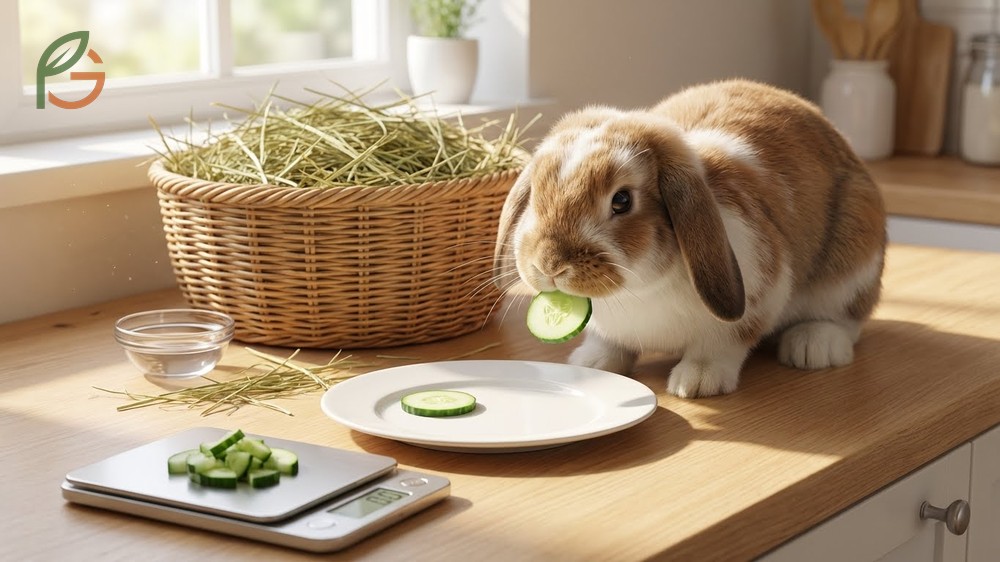
Proper portion control determines whether cucumbers benefit or harm your rabbit’s health. Veterinary guidelines recommend limiting cucumber to 1-2 thin slices once or twice weekly for average-sized rabbits[2]. This frequency provides the hydration and enrichment benefits without risking digestive upset or displacing essential hay consumption.
A rabbit’s size significantly impacts appropriate cucumber portions. Smaller breeds like Netherland Dwarfs should receive half the amount given to medium breeds like New Zealand Whites. Larger breeds such as Flemish Giants can handle slightly larger portions but should still follow the moderation principle to prevent gastrointestinal issues.
When introducing cucumbers for the first time, start with a single small piece about the size of your thumbnail. Monitor your rabbit for 24-48 hours for signs of digestive disturbance, including soft stools, reduced appetite, or lethargy. If no adverse reactions occur, gradually increase the portion to the recommended serving size over several weeks.
This table compares recommended cucumber serving sizes, feeding frequency, and portion descriptions across five rabbit weight categories from small to giant breeds
| Rabbit Size | Weight Range | Cucumber Portion | Frequency |
|---|---|---|---|
| Small breeds | 2-3 lbs (0.9-1.4 kg) | 1 thin slice (0.5 inch thick) | Once weekly |
| Medium breeds | 4-7 lbs (1.8-3.2 kg) | 1-2 thin slices | Twice weekly |
| Large breeds | 8-11 lbs (3.6-5 kg) | 2-3 thin slices | Twice weekly |
| Giant breeds | 12+ lbs (5.4+ kg) | 3-4 thin slices | Twice weekly |
The timing of cucumber treats matters for optimal digestion. Offer cucumbers during times when your rabbit has already consumed hay, typically mid-morning or afternoon. This ensures fiber intake occurs first, maintaining proper digestive motility. Never give cucumbers as the first food of the day, as this can encourage selective eating patterns where rabbits wait for treats instead of consuming essential hay.
Signs of excessive cucumber consumption include watery droppings, reduced cecotrope production, and soft stool consistency. If you notice these symptoms, immediately discontinue cucumber feeding and increase hay availability. Contact your veterinarian if digestive issues persist beyond 24 hours or if your rabbit shows signs of pain, bloating, or complete appetite loss.
Safe Vegetables for Bunnies
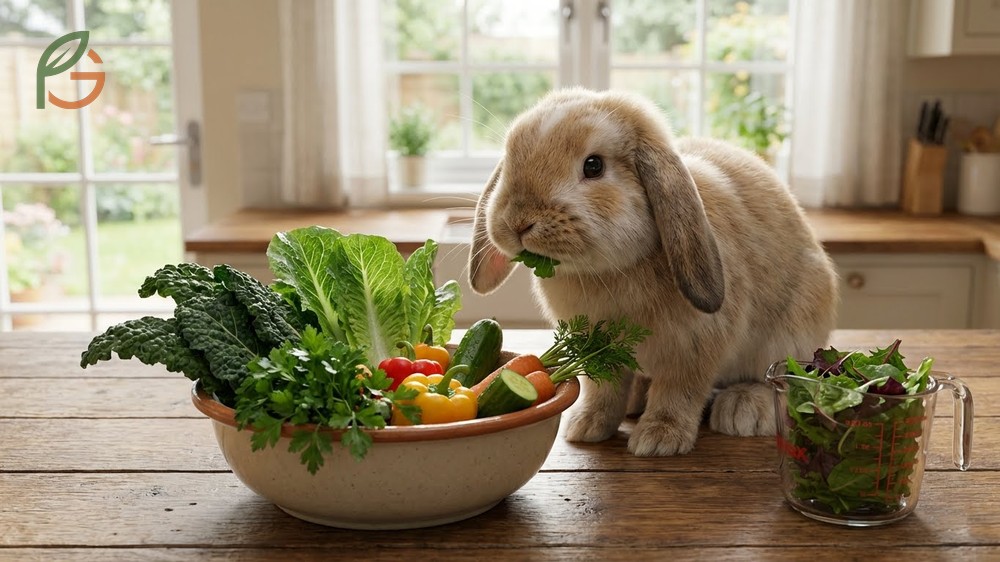
A varied vegetable diet provides essential nutrients and enrichment for pet rabbits. Current veterinary guidance recommends offering 1 cup of mixed vegetables per 2 pounds of body weight daily, divided among at least 3-4 different types. This variety ensures balanced nutrient intake while preventing overconsumption of any single vegetable that might cause issues in large quantities.
Dark, leafy greens should comprise the majority of your rabbit’s vegetable intake. These greens provide crucial nutrients, including calcium, vitamin A, and folate, while offering more fiber than watery vegetables like cucumbers. Romaine lettuce, cilantro, parsley, and basil make excellent daily choices, while vegetables like cucumber serve as occasional supplemental treats.
Introducing new vegetables requires a gradual approach to prevent digestive upset. Add one new vegetable at a time, offering a small amount and waiting 24 hours to monitor for adverse reactions. This methodical introduction helps you identify which vegetables your rabbit tolerates well and which might cause individual sensitivities.
- Daily leafy greens: Romaine lettuce, cilantro, parsley, basil, mint, arugula, and watercress provide nutrients with appropriate fiber content
- Daily low-oxalate options: Cucumber leaves, endive, escarole, and radicchio offer variety without calcium absorption concerns
- Occasional treats (2-3 times weekly): Bell peppers, celery, cucumber flesh, and zucchini add variety and hydration
- Limited vegetables (once weekly): Carrots, broccoli, and Brussels sprouts provide nutrients but can cause gas or are high in sugar
- Moderation vegetables: Kale and spinach are nutritious but contain oxalates that should be rotated with low-oxalate greens
- Avoided vegetables: Potatoes, onions, garlic, rhubarb leaves, and mushrooms are toxic or dangerous to rabbits
| Vegetable | Water Content | Feeding Frequency |
|---|---|---|
| Cucumber | 96% | 1-2 times weekly |
| Romaine lettuce | 95% | Daily |
| Bell peppers | 92% | 2-3 times weekly |
| Zucchini | 94% | 2-3 times weekly |
| Carrots | 88% | Once weekly (high sugar) |
The foundation of rabbit nutrition remains unlimited grass hay, which should constitute 80-85% of their total diet. Vegetables supplement rather than replace hay’s critical fiber content. Timothy hay provides the 30-35% fiber content[4] essential for maintaining gastrointestinal motility and preventing serious conditions like GI stasis.
Commercial rabbit pellets should be limited to 1/4 cup per 5 pounds of body weight daily for adult rabbits. High-quality pellets contain 15-16% crude fiber and 16-18% protein, supporting nutritional needs without encouraging selective eating behaviors. Young rabbits under 6 months require alfalfa-based pellets for growth, while adults benefit from timothy-based formulas that prevent excessive calcium intake and obesity.
Conclusion
The evidence confirms that can rabbits eat cucumbers is answered with a qualified yes—cucumbers provide safe, hydrating treats when offered in appropriate moderation. Research demonstrates that 1-2 thin slices once or twice weekly delivers hydration benefits and dietary variety without risking the digestive upset that excessive consumption causes. The key lies in maintaining cucumbers as supplemental treats rather than dietary staples, ensuring unlimited hay remains your rabbit’s primary food source.
Current veterinary guidance emphasizes the importance of balanced nutrition that prioritizes fiber-rich hay, complemented by daily leafy greens and occasional treats like cucumber. By following portion guidelines, washing produce thoroughly, and monitoring your rabbit’s individual response, you can safely incorporate cucumbers into a health-promoting diet. FruitGarden continues to synthesize emerging veterinary research and nutritional data to help pet owners make evidence-based feeding decisions for their rabbits’ optimal health.
Medical Disclaimer
Important Veterinary Disclaimer: This content is for informational and educational purposes only. It is not intended as a substitute for professional veterinary advice, diagnosis, or treatment. Always consult a qualified veterinarian before making any changes to your rabbit’s diet, especially if your rabbit has existing health conditions, digestive sensitivities, or special dietary needs. Individual rabbits may react differently to new foods, and what’s safe for most rabbits may not be appropriate for your specific pet.
Frequently Asked Questions
Can Baby Rabbits Eat Cucumbers?
Baby rabbits under 12 weeks old should not eat cucumbers or any vegetables. Their digestive systems are too immature to handle anything beyond mother’s milk and gradually introduced alfalfa hay and pellets. Introduce vegetables slowly after 3 months of age, starting with leafy greens rather than watery vegetables like cucumbers, which can cause severe diarrhea in young rabbits.
Can Rabbits Eat Cucumber Seeds?
Yes, cucumber seeds are safe for rabbits and don’t need to be removed before feeding. The soft seeds pose no choking hazard and contain trace nutrients. However, some rabbits may experience mild digestive sensitivity to seeds, so monitor your rabbit’s droppings after feeding cucumber with seeds for the first time.
Do Rabbits Like Cucumbers?
Most rabbits enjoy cucumbers due to their refreshing taste, crunchy texture, and high water content. Individual preferences vary, with some rabbits eagerly consuming cucumbers while others show little interest. The mild flavor makes cucumbers generally acceptable to rabbits who might reject stronger-tasting vegetables. Don’t force cucumber consumption if your rabbit prefers other safe vegetables.
Can Rabbits Have Cucumber Every Day?
No, rabbits should not eat cucumber daily. The extremely high water content can cause digestive upset and dilute nutrient intake when fed too frequently. Veterinarians recommend limiting cucumber to 1-2 times per week as an occasional treat. Daily vegetables should consist of fiber-rich leafy greens like romaine lettuce, cilantro, and parsley rather than watery vegetables.
What Happens If a Rabbit Eats Too Much Cucumber?
Excessive cucumber consumption leads to soft stools, diarrhea, watery cecotropes, and potential dehydration from fluid loss. The high water content overwhelms the rabbit’s digestive system, disrupting normal cecal fermentation and nutrient absorption. If your rabbit develops diarrhea after eating cucumber, remove all vegetables, provide unlimited hay and water, and contact your veterinarian if symptoms persist beyond 12 hours.
Can Rabbits Eat Zucchini Like They Eat Cucumbers?
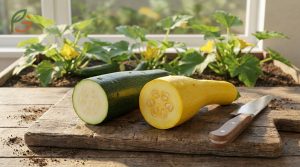
Yes, rabbits can eat zucchini using the same guidelines as cucumbers—1-2 thin slices twice weekly as an occasional treat. Zucchini contains similar water content (94%) and nutritional profile to cucumbers, offering comparable hydration benefits. Both belong to the Cucurbitaceae family and can be rotated as part of a varied vegetable diet. Always introduce zucchini gradually if your rabbit hasn’t eaten it before.
Should I Refrigerate Cucumbers Before Giving Them to My Rabbit?
Yes, serving cool cucumbers from the refrigerator provides extra refreshment, especially during hot weather when rabbits struggle with heat regulation. Cold cucumber offers enhanced hydration benefits and encourages water consumption. However, avoid feeding frozen cucumber directly from the freezer, as extreme cold can cause digestive shock. Let frozen cucumber pieces reach cool room temperature before offering them to your rabbit.