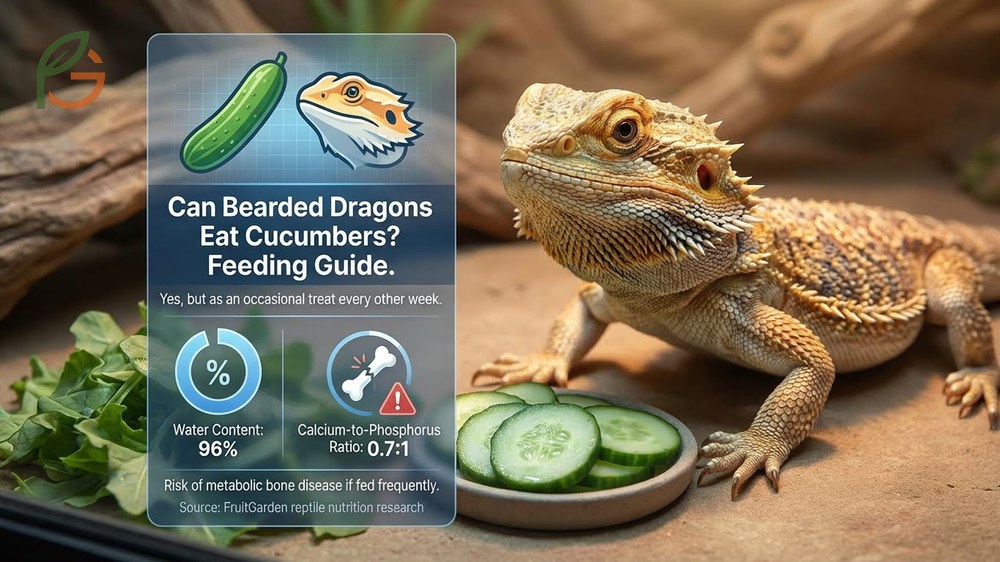
Can bearded dragons eat cucumbers? Yes, but only as an occasional treat every other week. Research shows that cucumbers contain 96% water[1] and have a poor calcium-to-phosphorus ratio of 0.7:1[2], which can lead to metabolic bone disease if fed too frequently. FruitGarden synthesizes current reptile nutrition research to help pet owners make informed feeding decisions.
Quick Answer
- Feed cucumbers once every 1-2 weeks maximum[1] to avoid health issues
- Cucumbers contain 14mg calcium vs. 21mg phosphorus[3] per 100g (poor ratio for reptiles)
- Always peel the skin and remove large seeds before feeding[4]
- Use calcium-rich staple greens like collard greens (14.5:1 ratio)[5] for daily feeding instead
Can Bearded Dragons Eat Cucumbers
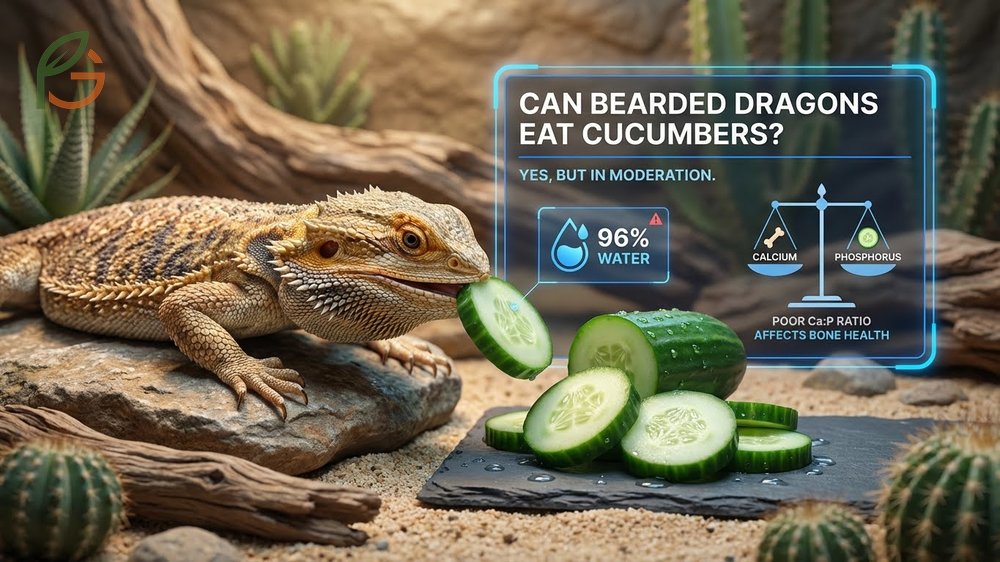
Bearded dragons can eat cucumbers, but they shouldn’t be a regular part of their diet. Research shows that while cucumbers offer hydration and some vitamins, their nutritional profile makes them unsuitable as a staple vegetable[1]. The high water content—96%—means your dragon fills up without getting adequate nutrients.
What often gets overlooked is that cucumber’s calcium-to-phosphorus ratio works against your dragon’s bone health. Most reptile owners don’t realize that phosphorus actually blocks calcium absorption in the bloodstream[6]. This matters because bearded dragons need significantly more calcium than phosphorus to prevent metabolic bone disease.
When fed properly—peeled, deseeded, and limited to every other week—cucumbers can serve as an occasional hydrating treat during hot weather. They’re particularly useful if your dragon shows signs of mild dehydration, though they shouldn’t replace proper hydration methods like regular baths or water bowls.
Nutritional Benefits of Cucumbers
Despite their limitations, cucumbers do provide specific nutrients that can supplement your bearded dragon’s diet when offered sparingly. Cucumbers contain vitamin C, which supports immune function and tissue health[1]. They also provide vitamin K for proper blood clotting and small amounts of potassium (136mg per 100g)[6] for muscle function.
The fiber content in cucumbers helps regulate digestion and can prevent constipation in some dragons. Manganese and magnesium, present in smaller amounts, support metabolism and muscle health respectively[1]. These benefits work best when cucumbers complement a diet rich in nutrient-dense staple greens.
The Calcium Phosphorus Problem
The calcium-to-phosphorus ratio in cucumbers sits at approximately 0.7:1 to 0.8:1[3], meaning they contain more phosphorus than calcium. Bearded dragons require the opposite—foods with significantly more calcium than phosphorus—to maintain healthy bones and prevent metabolic bone disease (MBD). This serious condition causes paralysis and can be fatal if left untreated[1].
Phosphorus binds with calcium in the digestive system, preventing your dragon’s body from absorbing this essential mineral. When you feed cucumbers too frequently, you’re essentially stealing calcium from your pet. Current veterinary guidance emphasizes that staple vegetables should have calcium-to-phosphorus ratios of at least 1.5:1 or higher.
Important Note: If your dragon eats cucumber more than twice per month, watch for early MBD symptoms including lethargy, twitching, weakened grip, or difficulty walking. Contact an exotic veterinarian immediately if these signs appear.
How Often to Feed Cucumber to Bearded Dragon
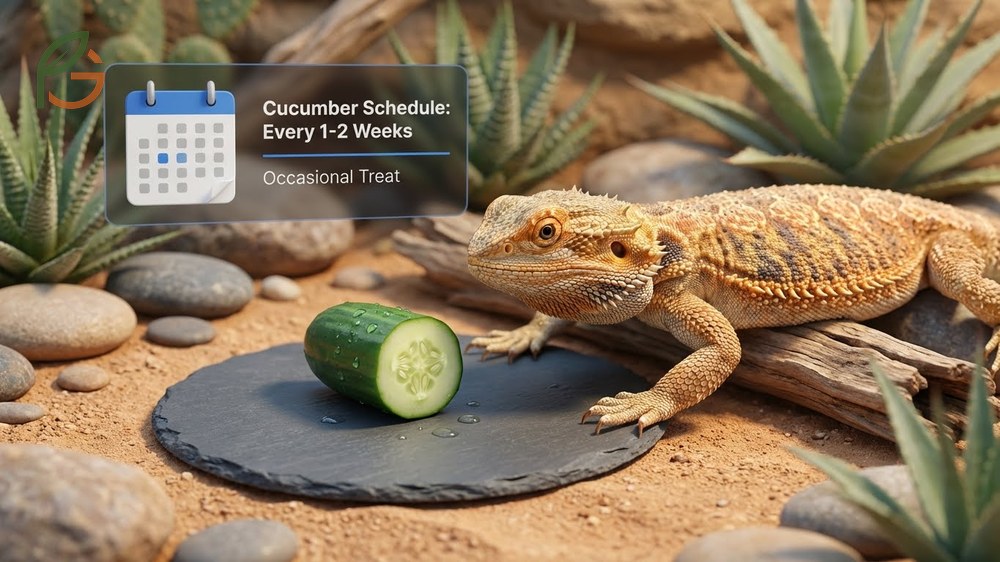
Adult bearded dragons can safely eat cucumber once every 1-2 weeks as an occasional treat[1]. This frequency prevents overhydration and ensures your dragon doesn’t miss out on more nutritious vegetables. Juveniles and baby dragons should receive cucumber even less frequently—perhaps once per month—since they’re in critical growth phases requiring maximum calcium intake.
Studies demonstrate that adult bearded dragons (18+ months) thrive on a diet that’s 70-80% plant matter and 20-30% insects[7]. Within that plant portion, cucumbers should represent less than 5% of total vegetable intake. Most of their greens should come from calcium-rich staples like collard greens, mustard greens, and turnip greens.
When you do offer cucumber, limit the portion to 2-3 small bite-sized pieces mixed into their regular salad. This approach lets your dragon enjoy the treat without filling up on low-nutrient food. Never feed cucumber as the main vegetable at any meal.
Feeding Frequency by Age
Baby bearded dragons (0-4 months) need food 3-5 times daily, with 80% insects and 20% plants[7]. At this stage, avoid cucumber entirely—their rapidly growing bones need maximum calcium. Juvenile dragons (5-18 months) transition to 1-2 daily feedings with a 50-50 split between insects and plants. You can introduce cucumber at this stage but limit it to once monthly.
Adults shift to primarily plant-based diets, receiving insects only 3-4 times weekly[8]. Their daily fresh salad should focus on nutrient-dense greens, with cucumber added as a bi-weekly hydrating supplement. This schedule supports their slower metabolism while preventing obesity.
Signs of Overfeeding
If you’re feeding cucumbers too often, your bearded dragon may develop diarrhea from excessive water intake[2]. Watch for watery or unusually soft stools following cucumber meals. Overhydration can also cause your dragon to lose interest in more nutritious foods since they feel full from water weight.
Long-term overfeeding of cucumber contributes to calcium deficiency symptoms. These include rubbery jaw, swollen limbs, tremors, and difficulty standing or climbing. Early metabolic bone disease may show as subtle weakness or reduced activity levels before progressing to more severe symptoms.
- Persistent diarrhea or watery stools after feeding
- Decreased appetite for staple greens and insects
- Soft or flexible jaw bones (early MBD symptom)
- Lethargy or reduced climbing activity
- Tremors or twitching, especially in limbs or tail
- Weight loss despite regular feeding
Peeling Cucumber for Reptiles
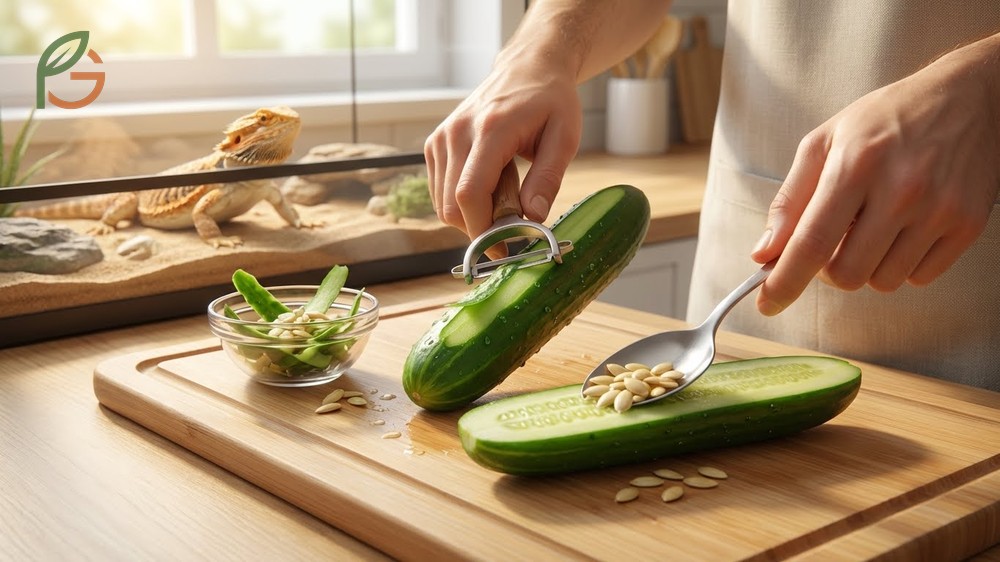
Always peel cucumbers completely before feeding them to your bearded dragon. The tough skin is difficult for reptiles to digest and can cause constipation or digestive blockages[4]. Even though cucumber skin contains some nutrients, the digestive risks outweigh any benefits for your dragon.
After peeling, slice the cucumber lengthwise and remove all large seeds with a spoon. Small seeds generally pass through safely, but larger seeds can create choking hazards or intestinal blockages[2]. Cut the remaining flesh into bite-sized pieces no larger than the space between your dragon’s eyes—this prevents choking.
Wash cucumbers thoroughly before peeling to remove pesticides and chemicals. Organic cucumbers are preferable but not essential if you wash and peel properly. Never feed your dragon pickled cucumbers or any cucumber that’s been seasoned, as salt and spices can harm reptiles.
- Wash the cucumber under cold running water for 30 seconds
- Peel away all green skin using a vegetable peeler
- Cut the cucumber in half lengthwise
- Scoop out large seeds with a spoon (leave small seeds)
- Dice the flesh into pieces smaller than the space between your dragon’s eyes
- Mix 2-3 pieces into their regular salad, don’t serve alone
- Remove any uneaten cucumber after 2-3 hours to prevent bacterial growth
Preparation Tip: If your cucumber has very large seeds, choose a younger, smaller cucumber next time. English cucumbers typically have smaller, softer seeds that are easier for dragons to digest.
Staple Greens for Bearded Dragons
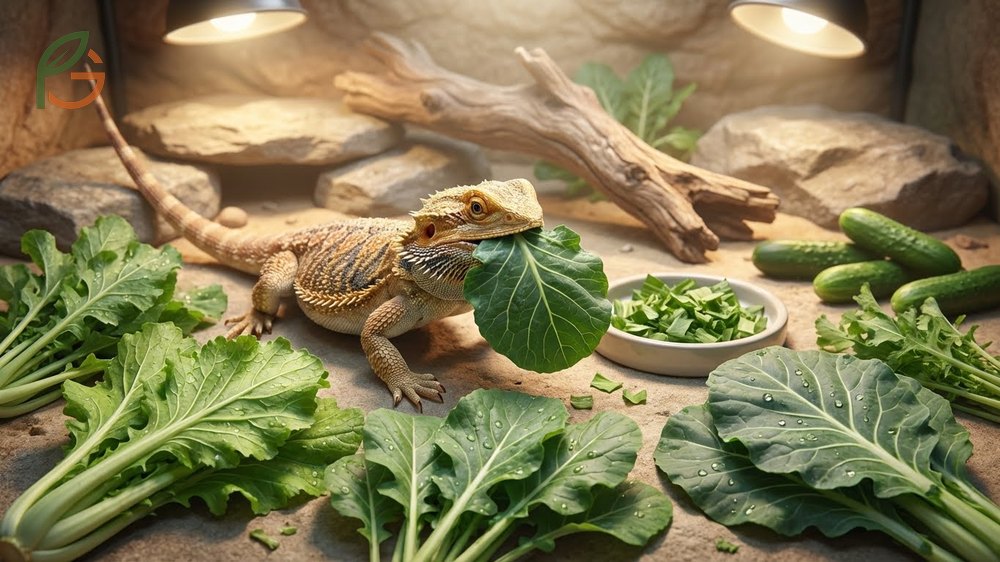
Instead of relying on cucumbers, feed your bearded dragon calcium-rich staple greens daily. Collard greens top the list with an impressive calcium-to-phosphorus ratio of 14.5:1[5], making them one of the best vegetables for preventing metabolic bone disease. They’re also rich in vitamins A, C, E, and K plus fiber and iron.
Mustard greens offer a peppery flavor that many dragons enjoy, with a 2.4:1 calcium-to-phosphorus ratio and high vitamin content[5]. Turnip greens provide a 4.5:1 ratio along with vitamins A and C[9]. Dandelion greens (2.8:1 ratio) add variety and are often available in your yard if you don’t use pesticides.
Rotate these staple greens to provide nutritional variety and prevent boredom. A typical daily salad should combine 2-3 different staple greens with occasional additions like bell peppers, squash, or carrots. Fresh greens should be available every morning for adult dragons, even on days when they don’t eat insects.
This table compares calcium to phosphorus ratios and key nutrients for five recommended staple greens versus cucumber
| Vegetable | Ca:P Ratio | Key Vitamins | Feeding Frequency |
|---|---|---|---|
| Collard Greens | 14.5:1[5] | A, C, E, K, folate | Daily staple |
| Turnip Greens | 4.5:1[5] | A, C, K | Daily staple |
| Dandelion Greens | 2.8:1[10] | A, calcium-rich | Daily staple |
| Mustard Greens | 2.4:1[5] | A, C, K | Daily staple |
| Endive | 1.9:1[10] | A, K, moderate nutrients | Weekly rotation |
| Cucumber | 0.7:1[3] | C, K, minimal | Every 1-2 weeks only |
- Chop greens into small pieces to make eating easier
- Mix 2-3 different greens in each salad for variety
- Offer fresh salad every morning, remove uneaten portions after 12 hours
- Pair high-oxalate greens like turnips with low-oxalate options like collards
- Avoid iceberg lettuce and spinach—they lack nutrients or block calcium
- Add colorful vegetables like bell peppers or butternut squash as toppings (10-20% of salad)
Hydration for Reptiles
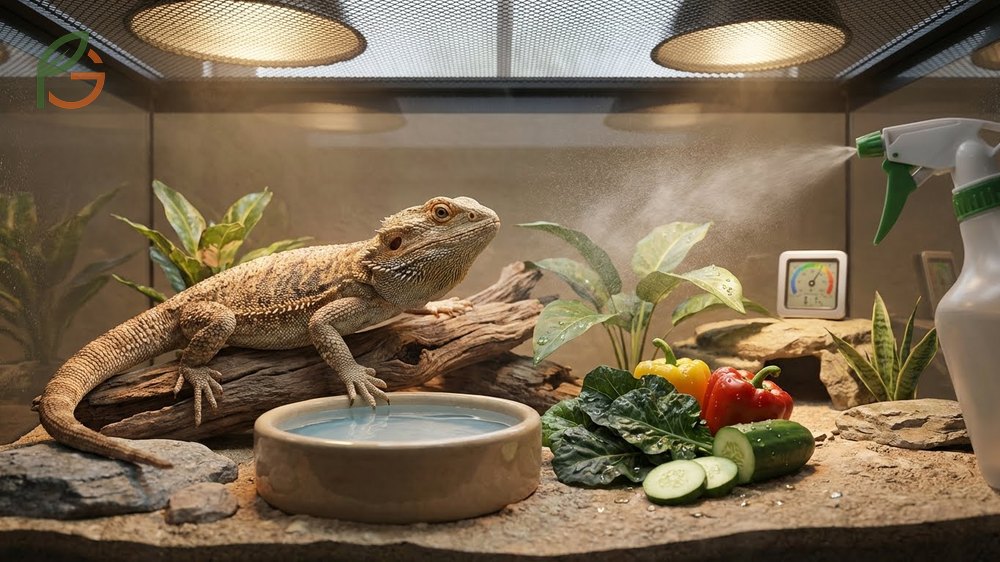
While cucumbers provide hydration, they shouldn’t be your primary method for keeping your bearded dragon properly hydrated. Research shows that bearded dragons get most of their water from food, but relying on watery vegetables like cucumber can lead to overhydration and diarrhea[6]. Proper hydration requires a balanced approach using multiple methods.
Signs of dehydration in bearded dragons include sunken eyes, wrinkled skin, lethargy, and thick saliva[11]. You can test hydration by gently pinching the skin on your dragon’s side—if it doesn’t spring back quickly, your pet may be dehydrated[12]. Prolonged dehydration can cause kidney failure, impaction, and muscle weakness.
The best hydration strategy combines water bowls, regular baths 2-3 times weekly, and moisture-rich staple greens. Some dragons won’t drink from bowls but will sip water during 10-15 minute baths in shallow lukewarm water. Misting your dragon’s greens can also encourage water intake.
- Provide a shallow water bowl daily, even if your dragon rarely drinks from it
- Give 10-15 minute lukewarm baths 2-3 times per week
- Mist salad greens lightly with water before serving
- Feed moisture-rich staples like cactus pads (2.3:1 Ca:P ratio)[10] weekly
- Drop a few live insects into the water bowl during feeding time
- Use a medicine dropper to offer water directly if your dragon is severely dehydrated
- Monitor urate color—white or pale yellow indicates good hydration, orange signals dehydration[12]
Hydration Warning: Never force-feed water by squirting it into your dragon’s mouth, as this can cause aspiration pneumonia. If your dragon won’t drink and shows severe dehydration signs, contact an exotic veterinarian immediately for possible subcutaneous fluid therapy.
Conclusion
The evidence is clear: can bearded dragons eat cucumbers? Yes, but they should remain an occasional treat rather than a dietary staple. Current reptile nutrition guidance emphasizes calcium-rich staple greens like collard, mustard, and turnip greens for daily feeding, reserving cucumber for bi-weekly hydration supplementation only. By prioritizing nutrient-dense vegetables over watery options, you’ll support your dragon’s bone health and prevent metabolic bone disease.
FruitGarden synthesizes current herpetology research to help pet owners make evidence-based feeding decisions. Remember to always peel and deseed cucumbers, limit portions to 2-3 small pieces every 1-2 weeks, and focus your dragon’s diet on vegetables with calcium-to-phosphorus ratios above 1.5:1 for optimal health.
Frequently Asked Questions
Can baby bearded dragons eat cucumbers?
Baby bearded dragons should avoid cucumbers entirely. Research shows that juveniles need maximum calcium for bone development during their rapid growth phase (0-4 months)[7]. Cucumber’s poor calcium-to-phosphorus ratio of 0.7:1[3] works against their nutritional needs. Wait until your dragon reaches at least 5-6 months before introducing cucumber as a monthly treat.
Do bearded dragons need cucumber for hydration?
No, bearded dragons don’t need cucumbers for hydration—better methods exist. Regular lukewarm baths 2-3 times weekly, water bowls, and moisture-rich staple greens like cactus pads provide safer hydration[11]. Cucumber’s 96% water content[1] can actually cause overhydration and diarrhea if fed too frequently. Reserve cucumbers for occasional supplementation only.
What happens if my bearded dragon eats cucumber daily?
Daily cucumber consumption can lead to metabolic bone disease (MBD), a serious condition causing paralysis and death[1]. The poor calcium-to-phosphorus ratio means phosphorus blocks calcium absorption over time. Your dragon may also develop diarrhea from excessive water intake and become malnourished from filling up on low-nutrient food. Limit cucumber to once every 1-2 weeks and prioritize calcium-rich greens instead.
Should I peel cucumbers before feeding my bearded dragon?
Yes, always peel cucumbers completely before feeding them to your bearded dragon. The tough skin is difficult for reptiles to digest and can cause constipation or intestinal blockages[4]. After peeling, remove large seeds with a spoon since they present choking hazards. Cut the flesh into bite-sized pieces no larger than the space between your dragon’s eyes for safe consumption.
What are better alternatives to cucumber for bearded dragons?
Collard greens (14.5:1 Ca:P ratio), mustard greens (2.4:1), turnip greens (4.5:1), and dandelion greens (2.8:1) are far superior alternatives[5]. These calcium-rich staple greens should form the foundation of your dragon’s daily salad. For hydration with better nutrition, offer cactus pads weekly (2.3:1 ratio)[10]. These options provide moisture plus essential nutrients that cucumber lacks.
Can bearded dragons eat cucumber skin or seeds?
No, remove both cucumber skin and large seeds before feeding. The skin is indigestible for bearded dragons and can cause digestive blockages[2]. Large seeds present choking hazards and intestinal obstruction risks. Small, soft seeds from young cucumbers are generally safe, but it’s best practice to scoop out the seed cavity entirely. Only feed peeled, deseeded cucumber flesh cut into appropriately-sized pieces.
How do I know if my bearded dragon is dehydrated?
Signs of dehydration include sunken eyes, wrinkled or loose skin, lethargy, thick saliva, and constipation[11]. You can perform a pinch test by gently pinching the skin on your dragon’s side—if it doesn’t spring back quickly, dehydration is likely[12]. Orange or yellow urates (instead of white) also indicate insufficient hydration. Offer regular baths, water bowls, and misted greens rather than relying on cucumber for hydration.