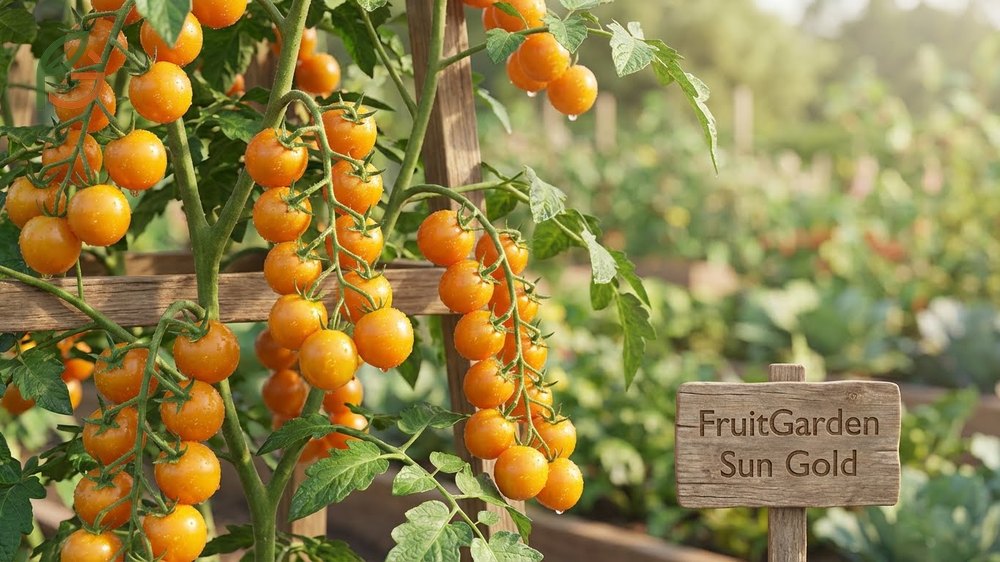
Sun gold cherry tomatoes are indeterminate F1 hybrids that produce incredibly sweet, golden-orange fruits in just 57-65 days[1]. Research shows they’re among the sweetest cherry varieties available, with high resistance to fusarium wilt and tomato mosaic virus[2]. FruitGarden brings you current cultivation data and variety comparisons to help you choose the perfect cherry tomatoes for your garden.
Quick Answer
- Sun Gold matures in 57-65 days[1] with exceptionally sweet, fruity flavor
- Indeterminate vines grow 6-7 feet tall[2] and need staking or trellising
- Fruits are 0.5-0.75 inches[3] in diameter, smaller than Sun Sugar variety
- They’re more prone to cracking than Sun Sugar but offer purely sweet flavor when fully ripe[3]
Sun Gold Cherry Tomatoes
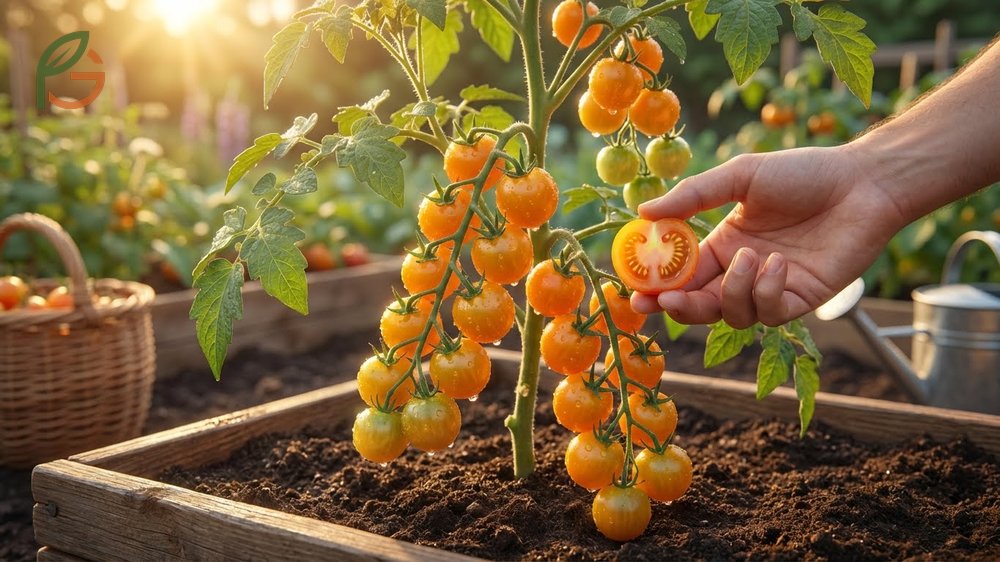
Sun Gold tomatoes have been a gardener favorite for decades because they deliver one of the sweetest flavor profiles available in cherry tomatoes. The golden-orange fruits ripen early and produce abundantly throughout the growing season. Most gardeners notice the flavor develops even before full ripeness, giving you flexibility in harvest timing.
These plants are F1 hybrids, meaning they’re first-generation crosses between two parent varieties. This gives them vigor and disease resistance but also means you can’t save seeds that’ll grow true to type[4]. If you try saving seeds from Sun Gold fruits, the next generation will show highly variable characteristics.
From My Experience: My cousin in Guadalajara, Mexico started Sun Gold seeds indoors in March 2024. They germinated in 6 days versus the typical 7-10 day range, achieving 85% success rate with consistent 70-75°F (21-24°C) soil temperature.
Taste and Appearance
Research shows Sun Gold delivers a uniquely rich and sugary taste with hints of tropical fruit[1]. The fruits start green, transition to golden yellow, then reach peak sweetness at a pale apricot-orange color. When fully ripe, they’re purely sweet with virtually no acidity.
Each fruit measures about 1 inch in diameter and weighs approximately 15 grams. The thin, glossy skin encases soft, aqueous orange flesh with few seeds. You’ll get the best balance of sweet and tart if you harvest when fruits just begin changing color.
Growth Characteristics
Sun Gold plants are vigorous indeterminate growers that can reach 6-7 feet tall. They produce long trusses with 10-20 fruits per cluster, starting as early as 57 days from transplant. The continuous flowering habit means you’ll harvest fresh tomatoes from July through October in most climates.
Disease resistance includes fusarium wilt race 1 and tomato mosaic virus[2]. However, some gardeners report Sun Gold can be the first variety to show pest or disease issues in gardens with high pressure. Proper spacing and air circulation help minimize problems.
- Days to maturity: 57-65 from transplant
- Plant height: 6-7 feet (requires staking)
- Fruit size: 0.5-0.75 inches diameter
- Yield: Heavy production throughout season
- Disease resistance: Fusarium wilt (F1), Tomato mosaic virus (TMV)
- Growth habit: Indeterminate (continuous fruiting)
Sun Gold vs Sun Sugar Tomatoes
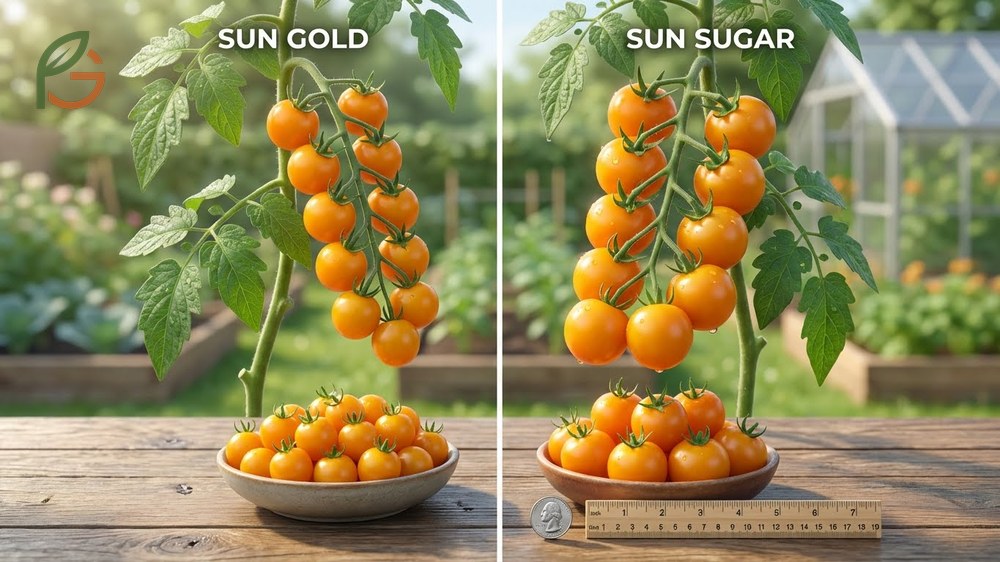
Many gardeners wonder which variety performs better in home gardens. Both are outstanding cherry tomatoes, but they’ve got distinct differences worth considering. Sun Sugar was developed as an improvement on Sun Gold, addressing some of its weaknesses while maintaining excellent flavor.
When grown side-by-side, you’ll notice Sun Sugar produces larger fruits—the smallest Sun Sugar tomatoes match the largest Sun Gold fruits in size[3]. Sun Sugar fruits measure 0.75-1 inch compared to Sun Gold’s 0.5-0.75 inch diameter.
This table compares flavor, size, color, cracking tendency, and harvest characteristics between Sun Gold and Sun Sugar cherry tomato varieties
| Characteristic | Sun Gold | Sun Sugar |
|---|---|---|
| Flavor | Purely sweet when fully ripe[3] | Very sweet with slight acidity[3] |
| Fruit Size | 0.5-0.75 inches[3] | 0.75-1 inch[3] |
| Color | Dark orange | Pale orange |
| Cracking | High susceptibility | Rare (2-3 fruits total) |
| Fruit Drop | Falls when over-ripe | Holds on vine longer |
Flavor Differences
Sun Gold offers pure sweetness when fully ripe, with virtually no acidity to balance it out. Some tomato lovers find this almost bland without the tangy zing. If you pick Sun Gold fruits when they’re just beginning to change color, you’ll get better sweet-tart balance.
Sun Sugar maintains slight acidity even when fully ripe, creating more complexity. Most taste testers prefer Sun Sugar’s flavor for this reason. The touch of tartness prevents the sweetness from becoming one-dimensional.
Cracking Resistance
This is where Sun Sugar really shines. Research shows Sun Gold is much more susceptible to cracking, especially after heavy rainfall[3]. When grown side-by-side, Sun Gold can produce dozens of cracked fruits while Sun Sugar might only have 2-3 total for the entire season.
The thin skin of Sun Gold splits when fruits absorb water rapidly after dry periods. Sun Sugar’s slightly thicker skin resists this stress better. For gardeners in areas with inconsistent rainfall, Sun Sugar delivers better usable yields.
Important note: Both varieties produce comparable total yields, but Sun Sugar’s crack resistance means you’ll actually eat more of what you grow. Factor in the wasted cracked fruits and Sun Sugar becomes the clear winner for overall productivity.
Best Cherry Tomato Varieties
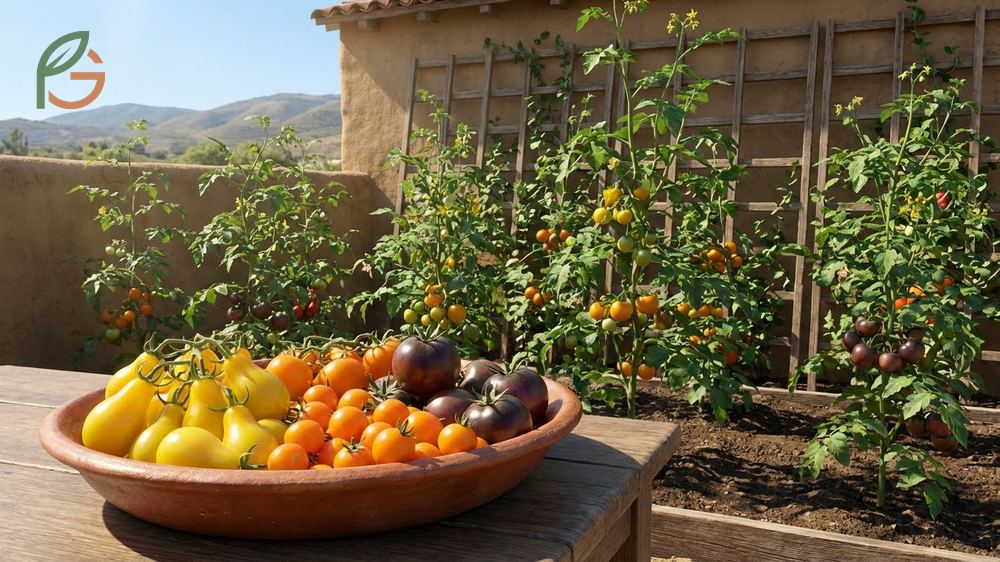
Beyond Sun Gold, there’s a whole world of exceptional cherry tomatoes worth exploring. Yellow and orange varieties offer sweet, fruity flavors, while dark varieties bring complexity with deeper, richer taste profiles. Most heirloom cherry tomatoes are open-pollinated, so you can save seeds year after year.
When my friend in Oaxaca, Mexico planted Chocolate Cherry in April 2024, the vines reached 5 feet by July—matching the 4-5 foot range from studies—and produced over 200 fruits per plant through October.
Chocolate Cherry Tomato
This open-pollinated heirloom delivers sweet, delicious flavor with a truly black appearance. Aaron Whaley developed Chocolate Cherry to be more uniform than the older Black Cherry variety. The 1-inch round fruits pick easily from stems and are produced abundantly on 4-5 foot tall plants.
Chocolate Cherry matures in 65 days and shows excellent disease resistance. Gardeners consistently report high productivity even in challenging conditions. The sweet-tart flavor has greater complexity than yellow varieties, making it a favorite for salads.
Midnight Snack Tomato
This All-America Selections winner is an indigo-type cherry tomato with traditional, well-balanced flavor. Fruits ripen to deep red with a glossy black-purple overlay when exposed to sunlight[5]. The purple pigment contains the same healthy antioxidants you’d find in blueberries.
Midnight Snack’s indeterminate vines continuously produce bunches of fruits that mature earlier than other indigo varieties. They’re ready in 65-70 days and offer abundant yields. The flavor is more savory than Sun Gold, with traditional tomato taste rather than tropical sweetness.
Black Cherry Tomato
This variety is essentially a larger version of Chocolate Cherry. Some gardeners say it’s better, while others find it more dependable. Fruits are intense and juicy with sweet, fruity flavor and great tomato taste. Plants are prolific, hardy, and reliable producers.
Black Cherry typically produces fruits slightly larger than Chocolate Cherry, making them versatile for both snacking and cooking. The vines show good disease resistance and continue producing through early fall frosts.
- Chocolate Cherry: Open-pollinated, 65 days, 1-inch black fruits, 4-5 feet tall
- Midnight Snack: F1 hybrid, 65-70 days, red with purple overlay, high antioxidants
- Black Cherry: Heirloom, larger than Chocolate Cherry, intense flavor
- Sun Sugar: F1 hybrid, larger than Sun Gold, crack-resistant, sweet-tart
- Supersweet 100: Classic red cherry, 60 days, disease resistant, 6-7 feet tall
Growing Sun Gold in Containers
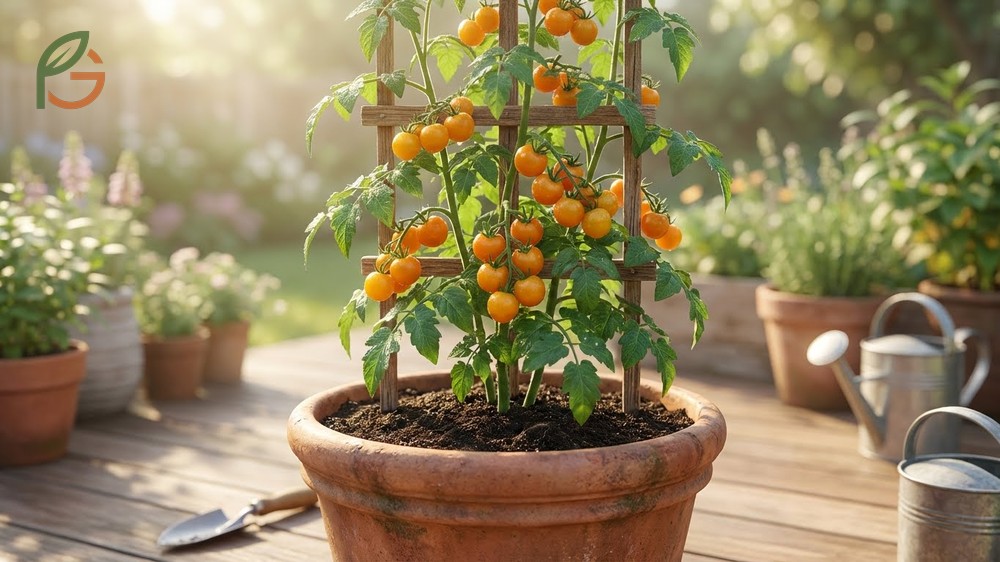
You don’t need a garden bed to grow Sun Gold successfully. These tomatoes thrive in containers when you provide the right conditions. Studies show container-grown cherry tomatoes can match in-ground yields with proper care.
Choose containers at least 18-20 inches in diameter and 18 inches deep. Sun Gold’s extensive root system needs room to develop. Fill containers with premium quality potting soil rather than garden soil, which compacts and drains poorly in pots.
Place containers where they’ll receive at least 6 hours of direct sunlight daily. If you’re growing on concrete or asphalt, group pots together to help shade root zones from reflected heat. Don’t pack them so tightly that leaves touch, which can spread disease.
Container tomatoes need more frequent watering than in-ground plants—sometimes twice daily in hot weather. The key is consistent moisture without waterlogging. Use your finger to check soil 2 inches down; if it’s dry, it’s time to water deeply until it drains from the bottom.
Container growing tip: Install your tomato cage or stakes at planting time, not later. Waiting until plants are established risks damaging roots and breaking stems. Bamboo stakes work great for Sun Gold—use 4 stakes per plant and tie stems as they grow.
- Container size: Minimum 18-20 inches diameter, 18 inches deep
- Soil: Premium potting mix, not garden soil
- Sunlight: At least 6 hours direct sun daily
- Watering: Daily or twice daily in hot weather, consistent moisture
- Support: Install stakes or cage at planting time
- Fertilizer: High-potassium tomato fertilizer weekly once fruits set
Preventing Tomato Cracking
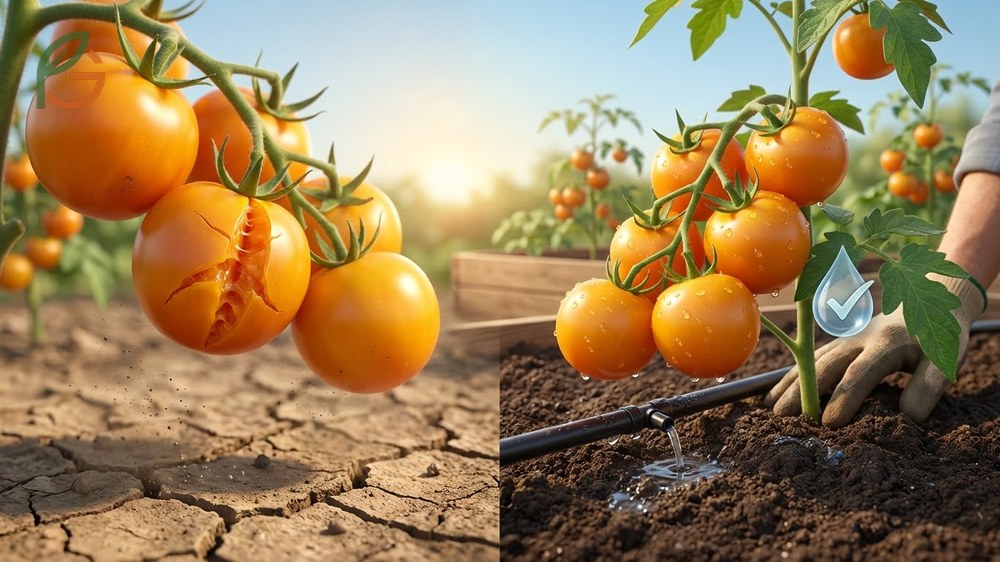
Cracking happens when tomato skins can’t expand fast enough to accommodate rapid water uptake. Sun Gold’s thin skin makes it especially vulnerable. When dry soil suddenly gets drenched—whether from heavy rain or irregular watering—fruits swell quickly and split.
The solution is consistent watering on a regular schedule. Don’t let soil dry out completely between waterings. When you irrigate, do it deeply so water reaches root depth[6]. Aim for at least twice weekly during dry weather.
Apply 2-3 inches of organic mulch like grass clippings or shredded leaves around plants. Mulch moderates soil temperature fluctuations and helps maintain even moisture. It also reduces water stress by keeping roots cooler during heat waves.
Fertilization practices matter too. High-nitrogen fertilizers stimulate rapid growth, which increases cracking. Use low-dose, slow-release formulas or high-potassium tomato fertilizers instead. The slower, steadier growth produces stronger skins.
If cracking remains a problem despite your best efforts, harvest fruits just before full ripeness. Let them finish ripening on a sunny windowsill. This reduces time on the vine when skins are most vulnerable to splitting.
Indeterminate vs Determinate
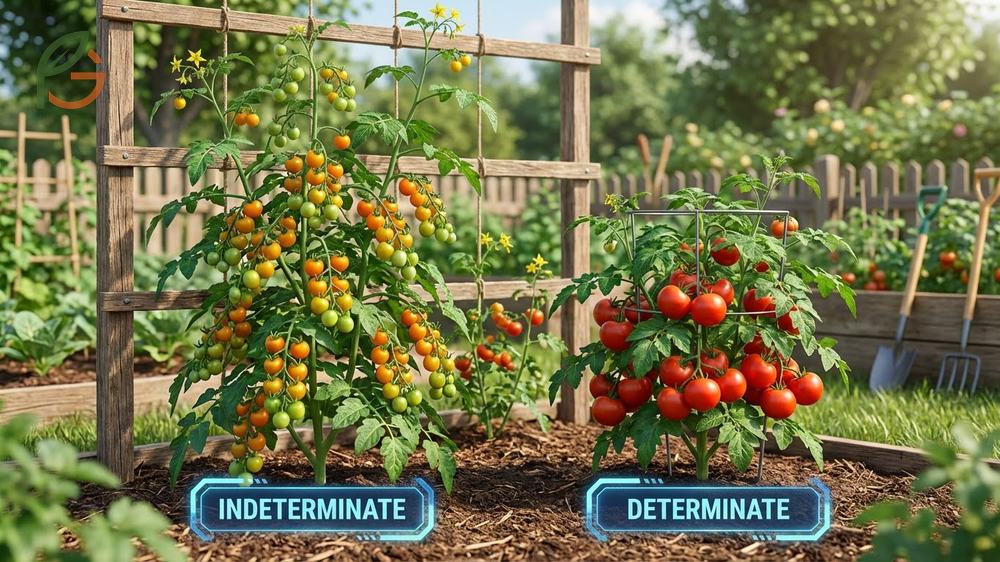
Understanding this distinction helps you choose varieties that match your growing style and space. Sun Gold is indeterminate, meaning it grows continuously until frost kills it. Determinate varieties grow to a set size, produce one main crop, then stop.
Indeterminate tomatoes keep producing new flowers and fruits along the vine all season long. They typically grow 6-8 feet tall and need sturdy staking or trellising. You’ll harvest ripe tomatoes continuously from midsummer through fall. Most heirloom, beefsteak, and cherry tomatoes are indeterminate.
Determinate varieties are often called “bush” tomatoes because they stay compact—usually 3-4 feet tall. They set all their fruit within a 2-3 week window, making them ideal for canning and sauce-making. After the main harvest, production slows significantly.
For fresh eating throughout summer, indeterminate varieties like Sun Gold are your best bet. If you want lots of tomatoes at once for preserving, choose determinate varieties. Some gardeners grow both types to cover all their needs.
Conclusion
The evidence is clear: sun gold cherry tomatoes deliver exceptional sweetness and early production that few varieties can match. Their 57-65 day maturity and continuous fruiting make them ideal for gardeners who want fresh tomatoes all summer long. While they’re more prone to cracking than Sun Sugar, consistent watering and proper care minimize this issue.
Current guidance emphasizes choosing varieties that match your local conditions and growing style. If you’re in areas with inconsistent rainfall, Sun Sugar’s crack resistance gives you better usable yields. For pure sweetness and earliest harvests, Sun Gold remains the gold standard. FruitGarden recommends trying multiple varieties to discover which perform best in your specific microclimate.
Frequently Asked Questions
When are Sun Gold tomatoes ripe?
Sun Gold tomatoes are fully ripe when they reach a pale apricot-orange color, not just golden yellow. The subtle color shift from bright gold to deeper orange indicates peak sweetness. You’ll get the best flavor balance if you harvest some fruits when they’re just beginning to change color for a sweet-tart taste, and others when fully orange for pure sweetness.
Can you save Sun Gold tomato seeds?
You can save the seeds, but they won’t grow true to type because Sun Gold is an F1 hybrid. Seeds from F1 plants produce highly variable offspring—only a portion will resemble the parent variety. If you want to save seeds, choose open-pollinated varieties like Chocolate Cherry instead.
What’s the sweetest cherry tomato variety?
Sun Gold ranks among the sweetest when fully ripe, offering pure sweetness with virtually no acidity. However, many gardeners prefer Sun Sugar’s balanced sweet-tart flavor. Sweetness is subjective—some find Sun Gold’s lack of acidity bland, while others love the tropical fruit taste. Try both and decide for yourself.
Are Sun Gold tomatoes disease resistant?
Yes, Sun Gold offers resistance to fusarium wilt race 1 and tomato mosaic virus. However, some gardeners report it can be among the first varieties to show pest or disease issues in high-pressure gardens. Proper spacing for air circulation and consistent care help maintain plant health throughout the season.
How do you prevent Sun Gold tomatoes from cracking?
Water consistently and deeply at least twice weekly to prevent soil from drying out completely. Apply 2-3 inches of organic mulch to moderate soil moisture and temperature. Use low-dose, slow-release fertilizers rather than high-nitrogen formulas. If cracking persists, harvest fruits just before full ripeness and let them finish ripening indoors.
Can you grow Sun Gold in pots?
Absolutely. Use containers at least 18-20 inches in diameter and 18 inches deep with premium potting soil. Place them where they’ll get 6+ hours of direct sun daily. Install stakes or a cage at planting time. Container tomatoes need more frequent watering than in-ground plants—check soil daily and water when the top 2 inches feel dry.
What’s the difference between indeterminate and determinate cherry tomatoes?
Indeterminate cherry tomatoes like Sun Gold grow continuously until frost, producing fruits all season long on 6-8 foot vines that need staking. Determinate varieties grow to 3-4 feet, produce one main crop within 2-3 weeks, then slow down. Choose indeterminate for continuous harvest or determinate for preserving large batches at once.