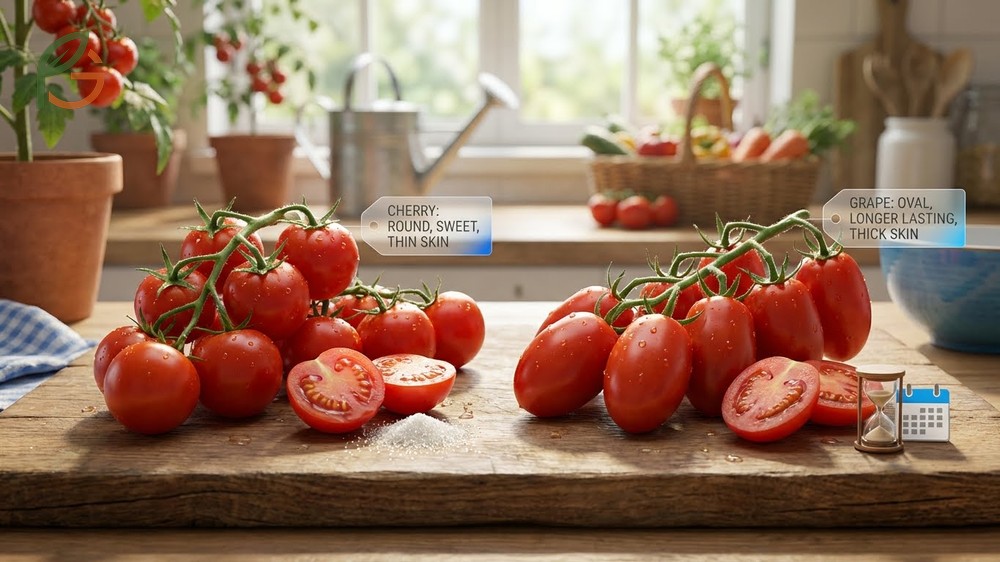
Cherry tomatoes vs grape tomatoes differ primarily in shape, sweetness, and shelf life. Cherry tomatoes are perfectly round with thinner skins and higher sugar content, while grape tomatoes have an oval shape with thicker skins that last longer. FruitGarden synthesizes current agricultural research to help you choose the right tomato variety for your garden and kitchen needs.
Quick Answer
- Cherry tomatoes are round (1-1.5 inches)[1], while grape tomatoes are oval-shaped (1.5-2 inches long)[2]
- Cherry tomatoes are sweeter with 5-7% Brix sugar content[1], compared to grape tomatoes at 3-5% Brix[1]
- Grape tomatoes have 20-30% thicker skins[1] and last 10-14 days[1] vs. cherry tomatoes’ 5-7 days[1]
- Cherry tomatoes work best for fresh salads, while grape tomatoes excel in roasting and cooking
Cherry Tomatoes vs Grape Tomatoes
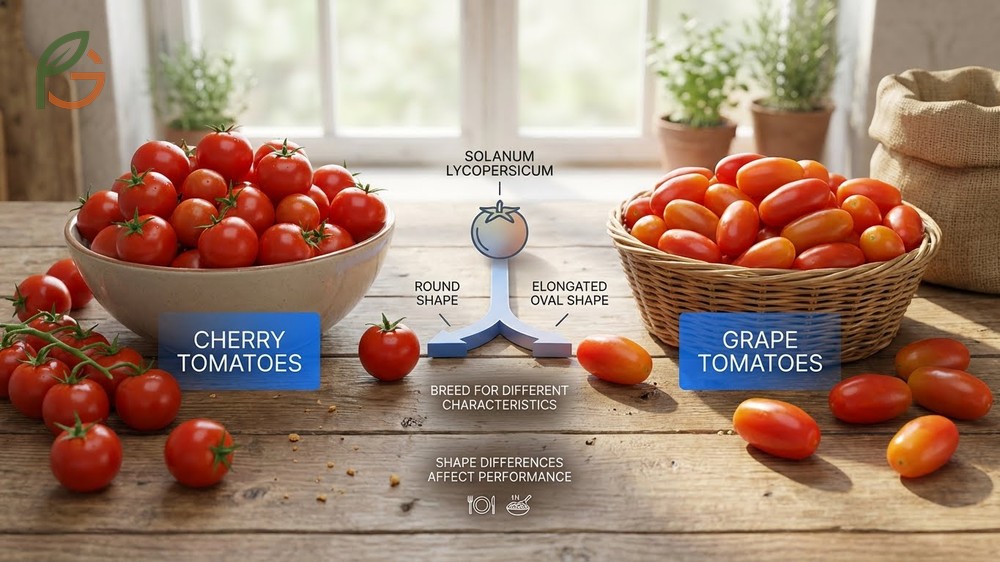
These two small tomato varieties belong to the same species, Solanum lycopersicum, but they’ve been bred for different characteristics[3]. The most obvious difference you’ll notice at the grocery store is their shape. Cherry tomatoes maintain a perfectly round form similar to actual cherries, while grape tomatoes resemble small grapes with an elongated oval shape[4].
Research shows that these shape differences aren’t just cosmetic—they affect how the tomatoes perform in your kitchen. Cherry tomatoes contain about 95% water content, making them burst with juice when you bite into them[1]. Grape tomatoes have 10-15% less moisture, sitting at 85-90% water content, which gives them a meatier texture[1].
From My Experience: My cousin in Guadalajara, Mexico grew both varieties in her backyard garden last summer. She noticed her cherry tomato plants produced fruit about 5-7 days earlier than the grape tomatoes, and the cherries needed more frequent picking to prevent splitting—matching the research on their higher water content.
Visual Identification
When you’re shopping, look at how the tomatoes attach to their stems. Grape tomatoes grow in tight clusters with stems that remain firmly attached, similar to how grapes grow on a vine. Cherry tomatoes also grow in clusters, but their stems detach more easily due to their thinner skin structure.
Color varieties differ between the two types as well. You’ll find cherry tomatoes in red, yellow, orange, and even striped varieties. Grape tomatoes typically come in red, though yellow grape varieties exist but aren’t as common in most grocery stores.
Texture Differences
The skin thickness creates the most noticeable texture difference. Grape tomatoes have skins that are 20-30% thicker than cherry tomatoes[1]. This thicker barrier slows dehydration and extends their shelf life by nearly double.
Cherry tomatoes have thinner, more delicate skins that tear easily. This makes them perfect for fresh eating but means they won’t hold up as well in cooked dishes. The thin skin also means they’re more susceptible to splitting if you overwater your plants or if they experience irregular watering patterns.
Size and Shape Differences
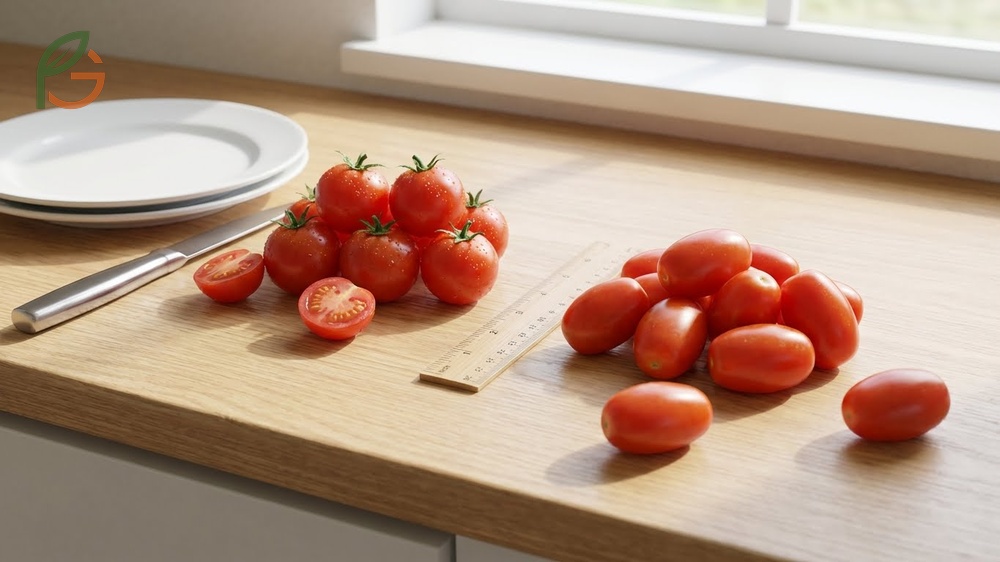
Cherry tomatoes measure approximately 1 to 1.5 inches in diameter and maintain a perfectly spherical shape[1]. Their round shape means they roll easily, which can be both an advantage for even roasting and a challenge when you’re trying to slice them for a recipe. Most people find it easiest to halve cherry tomatoes by placing them between two plates and running a sharp knife between the plates.
Grape tomatoes range from 1.5 to 2 inches in length with an oblong, oval shape that comes to slightly pointed ends[2]. Their shape makes them easier to slice lengthwise without the tomato rolling away. This stability is why professional chefs often prefer grape tomatoes for dishes that require consistent cutting.
This table compares shape, diameter, skin thickness, water content, and shelf life between cherry and grape tomatoes
| Characteristic | Cherry Tomatoes | Grape Tomatoes |
|---|---|---|
| Shape | Perfectly round | Oval, grape-like |
| Size | 1-1.5 inches[1] diameter | 1.5-2 inches[2] long |
| Skin Thickness | Thinner, delicate | 20-30% thicker[1] |
| Water Content | 95%[1] | 85-90%[1] |
| Shelf Life | 5-7 days[1] | 10-14 days[1] |
The seed cavity also differs between the two varieties. Cherry tomatoes have larger seed cavities that take up 25-30% of the fruit’s volume, while grape tomatoes have smaller seed cavities at 15-20%, contributing to their meatier texture[1]. This means you’re getting more flesh per tomato with grape varieties, which matters if you’re reducing them down for sauces.
Storage Tip: Store both varieties at 45-60°F (7-16°C) with 95% relative humidity for optimal shelf life up to 10 days[5]. Don’t refrigerate them below 41°F (5°C) or they’ll lose flavor and develop a mealy texture.
Taste and Flavor Comparison
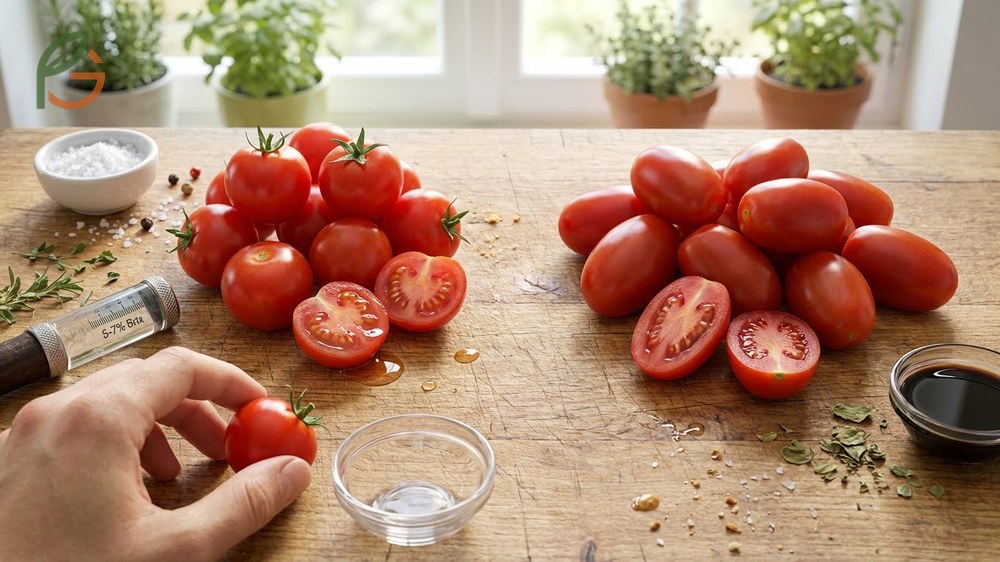
Cherry tomatoes deliver higher sweetness levels, measuring 5-7% on the Brix scale, which measures sugar content[1]. They offer a classic sweet-tart tomato profile with balanced acidity. When you bite into one, you’ll notice an immediate burst of juice that releases aromatic compounds engaging multiple senses at once.
Grape tomatoes measure 3-5% Brix, making them less sweet but more intensely savory[1]. Food scientists at the University of California Davis documented through sensory analysis that grape tomatoes have more pronounced umami notes—that savory, meaty flavor that makes them taste “tomato-ier” despite being less sweet[1]. Their thicker skin also affects how flavor releases when you eat them.
The lower water content in grape tomatoes concentrates their flavor compounds. This means they maintain more consistent taste even when grown under varying conditions, while cherry tomatoes can vary more in sweetness depending on growing conditions like sunlight exposure and watering patterns.
- Higher natural sweetness with candy-like quality
- Juicier texture that bursts when bitten
- Balanced sweet-tart profile similar to classic garden tomatoes
- More aromatic with immediate flavor release
- Flavor can vary more based on growing conditions
- Less sweet but more savory with umami depth
- Concentrated “tomato-ier” flavor due to lower moisture
- Firmer texture with slower flavor release
- More consistent taste across different growing conditions
- Meatier mouthfeel preferred by some chefs
Most people find cherry tomatoes better for fresh applications where you want that sweet pop of flavor. Grape tomatoes work better when you’re looking for a tomato that won’t overpower other ingredients or when you need something that holds its shape and doesn’t release too much liquid.
Nutritional Value Comparison
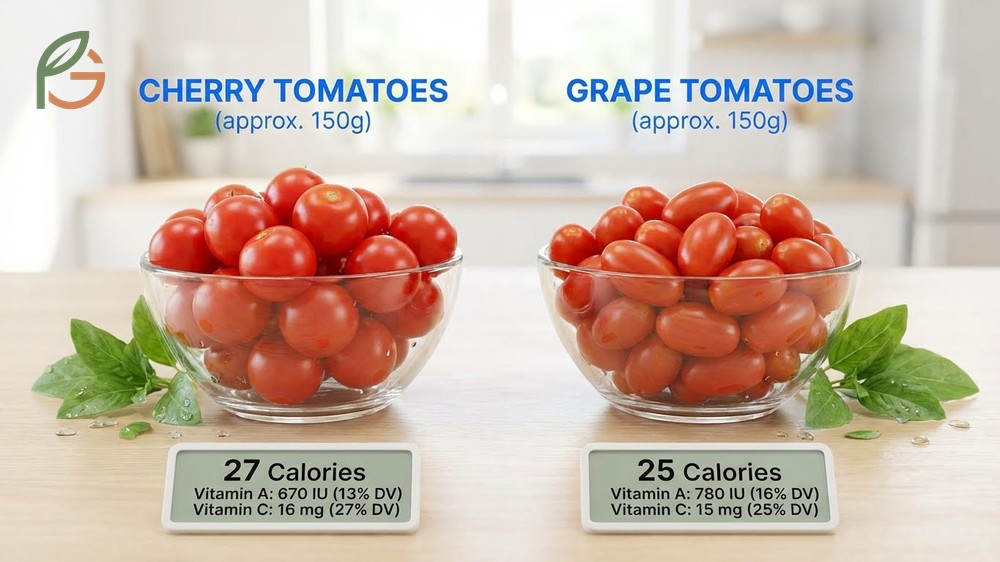
Both varieties pack impressive nutrition into their small size, with only minor differences. According to USDA data, a one-cup serving (approximately 150g) of cherry tomatoes contains 27 calories, 670 IU of vitamin A (13% daily value), and 16 mg of vitamin C (27% daily value)[1]. The same serving of grape tomatoes provides 25 calories, 780 IU of vitamin A (16% daily value), and 15 mg of vitamin C (25% daily value)[1].
The thicker skin of grape tomatoes means they retain slightly more lycopene—the powerful antioxidant responsible for tomatoes’ red color and linked to heart health. Research published in the Journal of Agricultural and Food Chemistry shows that grape tomatoes maintain 15-20% more lycopene after cooking compared to cherry tomatoes[1]. This makes them potentially more beneficial for heart health when you’re making sauces or roasted dishes.
Both varieties are excellent sources of potassium and contain negligible fat, making them valuable for heart-healthy diets. They also provide similar amounts of dietary fiber, with both offering about 2 grams per cup serving. The key nutritional difference really comes down to how you prepare them—cooking either variety with a small amount of healthy fat like olive oil increases lycopene absorption by up to 400%.
Nutritional Note: The vitamin C in tomatoes degrades with cooking, so you’ll get more of this nutrient when eating them raw. However, lycopene becomes more bioavailable when tomatoes are cooked, so you’re getting different benefits depending on preparation method.
Cooking Uses for Each Type
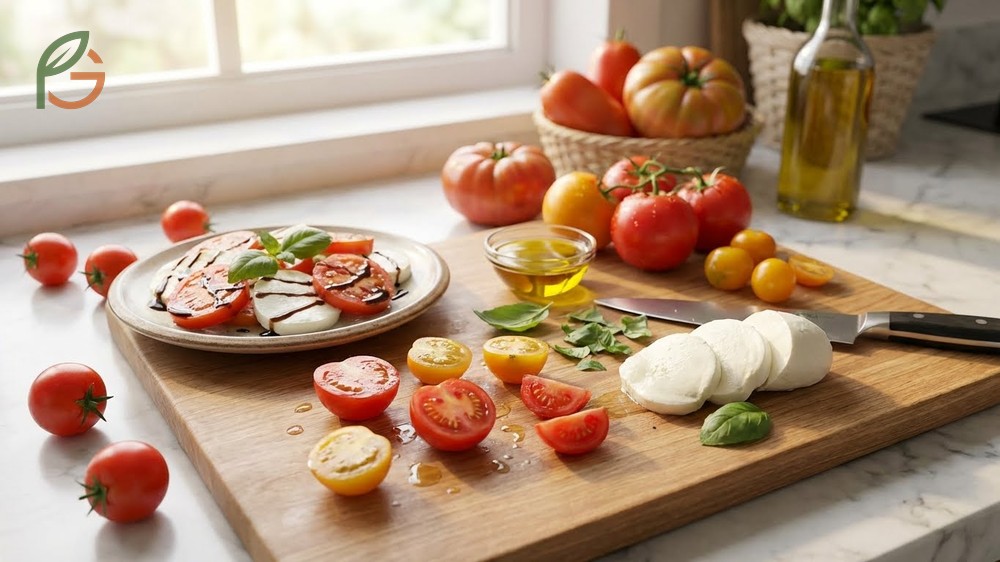
Understanding which tomato works best for specific cooking applications transforms your dishes from good to exceptional. The structural differences between these varieties mean they perform very differently under heat and in various preparations.
Cherry tomatoes shine in fresh applications where their juiciness enhances the eating experience. Their burst of liquid complements fresh mozzarella in caprese salads and adds refreshing moisture to cold pasta salads. They’re also excellent for raw tomato sauces where you want to preserve that fresh tomato flavor without cooking.
Best Uses for Cherry Tomatoes
Fresh preparations work best with cherry tomatoes. Their high moisture content and thin skins mean they break down quickly when cooked, which can be either an advantage or disadvantage depending on your recipe. For quick-cooking applications where you want the tomatoes to burst and release their juices—like tossed with hot pasta—cherry tomatoes are perfect.
When roasting cherry tomatoes, use high heat (425°F/218°C) for a short time (15-20 minutes). This concentrates their sweetness and caramelizes their natural sugars before they have time to turn mushy. Toss them with olive oil, salt, and garlic for a simple side dish or pasta topping.
- Caprese salads where juice complements fresh mozzarella
- Raw tomato sauces that preserve fresh flavor
- Summer pasta salads needing refreshing moisture
- Bruschetta toppings that release flavorful juices
- Quick sautés tossed with hot pasta
- Fresh salsas and pico de gallo
Best Uses for Grape Tomatoes
Grape tomatoes excel in cooking scenarios where structural integrity matters. Their thicker walls break down more slowly, allowing them to maintain their shape through extended cooking times. Chef Thomas Keller notes that “the structural integrity of grape tomatoes makes them the professional chef’s secret weapon for dishes requiring tomato elements that maintain their identity through cooking”[1].
For roasted vegetable medleys, grape tomatoes won’t turn to mush while other vegetables cook. They’re also excellent for skewers and kebabs since they resist falling apart during grilling. Their meaty texture holds up in slow-cooked dishes like ratatouille or tomato-based stews.
- Roasted vegetable medleys at 400°F (204°C) for 25-30 minutes
- Pasta sauces needing texture and body
- Skewers and kebabs for grilling without falling apart
- Slow-cooked dishes like ratatouille or stews
- Sheet pan dinners with longer cook times
- Tomato-based soups where shape retention matters
My friend in Veracruz, Mexico roasts grape tomatoes with jalapeños and onions for salsa. She swears they hold up better than cherry tomatoes during the 30-minute roast at 425°F (218°C), giving her salsa better texture without turning watery.
Growing Differences and Varieties
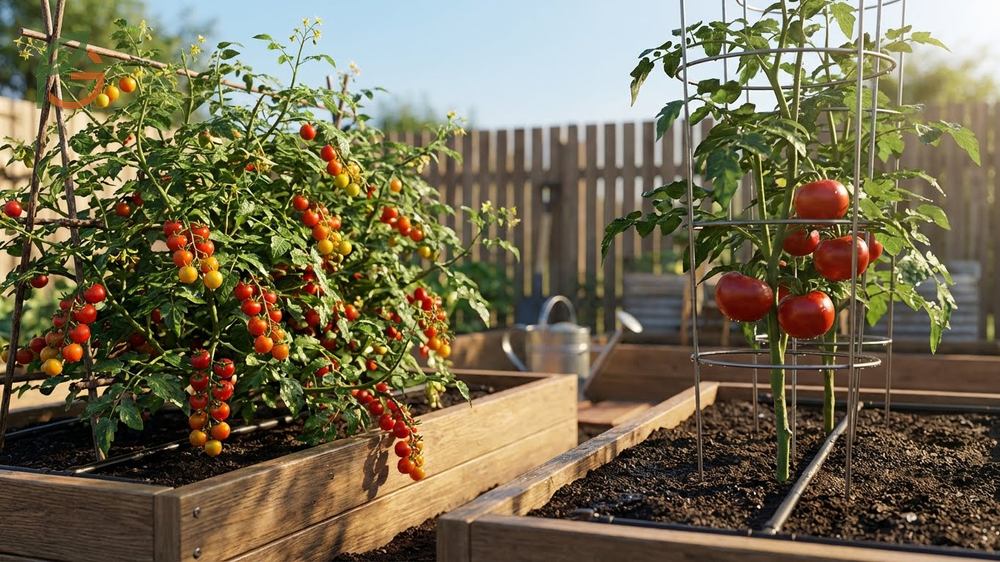
Both tomato types grow similarly and require the same basic conditions—full sun (6-8 hours daily), consistent watering, and well-drained soil rich in organic matter[3]. However, there are some differences in their growth habits and maintenance needs that you’ll want to consider when planning your garden.
Cherry tomato plants tend to be more vigorous and prolific, producing larger quantities of fruit throughout the growing season. This means they typically need stronger support structures like sturdy cages or stakes. They’re also more prone to splitting if watering isn’t consistent, especially during periods when heavy rain follows drought.
Grape tomato plants are generally more compact and may not need as much support, though staking is still recommended. They’re more forgiving of irregular watering patterns thanks to their thicker skins and lower moisture content. This makes them a good choice if you travel frequently or can’t maintain a strict watering schedule.
- Plant in soil that drains well and has been amended with compost
- Provide full sun exposure for at least 6-8 hours daily
- Water deeply but infrequently to encourage strong root systems
- Mulch around plants to maintain consistent soil moisture
- Feed every 2-3 weeks with balanced tomato fertilizer
- Prune suckers on indeterminate varieties for better air circulation
Both varieties come in determinate and indeterminate types. Determinate varieties grow to a set height and produce all their fruit within a few weeks—great if you want a big harvest for canning or preserving. Indeterminate varieties keep growing and producing until frost kills them, providing a steady supply of fresh tomatoes throughout the season.
Popular cherry tomato varieties include Sweet 100, Sun Gold (yellow), and Black Cherry. For grape tomatoes, look for varieties like Juliet, Santa (hybrid), and Sweet Olive. Each variety has slightly different flavor profiles and disease resistance, so it’s worth trying several to find your favorites.
Growing Tip: In hot climates above 90°F (32°C), grape tomatoes often outperform cherry tomatoes because their thicker skins provide better heat tolerance and reduce sun scald damage. If you’re gardening in the southern United States or other hot regions, grape varieties might give you better yields.
Conclusion
The evidence is clear: cherry tomatoes vs grape tomatoes each have distinct advantages depending on your needs. Cherry tomatoes deliver superior sweetness and juice for fresh applications, while grape tomatoes provide better structure and longer shelf life for cooking. Your choice comes down to whether you prioritize that burst-in-your-mouth sweetness or the meaty texture that holds up under heat.
Current agricultural guidance emphasizes growing both varieties to maximize your harvest window and culinary options. FruitGarden recommends planting at least one of each type in your garden—you’ll appreciate having cherry tomatoes for fresh snacking and salads, while grape tomatoes excel in your cooked dishes and provide reliable storage when you can’t use them immediately.
Frequently Asked Questions
Which Tomato Variety Is Sweeter?
Cherry tomatoes are sweeter, measuring 5-7% on the Brix sugar scale compared to grape tomatoes at 3-5% Brix. Their higher sugar content and balanced acidity create that classic sweet-tart tomato flavor most people expect from fresh garden tomatoes.
Can You Substitute Cherry Tomatoes for Grape Tomatoes in Recipes?
Yes, but with adjustments. In fresh dishes like salads, they’re easily interchangeable. For cooked recipes, cherry tomatoes release more juice and break down faster, so you might need to cook them for less time or drain excess liquid. Grape tomatoes work better in recipes requiring longer cooking times.
How Long Do Cherry and Grape Tomatoes Last?
Cherry tomatoes last 5-7 days when stored properly, while grape tomatoes last 10-14 days—nearly double the shelf life. Store both at 45-60°F (7-16°C) with high humidity for best results. Don’t refrigerate below 41°F (5°C) as this damages their flavor and texture.
Are Cherry or Grape Tomatoes Healthier?
Both are nutritionally similar, providing about 25-27 calories per cup with excellent vitamin A and C content. Grape tomatoes retain 15-20% more lycopene when cooked due to their thicker skins, making them slightly better for heart health in cooked dishes. Cherry tomatoes offer more vitamin C when eaten raw.
Which Tomato Type Is Easier to Grow?
Grape tomatoes are slightly easier for beginners because they’re more forgiving of inconsistent watering and less prone to splitting. Cherry tomatoes produce more prolifically but need stronger support and consistent moisture. Both require the same basic care—full sun, well-drained soil, and regular feeding.
What’s the Best Way to Store Small Tomatoes?
Store them at room temperature if you’ll eat them within 2-3 days for best flavor. For longer storage, keep them at 45-60°F (7-16°C) in a well-ventilated area. Don’t refrigerate unless absolutely necessary, and if you do, let them return to room temperature for 1-2 hours before eating to restore flavor.
Do Cherry and Grape Tomatoes Taste Different When Cooked?
Yes, cherry tomatoes become sweeter and more jam-like when cooked, releasing significant juice that creates sauce-like consistency. Grape tomatoes maintain a firmer texture with more concentrated savory flavor, making them taste more like traditional tomatoes even after cooking. Choose based on whether you want sweetness or meaty texture in your dish.