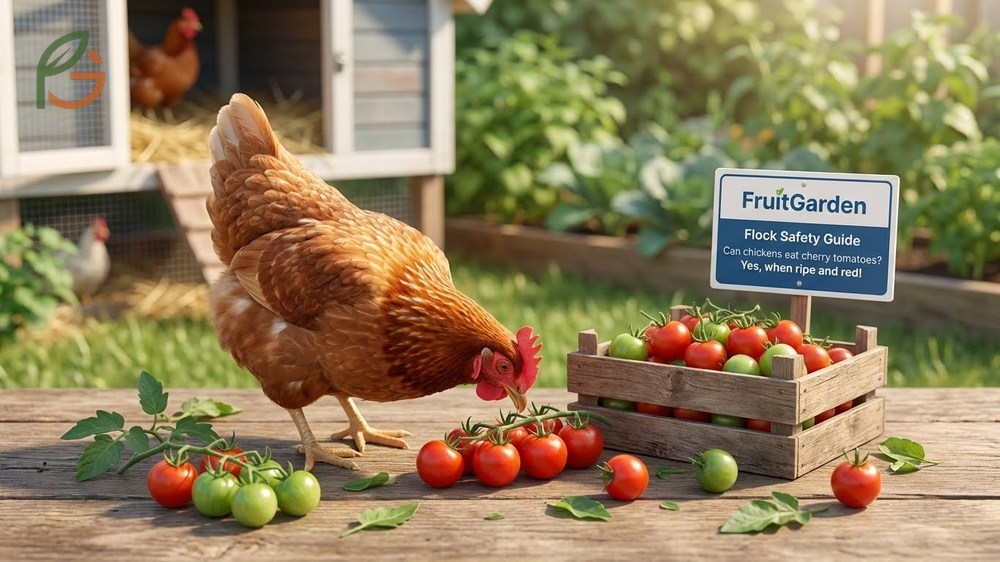
Can chickens eat cherry tomatoes? Yes, chickens can safely eat cherry tomatoes when they’re fully ripe and red. Research shows these bite-sized treats offer nutritional benefits like vitamins A and C, plus antioxidants that can enhance egg quality.[1] However, you’ll need to avoid green tomatoes and all plant parts, which contain toxic solanine. FruitGarden synthesizes current poultry nutrition research to help backyard chicken keepers make informed feeding decisions.
Quick Answer
- Ripe cherry tomatoes are 100% safe for chickens when fed in moderation[1]
- Feed only 1-2 small tomatoes per chicken weekly, making up no more than 5-10% of their diet[2]
- One medium tomato contains just 22 calories and provides over 90% water content for hydration[3]
- Never feed green tomatoes, leaves, stems, or flowers—they contain solanine that causes paralysis and death in chickens[1]
Can Chickens Eat Cherry Tomatoes
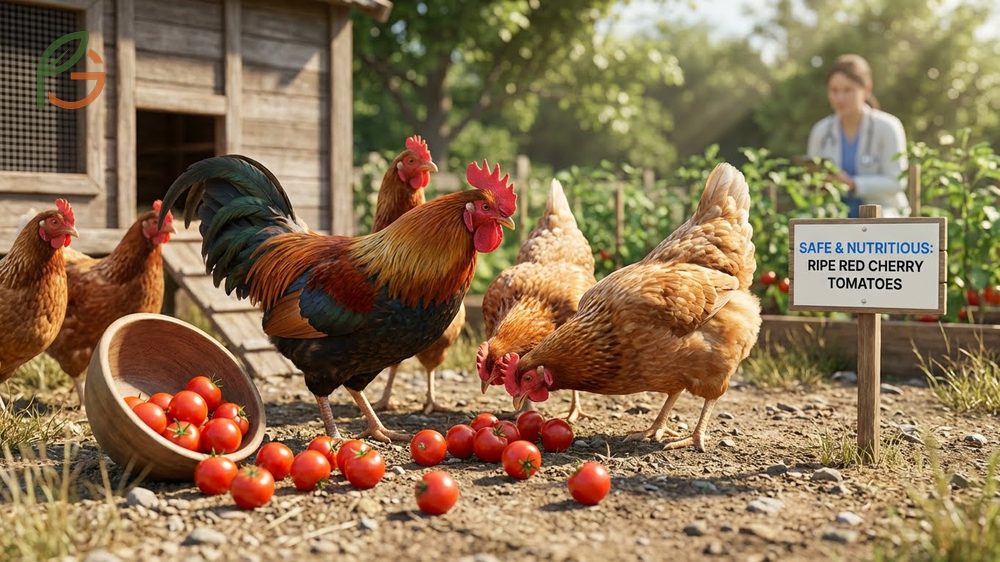
Cherry tomatoes are perfectly safe for chickens when they’re fully ripe and red. Studies confirm that chickens not only tolerate tomatoes well but actually thrive on their nutrient profile.[1] Dr. Sabrina Kong, a veterinarian at Jules Veterinary Center, emphasizes that tomatoes make nutritious treats when served in moderation.[1]
The key is selecting the right stage of ripeness. Only fully red tomatoes are appropriate for your flock.
Most people don’t realize that chickens can eat both the flesh and seeds of ripe tomatoes without any digestive issues.[4] The seeds pass through their system naturally and don’t pose choking hazards like some other foods.
What Makes Ripe Tomatoes Safe
Ripe tomatoes contain negligible amounts of solanine, the toxic compound found in nightshade plants. As tomatoes mature from green to red, solanine levels drop dramatically to safe concentrations.[1] This natural detoxification process makes red tomatoes completely harmless to chickens.
The ripening process also increases sugar content and improves palatability. Chickens instinctively prefer sweeter foods, so they’ll eagerly peck at cherry tomatoes you offer them.
Important Note: Even slightly green shoulders on tomatoes signal elevated solanine levels. Wait until tomatoes are uniformly red before feeding them to your flock.
Cherry vs Regular Tomatoes
Cherry tomatoes offer practical advantages over large slicing varieties. Their smaller size makes them easier for chickens to peck and consume without wasting food. You can offer them whole or halved, depending on your flock size.
Both cherry and regular tomatoes provide identical nutritional benefits per gram. The main difference lies in convenience—cherry tomatoes require less prep work and create less mess in your chicken run.
Nutritional Benefits for Chickens
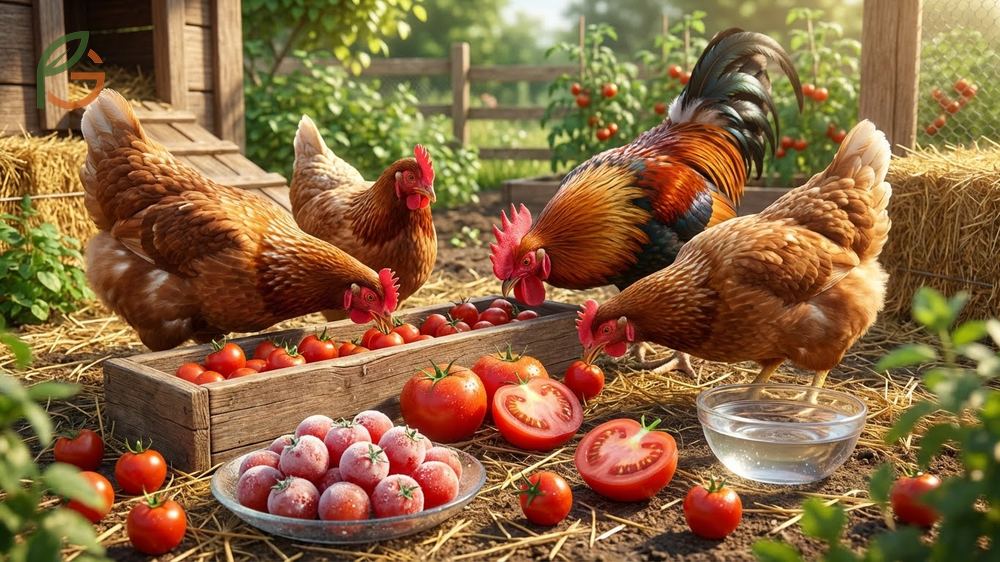
Tomatoes pack impressive nutritional value into their low-calorie profile. A medium tomato delivers just 22 calories while providing substantial amounts of vitamins A and C.[3] This makes them ideal treats that won’t disrupt your chickens’ balanced diet.
The high water content—over 90%—helps keep chickens hydrated during hot weather.[1] During summer months, frozen cherry tomatoes become refreshing snacks that also provide essential nutrients. What often gets overlooked is that tomato antioxidants transfer directly into eggs when laying hens consume them regularly.
Vitamins and Minerals
Tomatoes are rich sources of several vitamins critical for poultry health. Vitamin C supports immune function, while vitamin K aids in blood clotting and bone health.[4] Potassium helps regulate fluid balance and muscle contractions in chickens.
The vitamin A content in tomatoes supports good vision and reproductive health in laying hens. A 123-gram serving provides multiple essential minerals that complement commercial feed formulations.[3]
- Vitamin C strengthens immune response against common poultry diseases
- Vitamin K promotes proper blood clotting and prevents internal hemorrhaging
- Potassium maintains healthy muscle function and heart rhythm
- Folate (Vitamin B9) supports cell division and feather growth
- Vitamin E acts as an antioxidant protecting cell membranes from damage
Antioxidants Boost Egg Quality
Research from British Poultry Science reveals that feeding tomato powder to laying hens significantly increases beneficial compounds in their eggs. Concentrations of lycopene, beta-carotene, lutein, and vitamin A all improved when tomatoes were added to chicken diets.[5] The same study found that harmful malondialdehyde (MDA) decreased, improving overall egg quality.
These antioxidants give egg yolks richer color and enhanced nutritional profiles. For best results, studies recommend adding up to 4 teaspoons of tomato powder per 2 pounds of poultry feed.[5]
Toxic Tomato Parts to Avoid
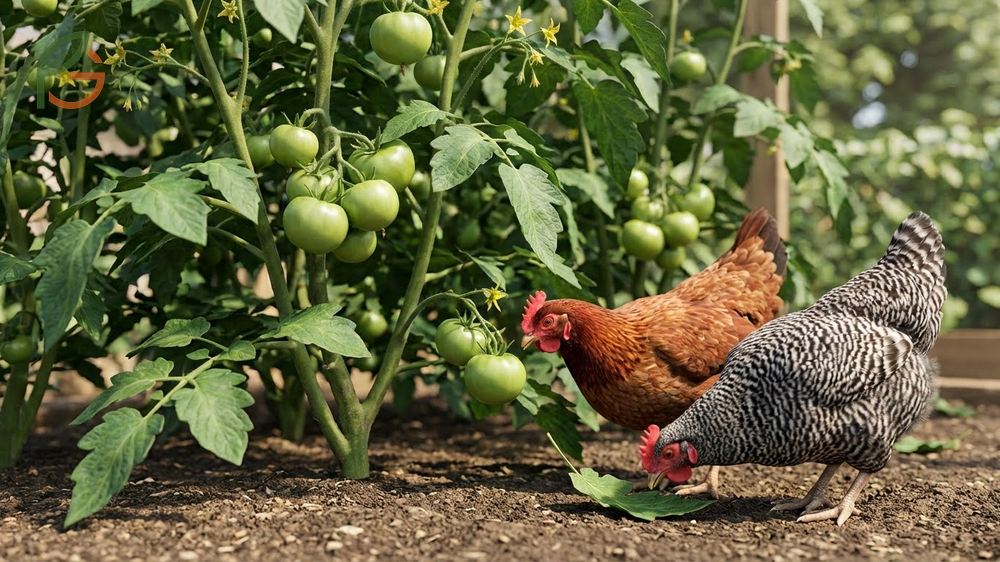
While ripe tomato fruits are safe, other parts of tomato plants pose serious dangers to chickens. Leaves, stems, flowers, and green unripe tomatoes all contain high concentrations of solanine, a glycoalkaloid toxin.[1] This compound evolved as the plant’s natural defense against pests and herbivores.
Chickens can’t efficiently metabolize solanine like some mammals can. Even small amounts of green plant material can cause severe reactions.[4] You’ll need to keep chickens away from tomato garden beds and never toss pruned vines into their run.
Critical Warning: Cooking doesn’t destroy solanine. Even boiled or baked tomato vines remain toxic to chickens. Only the red fruit portion is safe after ripening.
Understanding Solanine Poisoning
Solanine interferes with nerve signal transmission and damages digestive tract linings in chickens. The toxin concentrates most heavily in leaves and green tomatoes, where levels can reach dangerous concentrations. Unlike some toxins that accumulate over time, solanine doesn’t build up in chicken tissues—it causes acute poisoning within hours of ingestion.[4]
Even dried tomato plants retain their toxicity. Never assume that wilted or composted vines are safe for chickens to consume.
Symptoms and Treatment
Symptoms typically appear within 24 hours of eating toxic tomato parts. Early signs include reduced appetite, lethargy, and diarrhea that may contain blood. As poisoning progresses, chickens develop neurological symptoms like tremors, weakness, and difficulty breathing.
Watch for drooping wings, green watery diarrhea, and paralysis with legs extended backward. No specific antidote exists for solanine poisoning—treatment focuses on supportive care and preventing further exposure. If you notice these symptoms, remove all tomato plant material immediately and contact a veterinarian.
- Decreased feed consumption and water intake within first 12 hours
- Lethargy and reluctance to move or perch normally
- Watery green diarrhea, sometimes bloody
- Muscle tremors or uncoordinated movements
- Respiratory distress with open-mouth breathing
- Sudden drop in egg production from laying hens
- Paralysis or inability to stand in severe cases
Safe Feeding Amounts
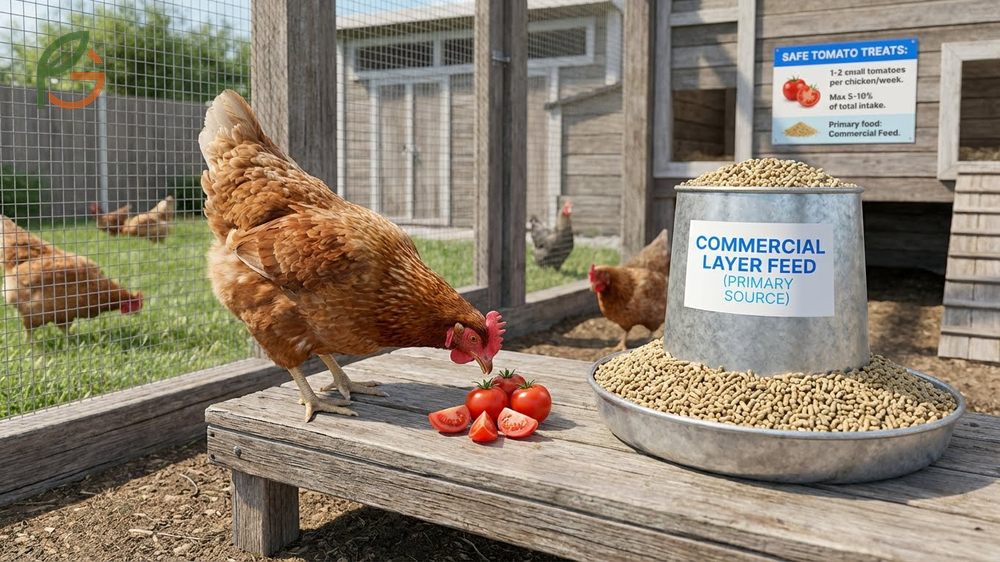
Evidence-based guidelines recommend limiting tomato treats to 1-2 small ripe tomatoes per chicken per week.[2] This amount provides nutritional benefits without disrupting their balanced diet. Tomatoes should comprise no more than 5-10% of your chickens’ total food intake.[2]
Current poultry nutrition guidance emphasizes that commercial layer feed must remain the primary food source, providing 16-18% protein and essential nutrients.[6] Treats like tomatoes supplement this base diet but shouldn’t replace it. What matters most is maintaining the proper protein-to-treat ratio for consistent egg production.
Portion Sizes by Flock Size
For individual chickens, Dr. Kong recommends about 6 grams of tomato per serving. This translates to half a cherry tomato, one grape tomato, or a thin slice from a large tomato.[1] These small portions prevent overfeeding while still delivering nutritional benefits.
For larger flocks, cutting cherry tomatoes in halves or quarters ensures fair distribution. This prevents dominant birds from monopolizing treats and guarantees each chicken gets appropriate amounts.
This table shows recommended tomato portion sizes for different flock sizes, including frequency, amount per chicken, and preparation methods
| Flock Size | Weekly Amount | Per Chicken | Preparation |
|---|---|---|---|
| 3-5 chickens | 6-10 cherry tomatoes[1] | 1-2 whole or halved | Whole or halved |
| 6-10 chickens | 12-20 cherry tomatoes | 1-2 quartered pieces | Quartered |
| 11-20 chickens | 22-40 cherry tomatoes | 1-2 small pieces | Quartered or diced |
| 20+ chickens | 40+ cherry tomatoes | 1-2 small pieces | Diced for distribution |
Frequency Recommendations
Introduce tomatoes gradually to avoid digestive upset. Start with one small piece per chicken and observe for 24-48 hours before increasing amounts. Once acclimated, chickens can receive tomato treats 2-3 times weekly without issues.
Space out tomato feedings to maintain interest and prevent overconsumption. Rotating different treat types throughout the week keeps chickens engaged while ensuring dietary variety. Remove uneaten tomato pieces within 4-6 hours to prevent spoilage and bacterial growth.[2]
Best Practice Tip: Feed tomatoes in the morning when chickens are most active. This timing helps them burn treat calories throughout the day while maintaining focus on their primary layer feed.
Best Feeding Practices
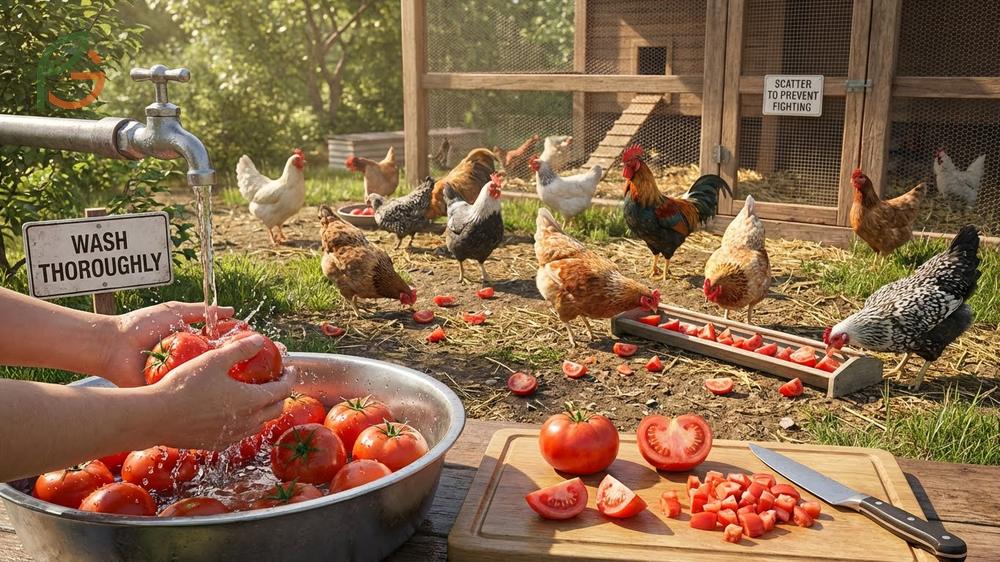
Always wash tomatoes thoroughly before offering them to chickens. Pesticide residues from conventionally grown produce can harm your flock’s health. Organic tomatoes eliminate this concern entirely, but thorough rinsing works for standard varieties too.
Cut tomatoes into appropriate sizes based on your flock dynamics. Smaller pieces prevent fighting and ensure even distribution among all birds. Scatter pieces around the run rather than piling them in one spot—this encourages natural foraging behavior.
Wait until chicks reach 8-12 weeks old before introducing fresh treats like tomatoes.[1] Younger birds need concentrated nutrition from starter feed to support rapid growth. Their digestive systems aren’t ready for treats until they’ve matured.
- Select only fully ripe, uniformly red tomatoes without green areas
- Wash thoroughly under running water to remove dirt and pesticides
- Cut into appropriate sizes: whole for small flocks, quartered for larger groups
- Scatter pieces throughout the run to encourage natural foraging
- Monitor chickens during first feeding to check for adverse reactions
- Remove uneaten portions within 4-6 hours to prevent spoilage
- Clean feeding areas after treats to maintain hygiene standards
Conclusion
The evidence is clear: chickens can eat cherry tomatoes safely when you follow proper guidelines. Ripe red tomatoes provide valuable vitamins, antioxidants, and hydration while posing zero risk to your flock. Just remember to avoid all green plant parts, limit portions to 5-10% of total diet, and introduce new treats gradually to prevent digestive issues.
Current poultry nutrition guidance emphasizes variety within proper limits. FruitGarden helps backyard chicken keepers understand which garden produce benefits their flocks and which poses dangers. By sticking to ripe tomatoes in moderate amounts, you’ll enhance your chickens’ diet while keeping them healthy and productive.
Frequently Asked Questions
Can chickens eat green cherry tomatoes?
No, chickens cannot eat green cherry tomatoes because they contain high levels of solanine, a toxic compound. Research shows that solanine concentrations peak in unripe tomatoes and cause neurological symptoms, paralysis, and potentially death in chickens. Always wait until tomatoes turn completely red before feeding them to your flock.
How many cherry tomatoes can I give my chickens per day?
Evidence-based guidelines recommend limiting treats to half a cherry tomato per chicken per feeding, offered 2-3 times weekly rather than daily. This amount keeps treats at 5-10% of total diet while preventing nutritional imbalances. Daily feeding of tomatoes can lead to overconsumption and decreased interest in balanced layer feed.
Are tomato leaves poisonous to chickens?
Yes, tomato leaves are extremely poisonous to chickens due to concentrated solanine content. Even dried or wilted leaves retain full toxicity since cooking or decomposition doesn’t destroy this compound. Keep chickens completely away from tomato plants and never add pruned vines to compost bins accessible to your flock.
Do tomatoes improve egg quality in laying hens?
Studies from British Poultry Science confirm that tomatoes significantly improve egg quality by increasing lycopene, beta-carotene, lutein, and vitamin A concentrations in eggs. Research shows adding 4 teaspoons of tomato powder per 2 pounds of feed delivers optimal results while also reducing harmful malondialdehyde levels in eggs.
Can baby chicks eat cherry tomatoes?
No, baby chicks shouldn’t eat cherry tomatoes until they reach 8-12 weeks of age. Veterinarians emphasize that young chicks require concentrated nutrition from starter feed to support rapid growth and development. Their immature digestive systems can’t properly process treats, which may cause gastrointestinal upset and nutrient deficiencies.
What should I do if my chicken ate a green tomato?
Monitor your chicken closely for 24-48 hours for signs of solanine poisoning including lethargy, watery green diarrhea, tremors, or breathing difficulties. Remove all tomato plants from their access immediately. If symptoms appear, contact a veterinarian right away—there’s no specific antidote, but supportive care can prevent severe complications or death.
Can chickens eat cooked tomato sauce or paste?
While plain cooked tomatoes are safe, most commercial tomato sauces and pastes contain added salt, sugar, onions, and garlic that harm chickens. Studies show excessive sodium disrupts chickens’ electrolyte balance and causes kidney stress. Stick to fresh ripe tomatoes instead of processed products to avoid these risks.