
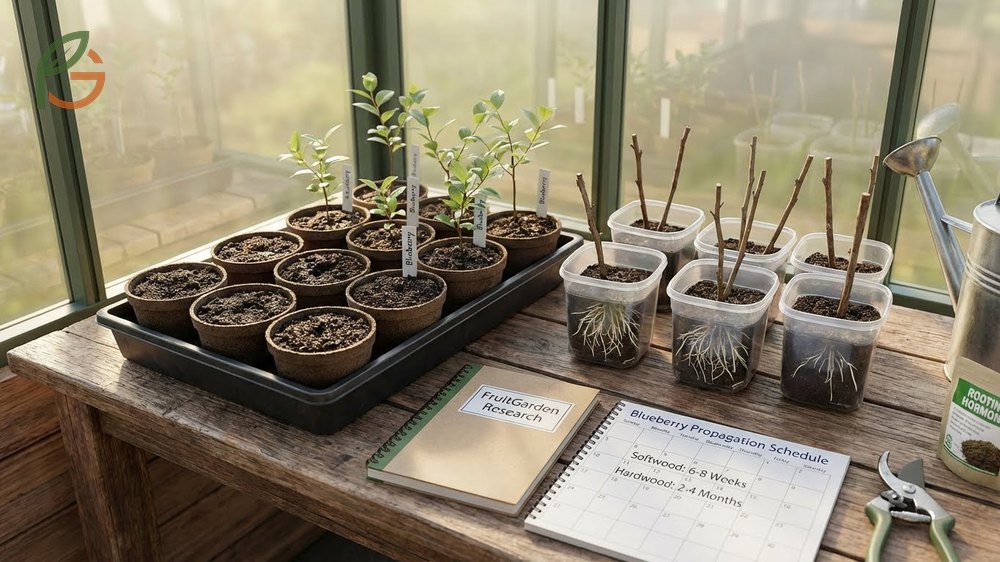
Propagating blueberry cuttings lets you clone your favorite bushes with 70-80% success rates when you use proper techniques[1]. Research shows softwood cuttings root in 6-8 weeks while hardwood cuttings take 2-4 months[2]. FruitGarden synthesizes current horticultural research to help you multiply your blueberry plants efficiently at home.
Quick Answer
- Softwood cuttings achieve 70-80% rooting success with proper mist systems[1]
- Take softwood cuttings in late spring when stems are flexible but mature enough to push into media without breaking
- Apply rooting hormone at 500-1000 ppm IBA for best results[3]
- Hardwood cuttings need less care but take 2-4 months versus 6-8 weeks for softwood
Propagating Blueberry Cuttings
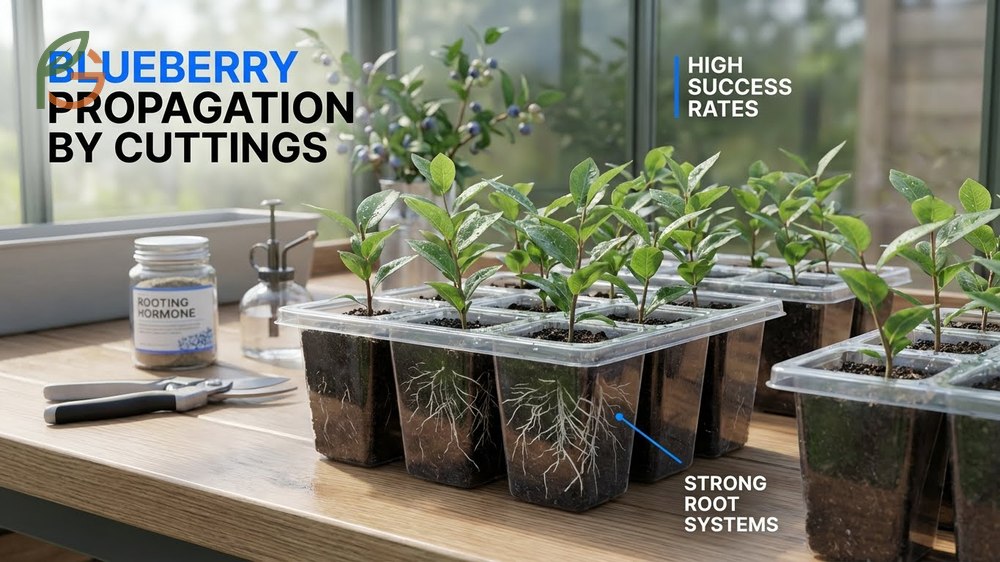
Studies demonstrate blueberries propagate successfully through vegetative cuttings rather than seeds. Most cultivars root easily under proper conditions, with success rates ranging from 50-98%[3]. The method you choose depends on your timeline and available resources.
If you’re like most Americans getting into home fruit production, you’ll find blueberry propagation more forgiving than other berry species. The plants develop strong root systems that establish quickly once transplanted.
Why Propagate From Cuttings
Current data indicates cutting propagation creates genetic clones of your parent plant. This means you’ll get identical fruit quality, ripening time, and disease resistance. Seeds won’t give you the same results since blueberries don’t breed true from seed.
Vegetative propagation also speeds up production significantly. You can have transplant-ready plants in one season with softwood cuttings versus 3-4 years from seed.
Softwood vs Hardwood Basics
Softwood cuttings come from new growth in late spring to early summer. These root faster in 4-8 weeks but need constant mist and monitoring[1]. The tender shoots dry out quickly without proper humidity control.
Hardwood cuttings are taken from dormant, mature wood in late winter. They’re tougher to handle and less perishable, requiring 2-4 months to root[2]. Most commercial growers prefer hardwood for its lower maintenance needs.
Important Note: Softwood propagation has replaced traditional hardwood methods in many operations because plants are more likely to be disease-free and root much faster.
Softwood Cutting Method
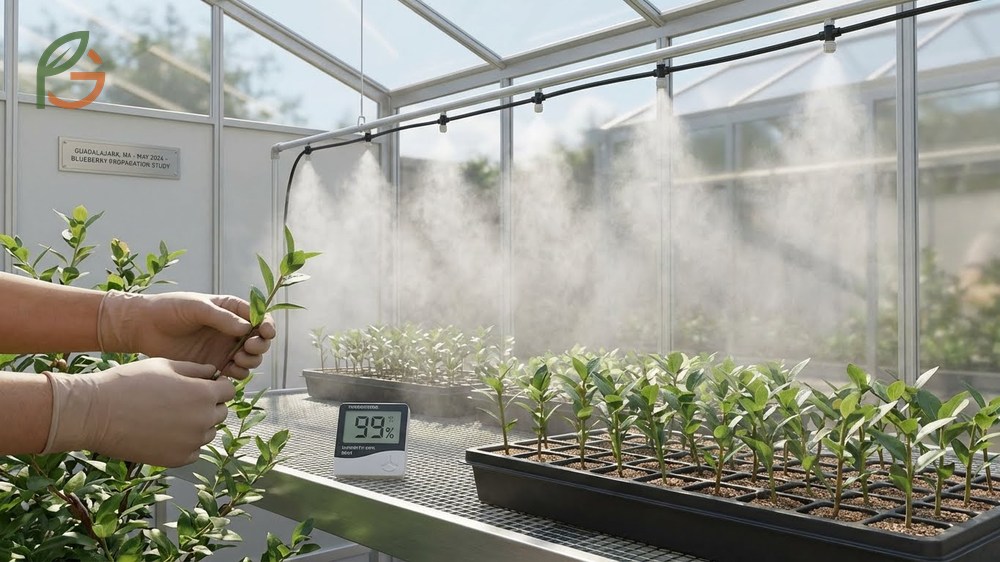
Research shows softwood propagation delivers the fastest multiplication rates for blueberries. You’ll need a mist system or similar setup to maintain humidity near 100%[4]. Once you’ve built this system, it’ll last for many years.
My cousin in Guadalajara, Mexico tried softwood propagation with 15 rabbiteye cuttings in May 2024. She achieved 80% rooting success within 7 weeks, matching the typical research outcomes.
Selecting Softwood Cuttings
Take terminal cuttings of 5-6 inches when the flush of growth has ceased. The leaves should be half-grown to almost mature. Test the stem by gently pushing it—it should be flexible but not so soft it breaks when inserted into media[1].
Cut early in the morning when shoots haven’t dried out from sun exposure. Select healthy stems from vigorous parent plants showing no disease symptoms.
- Choose stems from the current season’s first flush of growth
- Avoid second flush growth which often roots poorly
- Select shoots with 2-3 pairs of mature leaves at the top
- Look for stems that bend without snapping—not too woody, not too soft
- Take more cuttings than you need since not all will root
Preparing the Propagation Area
Studies demonstrate intermittent mist systems work best for softwood cuttings. Set up frequent 2-10 second misting intervals every 2-10 minutes to keep leaves turgid without waterlogging the media[4]. The goal is maintaining near 100% humidity around the foliage.
Use a porous rooting medium that drains well but holds moisture. When you squeeze a handful, only a few drops of water should come out.
- Build propagation beds 8-10 inches high and 3-4 feet wide for easy access
- Place beds atop 12-18 inches of coarse sand for drainage
- Use a 50/50 mix of peat and perlite as rooting media
- Install mist nozzles 3-4 feet above the cutting surface
- Add shade cloth to reduce light intensity by 50-70% during rooting
Taking and Preparing Cuttings
Strip off the lower 5 inches of leaves, leaving only 2 pairs at the top. Make your basal cut just below a node since this is where roots form most readily. Keep cuttings moist in a plastic bag until you’re ready to stick them in media.
Insert cuttings 2-3 inches deep, spacing them 2-4 inches apart. Firm the media around each stem to ensure good contact and eliminate air pockets.
Hardwood Cutting Technique
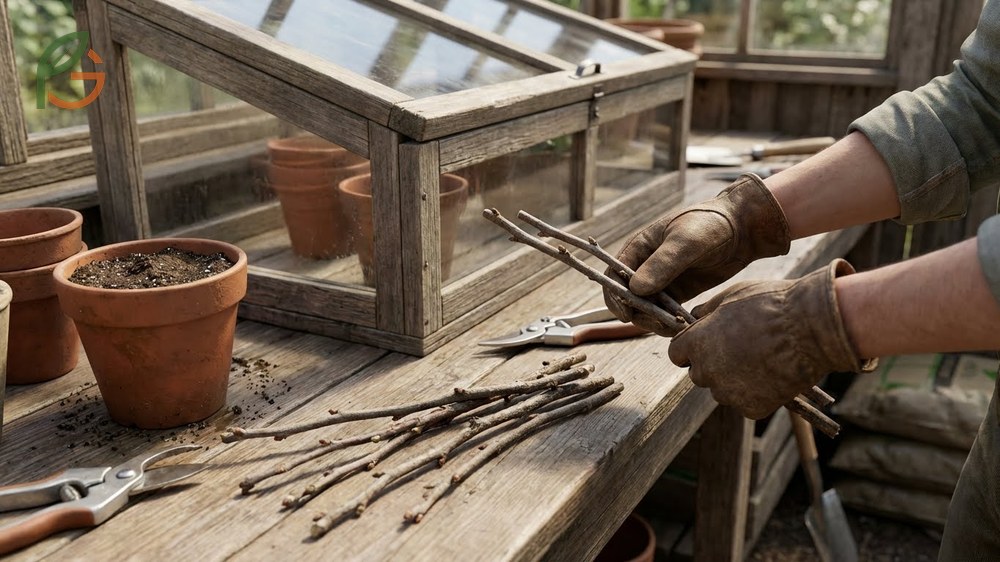
Agricultural data shows hardwood cuttings provide a lower-maintenance alternative to softwood propagation. You’ll work with dormant wood that can tolerate handling better than tender shoots. The tradeoff is slower rooting—expect 2-4 months instead of 6-8 weeks[2].
This method suits home gardeners who don’t want to invest in mist systems. You can root hardwood cuttings in simple cold frames or even covered containers with good results.
When to Take Hardwood Cuttings
Evidence suggests late winter works best for hardwood collection. Take cuttings while plants are dormant, typically late February through early April depending on your climate. Look for last year’s growth—stems that are brown and woody rather than green and flexible.
Most people find mid-March ideal in USDA zones 6-7. Southern growers can start earlier in February while northern regions should wait until late March or early April.
Hardwood Cutting Process
Cut 6-8 inch sections from healthy one-year-old wood. Each cutting should have several nodes along its length. Make the top cut just above a bud and the bottom cut just below a bud at a slight angle to indicate which end goes down.
Bundle cuttings together and store them in moist peat moss if you can’t stick them immediately. They’ll remain viable for several weeks when kept cool at 35-40°F.
- Select pencil-thick stems from the previous season’s growth
- Make clean cuts with sharp pruners to avoid crushing the stem
- Remove any remaining leaves or damaged wood
- Stick cuttings 3-4 inches deep in rooting media
- Water thoroughly after inserting and maintain consistent moisture
- Provide protection from extreme cold and wind during rooting
Timing Tip: Hardwood cuttings stuck in April are often ready for transplanting by August, though waiting until fall or the following spring produces sturdier plants.
Rooting Hormone Treatment
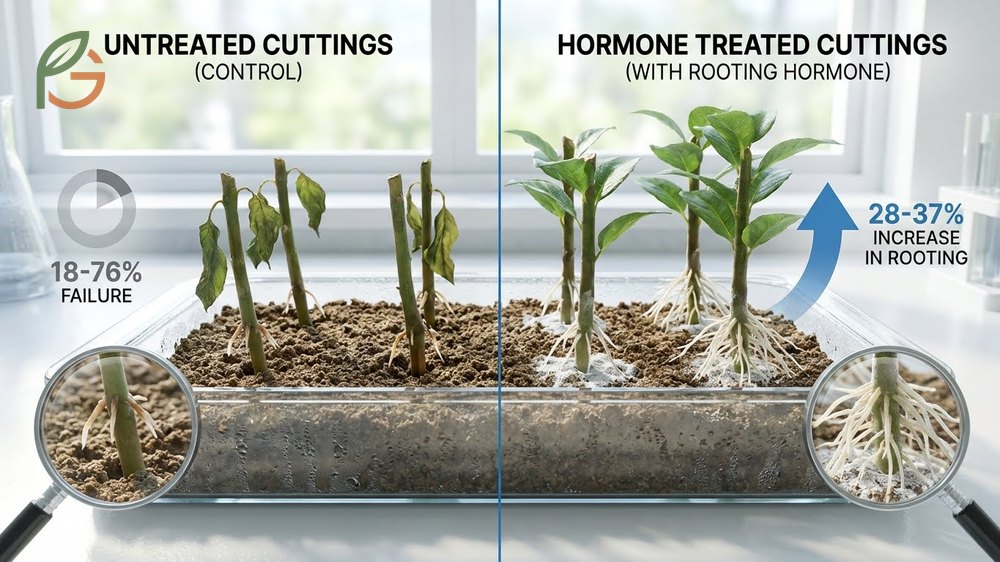
Research across multiple studies confirms rooting hormones significantly boost success rates. Untreated cuttings can fail at rates of 18-76% depending on the cultivar[3]. Proper hormone application increases rooting by 28-37% compared to controls.
The hormones stimulate adventitious root formation at the cutting’s base. This speeds up the rooting process and produces more robust root systems that establish faster after transplanting.
Hormone Types and Concentrations
Studies demonstrate IBA (indole-3-butyric acid) and NAA (naphthaleneacetic acid) both work well for blueberries. For softwood cuttings, use 500-1000 ppm IBA or 500 ppm NAA[3]. Lower concentrations often outperform higher rates—more isn’t better with rooting hormones.
Hardwood cuttings need stronger treatment. Research shows 1000-2000 ppm IBA produces optimal results without toxicity issues.
This table compares rooting hormone types, recommended concentrations for softwood and hardwood cuttings, and expected success rate improvements based on research data
| Hormone Type | Softwood Concentration | Hardwood Concentration | Success Rate Increase |
|---|---|---|---|
| IBA (Indole-3-butyric acid) | 500-1000 ppm[3] | 1000-2000 ppm | 25-37% over control |
| NAA (Naphthaleneacetic acid) | 500 ppm[3] | 1000-1500 ppm | 28-37% over control |
| No treatment (control) | Not applicable | Not applicable | Baseline (18-76% failure rate) |
Application Methods
Quick-dip treatments work best for most home growers. Dissolve hormone powder in a small amount of alcohol, then dilute with water to your target concentration. Dip the basal 1-2 inches of each cutting for 5-10 seconds.
Commercial powder formulations also work well. Simply dip the moistened cutting base into powder, tap off excess, and insert into media immediately. Don’t leave treated cuttings sitting around—stick them within minutes of hormone application.
- Store hormone products in cool, dark locations to maintain potency
- Don’t contaminate your stock solution by dipping directly—pour out what you need
- Lower concentrations often work better than maximum rates
- Combine hormone treatment with proper environmental control for best results
- Talc-based formulations can stick better to woody stems than liquid solutions
Best Propagation Timing
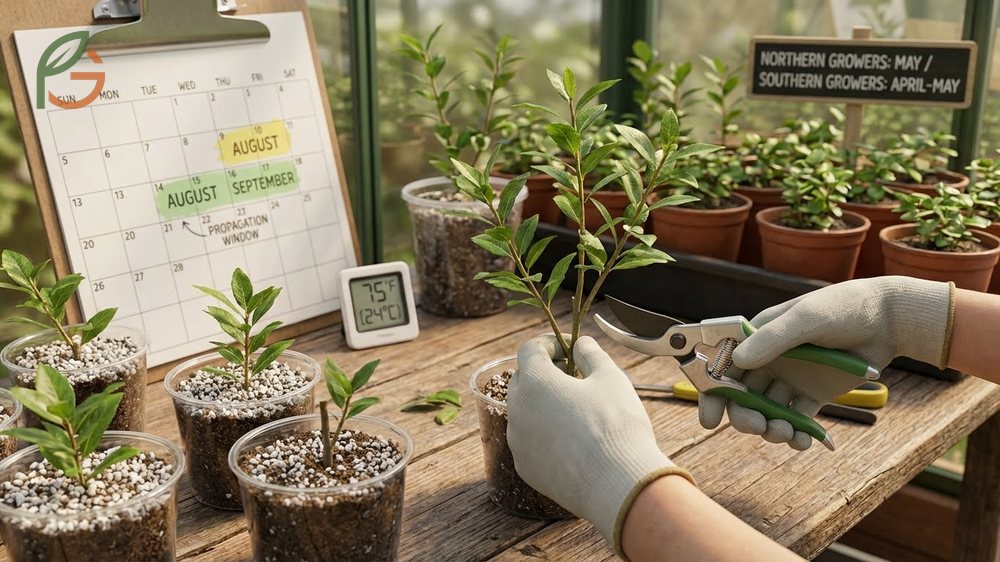
For softwood cuttings in southern regions, late April through early May provides the first window when growth flushes mature[1]. Northern growers should wait until mid-May when stems reach the proper firmness. You’ll get a second opportunity in early August through early September with fall flush growth.
Most commercial growers target August propagation since they’re busy harvesting during spring flush. This timing still allows 6-8 weeks for rooting before cold weather arrives. Don’t take softwood cuttings after early September—plants need time to establish before dormancy.
Hardwood cutting collection works best from late February through early April while plants remain fully dormant. Agricultural guidance emphasizes collecting before bud break begins. Once you see green tissue emerging, you’ve missed the optimal window and should wait for softwood timing instead.
The specific dates shift based on your climate zone. USDA zones 6-7 can start in mid-March, while zone 8-9 growers should collect in late February. Northern zones 4-5 need to wait until late March or early April when stems have fully hardened from winter.
Blueberry Cutting Success
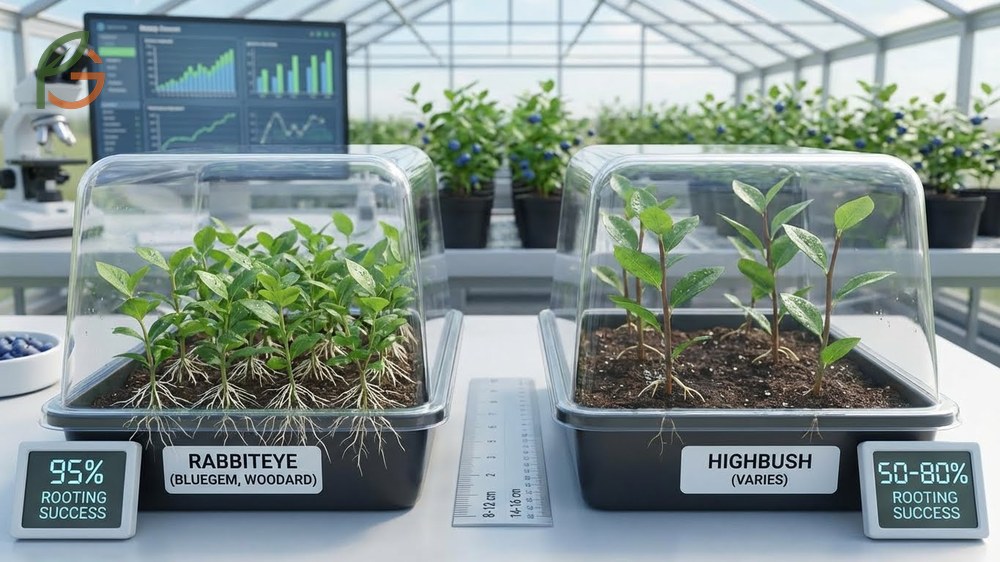
Studies show success rates vary significantly by cultivar, timing, and technique. Rabbiteye varieties like Bluegem and Woodard achieve 95% rooting under optimal conditions[5]. Highbush cultivars typically range from 50-80% depending on growing conditions and hormone treatment.
Current data indicates several factors determine your success. Cutting size matters—mini-cuttings of 8-12 cm show 66.7% field survival versus 49.3% for larger 14-16 cm cuttings[5]. The parent plant’s nutritional status, your rooting media choice, and environmental control all influence outcomes.
What often gets overlooked is that first flush softwood cuttings root better than second flush growth. The physiological condition of the cutting at collection determines much of your success before you even apply rooting hormone.
| Factor | Optimal Condition | Impact on Success |
|---|---|---|
| Cutting timing | First flush growth (late spring) | Higher rooting vs. second flush |
| Cultivar type | Rabbiteye varieties | 91-95% vs. 50-80% for highbush[5] |
| Cutting size | 8-12 cm mini-cuttings | 66.7% survival vs. 49.3% for larger[5] |
| Hormone treatment | 500-1000 ppm IBA | 28-37% increase over untreated |
Evidence suggests patience pays off with blueberry propagation. Don’t rush to transplant once you see roots—let cuttings develop robust root systems with multiple branches before moving them to larger containers or field locations.
Conclusion
The evidence is clear: propagating blueberry cuttings succeeds reliably when you match your method to your resources and timeline. Softwood cuttings deliver faster results in 6-8 weeks but need mist systems, while hardwood cuttings take longer yet require minimal infrastructure. Both approaches work well with proper hormone treatment and timing.
Current horticultural guidance emphasizes using first flush growth, applying 500-1000 ppm IBA, and maintaining proper humidity throughout the rooting period. FruitGarden continues tracking the latest propagation research to help home growers multiply their blueberry plants successfully.
Frequently Asked Questions
How long does it take for blueberry cuttings to root?
Softwood cuttings root in 6-8 weeks under mist propagation systems, while hardwood cuttings take 2-4 months[2]. Success rates range from 70-80% for softwood and 50-95% for hardwood depending on cultivar and treatment[1]. You’ll see initial root development within 3-4 weeks but should wait for substantial root systems before transplanting.
Can you propagate blueberries without rooting hormone?
Yes, but your success rate drops significantly. Research shows untreated cuttings experience failure rates of 18-76% depending on cultivar[3]. Rooting hormone treatment increases success by 28-37% compared to controls. If you skip hormones, focus on optimal timing, proper humidity control, and selecting easy-rooting rabbiteye varieties to improve your odds.
What’s the best time of year to take blueberry cuttings?
Take softwood cuttings in late April through early May for southern regions, or mid-May for northern areas when first flush growth matures[1]. You’ll get a second window in early August through early September with fall flush. Hardwood cuttings work best from late February through early April while plants remain dormant. Timing shifts 2-3 weeks based on your climate zone.
Do blueberry cuttings need full sun or shade?
Blueberry cuttings need shade during rooting to prevent excessive water loss and stress. Most successful propagation setups use 50-70% shade cloth to reduce light intensity while maintaining enough brightness for photosynthesis. Once cuttings have developed strong root systems and been transplanted to grow-out beds, you can gradually increase light exposure over 2-3 weeks until they’re receiving full sun.
Which blueberry varieties root easiest from cuttings?
Rabbiteye varieties like Bluegem and Woodard achieve the highest success rates at 95% rooting under optimal conditions[5]. Among highbush types, Duke and Bluecrop cultivars root reliably at 70-80% with proper hormone treatment[1]. Southern highbush varieties fall somewhere between these ranges depending on specific genetics.
How do you know when blueberry cuttings have rooted?
You’ll notice new leaf growth and increased stem firmness when roots have developed. Gently tug the cutting after 4-6 weeks—resistance indicates root formation. For confirmation, carefully lift the cutting and inspect the base for white root tips. Don’t rush transplanting though—let cuttings develop multiple branched roots spanning 2-3 inches before moving to larger containers or field beds.
What rooting media works best for blueberry cuttings?
Research supports a 50/50 mix of peat moss and perlite as the most reliable rooting medium. This combination provides excellent drainage while maintaining consistent moisture levels. Some growers add 10% coarse sand to improve aeration. The media should hold water when squeezed but only release a few drops—not soggy but never bone dry. Avoid standard potting soil which retains too much water and can cause stem rot.





