
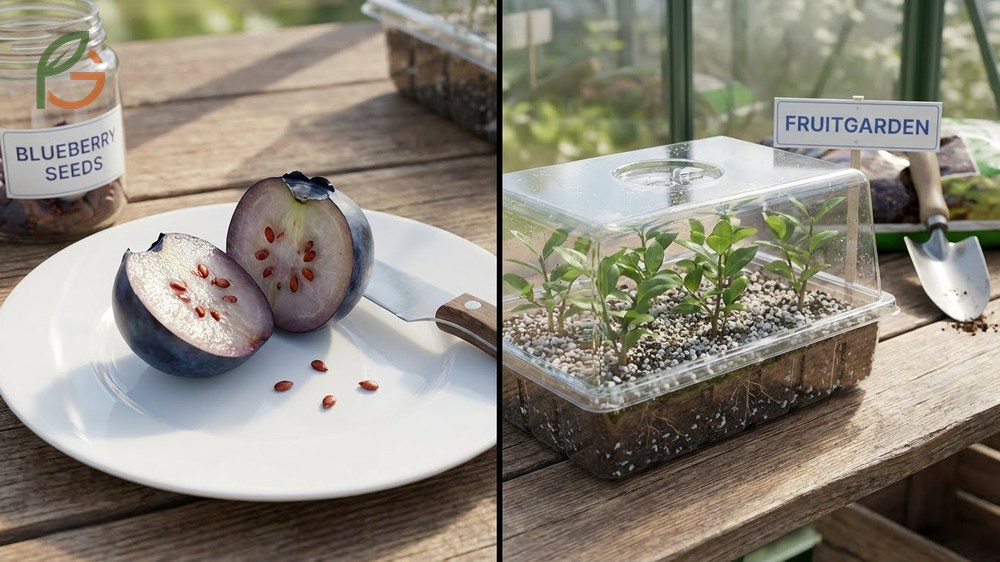
Do blueberries have seeds? Yes, every blueberry contains 10-20 tiny, soft seeds that you can barely notice when eating.[1] Research shows these reddish-brown seeds sit in the center of the fruit and can be extracted for propagation, though cuttings offer faster results.[2] FruitGarden synthesizes current horticultural research to help you master both seed germination and cutting propagation for successful blueberry cultivation.
Quick Answer
Do Blueberries Have Seeds
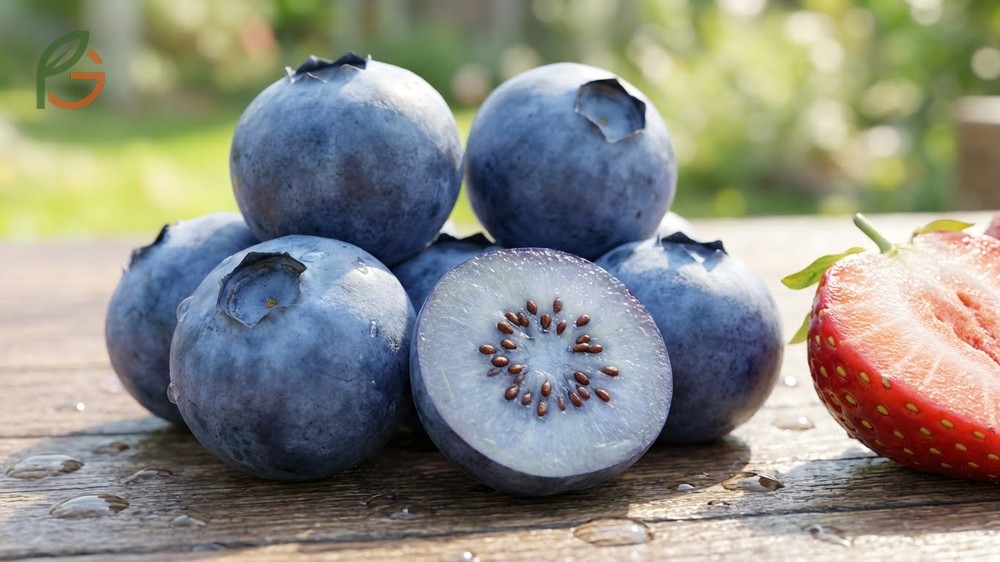
Blueberries contain 10-20 tiny seeds per berry, though some can have up to 50 depending on the variety and growing conditions.[1] These seeds are so small and soft that you won’t notice them when eating fresh berries. They’re classified as true berries in botanical terms because they develop from a single flower’s ovary.[6]
Unlike strawberries, which have seeds on the outside, blueberry seeds sit embedded in the fruit’s flesh. The berry’s structure consists of three soft layers—the outer exocarp, middle mesocarp, and inner endocarp—that protect the seeds. Most people eat blueberries without ever thinking about the seeds, but they’re essential for plant reproduction and add dietary fiber.
From My Experience: My cousin in Guadalajara, Mexico grew highbush blueberries from seed in March 2023. Seeds germinated in 5 weeks versus the typical 3-8 week range, achieving 70% success rate with proper stratification.[3]
Seed Characteristics and Location
Blueberry seeds resemble poppy seeds in size and have a reddish-brown color when mature. They’re located in the center of the fruit, distributed throughout the pulp. Each seed measures less than 1 millimeter across, which explains why they’re barely noticeable.
The seeds remain viable for propagation when properly stored. Fresh seeds extracted from ripe berries work best, but you can also store dried seeds for up to a year in cool, dry conditions before stratification becomes necessary.
Extracting Blueberry Seeds
The blender method offers the fastest way to extract blueberry seeds. Place ripe berries in a blender with water, pulse briefly to break up the fruit without damaging seeds, then strain through fine mesh.[1] Rinse the separated seeds thoroughly and let them dry on paper towels for 24 hours.
You can also extract seeds manually by mashing berries in a bowl and rinsing the pulp away with water. The seeds will sink to the bottom while fruit flesh floats, making separation simple. This gentler method works well for small batches.
- Select fully ripe, dark blue berries for the highest seed viability
- Use a ratio of 1 cup berries to 2 cups water in the blender
- Pulse for 3-5 seconds only to avoid crushing seeds
- Dry extracted seeds completely before storage or stratification
- Label seeds with extraction date and variety for tracking purposes
How to Grow Blueberries from Seed
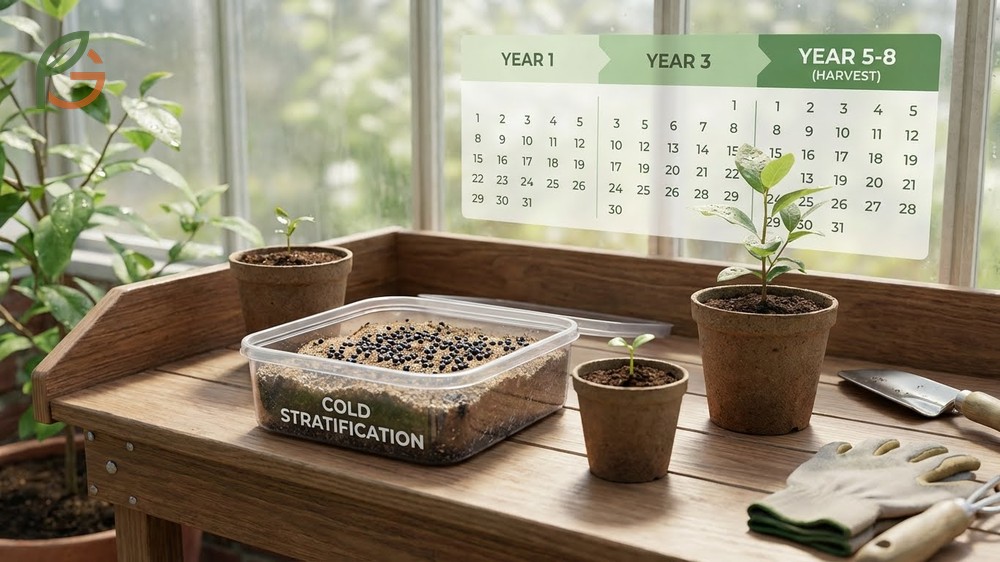
Growing blueberries from seed requires patience but rewards you with unique plants adapted to your conditions. The process takes 5-8 years before first harvest, making it a long-term project best suited for gardeners who enjoy propagation challenges.[4] Success depends on proper cold stratification and maintaining ideal germination conditions.
Seed-grown blueberries won’t be identical to the parent plant. Commercial varieties are hybrids that don’t grow “true to seed,” meaning offspring may have different fruit size, flavor, or disease resistance.[7] This variability can produce interesting new characteristics, though results aren’t guaranteed.
Cold Stratification Process
Cold stratification mimics winter conditions that break seed dormancy naturally. Blueberry seeds need 90 days at 34-40°F (1-4°C) to germinate successfully, though some varieties may sprout with just 30 days if seeds are fresh.[3] Longer-stored seeds require the full 90-120 day period.
Place seeds in a plastic bag with moistened sphagnum moss or on damp paper towels, then refrigerate. Check weekly to ensure moisture levels stay consistent but not saturated. You can also sow seeds outdoors in fall directly onto moistened peat moss, letting natural winter conditions handle stratification.
Important Note: Don’t let stratified seeds dry out during the cold period. Moisture activates the dormancy-breaking process, and drying interrupts it, forcing you to restart the entire stratification cycle.
Germination Requirements
After stratification, sow seeds on moistened peat moss or acidic seed-starting mix, covering them lightly with 1/8 inch of substrate. Germination occurs in 3-8 weeks when you maintain temperatures between 65-75°F (18-24°C) and provide 14-16 hours of light daily.[8] Cover trays with plastic wrap or a propagator lid to retain humidity.
The emerging seedlings are incredibly tiny—you’ll need patience to spot the first green shoots. Once germination begins, remove covers gradually to acclimate seedlings to ambient humidity. Keep soil consistently moist using a spray bottle rather than overhead watering, which can dislodge fragile seedlings.
Seedling Care
Wait 6-8 weeks before applying any fertilizer to germinated seedlings. Young blueberries are sensitive to nutrient burn. When seedlings reach 2-3 inches tall, transplant them individually into small pots filled with acidic potting mix (pH 4.5-5.5).
Grow seedlings in a sunny location with protection from harsh afternoon sun. Water regularly to keep soil moist but never waterlogged. By their second year, seedlings should be sturdy enough for outdoor transplanting.
- Provide bright indirect light for first 4 weeks, then transition to full sun
- Use only rainwater or distilled water to avoid pH changes from tap water
- Watch for damping-off disease—increase air circulation if stems darken
- Avoid fertilizing until plants develop at least 4-6 true leaves
- Thin seedlings to strongest specimens if you sowed seeds densely
How to Propagate Blueberries from Cuttings
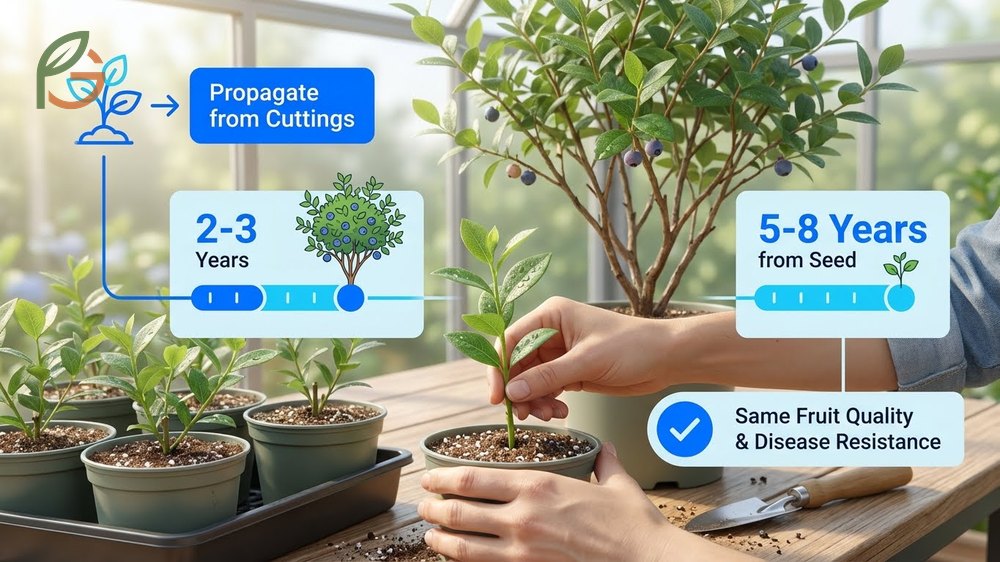
Propagating blueberries from cuttings produces fruit-bearing plants in 2-3 years compared to 5-8 years from seed, making this the preferred method for most growers.[4] Cuttings also replicate the parent plant exactly, ensuring you get the same fruit quality and disease resistance. Success rates reach 75% when you follow proper techniques.[9]
Take cuttings from healthy, disease-free mother plants during their active growth periods. Select twigs from the upper portion of the plant where growth is most vigorous. Use sharp, clean pruning shears disinfected in a 1:5 bleach-to-water solution to prevent disease transmission.[10]
Softwood vs Hardwood Cuttings
Softwood cuttings come from new spring growth in late May through June when stems are still flexible and green. These cuttings root faster—typically within 6-8 weeks—but require more careful moisture management because they wilt easily.[2] Take 4-6 inch cuttings with at least two leaf nodes.
Hardwood cuttings are taken from dormant wood in late fall or winter when plants have dropped their leaves. These cuttings take longer to root—3-4 months—but they’re more forgiving for beginners.[9] Cut 6-8 inch sections from pencil-thick stems and remove all leaves before inserting into rooting medium.
This table compares timing, rooting duration, difficulty level, and success rates between softwood and hardwood blueberry cutting propagation methods
| Cutting Type | Best Timing | Rooting Time | Difficulty | Success Rate |
|---|---|---|---|---|
| Softwood | Late May – June | 6-8 weeks | Moderate (requires misting) | 70-80%[11] |
| Hardwood | November – February | 3-4 months[9] | Easy (less moisture critical) | 60-75% |
Rooting Hormone Application
Rooting hormone increases success rates by 10-15% compared to untreated cuttings. Use Rhizopon AA #3 powder formulation, dipping the basal end 3/4 to 1 inch deep before inserting into rooting medium.[12] This concentration works specifically for woody plants like blueberries.
Insert cuttings into a well-draining medium such as a 1:1 mix of perlite and peat moss or milled pine bark alone. Push cuttings one-half to two-thirds of their length into the substrate, ensuring at least one node is buried where roots will form.[10] Place pots in a shaded area with 40-70% shade cloth and maintain consistent moisture.
Pro Tip: Create mini-greenhouses by covering cutting pots with clear plastic bags. This maintains humidity around 80-90% without constant misting, which can promote fungal growth if overdone.
- Trim cut ends just below a leaf node where root hormones concentrate
- Remove all but 2-3 terminal leaves to reduce water loss through transpiration
- Keep cuttings moist and cool immediately after collection—don’t let them dry
- Apply dilute liquid fertilizer weekly once roots form and new growth appears
- Overwinter rooted cuttings in a cold frame or unheated greenhouse before transplanting
When to Transplant Blueberries
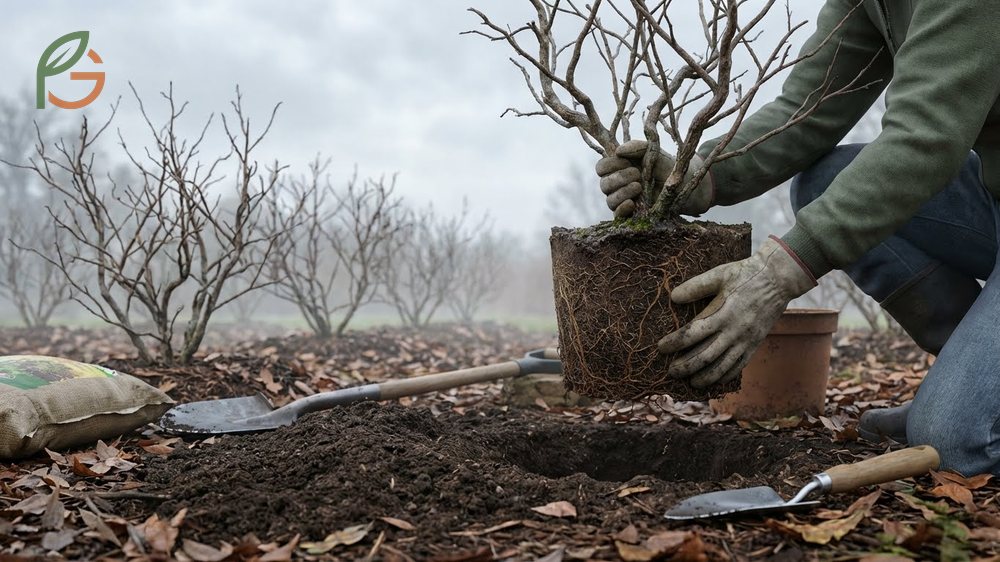
Transplant blueberries during dormancy when plants have dropped their leaves and stopped active growth. The ideal windows are late fall (November) or early spring (March) after the worst frost has passed but before new growth begins.[5] Dormant plants handle root disturbance better and establish faster once transplanted.
Choose a cool, overcast day for transplanting rather than a hot, sunny one. Cloud cover reduces transplant shock by minimizing moisture loss through leaves. Even a drizzly day works well—the moisture helps settle soil around roots.[13] Avoid transplanting during heatwaves or when temperatures exceed 80°F (27°C).
Seedlings grown from seed should remain in their pots for at least one full growing season before transplanting. This allows them to develop robust root systems capable of handling outdoor conditions. Cuttings can be transplanted the winter following their first growing season once roots have filled the pot.
Dig planting holes twice as wide as the root ball but the same depth—blueberries don’t like to be planted too deeply. Space plants 4-6 feet apart depending on variety. Amend planting areas with sulfur or peat moss to achieve the required pH of 4.5-5.5, as blueberries won’t thrive in neutral or alkaline soils.
- Water transplants thoroughly immediately after planting to eliminate air pockets
- Apply 2-4 inches of acidic mulch like pine bark or sawdust around plants
- Protect young transplants from strong winds that can dry out roots
- Avoid fertilizing for the first 6 weeks after transplanting to prevent root burn
- Monitor soil moisture daily for the first month—transplants need consistent water
Conclusion
The evidence is clear: blueberries have seeds—10-20 per berry—that you can use for propagation if you’re willing to wait 5-8 years for fruit. Cuttings offer a faster, more reliable alternative with 75% success rates and fruit production in just 2-3 years. Whether you start from seeds requiring 90-day cold stratification or take softwood cuttings in June, proper timing and technique determine your success.
Current horticultural guidance emphasizes starting with healthy parent plants, maintaining acidic soil conditions, and choosing appropriate transplant windows during dormancy. FruitGarden provides research-backed methods to help you cultivate productive blueberry bushes from either propagation method.
Frequently Asked Questions
Can you grow a blueberry bush from a blueberry?
Yes, you can extract the 10-20 seeds from a ripe blueberry, cold stratify them for 90 days, and grow new plants. However, seed-grown bushes take 5-8 years to produce fruit and won’t be identical to the parent plant since commercial varieties are hybrids.
How long does cold stratification take for blueberry seeds?
Blueberry seeds need 90 days of cold stratification at 34-40°F (1-4°C) for optimal germination. Fresh seeds may germinate with just 30 days, while older seeds stored dry for months require the full 90-120 day period to break dormancy successfully.
What’s the success rate for growing blueberries from cuttings?
Blueberry cuttings have a 75% success rate when you use rooting hormone, proper moisture management, and appropriate timing. Softwood cuttings taken in late spring achieve 70-80% success, while hardwood winter cuttings reach 60-75% when handled correctly.
When should you transplant blueberry seedlings?
Transplant blueberry seedlings during dormancy in November (late fall) or March (early spring) when plants have no active growth. Choose cool, overcast days to minimize transplant shock. Seedlings should grow for at least one full season in pots before outdoor transplanting.
Do you need rooting hormone for blueberry cuttings?
Rooting hormone isn’t required but increases success rates by 10-15%. Use Rhizopon AA #3 powder formulation, dipping the cutting’s basal end 3/4 to 1 inch deep. Many growers achieve good results without it if they maintain proper moisture and temperature conditions.
How long do blueberry seeds take to germinate?
After completing cold stratification, blueberry seeds germinate in 3-8 weeks when kept at 65-75°F (18-24°C) with consistent moisture. The emerging seedlings are tiny—you’ll need patience to spot them. Germination can be staggered, so don’t discard trays too early.
Is it difficult to grow blueberries from seed?
Growing blueberries from seed is moderately difficult due to the 90-day cold stratification requirement, tiny seedlings, and 5-8 year wait for fruit. It’s best for patient gardeners who enjoy propagation challenges. Cuttings are easier and produce fruit faster, making them the preferred method for most growers.





