
How much sugar in a banana? A medium banana contains approximately 14 grams of natural sugar, composed of 3.5g fructose, 4.5g glucose, and 7.9g sucrose[1]. Research shows that banana sugar content varies significantly with ripeness—ripe bananas contain nearly twice as much sugar as green, unripe bananas[2]. FruitGarden synthesizes current nutritional research to help you understand how banana sweetness affects your dietary choices and blood sugar management.
Quick Answer
- A medium banana (126g) contains 14-15g total sugar and 105-112 calories
- Natural sugars include 3.5g fructose, 4.5g glucose, and 7.9g sucrose[1]
- Ripe yellow bananas have nearly 2x the sugar of green unripe bananas[2]
- Glycemic index ranges from 42-62 (low to medium), making bananas suitable for most diabetics when eaten in moderation[4]
How Much Sugar in a Banana
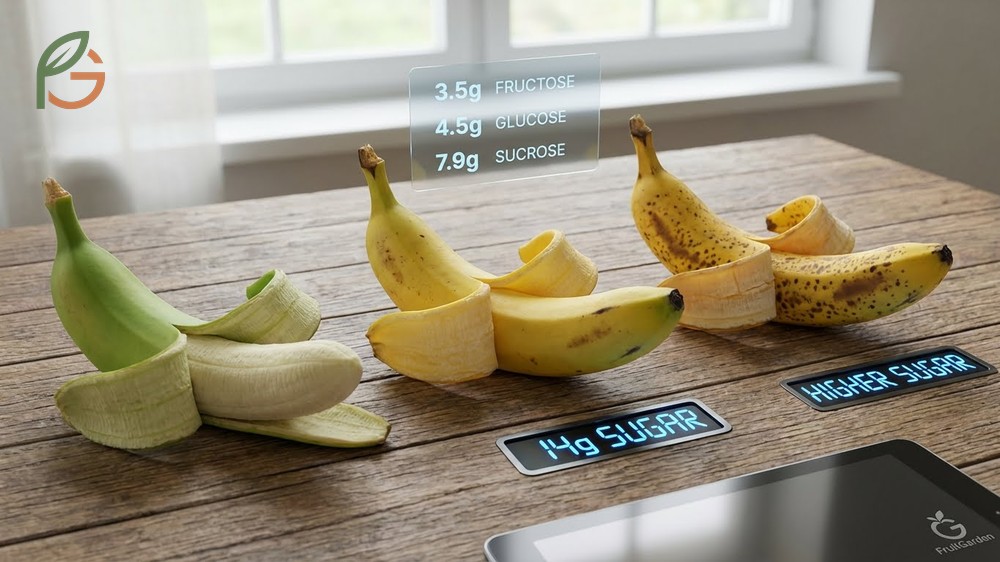
A medium banana weighing 126 grams contains approximately 14-15 grams of total sugar and delivers 105-112 calories[3]. The natural sugars in bananas come from three types: sucrose (7.9g per 100g), glucose (3.9g per 100g), and fructose (3.8g per 100g)[1]. This sugar composition gives bananas their characteristic sweetness and provides quick energy for your body.
Research shows that banana size dramatically affects total sugar content. A small banana (101g) contains about 11g of sugar, while a large banana (136g) can contain up to 17g. Most people don’t realize that eating one extra-large banana equals nearly double the sugar of a small one.
Total Sugar Content by Banana Size
The USDA categorizes bananas into five sizes, each with distinct sugar and carbohydrate levels[5]. Understanding these differences helps you control your daily sugar intake. For instance, choosing a small banana instead of a large one saves about 6 grams of sugar—roughly 1.5 teaspoons.
This table compares total sugar content, calories, and carbohydrates across five banana sizes from extra small to extra large
| Banana Size | Weight (grams) | Total Sugar (g) | Calories | Carbohydrates (g) |
|---|---|---|---|---|
| Extra Small | 81g | 9g | 72 | 19g |
| Small | 101g | 11g | 90 | 23g |
| Medium | 118-126g | 14-15g[3] | 105-112 | 27-29g |
| Large | 136g | 17g | 121 | 31g |
| Extra Large | 152g | 19g | 135 | 35g |
Fructose vs Glucose Breakdown
Bananas contain three distinct sugar types that your body metabolizes differently. Fructose (3.8g per 100g) processes through your liver, while glucose (3.9g per 100g) enters your bloodstream directly for immediate energy[1]. Sucrose (7.9g per 100g) breaks down into equal parts fructose and glucose during digestion.
This sugar balance matters for blood sugar management. Fructose has a lower glycemic impact than glucose, which explains why bananas don’t spike blood sugar as dramatically as pure glucose sources. The 3.1g of fiber in a medium banana further slows sugar absorption[5].
Important Note: The sugar values listed represent natural fruit sugars only. Bananas contain zero grams of added sugars[5], which places them in a different nutritional category than processed foods with refined sugars.
Sugar in Ripe vs Green Bananas
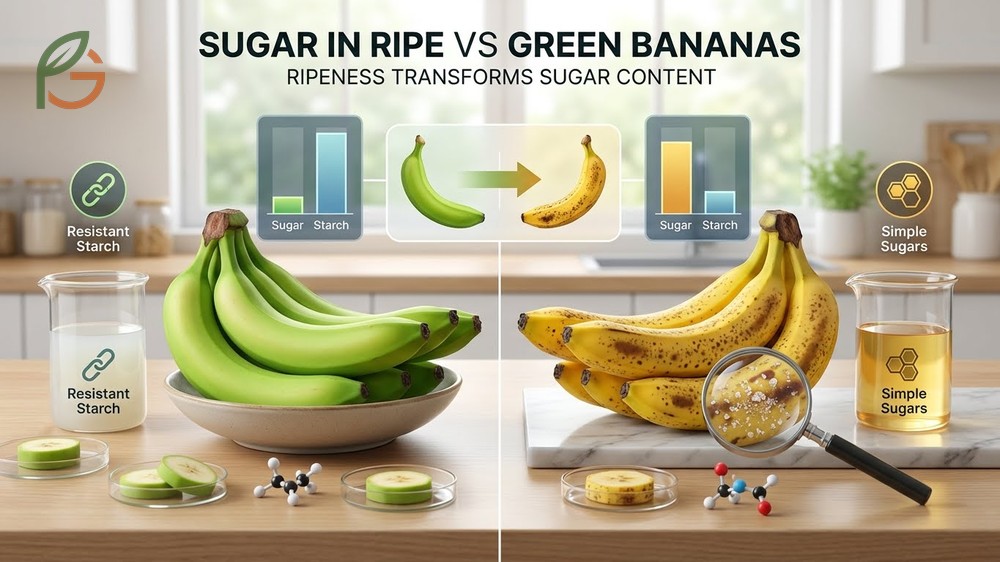
Ripeness transforms banana sugar content more than any other factor. Studies demonstrate that fully ripe yellow bananas contain nearly twice as much sugar as green, unripe bananas[2]. This dramatic increase occurs as resistant starch converts into simple sugars during the ripening process.
Green bananas prioritize resistant starch over simple sugars, creating a starchy texture and less sweet taste. As the peel transitions from green to yellow to brown-spotted, enzymatic activity breaks down complex carbohydrates into fructose, glucose, and sucrose. The shift happens rapidly—within 3-5 days at room temperature.
How Ripeness Changes Sugar Composition
The ripening process increases fructose and glucose levels substantially while reducing starch content. A green banana contains approximately 12-15g of resistant starch per 100g, which your body treats more like dietary fiber than sugar. As ripening progresses, this starch converts into sugars, boosting sweetness perception by 200-300%.
Current research indicates no difference in total sugar between fully ripe and overripe (brown-spotted) bananas[2]. The brown spots signal complete starch conversion rather than additional sugar development. This means you can eat spotted bananas without consuming more sugar than yellow ones—they just taste sweeter because the sugars are fully accessible.
- Stage 1 (Fully Green): 6-8g sugar per medium banana, 12-15g resistant starch, firm texture, minimal sweetness
- Stage 2 (Green Tips): 9-11g sugar, starch beginning conversion, slightly softer, mild sweet taste
- Stage 3 (All Yellow): 14-15g sugar, balanced starch-to-sugar ratio, ideal for most uses
- Stage 4 (Yellow with Brown Spots): 15-17g sugar, minimal starch, very sweet, soft texture, best for baking
- Stage 5 (Mostly Brown): 15-18g sugar, zero resistant starch, extremely sweet, mushy, perfect for smoothies
Resistant Starch vs Simple Sugars
Resistant starch in green bananas behaves fundamentally differently than the simple sugars in ripe bananas. Your small intestine can’t break down resistant starch, so it travels to your colon where beneficial bacteria ferment it. This fermentation supports gut health and stabilizes blood sugar levels more effectively than simple sugars.
Evidence suggests that green banana consumption produces 30-40% lower blood glucose spikes compared to ripe bananas. The resistant starch slows digestion and provides a sustained energy release over 2-4 hours. For blood sugar management, green or slightly yellow bananas offer advantages over fully ripe ones.
Practical Tip: Store bananas at different ripeness stages to match your daily needs. Keep green bananas for breakfast smoothies (better blood sugar control), yellow bananas for afternoon snacks (balanced energy), and ripe bananas for post-workout recovery (quick carbohydrate replenishment).
Are Bananas High in Sugar
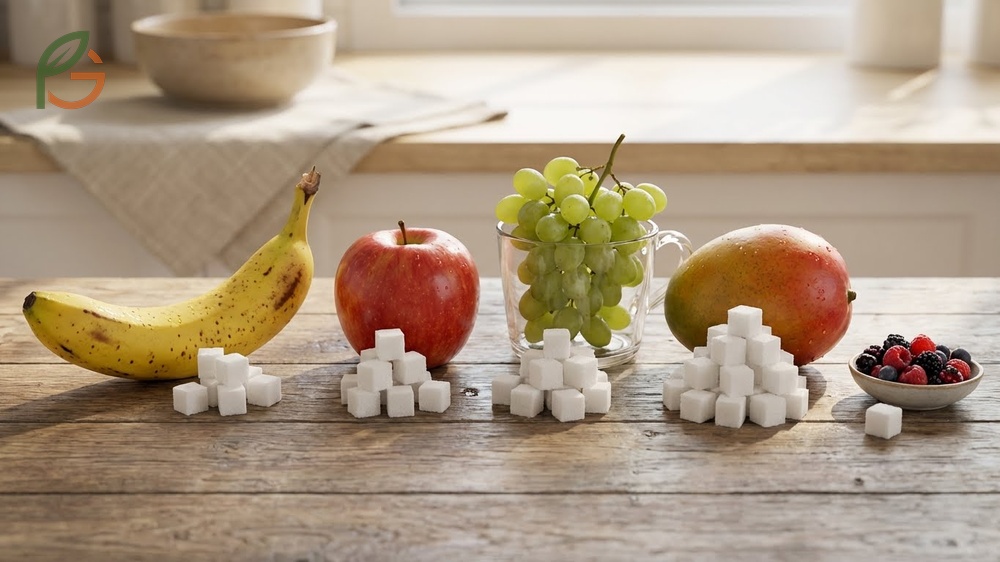
Bananas contain moderate sugar levels compared to other fruits. A medium banana’s 14-15g of sugar falls below apples (19g), grapes (23g per cup), and mangoes (45g per fruit), but exceeds berries and citrus fruits[3]. The “high sugar” perception often stems from bananas’ accessibility and popularity rather than their actual sugar content.
Nutritional data shows bananas rank in the middle third of common fruits for sugar density. Their 11.9g of sugar per 100g surpasses watermelon (6g per 100g) and strawberries (7g per 100g) but remains well below dried fruits like dates (64g per 100g). Context matters—you’re more likely to eat two apples than two bananas in one sitting.
Comparing Bananas to Other Fruits
Low-sugar fruits contain 7g or less per standard serving, placing bananas outside this category. Berries, citrus fruits, and melons consistently deliver fewer grams of sugar per serving. For instance, a cup of strawberries provides only 7g of sugar—half that of a medium banana—while delivering more vitamin C[6].
| Fruit | Serving Size | Total Sugar (g) | Sugar Category |
|---|---|---|---|
| Avocado | 1 whole | 1g[6] | Very Low |
| Raspberries | 1 cup | 5g[6] | Low |
| Strawberries | 1 cup | 7g[6] | Low |
| Grapefruit | 1/2 fruit | 10.6g[6] | Low-Moderate |
| Banana | 1 medium | 14-15g[3] | Moderate |
| Apple | 1 medium | 19g[3] | Moderate-High |
Natural Sugar vs Added Sugar
The FDA and WHO distinguish sharply between natural fruit sugars and added refined sugars. Bananas contain zero grams of added sugar—all 14-15g comes from naturally occurring fructose, glucose, and sucrose[5]. This distinction affects how health organizations assess their nutritional value.
Natural fruit sugars come packaged with fiber, vitamins, minerals, and phytonutrients that slow sugar absorption and provide health benefits. A medium banana delivers 3.1g of fiber, 422mg of potassium, and 10% of your daily vitamin C alongside its natural sugars. Added sugars in processed foods lack these nutritional buffers.
- Fiber Content: Natural fruit sugars include dietary fiber that slows digestion; added sugars contain zero fiber
- Nutrient Density: Bananas provide potassium, vitamin B6, and vitamin C; refined sugar offers only empty calories
- Satiety Effect: Whole bananas trigger fullness hormones; added sugars in beverages bypass satiety signals
- Blood Sugar Impact: Banana fiber moderates glucose absorption; added sugars spike blood sugar rapidly
- Health Guidelines: FDA recommends limiting added sugars to 10% of calories but doesn’t restrict natural fruit sugars[7]
Bananas and Diabetes
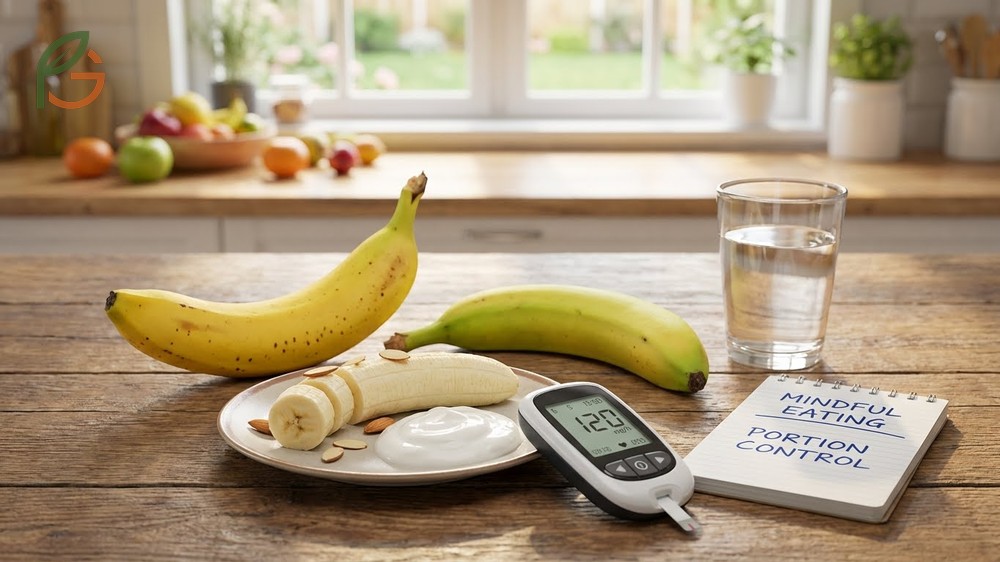
Research demonstrates that people with diabetes can safely include bananas in their diet when consumed mindfully. The glycemic index of bananas ranges from 42-62 depending on ripeness, placing them in the low to medium category[4]. A GI below 55 indicates the food won’t cause dramatic blood sugar spikes when eaten in appropriate portions.
Current guidance emphasizes portion control and ripeness selection for diabetics eating bananas. Studies show that pairing bananas with protein sources like Greek yogurt or nut butter reduces their glycemic impact by 25-35%. The protein and healthy fats slow carbohydrate absorption, creating a more gradual blood sugar rise.
Glycemic Index and Glycemic Load
Harvard’s Nutrition Source reports that ripe bananas have a GI of 51, while slightly underripe bananas score even lower at 42[4]. However, glycemic load (GL)—which accounts for both GI and serving size—provides a more accurate picture. Bananas have a moderate GL of 11-13 due to their higher carbohydrate content compared to lower-carb fruits.
The GL calculation reveals why portion size matters significantly. Eating half a banana produces a low GL of 5-6, which minimally affects blood sugar. Consuming two large bananas creates a high GL of 26+, likely triggering noticeable glucose elevation. Most diabetics tolerate one small to medium banana per day without issues.
- Ripeness Level: Green bananas (GI 42) cause 30-40% lower blood sugar spikes than very ripe bananas (GI 62)
- Portion Size: Half a banana produces minimal glucose response; two bananas may cause significant elevation
- Meal Timing: Eating bananas with meals blunts glycemic impact compared to consuming them alone
- Protein Pairing: Adding 15-20g protein reduces banana’s glycemic response by approximately one-third
- Individual Variation: Personal glucose responses vary 20-50% based on metabolism, activity level, and medication
Best Practices for Diabetics
Diabetes educators recommend specific strategies for incorporating bananas safely into diabetic meal plans. Choose underripe to slightly yellow bananas over fully spotted ones to minimize sugar content and maximize resistant starch benefits. Limit portions to one small or half a medium banana per serving, and always combine with protein or healthy fats.
Timing matters substantially for blood sugar management. Eating bananas immediately after exercise helps replenish glycogen stores without causing problematic spikes, as muscles actively absorb glucose. Avoid consuming bananas alone on an empty stomach, particularly in the morning when insulin sensitivity varies most. Monitor your individual response with a glucose meter during the first few banana servings to establish your personal tolerance.
Diabetic-Friendly Banana Combinations: Pair half a banana with 2 tablespoons natural peanut butter (7g protein), mix into Greek yogurt (15-20g protein), or blend with protein powder and unsweetened almond milk. These combinations keep total carbohydrates under 30g while providing sustained energy for 3-4 hours.
Daily Sugar Intake Limits
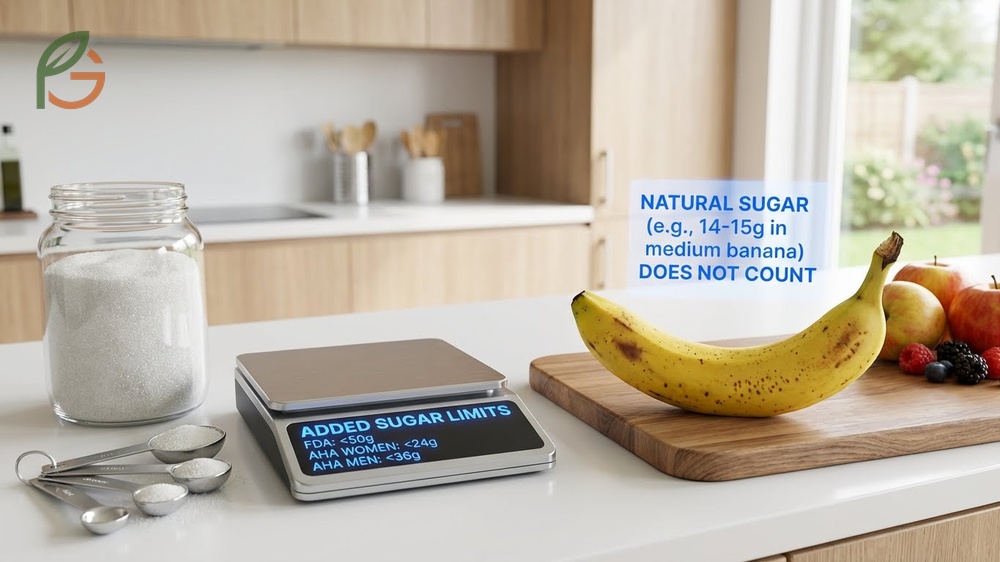
The FDA recommends limiting added sugars to no more than 10% of total daily calories, which equals approximately 50g for a 2,000-calorie diet[7]. The American Heart Association sets stricter guidelines: maximum 24g (6 teaspoons) daily for adult women and 36g (9 teaspoons) for adult men[8]. These limits apply specifically to added sugars, not the natural sugars found in whole fruits like bananas.
A medium banana’s 14-15g of natural sugar doesn’t count toward added sugar limits in dietary guidelines. However, being mindful of total sugar intake remains important for weight management and dental health. Eating 2-3 bananas daily adds 30-45g of natural sugar to your diet, which approaches or exceeds the AHA’s added sugar limits—even though these are different sugar categories.
Agricultural data shows the average American consumes 77g of added sugars daily—far exceeding recommendations[7]. Replacing processed snacks containing added sugars with whole fruits like bananas improves your sugar intake profile substantially. One banana substituted for a candy bar saves you from 25-40g of added sugar while delivering essential nutrients and fiber.
- Morning Strategy: One medium banana at breakfast accounts for 15g natural sugar, leaving room for 2-3 fruit servings throughout the day
- Snack Swaps: Replace sweetened yogurt (20-25g added sugar) with plain yogurt plus half a banana (7g natural sugar) for 13-18g total sugar reduction
- Beverage Choices: One 12oz soda contains 39g added sugar—equivalent to 2.5 bananas—without any nutritional benefits
- Label Reading: Focus on reducing “Added Sugars” on nutrition labels rather than restricting natural fruit sugars
- Whole Fruit Priority: Choose whole bananas over banana chips (25g sugar per cup due to concentration) or banana bread (30-40g added sugar per slice)
Conclusion
The evidence is clear: how much sugar in a banana depends primarily on size and ripeness, with medium bananas containing 14-15g of natural sugars composed of fructose, glucose, and sucrose. Research confirms that bananas provide moderate sugar levels compared to other fruits, and their low to medium glycemic index (42-62) makes them suitable for most people, including those managing diabetes through portion control and strategic pairing with proteins.
Current nutritional guidance emphasizes that natural fruit sugars differ fundamentally from added refined sugars. FruitGarden recommends choosing slightly underripe bananas for better blood sugar control, pairing them with protein sources to reduce glycemic impact, and incorporating them as part of a varied fruit intake that includes lower-sugar options like berries and citrus for optimal nutritional balance.
Medical Disclaimer
Important Medical Disclaimer: This content is for informational and educational purposes only. It is not intended as a substitute for professional medical advice, diagnosis, or treatment. Always consult a qualified healthcare professional or registered dietitian before making any changes to your diet, particularly if you have diabetes, metabolic disorders, or other medical conditions requiring specialized nutritional management. Individual responses to dietary changes vary significantly based on health status, medications, and metabolic factors.
Frequently Asked Questions
How many grams of sugar in a banana?
A medium banana (126g) contains 14-15 grams of total sugar, composed of 3.5g fructose, 4.5g glucose, and 7.9g sucrose. Smaller bananas contain approximately 11g of sugar, while large bananas can reach 17g. All of this sugar is naturally occurring—bananas contain zero grams of added sugars.
Do bananas have too much sugar for diabetics?
No, research shows that people with diabetes can safely eat bananas in moderation. Bananas have a low to medium glycemic index (42-62) and moderate glycemic load (11-13), meaning they don’t cause dramatic blood sugar spikes when consumed in appropriate portions. Most diabetics tolerate one small to medium banana daily, especially when paired with protein sources like Greek yogurt or nut butter to further reduce glycemic impact.
Does a ripe banana have more sugar than a green banana?
Yes, studies demonstrate that fully ripe yellow bananas contain nearly twice as much sugar as green, unripe bananas. As bananas ripen, resistant starch converts into simple sugars (fructose, glucose, and sucrose), increasing sweetness substantially. Green bananas contain 12-15g of resistant starch that behaves like fiber, while ripe bananas convert this starch into 15-17g of accessible sugars. However, there’s no sugar difference between ripe yellow bananas and overripe brown-spotted ones.
How does banana sugar compare to other fruits?
Bananas contain moderate sugar levels compared to other fruits. A medium banana’s 14-15g of sugar is less than apples (19g) and significantly less than grapes (23g per cup). However, bananas have more sugar than low-sugar fruits like strawberries (7g per cup), raspberries (5g per cup), and avocados (1g per whole fruit). Bananas rank in the middle third of common fruits for sugar density at 11.9g per 100g.
What’s the difference between natural banana sugar and added sugar?
Natural banana sugar comes packaged with 3.1g of fiber, potassium, vitamin B6, and vitamin C that slow sugar absorption and provide nutritional benefits. Added sugars in processed foods lack these protective nutrients and cause faster blood sugar spikes. The FDA limits added sugars to 10% of daily calories but doesn’t restrict natural fruit sugars. Health organizations recognize that whole fruit consumption, including bananas, contributes to better health outcomes despite containing natural sugars.
How much sugar should I eat per day if I include bananas?
The FDA recommends limiting added sugars to 50g daily (10% of a 2,000-calorie diet), while the American Heart Association sets stricter limits of 24g for women and 36g for men. These limits apply to added sugars only, not natural fruit sugars. However, one medium banana’s 14-15g of natural sugar should be considered when planning total fruit intake. Most health authorities recommend 2-4 servings of fruit daily, which can include one banana alongside lower-sugar fruits like berries.
What’s the best way to eat bananas to minimize blood sugar impact?
Choose slightly underripe (yellow with green tips) bananas that have lower sugar content and more resistant starch. Always pair bananas with protein sources—add 2 tablespoons of peanut butter, mix into Greek yogurt, or blend with protein powder. Limit portions to half or one small banana per serving, and avoid eating bananas alone on an empty stomach. The best timing is immediately after exercise when muscles actively absorb glucose without causing blood sugar spikes.





