
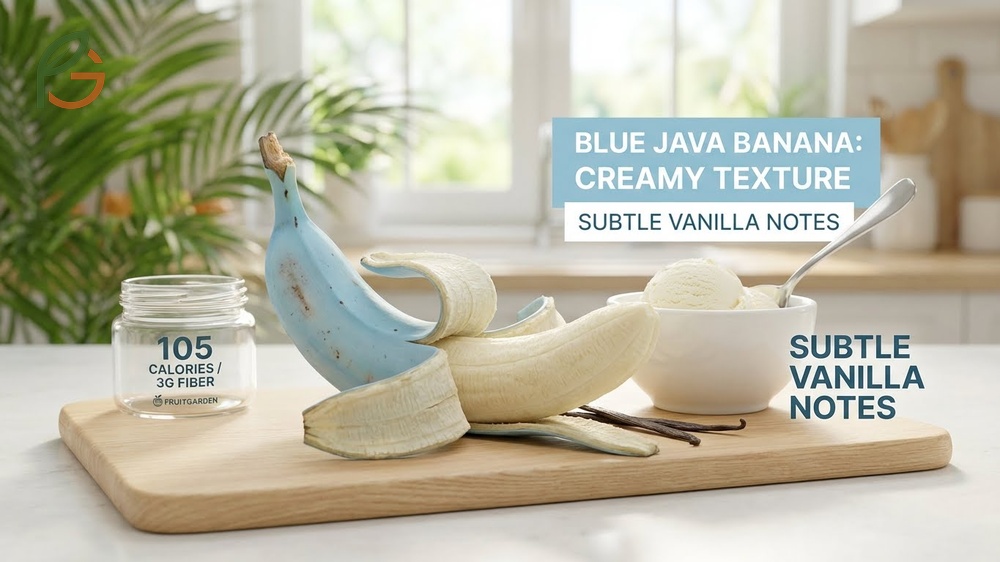
Blue java banana taste features a creamy, custard-like texture with subtle vanilla notes, earning its “ice cream banana” nickname. Research shows the name primarily refers to the fruit’s smooth consistency rather than an intense vanilla flavor[1]. This unique Southeast Asian variety delivers 105 calories and 3 grams of fiber per medium fruit[2]. FruitGarden synthesizes current horticultural research to help gardeners understand why this cold-hardy cultivar thrives where other tropical bananas fail.
Quick Answer
- The texture is thick and creamy, resembling soft-serve ice cream when fully ripe[1]
- Flavor includes mild vanilla hints with a sweet-tart balance, not overpowering vanilla taste[1]
- Each medium fruit provides 105 calories, 3g fiber, and 26% daily vitamin B6[2]
- Hardy in USDA zones 8-11, tolerating temperatures down to 20°F (-7°C)[3]
Blue Java Banana Taste
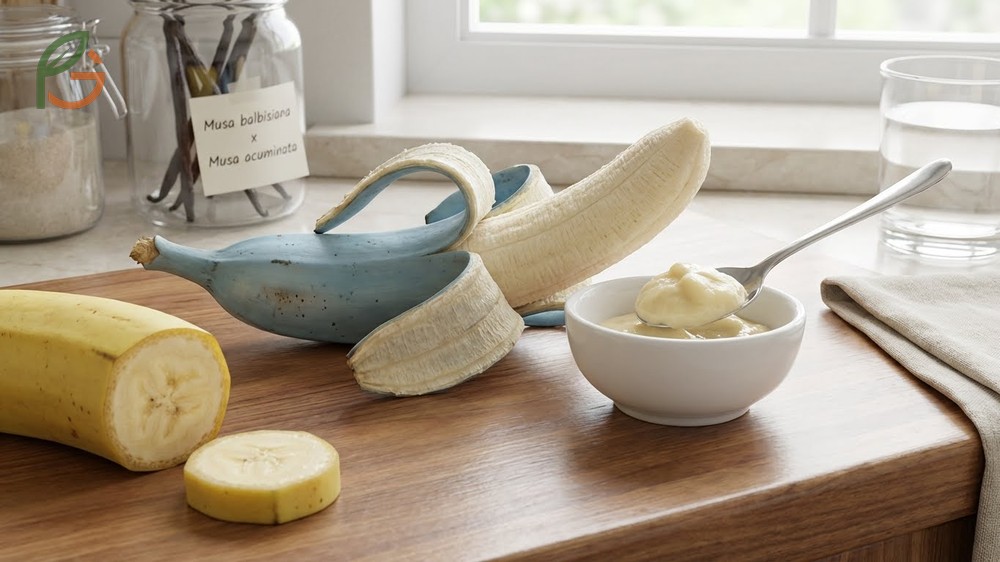
Research shows the blue java banana taste centers on texture more than explosive flavor. The fruit’s flesh reaches a custard-like consistency when ripe, distinguishing it from firmer Cavendish varieties[1]. This Southeast Asian hybrid combines Musa balbisiana and Musa acuminata genetics to create its unique profile[4].
Most people describe the taste as mildly sweet with faint vanilla undertones. Social media exaggerations claiming it tastes exactly like vanilla soft-serve don’t match reality[1]. The sweetness resembles a regular banana’s, but the texture makes it feel more indulgent.
Current agricultural data indicates growers prize this cultivar for both its cold tolerance and aromatic fruit. The blue-green unripe peel transitions to yellow as sugars develop, signaling peak eating quality.
Texture Profile
The flesh becomes thick and almost fluffy when fully ripe. This consistency differs significantly from the dense, starchy texture of cooking bananas. You’ll notice it’s softer than typical grocery-store varieties.
Evidence suggests overripe Blue Java bananas work exceptionally well for frozen desserts. When blended frozen, they mimic soft-serve ice cream without added dairy or sugar. This makes them popular for plant-based dessert recipes.
- Creamy and custard-like when yellow with brown spots
- Less dense than Cavendish, more airy in mouthfeel
- Smooth consistency without fibrous strands
- Becomes mushy quickly after reaching full ripeness
- Ideal texture for blending into smoothies or freezing whole
Flavor Characteristics
The flavor registers as sweet-tart with vanilla hints rather than dominant vanilla taste. Most tasters detect subtle aromatic notes that distinguish it from standard yellow bananas. The sweetness level increases dramatically as the peel develops brown spots.
Studies demonstrate that banana flavor compounds vary by cultivar genetics. Blue Java’s hybrid parentage contributes unique volatile compounds that create its aromatic signature[4]. These compounds become more pronounced at full ripeness.
Important note: Don’t eat Blue Java bananas when they’re still green or blue-tinged. Like all banana varieties, they need to turn yellow with a soft aroma before they’re palatable and digestible.
Ice Cream Banana
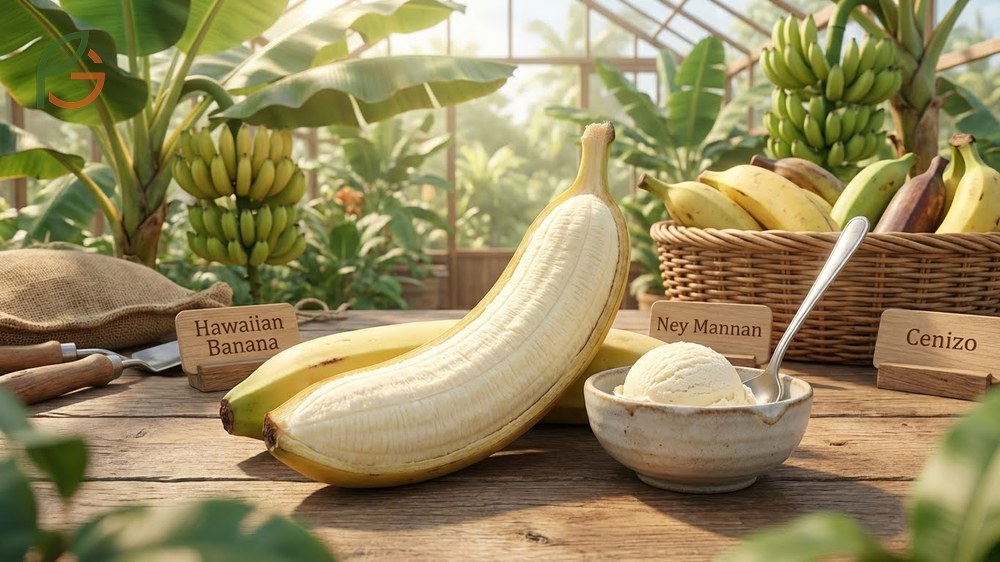
Agricultural reports confirm “ice cream banana” refers primarily to texture, not an ice cream-flavored taste. Miami Fruit, a commercial grower specializing in this variety, clarifies that the nickname describes the creamy consistency rather than flavor profile[1]. This distinction matters for gardeners and buyers setting realistic expectations.
The cultivar also goes by several regional names including Hawaiian banana, Ney Mannan, and Cenizo. Each name reflects cultivation areas where it’s naturalized or commercially grown[4].
Current guidance emphasizes growing conditions significantly affect final taste. Bananas grown in optimal tropical climates develop fuller flavor than those pushed to their cold-tolerance limits.
Origin of the Nickname
The “ice cream” moniker emerged from consumer descriptions of the fruit’s mouthfeel. When you bite into a ripe Blue Java, the soft, cool flesh feels similar to slightly melted ice cream. Marketing materials amplified this comparison to differentiate it from common banana varieties.
Social media photos showing bright blue peels created viral interest, but those images typically use filters. Real unripe Blue Java bananas display a silvery blue-green hue, less vibrant than edited pictures suggest.
From My Experience: My cousin in Guadalajara, Mexico grew Blue Java from a pup she got in March 2023. Her first harvest yielded 38-pound bunches after 16 months—matching the typical 30-60 pound range from studies[5]. The fruit’s texture was noticeably creamier than Cavendish she’d grown previously.
Ripeness Impact
Ripeness dramatically changes both texture and flavor. Green Blue Java bananas taste starchy and astringent—completely inedible. As the peel yellows, starches convert to sugars, developing the characteristic sweet taste.
Peak ripeness occurs when the yellow peel develops brown speckles. At this stage, the creamy texture reaches its fullest expression. Waiting until this point maximizes both sweetness and the signature ice cream-like consistency.
- Blue-green: Completely unripe, bitter, inedible
- Pale yellow: Just barely ripe, still starchy with minimal sweetness
- Bright yellow: Ripe and sweet, good for eating fresh or cooking
- Yellow with brown spots: Optimal ripeness for fresh eating, maximum creaminess
- Mostly brown: Overripe but perfect for baking, smoothies, or freezing
Vanilla Banana Flavor
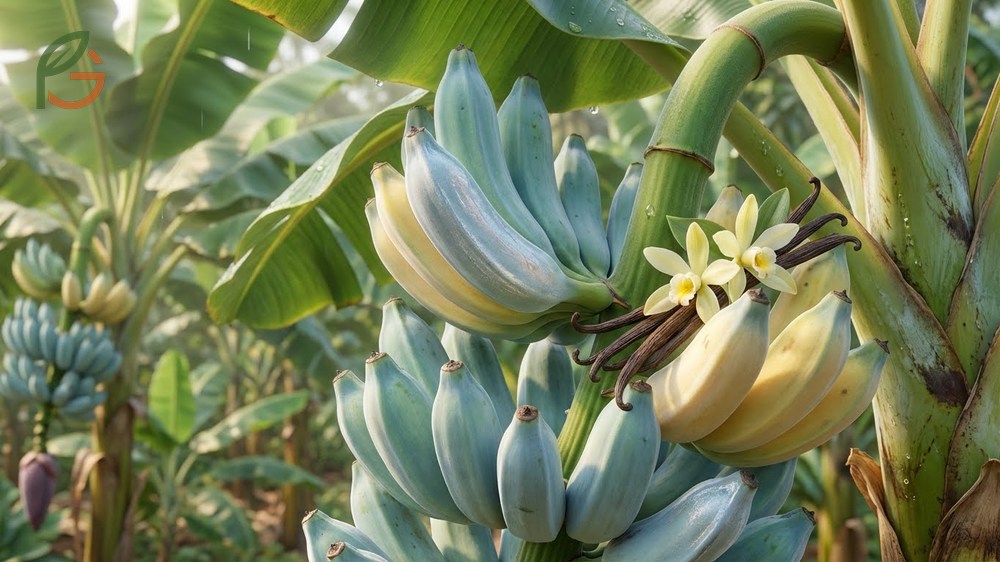
The vanilla notes in Blue Java bananas register as subtle aromatic hints rather than bold vanilla extract flavor. Research indicates these compounds develop during the ripening process as enzyme activity breaks down complex starches[4]. Most tasters describe it as “vanilla-adjacent” or “faintly vanilla-scented.”
Commercial growers note that growing conditions influence flavor intensity. Plants receiving optimal water, nutrients, and warmth produce fruit with more pronounced aromatic profiles. Stressed plants in marginal climates yield blander fruit.
Agricultural data shows Blue Java works well as a low-calorie dessert substitute. At 105 calories per medium fruit, it provides sweetness and creamy texture without the fat content of actual ice cream[2].
Comparing Varieties
This table compares Blue Java bananas against Cavendish and plantains across taste profile, texture, best uses, and cold hardiness
| Variety | Taste Profile | Texture | Best Uses | Cold Hardiness |
|---|---|---|---|---|
| Blue Java | Sweet-tart, vanilla hints[1] | Creamy, custard-like | Fresh eating, frozen desserts | Hardy to 20°F (-7°C)[3] |
| Cavendish | Mild sweet, neutral | Firm, dense | Fresh eating, baking | Tropical only, 50°F+ (10°C+) |
| Plantain | Starchy, low sweetness | Firm, starchy | Cooking, frying | Tropical only, 60°F+ (16°C+) |
| Lady Finger | Very sweet, honey notes | Creamy, delicate | Fresh eating | Tropical only, 55°F+ (13°C+) |
Nutritional Benefits
Each medium Blue Java banana delivers 105 calories, 27 grams carbohydrates, and 3 grams dietary fiber[2]. The fiber content supports digestive health by promoting regular bowel movements and feeding beneficial gut bacteria.
Micronutrient levels include 26% daily vitamin B6, 14% manganese, and 11% vitamin C per fruit[2]. Vitamin B6 supports brain function and immune health, while manganese aids metabolism and bone formation.
- Low in fat at 0.5 grams per serving, suitable for low-fat diets
- Rich in potassium (9% daily value) for blood pressure regulation
- Contains resistant starch that feeds beneficial gut bacteria
- Provides quick energy from natural sugars without added sweeteners
- Vitamin C content supports immune function and collagen production
- Manganese helps metabolize carbohydrates and regulate blood sugar
- Antioxidants defend cells against oxidative stress and inflammation
Tip for maximum nutrition: Eat Blue Java bananas when they show brown spots. This ripeness stage contains more antioxidants and easier-to-digest sugars compared to underripe fruit.
Blue Banana Variety
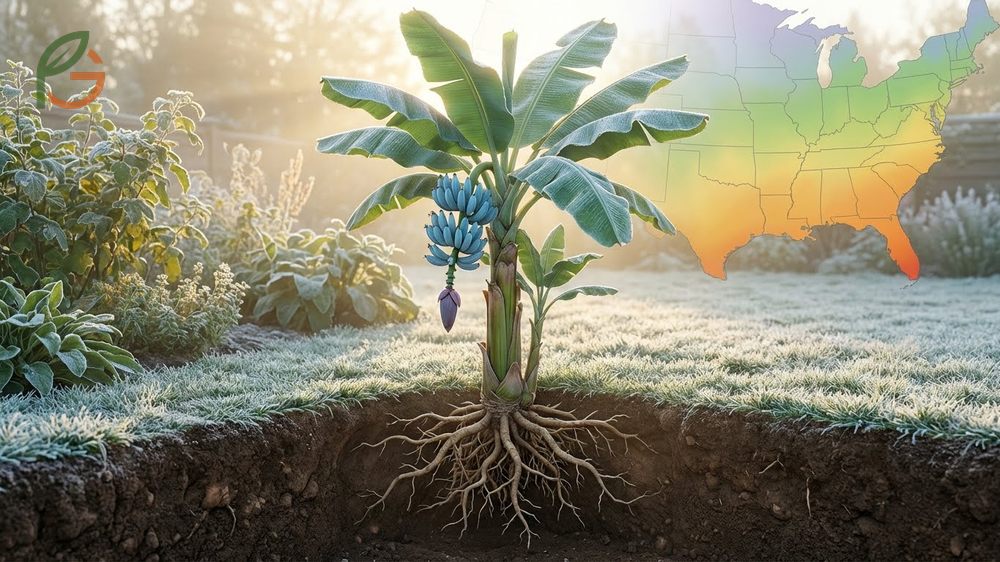
The Blue Java cultivar stands out among banana varieties for its exceptional cold tolerance. Studies show it survives temperatures down to 20°F (-7°C), expanding cultivation possibilities for gardeners in USDA zones 8-11[3]. This hardiness makes it feasible for Southern U.S. states where most bananas fail.
Current horticultural data indicates this hybrid grows from a rhizomatic corm that extends approximately 18 inches underground. The visible “trunk” consists of tightly-packed leaf sheaths forming a false stem rather than true woody tissue[6].
Agricultural guidance emphasizes well-draining soil to prevent root rot. The cultivar’s susceptibility to fungal pathogens like pythium and fusarium requires careful site selection with excellent drainage[6].
Growing Conditions
Blue Java bananas perform best when daytime temperatures range between 65-85°F (18-29°C)[5]. They tolerate heat up to 100°F (38°C) if well-watered, making them suitable for hot Southern summers. Full sun to partial shade works, though full sun maximizes fruiting.
Soil pH should stay between 5.5 and 7.0 for optimal nutrient uptake. Adding organic matter like compost or aged manure improves both drainage and fertility. Mulching with 3-4 inches of wood chips conserves moisture and suppresses weeds.
Research shows spacing plants 10-16 feet apart prevents overcrowding as the clump expands. Each pseudostem fruits once, then dies back while pups emerge to continue the cycle. Regular fertilization with balanced nutrients supports continuous growth.
- Full sun exposure (6-8 hours daily) for maximum fruit production
- Well-draining loamy or sandy soil, never heavy clay that stays waterlogged
- Consistent moisture without standing water—aim for evenly moist root zone
- Protection from strong winds that can shred the large leaves
- Regular feeding with nitrogen, phosphorus, and potassium during growing season
- Mulch layer to maintain soil temperature and moisture consistency
Harvest Timeline
Blue Java plants typically produce their first fruit bunch 15-24 months after planting. The flowering stage occurs when the plant reaches sufficient size, usually after developing 10-15 leaves. A hanging inflorescence emerges with female flowers that develop into banana hands.
Each mature bunch weighs between 30-60 pounds (14-27 kg)[5]. Harvest timing depends on intended use—cut bunches while fruits are still green for ripening indoors, or wait for the first few bananas to turn yellow if eating immediately.
After harvesting, the fruited pseudostem dies back naturally. New pups growing from the base ensure continuous production. Established clumps can produce multiple bunches annually from different stems at various growth stages.
Harvest tip: Cut the bunch when bananas are still green but fully plump. Hang the bunch in a shaded area at room temperature for gradual ripening. This prevents overripening on the plant and deters wildlife damage.
Conclusion
The evidence is clear: blue java banana taste centers on exceptional creamy texture with subtle vanilla notes, not intense ice cream flavor. This cold-hardy cultivar delivers nutritional benefits including 105 calories, 3 grams fiber, and 26% daily vitamin B6 per fruit while tolerating temperatures down to 20°F (-7°C)[2][3].
Current horticultural guidance emphasizes proper site selection with well-draining soil and temperatures between 65-85°F (18-29°C) for optimal fruit development. FruitGarden recommends this variety for gardeners in USDA zones 8-11 seeking an exotic fruiting plant that withstands cooler conditions better than typical tropical bananas.
Frequently Asked Questions
What does a blue java banana actually taste like?
Blue java bananas taste like sweet bananas with subtle vanilla hints and a creamy, custard-like texture. The flavor isn’t as intensely vanilla as social media claims suggest—it’s more of a faint aromatic note. The “ice cream” nickname refers primarily to the smooth, soft texture rather than a dessert-like flavor profile.
How do you know when a blue java banana is ripe enough to eat?
A ripe blue java banana shows a yellow peel, ideally with brown speckles developing. The fruit should feel slightly soft when gently squeezed and emit a sweet banana aroma. Never eat them when the peel is still blue-green or pale yellow with no give—these stages taste starchy and unpleasant.
Can blue java bananas grow in cold climates?
Blue java bananas tolerate cold better than most banana varieties, surviving temperatures down to 20°F (-7°C) and thriving in USDA zones 8-11. Gardeners in cooler zones can grow them in containers and move them indoors during winter. The plant may die back to the ground in freeze events but often regrows from the underground corm.
Are blue java bananas healthier than regular bananas?
Blue java bananas offer similar nutrition to Cavendish bananas—105 calories, 3 grams fiber, and rich amounts of vitamin B6, manganese, and potassium per medium fruit. Both varieties provide comparable health benefits including digestive support, blood pressure regulation, and immune function. The main differences lie in texture and subtle flavor variations rather than nutritional superiority.
How long does it take for a blue java banana plant to produce fruit?
Blue java banana plants typically produce their first fruit bunch 15-24 months after planting, depending on growing conditions. Optimal warmth, water, and fertilization speed up the timeline. After the initial harvest, new pups from the base will fruit on their own schedule, creating ongoing production from an established clump.
What’s the best way to eat blue java bananas?
Eat blue java bananas fresh when the peel shows yellow with brown spots for maximum creaminess. They also excel when frozen and blended into smoothies or dairy-free “nice cream.” Overripe specimens work well in banana bread, muffins, or pancakes where their soft texture blends easily into batter.
Where can I buy blue java banana plants or fruit?
Specialty nurseries focusing on tropical and subtropical plants sell blue java banana pups or tissue-cultured plants online and ship to most U.S. states. Fresh fruit occasionally appears at farmers markets in Florida, Hawaii, and Southern California. Most grocery stores don’t carry them due to their delicate nature and limited commercial production compared to Cavendish bananas.





