
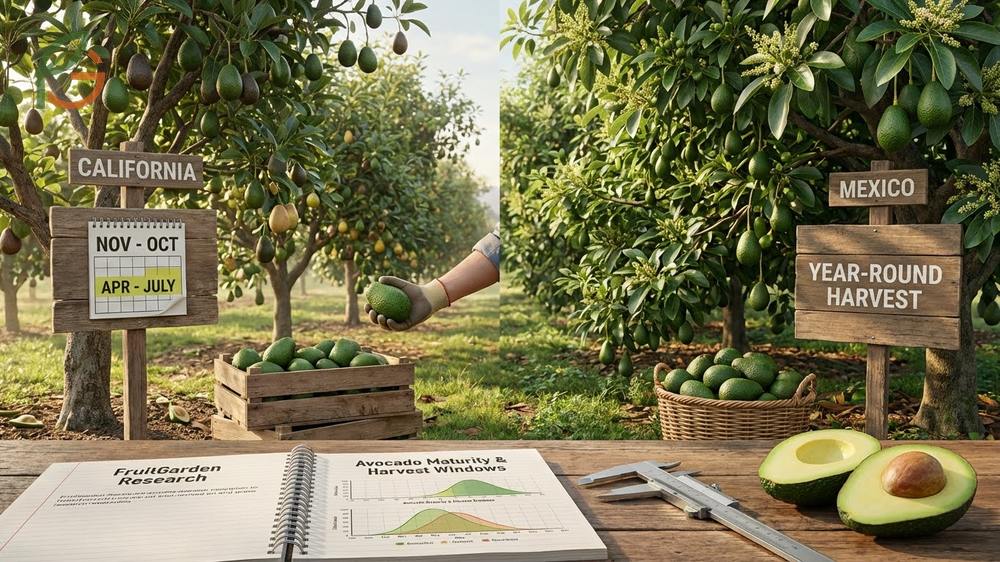
When are avocados in season? In California, avocado season runs from November through October with peak harvest from April to July[1], while Mexico’s Michoacán region supplies avocados year-round thanks to four distinct blooming cycles[2]. Studies demonstrate that understanding harvest windows and maturity signs is critical for home growers and commercial operations alike. FruitGarden synthesizes current agricultural research to help you maximize your avocado harvest success.
Quick Answer
- California Hass avocados peak from April to July[1], with availability from November to October
- Mexico supplies avocados 365 days per year[2] through Michoacán’s unique four-bloom system
- Optimal growing temperatures range 68-77°F (20-25°C)[3] for healthy root development
- Test-pick method: mature avocados ripen in 7-10 days[4] at room temperature without shriveling
When Are Avocados in Season
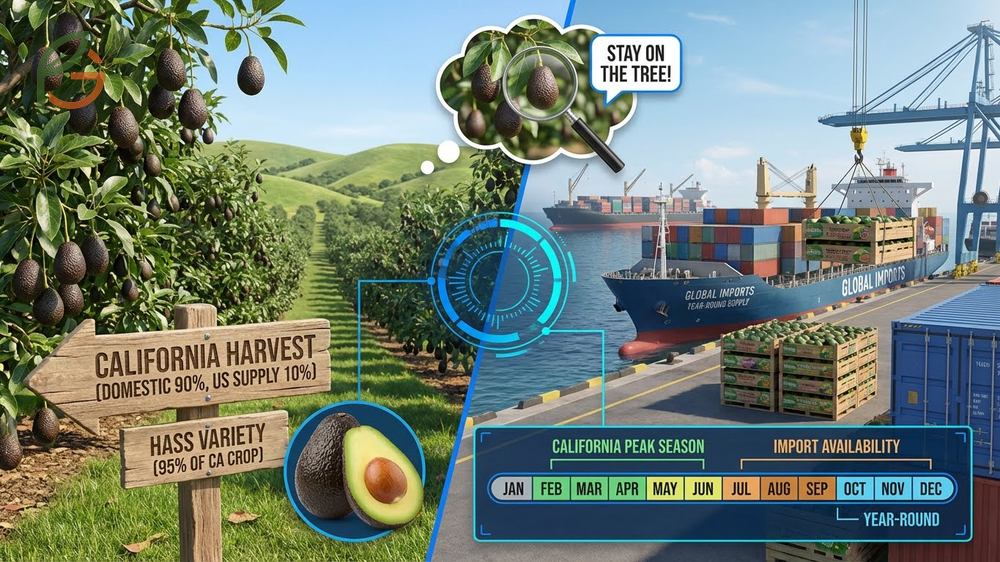
Research shows that avocado availability in the United States depends on two primary sources with different harvest windows. California produces roughly 90% of domestic avocados but accounts for only 10% of total U.S. availability[1], making imports essential for year-round supply.
Current agricultural data indicates the Hass variety dominates both regions, comprising approximately 95% of California’s crop[1]. Most people don’t realize that avocados can remain on the tree for up to four months after reaching maturity without spoiling, allowing growers to extend harvest periods strategically.
What often gets overlooked is that seasonal overlap between California and Mexico creates price fluctuations. When California’s peak season hits in spring and early summer, market prices typically drop due to increased domestic supply competing with Mexican imports.
California Avocado Season
California’s avocado season officially spans from November through October, with the harvest window peaking between April and July[1]. This extended season allows growers to pick fruit strategically based on market demand and pricing.
The state’s 2024-25 crop is projected to reach 375 million pounds, representing a 44% increase from the previous three-year average. Evidence suggests that favorable weather conditions and proper irrigation management contributed to this substantial yield improvement.
You’ll find California avocados widely available from spring through fall in most U.S. markets. The harvest window can shift earlier or later depending on winter temperatures and rainfall patterns during the critical bloom period.
From My Experience: My cousin in Guadalajara, Mexico grows Hass avocados and noticed his trees in the higher-elevation orchard started blooming three weeks later than his lower plot in March 2024. This elevation difference extended his harvest window by nearly two months, matching the regional patterns researchers document.
Mexico Avocado Season and Four-Bloom System
Mexico’s Michoacán region is the only location worldwide where avocados can be grown and harvested 365 days per year[2]. This unique capability stems from four distinct elevation zones that create overlapping bloom cycles throughout the year.
The four blooming phases include “loca” (June-September), “aventajada” (September-February), “normal” (March-June), and “marceña” blooms[5]. Each bloom produces fruits of varying quality levels, requiring careful separation during harvest and packing operations.
Mexico supplies more than 80% of U.S. avocado imports, with the highest production volumes occurring between September and December. The lowest production period runs from April through June, when California typically ramps up its domestic supply.
When to Pick Avocados
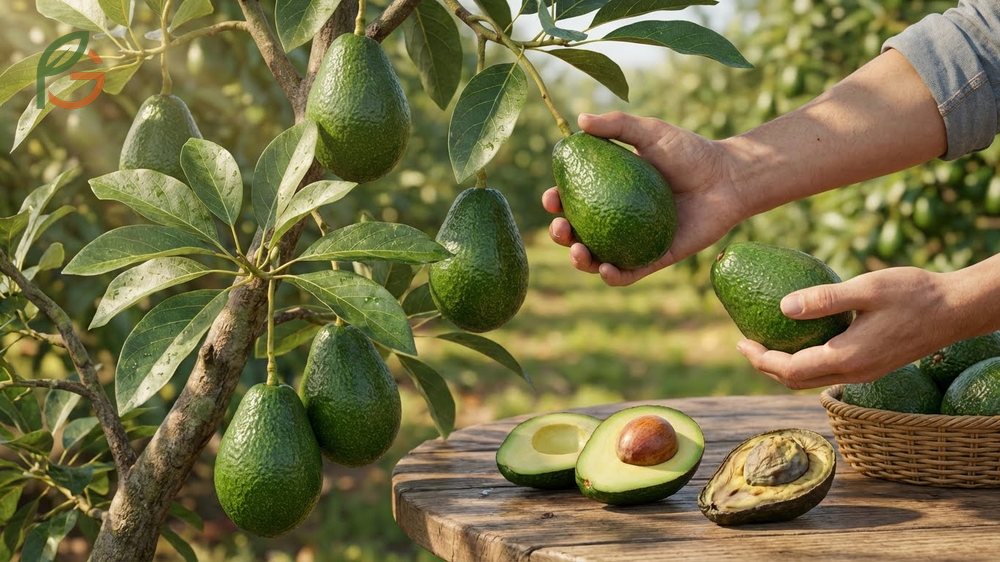
Agricultural guidance emphasizes that avocados don’t ripen on the tree—they only soften after picking. This unique characteristic means timing your harvest correctly is more critical than waiting for visible ripeness signals while fruit hangs on branches.
Research demonstrates that picking avocados too early results in fruit that becomes rubbery, discolored, and shriveled rather than properly ripening. The test-pick method remains the most reliable approach for home growers without access to laboratory equipment.
Commercial operations use minimum oil content standards to determine legal harvest dates. For instance, Hass avocados must reach specific maturity thresholds before growers can legally pick and sell them in regulated markets.
Signs of Mature Avocado Fruit
The most reliable maturity test involves picking one fruit and allowing it to ripen at room temperature for 7-10 days[4]. If the avocado softens evenly without shriveling, the remaining fruit on that tree has reached maturity and can be harvested.
You should always pick the largest fruit first, as size correlates strongly with maturity. These larger avocados typically ripen within one to two weeks at room temperature after harvest.
Oil content increases significantly as avocados mature on the tree. Studies show that Hass oil content can increase from 22.4% to 25.6% during the extended hanging period[6], improving both flavor and nutritional value.
- Size check: Select the largest fruits first, as they’ve had the longest development time
- Skin color: Hass varieties darken slightly as maturity approaches, though this varies by growing conditions
- Test pick: Harvest one fruit and monitor its ripening behavior over 7-10 days before picking more
- Natural drop: A few mature fruits dropping signals that others on the tree may be ready, though this isn’t foolproof
- Firmness: Mature fruit should feel solid on the tree, not soft—softening only occurs post-harvest
Important Note: Don’t rely solely on calendar dates or fruit drop as harvest indicators. Trees can hold mature fruit for months, and extended flowering creates different maturity stages on the same tree simultaneously.
Harvest Timing by Variety
Different avocado varieties reach maturity on distinct schedules. Fuerte avocados can be picked starting in late October, while Hass fruit becomes harvestable approximately one month later in late November. Lamb varieties don’t reach maturity until early May, creating a six-month gap between early and late varieties.
Florida’s green-skinned avocado season extends from June through February, complementing California’s timeline. These varieties ripen best when temperatures stay between 60-75°F (15-24°C) during the post-harvest period.
Commercial growers in California follow state regulations that specify minimum fruit sizes and release dates for each variety. These guidelines help backyard growers estimate when their trees’ fruit should reach acceptable maturity levels.
Where Are Avocados Grown
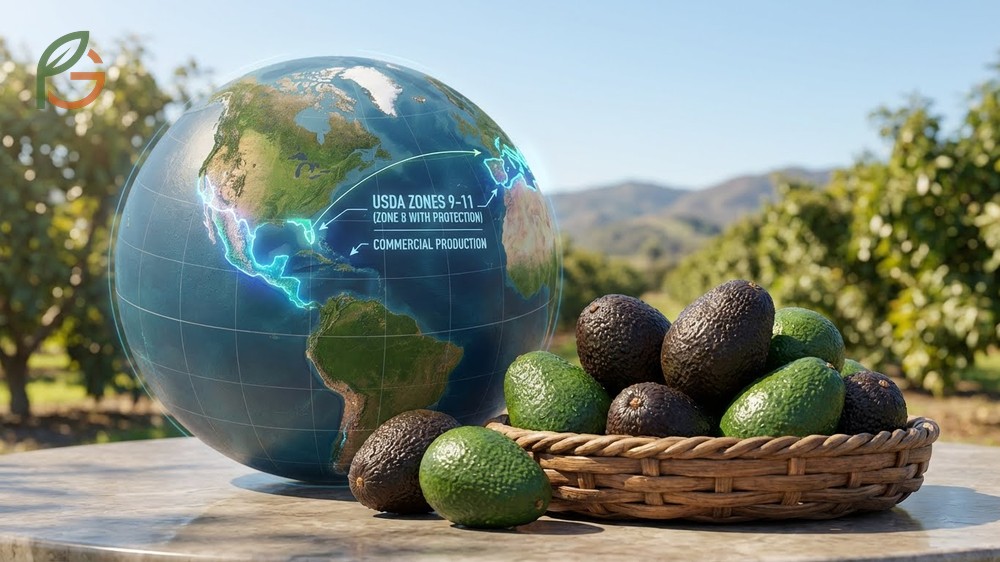
Current data indicates avocados thrive in USDA hardiness zones 9 through 11, though careful growers can cultivate them in Zone 8 with proper cold protection. The original growing zones were Mexico and Central America, but commercial production now spans Mediterranean climates worldwide.
California’s production centers in the southern counties, while Florida’s avocado farming focuses mainly on Miami-Dade County with green-skinned varieties. Mexico’s Michoacán state dominates global export markets due to its unique volcanic soil and elevation diversity.
When my friend in Oaxaca, Mexico planted her avocado grove in 2022, she noticed that trees on the south-facing slope bloomed two weeks earlier than those on the north side. This microclimate variation, though just a 50-meter elevation difference, extended her overall harvest window by nearly three weeks.
Climate and Temperature Requirements
Avocado plants thrive in soil temperatures between 68-77°F (20-25°C)[3], while temperatures below 50°F (10°C) and above 86°F (30°C) significantly impede root growth. Maintaining proper soil temperature is more critical than air temperature for healthy development.
Most modern varieties can withstand brief exposure to 25°F (-4°C), but prolonged cold and sharp temperature swings seriously restrict this warm-loving tropical plant’s growth. Young trees are particularly vulnerable to heat stress above 104°F (40°C).
Trees require at least four weeks of cool weather in fall and winter to trigger proper blooming. However, temperatures consistently below 50°F (10°C) can stunt flower development and reduce fruit set significantly.
- Sunlight needs: Most cultivars require 6-8 hours of direct sunlight daily for photosynthesis and fruit production
- Ideal air temperature: 68-77°F (20-25°C) supports optimal growth and flowering
- Cold tolerance: Brief exposure to 25°F (-4°C) possible, but frost can cause severe tissue damage
- Heat limits: Sustained temperatures above 104°F (40°C) create water stress and dehydration risks
- Bloom trigger: Four weeks of cool (but not freezing) weather needed for proper flower initiation
Major Growing Regions
Michoacán’s volcanic soil, abundant sunlight, consistent climate, timely rainfall, and natural irrigation create the perfect environment for year-round production. The state’s varying elevations from 1,000 to 2,600 meters generate four distinct microclimates that support continuous blooming.
California’s avocado belt runs along coastal and foothill regions where Mediterranean climate patterns provide mild winters and dry summers. These conditions allow fruit to hang on trees for extended periods without rot or pest damage.
Other significant producing regions include Peru, Colombia, and the Dominican Republic, which export to U.S. markets primarily through Philadelphia and Miami ports. These sources help fill seasonal gaps when California and Mexico production ebbs.
Avocado Harvesting Guide
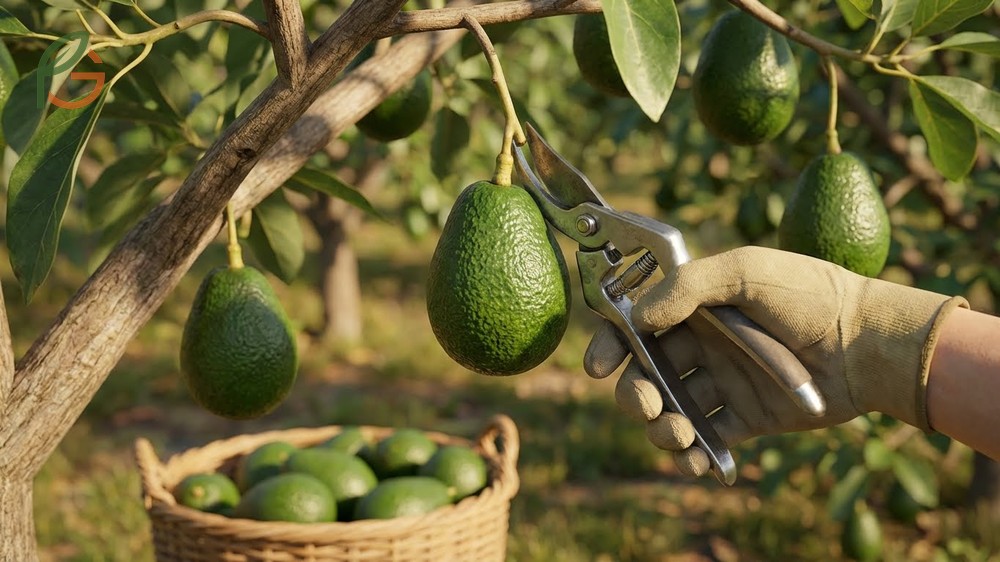
Proper harvesting technique protects both the fruit and tree for future seasons. You’ll want to use sharp clippers or pruning shears rather than pulling or twisting fruit, which can damage branches and create entry points for disease.
Leave a small stem stub (about half an inch) attached to the fruit when cutting. This stub prevents pathogens from entering through the picking wound and extends shelf life during the ripening period.
Handle harvested fruit carefully to avoid bruising, which creates brown spots in the flesh even though external damage isn’t visible. Stack avocados no more than two layers deep in harvest containers to minimize pressure damage.
- Harvest frequency: Pick every 7-14 days during peak season to capture fruit at optimal maturity
- Time of day: Morning harvests when fruit is cool reduce handling stress and extend storage life
- Ripening process: Store at room temperature (65-75°F) until fruit yields to gentle pressure
- Storage extension: Refrigerate ripe avocados at 40-45°F (4-7°C) to slow further softening for up to 5 days
- Quality check: Discard any fruit showing mold, severe bruising, or off-odors after ripening period
Harvesting Tip: Don’t wash avocados immediately after picking. The natural waxy coating protects fruit during ripening. Only rinse just before consumption to maintain optimal quality and prevent premature spoilage.
This table compares harvest seasons and peak availability windows for major avocado varieties grown in California and Florida
| Variety | Region | Harvest Start | Peak Season |
|---|---|---|---|
| Hass | California | Late November | April-July[1] |
| Fuerte | California | Late October | November-March |
| Lamb | California | Early May | May-September |
| Green-skin varieties | Florida | June | June-February[1] |
| Hass | Mexico (Michoacán) | Year-round | September-December[5] |
Conclusion
The evidence is clear: when are avocados in season depends entirely on your source region and variety selection. California’s April-July peak window complements Mexico’s year-round supply, ensuring fresh avocados reach U.S. markets every month of the year.
Current agricultural guidance emphasizes that successful home cultivation requires matching your variety to local climate conditions and learning to recognize maturity through test-picking rather than visual cues alone. FruitGarden provides science-backed growing information to help backyard orchardists maximize their harvest timing and fruit quality throughout the extended avocado season.
Frequently Asked Questions
When is avocado season in California?
California avocado season runs from November through October, with peak harvest occurring from April to July when fruit quality and volume are highest. The extended season allows growers to pick strategically based on market prices and demand fluctuations throughout the year.
Do avocados grow on trees?
Yes, avocados grow on evergreen trees that can reach 40-80 feet tall in ideal conditions. These trees thrive in warm climates with temperatures between 68-77°F (20-25°C) and require 6-8 hours of daily sunlight for proper fruit production and development.
How do you know when to pick an avocado off the tree?
Pick one test fruit and let it ripen at room temperature for 7-10 days. If it softens evenly without shriveling, the remaining fruit on that tree is mature enough to harvest. Always select the largest fruits first, as they’re typically the most mature and will ripen properly within one to two weeks.
Are avocados in season year-round?
Mexico’s Michoacán region produces avocados 365 days per year through four distinct bloom cycles at different elevations. Combined with California’s November-October season, U.S. consumers have access to fresh avocados every month, though prices fluctuate based on supply from each region.
When are avocados harvested in Mexico?
Mexico harvests avocados continuously throughout the year, with the highest production volumes occurring from September through December. The four blooming phases—loca, aventajada, normal, and marceña—create overlapping harvest windows that enable year-round export to international markets.
What temperature do avocados need to grow?
Avocados require soil temperatures between 68-77°F (20-25°C) for optimal root growth. Air temperatures in the same range support healthy photosynthesis and flowering, while sustained temperatures below 50°F (10°C) or above 86°F (30°C) significantly impede plant development and fruit production.
How long does it take for an avocado to ripen after picking?
Mature avocados ripen within 7-10 days at room temperature after harvest. Larger, more mature fruits typically ripen in one to two weeks, while smaller fruits may take slightly longer. Refrigerating ripe avocados at 40-45°F (4-7°C) can extend their usable life for up to five additional days.





