
Storing avocados in water is not safe, according to the FDA. Research shows this viral TikTok hack creates ideal conditions for bacteria like Listeria and Salmonella to multiply and penetrate the fruit’s flesh. FruitGarden synthesizes current food safety guidance to help you preserve avocados safely without risking foodborne illness.
Quick Answer
- The FDA warns bacteria can infiltrate avocado pulp within 15 days[1] when stored in water
- 17.73% of avocado skins tested positive for Listeria[2] in FDA testing
- Safe alternatives include lemon juice, plastic wrap, and airtight containers at 40°F (4°C)[3]
- Always wash avocados before cutting—even surface disinfection won’t remove internalized bacteria
Storing Avocados in Water: Why It’s Dangerous
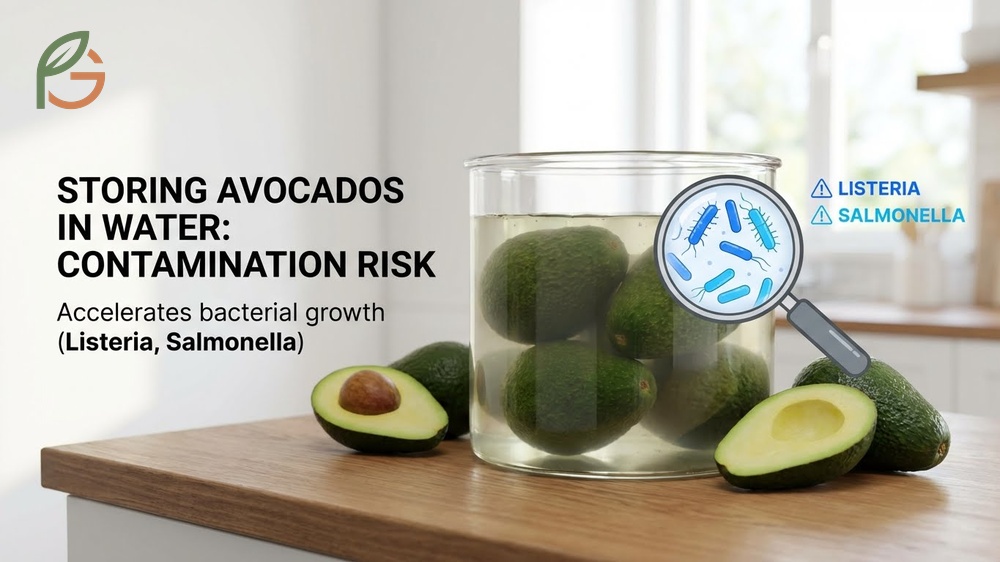
The viral TikTok trend of submerging whole or halved avocados in water promises to keep them fresh for up to a month. Research shows this practice creates a breeding ground for harmful bacteria already present on the fruit’s surface.[3] Water doesn’t preserve avocados—it accelerates contamination.
Studies demonstrate that pathogens like Listeria monocytogenes and Salmonella can multiply rapidly when avocados sit submerged in refrigerated water. The moist environment provides ideal conditions for bacterial growth. What’s worse, these microorganisms don’t just stay on the surface.
FDA scientists have proven that Listeria can infiltrate and internalize into the pulp of avocados within 15 days during refrigerated storage in water.[1] Once bacteria penetrates the flesh, even thorough washing and surface disinfection before cutting can’t remove the contamination. This turns a seemingly helpful hack into a potential food safety hazard.
FDA Warning on Avocado Water Storage
The U.S. Food and Drug Administration issued an official warning against storing avocados in water. An FDA spokesperson stated the agency “does not recommend this practice” due to serious food safety concerns.[1]
The warning specifically addresses “the possibility that any residual human pathogens that may be residing on the avocado surface may potentially multiply during storage when submerged in water.” This isn’t speculation—it’s based on actual surveillance data. The FDA tested 1,615 avocado samples over two years to assess bacterial contamination levels.
Important Warning: Even if your avocado looks and smells fine after water storage, dangerous bacteria may have already infiltrated the flesh. You can’t see, smell, or taste Listeria or Salmonella.
How Bacteria Multiply in Water
Water creates a perfect environment for bacterial proliferation. When you submerge an avocado, any bacteria on the skin becomes surrounded by moisture—the key ingredient bacteria need to reproduce. The typical refrigerator temperature of 40°F (4°C) slows but doesn’t stop this growth.
Listeria monocytogenes is particularly concerning because it thrives in cold, wet conditions. Unlike many bacteria, Listeria can multiply at refrigerator temperatures. This means your submerged avocado becomes more contaminated each day it sits in water, not less.
Current data indicates the bacterial load increases exponentially over time. What starts as a low level of surface contamination can reach dangerous concentrations within days. The water itself becomes contaminated, spreading bacteria across the entire fruit surface and potentially into any micro-cracks or damaged areas in the skin.
Listeria and Salmonella Risk on Avocado Skin
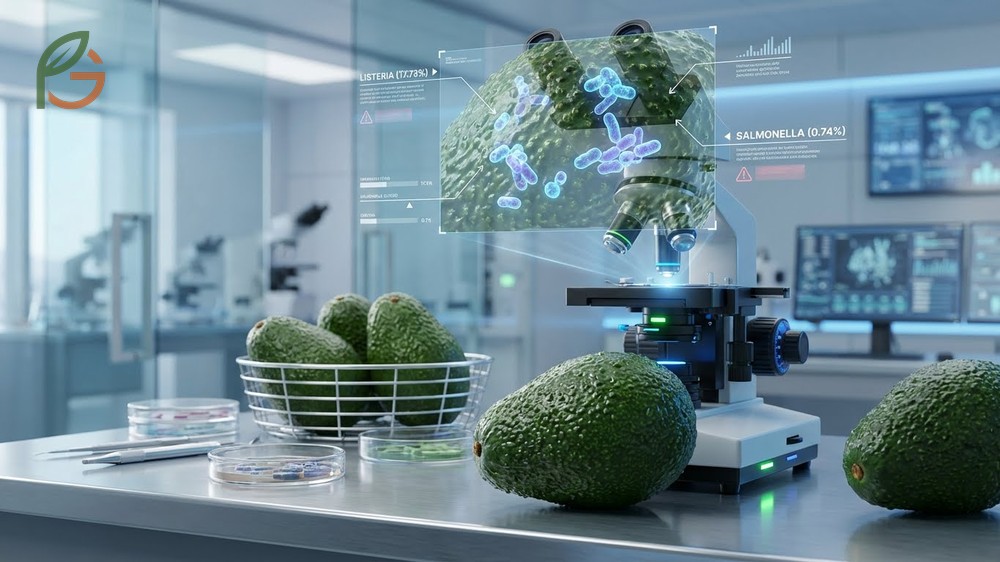
FDA surveillance testing revealed significant bacterial contamination on avocado skins. Of 361 avocado skin samples tested, 64 tested positive for Listeria monocytogenes—that’s 17.73%.[2] This contamination rate applies to both imported and domestically grown avocados.
Salmonella contamination rates were lower but still present. The FDA detected Salmonella in 12 out of 1,615 avocado samples, representing 0.74% of tested fruits.[2] All 12 positive samples came from domestically grown avocados, while imported avocados tested negative for Salmonella in this study.
The pulp showed much lower contamination rates. Only 3 out of 1,254 avocado pulp samples tested positive for Listeria—far less than 1%. This demonstrates that the skin acts as a protective barrier under normal storage conditions. Water storage compromises this natural defense.
FDA Testing Results
The FDA’s two-year assessment examined 1,615 avocado samples, with 70% imported to reflect actual U.S. market distribution. Testing focused on both skin and pulp to understand contamination patterns. Results showed bacteria concentrates heavily on the exterior surface.
Listeria contamination affected both imported and domestic avocados equally. Of the 64 positive skin samples, 33 came from domestic avocados and 31 from imported fruits.[2] This indicates contamination occurs throughout the supply chain, not from a single source.
This table compares Listeria and Salmonella detection rates on avocado skin versus pulp based on FDA surveillance testing of over 1,600 samples
| Sample Type | Listeria Positive | Listeria Rate | Salmonella Positive | Salmonella Rate |
|---|---|---|---|---|
| Avocado Skin | 64 of 361[2] | 17.73% | Not tested separately | — |
| Avocado Pulp | 3 of 1,254[2] | <1% | Not specified | — |
| Whole Fruit | 64 samples | — | 12 of 1,615[2] | 0.74% |
Why the TikTok Hack Went Viral
The water storage method gained millions of views because it appears to work initially. Water slows oxidation, the chemical reaction that causes cut avocados to turn brown. Users saw their avocados stay green for weeks and assumed this meant they stayed fresh.
The visual appeal misled people. A green avocado doesn’t equal a safe avocado. The browning you see on cut avocados is oxidation—it’s unappetizing but harmless. The real danger with water storage is invisible bacterial contamination that can cause serious illness.
Several TikTok creators eventually posted follow-up videos retracting their recommendations after learning about the FDA warning. One popular video that garnered over six million views was followed by a correction stating “It is not advisable to store avocados in water.”[3]
Safe Alternative Storage Methods
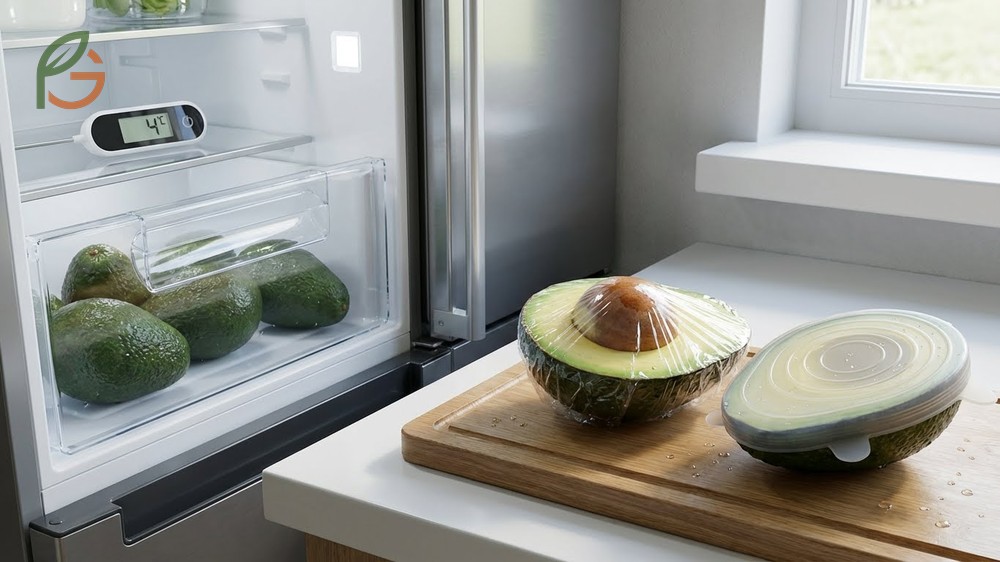
Multiple safe methods exist for keeping avocados fresh without risking bacterial growth. These techniques work by reducing oxygen exposure or slowing the ripening process through temperature control. None involve submerging fruit in water.
The most effective approaches combine physical barriers with proper temperature management. Research shows these methods keep avocados fresh for 1-3 days (cut) or up to a week (whole) while maintaining food safety. The key is creating an oxygen barrier without introducing moisture that promotes bacterial growth.
Refrigerator Storage
For whole uncut avocados, refrigeration is the simplest preservation method. Once avocados reach your desired ripeness at room temperature, transfer them to the refrigerator. The cold temperature slows enzymatic activity that causes ripening and spoilage. Whole ripe avocados last up to one week in the fridge.
Store whole avocados in the crisper drawer, which maintains slightly higher humidity than other refrigerator sections. Keep them away from ethylene-producing fruits like apples and bananas that accelerate ripening. The ideal refrigerator temperature for avocado storage is 40°F (4°C).[3]
For cut avocados, leave the pit in the unused half and keep the skin on. These natural barriers limit surface area exposed to air. The pit creates a physical barrier over the center portion, while the skin protects the exterior.
Storage Tip: Unripe avocados shouldn’t go in the refrigerator. Cold temperatures can prevent proper ripening. Store firm avocados at room temperature (68-75°F or 20-24°C) until they yield to gentle pressure, then refrigerate.
Lemon Juice Method
Applying lemon or lime juice to cut avocado flesh effectively slows browning without creating bacterial risks. The citric acid lowers pH on the exposed surface, which inhibits oxidase enzymes responsible for browning. Brush or sprinkle juice directly onto the flesh, then wrap tightly in plastic wrap.
This method keeps cut avocados fresh for 1-2 days in the refrigerator. The acid creates an unfavorable environment for bacteria while preventing discoloration. Most people can’t taste the citrus when the juice is applied in thin layers. For best results, press plastic wrap directly against the flesh to eliminate air pockets.
An alternative involves placing the cut avocado in an airtight container with a slice of onion. The sulfur compounds released by onions slow oxidation without adding moisture. This method works similarly to lemon juice but may impart a mild onion flavor.
- Plastic wrap method: Press wrap directly against exposed flesh, eliminating all air pockets, then refrigerate for up to 3 days
- Lemon juice method: Brush cut surface with fresh lemon or lime juice, wrap tightly, and store in refrigerator for 1-2 days
- Airtight container: Place cut side down in a container, add lemon juice, seal completely, and refrigerate immediately
- Onion slice method: Store cut avocado with raw onion slice in sealed container to slow oxidation through sulfur compounds
- Oil coating: Lightly brush exposed flesh with olive oil to create moisture barrier before wrapping and refrigerating
Safe Avocado Handling Practices
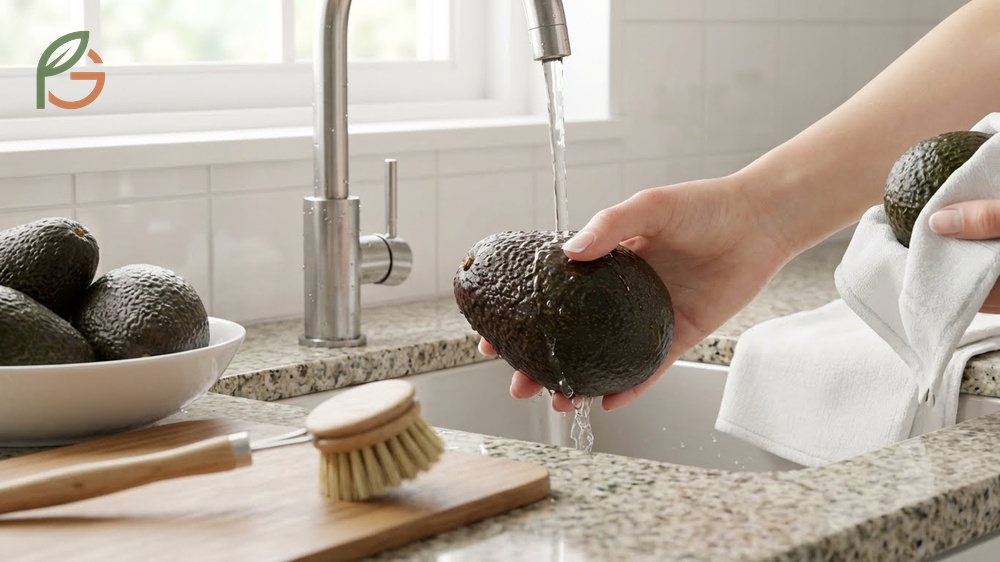
Proper handling starts before you cut into an avocado. Always wash avocados under running water before slicing, even though you don’t eat the skin. Bacteria on the surface transfers to the flesh when your knife passes through. Scrub the exterior gently with a produce brush to remove dirt and reduce bacterial load.
Dry avocados thoroughly with a clean towel or paper towel after washing. Moisture on the skin promotes bacterial growth during storage. This step is especially important if you’re not using the entire avocado immediately. Pat all surfaces until completely dry before cutting or storing.
Wash your hands for at least 20 seconds with soap and warm water before handling avocados. Clean hands prevent cross-contamination from other foods or surfaces. This simple step significantly reduces foodborne illness risk.
- Rinse avocados under cold running water, scrubbing skin with a clean produce brush to remove surface bacteria
- Dry fruit completely with clean towel or paper towel—moisture encourages bacterial multiplication during storage
- Wash hands with soap for 20 seconds before and after handling avocados to prevent cross-contamination
- Use clean cutting boards and knives—sanitize with hot soapy water between cutting different foods
- Refrigerate cut avocados within 2 hours of slicing to minimize time in the temperature danger zone
- Store avocados separately from raw meat, poultry, and seafood to avoid cross-contamination in refrigerator
- Discard avocados that smell off, have mold, or show signs of excessive decay beyond normal browning
Use separate cutting boards for produce and raw proteins. If you only have one board, wash it thoroughly with hot soapy water between uses. Bacteria from raw meat can transfer to cutting surfaces and contaminate fruits and vegetables. This practice applies to all produce, not just avocados.
Store avocados on refrigerator shelves away from raw meat, poultry, and seafood. Juices from animal products can drip onto produce below, causing cross-contamination. Keep avocados in crisper drawers or on upper shelves where they won’t contact other foods.
Safety Reminder: Never leave cut avocados at room temperature for more than 2 hours. The temperature danger zone (40-140°F or 4-60°C) allows rapid bacterial growth. Refrigerate or discard cut avocados within this window.
Conclusion
The evidence is clear: storing avocados in water creates significant food safety risks that far outweigh any convenience. FDA testing demonstrates that bacteria can infiltrate fruit pulp within days, making this viral hack a potential recipe for foodborne illness. Safe alternatives like lemon juice application, plastic wrap, and proper refrigeration keep avocados fresh without bacterial contamination risks.
Current food safety guidance emphasizes washing all produce before cutting, using proper storage temperatures, and avoiding practices that promote bacterial growth. FruitGarden recommends following FDA guidelines and choosing proven preservation methods over unverified social media trends for your family’s health and safety.
Medical Disclaimer
Important Food Safety Disclaimer: This content is for informational and educational purposes only. It is not intended as a substitute for professional medical or food safety advice. The information provided reflects current FDA guidance but should not replace consultation with healthcare professionals if you experience symptoms of foodborne illness. Always consult a qualified healthcare provider if you develop fever, severe diarrhea, vomiting, or other symptoms after consuming potentially contaminated food. When in doubt about food safety, follow the adage “when in doubt, throw it out.”
Frequently Asked Questions
Can you store avocados in water in the fridge safely?
No, storing avocados in water in the fridge is not safe. The FDA explicitly warns against this practice because bacteria like Listeria and Salmonella multiply when avocados are submerged in water. Research shows bacteria can infiltrate the pulp within 15 days, and washing won’t remove internalized contamination.
Why did the FDA warn against the avocado water storage hack?
The FDA issued a warning because their testing found 17.73% of avocado skins harbor Listeria monocytogenes. When submerged in water, these bacteria multiply rapidly and can penetrate into the edible flesh. Water creates ideal conditions for bacterial growth rather than preservation, turning a seemingly helpful hack into a food safety hazard.
What is the safest way to store cut avocados?
The safest method is brushing the exposed flesh with lemon or lime juice, then wrapping tightly in plastic wrap pressed directly against the surface. Leave the pit in the unused half and refrigerate immediately. This keeps cut avocados fresh for 1-2 days while preventing bacterial growth and oxidation.
Does the avocado pit in water myth actually work for growing plants?
Growing an avocado plant from a pit suspended in water with toothpicks is different from storing whole avocados in water for eating. The germination method uses clean water changed regularly and focuses on sprouting, not food preservation. For eating purposes, never store avocados in water due to bacterial contamination risks.
How long can whole avocados stay fresh in the refrigerator?
Whole ripe avocados last up to one week in the refrigerator at 40°F (4°C). Store them in the crisper drawer away from ethylene-producing fruits. Unripe avocados should remain at room temperature (68-75°F or 20-24°C) until they ripen, then transfer to the fridge to slow further ripening.
Should you wash avocados before cutting them?
Yes, always wash avocados under running water and scrub with a produce brush before cutting. FDA testing found bacteria on nearly 18% of avocado skins. When your knife passes through unwashed skin, it transfers bacteria to the edible flesh. Washing removes surface contamination and significantly reduces foodborne illness risk.
What are the symptoms of Listeria from contaminated avocados?
Listeria infection symptoms include fever, muscle aches, nausea, and diarrhea. Symptoms typically appear within 1-4 weeks after consuming contaminated food. Pregnant women, older adults, and people with weakened immune systems face higher risk of severe complications. If you suspect Listeria infection, contact your healthcare provider immediately.





