
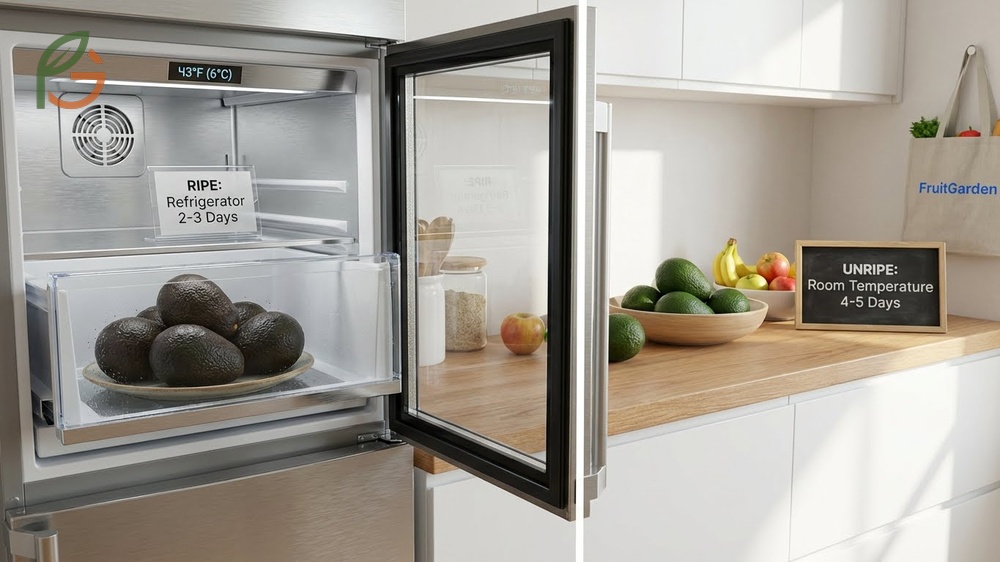
How to store avocados correctly makes the difference between enjoying creamy, perfect fruit and wasting money on spoiled produce. Research shows that ripe avocados stay fresh for 2-3 days in the refrigerator at 41-45°F (5-7°C)[1], while unripe ones ripen in 4-5 days at room temperature[2]. FruitGarden synthesizes current agricultural research to help you maximize avocado freshness and minimize waste.
Quick Answer
How to Store Avocados
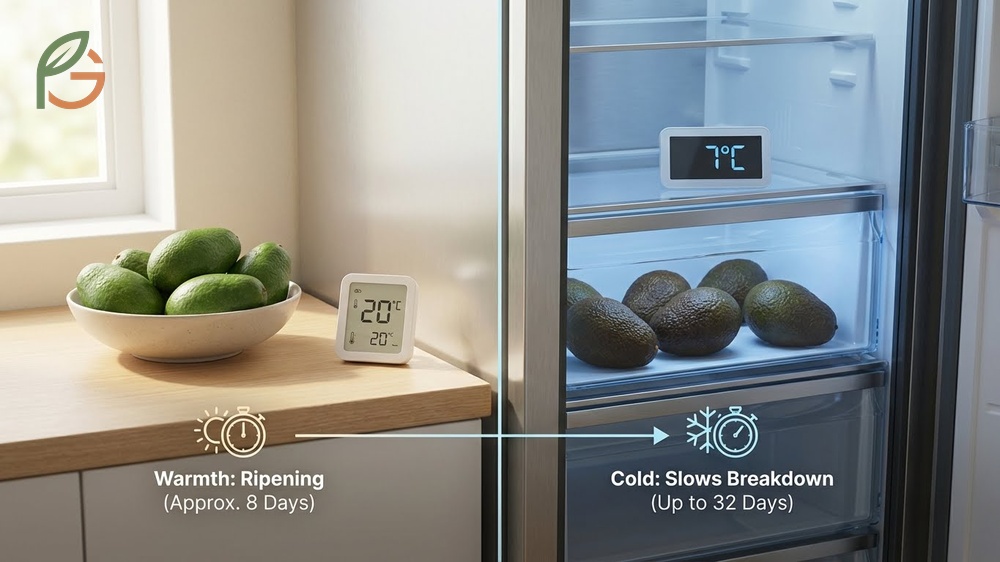
Storage location depends entirely on ripeness. Unripe avocados need warmth to develop their creamy texture, while ripe ones require cold to slow enzymatic breakdown.
Studies demonstrate that temperature control extends shelf life dramatically—avocados stored at 45°F (7°C) last 32 days versus just 8 days at 68°F (20°C)[5]. This explains why proper storage matters so much for your grocery budget.
Storing Unripe Avocados
Hard, green avocados should sit on your countertop away from direct sunlight. They’ll ripen naturally in 4-5 days at room temperature around 68-72°F (20-22°C)[2].
Don’t refrigerate unripe avocados unless you want to pause ripening for up to 2 weeks. Most people don’t realize that cold temperatures below 41°F (5°C) can cause chilling injury in unripe fruit, leading to uneven ripening and off-flavors.
From My Experience: My cousin in Guadalajara, Mexico keeps unripe avocados in a woven basket on the counter. She checks firmness daily by gently pressing the stem end—when it yields slightly, they’re ready within 24 hours.
Storing Ripe Avocados
Ripe avocados belong in the refrigerator immediately. The crisper drawer maintains optimal humidity while the cold temperature slows down ripening enzymes.
Research shows ripe Hass avocados stay fresh for 2-3 days at 41-45°F (5-7°C)[1]. Beyond this window, internal browning and flavor degradation accelerate even if the exterior looks fine.
Important Note: Don’t store Hass avocados below 41°F (5°C) or green-skinned varieties below 43°F (6°C)—temperatures that are too cold cause chilling injury and brown streaks inside the fruit.
How to Ripen Avocados Quickly
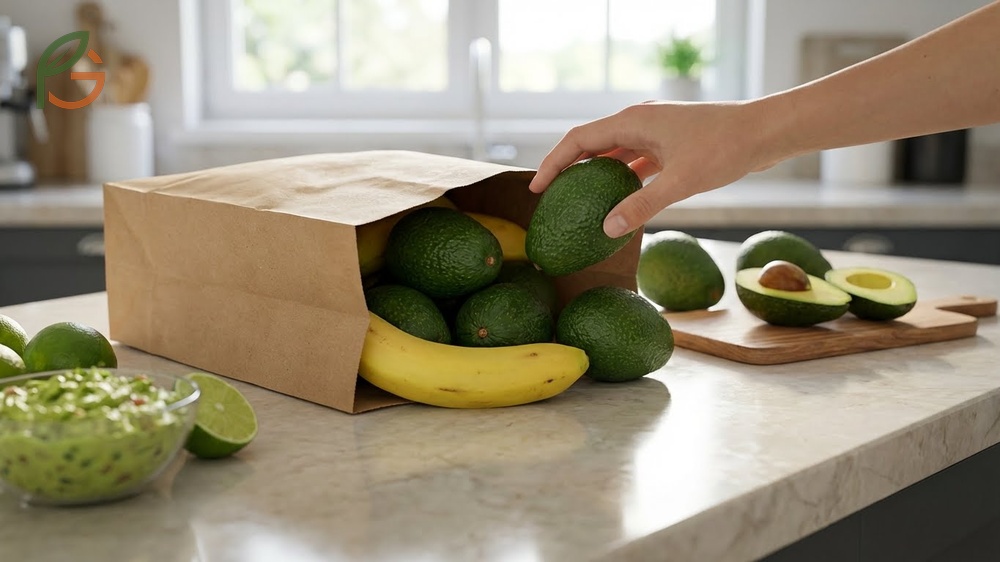
The fastest method concentrates ethylene gas around the fruit. When you’re working against the clock for tonight’s guacamole, strategic placement with high-ethylene fruits cuts ripening time in half.
A hard avocado that normally takes 4-5 days can ripen in just 2-3 days with the right technique. This works because you’re creating a controlled microenvironment that mimics commercial ripening rooms.
The Paper Bag Trick
Place unripe avocados in a brown paper bag with a banana or apple. Fold the top loosely and leave at room temperature for 2-3 days instead of the usual 4-5.
The science is simple—paper bags trap ethylene gas molecules while allowing oxygen to enter[3]. Plastic bags don’t work because they block oxygen, which fruits need for the chemical reactions that soften flesh and develop flavor.
- Bananas – produce the highest ethylene levels of common fruits
- Apples – consistent ethylene production makes them reliable accelerators
- Tomatoes – moderate ethylene output, works well for gentle ripening
- Kiwis – high ethylene producers when ripe themselves
- Pears – another strong ethylene source that speeds the process
My friend in Oaxaca, Mexico swears by the banana method—she places 2 unripe avocados with 1 overripe banana in a bag, and they’re ready for breakfast tacos within 48 hours versus the typical 96-120 hours.
Ethylene Gas Science
Ethylene is a plant hormone that triggers ripening in climacteric fruits like avocados. Current agricultural data shows that concentrated ethylene exposure can double ripening speed when combined with proper temperature.
Avocados naturally produce ethylene as they ripen, creating a feedback loop. When multiple avocados sit together in an enclosed space, their combined ethylene output accelerates all the fruit simultaneously—this is why commercial operations use ethylene chambers.
Best Way to Store Avocados After Cutting
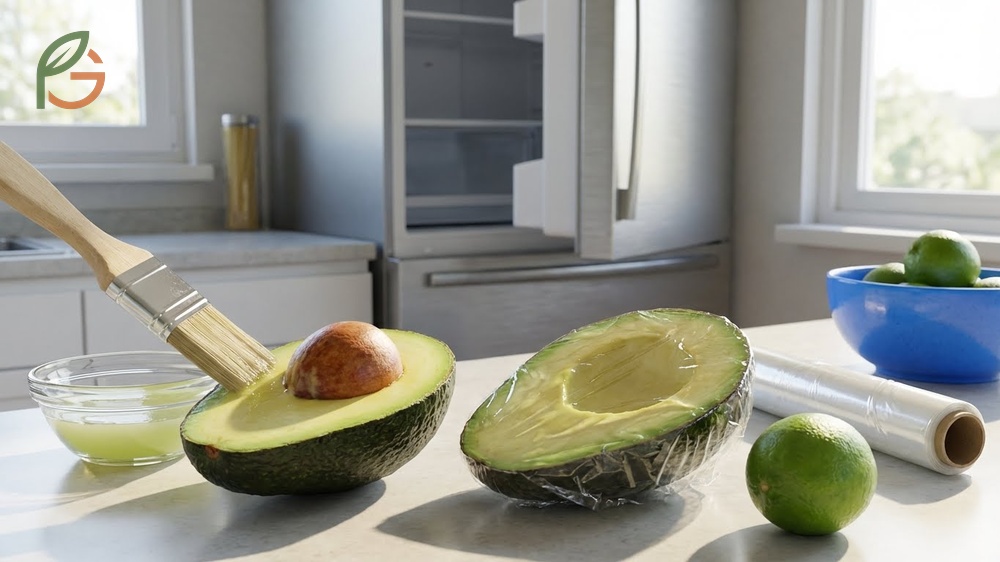
Cut avocados oxidize rapidly when exposed to air, turning brown within hours. The best preservation method combines acid, airtight sealing, and refrigeration to extend freshness to 12-24 hours[4].
Brush the exposed flesh with lemon or lime juice immediately after cutting. The citric acid lowers pH and slows enzymatic browning that makes avocados look unappetizing.
Wrap the avocado tightly in plastic wrap, pressing it directly against the flesh to eliminate air pockets. Then place it flesh-side down in an airtight container before refrigerating—the double barrier significantly reduces oxidation.
- Brush cut surface with fresh lemon or lime juice within 30 seconds of cutting
- Press plastic wrap directly onto the flesh, smoothing out all air bubbles
- Place wrapped avocado flesh-side down in an airtight container
- Store in the refrigerator’s main compartment, not the door (temperature fluctuates less)
- Use within 12-24 hours for best quality and color
- Scrape off any brown surface layer before serving if oxidation occurs
Pro Tip: Leave the pit in one half when storing—while it doesn’t prevent oxidation chemically, it covers more surface area and reduces air exposure on that section.
Avocado Ripening Stages
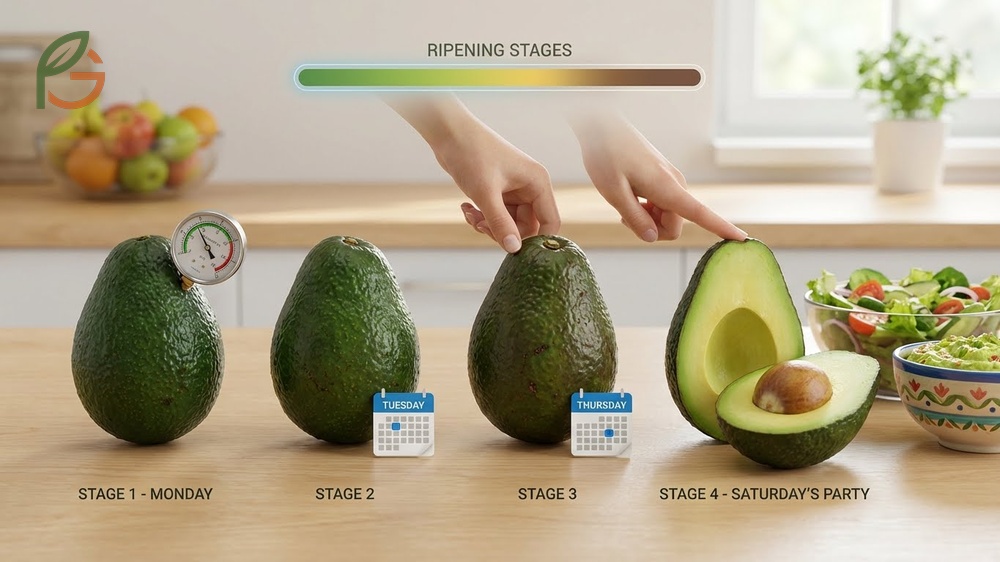
Recognizing ripeness stages prevents the frustration of cutting into rock-hard or overripe fruit. Each stage has distinct firmness characteristics measured by professional graders in pounds of pressure.
Understanding these stages helps you buy avocados strategically—get Stage 1 fruit on Monday for Saturday’s party, or Stage 4 for tonight’s salad. This timing knowledge reduces waste and ensures you always have ready-to-eat avocados.
This table compares firmness levels, pressure ranges, appearance, and timeframe across five avocado ripening stages from hard to overripe
| Stage | Firmness | Days to Ripe | Appearance |
|---|---|---|---|
| Stage 1 | Very hard (25+ lbs pressure[6]) | 4-5 days[2] | Bright green, no give when pressed |
| Stage 2 | Hard (15-25 lbs[6]) | 3 days | Slight color darkening begins |
| Stage 3 | Breaking (10-15 lbs[6]) | 2 days | Dark green to purple-black, minimal give |
| Stage 4 | Firm-ripe (5-10 lbs[6]) | Ready now | Dark purple-black, yields to gentle pressure |
| Stage 5 | Overripe (very soft) | Past prime | Mushy, may have dark spots or dents |
The stem test provides additional confirmation—gently remove the small stem cap at the top. If it reveals bright green underneath, the avocado is ripe. Brown indicates overripeness, while difficulty removing the stem means it needs more time.
Signs of Bad Avocado
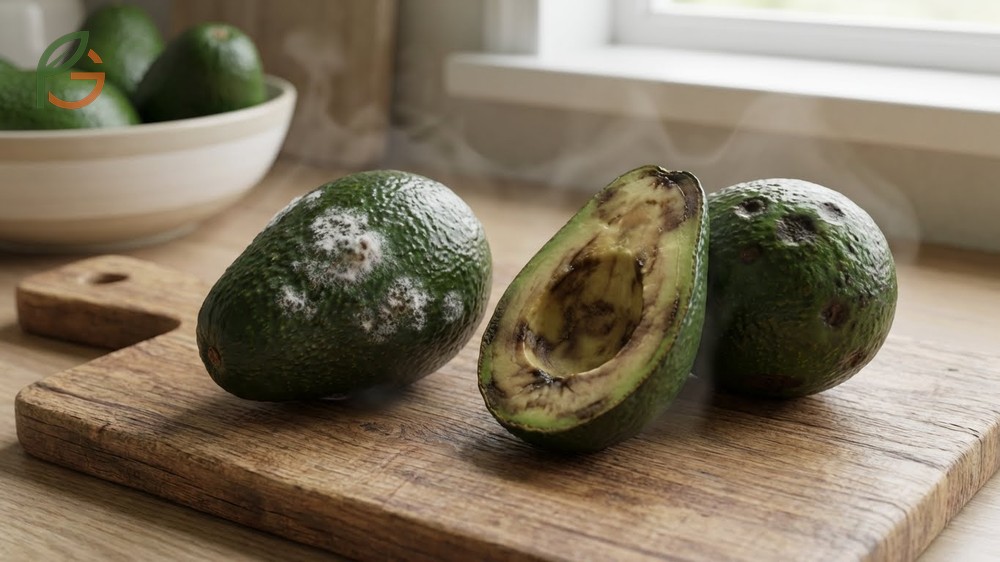
Knowing when to discard avocados prevents foodborne illness and wasted calories on unpleasant flavors. Spoilage indicators appear both externally and internally, with some signs more critical than others.
Evidence suggests that mold growth and sour odors indicate bacterial or fungal contamination that makes avocados unsafe[7]. While minor browning from oxidation is harmless, extensive discoloration often accompanies off-flavors.
- Mold growth – white, gray, or fuzzy patches on skin or flesh means immediate disposal[7]
- Sour or fermented smell – fresh avocados have a mild, nutty aroma; off odors indicate spoilage
- Extensive brown or black flesh – dark streaks throughout suggest the fruit is past edible stage
- Slimy or mushy texture – breakdown of cell structure from bacterial growth
- Bitter or rancid taste – even if appearance seems okay, bad flavor confirms spoilage
- Sunken dark spots – exterior dents with soft, dark tissue underneath
- Stringy, fibrous texture – combined with discoloration, indicates overripeness turning to rot
Safety Note: Small brown spots from oxidation are safe to eat—just scrape them off. However, if the avocado smells off or has mold anywhere, throw out the entire fruit, not just the affected section.
When my aunt in Monterrey, Mexico taught me to test avocados, she emphasized the smell test—she cuts a small piece and sniffs it before serving. If there’s any hint of sourness or fermentation, it goes straight to the compost bin regardless of appearance.
Conclusion
The evidence is clear: how to store avocados properly extends freshness from days to weeks when you match storage temperature to ripeness stage. Ripe avocados last 2-3 days refrigerated at 41-45°F (5-7°C), while unripe ones ripen in 4-5 days on the counter or 2-3 days with the paper bag trick.
Current agricultural guidance emphasizes temperature control as the single most important factor—studies show proper storage can extend shelf life by 300% compared to room temperature alone. Whether you’re growing avocados in your backyard or buying them at the store, FruitGarden provides research-based methods that reduce waste and maximize enjoyment of this nutrient-dense fruit.
Frequently Asked Questions
Do I store avocados in the fridge?
Store ripe avocados in the fridge at 41-45°F (5-7°C) for 2-3 days to maintain freshness. Keep unripe avocados on the counter at room temperature—refrigerating them before they’re ripe can cause chilling injury and prevent proper flavor development.
Can you store avocados in the fridge?
Yes, you can and should store ripe avocados in the refrigerator. Research shows this extends shelf life from less than a day at room temperature to 2-3 days in the crisper drawer. However, don’t refrigerate unripe avocados unless you want to pause ripening for up to 2 weeks.
Where to store avocados for best results?
Store unripe avocados on the kitchen counter away from direct sunlight at 68-72°F (20-22°C). Once ripe, transfer them immediately to the refrigerator’s crisper drawer. Cut avocados must go in an airtight container in the fridge within minutes of cutting to prevent excessive browning.
How do you preserve an avocado that’s already cut?
Brush the cut surface with lemon or lime juice, wrap tightly in plastic wrap pressed directly against the flesh, and place flesh-side down in an airtight container. Refrigerate immediately and use within 12-24 hours for best quality before oxidation causes extensive browning.
How long do avocados last in the refrigerator?
Ripe whole avocados last 2-3 days in the fridge at 41-45°F (5-7°C). Unripe avocados can be refrigerated for up to 2 weeks to slow ripening, though they’ll need 2-3 days at room temperature afterward to finish ripening properly.
Does the paper bag trick really work for ripening avocados?
Yes, the paper bag trick cuts ripening time roughly in half by trapping ethylene gas while allowing oxygen flow. Adding a banana or apple speeds it further since they produce high ethylene levels—expect ripe avocados in 2-3 days instead of 4-5 days on the open counter.
How can you tell if an avocado has gone bad?
Bad avocados show mold (white, gray, or fuzzy patches), emit sour or fermented odors, feel mushy or slimy, and have extensive brown or black flesh throughout. While minor surface browning from oxidation is safe, any off smell or mold means the entire fruit should be discarded.





