
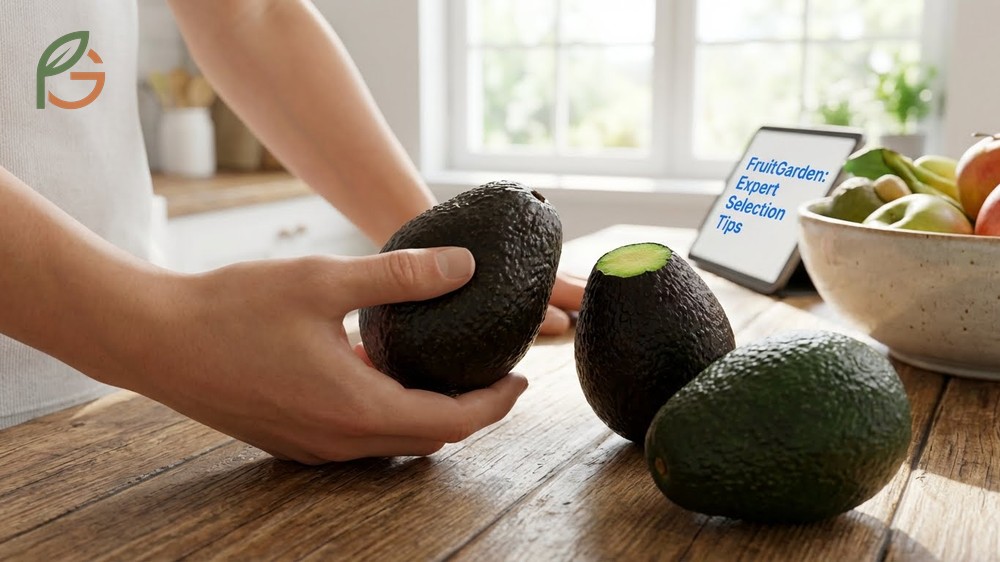
How to pick a good avocado? Check the color for dark green to black hues, gently squeeze in your palm for slight give, and perform the stem test to reveal green underneath. Research shows these three methods work together to identify perfectly ripe avocados without causing bruising[1]. FruitGarden synthesizes current agricultural guidance to help you select premium avocados every time.
Quick Answer
- Dark green to black skin indicates ripeness for Hass varieties[2]
- Firm avocados need 3-5 days to ripen at room temperature
- The stem test shows bright green underneath when perfectly ripe
- Buy a mix of firmness levels to enjoy avocados throughout the week
How to Pick a Good Avocado
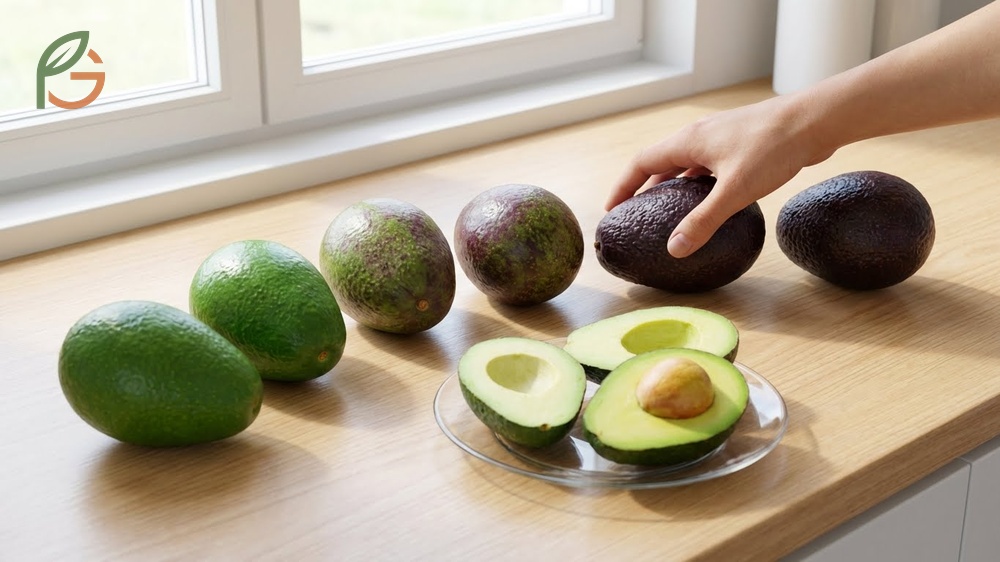
Studies demonstrate that successful avocado selection relies on three key indicators working in harmony. Color provides the initial visual cue about ripeness stage. Firmness confirms internal texture without cutting the fruit open.
Most people don’t realize that timing matters more than perfection when selecting avocados. You’re not looking for one “perfect” avocado—you’re building a rotation that ripens on your schedule. This approach prevents waste and ensures you always have ready-to-eat fruit.
Color Inspection
Hass avocados transition from bright green to dark green or purplish-black as they ripen[2]. Bright green varieties need several days on your counter before they’re ready. Dark-colored fruits are typically ready within 24 hours or can be eaten immediately.
Florida avocados stay bright green even when fully ripe, making color a less reliable indicator for these varieties. The firmness test becomes your primary selection method for Florida types.
From My Experience: My cousin in Guadalajara, Mexico grew Hass avocados in her backyard orchard. She taught me to buy avocados at three different ripeness stages—some dark for immediate use, medium green for mid-week, and bright green for weekend meals. This rotation matched the natural ripening timeline and eliminated the “all ripe at once” problem.
Firmness Check
Current guidance emphasizes palm-squeezing over fingertip pressing. Cradle the avocado in your entire palm and apply gentle, even pressure. Fingertips create concentrated pressure points that bruise the delicate flesh underneath.
If it feels like squeezing a tennis ball, expect 4-5 days until ripeness. If it yields slightly like a partially deflated balloon, it’s ready now. Mushy texture indicates overripeness or internal damage.
- Rock-hard: 5-7 days until ripe, ideal for advance planning
- Firm with no give: 3-4 days, perfect for mid-week purchases
- Slight yield to palm pressure: 1-2 days or ready now
- Moderate softness: Eat today, don’t wait
- Very soft or mushy: Overripe, likely has brown spots inside
Skin Texture Examination
Scan the entire surface for irregularities before you check firmness. Large dents, dark patches, or soft spots signal internal bruising[2]. Even if the rest of the fruit feels perfect, damaged areas spread quickly.
Hass avocados develop bumpy, pebbly skin naturally—this texture is normal and doesn’t indicate quality issues. Smooth, unblemished Florida avocados are your benchmark for those varieties.
Avocado Stem Test Check
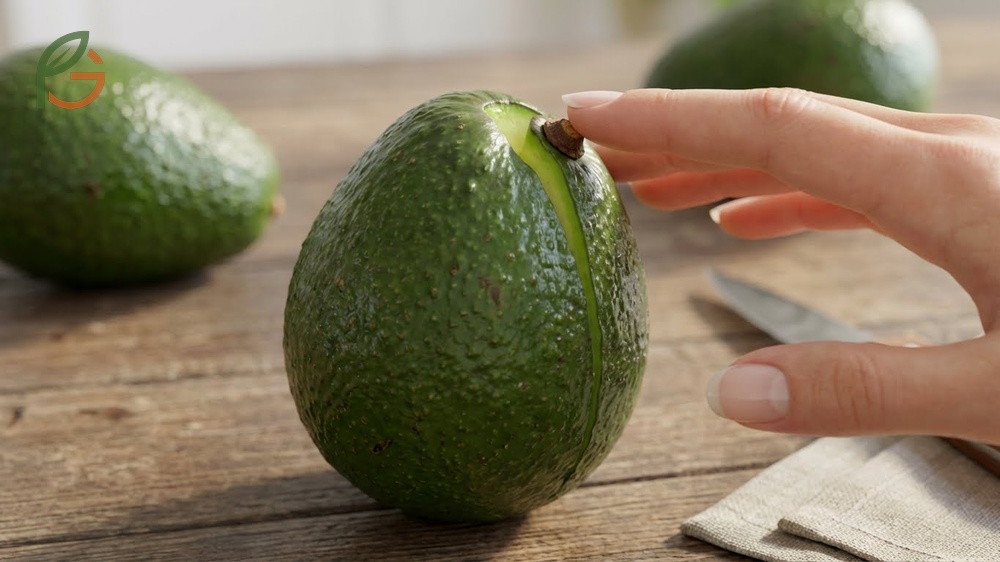
Agricultural experts consider the stem test the most reliable ripeness indicator because it reveals actual flesh color. This method eliminates guesswork by giving you a direct view inside the fruit. You’re bypassing external signals and checking internal quality.
The small cap at the stem end acts as a natural inspection window. What you see underneath tells you exactly what the entire avocado looks like inside.
Performing the Stem Test
Gently flick the small brown stem nub at the top of the avocado. If it resists or doesn’t budge, the fruit isn’t ripe yet—wait another day or two. If it pops off easily with minimal pressure, you’re ready to inspect underneath.
Some stores discourage stem removal because it accelerates oxidation at that spot. If you’re comfortable with your color and firmness assessment, you can skip this step. Use it as your tiebreaker when other signals seem unclear.
Important Note: If the stem is already missing when you find the avocado in the store, proceed with caution. That exposed area may have started browning, even if the rest of the fruit is fine. Check the exposed spot for brown discoloration before purchasing.
Interpreting Stem Colors
Bright green underneath the stem means perfect ripeness—buy it and eat within 1-2 days. Pale yellow-green indicates slight under-ripeness but the fruit will be ready within 24 hours. Brown or dark spots mean overripeness or internal damage has begun.
If you see mold or black discoloration under the stem, skip that avocado entirely. Internal rot has progressed too far and likely affects the entire fruit.
- Bright green: Perfect ripeness, ready to eat immediately
- Light green: Nearly ripe, ready in 12-24 hours
- Yellow-green: Still firm inside, needs 2-3 days
- Brown: Overripe, may have brown streaks throughout
- Black or moldy: Spoiled, do not purchase
Hass Avocado vs Florida Avocado Selection
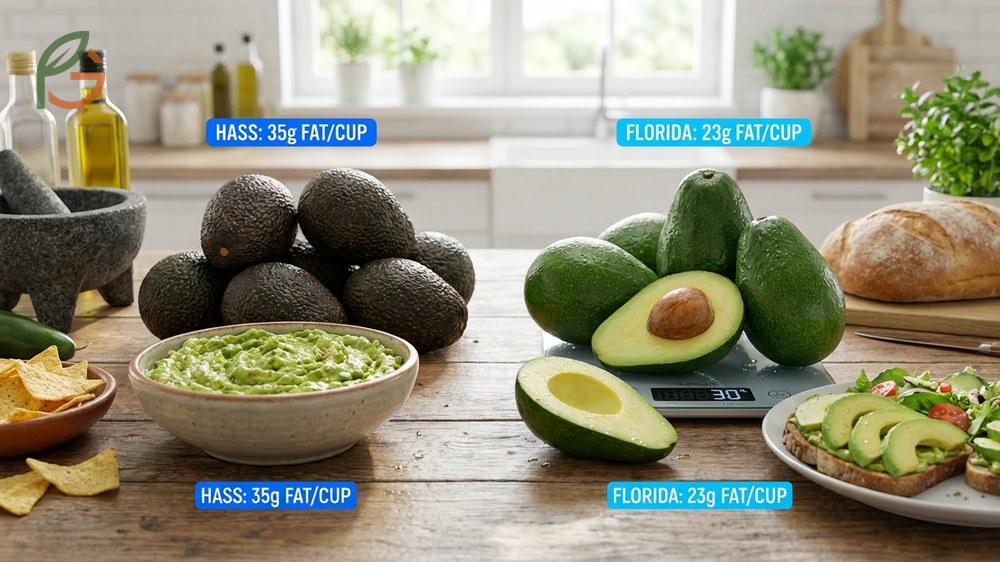
These two varieties require different selection strategies because their physical properties diverge significantly. Hass avocados contain 35 grams of fat per cup, while Florida varieties have just 23 grams[3]. This fat difference creates distinct textures and culinary applications.
Hass varieties dominate U.S. markets and work best for guacamole, spreading, and mashing. Florida avocados excel in sliced applications like salads and sandwiches because their firmer texture holds shape better[3].
This table compares appearance, ripeness indicators, fat content, best uses, and selection tips for Hass and Florida avocado varieties
| Feature | Hass Avocado | Florida Avocado |
|---|---|---|
| Ripe Color | Dark green to purplish-black[2] | Bright green remains constant[3] |
| Skin Texture | Bumpy, pebbly surface | Smooth, glossy skin |
| Best Selection Method | Color + firmness + stem test | Firmness is primary indicator |
| Texture When Ripe | Creamy, buttery, easy to mash | Firmer, holds shape when sliced |
| Ideal Uses | Guacamole, toast, smoothies | Salads, sandwiches, decorative slices |
When shopping, Hass avocados give you more ripeness feedback through color changes. Florida varieties require confident palm-squeezing skills since their green exterior won’t change.
Buying Avocados for the Week
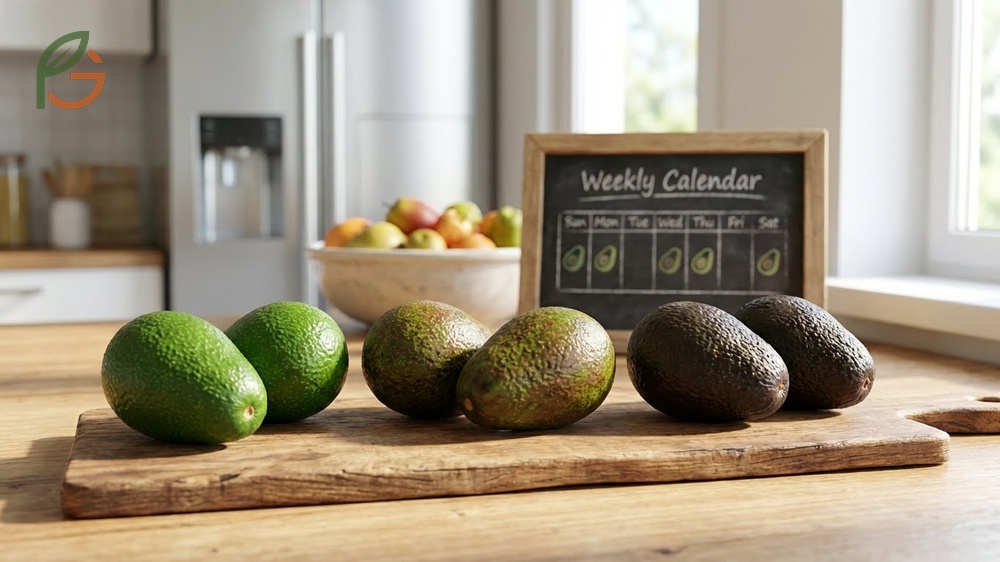
Strategic purchasing eliminates the common scenario where all your avocados ripen simultaneously. Research shows that buying avocados at different firmness stages creates a natural rotation system. You’ll have ready-to-eat fruit throughout the week without waste or last-minute store trips.
For a family of four eating avocados 3-4 times weekly, buy 6-8 avocados spanning the firmness spectrum. Store them on your counter at room temperature and move them to the refrigerator once they reach your preferred ripeness[4].
- Buy 2-3 rock-hard avocados for days 5-7 of the week
- Select 2 firm avocados with minimal give for days 3-4
- Choose 1-2 avocados with slight softness for immediate use (days 1-2)
- Check your counter daily and move ripe ones to the fridge
- Refrigerated ripe avocados stay fresh for 5-7 additional days
Place unripe avocados in a paper bag with a banana to speed ripening by 2-3 days[4]. The banana releases ethylene gas that accelerates the process. Don’t seal them in plastic—paper bags allow necessary airflow while concentrating the ripening gas.
Storage Tip: Once an avocado reaches your preferred ripeness, refrigeration stops the process for about a week. This gives you control over when each fruit is ready rather than letting them all ripen at once.
If you’re meal prepping, choose your firmness levels backward from your menu plan. Need avocados for Saturday’s brunch? Buy firm ones on Tuesday. Planning guacamole for taco Tuesday? Pick soft ones on Monday or firm ones the previous Thursday.
Best Time of Year for Avocados
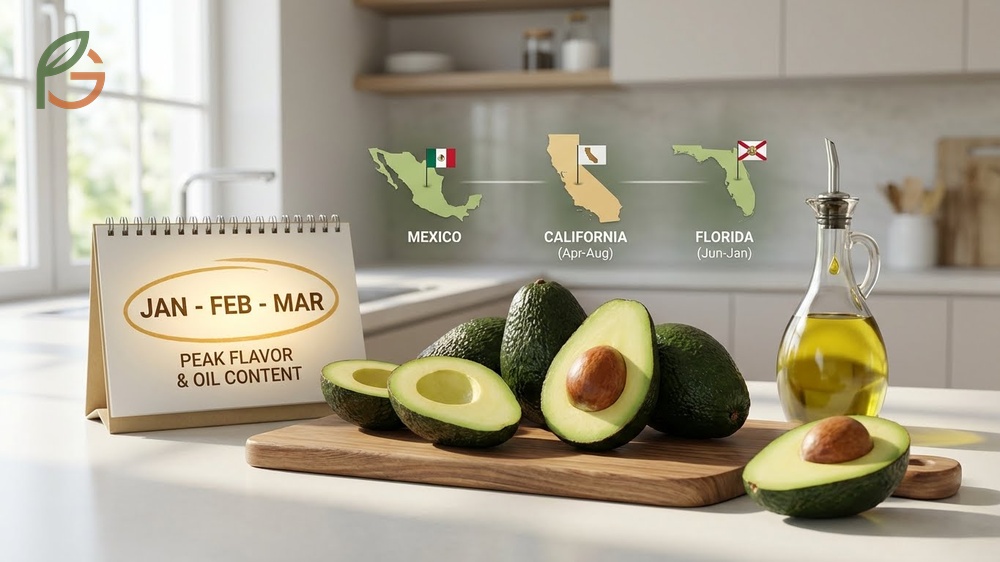
Thanks to growing regions across Mexico, California, and Florida with overlapping harvest seasons, avocados are available year-round in U.S. stores. However, peak flavor and oil content occur during specific windows. California’s season runs April through August, while Florida produces from June through January[5].
January through March represents the optimal buying window for maximum flavor intensity. During these months, avocados have developed higher oil content that creates the rich, buttery texture people love. If you’re buying during summer, expect slightly less creamy texture but still good quality.
Mexican imports follow four distinct bloom cycles throughout the year: Loca (June-September), Aventajada (September-October), Normal (September-February), and Marzena (March-June)[5]. These overlapping cycles ensure consistent supply but subtle quality variations depending on which harvest cycle is currently arriving at stores.
Prices typically drop during peak harvest months (April-August for California, June-January for Florida). Stock up during these windows if you’re planning to make large batches of guacamole or want to freeze avocado for later use.
Identifying Bruised Avocados Without Cutting
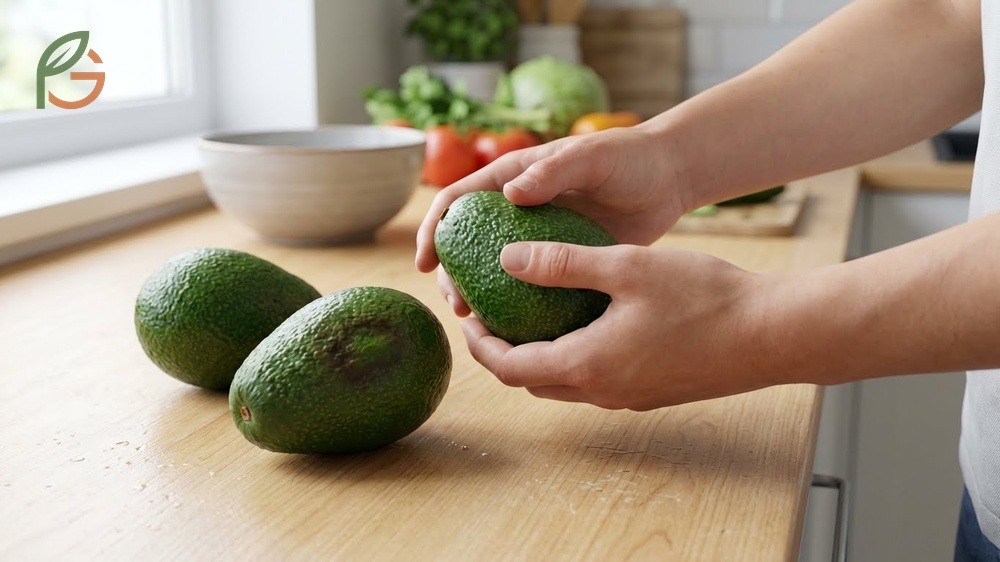
External inspection catches most bruising before you buy. Run your eyes over the entire surface looking for sunken spots, discolored patches darker than the surrounding skin, or areas that feel distinctly softer than the rest. These indicate internal damage from dropping, rough handling, or compression during transport.
The palm-squeeze method reveals inconsistent firmness that signals bruising. A properly ripened avocado feels uniformly soft throughout. If you detect a mushy spot on one side but firmness on the other, internal bruising has likely occurred.
Missing stems are red flags for potential bruising. When the stem cap falls off prematurely or gets removed in the store, that exposed area oxidizes faster and creates an entry point for bacteria. If you must buy a stem-less avocado, inspect the exposed area closely for brown or black discoloration.
- Large dents or depressions in the skin surface
- Dark patches that are distinctly different from natural ripening color
- Soft spots that give way more than surrounding areas
- Shriveled or wrinkled skin indicating dehydration and age
- Brown discoloration visible under a removed or missing stem
Some shoppers try the “shake test” to hear if the pit rattles inside, thinking this indicates ripeness. This method is unreliable and potentially misleading. A rattling pit might signal overripeness where the flesh has pulled away from the seed, or it might mean nothing at all depending on the variety and growing conditions.
Conclusion
The evidence is clear: how to pick a good avocado comes down to mastering three techniques—color assessment for Hass varieties, palm-pressure firmness testing, and the stem test for confirmation. You’ll get consistent results when you buy avocados at multiple ripeness stages rather than hoping for perfection in a single shopping trip.
Current guidance emphasizes gentleness throughout the selection process to prevent bruising that degrades quality. FruitGarden helps home gardeners and fruit enthusiasts understand the science behind proper selection, storage, and ripening so you can enjoy perfect avocados every time you reach for one.
Frequently Asked Questions
How do you pick an avocado at the grocery store?
Choose avocados by checking color (dark green to black for Hass), gently squeezing in your palm for slight give, and performing the stem test to see green underneath. Buy multiple avocados at different firmness levels so they ripen throughout the week rather than all at once.
How can you tell if an avocado is ripe?
A ripe avocado yields to gentle palm pressure, has dark green to black skin (for Hass varieties), and shows bright green color under the stem cap. If it feels rock-hard, wait 3-5 days. If it’s mushy, it’s overripe and may have brown spots inside.
What’s the difference between Hass and Florida avocados when selecting?
Hass avocados turn dark when ripe and have creamy texture, making color your primary selection tool. Florida avocados stay bright green even when ripe, so you must rely on firmness testing. Florida varieties work better for slicing, while Hass types are ideal for mashing.
Should you squeeze avocados to check ripeness?
Yes, but use your entire palm, not your fingertips. Cradle the avocado in your hand and apply gentle, even pressure. Fingertips create concentrated pressure points that bruise the flesh underneath. The fruit should yield slightly if ripe, similar to a partially deflated balloon.
How do you buy avocados that will last all week?
Purchase 6-8 avocados at varying firmness stages—2-3 rock-hard for later in the week, 2 moderately firm for mid-week, and 1-2 with slight softness for immediate use. Store on your counter and move to the refrigerator once ripe to extend freshness by 5-7 days.
What does it mean when the stem is brown under an avocado?
Brown color under the stem indicates overripeness or internal browning. The avocado may still be edible but expect brown streaks throughout the flesh. If you see black or moldy areas under the stem, skip that fruit entirely as rot has progressed too far.
When is the best time of year to buy avocados?
January through March offers peak flavor with higher oil content that creates buttery texture. California’s harvest runs April-August, while Florida produces June-January. Prices drop during these regional peak seasons, making them ideal for buying larger quantities.





