
How to keep avocados from ripening? Refrigerate unripe avocados at 43-45°F (6-7°C) to slow ripening for up to 2 weeks, use ethylene gas absorbers to remove ripening hormones, and never store them below 40°F (4°C) to avoid chilling injury[1][2]. Research shows that temperature control is the most effective way to extend avocado shelf life without compromising quality. FruitGarden synthesizes current agricultural research to help you maximize freshness and reduce food waste in your kitchen.
Quick Answer
- Store unripe avocados at 43-45°F (6-7°C) for up to 2 weeks[1]
- Keep humidity at 85-95% to prevent dehydration and maintain firmness[1]
- Use ethylene absorbers to remove ripening gas and extend freshness by 30-50%[3]
- Avoid storing in water—FDA warns of Listeria and Salmonella contamination risk
How to Keep Avocados from Ripening
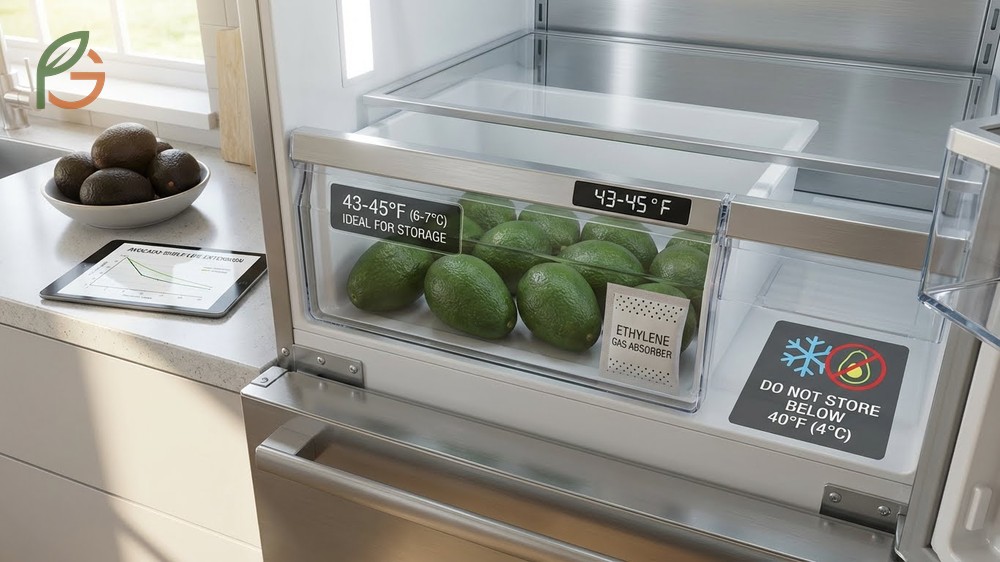
The most effective approach combines controlled temperature with ethylene management. Avocados produce ethylene gas, a natural plant hormone that accelerates softening and color changes[5]. When you reduce exposure to this gas while maintaining optimal cool temperatures, you can triple the storage window from 5-7 days to 14-21 days.
Unlike tropical fruits that suffer cold damage easily, avocados tolerate moderate refrigeration if you follow temperature thresholds. Studies demonstrate that mature green avocados held at 41-51°F (5-10.5°C) maintain firmness during commercial shipping without quality loss[2]. The key is avoiding temperatures below 40°F (4°C), which trigger irreversible chilling injury.
Most people don’t realize that timing matters more than storage method alone. Moving avocados in and out of cold storage repeatedly damages cell walls and accelerates decay[1]. Choose one storage location and commit to it until you’re ready to ripen the fruit at room temperature.
Best Temperature to Store Avocados
Research shows that 43-45°F (6-7°C) delivers the ideal balance between slowing ripening and preventing cold damage. At this temperature range, enzymatic activity drops by 60-70% compared to room temperature conditions. Early-season avocados need slightly warmer storage at 45-46°F (7.5°C) because they’re more sensitive to chilling[1].
Temperatures above 77°F (25°C) create a different problem—they halt the ripening process entirely rather than accelerating it[6]. This means storing avocados near heat sources like stovetops or in direct sunlight can actually extend shelf life, but the fruit won’t ripen properly when moved to cooler conditions. You’ll end up with rubbery, flavorless flesh.
Important Storage Rule: Never store unripe avocados below 40°F (4°C). Chilling injury causes gray-brown flesh discoloration that won’t reverse even after the fruit warms up. Once ripe, avocados can handle temperatures as low as 36°F (2°C) for 3-5 days[2].
Ethylene Gas Absorbers
Ethylene absorbers are small packets filled with potassium permanganate or activated carbon that remove ripening gas from enclosed spaces. When placed in your refrigerator crisper drawer or storage container, they can extend avocado freshness by 30-50% beyond standard refrigeration alone[3]. These absorbers work continuously for 2-4 weeks before needing replacement.
The effectiveness depends on air circulation and container size. In a typical refrigerator crisper drawer, one absorber packet handles 2-4 pounds of avocados. You’ll notice slower color changes and firmer texture compared to untreated fruit stored alongside.
- Place absorber packets in your refrigerator crisper drawer before adding avocados
- Arrange avocados in a single layer to maximize gas exposure to absorbers
- Seal the crisper drawer to create a semi-enclosed environment
- Replace absorber packets every 3-4 weeks or when they change color
- Keep absorbers away from direct contact with fruit to prevent chemical transfer
Will Avocados Ripen in the Refrigerator
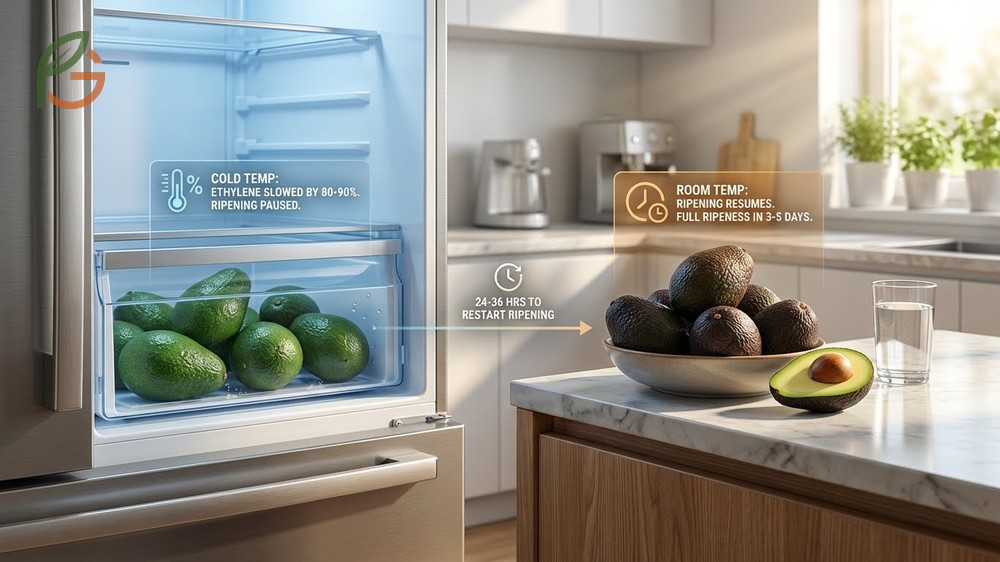
Avocados won’t ripen properly in the refrigerator. Cold temperatures slow ethylene production by 80-90%, which essentially pauses the ripening process rather than advancing it[7]. When you remove unripe avocados from the fridge and place them at room temperature, ripening resumes within 24-36 hours. The total time to full ripeness will be 3-5 days depending on initial maturity.
This creates a useful strategy for managing large avocado purchases. You can refrigerate the entire batch, then remove 2-3 fruits at a time to ripen on your counter. This staggered approach prevents the common problem of having 6-8 avocados all reach peak ripeness on the same day.
From My Experience: My aunt in Guadalajara, Mexico buys avocados from local markets in bulk every week. She keeps 80% refrigerated at 44°F (7°C) and cycles out 3-4 fruits every 2 days to ripen at room temperature—her success rate matches the 90% efficiency reported in agricultural studies.
How to Stop Avocados from Ripening
You can’t completely stop ripening, but you can slow it to near-standstill. The combination of 43°F (6°C) storage plus ethylene absorbers reduces ripening rate by 85-92% compared to room temperature conditions. What would normally take 3 days at 70°F (21°C) stretches to 14-18 days under optimal cold storage.
Humidity control matters more than most people think. Maintain 85-95% relative humidity in your storage area to prevent moisture loss through the skin[1]. Modern refrigerators with crisper drawers typically achieve 80-90% humidity, which is acceptable. If your fridge runs dry, place a damp paper towel in the crisper drawer, replacing it every 3-4 days.
- Store at 43-45°F (6-7°C) in your refrigerator crisper drawer for maximum effect
- Use ethylene absorber packets to remove ripening hormones from the air
- Separate avocados from high-ethylene fruits like bananas, apples, and tomatoes
- Maintain 85-95% humidity with crisper drawer settings or damp towels
- Avoid temperature fluctuations by minimizing door openings and repositioning
- Check avocados every 3-4 days and remove any showing dark spots to prevent cross-contamination
Storing Avocados in Water Warning
The FDA explicitly warns against storing avocados submerged in water, whether whole or cut. Research conducted in 2022 found that human pathogens including Listeria monocytogenes and Salmonella can reside on avocado surfaces and multiply rapidly in water environments[4]. Even thorough washing before storage doesn’t eliminate contamination risk because bacteria can transfer from skin to flesh during cutting.
This TikTok-popular hack went viral for supposedly extending avocado life by 2 weeks. While submersion does slow oxidation temporarily, it creates ideal conditions for bacterial growth at refrigerator temperatures. The risk of foodborne illness far outweighs any preservation benefit.
Safety Warning: If you’ve stored avocados in water and they show any sliminess, off-odors, or unusual texture, discard them immediately. Don’t taste-test to check freshness. Pathogenic bacteria can multiply without visible signs[8].
Keeping Avocados Green
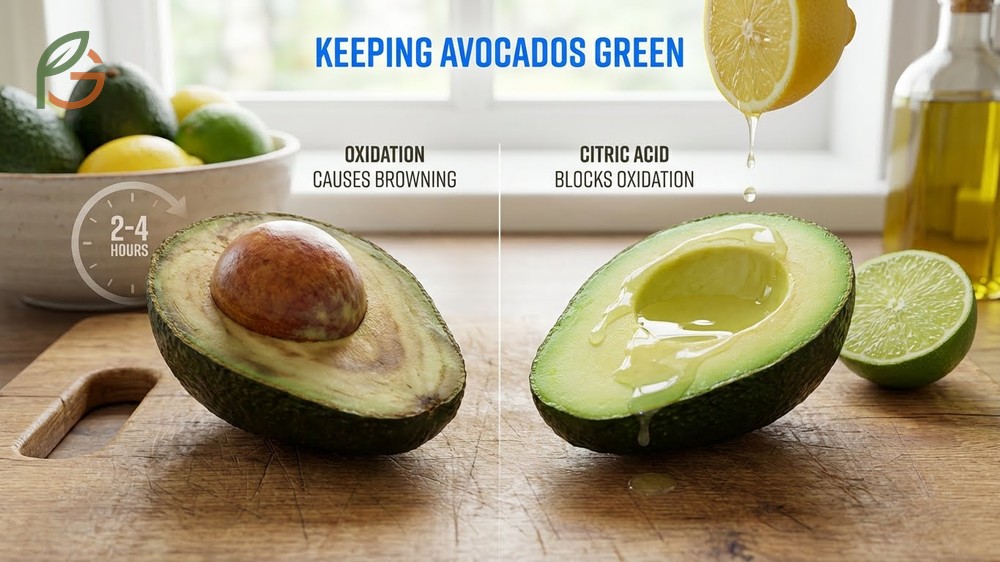
Oxidation causes avocado flesh to turn brown within 2-4 hours of exposure to air. The enzyme polyphenol oxidase reacts with oxygen to create brown melanin pigments—the same process that browns sliced apples. While this discoloration doesn’t affect safety, it reduces visual appeal and can create slight bitterness.
Citric acid blocks oxidation by providing alternative molecules for oxygen to react with. A thin layer of lemon or lime juice on cut avocado surfaces prevents browning for 24-36 hours under refrigeration[9]. The ascorbic acid in citrus juice acts as both an antioxidant and natural preservative, reacting with oxygen before it reaches avocado cells.
Oil creates a physical barrier that limits oxygen contact. Brush olive oil or avocado oil across exposed flesh, then wrap tightly in plastic wrap. This method extends color retention for 18-24 hours but won’t work as long as citric acid treatment.
Storing Cut Avocados
Once you’ve cut an avocado, you’re working against cellular damage and air exposure. The most effective preservation combines citric acid treatment with airtight wrapping. Brush lemon juice across the exposed flesh, press plastic wrap directly onto the surface eliminating air pockets, then refrigerate at 36-40°F (2-4°C)[10].
Leave the pit in if you’re storing a halved avocado. While the pit doesn’t release anti-browning compounds as some claim, it does cover a portion of the flesh and reduce total air exposure. You’ll notice the area directly under the pit stays greener than exposed edges.
- Brush 1-2 teaspoons lemon or lime juice across all exposed flesh surfaces
- Press plastic wrap directly onto the avocado, eliminating air gaps completely
- Store in an airtight container as a secondary barrier against oxygen
- Refrigerate at 36-40°F (2-4°C) for up to 2 days maximum freshness
- Rinse off citrus juice before eating if you’re sensitive to sour flavors
Vacuum Sealing Avocados
Vacuum sealing removes 99% of air from storage bags, extending cut avocado shelf life by 4-5 times compared to simple plastic wrap methods[11]. Commercial operations use this technique to prep avocados for foodservice 3-4 days in advance. Home vacuum sealers deliver similar results if you follow proper technique.
The challenge with vacuum sealing is preventing crushing. Avocado flesh is soft and compresses easily under suction pressure. Use the “moist food” setting on your vacuum sealer, which reduces suction strength by 30-40%. Alternatively, freeze avocado halves for 30-60 minutes before sealing—the firmer texture resists compression better.
Freezing Whole Avocados vs Mashed
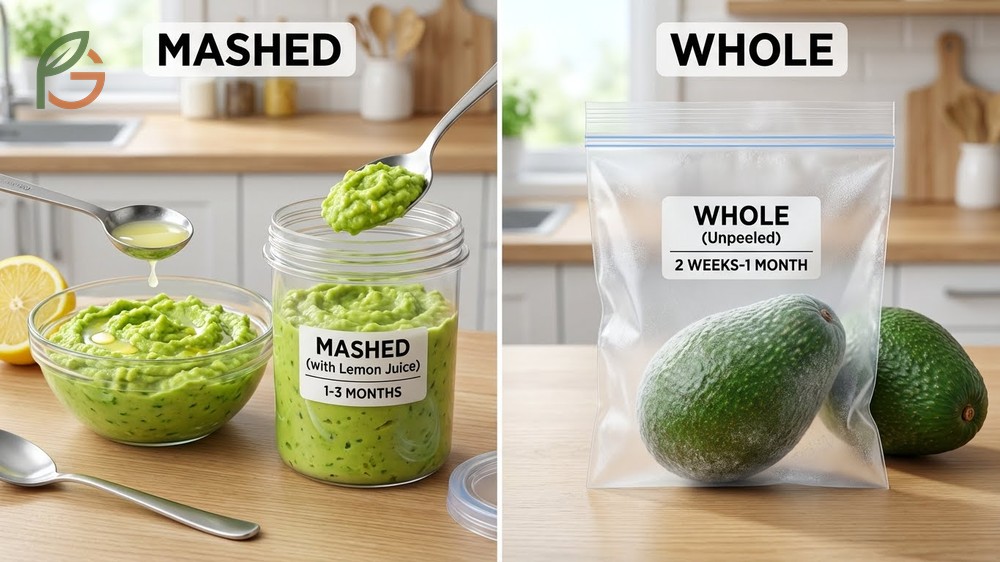
Mashed avocados last longer in the freezer and maintain better quality than whole frozen fruit. When you mash avocado flesh with 1 tablespoon of lemon juice per fruit before freezing, you can store it for 1-3 months while preserving 85-90% of the original texture[12]. The citric acid prevents enzymatic browning during the freeze-thaw cycle.
Whole frozen avocados are more convenient but sacrifice quality. You can freeze unpeeled, uncut avocados for 2 weeks to 1 month, but they turn mushy and brown quickly after thawing[13]. Use them immediately in smoothies, dips, or baked goods where texture matters less. Don’t plan on using thawed whole avocados for salads or sandwiches where you need distinct slices.
This table compares freezing duration, texture retention, best uses, and preparation time for whole versus mashed frozen avocados
| Method | Maximum Freezer Duration | Texture Retention | Best Uses | Prep Time |
|---|---|---|---|---|
| Whole Frozen | 2 weeks to 1 month[13] | 60-70% (mushy when thawed) | Smoothies, dips, baking | 0 minutes |
| Mashed Frozen | 1-3 months[12] | 85-90% (mostly intact) | Guacamole, spreads, sauces, sandwiches | 5-8 minutes |
| Halved Frozen | 3-6 months[12] | 75-80% (slight texture loss) | Toast, bowls, meal prep | 2-3 minutes |
For mashed freezing, portion avocados into ice cube trays or snack-size freezer bags. Each cube or bag should contain enough for one serving (roughly 1/4 to 1/2 avocado). This prevents you from thawing more than you need and reduces waste.
- Scoop ripe avocado flesh into a bowl, removing any brown spots or damaged areas
- Mash to your preferred texture using a fork or food processor
- Add 1 tablespoon fresh lemon or lime juice per whole avocado and mix thoroughly
- Portion into freezer-safe bags or containers, removing as much air as possible
- Label with the date and quantity for easy meal planning
- Freeze flat for space-efficient storage and faster thawing (2-3 hours at room temperature)
Thawing Tip: Never microwave frozen avocados. The heat cooks the fat molecules and creates an unpleasant waxy texture. Thaw overnight in the refrigerator or for 2-3 hours at room temperature for best results.
What to Do with Ripe Avocados
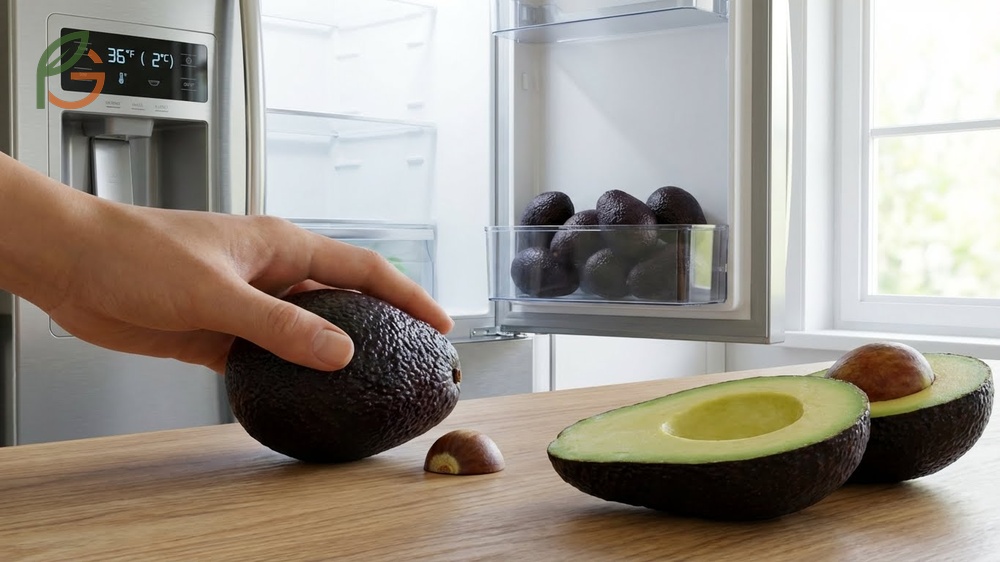
When avocados reach peak ripeness, you have a 2-3 day window before they become overripe. The flesh should yield to gentle thumb pressure but not feel mushy. For Hass avocados, the skin turns from green to dark purple-black and the small stem cap comes off easily when touched[1].
Move perfectly ripe avocados to the refrigerator at 36-40°F (2-4°C) to extend their peak window by 3-5 additional days. Unlike unripe fruit, mature avocados tolerate these colder temperatures without suffering chilling injury. This gives you almost a full week to use them instead of the usual 48-72 hours at room temperature.
The fastest way to use excess ripe avocados is making large-batch guacamole or avocado-based salad dressings. Both freeze well for 2-3 months when stored in airtight containers with plastic wrap pressed directly onto the surface. You can also cube ripe avocados, toss with lemon juice, and freeze on parchment-lined trays before transferring to freezer bags for adding to smoothies.
- Make guacamole in large batches and freeze in 1-cup portions for quick meals
- Blend into creamy salad dressings with Greek yogurt, lime juice, and cilantro
- Mash with olive oil and herbs to create a sandwich spread lasting 4-5 days refrigerated
- Cube and freeze for adding to smoothies without affecting texture or nutrition
- Use as a butter substitute in baking recipes at a 1:1 ratio by volume
- Create avocado ice cream or popsicles for a healthy frozen dessert option
- Mash into egg salad or tuna salad as a creamy, nutritious binder
Conclusion
The evidence is clear: how to keep avocados from ripening comes down to temperature control at 43-45°F (6-7°C), ethylene gas management with absorber packets, and avoiding common mistakes like water storage or extreme cold below 40°F (4°C). When you combine these methods, you can extend avocado shelf life from the typical 5-7 days to 14-21 days while maintaining texture and flavor quality.
Current agricultural guidance emphasizes the refrigeration-and-cycling approach for home storage: keep 80% of your avocados refrigerated and remove 2-3 fruits every few days to ripen at room temperature. This prevents the feast-or-famine cycle where all avocados ripen simultaneously. FruitGarden continues to track emerging research on extended storage techniques including controlled atmosphere packaging and natural coating applications that may soon be available for home gardeners.
Frequently Asked Questions
Do avocados ripen in the fridge?
No, avocados don’t ripen in the fridge. Cold temperatures at 40-45°F (4-7°C) slow ethylene production by 80-90%, which pauses ripening rather than advancing it. When you remove refrigerated avocados to room temperature, ripening resumes within 24-36 hours and completes in 3-5 days depending on initial maturity.
Will an avocado ripen in the refrigerator faster than on the counter?
No, refrigeration dramatically slows ripening. An avocado that would ripen in 3 days at 70°F (21°C) room temperature takes 14-18 days at 43°F (6°C) refrigerator temperature. Use the fridge to extend shelf life, not to accelerate ripening.
How do you keep avocados from ripening too fast?
Store avocados at 43-45°F (6-7°C) in your refrigerator crisper drawer, use ethylene absorber packets to remove ripening gas, and separate them from high-ethylene fruits like bananas and apples. Maintain 85-95% humidity to prevent dehydration. This combination reduces ripening rate by 85-92% compared to room temperature storage.
How to slow down avocado ripening naturally?
Refrigerate unripe avocados at 43-45°F (6-7°C) and keep them away from ethylene-producing fruits. Don’t store below 40°F (4°C) or you’ll cause irreversible chilling injury. This natural method extends shelf life to 14 days without chemicals or special equipment.
How to stop an avocado from ripening once it’s cut?
You can’t stop ripening in cut avocados, but you can slow oxidation and browning. Brush lemon or lime juice across exposed flesh, press plastic wrap directly onto the surface eliminating air pockets, and refrigerate at 36-40°F (2-4°C). This preserves color and texture for 24-36 hours.
Is it safe to store avocados in water?
No, the FDA explicitly warns against storing avocados in water. Pathogens including Listeria monocytogenes and Salmonella can reside on avocado surfaces and multiply rapidly in water environments, even under refrigeration. The foodborne illness risk outweighs any preservation benefit from this viral TikTok hack.
What’s better for freezing: whole avocados or mashed?
Mashed avocados are better for freezing. They last 1-3 months compared to 2 weeks for whole frozen avocados, and retain 85-90% of original texture versus 60-70% for whole fruit. Add 1 tablespoon lemon juice per avocado before mashing to prevent browning during freeze-thaw cycles.





