
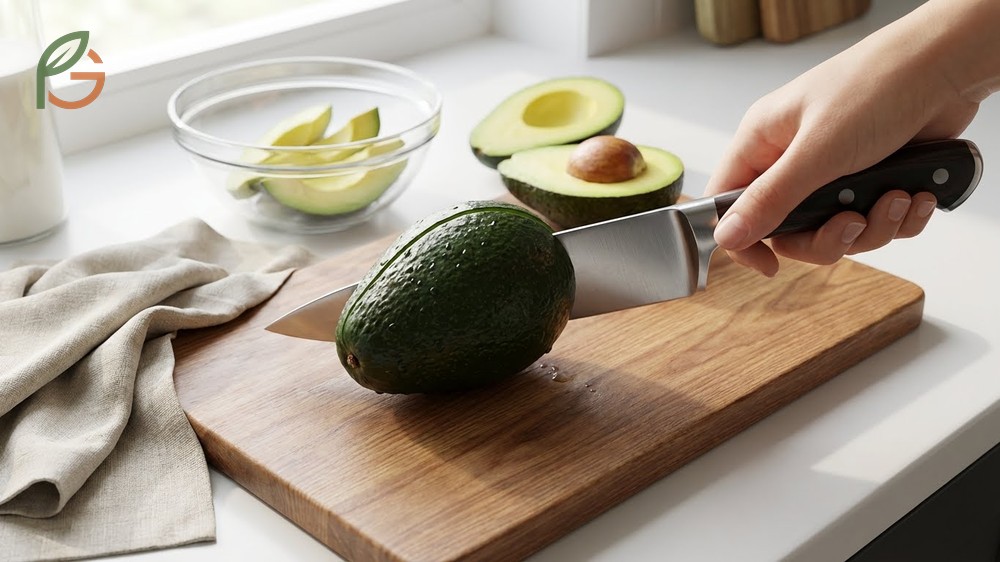
How to cut an avocado starts with placing the fruit on a cutting board and slicing lengthwise around the pit until you’ve made a complete circle, then twisting the halves apart[1]. Research shows that using the proper technique with a sharp 7 to 8-inch chef’s knife reduces the risk of “avocado hand” injuries while achieving clean, uniform cuts[2]. FruitGarden synthesizes current culinary guidance and safety data to help you master avocado preparation techniques that work whether you’re making guacamole, avocado toast, or decorative avocado roses.
Quick Answer
How to Cut an Avocado
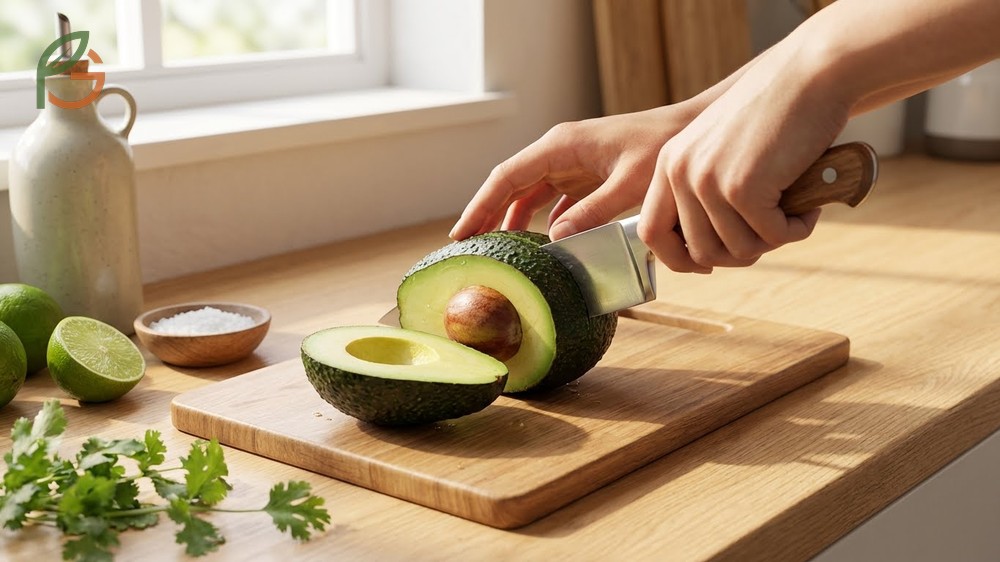
Cutting an avocado properly starts with positioning the fruit horizontally on a stable cutting board. You’ll want to pierce the skin with your knife down to the pit and rotate the avocado in a rolling motion away from you until you’ve sliced completely around[3]. Once you’ve made the full circle, hold both halves and twist them in opposite directions to separate.
The traditional lengthwise cut method works best because it follows the avocado’s natural shape and creates two even halves. Studies demonstrate that maintaining a stable cutting surface reduces slipping incidents by positioning a dish towel under your board[2]. Hold the avocado firmly with your non-dominant hand while keeping fingers clear of the cutting path.
Most people don’t realize that avocado ripeness dramatically affects cutting ease. A perfectly ripe avocado yields to gentle pressure but isn’t mushy, making it easier to achieve clean slices. If you’re working with a firmer avocado, you’ll need slightly more pressure, but the technique remains the same.
Choosing the Right Knife
Research shows that a sharp chef’s knife with a blade length of 7 to 8 inches is ideal for cutting avocados and similar fruits[2]. Alternatively, a Santoku knife with its shorter blade and Granton edge excels at creating uniform slices while preventing the avocado from sticking to the blade[1]. Both options provide the precision and control you need for making clean cuts through the avocado’s flesh and skin.
A sharp blade is crucial for both safety and efficiency. Dull knives require more force and can easily slip, increasing your risk of injury. Most culinary experts recommend honing your knife regularly and sharpening it professionally every few months.
From My Experience: My cousin in Guadalajara, Mexico grows avocados in her backyard and taught me that the knife matters more than you’d think. She uses a 7-inch Santoku exclusively for harvesting and cutting her Hass avocados—the slices come out perfect every time without bruising the flesh.
Basic Cutting Technique
Place your ripe avocado on its side on the cutting board. Insert your knife horizontally at the midpoint where the fruit is widest, cutting through the skin until you hit the pit. Keep the knife steady as you rotate the avocado around the blade, maintaining consistent pressure.
Once you’ve completed the cut around the circumference, grasp both halves with your hands. Twist them in opposite directions—one half clockwise, the other counterclockwise—and they’ll separate cleanly. The pit will remain lodged in one half, ready for safe removal using the methods described in the next section.
Safety Tip: Never hold an avocado in your hand while cutting it. Always use a stable cutting board and keep your fingers away from the knife’s path to prevent cuts.
How to Remove Avocado Pit Safely
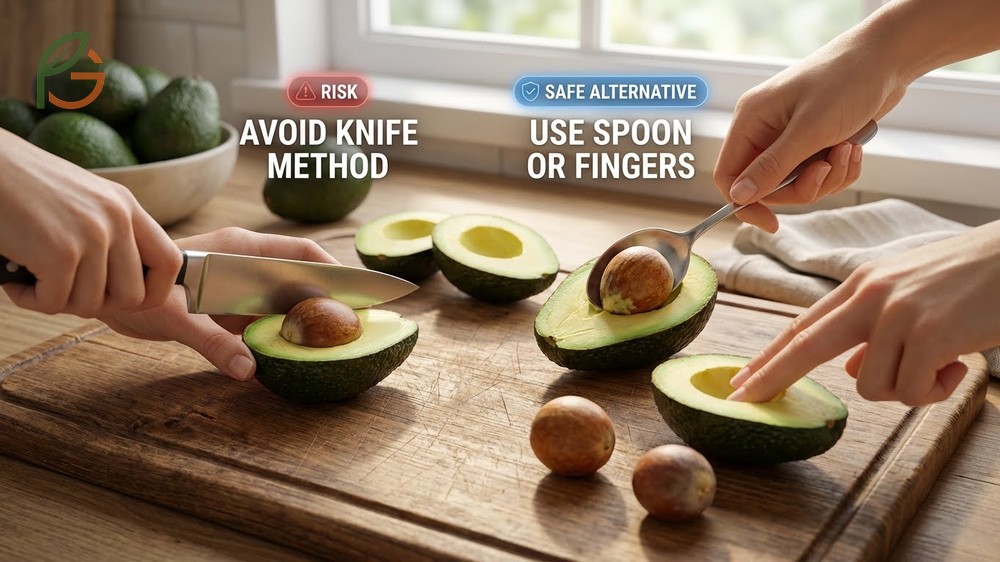
Current safety data indicates that striking the pit with a knife blade—though popular—causes numerous “avocado hand” injuries each year. The safer alternative is using a spoon or your fingers, which eliminates the risk of cutting yourself while removing the pit from the knife blade[3]. These methods work best on ripe avocados where the pit has naturally loosened from the surrounding flesh.
The spoon and push techniques both offer knife-free alternatives that are equally effective. You don’t need special tools or complicated maneuvers. Both methods take just seconds once you’ve practiced them a few times.
Spoon Scoop Method
Grab a regular teaspoon with a pointed tip rather than a rounded soup spoon. Position the spoon’s tip under the narrower part of the pit where it meets the flesh. Gently slide the spoon between the pit and the avocado, then lift upward to scoop the pit out cleanly[3].
This technique is simple and requires no force. If the pit doesn’t release easily, your avocado might not be ripe enough, or you can try repositioning the spoon at a different angle. The pit should pop out with minimal resistance when you’ve hit the right spot.
Push Technique
This hands-only method requires placing your index and middle fingers on either side of the pit, with your thumb positioned on the skin side of the avocado[5]. Form an upside-down tripod grip around the base, then push the pit forward with your thumb as if you’re plunging a syringe. The pit will pop right out without taking any flesh with it.
Most people find this method surprisingly easy once they try it. It’s shockingly effective and eliminates the need for any tools. You can dispose of the pit immediately without touching a knife.
- Never use a sharp knife to strike or pry the pit—this causes most avocado-related injuries
- Always place the avocado half on a stable surface rather than holding it in your palm
- If using a spoon, choose one with a thinner edge that can slide easily under the pit
- For the push method, apply steady pressure rather than forcing the pit out quickly
- Protect your hand with a dish towel if you must use the knife-strike method
- Discard the pit immediately to avoid accidentally cutting yourself while cleaning up
How to Peel an Avocado
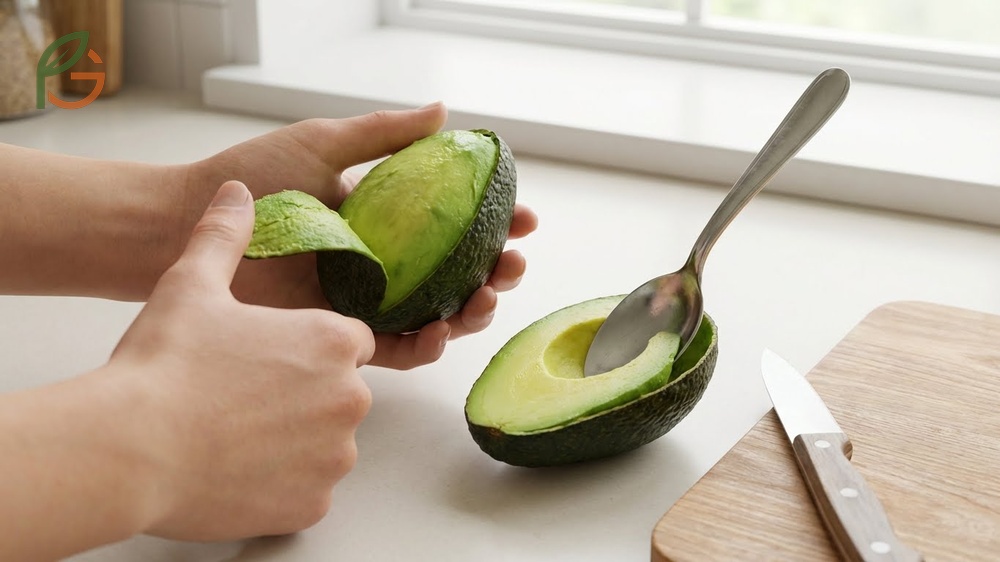
Peeling an avocado depends on its ripeness and your intended use. For perfectly ripe avocados, make a small nick in the center of the peel at the narrow end using your knife tip[6]. Using your fingers, gently pull the skin away from the fruit starting from that nick—it often comes off in a single piece or several large sections.
Alternatively, you can use the spoon method by sliding a large spoon between the flesh and skin. Follow the curve of the skin as closely as possible, loosening the flesh all around. The entire avocado half should lift out in one piece if it’s properly ripe.
For firmer avocados, you might need to score the flesh first before peeling. The skin method works best when you need the avocado intact for slicing or making decorative presentations. The spoon method is faster for recipes where appearance doesn’t matter, like guacamole or smoothies.
Ripeness Matters: If the skin won’t peel easily, your avocado isn’t ripe enough. Wait another day or two until it yields to gentle pressure before attempting to peel it.
Slicing Avocado for Toast
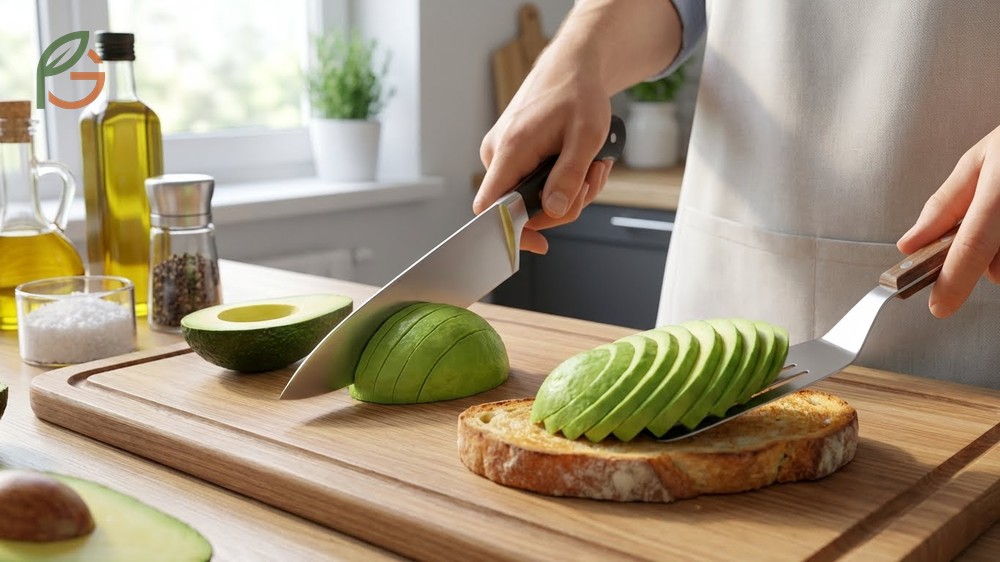
Creating picture-perfect avocado toast starts with removing the pit and peeling the avocado half. Place the peeled avocado cut-side down on your cutting board. Use your knife tip to make thin diagonal slices about 1cm (0.4 inches) apart across the entire half[7].
Gently push the slices away from each other to create a fanned pattern. Slide a spatula or the flat side of a large knife under the entire fanned arrangement. Transfer it carefully onto your prepared toast, maintaining the decorative pattern.
The diagonal cut creates longer, more elegant slices than straight cuts. You can also score the avocado inside the skin before scooping if you prefer not to peel it first. Season the slices with olive oil, flaky sea salt, freshly cracked black pepper, and chili flakes for the classic presentation.
- Use a very ripe avocado for easiest slicing and best flavor
- Cut slices uniformly thin (about 1cm) so they fan out smoothly
- Work on a smooth cutting surface like marble to reduce friction when transferring
- Brush lemon juice on slices if you’re preparing them ahead to prevent browning
- Support the entire fanned arrangement with a spatula when moving to toast
- Angle your knife at 45 degrees for the most attractive diagonal slices
Dicing Avocado for Guacamole
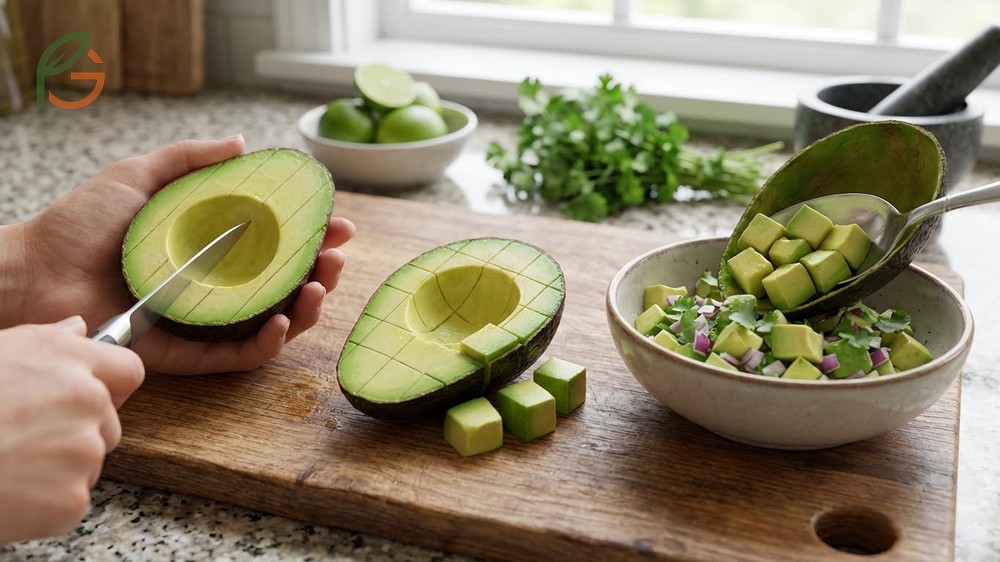
Dicing avocado for guacamole is easiest when you score the flesh while it’s still inside the skin. After removing the pit, hold the avocado half in your palm with the flesh facing up. Use your knife tip to make lengthwise cuts through the flesh without piercing the skin underneath[8].
Rotate the avocado 90 degrees and make crosswise cuts, creating a grid pattern. The result is uniform cubes that are ideal for salads, salsas, or as toppings. Scoop out the pre-diced cubes with a spoon directly into your bowl.
This crosshatch scoring method saves time and creates consistently sized pieces. You don’t need to peel the avocado first, which means less mess and faster prep. The skin acts as a natural bowl that holds everything together while you work.
For chunkier guacamole, make your grid cuts about 1cm apart. For smoother guacamole that requires less mashing, cut smaller cubes at 0.5cm intervals. The size you choose depends on your texture preference.
Avocado Rose Tutorial
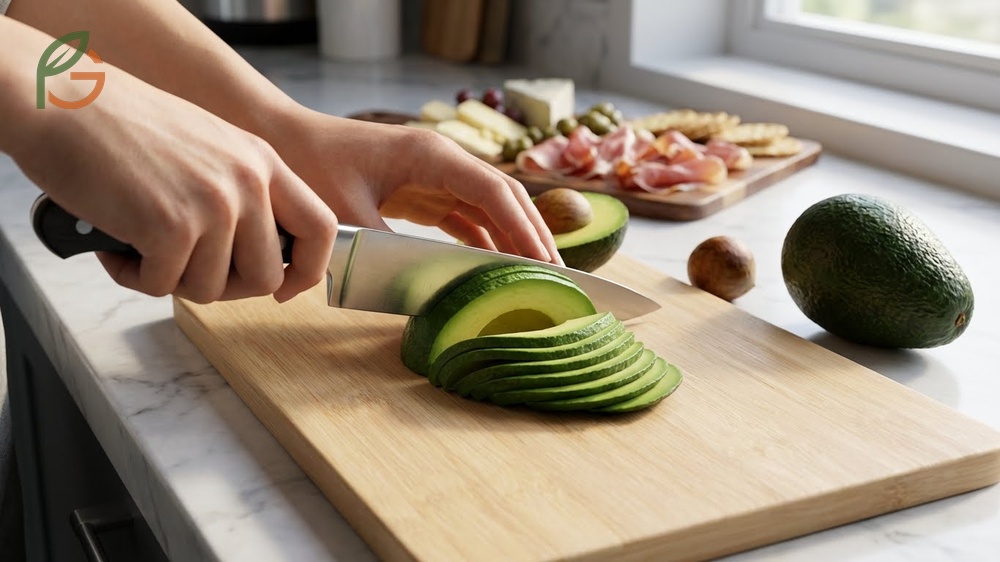
Creating an avocado rose transforms a simple ingredient into an elegant garnish for charcuterie boards, salads, and upscale presentations. Start with a firm-ripe avocado that’s not too soft, as overripe fruit won’t hold its shape[6]. Cut the avocado in half, remove the pit, and peel off the skin completely.
Place the peeled half cut-side down on a smooth cutting surface. Make thin slices across the avocado—you want them quite thin so they’re easier to shape without breaking[9]. Space your cuts evenly, aiming for 10-12 slices per half.
Fan out the slices so they form a long line with each slice overlapping the next. Remove the small end slices if they’re too thin to work with. Starting from one end, curl the avocado slices toward the center, continuing to roll until you’ve formed a spiral rose shape.
Transfer your completed rose carefully using a spatula. You can adjust the “petals” by gently pulling, pushing, or flattening them to accentuate the flower appearance. Brush with lemon juice to prevent browning if you’re not serving immediately.
How to Store Cut Avocado
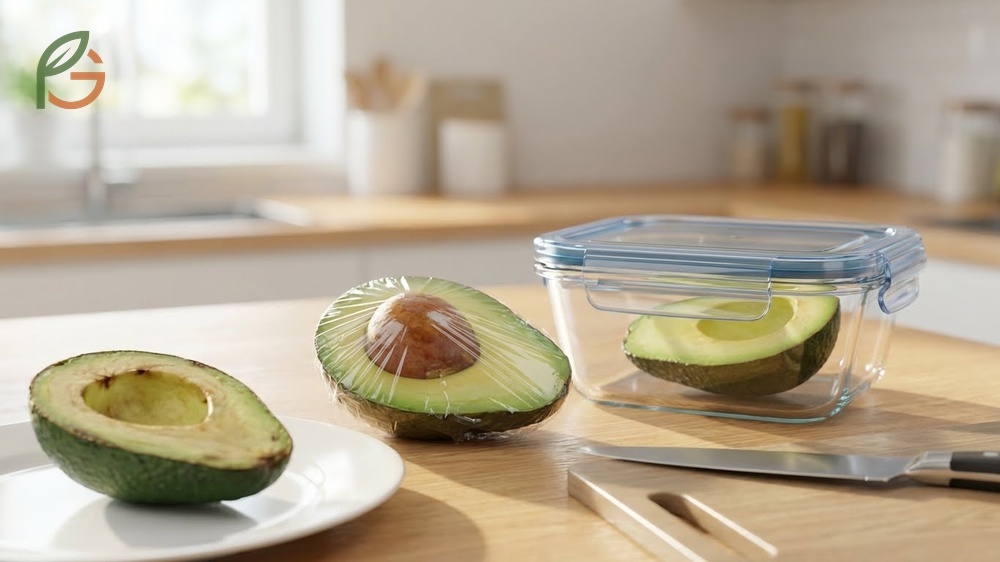
Enzymatic browning occurs when polyphenol oxidase (PPO) and phenolic compounds in avocado pulp are exposed to oxygen, triggering reactions that form brown pigment[10]. Preventing this reaction requires limiting oxygen exposure through proper storage techniques. Wrapping cut avocado tightly in plastic wrap or storing it in an airtight container controls oxygen contact and delays browning.
The most effective storage method involves keeping the pit in the unused half and wrapping it tightly with stretch-tight plastic film pressed directly against the avocado flesh. Squeeze out air pockets to create a seal. This keeps the avocado fresh for 1-2 days in the refrigerator.
For longer storage, brush or squeeze lemon or lime juice on the exposed flesh before wrapping. The citric acid and vitamin C provide additional protection against browning. You can also store the avocado half cut-side down in a container with a thin layer of water covering the surface.
Research shows that storing avocado with sliced onion may prevent browning without affecting flavor—as long as the onion only touches the skin, not the flesh[10]. Onion’s sulfuric compounds interact with the copper-containing PPO enzyme, inhibiting its activity by up to 33%.
- Keep the pit in the unused half—it helps protect the surrounding flesh from air exposure
- Press plastic wrap directly against the cut surface to eliminate air pockets
- Brush exposed flesh with lemon, lime, or orange juice before wrapping
- Store cut-side down in water in an airtight container for up to 2 days
- Place a sliced onion in the container (touching only the skin) to inhibit browning
- Use vacuum-sealed mason jars if you have the equipment—keeps for a week or longer
- Scrape off any browned surface layer before eating—the green flesh underneath is still fresh
Picking a Good Avocado
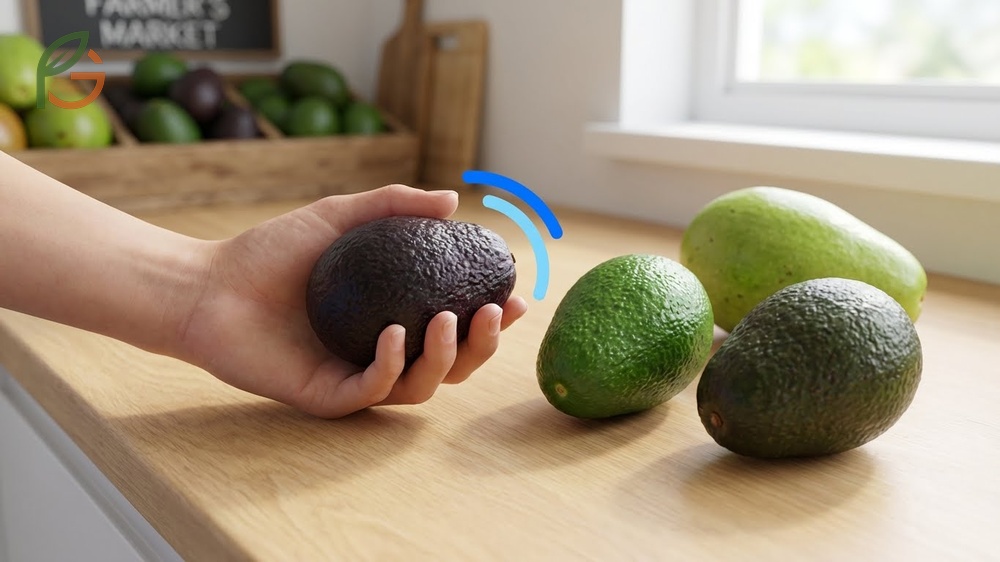
Selecting ripe avocados at the store requires understanding color, texture, and stem tests. Hass avocados transition from bright green to darker green or purplish-black as they ripen[11]. However, color alone doesn’t tell the complete story—some varieties retain light-green skin even when perfectly ripe.
The most reliable test involves holding the avocado in your palm and applying gentle pressure with your whole hand rather than squeezing with your fingers[12]. Ripe, ready-to-eat fruit will be firm but will yield slightly to pressure. Don’t squeeze with your fingers—this bruises the flesh and ruins the avocado for other shoppers.
The stem test provides additional confirmation of ripeness and quality. Try to flick off the small stem nub at the top of the avocado. If you can’t remove it easily, the fruit isn’t ripe yet. If it comes off and reveals green underneath, the avocado is fresh and ready. Brown underneath the stem indicates bruising or overripeness.
For meal planning throughout the week, buy avocados at different ripeness stages. Choose darker, slightly soft ones for immediate use within 1-2 days. Select greener, firmer avocados that will ripen over 3-4 days[13]. This ensures you’ll have perfectly ripe avocados available when you need them.
This table compares weight and serving information across different avocado sizes from small to large, showing both metric and imperial measurements
| Avocado Size | Whole Weight | Flesh Only Weight | Approximate Servings |
|---|---|---|---|
| Average | 150g (5.3oz)[14] | 100g (3.5oz)[14] | 2 servings (50g each)[4] |
| Large | 200g (7oz)[14] | 125g (4.4oz)[14] | 2.5 servings |
| USDA Serving | N/A | 50g (1.75oz)[4] | 1/3 of average avocado |
Conclusion
The evidence is clear: mastering how to cut an avocado safely and efficiently comes down to using the right knife, following proper techniques for pit removal, and understanding ripeness indicators. Current culinary guidance emphasizes safety-first methods like the spoon scoop and push technique for pit removal, which eliminate the injuries associated with knife-strike methods.
Whether you’re slicing avocados for toast, dicing them for guacamole, or creating elegant avocado roses, these fundamental techniques will serve you well. FruitGarden continues to share practical fruit preparation knowledge that helps home cooks and gardening enthusiasts get the most from their fresh produce.
Frequently Asked Questions
What’s the safest way to remove an avocado pit?
The safest method is using a spoon to scoop under the pit or the push technique where you place fingers on either side of the pit and push it out with your thumb from the skin side. Both methods eliminate the knife-related injuries that occur when striking the pit with a blade.
How do you keep cut avocado from turning brown?
Wrap cut avocado tightly in plastic wrap pressed directly against the flesh to eliminate air exposure, which causes enzymatic browning. You can also brush the exposed surface with lemon or lime juice, store it cut-side down in water, or place it in a container with sliced onion (touching only the skin) to inhibit browning for 1-2 days.
What knife is best for cutting avocados?
A sharp chef’s knife with a 7 to 8-inch blade is ideal for cutting avocados because it provides the right balance of control and cutting power. Alternatively, a Santoku knife with a Granton edge works excellently for creating uniform slices while preventing sticking.
How can you tell if an avocado is ripe?
Hold the avocado in your palm and apply gentle pressure with your whole hand—it should yield slightly but still feel firm. Check the color (Hass avocados turn darker when ripe) and try the stem test: if the stem flicks off easily and reveals green underneath, the avocado is ripe and fresh.
What is a serving size of avocado?
According to USDA FoodData Central, one serving of fresh avocado is 1/3 of an avocado or 50 grams (1.75 ounces). However, portion sizes can vary based on your dietary goals—some people eat 1/2 or a whole avocado depending on their caloric needs.
How do you slice avocado for avocado toast?
After removing the pit and peeling the avocado, place it cut-side down on a cutting board and make thin diagonal slices about 1cm apart. Gently fan out the slices, then use a spatula to transfer the entire fanned arrangement onto your toast while maintaining the decorative pattern.
Can you dice avocado without peeling it first?
Yes, the easiest dicing method involves scoring the flesh while it’s still in the skin. After removing the pit, hold the avocado half flesh-side up and use your knife to make a crosshatch pattern through the flesh without piercing the skin. Then scoop out the pre-diced cubes with a spoon.





