
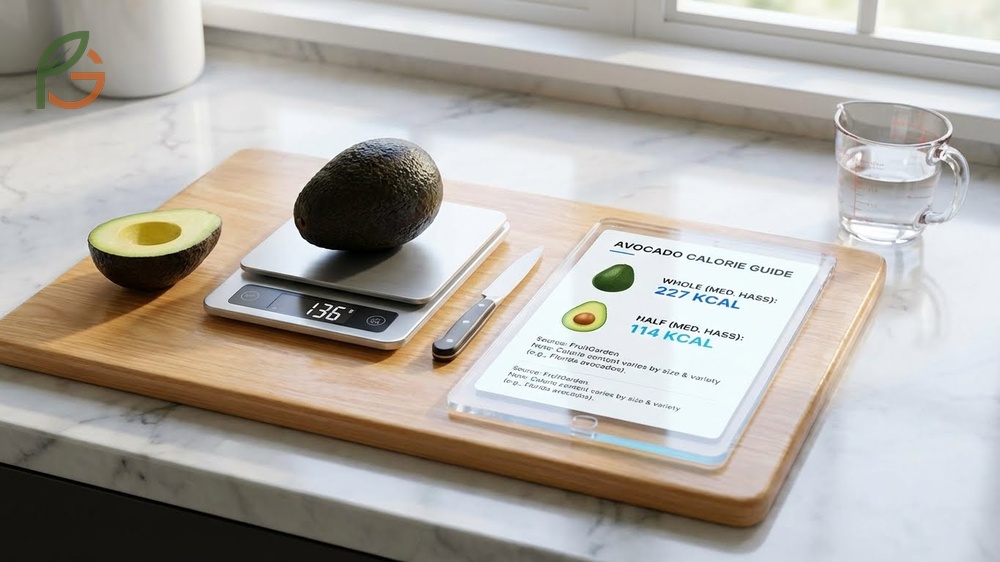
How many calories in an avocado? A medium Hass avocado (136g) contains 227 calories for the whole fruit and 114 calories for half[1]. Research shows the calorie content varies by size and variety, with Hass avocados containing more fat and calories per ounce than Florida avocados. FruitGarden synthesizes current nutrition data to help you understand avocado serving sizes and their impact on your daily calorie intake.
Quick Answer
How Many Calories in an Avocado
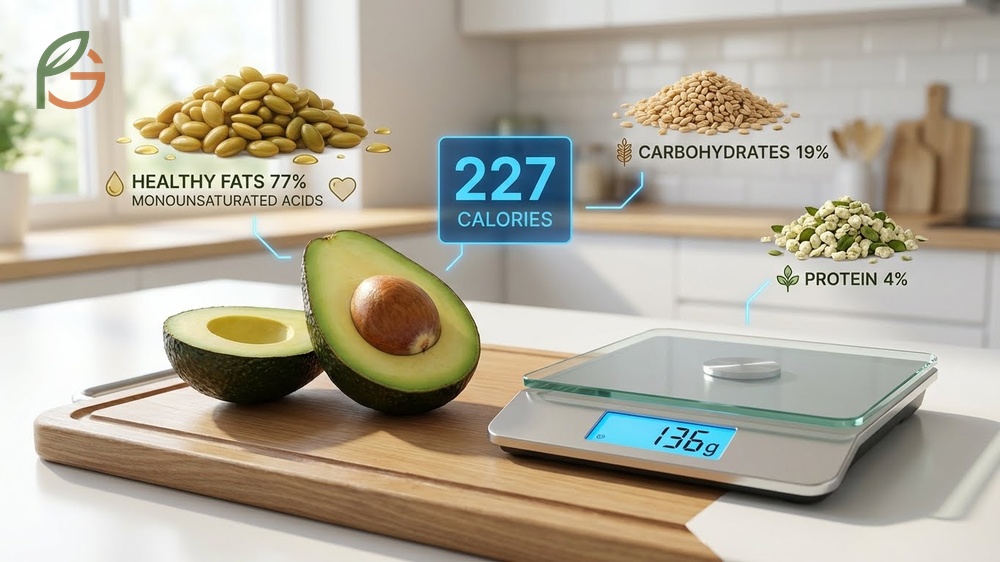
The calorie content of an avocado depends primarily on its size and variety. Research shows that a medium Hass avocado weighing 136 grams contains 227 calories for the whole fruit[1]. This makes it one of the more calorie-dense fruits due to its high healthy fat content.
Studies demonstrate that about 77% of avocado calories come from fat, primarily heart-healthy monounsaturated fatty acids[1]. The remaining calories come from carbohydrates (19%) and protein (4%). Unlike processed high-fat foods, avocados pack their calories alongside essential nutrients like fiber, potassium, and vitamins.
Current data indicates that avocado’s energy density sits at 1.7 calories per gram, classifying it as a medium energy-dense food[1]. This means you’re getting substantial nutrition per calorie compared to low-nutrient snacks.
Whole Avocado Calories
A whole medium Hass avocado delivers 227 calories, but the total varies with fruit size[1]. Smaller avocados (100-120g) contain around 160-190 calories, while larger specimens (150-200g) can reach 250-330 calories. The seed and skin make up about 33% of total weight, so you’re eating roughly two-thirds of what you’re holding.
If you’re tracking calories, weighing your avocado without the pit and skin gives the most accurate count. Most kitchen scales can help you determine exactly what you’re consuming rather than guessing.
Half Avocado Calories
Half a medium avocado (68g edible portion) contains 114 calories, making it a reasonable portion for most meals[1]. National Health and Nutrition Examination Survey data shows this is actually the average amount Americans consume per eating occasion. It’s enough to add creaminess to toast or salads without overwhelming your calorie budget.
Research indicates that half an avocado provides 4.6g of dietary fiber and 10.5g of fat, predominantly the beneficial monounsaturated type[1]. This combination helps with satiety, potentially reducing overall calorie intake throughout the day.
Calories in an Avocado by Serving Size
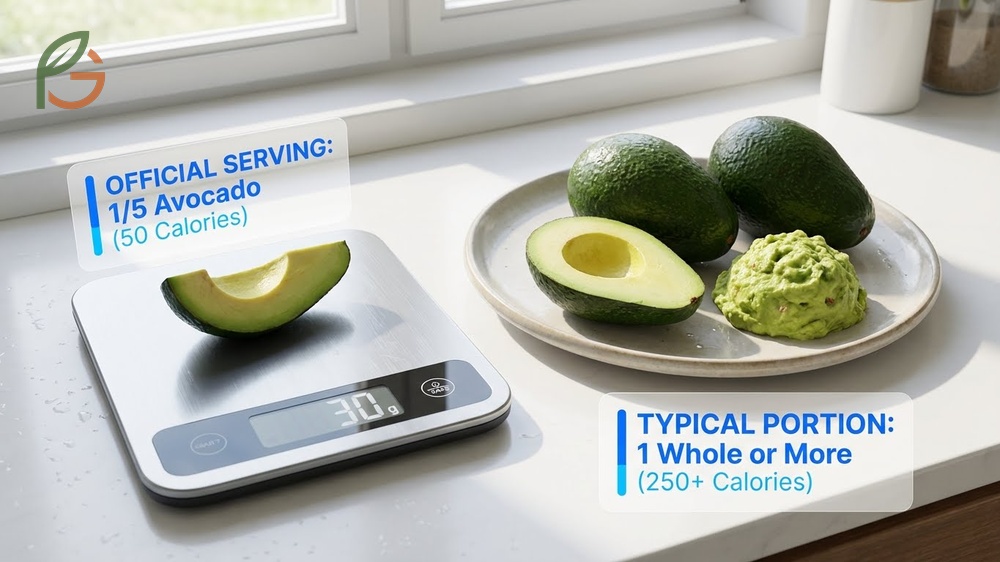
Understanding different serving sizes helps you align avocado consumption with your nutritional goals. The official serving size differs significantly from what most people actually eat, creating confusion about calorie content.
Official Serving vs Typical Portion
The U.S. Nutrition Labeling and Education Act defines one serving as one-fifth of a medium avocado, or 30 grams, containing just 50 calories[1]. However, this official portion is much smaller than what people typically consume. National survey data reveals the average eating occasion involves half an avocado (68g) with 114 calories.
This disconnect matters when you’re reading nutrition labels or tracking intake. If a recipe calls for “one serving” of avocado, clarify whether that means the tiny official serving or a more realistic half-fruit portion.
Important Note: Food labels on pre-packaged avocados might list nutrition facts for the 30g official serving, but you’ll likely eat 2-3 times that amount. Always check serving size details to avoid underestimating calories.
Calories by Weight
Calculating avocado calories by weight gives you precision for meal planning. Since avocados provide 167 calories per 100 grams of edible flesh[1], you can estimate any portion size. A 50g chunk contains about 84 calories, while a 150g portion delivers roughly 250 calories.
Most kitchen scales measure in grams, making this calculation straightforward. Weigh your scooped avocado, multiply the grams by 1.67, and you’ll get an accurate calorie count.
This table compares five common avocado serving sizes showing weight in grams and ounces alongside corresponding calorie counts
| Serving Description | Weight | Calories |
|---|---|---|
| Official serving (1/5 fruit) | 30g (1 oz) | 50[1] |
| Quarter avocado | 34g (1.2 oz) | 57 |
| Half avocado (typical portion) | 68g (2.4 oz) | 114[1] |
| Whole medium avocado | 136g (4.8 oz) | 227[1] |
| Per 100g reference | 100g (3.5 oz) | 167[1] |
Hass vs Florida Avocado Calories
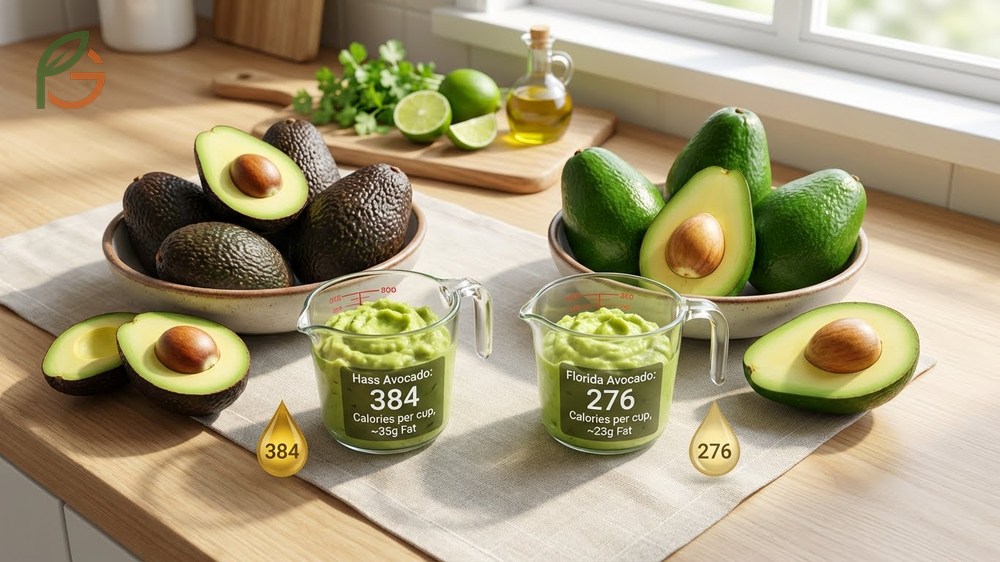
Not all avocados deliver the same calorie punch. Hass avocados (the dark, bumpy-skinned variety) contain significantly more calories and fat per ounce than Florida avocados (the smooth, bright green type). Hass varieties pack 384 calories per cup compared to 276 calories per cup for Florida avocados[2].
The difference comes down to fat content. Hass avocados contain about 35 grams of fat per cup, while Florida types have only 23 grams[2]. This makes Florida avocados a lighter choice if you’re counting calories, though they have a more watery texture and milder flavor.
For most Americans, you’re eating Hass avocados since they dominate store shelves. Florida varieties are more common in South Florida and the Caribbean during summer months when Hass production dips.
Variety Tip: If you can’t tell the difference visually, check the label or ask your grocer. Florida avocados are typically much larger (sometimes twice the size) and stay green when ripe, while Hass avocados turn dark purple-black.
Nutritional Breakdown Beyond Calories
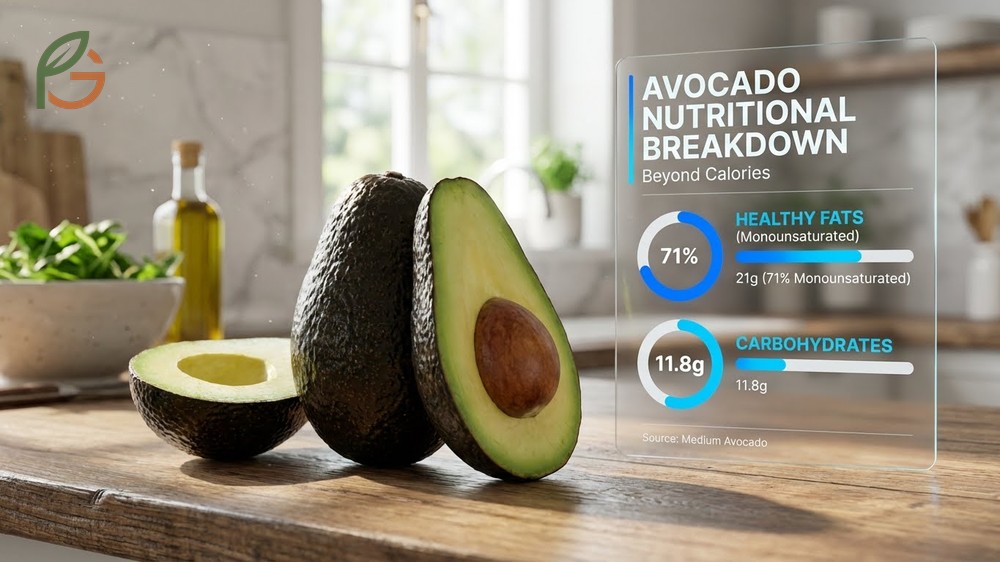
Avocado’s calorie count tells only part of the story. The nutritional profile shows why these calories are considered beneficial rather than empty. Understanding what’s packed into those 227 calories helps you appreciate avocados as more than just a calorie source.
Macronutrients in Avocado
A whole medium avocado contains 21g of fat, with 71% being monounsaturated fatty acids that support cardiovascular health[1]. The carbohydrate content sits at 11.8g, but 9.2g of that is dietary fiber, leaving just 2.6g of digestible carbs. This makes avocados remarkably low-carb despite being a fruit.
Protein content is modest at 2.7g per whole fruit, but it’s complete with all essential amino acids. The fiber content is particularly impressive, providing about 37% of the daily recommended intake for adults in one medium fruit[1].
- High monounsaturated fat content helps reduce LDL cholesterol while maintaining HDL levels
- Rich fiber content (about 80% of total carbohydrates) supports digestive health and satiety
- Low sugar content (only 0.41g per whole fruit) won’t spike blood glucose
- Medium energy density keeps you full longer compared to high-carb snacks
- Complete protein profile provides all nine essential amino acids in small amounts
Vitamins and Minerals
Evidence suggests avocados are among the most nutrient-dense fruits available. A whole avocado provides 690mg of potassium (more than a medium banana), 121mcg of folate (30% of daily needs), and significant amounts of vitamins K, E, C, and B6[1]. The magnesium content (39mg) supports over 300 enzymatic reactions in your body.
What makes avocados unique is their carotenoid content, particularly lutein and zeaxanthin, which are highly bioavailable due to the fruit’s natural fat content. Research demonstrates that adding avocado to salads increases carotenoid absorption from vegetables by 2-5 times compared to fat-free options[1].
- Potassium (690mg per fruit) helps regulate blood pressure and counteracts sodium intake
- Folate (121mcg) is essential for DNA synthesis and particularly important during pregnancy
- Vitamin K1 (28.6mcg) supports blood clotting and bone metabolism
- Vitamin E (2.68mg) acts as a fat-soluble antioxidant protecting cell membranes
- Lutein and zeaxanthin (369mcg combined) accumulate in eye tissue to protect against age-related damage
- Magnesium (39mg) participates in energy production and muscle function
Are Avocado Calories Healthy
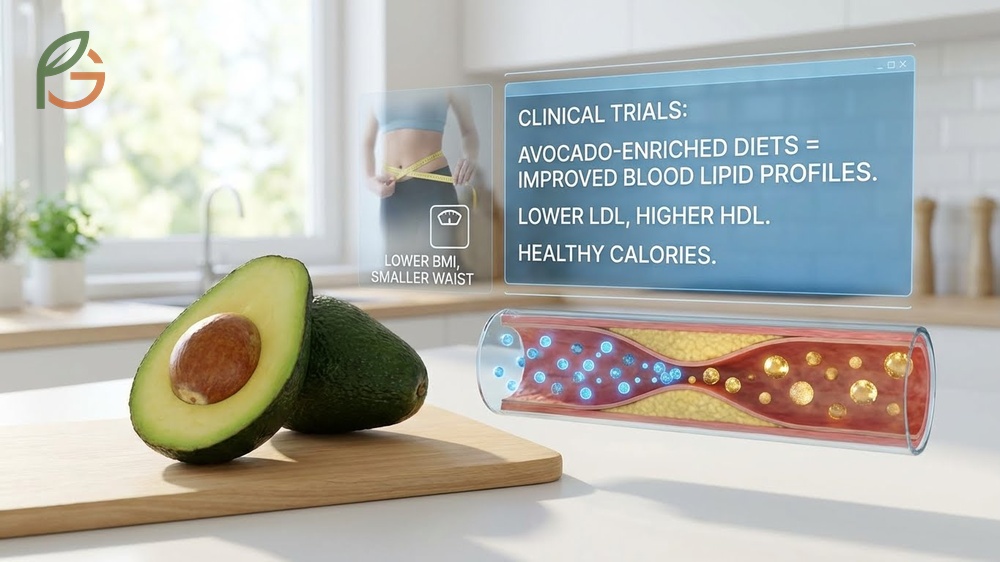
Research shows that avocado calories are among the healthiest you can consume despite their high count. Clinical trials demonstrate that avocado-enriched diets improve blood lipid profiles by lowering LDL cholesterol and triglycerides while maintaining or increasing HDL cholesterol[1]. These effects occur even when avocados are added to existing diets without reducing other foods.
Studies demonstrate that people who regularly eat avocados have lower BMI, smaller waist circumference, and reduced risk of metabolic syndrome compared to non-consumers[1]. This seems counterintuitive given the calorie density, but it’s explained by avocados’ high satiety factor. The combination of fiber, healthy fats, and water content helps you feel full longer, potentially reducing total daily calorie intake.
Current guidance emphasizes that dietary fat quality matters more than quantity for cardiovascular health. Avocados provide primarily monounsaturated fats similar to olive oil, which are associated with reduced inflammation and improved arterial function[1]. The fruit also contains phytosterols (113mg per fruit) that help block cholesterol absorption in the intestines.
For weight management, controlled studies show that consuming up to 1.5 avocados daily within an energy-restricted diet doesn’t compromise weight loss compared to low-fat alternatives[1]. The key is substituting avocado for less nutritious fats rather than simply adding it on top of your usual intake.
- Reduces LDL cholesterol by 9-22% in clinical trials when replacing saturated fats
- Increases HDL cholesterol levels, improving the total cholesterol ratio
- Lowers triglycerides more effectively than high-carbohydrate diets
- Enhances absorption of fat-soluble vitamins (A, D, E, K) from meals
- Provides satiety that may reduce overall calorie consumption throughout the day
- Contains antioxidants that protect against cellular damage and inflammation
Managing Avocado Portions for Calorie Control
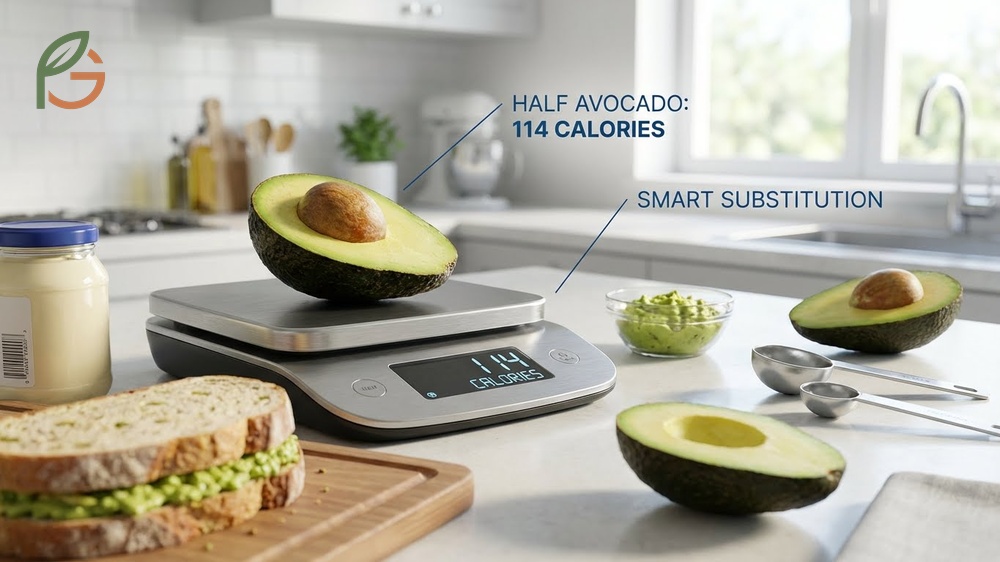
If you’re watching calories but don’t want to give up avocados, strategic portioning makes the difference. Start by measuring your servings until you can eyeball accurate portions. A half avocado at 114 calories fits easily into most meal plans, whether you’re aiming for 1,500 or 2,500 calories daily.
Substitution strategies work better than simple addition. Replace mayonnaise with mashed avocado on sandwiches (saving about 50 calories per tablespoon), use avocado instead of butter on toast, or swap sour cream with avocado in Mexican dishes. These swaps maintain satisfaction while improving nutritional quality.
Timing matters for satiety. Research suggests eating avocado at breakfast or lunch provides better fullness ratings than consuming it as a snack[1]. A quarter avocado (57 calories) adds creaminess to morning eggs, while half an avocado transforms a lunch salad into a filling meal that prevents afternoon snacking.
- Pre-slice avocados into quarters and refrigerate in airtight containers with lemon juice
- Use measuring spoons for guacamole (2 tablespoons equals about 50 calories)
- Pair avocado with high-protein foods to maximize satiety per calorie
- Choose smaller avocados (100-120g) if you plan to eat the whole fruit
- Save the remaining half with the pit intact and wrapped tightly to prevent browning
- Track your portions for a week to understand your typical consumption patterns
Storage Tip: Brush cut avocado surfaces with lemon or lime juice before wrapping in plastic wrap. This prevents oxidation and browning for 24-48 hours in the refrigerator, letting you enjoy precise portions without waste.
Conclusion
The evidence is clear: how many calories in an avocado depends on serving size, with half a medium fruit containing 114 calories and a whole one providing 227 calories of nutrient-dense energy. These aren’t empty calories—they come packaged with heart-healthy fats, substantial fiber, and essential micronutrients that support overall health. Current nutritional guidance emphasizes that avocados fit into healthy eating patterns for weight management and cardiovascular wellness when consumed as part of balanced meals.
Agricultural data shows Americans are increasingly incorporating avocados into their diets, averaging half a fruit per eating occasion. By understanding serving sizes and planning portions strategically, you can enjoy avocados’ creamy texture and nutritional benefits without sabotaging your calorie goals. FruitGarden provides evidence-based nutrition information to help you make informed decisions about incorporating fresh produce into your daily meals.
Medical Disclaimer
Important Medical Disclaimer: This content is for informational and educational purposes only. It’s not intended as a substitute for professional medical advice, diagnosis, or treatment. Always consult a qualified healthcare professional or registered dietitian before making significant changes to your diet, especially if you have diabetes, cardiovascular conditions, or other medical concerns. Individual nutritional needs vary based on age, activity level, health status, and personal goals.
Frequently Asked Questions
How Many Calories Are in One Whole Avocado?
A whole medium Hass avocado (136g edible portion) contains 227 calories. Smaller avocados have 160-190 calories, while larger ones can reach 250-330 calories. The calorie content varies based on size and variety, with Hass avocados being more calorie-dense than Florida types.
How Many Calories in Half an Avocado?
Half a medium avocado contains 114 calories, which is the average portion Americans consume per eating occasion according to national survey data. This serving provides 4.6g of fiber and 10.5g of healthy fats, making it a satisfying addition to meals without excessive calories.
Are Avocado Calories Bad for Weight Loss?
No, research shows avocado calories can support weight loss when substituted for less nutritious fats. Studies demonstrate that consuming up to 1.5 avocados daily within a calorie-controlled diet doesn’t hinder weight loss compared to low-fat alternatives. The fiber and healthy fats increase satiety, potentially reducing overall calorie intake throughout the day.
How Many Calories in Guacamole vs Whole Avocado?
Guacamole typically contains 40-60 calories per 2-tablespoon serving (about 30g), similar to a small avocado portion. However, restaurant guacamole often includes added oils, which can increase calories to 70-100 per serving. Homemade guacamole with only avocado, lime, onion, and tomato will have similar calories to plain avocado at roughly 50 calories per ounce.
What’s the Difference in Calories Between Hass and Florida Avocados?
Hass avocados contain about 40% more calories per cup than Florida avocados—384 calories versus 276 calories. This difference is due to higher fat content in Hass varieties (35g per cup compared to 23g). Florida avocados have a lighter, more watery texture with fewer calories per ounce but less rich flavor.
How Many Calories in Avocado Toast?
Avocado toast calories depend on portion sizes and bread type. A typical serving with one slice of whole wheat bread (80 calories) and half an avocado (114 calories) totals about 195 calories. Adding toppings like eggs (+70 calories), feta cheese (+75 calories), or olive oil (+120 calories per tablespoon) increases the total substantially.
Does Avocado Size Affect Calorie Count Significantly?
Yes, avocado size dramatically affects calorie content. Small avocados (100g) have about 167 calories, medium ones (136g) contain 227 calories, and large avocados (200g) can reach 330 calories or more. Weighing your avocado without skin and pit provides the most accurate calorie count, using the formula: grams × 1.67 = calories.





