
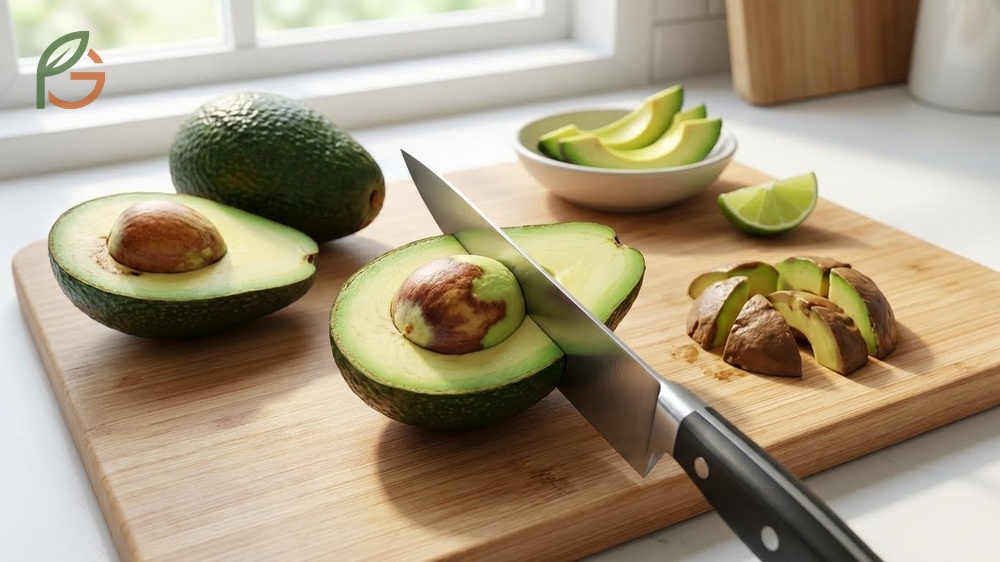
Brown spots in avocado typically result from oxidation, bruising, or cold exposure and don’t pose health risks. Research shows that these discolorations affect texture and taste but remain safe for consumption when you cut away damaged areas[1]. FruitGarden synthesizes current food safety data and agricultural research to help you distinguish harmless browning from true spoilage.
Quick Answer
- Most brown spots stem from enzymatic browning (oxidation) when cut flesh meets air—completely safe to eat[1]
- Chilling injury creates gray-brown streaks in unripe fruit stored below 41°F (5°C)—safe but may taste bitter[2]
- Vascular browning follows natural fiber bundles from stem to base—harmless and edible[2]
- Spoilage shows distinct signs: rancid odor, slimy texture, and mold growth—discard immediately[1]
Brown Spots in Avocado
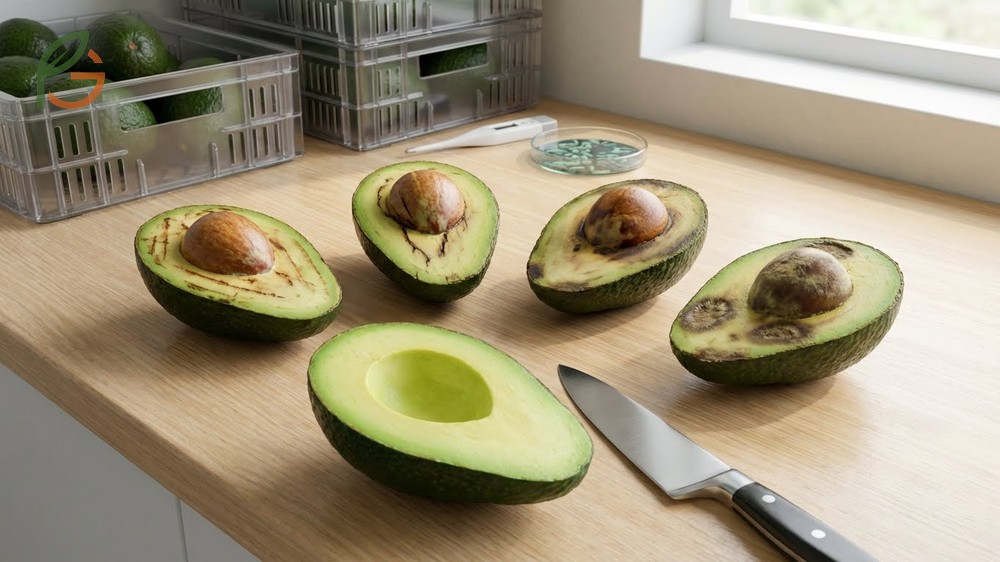
Studies demonstrate that brown discoloration in avocados arises from four primary mechanisms: enzymatic reactions, vascular tissue damage, temperature stress, and microbial contamination. Each type presents distinct visual patterns that signal different internal processes.
Current agricultural data shows most browning occurs post-harvest during transportation, storage, or after cutting. The severity ranges from superficial surface oxidation to deep tissue damage affecting fruit quality and shelf life.
Enzymatic Browning and Oxidation
When you slice an avocado, polyphenol oxidase enzymes mix with phenolic compounds in damaged cells. This reaction produces melanin pigments within minutes, creating the familiar brown surface layer[1].
The process doesn’t indicate spoilage but rather a natural defense mechanism. Research shows oxidized flesh remains nutritionally sound for 24-48 hours when refrigerated, though flavor may turn slightly bitter[1].
You can slow oxidation by coating cut surfaces with lemon juice or storing avocados in airtight containers. These methods limit oxygen exposure and preserve green color for extended periods.
Important Note: Oxidation affects appearance and taste but doesn’t compromise food safety. Don’t confuse surface browning with bacterial contamination, which produces distinctly foul odors.
Vascular Browning Patterns
Vascular browning follows the fibro-vascular bundles that transport water and nutrients from stem to tip. These channels turn dark brown or black when tissue weakens from cold temperatures or prolonged storage[2].
The discoloration typically concentrates near the distal (blossom) end and radiates outward in thread-like patterns. Agricultural experts note this occurs when fruits experience cellular breakdown during the ripening transition.
Evidence suggests vascular browning doesn’t render avocados unsafe, though affected areas may develop rubbery texture. You can eat around these sections or remove them if the consistency bothers you.
Chilling Injury Symptoms
Chilling injury develops when unripe avocados stay below 41°F (5°C) for extended periods before ripening begins. Cold temperatures damage cell membranes, causing gray-brown streaks or patches throughout the flesh[2].
Research conducted on Hass avocados shows bruise incidence drops to zero when impacted fruit stays at 41°F (5°C) for 48 hours. In contrast, holding at 59°F (15°C) or 77°F (25°C) results in 90% and 95% bruising rates respectively[3].
Cold-damaged avocados remain edible but often taste bland or bitter. The FDA recommends washing whole avocados under running water before cutting to reduce surface bacteria transfer[4].
Can You Eat Avocado with Brown Spots
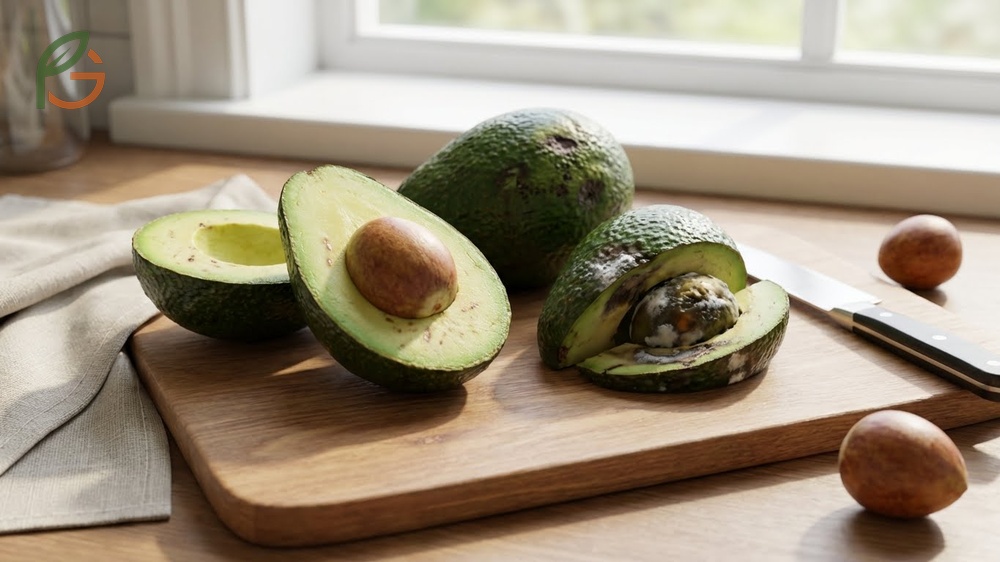
Most brown spots pose no health risks and simply affect sensory qualities like taste and texture. Studies confirm that oxidation, bruising, and chilling injury create harmless discolorations you can safely consume or trim away[2].
The key lies in distinguishing benign browning from bacterial or fungal spoilage. Current food safety guidance emphasizes checking multiple indicators rather than relying on color alone.
Safe Browning vs Spoilage
Safe brown spots appear isolated, firm to the touch, and lack odor. These typically stem from mechanical damage during harvest, transport, or natural enzymatic reactions after cutting.
Spoilage manifests differently with specific warning signs. Research shows bacterial contamination produces sour or rancid smells, slimy surfaces, and rapid softening throughout the fruit[1].
- Rancid odor: Sour or ammonia-like smell signals bacterial breakdown of fats and proteins
- Slimy texture: Wet, slippery film on flesh indicates advanced microbial growth
- Mold presence: White, green, or black fuzzy patches on skin or flesh—discard entire fruit
- Excessive mushiness: Flesh collapses under light pressure, lacks structure
- Widespread dark patches: Large black or brown areas covering more than 50% of flesh
The FDA detected Salmonella on 12 avocado skin samples from domestic growers during surveillance testing. This underscores the importance of washing whole avocados before cutting to prevent knife contamination[4].
Safety Warning: Never taste avocado if you notice foul odors or visible mold. High moisture content makes avocados particularly susceptible to rapid fungal colonization once contaminated.
Cutting Around Brown Spots
Agricultural guidance confirms you can safely remove isolated brown areas and consume the remaining green flesh. Use a clean knife to excise discolored sections with a quarter-inch margin around each spot[2].
For surface oxidation on guacamole or cut halves, simply scrape away the brown layer. The green tissue underneath retains full nutritional value and flavor when browning occurred within 24 hours.
This practice works best for oxidation, minor bruising, and small vascular brown streaks. If browning covers more than half the fruit or penetrates deeply throughout, the avocado likely passed peak quality and won’t taste good even if technically safe.
Brown Strings in Avocado
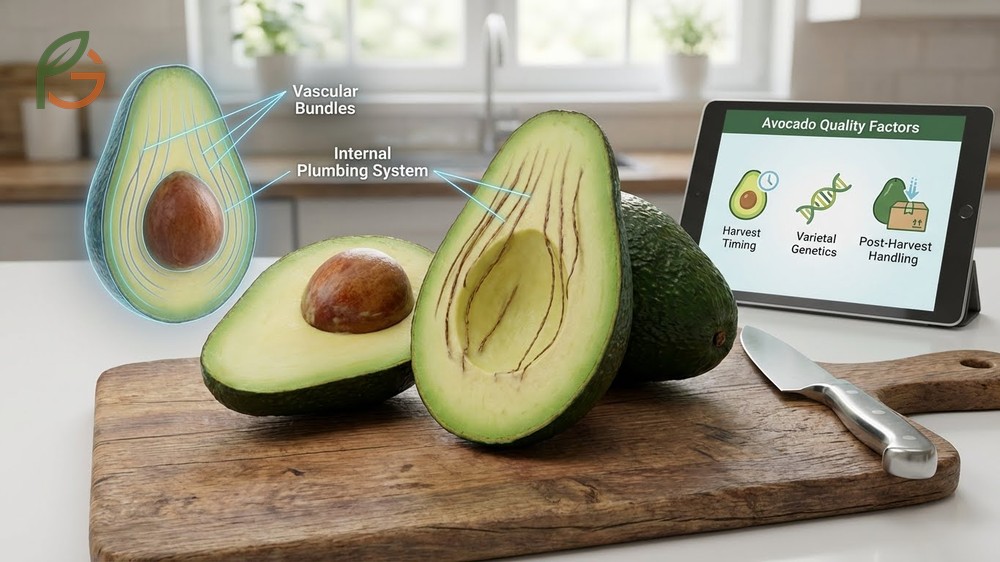
Those fibrous brown threads you sometimes encounter are vascular bundles—the avocado’s internal plumbing system. These structures normally blend seamlessly into creamy flesh but become prominent under certain growing or storage conditions[2].
Stringiness doesn’t compromise safety, though it affects eating quality. Current agricultural data links this texture variation to harvest timing, varietal genetics, and post-harvest handling.
Fibro-Vascular Bundles Explained
Fibro-vascular bundles consist of xylem vessels that transport water upward and phloem tubes moving nutrients downward. These channels run from the stem attachment point through the flesh to the fruit’s base.
Studies show early-season harvests produce more fibrous avocados as immature bundles haven’t fully softened. The tissue remains tougher and more visible when you slice the fruit.
In ideal conditions, enzymes break down bundle cell walls during ripening, creating that signature buttery texture. Stress factors like cold exposure or uneven ripening interrupt this process, leaving strings intact.
- Early harvest: Immature fruit picked at start of growing season before full oil development
- Uneven ripening: Temperature fluctuations during maturation create inconsistent softening
- Cold storage stress: Prolonged refrigeration below 41°F (5°C) hardens vascular tissue
- Low oil content: Fruits with less than 8% fat lack lubrication for smooth texture
- Varietal predisposition: Some cultivars naturally develop more prominent fiber structures
Stringy Avocado Varieties
Certain avocado cultivars show genetic tendencies toward stringier flesh regardless of handling. West Indian varieties grown in Florida typically exhibit more pronounced vascular bundles than Mexican or Guatemalan types.
Hass avocados, accounting for roughly 80% of California’s crop, generally produce creamier texture with less noticeable strings. Their higher oil content—ranging from 15-20%—helps mask vascular structures during ripening.
You can’t predict stringiness from external appearance. The phenomenon becomes apparent only after cutting, so consider it an occasional texture variation rather than a defect when it occurs in otherwise fresh fruit.
Causes of Brown Discoloration
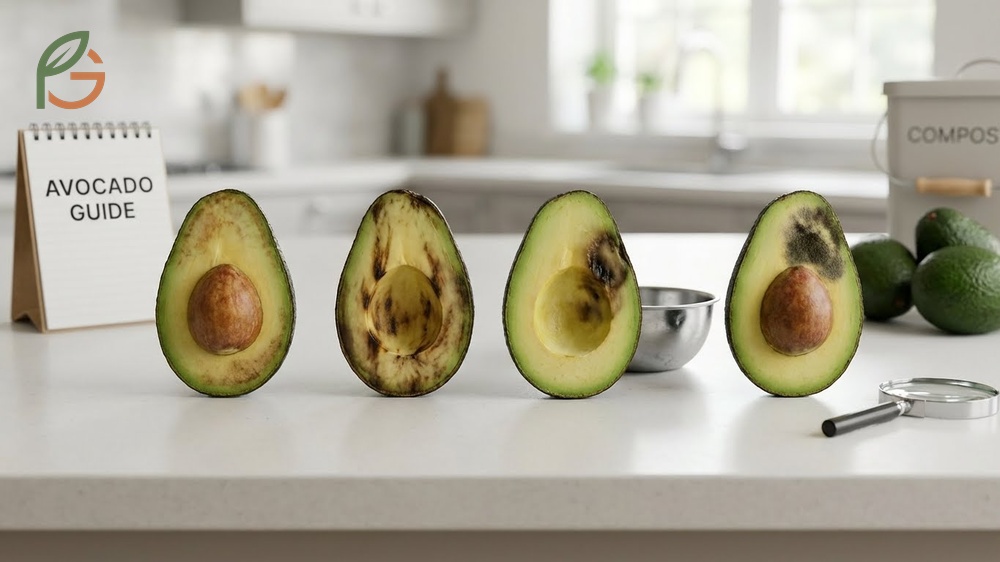
Beyond the common oxidation and cold damage, physical trauma and fungal pathogens create distinct browning patterns. Research shows these causes require different identification strategies and handling approaches.
Understanding the source helps you assess whether an avocado remains suitable for consumption or should go into the compost bin. Each cause leaves characteristic signatures in color, texture, and distribution of affected tissue.
Bruising from Handling
Mechanical impacts during harvest, packing, or transport rupture avocado cells, releasing polyphenol oxidase that creates brown bruise marks. Agricultural studies show impacts trigger 90-95% bruising rates when fruit stays at room temperature 59-77°F (15-25°C) in the first 8 hours after damage[3].
Bruises typically appear as isolated brown spots beneath the skin that don’t penetrate deeply. The surrounding tissue stays firm and green, making these easy to cut away.
Evidence indicates fruit temperature proves critical in bruise development. Cooling bruised avocados to 41°F (5°C) within hours of impact significantly reduces visible discoloration, though excessive cold below 37°F (3°C) causes separate chilling injury[3].
Anthracnose Fungal Infection
Anthracnose, caused by Colletotrichum fungi, creates sunken dark brown to black lesions on avocado skin and flesh. USDA inspection guidelines describe these infections as nearly circular spots ranging from tiny specks to over 0.5 inches in diameter[5].
The pathogen remains latent during fruit development, activating only during ripening when natural defenses weaken. Commercial packinghouses report rejection rates reaching 52.5% for anthracnose in affected regions.
Infected avocados develop soft rot that leaks fluid and may show orange fungal masses on the surface. These fruits aren’t safe to eat—the widespread tissue breakdown and fungal colonization make them unsuitable for consumption regardless of trimming attempts.
This table compares four types of avocado browning across appearance, safety, and recommended actions
| Browning Type | Appearance | Safe to Eat | Action |
|---|---|---|---|
| Oxidation | Surface brown layer on cut flesh, uniform color | Yes[1] | Scrape off brown layer or eat as-is |
| Vascular Browning | Brown threads from stem to base following fiber bundles | Yes[2] | Eat around or remove if texture bothers you |
| Chilling Injury | Gray-brown streaks or patches throughout flesh | Yes[2] | Edible but may taste bitter or bland |
| Bruising | Isolated brown spots, firm surrounding tissue | Yes[3] | Cut away brown areas with margin |
| Anthracnose/Rot | Sunken black lesions, soft tissue, foul odor | No[5] | Discard entire fruit immediately |
Conclusion
The evidence shows clearly that brown spots in avocado usually signal harmless processes like oxidation, cold exposure, or mechanical bruising rather than food safety hazards. You can confidently consume avocados with minor discoloration by cutting around affected areas and checking for spoilage indicators like foul odors or slime.
Current food safety guidance emphasizes washing whole avocados before cutting and storing cut fruit promptly in refrigeration. FruitGarden compiles agricultural research and USDA inspection standards to help you make informed decisions about fruit quality and safe consumption practices.
Medical Disclaimer
Important Food Safety Disclaimer: This content is for informational and educational purposes only. It is not intended as a substitute for professional food safety advice or medical guidance. If you have food allergies, compromised immune function, or concerns about consuming avocados with discoloration, consult a qualified healthcare professional or registered dietitian before making dietary decisions. When in doubt about food safety, err on the side of caution and discard questionable produce.
Frequently Asked Questions
What causes black spots inside avocado?
Black spots inside avocados typically result from vascular browning caused by cold storage below 41°F (5°C) before ripening or from natural fiber bundle discoloration during maturation. These spots follow the fruit’s internal channels and remain safe to eat, though you can cut them away if the texture seems rubbery or unappetizing.
Are brown flecks in avocado safe to eat?
Yes, brown flecks in avocado flesh are safe to consume. Research confirms these small discolorations stem from minor bruising, vascular tissue oxidation, or natural variation in ripening patterns. Only discard avocados showing widespread rot, mold growth, or producing rancid odors that signal bacterial contamination.
How do you know if brown spots mean the avocado is rotten?
Rotten avocados produce distinctly sour or ammonia-like odors, develop slimy texture when touched, and show mold growth on skin or flesh. In contrast, safe brown spots from oxidation or cold damage appear isolated, lack smell, and occur in firm tissue. Check multiple indicators rather than relying solely on color to assess spoilage.
Can you eat avocado brown inside when cut open?
You can safely eat avocados that turn brown after cutting due to oxidation. The enzymatic browning process creates melanin pigments that affect appearance and may add slight bitterness but don’t pose health risks. Consume oxidized avocados within 24-48 hours when refrigerated, or scrape away the brown layer to reveal fresh green flesh underneath.
What are the brown threads in avocado?
Brown threads are fibro-vascular bundles—the channels that transport water and nutrients through the fruit. These structures become more noticeable in early-season harvests, certain varieties like West Indian types, or when cold storage disrupts normal ripening. The strings are completely edible though they create less desirable texture compared to creamy avocados.
How long can you eat avocado after it turns brown?
Cut avocados that brown from oxidation remain safe for 24-48 hours when stored in airtight containers in the refrigerator. The FDA recommends consuming cut produce promptly to minimize bacterial growth risk. If brown avocado develops off-odors, excessive mushiness, or slime during storage, discard it regardless of time elapsed.
Does cutting around brown spots in avocado make it safe?
Yes, cutting around isolated brown spots with a clean knife removes damaged tissue while preserving edible portions. Agricultural guidance suggests excising discolored areas with a quarter-inch margin. This approach works for oxidation, bruising, and minor vascular browning, but doesn’t salvage avocados with widespread rot, mold, or fungal infections like anthracnose.





