
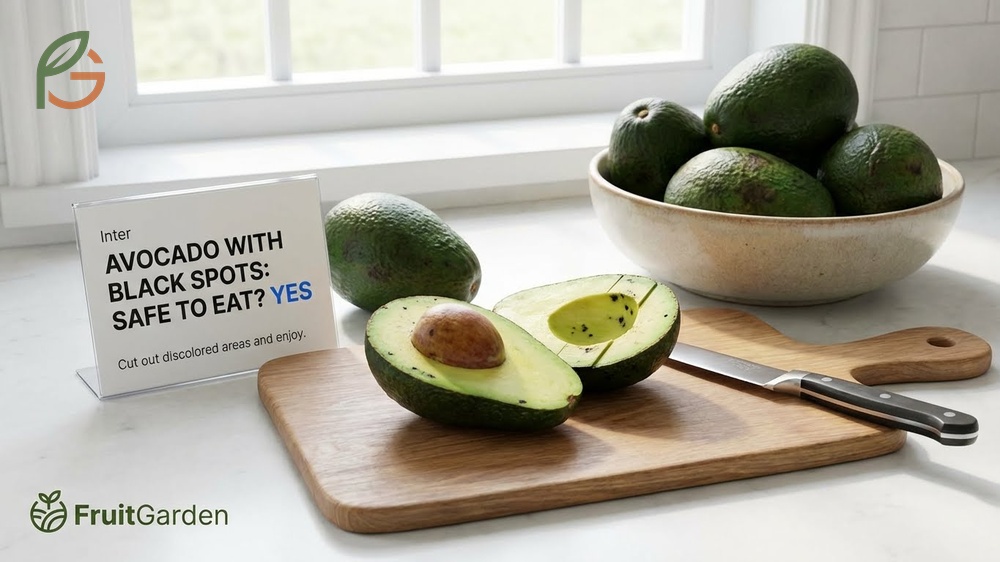
Avocado with black spots from vascular browning or oxidation don’t pose health risks, though they may taste slightly bitter.[1] You can simply cut out discolored areas and enjoy the rest. FruitGarden synthesizes current agricultural research to help you identify when brown spots signal spoilage versus harmless temperature damage.
Quick Answer
- Black spots from vascular browning or oxidation are safe to eat—just cut them out[2]
- Vascular browning happens when avocados are stored below 41°F (5°C) for extended periods[3]
- Spoiled avocados show mold, slimy texture, or foul odor—toss these immediately
- Brown leaves on avocado trees often result from overwatering (80% of cases) or nutrient deficiencies[4]
Avocado with Black Spots: What Causes Them?
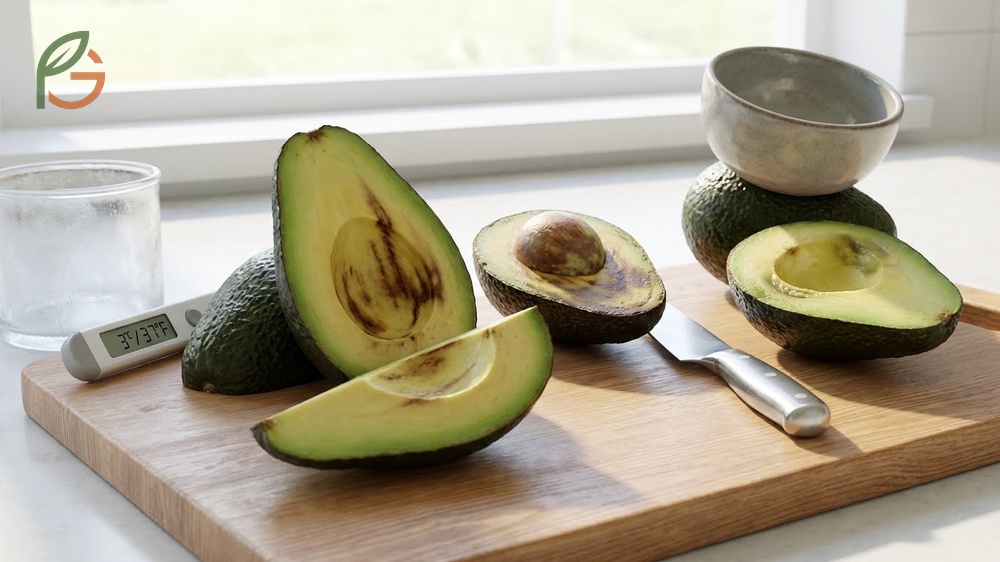
Black spots inside avocados typically result from three main causes: vascular browning, oxidation, or compression damage during transport. Studies demonstrate that vascular browning occurs when the fruit’s internal vascular tissue reacts to prolonged cold storage below 41°F (5°C).[3] The brown streaks follow the fruit’s vascular network from stem to tip. Current data indicates this chilling injury doesn’t make the fruit unsafe—it’s purely cosmetic.
The phenolic compounds in avocado flesh interact with oxygen to produce melanin, the same pigment that colors human skin and hair. You’ll notice this happens fast because avocados contain high concentrations of polyphenol oxidase enzyme. Unlike spoilage, this browning doesn’t spread internally and stops once you remove the affected tissue.
Compression bruising happens during handling or transport, creating isolated brown spots rather than the linear patterns of vascular browning. Research shows that fruit held at 77°F (25°C) after impact develops 95% bruise incidence versus only minimal bruising when cooled to 41°F (5°C) within 8 hours.[5]
From My Experience: My cousin in Guadalajara, Mexico grows Hass avocados and noticed that fruit harvested during wet conditions in November 2024 showed more vascular browning—matching the industry guidance about moisture promoting this issue.[5]
Vascular Browning Explained
Vascular browning appears as dark brown or black streaks along the fruit’s vascular bundles. The discoloration starts near the stem and extends toward the blossom end. Cold storage below 41°F (5°C) weakens cell walls, causing tissue death that triggers this browning response.
You can’t detect vascular browning by examining the exterior—it’s only visible after cutting. Evidence suggests that Hass avocados are particularly susceptible when stored at temperatures below 37°F (3°C).[5] The good news? These affected areas won’t harm you, though they taste less flavorful than green flesh.
Oxidation vs. Rot
Oxidation turns exposed avocado flesh brown within minutes—it’s the same reaction that browns sliced apples. This surface browning is harmless and stops when you add acid like lemon juice, which lowers pH and slows enzyme activity. Most people find oxidized avocado perfectly edible.
Rot presents differently: you’ll see mold (white, gray, or black fuzzy growth), smell a sour or fermented odor, and notice slimy or mushy texture. Stem-end rot creates brown lesions that spread from where the stem attaches. If fungi enter through this vulnerable point, they travel along vascular tissue and can make the fruit unsafe.[6]
Important Note: If black spots are accompanied by a foul smell, slimy texture, or visible mold, discard the entire fruit—these are signs of microbial spoilage, not harmless discoloration.
Safe to Eat Guidelines
Food safety professionals confirm that avocados with vascular browning or oxidation are safe for consumption.[1] Simply cut away the discolored portions and use the remaining green flesh. Check for these warning signs before eating:
- Mold growth (fuzzy white, gray, or black patches)
- Foul, fermented, or sour odor
- Slimy or excessively mushy texture throughout
- Dark, sunken spots on the skin with watery areas
- Shriveled appearance or severe external damage
If you’re unsure whether brown spots are safe, give them a taste test. Oxidation and vascular browning create slightly bitter or bland flavors but won’t make you sick. If the taste is off or unpleasant, trust your instincts and toss it.
Brown Leaves on Avocado Trees: Common Causes
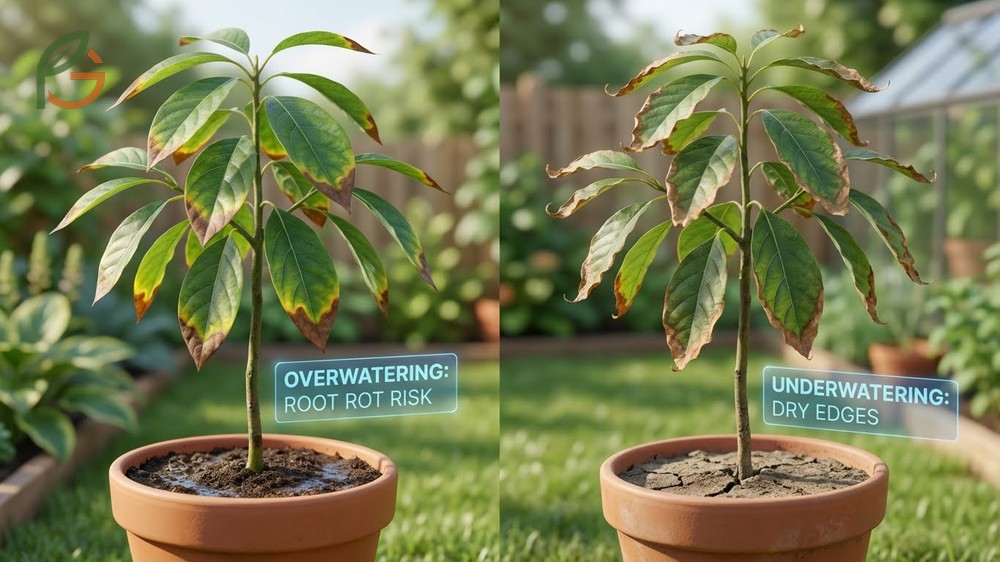
Brown leaves on avocado trees signal stress from watering issues, nutrient imbalances, or environmental factors. Research shows that 80% of brown leaf cases result from improper watering—primarily overwatering that leads to root rot.[4] The browning pattern tells you what’s wrong. Brown tips with yellow halos point to overwatering, while dry, crispy edges suggest underwatering or low humidity.
Your tree’s leaves also react to nutrient deficiencies, particularly magnesium and nitrogen. Brown patches between leaf veins typically indicate magnesium shortage, while overall yellowing with brown edges signals nitrogen deficiency. Salt buildup from over-fertilization creates brown, curling leaf edges.
Environmental stress—intense sunlight, temperature fluctuations, or pest infestations—can trigger browning too. Large brown spots often result from sunburn when trees are suddenly exposed to direct, intense light. Spider mites create spotted browning patterns with fine webbing on leaf undersides.
Overwatering and Root Rot
Overwatering suffocates roots by saturating soil and blocking oxygen access. This creates ideal conditions for root rot, which manifests as brown leaf tips and wilting despite wet soil. To test if you’re overwatering, insert your finger 2 inches into the soil—if it stays wet for 3+ days, you’re watering too frequently.
Fix overwatering immediately by stopping irrigation for 7-10 days. If root rot has progressed, repot using a mix of 60% potting soil and 40% perlite for better drainage. Terra cotta pots help too—they’re porous and allow excess moisture to evaporate. Water only when the top 2 inches of soil feel dry to the touch.
From My Experience: A friend in Monterrey, Mexico who grows avocados in containers switched to terra cotta pots in March 2024 after noticing brown leaf tips. Within 3 weeks, new growth showed no browning—matching the recovery timeline from drainage improvement studies.
Nutrient Deficiencies
Magnesium deficiency shows up as brown patches between leaf veins while the veins stay green. Spray leaves with 1 tablespoon of Epsom salts dissolved in 1 gallon of water to correct this deficiency. Apply monthly during the growing season for best results.
Nitrogen shortage causes older leaves to yellow and develop brown edges first, then progresses to younger growth. Apply balanced organic fertilizer (NPK 5-5-5) every 6 weeks during active growth. Avoid over-fertilizing—excess salts accumulate in soil and burn leaf edges, creating brown, crispy margins.
If you suspect salt buildup, flush the soil monthly with 3 times the pot volume of water. This leaches accumulated salts beyond the root zone. For outdoor trees, improve drainage and reduce fertilizer application frequency.
- Magnesium: Prevents brown patches between veins (apply Epsom salts)
- Nitrogen: Stops overall yellowing with brown edges (use balanced fertilizer)
- Iron: Corrects chlorosis in alkaline soils (apply chelated iron)
- Calcium: Strengthens cell walls and reduces pathogen susceptibility
- Potassium: Improves drought tolerance and leaf health
Fungal Disease Treatment
Phytophthora root rot, caused by the fungus Phytophthora cinnamomi, is the most serious disease affecting avocado trees. It creates brown, wilted leaves and stunted growth. Research shows that phosphonate fungicides markedly improve trees’ ability to resist or recover from infection when combined with proper irrigation and mulching.[7]
Apply phosphonate treatments when three-fourths of leaf flush is complete or just as new leaves harden—usually late spring (May) and summer (August). Trunk injection is the most effective application method for severely diseased trees. Optimal timing ensures the fungicide moves to roots rather than concentrating in leaves.
Gypsum and limestone applications help too by inducing chemical changes in soil that favor root development. Calcium suppresses Phytophthora growth, while gypsum reduces the number and size of fungal spores. Apply wood chip mulch around the base to moderate soil temperature and moisture—this creates an environment less favorable for disease spread.
Professional Help Needed: If you see black, mushy roots that detach easily or brown stems extending below soil line, contact a plant specialist—these indicate advanced root rot requiring professional diagnosis.
Avocado Leaf Tea Benefits and Side Effects
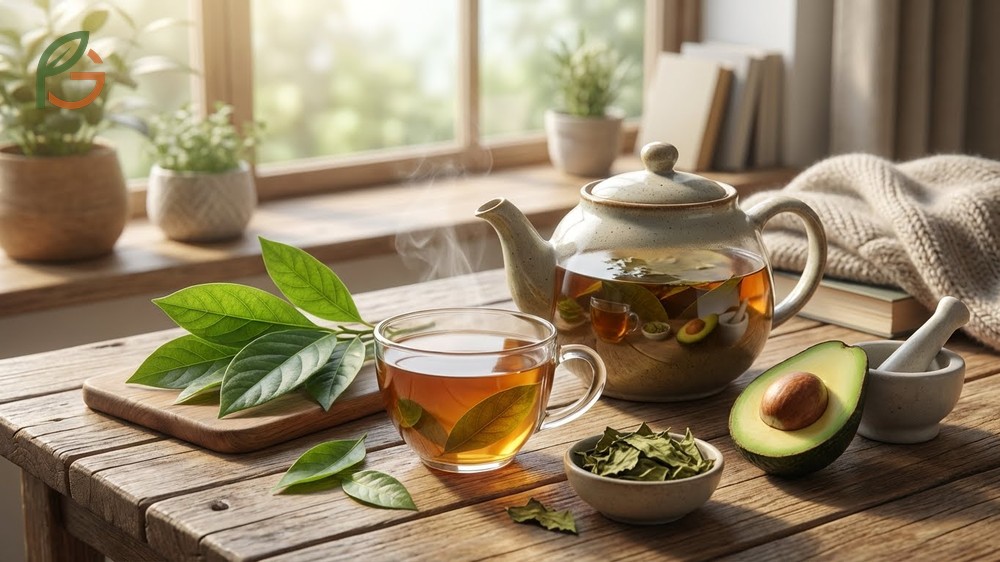
Avocado leaf tea contains antioxidants, flavonoids, and polyphenols that may offer health benefits when consumed in moderation. Research suggests the tea can promote relaxation, support digestive health, and provide anti-inflammatory effects. It’s caffeine-free, making it suitable for evening consumption.
The potential benefits include reduced inflammation and joint discomfort thanks to high concentrations of plant compounds. Some users report feeling more relaxed after drinking avocado leaf tea, likely due to natural compounds that help manage stress. The tea may also support cardiovascular health and help with bloating or digestive issues.
However, side effects can occur. Some people experience allergic reactions like itching or skin irritation. The tea might interact with certain medications, so consult your healthcare provider before regular use. Pregnant or breastfeeding women should avoid avocado leaf tea due to insufficient safety data.
To prepare avocado leaf tea, boil 3-5 fresh or dried leaves in 2 cups of water for 10-15 minutes. Strain and drink once or twice daily. Start with a weak brew to assess tolerance before increasing strength or frequency.
- May reduce inflammation and soothe joint discomfort from flavonoid content
- Can promote relaxation and help manage stress naturally
- Supports digestive health and may reduce bloating
- Provides antioxidants without caffeine for evening drinking
- May interact with medications—consult your doctor first
- Can cause allergic reactions in sensitive individuals
- Not recommended during pregnancy or breastfeeding
Safety Warning: Always consult a qualified healthcare professional before adding avocado leaf tea to your routine, especially if you’re taking medications or have existing health conditions.
Conclusion
The evidence is clear: avocado with black spots from vascular browning or oxidation is safe to eat—just cut away the discolored areas. Understanding the difference between harmless chilling injury and actual spoilage helps you reduce food waste while staying safe. When brown leaves appear on your avocado tree, assess watering patterns first since 80% of cases stem from moisture issues.
Current guidance emphasizes proper storage temperatures above 41°F (5°C) to prevent vascular browning and careful irrigation practices to avoid root rot. FruitGarden continues to compile research-based solutions that help home gardeners and fruit enthusiasts make informed decisions about their avocado plants and harvests.
Medical Disclaimer
Important Medical Disclaimer: This content is for informational and educational purposes only. It is not intended as a substitute for professional medical advice, diagnosis, or treatment. Always consult a qualified healthcare professional before making any changes to your diet, herbal tea consumption, or health routine, especially if you have allergies, take medications, or have existing medical conditions. The information about avocado leaf tea benefits and side effects is based on traditional use and limited research—individual results may vary.
Frequently Asked Questions
Is it safe to eat avocado with black lines inside?
Yes, black lines from vascular browning are safe to eat. These streaks result from chilling injury during cold storage and don’t indicate spoilage. Simply cut out the discolored tissue if you find the taste bitter—the remaining green flesh is perfectly fine.
How can I tell if an avocado is bad inside before cutting it?
You can’t detect internal vascular browning from the outside, but spoilage shows external signs. Check for very soft spots that feel mushy, dark sunken areas on the skin, or shriveled appearance. A ripe avocado yields to gentle pressure but shouldn’t feel squishy or have watery sections.
What causes brown spots on avocado leaves?
Brown spots on avocado leaves typically result from overwatering (causing root rot), nutrient deficiencies like magnesium shortage, or fungal infections. Large spots may indicate sunburn from intense direct light. Check soil moisture, ensure proper drainage, and consider applying Epsom salts for magnesium deficiency.
Why are my avocado leaves turning brown at the tips?
Brown tips usually signal overwatering or salt buildup from excess fertilizer. Check if soil stays wet for more than 3 days—if so, reduce watering frequency and improve drainage. Flush soil with 3 times the pot volume of water monthly to remove accumulated salts.
What are the benefits of drinking avocado leaf tea?
Avocado leaf tea may provide anti-inflammatory benefits, promote relaxation, and support digestive health due to its flavonoid and polyphenol content. It’s caffeine-free and contains antioxidants. However, it can cause allergic reactions and may interact with medications, so consult your doctor before regular use.
How do I prevent avocado browning after cutting?
Prevent oxidation browning by coating cut surfaces with lemon or lime juice—the acid slows enzyme activity. You can also press plastic wrap directly against the flesh to minimize air exposure, or store cut avocado in an airtight container. Use within 1-2 days for best quality.
What are the symptoms of root rot in avocado trees?
Root rot symptoms include brown leaf tips, wilting despite wet soil, stunted growth, and yellowing leaves. If you dig up roots, they’ll appear black, mushy, and may detach easily. The tree declines gradually over months. Treat with phosphonate fungicides and improve drainage immediately.





