
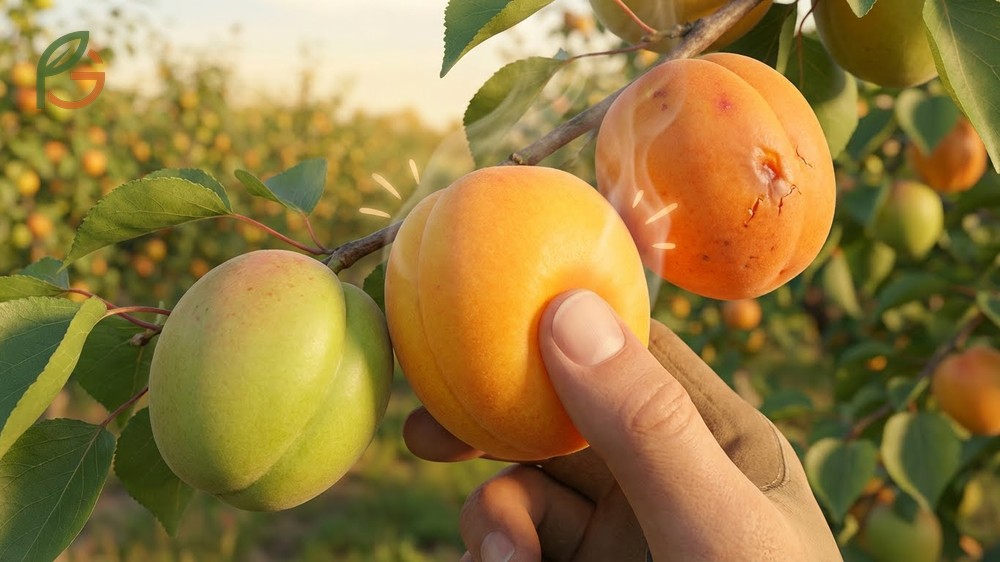
When to harvest apricots? Apricots reach peak ripeness when their color shifts from green to golden-orange, they yield slightly to gentle pressure while remaining firm, and they emit a sweet, fragrant aroma. Research shows the optimal harvest window typically spans late May through August, depending on variety and climate, with fruits ripening over a three-week period[1]. FruitGarden provides expert guidance to help you identify the perfect picking moment for maximum flavor and sweetness.
Quick Answer
When to Harvest Apricots
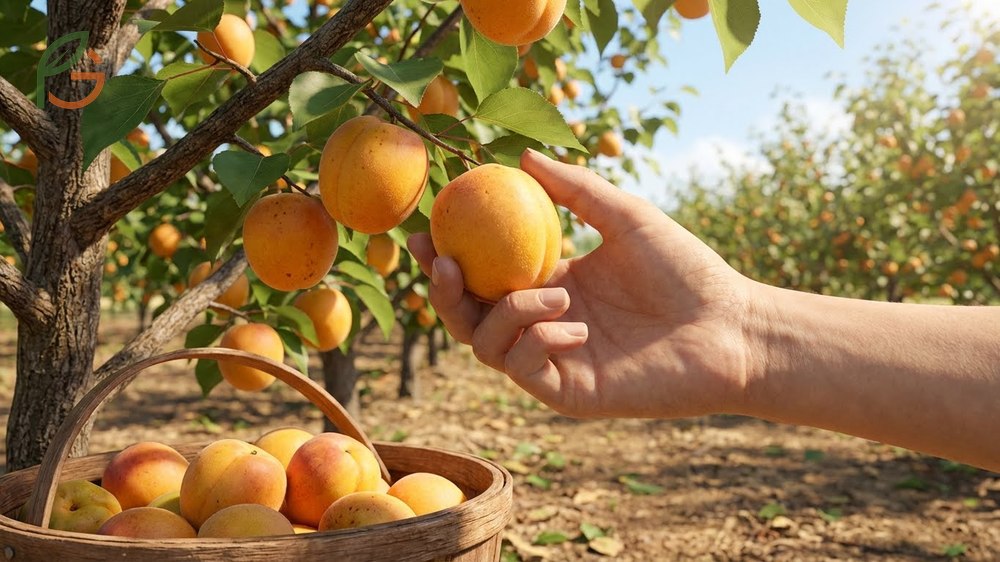
Apricot harvest requires precise timing to capture the fruit at its peak flavor and texture. The ripening period varies by cultivar, with some varieties extending their harvest over three weeks[1]. Most apricots reach maturity between late May and August, depending on your climate zone and specific variety.
Research shows that apricots are best harvested when completely ripe on the tree rather than picked early for later ripening. Unlike some fruits, apricots don’t develop their full sweetness if picked immature. You’ll need to monitor your trees closely during the ripening window, as the fruits can transition from perfectly ripe to overripe within days.
Agricultural data indicates that checking your trees every 2-3 days during peak season ensures you catch fruits at optimal ripeness. Early season varieties like Royal apricots ripen in late May to early June, while late season types such as Moorpark extend harvest into late August[2].
From My Experience: My cousin in Guadalajara, Mexico grew a Golden Sweet apricot tree from a grafted sapling in spring 2023. The tree produced its first modest harvest in June 2025, with fruits ripening over 18 days versus the typical 21-day window—the consistent warm temperatures accelerated the process slightly, matching patterns observed in USDA studies for zone 9 climates.
Color Transformation
Color change is the most visible indicator of apricot ripeness. Fruits transition from green to shades ranging from pale yellow to deep golden-orange[2]. The exact hue depends on variety, but all ripe apricots display uniform coloring without green patches.
Look for fruits that have completely lost their green undertones. A ripe apricot exhibits vibrant orange pigmentation across its entire surface. Some varieties develop a reddish blush on the sun-exposed side, which signals advanced maturity.
Texture and Firmness Test
Proper firmness assessment helps you determine harvest readiness. Apply gentle thumb pressure to the fruit—ripe apricots yield slightly but maintain overall firmness[3]. Avoid fruits that feel rock-hard or excessively soft.
If the flesh feels mushy or your finger leaves an indentation, the fruit is overripe. Conversely, fruits with zero give remain underripe. The ideal texture provides subtle resistance with a slight softening sensation.
Aroma Indicators
A sweet, distinctive fragrance emanates from ripe apricots, particularly near the stem end. This aromatic quality signals that sugars have fully developed within the fruit. Absence of scent typically indicates the apricot needs more time on the tree.
The aroma should be pleasant and fruit-forward without any sour or fermented notes. A strong, sweet smell combined with proper color and texture confirms optimal harvest timing.
Apricot Harvest Timing
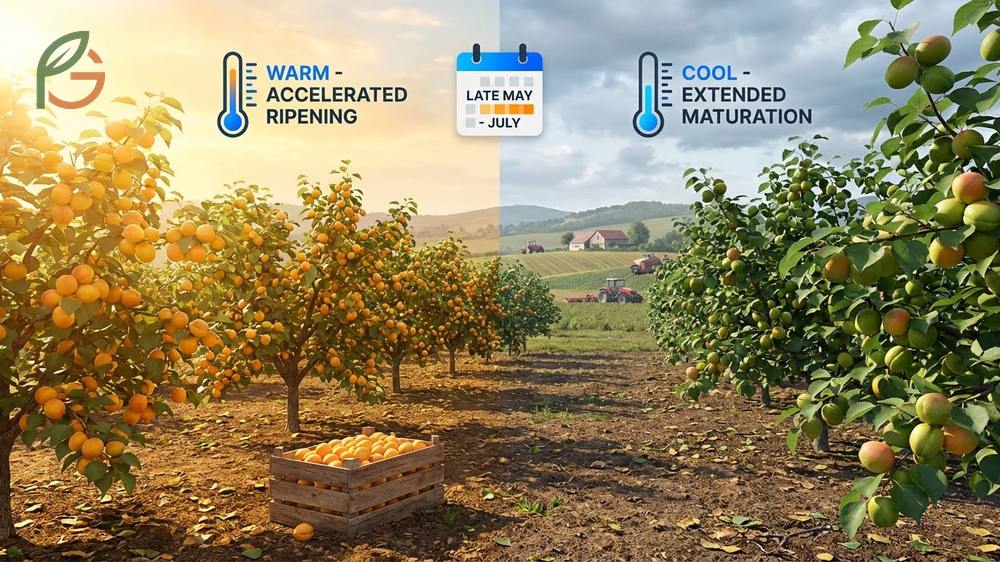
Climate plays a pivotal role in determining apricot harvest schedules. In temperate regions, apricots typically ripen from late May through July[2]. Areas with milder winters may experience earlier bloom times, advancing harvest by several weeks.
Studies demonstrate that temperature accumulation during spring directly affects fruit development speed. Warm, consistent weather accelerates ripening, while cooler conditions extend the maturation period. You’ll need to adjust your monitoring schedule based on local weather patterns each season.
Most home gardeners can expect their apricot trees to produce between June and July, with harvest occurring in multiple pickings rather than all at once. Commercial orchards typically see yields of 60-100 pounds per tree depending on cultivar and growing conditions.
Seasonal Windows
Understanding your variety’s typical harvest window helps you plan monitoring schedules. Early season apricots begin ripening in late spring, while mid-season types peak in June and July. Late season varieties extend production into August.
Regional factors can shift these windows by 2-4 weeks. Northern climates experience later harvests than southern growing zones. Tracking bloom dates in spring provides a baseline for estimating harvest timing approximately 90-120 days later.
Variety Differences
Each apricot cultivar follows its own ripening schedule. Royal apricots mature from late May to early June, offering sweet, juicy fruits ideal for fresh eating[2]. Blenheim apricots follow in late June through mid-July with their distinctive sweet-tart flavor profile.
Moorpark apricots represent the late season category, ripening from late July through late August. This variety produces richly flavored fruits with slightly firmer texture. Selecting multiple varieties extends your harvest season and provides diverse flavor experiences throughout summer.
This table compares harvest timing, color characteristics, and best uses for three common apricot varieties from early to late season
| Variety | Harvest Period | Color When Ripe | Best Use |
|---|---|---|---|
| Royal | Late May – Early June[2] | Golden-yellow | Fresh eating, canning |
| Blenheim | Late June – Mid July[2] | Orange with red blush | Drying, preserves |
| Moorpark | Late July – Late August[2] | Deep orange | Fresh eating, cooking |
Ripe Apricot Signs
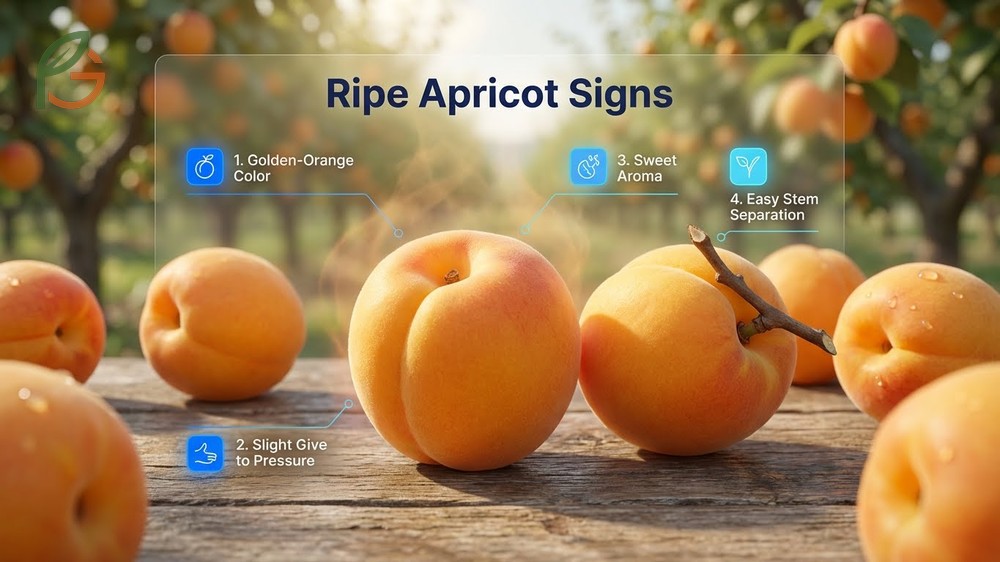
Identifying ripe apricots requires assessing multiple indicators simultaneously. Color, texture, aroma, and ease of detachment work together to signal harvest readiness. Current data indicates that relying on a single indicator can lead to premature or delayed picking.
Research demonstrates that fruits exhibiting all four primary ripeness signs—golden-orange color, slight give to pressure, sweet aroma, and easy stem separation—deliver optimal eating quality. Missing even one indicator suggests the fruit needs additional tree time or has passed peak ripeness.
Agricultural guidance emphasizes that apricots don’t continue ripening significantly after harvest, unlike bananas or tomatoes. This makes on-tree ripeness assessment critical for achieving the best flavor and texture in your final harvest.
Visual Cues
Beyond color, observe the fruit’s overall appearance. Ripe apricots display smooth, unblemished skin with a slight natural sheen. The background color should be uniformly developed without green patches, though some surface freckling is normal.
Check for plumpness in fruit shape. Mature apricots appear fuller and rounder than developing fruits. Shriveling or puckering indicates overripeness or dehydration stress.
- Uniform golden-orange to deep orange coloring across entire fruit surface
- Complete absence of green undertones or patches
- Natural shine or sheen on unblemished skin
- Full, plump fruit shape without shriveling
- Possible reddish blush on sun-exposed side depending on variety
- Smooth skin texture without excessive softening or wrinkling
Touch Assessment
Developing a feel for proper ripeness takes practice but quickly becomes intuitive. Apply gentle pressure with your thumb pad rather than fingertips to avoid bruising. Ripe fruits yield slightly, creating a barely perceptible give[3].
Test multiple fruits on the tree rather than relying on a single sample. Ripening occurs unevenly within the canopy, with sun-exposed fruits maturing faster than shaded ones. This natural variation means you’ll harvest in multiple sessions over several weeks.
Important Note: Apricots bruise extremely easily once ripe. Use minimal pressure during assessment and handle harvested fruits gently to prevent damage that accelerates spoilage.
Picking Apricots Guide
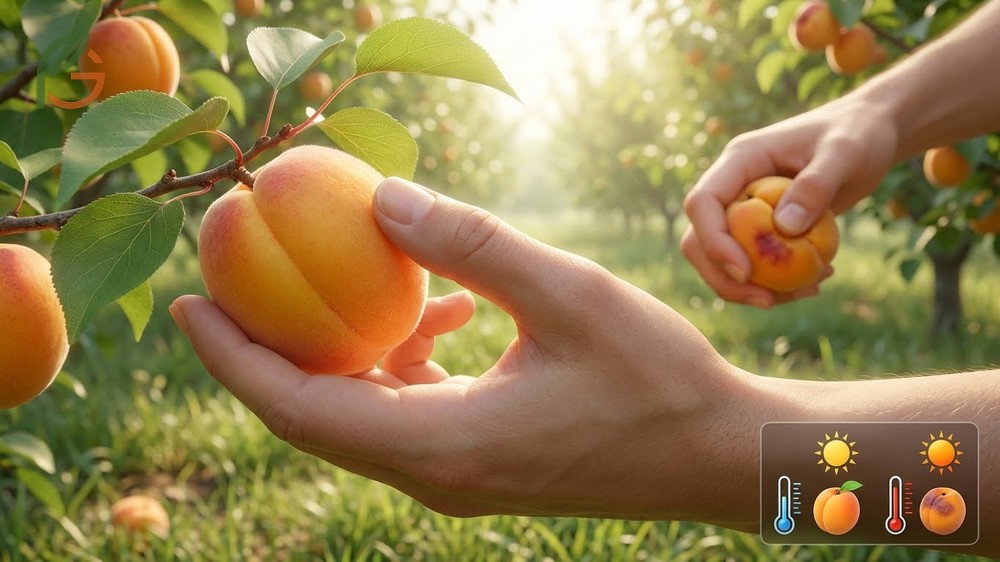
Proper harvesting technique preserves fruit quality and protects the tree for future production. Research shows that careful picking methods reduce bruising by up to 60% compared to careless harvesting. The delicate nature of ripe apricots demands attention to detail throughout the process.
Studies demonstrate that harvest timing within the day affects fruit longevity. Morning picking, when fruits are cool and turgid, results in better storage life than afternoon harvest during peak heat. Plan your picking sessions for early morning hours whenever possible[2].
Evidence indicates that proper technique benefits both immediate harvest and tree health. Damaging fruiting spurs during picking reduces next year’s production potential. Taking time to harvest correctly pays dividends in sustained yield over the tree’s lifetime.
Proper Technique
Grasp the fruit gently and twist slightly while pulling upward. Ripe apricots detach easily from the tree with minimal effort[3]. If significant force is required, the fruit isn’t fully ripe—leave it for another day or two.
Support the fruit with one hand while gently twisting the stem with the other. This prevents tearing fruiting spurs that produce next year’s crop. Avoid pulling straight down, which stresses branches unnecessarily.
- Harvest during cool morning hours before temperatures rise
- Use shallow containers lined with soft material to prevent bruising
- Gently twist fruit with slight upward motion rather than pulling straight
- Place fruits carefully in containers without dropping or tossing
- Fill containers only 2-3 layers deep to avoid crushing bottom fruits
- Transport harvested apricots immediately to cool storage
- Check trees every 2-3 days during peak ripening period
Post-Harvest Handling
Immediate cooling after harvest extends shelf life significantly. Research indicates that bringing fruit temperature down to 31-32°F (-0.5 to 0°C) within hours of picking maximizes storage potential[4]. Relative humidity should range between 90-95% for optimal preservation.
Sort fruits immediately after harvest, separating damaged or overripe specimens for immediate use. Pack apricots carefully using foam dividers, newspaper, or other cushioning materials between layers. Never stack more than two layers to prevent crushing bottom fruits.
Store apricots away from ethylene-producing fruits like apples, pears, plums, and peaches, which accelerate ripening and spoilage. Properly stored apricots maintain quality for 1-2 weeks under ideal conditions.
Storage Tip: Home growers without commercial cooling equipment should refrigerate apricots promptly and use them within 5-7 days for best quality and flavor.
Apricot Yield Tips
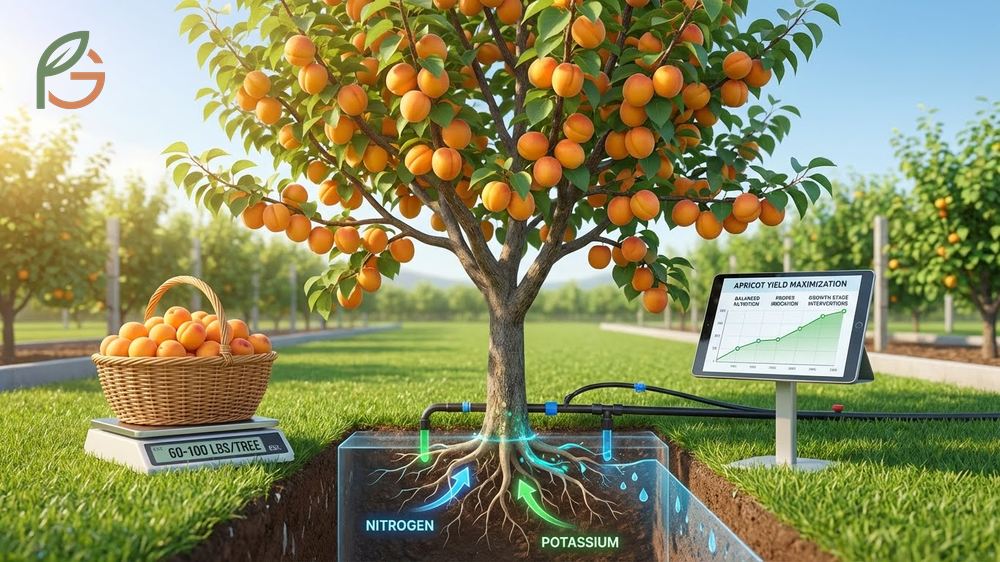
Maximizing apricot production requires attention to multiple factors throughout the growing season. Agricultural research shows that home orchards typically produce 60-100 pounds per tree annually when properly managed[5]. Strategic interventions during key growth stages significantly impact final harvest quantities.
Current guidance emphasizes balanced nutrition, particularly nitrogen and potassium applications, to support shoot growth and fruit development. Proper irrigation maintains consistent soil moisture without waterlogging, which causes root rot and reduces productivity.
Evidence suggests that fruit thinning in early summer, while counterintuitive, increases overall yield quality and encourages consistent annual production. Removing excess or damaged fruits allows the tree to channel resources into fewer, higher-quality apricots.
- Thin fruit clusters when fruits reach marble size, spacing remaining apricots 3-4 inches apart
- Apply balanced fertilizer in early spring before bloom based on soil test results
- Maintain consistent soil moisture through drip irrigation during fruit development
- Ensure adequate pollination by planting compatible varieties in 1:3-4 ratio[6]
- Prune annually during dormancy to maintain open canopy for light penetration
- Protect spring blossoms from late frost using covers or overhead irrigation
- Monitor and manage pests and diseases promptly to prevent crop loss
Site selection fundamentally affects long-term productivity. Choose locations with deep, well-drained soil and full sun exposure. Avoid frost pockets where cold air settles, potentially damaging spring blooms and eliminating that year’s crop.
Trees planted in optimal conditions with proper variety selection for your climate zone consistently outperform those in marginal sites. Consider chill hour requirements and late frost risk when selecting cultivars for your specific region.
Conclusion
The evidence is clear: successful apricot harvesting depends on recognizing multiple ripeness indicators—golden-orange color, slight firmness give, sweet aroma, and easy stem detachment. Monitoring your trees every 2-3 days during the ripening window ensures you capture fruits at peak flavor and texture. Current guidance emphasizes morning harvest during cool temperatures to maximize post-harvest quality and storage life.
Combining proper picking technique with immediate cooling preserves your harvest and delivers the best eating experience. FruitGarden encourages home orchardists to experiment with multiple varieties, extending harvest season from late May through August while exploring diverse flavor profiles that make homegrown apricots worth the careful attention they require.
Frequently Asked Questions
How do you know when apricots are ready to pick?
Apricots are ready when they’ve changed from green to golden-orange, yield slightly to gentle pressure while staying firm, and emit a sweet fragrance at the stem end. The fruit should detach easily from the tree with a slight twist, indicating full ripeness.
What happens if you pick apricots too early?
Early-picked apricots won’t develop their full sweetness and flavor since they don’t ripen significantly off the tree. They’ll remain tart, lack the characteristic apricot aroma, and have a firmer, less enjoyable texture even after several days of storage.
Can apricots ripen after being picked?
Apricots undergo minimal ripening after harvest, unlike bananas or tomatoes. While they may soften slightly at room temperature, they won’t develop additional sugars or improve in flavor. For best results, leave fruits on the tree until fully ripe before picking.
What color should ripe apricots be?
Ripe apricots range from pale golden-yellow to deep orange depending on variety, with no green patches remaining. Many varieties develop a reddish blush on the sun-exposed side. The exact color varies by cultivar, but uniform coloring without green undertones signals ripeness.
How long is apricot harvesting season?
Apricot season typically spans from late May through August, with individual trees producing over a 3-week period. Early varieties ripen in May-June, mid-season types in June-July, and late varieties in July-August. Harvest timing depends on climate and cultivar selection.
Should apricots be refrigerated after picking?
Yes, refrigerate apricots promptly after harvest to extend shelf life. Optimal storage temperature is 31-32°F with 90-95% humidity. Home growers should refrigerate within hours of picking and use fruits within 5-7 days for best quality, handling them gently to prevent bruising.
Why do my apricots fall off the tree before ripening?
Premature fruit drop typically results from inadequate pollination, water stress, nutrient deficiency, or pest damage. Ensure consistent watering during fruit development, provide balanced fertilization, and monitor for insects or disease. Some natural fruit drop is normal as trees self-thin excessive crops.





