
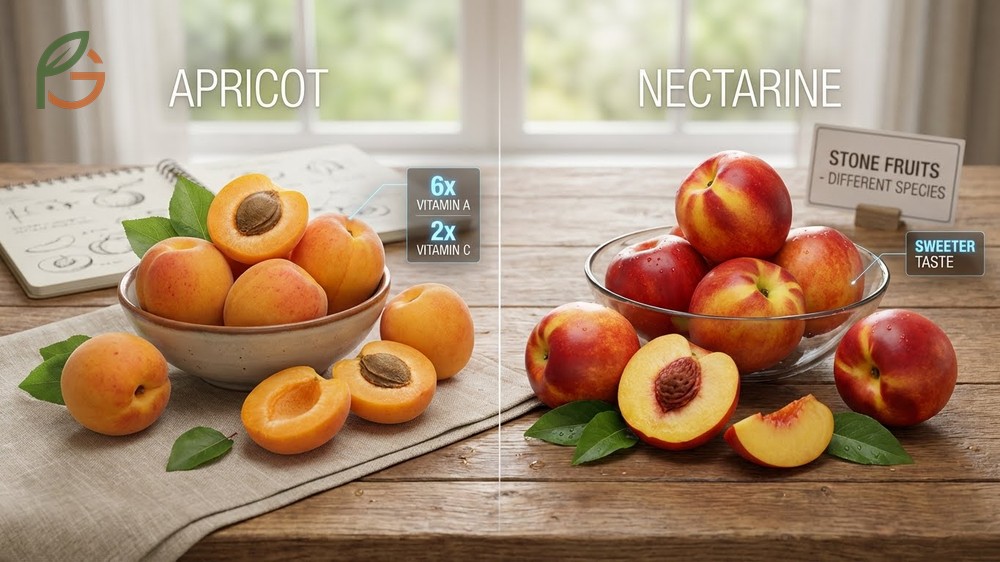
Apricot vs nectarine differences come down to texture, flavor intensity, and skin type. Apricots have velvety skin with sweet-tart flavor and softer flesh, while nectarines feature smooth skin, firmer texture, and consistently sweeter taste. Research shows apricots pack nearly 6 times more vitamin A[1] and 2 times more vitamin C[1] than nectarines. What often gets overlooked is that these two stone fruits aren’t even the same species—apricots are Prunus armeniaca, while nectarines are smooth-skinned variants of peaches (Prunus persica). FruitGarden synthesizes current horticultural research to help you distinguish between these popular stone fruits.
Quick Answer
- Apricots deliver 48 calories per 100g with velvety skin and sweet-tart flavor
- Nectarines provide 44 calories[1] per 100g with smooth skin and sweeter taste
- Texture difference: apricots are softer and less juicy; nectarines are firmer and juicier[2]
- Apricots contain 259mg potassium[1] vs. 201mg in nectarines[1] per 100g
Apricot vs Nectarine: Key Differences
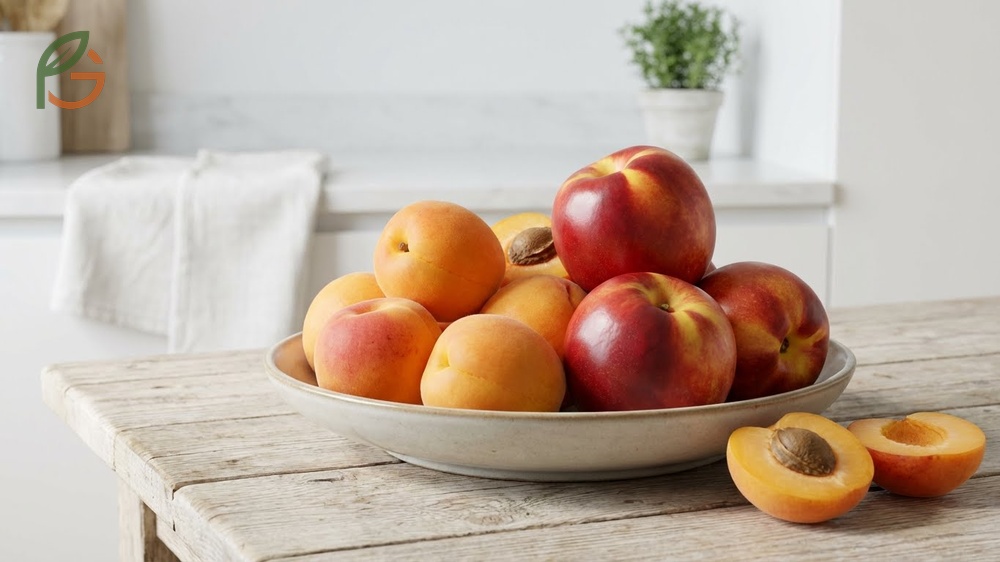
The most noticeable difference between apricots and nectarines is their skin texture. Apricots have a distinctive velvety, slightly fuzzy skin that’s softer to touch[3]. Nectarines sport smooth, completely fuzz-free skin that’s shiny and firm[3].
Size differences matter too. Nectarines are typically larger than apricots[1], though both fruits vary depending on variety and growing conditions. Apricots usually range in color from orange to yellow with occasional red blush, while nectarines display red, yellow, or white flesh with vibrant exterior coloring.
Beyond appearance, these fruits belong to different species within the stone fruit family. This isn’t just a botanical detail—it affects everything from growing requirements to flavor development. Both share the characteristic hard pit (or stone) at their center, which is why they’re called stone fruits or drupes.
Skin Texture and Appearance
The skin texture difference comes from a genetic variation that controls fuzz development. Apricots maintain their velvety coating throughout ripening, which some people find pleasant while others prefer to remove before eating. This fuzzy exterior actually protects the fruit from certain pests and helps retain moisture during development.
Nectarines’ smooth skin results from a recessive gene that prevents fuzz formation[1]. This makes them more convenient for eating out of hand, but it also means they’re slightly more susceptible to bruising during transport. The smooth surface bruises more easily than apricots’ protective fuzzy layer.
Species and Genetic Classification
Apricots (Prunus armeniaca) evolved as a distinct species with origins in Central Asia. They’re not simply variants of another fruit—they’re their own species with unique characteristics. This explains why apricots have such different flavor and texture profiles compared to peaches and nectarines.
Nectarines are genetic variants of peaches (Prunus persica var. nucipersica), not separate species[4]. They share the same species classification as peaches but express different traits. A single recessive gene controls whether the fruit develops fuzz or smooth skin, which is why you’ll sometimes find both peaches and nectarines on the same tree.
Taste and Texture Differences
Nectarines are consistently sweeter than apricots with less tartness[5]. If you’re biting into a ripe nectarine, you’ll get a burst of candy-like sweetness with minimal acidity. Apricots deliver more complex flavor layers—honeyed sweetness combined with refreshing tartness that cleanses your palate.
The flavor complexity in apricots makes them versatile for both sweet and savory dishes. Professional chefs describe apricots as having “the soul of a plum with the heart of a peach”[5]. This unique positioning means they work brilliantly in tagines and glazes where you need balanced sweet-tart flavor.
Texture plays a huge role in how these fruits perform in recipes. Apricots aren’t as juicy as nectarines, which affects cooking applications[2]. When you substitute apricots for nectarines in baking, you’ll need to add extra liquid and sweetener to compensate.
Flavor Profiles Explained
Apricot flavor evolves as you eat it. You’ll notice honeyed sweetness first, followed by peach-like floral notes, then a citrus-like tartness on the finish. Aromatic elements include delicate floral notes similar to orange blossom[5]. This complexity makes apricots fascinating to work with in the kitchen.
Nectarines offer a more straightforward flavor experience. They’re sweet and juicy with a slightly spicy undertone that distinguishes them from peaches[3]. The flesh ranges from creamy white (which lacks acidity) to yellow (which has mild acidity). White nectarines are especially prized for fresh eating due to their aromatic, decadent sweetness.
- Apricots balance sweet and tart in equal measure, while nectarines lean heavily sweet
- Apricot flavor includes plum undertones and floral notes; nectarines taste peachy with spicy hints
- Ripe apricots still maintain noticeable acidity; nectarines (especially white varieties) have minimal acid
- Apricots develop more complex flavors when cooked; nectarines maintain straightforward sweetness
- The aromatic profile differs: apricots smell like orange blossoms, nectarines smell like sweet peaches
Texture and Juiciness Comparison
Nectarines are firmer and spicier in texture compared to peaches, but they’re still juicier than apricots[3]. When you bite into a ripe nectarine, juice runs down your chin. Apricots have denser, less juicy flesh that holds its shape better during cooking. This textural difference explains why apricots work brilliantly in dried fruit applications.
The flesh firmness varies with ripeness for both fruits. Apricots soften considerably as they ripen, developing a silky texture that’s almost creamy. Nectarines maintain more structural integrity even when fully ripe, making them ideal for grilling and fresh fruit salads where you don’t want the fruit to fall apart.
Important Note: Don’t judge ripeness by firmness alone. Apricots can feel firm but be perfectly ripe if they’ve developed their characteristic sweet-tart aroma. Nectarines need a slight give near the stem end to indicate peak ripeness.
Nutrition Comparison Chart
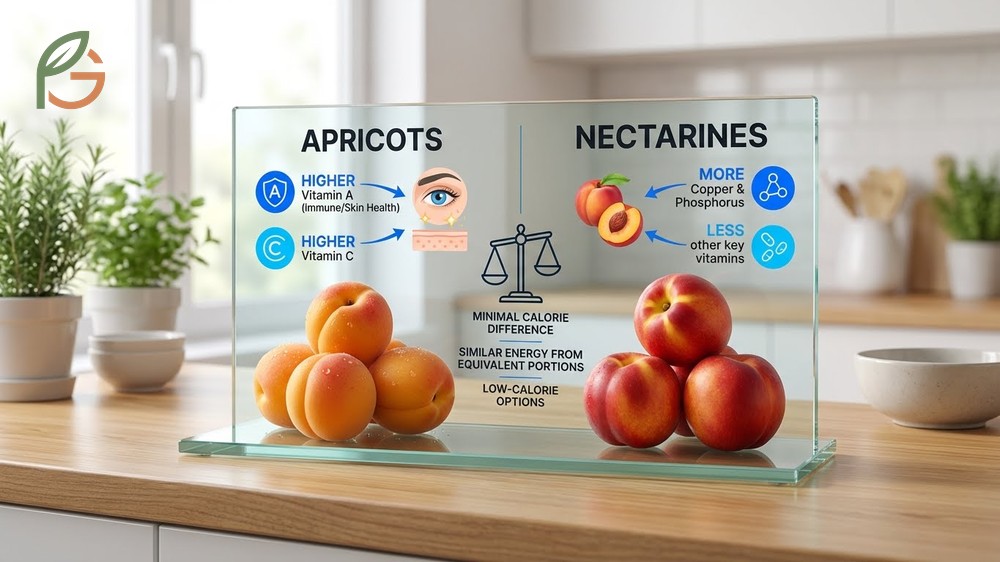
Both fruits offer excellent nutritional value with slight differences in vitamin and mineral content. Apricots provide significantly higher amounts of vitamin A and vitamin C, which supports immune function and skin health. Nectarines contain slightly more copper and phosphorus but less of the other key vitamins.
The calorie difference is minimal—you’ll get nearly identical energy from equivalent portions. Both fruits are low-calorie options that fit well into weight management plans. The fiber content is comparable too, with apricots offering slightly more at 2g[1] versus nectarines’ 1.7g[1] per 100g serving.
This table compares calories, macronutrients, vitamins, and minerals between apricots and nectarines per 100-gram serving based on USDA data
| Nutrient | Apricot | Nectarine | Difference |
|---|---|---|---|
| Calories | 48 kcal[1] | 44 kcal[1] | Apricot +4 kcal |
| Carbohydrates | 11.1g[1] | 10.5g[1] | Apricot +0.6g |
| Fiber | 2g[1] | 1.7g[1] | Apricot +0.3g |
| Vitamin A | 96µg[1] | 17µg[1] | Apricot +465% |
| Vitamin C | 10mg[1] | 5.4mg[1] | Apricot +85% |
| Potassium | 259mg[1] | 201mg[1] | Apricot +29% |
- Apricots deliver nearly 6 times more vitamin A, crucial for eye health and immune function
- Both fruits are alkaline-forming with PRAL values of -4.3 (apricot) and -3.1 (nectarine)
- Net carbs are similar: 9.1g in apricots vs. 8.8g in nectarines per 100g serving
- Nectarines contain more fructose while apricots have higher sucrose and glucose levels
- Both fruits provide less than 50 calories per 100g, making them excellent for weight management
Apricot and Nectarine Cooking Uses
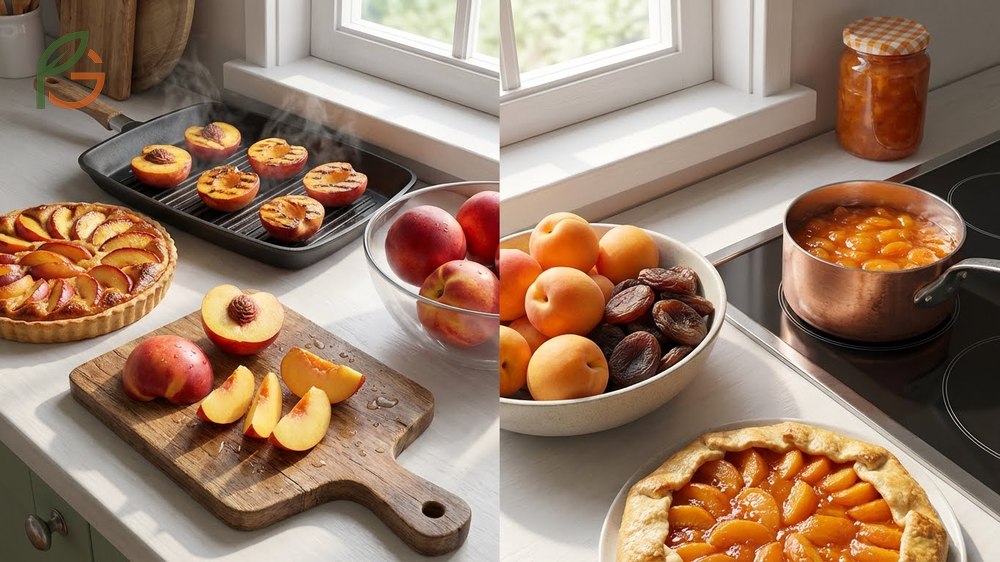
Nectarines excel in applications where you want the fruit to maintain structure. They’re ideal for fresh eating, grilling, and baking in tarts where you need distinct fruit pieces[3]. The firmer texture and higher juice content create beautiful caramelization when grilled, adding a smoky-sweet dimension to summer desserts.
Apricots shine when you need concentrated flavor or when you’re working with dried fruit. If you’re substituting apricots for nectarines in recipes, you’ll need to increase liquid by about 20-30% and add extra sweetener[4]. This compensates for apricots’ drier texture and higher tartness.
Both fruits work well in preserves, though they produce different results. Apricot jam develops a thicker consistency due to lower water content and higher pectin levels. Nectarine preserves stay lighter and more fluid, which some people prefer for spooning over yogurt or ice cream.
Baking Applications
For pies and galettes, nectarines hold their shape better during baking. They release juice gradually, creating a natural sauce without turning mushy. Apricots tend to break down more, which works perfectly for rustic tarts where you want a jammy filling. Their sweet-tart balance also means you can reduce added sugar by 10-15% compared to nectarine recipes.
Crisps and crumbles work brilliantly with nectarines because you want that juicy consistency mixing with the crispy topping[3]. Apricots work better in upside-down cakes or clafoutis where the denser texture creates appealing contrast with the batter.
From My Experience: My cousin in Guadalajara, Mexico grows both apricot and nectarine trees in her backyard orchard. She’s found that apricots ripen 7-10 days earlier than nectarines in her climate zone, which extends the fresh stone fruit season. Her trees produce consistently when she prunes them in late winter and thins fruit clusters to 4-6 inches apart, matching the spacing recommendations from local agricultural extension services.
Fresh Eating and Storage
Nectarines are the hands-down winner for fresh eating straight from the tree. The smooth skin eliminates the fuzzy texture some people dislike, and the high juice content makes them refreshing on hot days. They’re perfect for fruit salads where you want distinct, firm pieces that don’t oxidize quickly.
Apricots require a bit more attention to ripeness for optimal fresh eating. They’re best when they’ve developed full color and emit a sweet fragrance but still have slight firmness. Once they get too soft, they’re better suited for cooking or drying. Store them at room temperature until ripe, then refrigerate for up to 3-5 days.
- Grilling works best with nectarines—their firmer texture prevents falling through grates
- Use apricots for tagines and savory glazes where sweet-tart complexity enhances meat dishes
- Nectarines don’t need peeling for most recipes; apricots might depending on personal preference
- Dried apricots concentrate flavor dramatically; dried nectarines are less common commercially
- For smoothies, nectarines blend smoother due to higher water content
- Apricot kernels are sometimes used in cooking; nectarine pits aren’t typically utilized
Storage Tip: Don’t wash either fruit until you’re ready to eat them. Moisture on the skin accelerates mold growth. Both fruits continue ripening at room temperature but stop once refrigerated.
Price Comparison and Availability
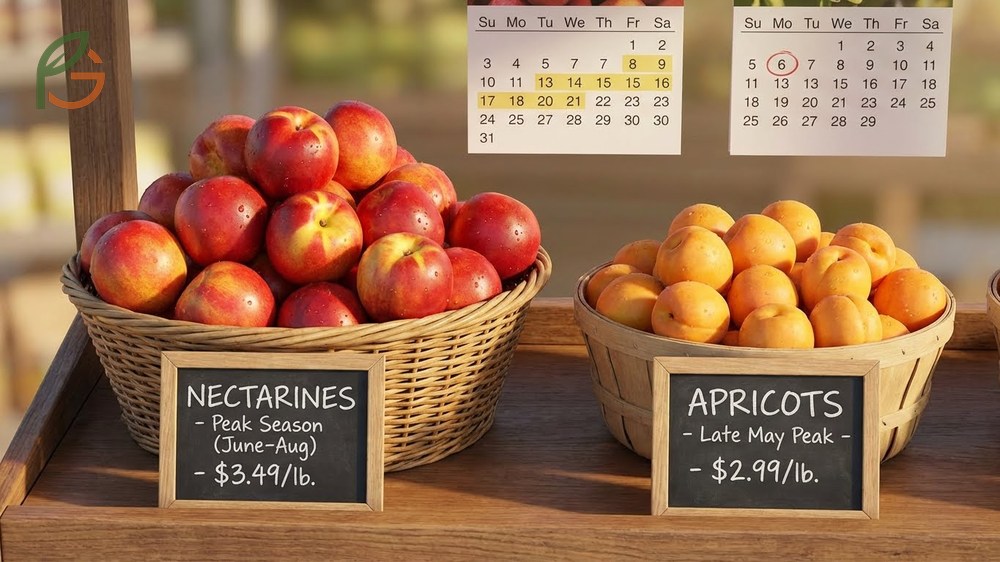
Nectarines typically cost slightly more than apricots at retail markets, though prices fluctuate based on season and location. During peak season (June through August in the U.S.), both fruits become more affordable and widely available. Out-of-season prices can be 2-3 times higher, especially for imported varieties.
Apricots have a shorter peak season than nectarines, which affects availability and pricing. You’ll find fresh apricots primarily from late May through July, while nectarines remain available through September. This extended season gives nectarines an advantage for consumers who want fresh stone fruit throughout summer.
For home gardeners, tree prices are comparable—both apricot and nectarine trees cost between $30-60 for standard varieties. Specialty cultivars or larger specimens can run higher. The investment pays off within 3-4 years when trees reach full production, yielding 50-100 pounds of fruit annually depending on variety and care.
- Local production affects pricing more than type—regionally grown fruit costs less than shipped varieties
- Organic certification typically adds 20-40% to the price for both fruits
- Apricots are more commonly sold dried, which offers year-round availability at stable prices
- Farmers’ markets often price both fruits lower than supermarkets during peak season
- Heirloom or specialty varieties command premium prices regardless of fruit type
Conclusion
The evidence is clear: apricot vs nectarine differences extend beyond skin texture to encompass flavor complexity, nutritional profiles, and culinary applications. Apricots offer sweet-tart flavor with nearly 6 times more vitamin A, while nectarines deliver consistent sweetness with firmer, juicier texture. Your choice depends on whether you prioritize nutritional density and complex flavor (apricots) or straightforward sweetness and fresh-eating convenience (nectarines).
Current horticultural guidance emphasizes that both fruits deserve space in home orchards and kitchen pantries. They’re not interchangeable—each brings unique strengths to different culinary applications and nutritional goals. FruitGarden recommends trying both fruits at peak ripeness to discover your personal preference, then exploring recipes that highlight each fruit’s distinctive characteristics.
Frequently Asked Questions
Which is healthier, apricot or nectarine?
Apricots are marginally healthier due to significantly higher vitamin A (96µg vs. 17µg) and vitamin C (10mg vs. 5.4mg) content[1]. They also provide more potassium (259mg vs. 201mg) and fiber (2g vs. 1.7g) per 100g serving. However, nectarines have slightly lower sugar content, making them a better choice if you’re monitoring blood sugar levels.
Can you substitute apricots for nectarines in recipes?
You can substitute apricots for nectarines, but you’ll need to adjust the recipe. Add 20-30% more liquid and increase sweetener since apricots are drier and more tart[4]. For baking applications, expect apricots to break down more than nectarines, creating a jammier texture rather than distinct fruit pieces.
What’s the taste difference between apricots and nectarines?
Nectarines are consistently sweeter with less tartness, offering a straightforward sweet flavor[5]. Apricots deliver complex sweet-tart flavor with floral notes and citrus-like acidity on the finish. Think of apricots as having plum undertones with peachy sweetness, while nectarines taste like sweeter, spicier peaches.
Do apricots and nectarines have the same texture?
No, their textures differ significantly. Nectarines are firmer and much juicier, maintaining structure during cooking[2]. Apricots have softer, denser flesh with less juice content. This makes nectarines ideal for grilling and fresh eating, while apricots work better for drying and applications where you want concentrated flavor.
Are apricots and nectarines the same species?
No, they’re different species. Apricots are Prunus armeniaca, a distinct species that originated in Central Asia. Nectarines are Prunus persica var. nucipersica, which are smooth-skinned genetic variants of peaches[4]. This species difference explains their distinct flavor profiles, growing requirements, and nutritional compositions.
Which fruit is better for grilling?
Nectarines are better for grilling due to their firmer texture and higher juice content[3]. They hold their shape on the grill and develop beautiful caramelization without falling apart. Apricots can work for grilling if they’re slightly underripe, but they’re more prone to breaking down due to their softer, less juicy flesh.
How do apricot and nectarine prices compare?
Nectarines typically cost slightly more than apricots at retail, though prices vary by season and location. Both fruits are most affordable during peak season (June-August in the U.S.), when local production is highest. Apricots have a shorter fresh season but are widely available dried year-round, while nectarines remain fresh through September but are less common in dried form.





