
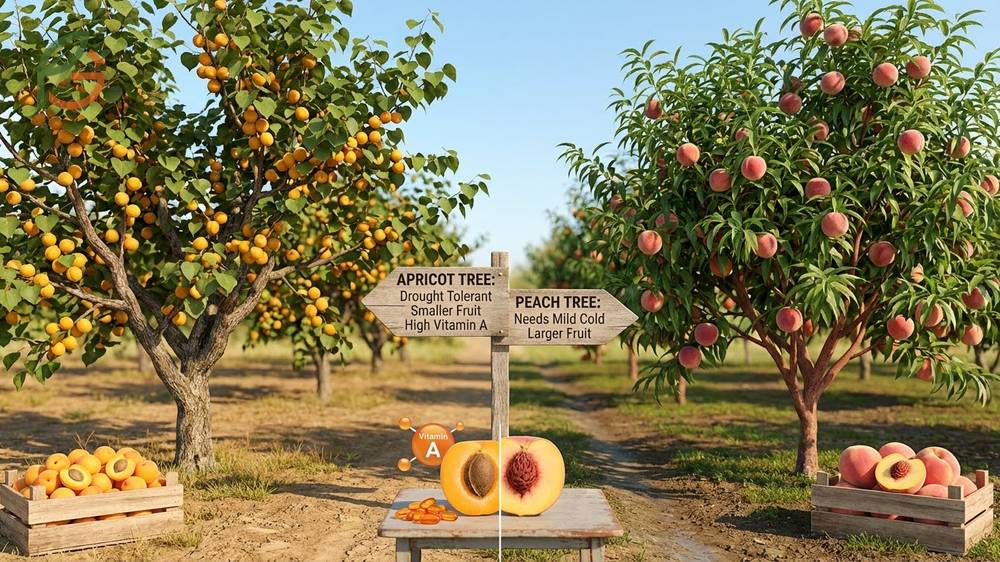
Apricot vs peach tree differences come down to size, climate needs, and fruit characteristics. Apricot trees grow 15-20 feet tall and handle drought better, while peach trees reach 12-15 feet and need less extreme cold[1]. Research shows apricots produce fruit that’s one-quarter the size of peaches and pack four times more vitamin A[2]. FruitGarden synthesizes current horticultural research to help you choose the right stone fruit tree for your climate zone.
Quick Answer
- Apricot trees reach 15-20 feet tall; peaches grow 12-15 feet[1]
- Both thrive in USDA zones 4-9, but peaches do best in zones 6-7[3]
- Apricots need 600-900 chill hours at 32-46°F (0-8°C); peaches tolerate warmer climates better[4]
- Apricot fruit weighs 35 grams with 17 calories; peaches weigh 130 grams with 50 calories[5]
Apricot vs Peach Tree
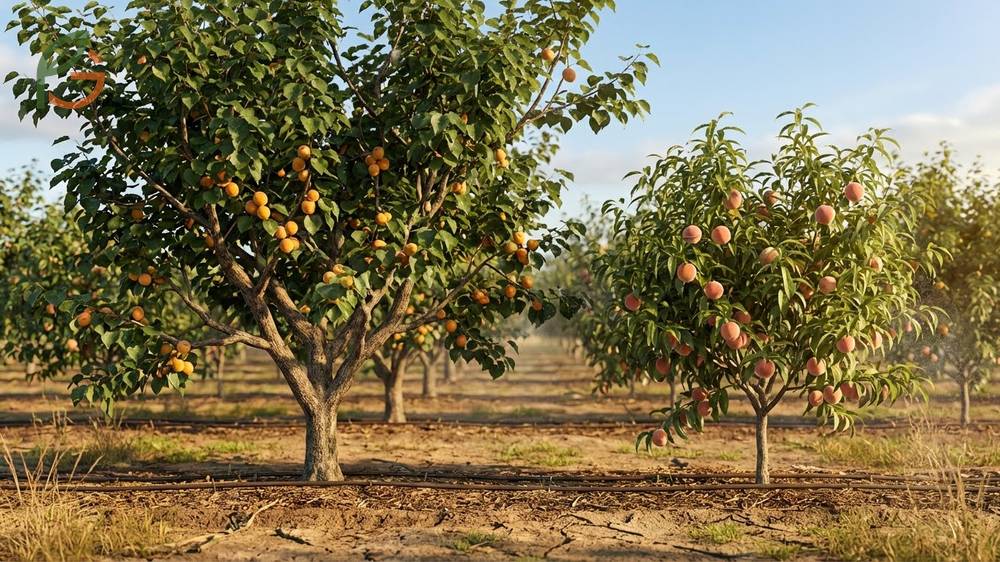
Tree structure separates these stone fruits from the start. Standard apricot trees mature to 15-20 feet in height and width, while peach trees naturally stop growing at 12-15 feet[1]. This size difference affects orchard planning and maintenance schedules.
Apricot trees show greater drought tolerance than peaches, making them suitable for drier regions. Both species need well-drained soil to prevent root rot and nematode issues, but apricots handle water stress more effectively[6]. You’ll water apricots less frequently during summer months compared to peach trees.
Bloom timing creates frost vulnerability differences between the species. Apricot trees bloom earlier in spring, which exposes flowers to late frost damage in low-lying areas. Peach trees bloom slightly later, reducing but not eliminating frost risk.
From My Experience: My cousin in Guadalajara, Mexico planted a Harcot apricot tree in March 2023. The tree reached 8 feet by September 2024—faster than the typical 12-18 inches annual growth for stone fruits—likely due to the region’s 260+ sunny days per year.
Tree Size and Growth Habit
Dwarf varieties change the size equation significantly. Dwarf apricots reach 8-10 feet, while dwarf peaches hit 6-10 feet at maturity[7]. Semi-dwarf versions of both species settle at 12-15 feet, which overlaps with standard peach dimensions.
Annual growth rates differ between the two trees. Peach trees add 12-24 inches per year during active growing years, with an average lifespan of 7-15 years[7]. Apricots grow more slowly but live longer, though specific lifespan data varies by cultivar and location.
Climate and Hardiness Zones
Both species survive in USDA hardiness zones 4-9, but performance varies by zone. Apricots adapt well across this entire range, handling zone 4’s winter lows down to -30°F (-34°C)[3]. Peach trees technically grow in zones 4-9 but thrive specifically in zones 6-7, where winter temperatures don’t drop below -10°F (-23°C).
Chill hour requirements create regional limitations for apricots. The trees need 600-900 hours between 32-46°F (0-8°C) annually for proper dormancy[4]. Temperatures below 32°F (0°C) damage apricot buds, while the ideal summer temperature hits 98.6°F (37°C).
Peaches tolerate more climate variability than apricots. They adapt to subtropical and nearly frost-free temperate zones, handling high humidity better than apricots[4]. This makes peaches the safer choice for southern U.S. growers in zones 8-9.
Important Note: Plant both trees on high ground in open sites. Low-lying areas collect fog and frost, which damages blossoms and reduces fruit set by 40-60% in bad years[6].
Difference Between Peach and Apricot
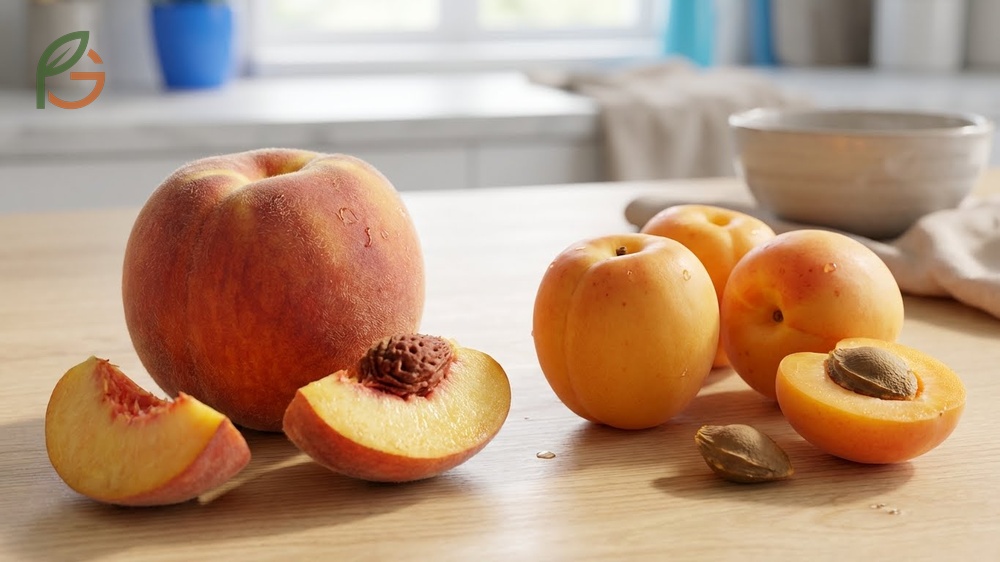
Size separates these fruits immediately at harvest. One apricot weighs 35 grams—about one-quarter the size of a small peach at 130 grams[5]. This size difference means you’ll eat 3-4 apricots in one sitting versus just one peach.
Skin texture creates the most obvious visual distinction. Peaches have fuzzy, velvety skin that feels soft to touch. Apricots feature smooth, firm skin without fuzz, which makes them easier to eat without peeling.
Pit characteristics differ between species. Apricot pits measure smaller and smoother than peach pits, which makes apricots easier to stone when cooking[5]. The smaller apricot pit also means more flesh per fruit by percentage.
Fruit Appearance and Size
Color intensity varies between ripe specimens. Apricots display golden-orange hues with occasional red blush on the sun-exposed side. Peaches range from yellow to creamy white flesh, with skin showing deeper red coloring across larger surface areas.
Diameter measurements show the size gap clearly. Peaches span 2.5-3.5 inches across at maturity[4]. Apricots typically measure 1.5-2 inches in diameter, which affects storage density and shipping costs for commercial growers.
Taste and Texture Comparison
Sugar content drives the sweetness difference between these fruits. One small peach contains 11 grams of sugar, while a single apricot holds just 3 grams[5]. This makes peaches taste noticeably sweeter, while apricots deliver a tart-sweet balance.
Texture separates the eating experience completely. Peaches feel soft, juicy, and almost nectar-like when ripe—you’ll get juice dripping down your hands. Apricots stay firmer and denser even at peak ripeness, with less water content that creates a less messy eating experience[8].
Malic acid contributes to the tartness in apricots. This organic acid balances the fruit’s natural sugars and creates the characteristic tang that distinguishes apricots from their sweeter peach cousins.
Apricot vs Peach Nutrition
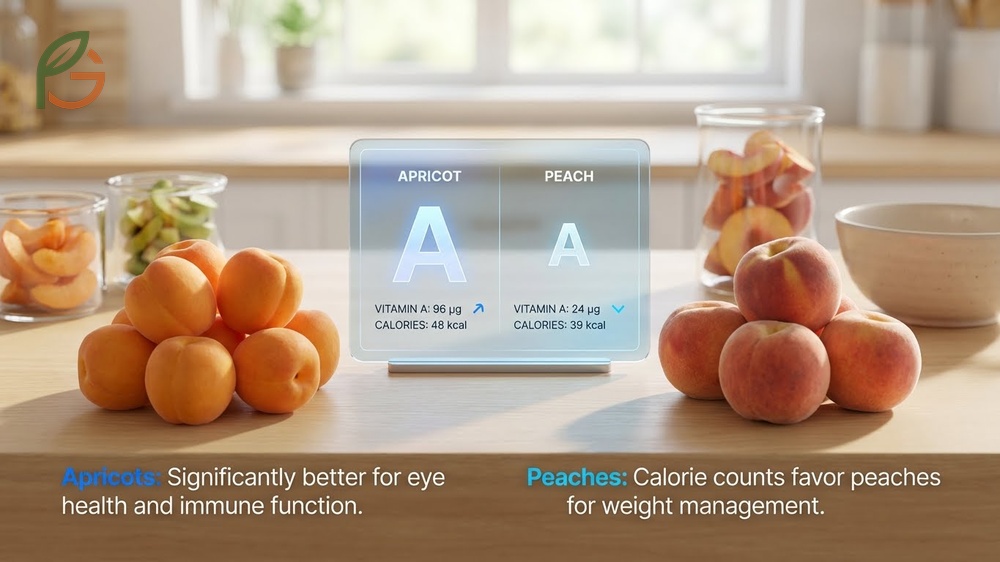
Vitamin A levels show the biggest nutritional gap between these fruits. Apricots deliver 96 micrograms of vitamin A per 100 grams—four times more than peaches at 24 micrograms[2]. This makes apricots significantly better for eye health and immune function.
Calorie counts favor peaches for weight management. Peaches contain 39 calories per 100 grams compared to apricots’ 48 calories[2]. The difference seems small, but it adds up when you’re eating multiple servings per week.
Fiber content gives apricots the edge for digestive health. They provide 2 grams of fiber per 100 grams versus 1.5 grams in peaches[2]. This 33% difference matters for hitting the recommended daily fiber intake of 25-30 grams.
This table compares key vitamins, minerals, and macronutrients between apricots and peaches per 100 gram serving
| Nutrient | Apricot | Peach |
|---|---|---|
| Calories | 48 kcal[2] | 39 kcal[2] |
| Vitamin A | 96 µg[2] | 24 µg[2] |
| Fiber | 2.0 g[2] | 1.5 g[2] |
| Potassium | 259 mg[2] | 190 mg[2] |
Mineral content favors apricots across most categories. They contain 259 milligrams of potassium per 100 grams versus 190 milligrams in peaches—a 36% advantage for blood pressure management[2]. Apricots also provide more iron, calcium, and vitamin C per serving.
- Apricots excel for vitamin A intake—one serving covers 10% of daily needs
- Peaches win for low-calorie snacking at 39 calories per 100g
- Apricots deliver more potassium for heart health and muscle function
- Peaches contain slightly more vitamin B3 (niacin) for energy metabolism
- Both fruits provide vitamin C, but apricots offer 52% more per serving
Apricot vs Peach Leaves
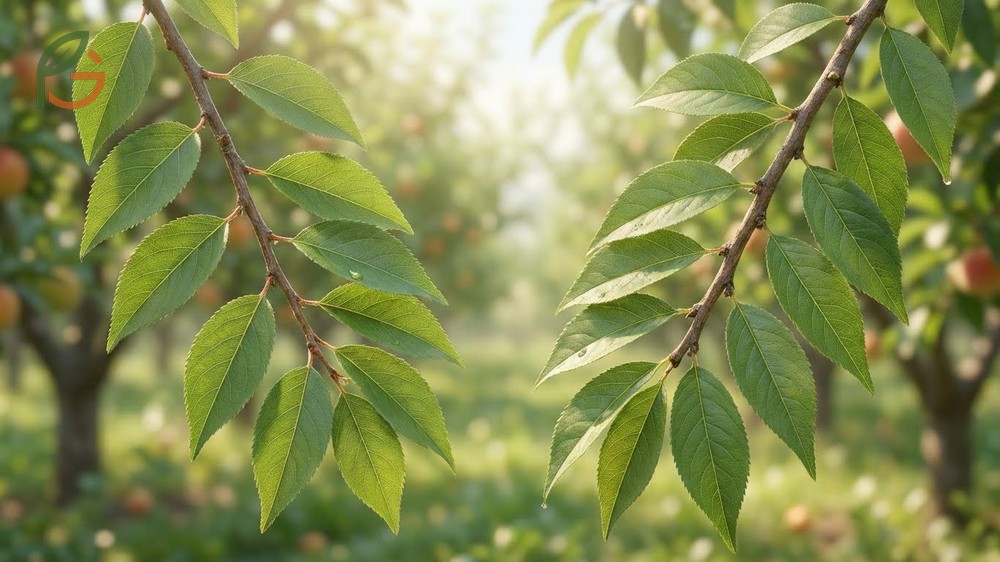
Leaf arrangement follows the same pattern for both species. Apricot and peach trees display alternating leaves along branches—one leaf per node, switching sides as you move up the stem. You won’t find opposing leaves (two leaves at the same node) on healthy stone fruit trees.
Leaf shape provides minimal identification help in most cases. Both species produce lanceolate (lance-shaped) leaves with serrated edges. The leaves look remarkably similar, which frustrates new gardeners trying to identify mystery seedlings.
Disease symptoms sometimes differ between species. Peach leaf curl (caused by Taphrina deformans) affects peach leaves more severely than apricot leaves, causing red blistering and leaf distortion. Apricot leaves show different symptom patterns with Plum pox virus—marked oak-leaf mosaic appears in the second and third leaves of growing branches.
- Both trees have long, skinny leaves with alternating arrangement
- Leaf color ranges from medium to dark green in healthy specimens
- Apricot leaves sometimes show vein clearing in viral infections
- Peach leaves develop distinctive curl patterns when infected with Taphrina
- Neither species produces fragrant leaves—scent comes from flowers and fruit
Identification Tip: If you can’t tell apricot and peach trees apart by leaves alone, wait for bloom time. Apricot flowers appear slightly earlier in spring with soft, feminine scent, while peach blossoms arrive later with aromatic pink petals.
Cooking with Apricot vs Peach
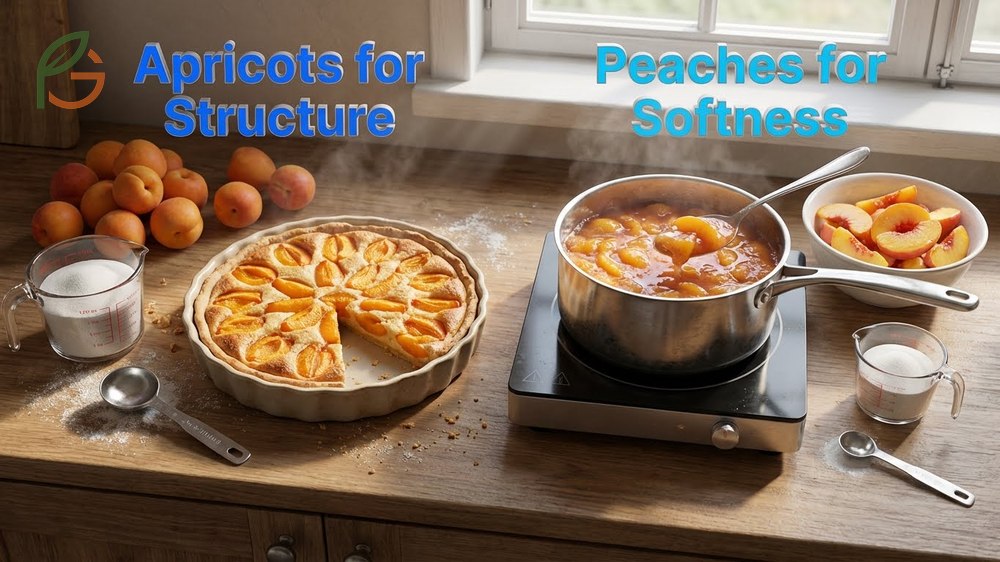
Baking applications favor apricots for structure retention. Their firmer texture and lower water content mean they hold shape better in pies, tarts, and cobblers. Peaches break down more during cooking, creating a softer, jammier filling that works better for sauces and compotes.
Sugar adjustments vary significantly between the two fruits. You’ll add 2-3 tablespoons less sugar when using peaches versus apricots in recipes due to peaches’ higher natural sugar content. Apricots need that extra sweetness to balance their tartness and create the same flavor profile.
Poaching and stewing work differently for each fruit. Apricots maintain their shape when simmered in syrup for 10-15 minutes, making them ideal for elegant plated desserts. Peaches soften quickly and work better for rustic preparations where texture isn’t critical.
Fresh versus dried forms create different cooking scenarios. Dried apricots concentrate sugars and create chewy texture for trail mixes and baked goods. Dried peaches exist but remain far less common—the high water content makes peaches harder to dry effectively without specialized equipment.
- Apricots work best in tarts, galettes, and structured baked goods
- Peaches excel in cobblers, crisps, and free-form desserts
- Both fruits make excellent jams, though apricot jam sets firmer
- Apricots caramelize well for upside-down cakes and glazes
- Peaches blend smoothly into smoothies and breakfast bowls
- Mix both fruits in compound desserts for balanced sweet-tart flavor
Pairing considerations change based on the fruit’s flavor profile. Apricots match well with almonds, honey, cardamom, and vanilla—ingredients that complement their tartness. Peaches pair naturally with cinnamon, brown sugar, bourbon, and cream-based elements that enhance their sweetness.
Stone Fruits Comparison
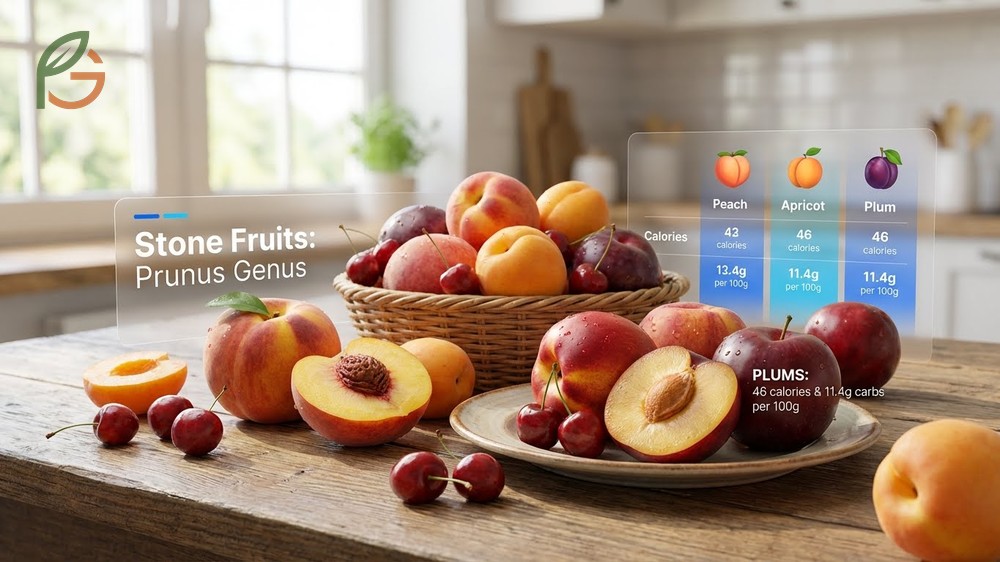
Stone fruits share a defining characteristic—they all contain a hard pit (endocarp) surrounding the seed. The Prunus genus includes peaches, apricots, plums, cherries, and nectarines, but each species developed distinct traits over thousands of years of cultivation.
Plums sit between peaches and apricots in most characteristics. They contain 46 calories per 100 grams—more than peaches but less than apricots[9]. Plums offer more carbohydrates than both at 11.4 grams per 100 grams, with higher sugar concentration than apricots.
Nectarines represent a genetic variant of peaches—essentially smooth-skinned peaches from a recessive gene. They contain 44 calories per 100 grams and deliver slightly less vitamin A than apricots[8]. The smooth skin makes nectarines easier to eat fresh, similar to apricots.
| Characteristic | Apricot | Peach | Plum |
|---|---|---|---|
| Skin Texture | Smooth | Fuzzy | Smooth |
| Taste Profile | Tart-sweet | Very sweet | Sweet-tart |
| Best Use | Baking, drying | Fresh eating, cobblers | Fresh, preserves |
- All stone fruits need well-drained soil with pH 6.0-7.0
- Cherries tolerate colder climates than peaches or apricots
- Plums adapt to the widest climate range among stone fruits
- Nectarines require identical growing conditions as peaches
- Apricots need the most specific chill hour requirements
From My Experience: A friend near Veracruz, Mexico grows three stone fruit varieties—peaches, plums, and apricots—in the same orchard. The peaches consistently outproduce the others by 30-40% per tree, but the apricots command 25% higher prices at local markets due to their scarcity in that region.
Conclusion
The choice between apricot vs peach tree depends on your climate zone, available space, and fruit preferences. Apricots deliver superior nutrition and drought tolerance but need specific chill hours, while peaches adapt to more climates and produce sweeter fruit in smaller spaces. Current horticultural guidance emphasizes matching tree species to your exact USDA zone—zones 4-5 favor cold-hardy apricot varieties, zones 6-7 work for both species, and zones 8-9 do better with heat-adapted peach cultivars.
Both trees reward proper site selection with 15-20 years of production. Plant on high ground with 8+ hours of direct sun, and you’ll harvest fresh stone fruit from early summer through fall. FruitGarden provides zone-specific growing guides to help you succeed with either species.
Frequently Asked Questions
What’s the main difference between apricot and peach trees?
The main difference is size—apricot trees grow 15-20 feet tall while peach trees reach 12-15 feet at maturity. Apricots also tolerate drought better and need 600-900 specific chill hours between 32-46°F, whereas peaches adapt to more variable climates and handle humidity better.
Can I grow apricot and peach trees in the same climate zone?
Yes, both species thrive in USDA zones 4-9, but performance varies. Zones 6-7 work best for both trees, while zones 4-5 favor apricots and zones 8-9 favor peaches. Check your specific chill hour accumulation—apricots won’t fruit properly without 600-900 hours below 46°F annually.
Which fruit has better nutrition—apricots or peaches?
Apricots provide better overall nutrition with four times more vitamin A (96 µg vs 24 µg per 100g), 33% more fiber, and 36% more potassium. Peaches contain fewer calories (39 vs 48 per 100g) and taste sweeter due to higher sugar content, making them better for low-calorie snacking.
How do apricot and peach leaves differ?
Apricot and peach leaves look nearly identical—both have alternating arrangement, lanceolate shape, and serrated edges. You can’t reliably identify the trees by leaves alone. Instead, wait for bloom time when apricots flower earlier with softer scent, while peaches produce aromatic pink blossoms slightly later in spring.
Which fruit works better for baking—apricots or peaches?
Apricots work better for structured baking like tarts and galettes because they hold their shape due to lower water content and firmer texture. Peaches excel in cobblers, crisps, and sauces where you want soft, jammy texture. You’ll need 2-3 tablespoons less sugar when baking with peaches versus apricots.
Do apricot trees produce fruit faster than peach trees?
No, both species begin fruiting 2-4 years after planting when grown from grafted nursery stock. Peach trees grow faster annually (12-24 inches) but have shorter lifespans of 7-15 years. Apricots grow more slowly but produce for 15-20+ years when properly maintained.
What’s the size difference between apricot and peach fruit?
Apricots weigh about 35 grams and measure 1.5-2 inches across—roughly one-quarter the size of peaches. A small peach weighs 130 grams and spans 2.5-3.5 inches in diameter. This size difference means you’ll typically eat 3-4 apricots versus one peach per serving.





